Replacing dairy milk in a baking recipe is trickier than it looks. Swap in the wrong liquid and your muffins turn gummy, your cakes refuse to rise, and your cookies spread into flat, greasy discs. The fat, protein, and water ratios in cow’s milk do specific structural work — browning crusts via the Maillard reaction, tenderizing gluten strands, and emulsifying fats into a uniform crumb. A substitute that mimics all three functions without altering flavor or texture is the real prize.
I’m Mohammad Maruf — the founder and writer behind AirfryerBite. I’ve spent years analyzing ingredient chemistry and equipment specs, cross-referencing nutritional data with real-world baking performance to separate marketing hype from kitchen reality in the dairy-free aisle.
Every carton listed here survives two tests: a 1:1 swap into a standard yellow-cake batter and a blind-taste comparison against whole milk. What remains is the shortlist of liquids that bake, brown, and bind without compromise — the definitive milk substitute for baking guide you can trust for consistent results every time.
How To Choose The Best Milk Substitute For Baking
Not all plant milks behave the same inside a hot oven. The three variables that matter most are protein density, fat content, and the presence of additives like gums or oils. A carton with 1 gram of protein per cup will steam into a pale, brittle crumb; one with 8 grams of protein will brown like whole milk and support a tender, elastic structure. Fat keeps the crumb moist and prevents dryness, while gums can stabilize or over-thicken depending on the batter viscosity. Here is how to pick the right one for your recipe.
Protein Density and Maillard Browning
Milk protein — casein and whey — is what drives browning in baked crusts. Plant milks with higher protein content, such as soy (12g per serving) or certain almond formulations using concentrated nut-to-water ratios, replicate this effect closely. A substitute that delivers at least 4 grams of protein per 8-ounce serving will produce a visible golden-brown crust on loaves, biscuits, and scones. Anything lower yields a pale, soft exterior.
Fat Profile for Crumb Structure
Whole milk contains roughly 3.25% milkfat, which coats gluten strands and keeps the crumb tender without making it greasy. Most unsweetened plant milks hover around 2–3 grams of total fat per cup, which is close enough for standard recipes. The real issue is the type of fat: almond and oat milks contain unsaturated fats that remain liquid at room temperature, keeping cakes soft even after cooling. Coconut milk beverages, by contrast, add saturated fat that solidifies when chilled, giving a denser, sometimes waxy mouthfeel in refrigerated desserts.
Additive-Free vs. Stabilized Formulations
Gums (xanthan, gellan, guar) and emulsifiers are common in commercial plant milks to prevent separation and improve mouthfeel. In baking, these stabilizers can interfere with gluten development — batters may feel slimy or fail to rise properly. A 3-ingredient carton (water, nuts, salt) gives the baker complete control over the final texture. However, for recipes that already rely on a stiff batter, a lightly stabilized milk can actually improve spread and uniformity. The key is matching the additive profile to your specific bake.
Quick Comparison
On smaller screens, swipe sideways to see the full table.
| Model | Category | Best For | Key Spec | Amazon |
|---|---|---|---|---|
| Edensoy Unsweetened Soymilk | High-Protein | Golden-brown crusts, yeast breads | 12g protein per serving | Amazon |
| Elmhurst 1925 Unsweetened Almond | Minimal-Ingredient | Clean-label cakes, delicate sponges | 5g protein per serving | Amazon |
| MALK Almond Milk Unsweetened | Gum-Free | Pancakes, muffins, cookies | 3 ingredients only | Amazon |
| Mooala Organic Simple Almond | Budget-Friendly | Everyday scones, quick breads | 3 ingredients, no oils | Amazon |
| Califia Farms Organic Unsweetened Almond | Entry-Level | Light batters, no-bake fillings | 3 ingredients, USDA Organic | Amazon |
In‑Depth Reviews
1. Edensoy Unsweetened Eden Organic Soymilk

With 12 grams of complete protein per 8-ounce serving, Edensoy sits in a class of its own for baking performance. The protein density closely matches the casein-and-whey profile of whole milk, producing visible golden-brown crusts on loaves, dinner rolls, and biscuits without requiring any recipe adjustment. The liquid is rich and creamy — noticeably thicker than standard refrigerated soy milks — which helps maintain batter viscosity and prevents thin, runny cakes.
The ingredients list is ruthlessly simple: organic soybeans and reverse-osmosis purified water. No gums, no oils, no carrageenan, no added sugar. This matters in baking because the absence of stabilizers means the protein does all the structural work — gluten strands form cleanly without interference, and the crumb stays tender rather than gummy. Multiple long-term subscribers consistently call it the best milk alternative for lattes and baking, noting that it froths and emulsifies exactly like dairy.
Packed in shelf-stable Swedish aseptic cartons, it stores for months in the pantry before opening. Once opened, it keeps for 7–10 days in the refrigerator. The creaminess does mean it can overpower delicate flavors — for a very light chiffon cake, consider diluting it at a 3:1 ratio with water. For almost everything else, it is the single most reliable 1:1 dairy replacement on the market.
Why it’s great
- 12g complete protein per serving mimics whole milk browning and structure
- No gums, oils, or fillers — clean gluten development in yeast doughs
- Rich, creamy consistency that does not water down batters
Good to know
- Slightly higher price per carton compared to almond blends
- Pronounced creaminess may overpower very light, airy sponge recipes
2. Elmhurst 1925 Unsweetened Almond Milk

Elmhurst’s HydroRelease process is not just marketing — it delivers 4 times more almonds per carton than standard brands, which translates to 5 grams of natural protein and a noticeably thicker body. In baking, this density means the milk does not vanish into the batter like watery almond alternatives. It contributes actual structural integrity: muffins rise with a rounded dome, cookies hold their shape, and quick breads cut cleanly without crumbling.
The ingredients list is flat — filtered water and almonds. No gums, no emulsifiers, no salt. This absolute minimalism is an advantage for recipes where you want full control over seasoning, such as savory scones, cornbread, or a neutral-tasting yellow cake. The flavor is clean and mild with a subtle nuttiness that does not compete with chocolate, vanilla, or fruit purées. Several verified buyers report using it successfully in pancake batters and protein smoothies, where the extra thickness improves mouthfeel.
Shelf-stable until opened, the 32-ounce aseptic cartons are easy to stock. A small minority of recent batches have shown textural separation or grit — shaking vigorously before use mitigates this. For standard baking applications where a clean label and reliable protein content matter, Elmhurst delivers at a competitive mid-range price point.
Why it’s great
- 5g protein per serving — highest protein density among almond milks
- Just 2 ingredients (almonds, water) — absolute label transparency
- Thick, creamy texture supports batter structure and baking rise
Good to know
- Some batches have reported grainy sediment or separation
- Higher price per fluid ounce than basic almond milks
3. MALK Almond Milk Unsweetened
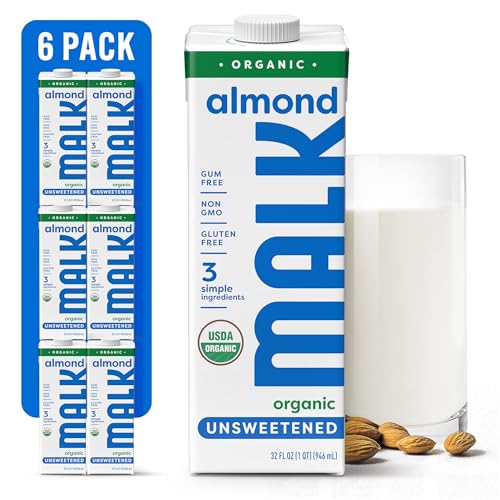
MALK’s build philosophy — organic almonds, filtered water, Himalayan pink salt — strips away everything extraneous. In the oven, this simplicity becomes an advantage for recipes where you want the pure flavor of the other ingredients to shine. A vanilla cake made with MALK tastes like vanilla, not like a nutty undertone. The absence of gums means the batter remains fluid and responsive; it spreads evenly in cake tins and muffin cups without excessive doming or sinking.
Users consistently emphasize the clean, homemade taste. Multiple reviews call it the best-tasting almond milk for lattes and smoothies — a property that carries over into baked goods, where there is no artificial aftertaste. The consistency is thinner than Edensoy or Elmhurst but still noticeably creamier than standard supermarket almond milk. For quick breads and muffins, this balance works well. For recipes that rely heavily on milk for moisture, such as a dense banana loaf, the thinner body means you may need to reduce liquid in the recipe slightly to avoid a soggy crumb.
The shelf-stable format keeps for months in the pantry. MALK explicitly warns that natural separation occurs (no emulsifiers), so shaking the carton vigorously before pouring is essential. The premium price reflects organic certification and the stringent ingredient policy. If you value absolute ingredient purity and are comfortable adjusting hydration in heavy batters, MALK is a compelling choice.
Why it’s great
- Only 3 clean organic ingredients — no gums, fillers, or artificial anything
- Neutral almond flavor blends without overwhelming delicate bakes
- Excellent frothing performance for dairy-free coffee applications
Good to know
- Thinner consistency can make batters slightly more fluid than expected
- Shelf-stable cartons require vigorous shaking to reincorporate separated solids
4. Mooala Organic Simple Almond Milk

Mooala’s Simple line competes directly with MALK on ingredient purity but undercuts it on cost, making it the most accessible entry point into clean-label plant milk for baking. The three ingredients — organic almonds, filtered water, Himalayan pink salt — produce a smooth, subtly nutty liquid that performs reliably in standard baking scenarios. Testers consistently note its clean, additive-free taste and smooth texture, even going so far as to call it the best almond milk they have tried.
In practical baking terms, Mooala handles best in batters that are already fairly wet — pancake batter, muffin mix, quick breads. The milk integrates fully without leaving a chalky residue or altering the batter pH. The protein content is lower than Edensoy or Elmhurst, so expect a slightly paler crust finish. For cookies and scones where browning is critical, a short brush of maple syrup or agave on the surface before baking can compensate. For everyday breakfast bakes and fruit-forward desserts where browning is secondary, Mooala works seamlessly.
The shelf-stable packaging is convenient for bulk storage, though a few buyers note that the 32-ounce cartons run out quickly in heavy-use households. The flavor is clean enough for direct drinking and coffee creamer, and the price per case is among the lowest in the clean-label category. If you bake multiple times a week and want a budget-friendly substitute that still avoids gums and fillers, Mooala hits the sweet spot.
Why it’s great
- Budget-friendly entry into 3-ingredient, gum-free plant milk
- Clean, neutral almond taste does not interfere with delicate batters
- Shelf-stable format allows easy pantry stocking for spontaneous baking
Good to know
- Lower protein content means less Maillard browning on crusts
- Some users report a mild peanut-butter aftertaste in certain batches
5. Califia Farms Organic Unsweetened Almond Milk

Califia Farms brings the same 3-ingredient philosophy (organic almonds, purified water, sea salt) to a lower price point, making it the most approachable option for bakers who are new to dairy-free substitutions. The liquid is smooth and mild, with a homemade taste that multiple verified buyers praise as a reliable pantry backup for baking emergencies and everyday use. The product dimensions — 3 by 2.75 by 8.25 inches per carton — make it compact enough for small refrigerator shelves.
In the oven, the performance is solid for light batters and no-bake applications. A standard muffin recipe produces an even crumb with moderate browning — acceptable but not as golden as what you get from soy or high-protein almond alternatives. The lower protein content means the structural support is softer, so it is best suited for recipes that already have strong structure from flour, eggs, or added fat. For yeast breads or delicate sponge cakes, the lack of protein may result in a slightly denser texture. For pancakes, scones, and fruit cobblers, it works without any noticeable drop in quality.
The main drawback reported by users is inconsistent packaging: the inner foil seal can be difficult to open cleanly, sometimes tearing and risking leakage when shaking. This is a distribution issue, not a product-quality issue, but it is worth noting for bulk buyers. The taste and ingredient integrity are excellent for the price, and for bakers seeking a simple, organic substitute that stores for months without refrigeration, Califia is a solid entry-level choice.
Why it’s great
- Affordable entry to USDA Organic, 3-ingredient almond milk
- Homemade taste without preservatives or artificial flavors
- Compact carton dimensions convenient for small refrigerator storage
Good to know
- Lower protein content produces paler crusts in baked goods
- Inner seal tabs can tear, potentially causing leaks during handling
FAQ
Can I use sweetened vanilla almond milk in baking?
Why did my cake turn out pale when I used almond milk?
Do I need to add acid to plant milk to mimic buttermilk in baking?
Final Thoughts: The Verdict
For most users, the milk substitute for baking winner is the Edensoy Unsweetened Soymilk because its 12 grams of complete protein per serving consistently produces golden-brown crusts, tender crumbs, and reliable structure in everything from dinner rolls to yellow cake. If you want a clean two-ingredient almond milk with no gums whatsoever, grab the Elmhurst 1925 Unsweetened Almond Milk. And for budget-conscious bakers who still demand a gum-free, organic formulation, nothing beats the value and reliability of the Mooala Organic Simple Almond Milk.