The gap between a budget blade and a master-level Japanese chef’s knife is crossed in the mid-range. At roughly to , you stop paying for novelty and start paying for real VG10 or 10Cr15CoMoV steel cores, genuine Damascus layering, and hand-finished edges that hold through a service. The challenge is separating the forged knives from the laser-etched imposters in the same price aisle.
I’m Mohammad Maruf — the founder and writer behind AirfryerBite. After analyzing the steel chemistries, handle ergonomics, and construction methods of dozens of models in this bracket, I can tell you exactly where the value actually sits and which features are worth the upgrade.
This guide breaks down the steel types, edge geometry, handle materials, and real-world performance that define the best mid range japanese knives, so you can invest in a blade that genuinely improves your prep work rather than just your countertop aesthetic.
How To Choose The Best Mid Range Japanese Knives
In the mid-range, you are no longer hoping a knife simply cuts. You are deciding how long the edge lasts, how the blade feels during a long prep session, and whether the construction will survive years of honing. Three specs define that threshold.
Steel Core: VG10 vs. Super Steel Alloys
VG10 is the benchmark stainless core in this bracket—hardness around 60-61 HRC, excellent edge retention, and good corrosion resistance. You will also see 10Cr15CoMoV, a Chinese-sourced super steel that mimics VG10’s performance with slightly higher carbon content. Both are legitimate for mid-range use. Avoid anything listed as “stainless steel” without a specific grade name, as that usually means a softer 440 series blade that will dull quickly.
Construction: Forged, Damascus, and the Laser-Etched Trap
Real Damascus is created by forge-welding multiple steel layers and then etching the blade to reveal the pattern. This adds structural toughness and corrosion resistance. Fake Damascus is a surface laser etch on a single steel layer—it will wear off with sharpening. In the – range, any knife claiming 60+ layers likely uses a real Damascus cladding over a high-carbon core. Look for explicit mentions of “forge welding” or “folded steel” to confirm authenticity.
Handle Geometry: Wa-Style vs. Western Full Tang
Traditional Japanese Wa handles (often octagonal or D-shaped) are lighter, promote a pinch grip, and offer better maneuverability for precision cuts. Western-style full tang handles add heft and balance for rocking cuts and heavy chopping. Your choice depends on grip preference—pinch grippers favor octagonal Wa handles, while palm grippers often prefer the weight of a full tang.
Quick Comparison
On smaller screens, swipe sideways to see the full table.
| Model | Category | Best For | Key Spec | Amazon |
|---|---|---|---|---|
| Yoshihiro VG10 46L Gyuto | Premium | Professional prep & high-volume kitchens | VG10 core, 46 layers, octagonal ambrosia handle | Amazon |
| Made In 8″ Damascus Gyuto | Premium | Home cooks wanting premium build | 66-layer Damascus, VG-10 core, POM handle | Amazon |
| Yoshihiro VG10 16L Santoku | Mid-Range | All-purpose vegetable & protein prep | VG10 core, 16 layers, mahogany handle | Amazon |
| Atumuryou JPCK 7″ Santoku | Mid-Range | Gift-ready daily driver | VG10 core, 67 layers, resin-wood handle | Amazon |
| KAWAHIRO VG10 8″ Gyuto | Mid-Range | Precision slicing and fine veg work | VG10 core, ebony & ruby wood handle | Amazon |
| HOSHANHO 3-Piece Set | Value | Home cooks wanting a full knife kit | 10Cr15CoMoV core, 60 HRC, pakkawood handle | Amazon |
| KAWAHIRO 9.5″ Gyuto | Mid-Range | Extended reach for large-volume prep | 60 HRC, alloy steel, hollow-groove blade | Amazon |
| SHAN ZU 8″ Damascus | Value | Budget entry into Damascus knives | 67-layer, 10Cr15CoMoV, G10 handle | Amazon |
| HOSHANHO 8″ Gyuto | Value | First Japanese knife on a tight budget | 9-layer, 10Cr15CoMoV, rosewood handle | Amazon |
In‑Depth Reviews
1. Yoshihiro VG10 46 Layers Hammered Damascus Gyuto
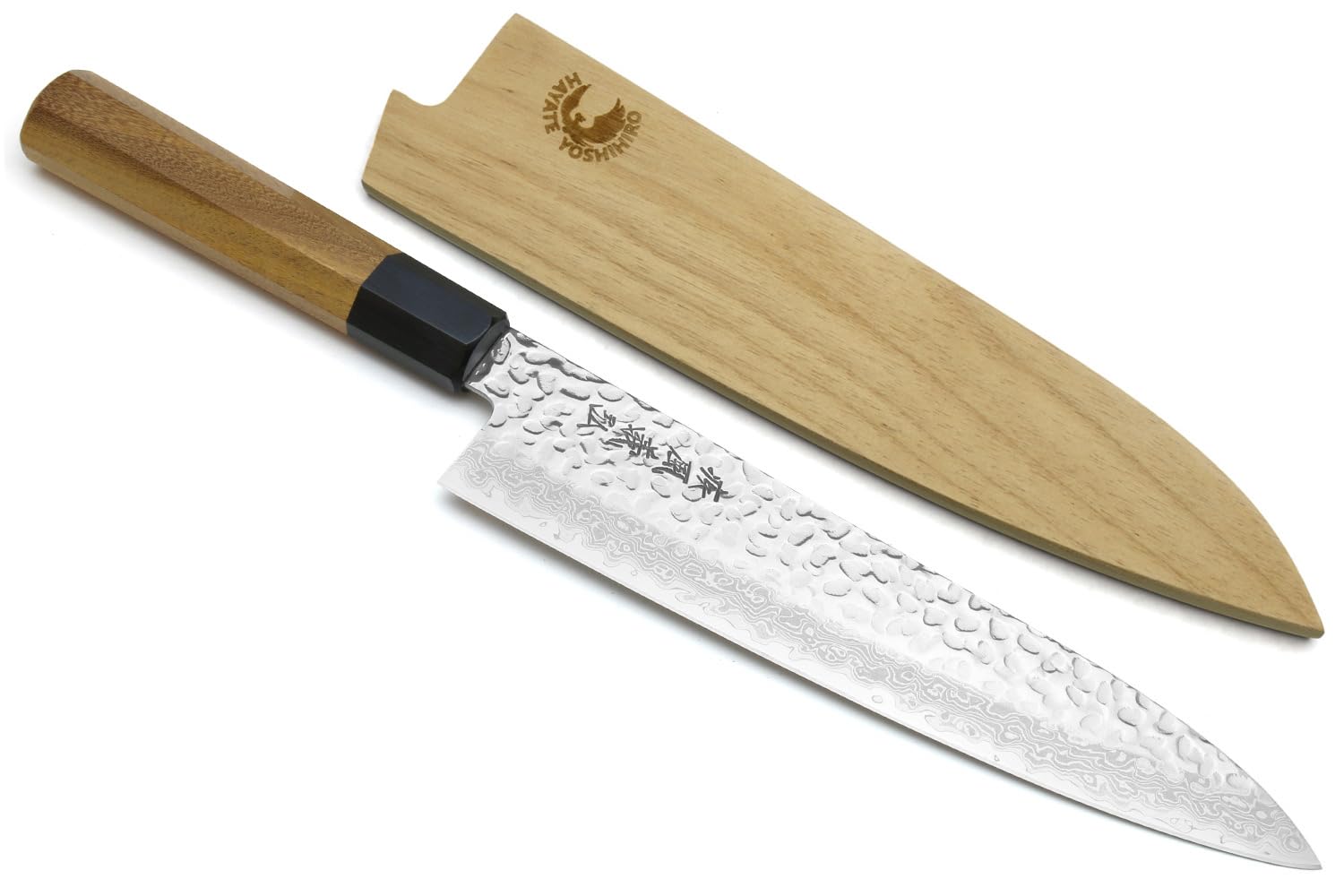
This 8.25-inch Gyuto from Yoshihiro sets the benchmark for what a mid-range Japanese knife should deliver. The VG10 core is clad in 46 layers of Damascus steel, creating a blade that balances impressive edge retention with enough toughness to handle daily prep without chipping. The hammered finish (tsuchime) reduces food release during slicing, a practical advantage when moving through large quantities of vegetables or protein.
The octagonal ambrosia wood Wa handle is where this knife truly differentiates itself. It encourages a proper pinch grip, reduces wrist fatigue during extended cutting sessions, and the natural wood texture provides a secure hold even when hands are slightly damp. The included magnolia wood saya adds an extra layer of protection for storage between uses.
Real customer feedback consistently praises the out-of-box sharpness and the knife’s ability to hold an edge through 150-300 cover service in professional kitchens. The thin blade geometry does require careful use—avoid hard squash seeds and frozen foods—but for meat, fish, and most produce, this is a precision instrument that justifies its position at the top of this list.
Why it’s great
- Genuine 46-layer Damascus cladding over VG10 core for strength and edge retention
- Octagonal Wa handle reduces fatigue during long prep sessions
- Comes with a magnolia wood saya for safe storage
Good to know
- Thin blade requires caution with hard ingredients like bones
- Unfinished handle needs occasional oiling to maintain appearance
- Best sharpened on water whetstones, not pull-through sharpeners
2. Made In 8″ Japanese Damascus Steel Gyuto
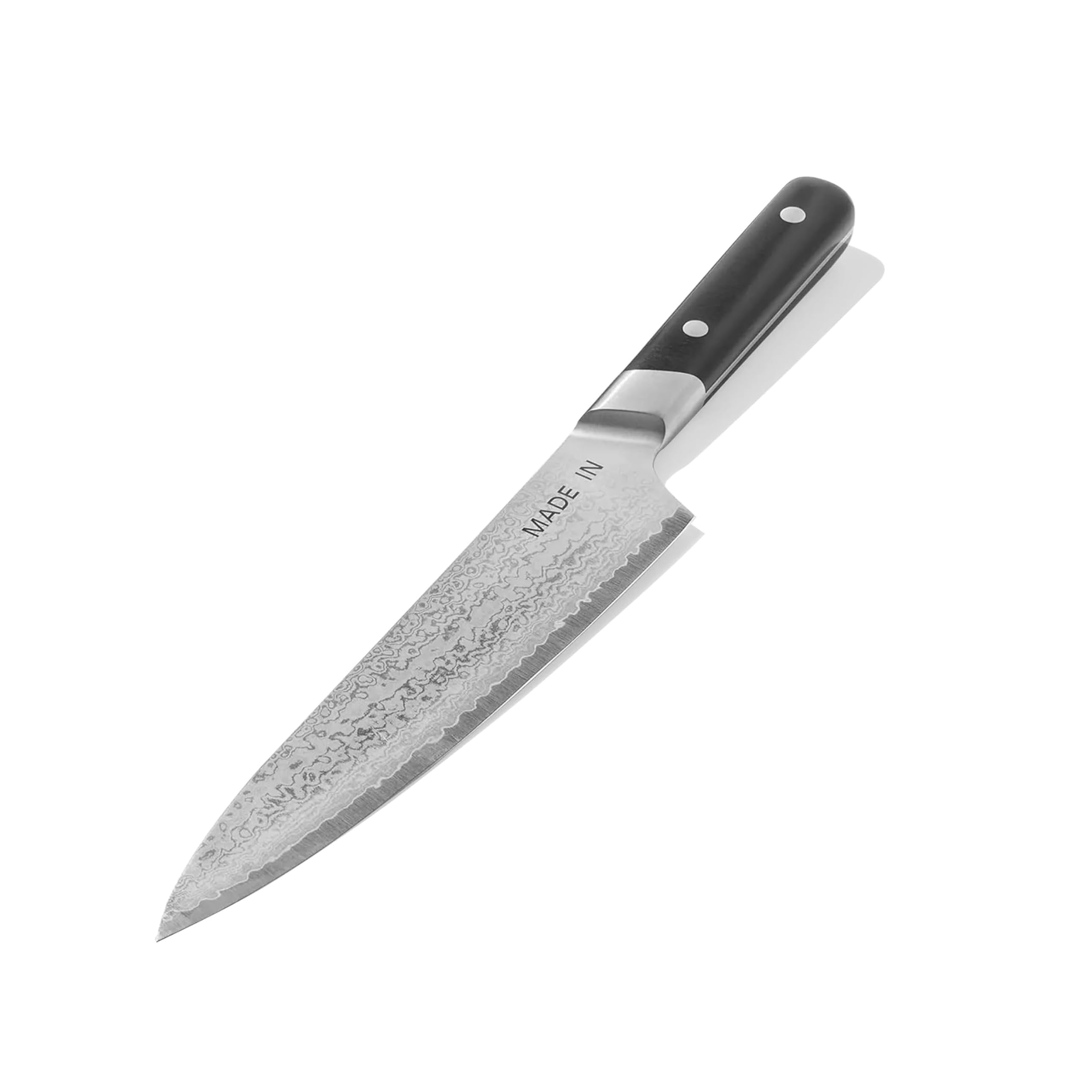
Forged in Seki, Japan, the Made In Gyuto uses a VG10 core wrapped in 66 layers of Damascus steel for a blade that is both visually striking and functionally tough. The 2.3mm blade thickness is noticeably thin at the spine, giving it a nimble feel for precise cuts on vegetables and boneless proteins. The 15-degree edge angle arrives sharp enough to slice through paper towel on contact.
The full tang construction with a black POM (polyoxymethylene) handle delivers a balanced weight distribution that sits comfortably in a Western-style grip. POM is a durable, moisture-resistant material that won’t swell or crack over time, making this a low-maintenance choice for home cooks who prefer a heavier knife with a modern handle feel.
Customer reviews highlight the extraordinary out-of-box sharpness and the elegant Damascus wave pattern that is unique to each blade. The knife performs exceptionally well for dicing onions, slicing tomatoes without crushing, and portioning chicken. As with most thin Japanese blades, hand washing and water whetstone sharpening are essential to preserve the edge geometry.
Why it’s great
- 66-layer true Damascus forged in Seki, Japan
- 2.3mm thin spine for precise, nimble cutting
- POM handle resists moisture and requires no maintenance
Good to know
- Thin blade may flex under heavy chopping pressure
- No saya included for blade protection during storage
3. Yoshihiro VG10 16 Layer Hammered Damascus Santoku

The 7-inch Santoku from Yoshihiro brings the brand’s signature hammered Damascus finish into a shorter, more versatile profile. With 16 layers over a VG10 core, this knife is less about layer count and more about achieving a balanced, user-friendly blade that works for both push-cutting and rocking motions. The hammered surface actively reduces sticking, which is a real advantage when slicing potatoes, apples, or cheese.
Unlike the octagonal Wa handle on the 46-layer Gyuto, this Santoku uses a Western-style mahogany handle with a full tang. The handle is slightly heavier, shifting the balance point toward the rear for comfortable palm gripping. The mahogany is sealed and polished, offering a smooth grip that suits cooks who prefer to hold the handle rather than the blade.
Reviews note that the factory edge favors a 70/30 ratio for right-handed users—a traditional Japanese asymmetry that enhances cutting performance when used correctly. With a 60 HRC rating, the steel is hard enough for excellent edge retention but not so hard that it becomes brittle. This Santoku is a reliable daily driver for home cooks who want a genuine Japanese knife without the premium price of higher-layer counts.
Why it’s great
- Hammered surface reduces food sticking during slicing
- Western full tang handle offers balanced weight for palm grips
- Genuine Japanese VG10 core at a fair entry price
Good to know
- Factory edge is asymmetrical 70/30; requires specific sharpening technique
- Not as sharp out-of-box as Shun; may need a fine grit stone to reach peak sharpness
4. Atumuryou JPCK 7″ Damascus Santoku
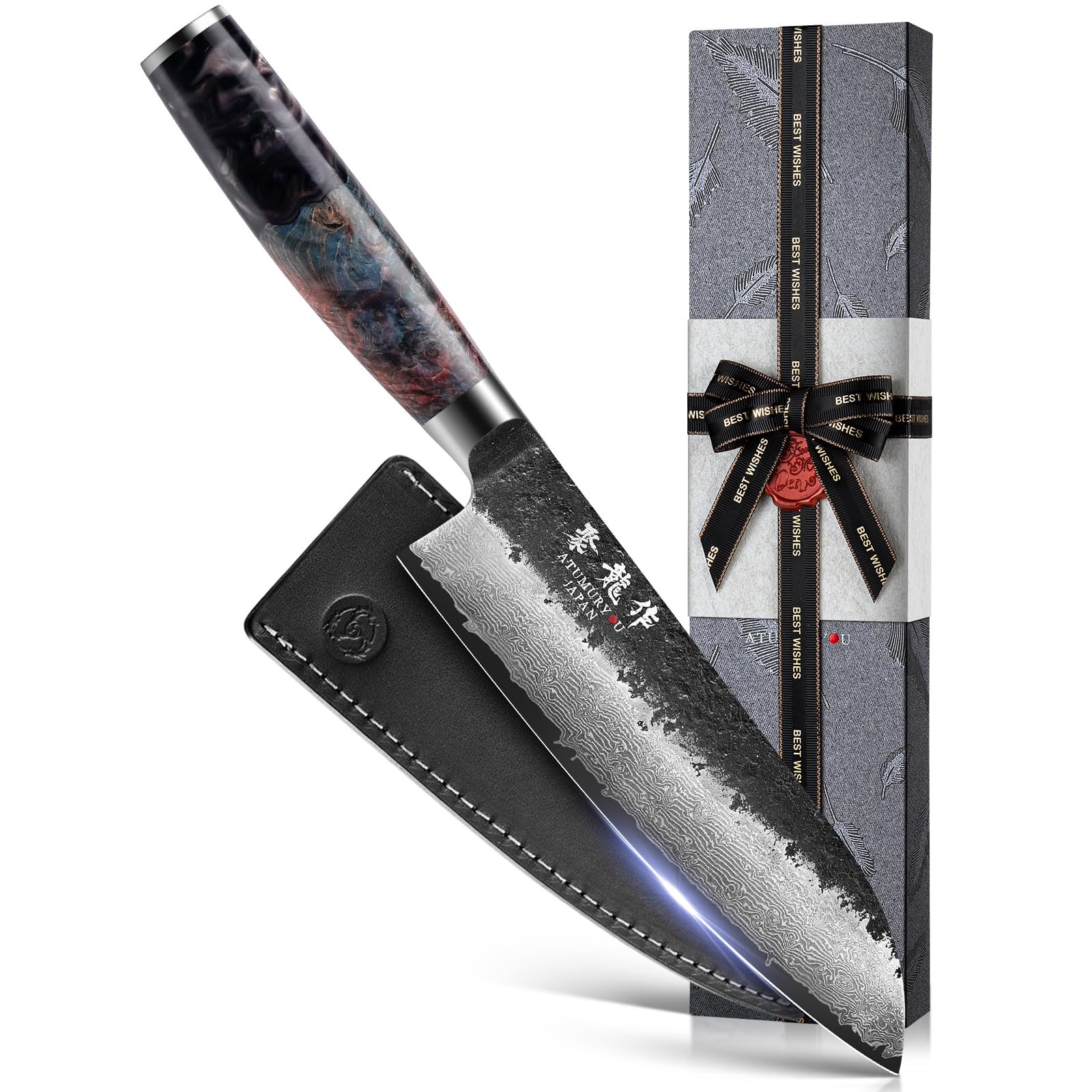
This Santoku packs a VG10 core surrounded by 67 layers of Damascus steel, with a 12-degree hand-sharpened edge that delivers exceptional precision. The black forged finish on the blade adds an extra layer of visual depth while naturally reducing friction during cuts. For a 7-inch blade, it handles a wide range of tasks from dicing onions to slicing boneless chicken thighs with minimal resistance.
The handle is made from stabilized wood and resin, creating a unique pattern in each knife. Stabilized wood resists moisture absorption and cracking better than natural wood, making it a practical choice for a daily-use knife. The full tang construction ensures the blade feels solid and balanced, with the weight centered for controlled, accurate cuts.
Customer feedback emphasizes the impressive out-of-box sharpness and the premium unpresenting experience, including a leather sheath and an elegant gift box. The knife has maintained its edge well after months of use, requiring less frequent sharpening than some competitors. The handle’s grip is comfortable for extended use, and the Damascus pattern is genuinely forged rather than laser etched.
Why it’s great
- Real 67-layer Damascus with a VG10 core and 12-degree edge
- Stabilized wood and resin handle resists moisture and cracking
- Includes genuine leather sheath and premium gift box
Good to know
- Packaging is excessive for daily storage
- Handle pattern is unique; may not match aesthetic preferences of all buyers
5. KAWAHIRO VG10 8″ Gyuto
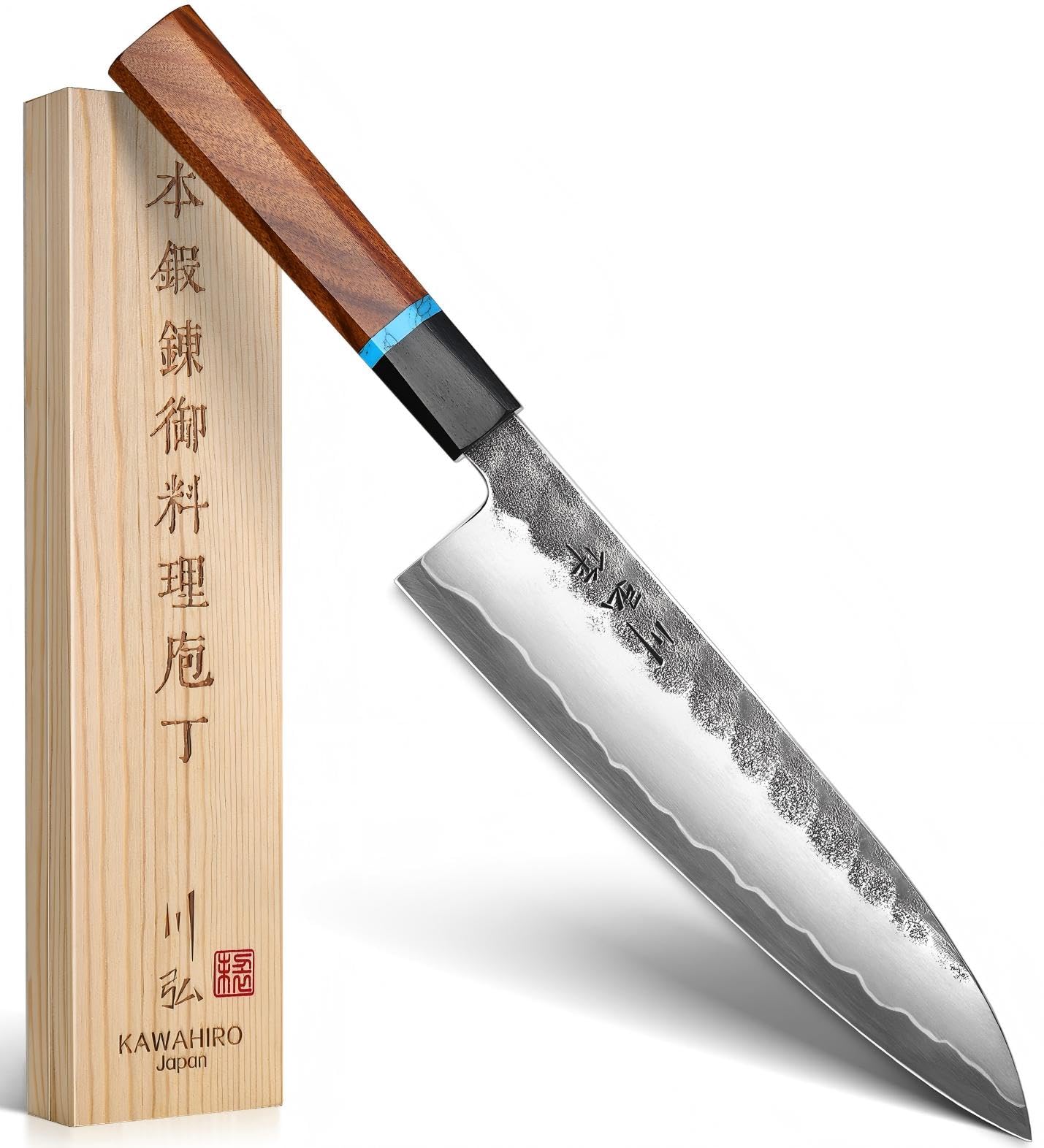
The KAWAHIRO 8-inch Gyuto features a VG10 core enclosed in a 3-layer composite steel construction, finished with a black forged blade that minimizes food sticking. The 8.24-inch blade is long enough for slicing brisket or squash yet agile enough for fine vegetable dice. The edge arrives extremely sharp, with a geometry that suits both pull-through cutting and push cutting techniques.
The handle is a standout design element, combining premium ruby wood, turquoise accents, and ebony into an octagonal Japanese Wa-style grip. This is not just aesthetic—the octagonal shape naturally guides your hand into a pinch grip, improving control over the blade. The handle is lightweight, keeping the knife’s balance forward for a nimble, responsive feel.
Users report that the knife holds its edge well over several months of daily use, only needing a few passes on a 5000-grit water stone to restore peak sharpness. Some note minor edge chipping after extended use on hard ingredients, which is typical for VG10 at this hardness level. The handle’s layered construction creates a beautiful, unique appearance that makes this knife a display-worthy piece on any magnetic strip.
Why it’s great
- VG10 core with 3-layer composite construction for durability
- Octagonal handle combines ruby wood, turquoise, and ebony for unique aesthetics
- Excellent tip control for fine vegetable and fruit work
Good to know
- Handle is assembled from multiple materials; may be a concern for long-term stability
- No saya included for blade protection
6. HOSHANHO 3-Piece Knife Set
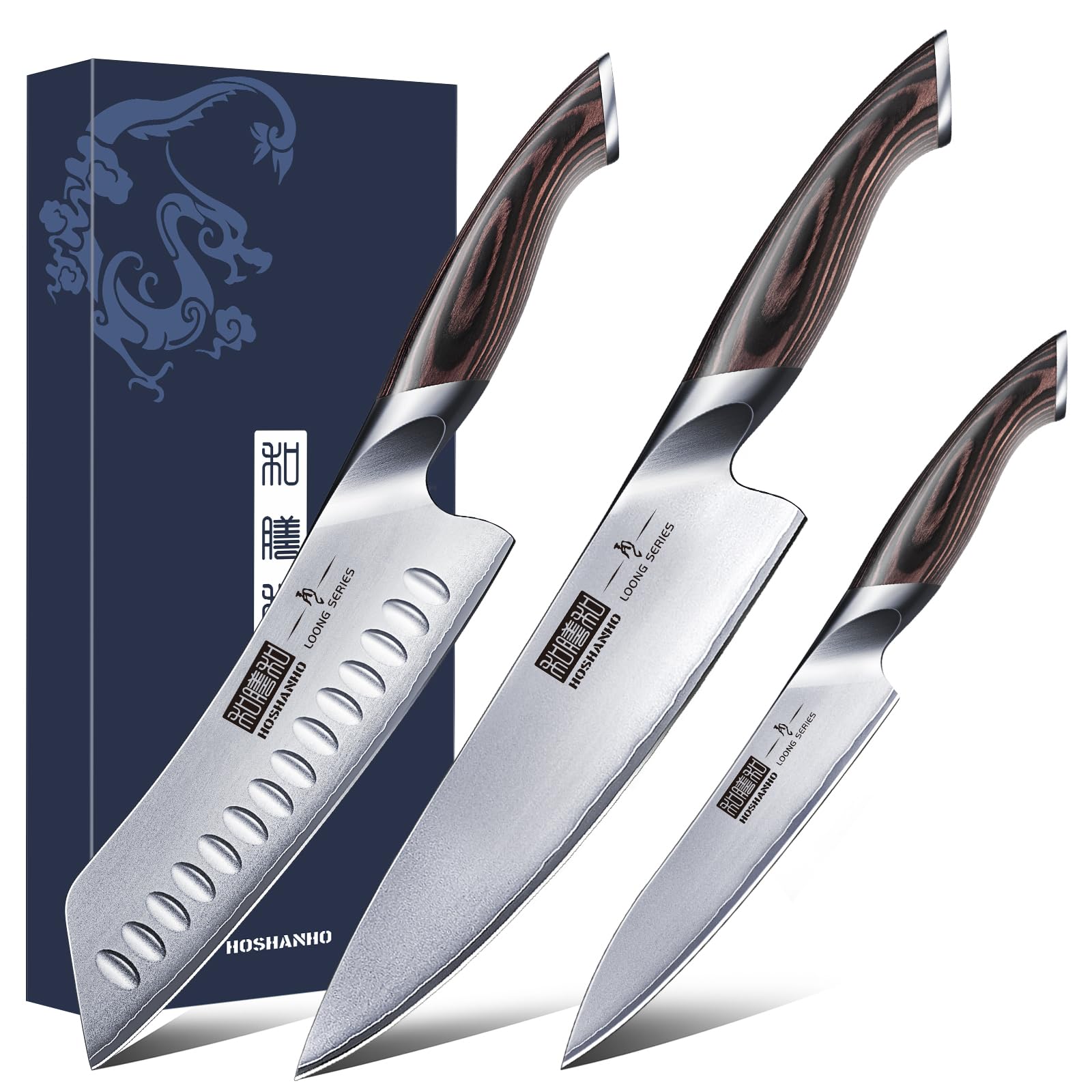
If you need a complete knife set without leaving the mid-range bracket, the HOSHANHO 3-piece offers an 8-inch chef’s knife, a 7-inch Santoku, and a 6-inch utility knife—all built from Japanese 10Cr15CoMoV high carbon stainless steel at 60 HRC. Each blade is hand-polished to a 15-degree edge per side and treated with a high-temperature vacuum and low-temperature cold nitrogen process for enhanced edge retention.
The pakkawood handles are ergonomically contoured and full tang, providing a comfortable and secure grip even during wet prep work. Pakkawood is a resin-impregnated hardwood that resists moisture and cracking, making it a practical choice for daily use without the maintenance of natural wood handles. The set comes in a simple gift box, making it a solid entry point for someone building their first Japanese knife collection.
Customer reviews consistently praise the razor-sharp out-of-box edges and the balanced weight distribution across all three knives. The set covers the three most common kitchen tasks—large preparation (chef’s knife), all-purpose slicing (Santoku), and smaller utility work (utility knife)—without any redundant pieces. Some users note that the knives are made in China, but the steel quality and construction are well above what the price suggests.
Why it’s great
- Three essential blade sizes in one package with the same high-carbon steel core
- Pakkawood handles are durable, moisture-resistant, and comfortable
- 15-degree edge per side delivers professional-grade sharpness out of box
Good to know
- Made in China, not Japan—quality is high but provenance differs
- No magnetic strip or block included for storage
7. KAWAHIRO 9.5″ Handcrafted Gyuto
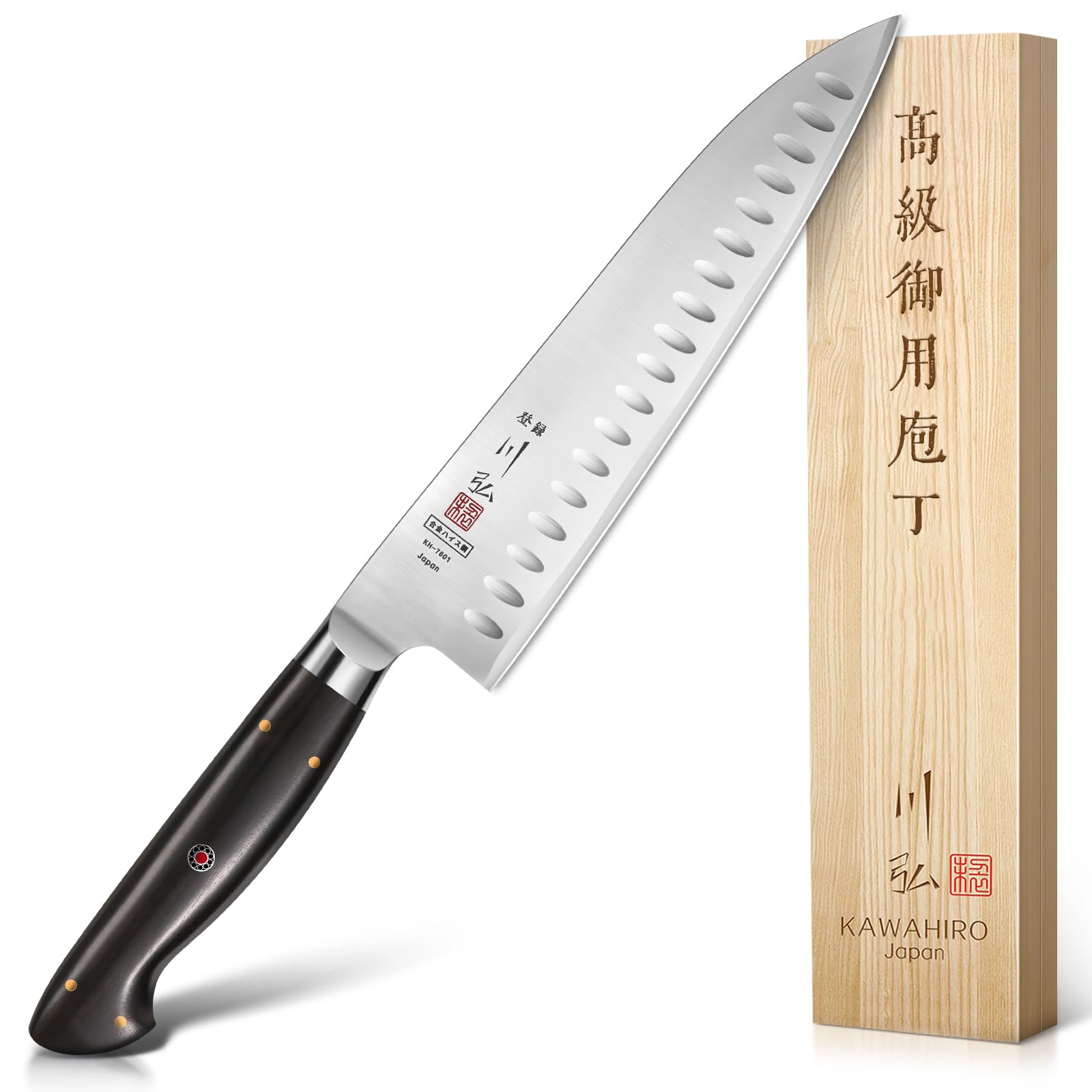
The 9.5-inch blade on this KAWAHIRO Gyuto is designed for cooks who work through large volumes of ingredients. The extended length allows you to cut through whole cabbages, large butternut squash, or multiple stacked vegetables in a single motion, reducing the number of repetitive cuts during prep. The hollow-groove blade (granton edge) creates air pockets that reduce friction and prevent food from sticking to the blade surface.
The Japanese high carbon alloy steel is hardened to 60 HRC and finished with traditional water-grinding, which preserves the blade’s microstructure for longer edge retention. The full tang rosewood handle is ergonomically shaped to reduce wrist strain during extended use, and the brass mosaic rivets add a traditional aesthetic touch. The knife arrives in a premium wooden gift box with a certificate of authenticity.
Customers report exceptional out-of-box sharpness, comparing it to a surgical scalpel. The longer blade requires a slight adjustment in cutting technique—especially for cooks used to standard 8-inch knives—but the payoff in efficiency is significant for heavy prep tasks. Some reviewers note small protruding metal bits on the handle that can be felt during use, though this appears to be a quality control variation.
Why it’s great
- 9.5-inch blade length increases cutting efficiency for large ingredients
- Hollow grooves reduce friction and prevent food sticking
- Traditional water-grinding preserves blade microstructure for longer sharpness
Good to know
- Longer blade requires a learning curve for precise control
- Some units have minor metal burrs on the handle that need filing
8. SHAN ZU 8″ Damascus Chef Knife

The SHAN ZU 8-inch Damascus knife delivers a 67-layer forged blade (66 outer layers plus a 10Cr15CoMoV core) at a price that undercuts most competitors by a significant margin. The 62 HRC core is hard enough for long edge retention, and the 15-degree V-shaped edge arrives sharp enough to cut through carrots with minimal pressure. The Damascus pattern is genuine forge-welded, not laser etched, which means the pattern will persist through years of sharpening.
The G10 fiberglass handle is a practical choice for durability—it is stronger than standard wood handles, resists moisture and temperature changes, and provides a secure grip even when wet. The handle is ergonomically shaped to reduce fatigue during extended prep sessions, and the balance point sits just forward of the handle for controlled slicing. SHAN ZU backs the knife with a 24-month warranty and lifetime support.
Customer feedback is overwhelmingly positive, with users praising the remarkable sharpness out of box and the eye-catching Damascus pattern. The knife is dishwasher safe according to the manufacturer, though hand washing is strongly recommended to preserve the handle and edge.
Why it’s great
- Genuine 67-layer forge-welded Damascus with a 10Cr15CoMoV core
- 62 HRC hardness for excellent edge retention
- G10 handle is durable, moisture-resistant, and comfortable
Good to know
- Gold-plated rivet on handle may flake over time
- Food sticks to the smooth blade surface without hammered texture
9. HOSHANHO 8″ Japanese Gyuto Chef Knife

HOSHANHO’s 8-inch Gyuto is the most affordable knife in this roundup, but it does not compromise on the core material. The blade uses a 10Cr15CoMoV super steel core wrapped in 9 layers of high-carbon and corrosion-resistant steel, forming a sandwich structure that balances hardness with toughness. The hand-polished edge is sharpened to 12-15 degrees per side, delivering a razor-sharp cutting surface that can handle delicate work like paper-thin tomato slices.
The traditional Japanese octagonal rosewood handle is a genuine Wa-style design, featuring two brass wire accents for visual appeal. The 8.11-inch blade length paired with a 6.1-inch handle creates a near golden ratio balance that reduces front-heaviness during push cuts. The hand-forged hammer pattern and natural layered finish give each knife a unique aesthetic that signals craftsmanship rather than the mass-produced look of budget knives.
Customers highlight the excellent price-to-quality ratio, with the blade holding its edge well for a knife in this tier. The lightweight design (7.8 ounces) reduces fatigue during long prep sessions. Some users report minor finishing issues, such as sharp edges on the blade’s heel near the handle that require light sanding. The knife demands proper care—hand washing and regular oiling of the rosewood handle are necessary to prevent oxidation and cracking.
Why it’s great
- 10Cr15CoMoV super steel core provides excellent edge retention for the price
- Genuine octagonal Wa handle encourages proper pinch grip
- Hand-forged hammer pattern creates a unique, craftsman-made appearance
Good to know
- Some units have sharp burrs at the blade heel near the handle
- Rosewood handle requires regular oiling and is not dishwasher safe
FAQ
Are mid-range Japanese knives actually made in Japan?
How do I sharpen a Damascus Japanese knife without damaging the pattern?
Can I use a Japanese knife on bones or frozen foods?
What does the layer count on a Damascus knife actually mean?
Why do some Japanese knives have an asymmetrical edge bevel?
Final Thoughts: The Verdict
For most users, the mid range japanese knives winner is the Yoshihiro VG10 46 Layers Hammered Damascus Gyuto because it combines a genuine VG10 core with a traditional octagonal Wa handle, excellent edge retention, and a protective saya—all within the mid-range price bracket. If you want a more modern, durable handle material, grab the Made In 8″ Japanese Damascus Steel Gyuto. And for the best value set covering three essential blade sizes, nothing beats the HOSHANHO 3-Piece Knife Set.