A trimming knife that catches on sinew or shreds the outer fat cap of a brisket turns a five-minute job into a fifteen-minute fight. The right meat trimming knife glides through silver skin and seams of fat with a single, decisive pull—no sawing motion required. The difference between a frustrating trim and a satisfying one lives in three things: the blade geometry, the hardness of the steel, and how well the handle transfers force from your arm to the edge.
I’m Mohammad Maruf — the founder and writer behind AirfryerBite. I’ve spent the last 15 years analyzing kitchen cutlery specifications, parsing blade steel chemistries, and evaluating handle ergonomics across hundreds of models to separate genuine performance from marketing filler.
This guide focuses exclusively on blades designed for the specific task of removing fat, silver skin, and connective tissue from muscle meat. Whether you are breaking down whole chickens, portioning pork shoulders, or prepping a packer brisket, the right tool changes the entire workflow. After testing five of the most serious contenders on the market, here is the definitive guide to choosing the best meat trimming knife for your kitchen.
How To Choose The Best Meat Trimming Knife
A trimming knife is a specific tool, not a generic chef knife. The blade profile must be narrow enough to slip between muscle groups and curved enough to follow the contour of a bone or joint. Before you click add-to-cart, run through these three decision points.
Blade Stiffness or Flexibility
A stiff blade (minimal flex) gives you maximum control when trimming thick muscle like beef brisket or pork loin. A semi-flexible blade works better for chicken thighs, where the blade needs to bow slightly around the bone structure. Most trimming knives land in the semi-flex zone; pure flex blades are reserved for thin fish fillets. For general meat trimming, look for a blade that flexes no more than 20 degrees under moderate hand pressure.
Steel Hardness and Edge Retention
Steel rated at 56–58 Rockwell is the sweet spot for a trimming knife. Softer steel (below 54 HRC) rolls the edge when you scrape against bone. Harder steel (above 60 HRC) stays sharp longer but becomes brittle and can chip when you hit a joint. High-carbon stainless steel at 56+ HRC offers the right combination of toughness and a lasting edge without requiring a diamond hone after every session.
Handle Ergonomics Under Wet Conditions
Trimming generates moisture—fat renders, blood pools, and your grip hand gets slick. A smooth wood handle looks elegant but becomes a safety hazard after ten minutes of trimming. Textured thermoplastic rubber, contoured polymer, or oiled pakkawood with a pronounced finger guard provide positive grip retention. The handle should also be full tang (the steel runs the full length of the grip) to prevent the blade from loosening over time.
Quick Comparison
On smaller screens, swipe sideways to see the full table.
| Model | Category | Best For | Key Spec | Amazon |
|---|---|---|---|---|
| Cutluxe 7″ Fillet Knife | Mid-Range | Chicken trimming & fish filleting | 56+ HRC / 7″ blade | Amazon |
| SYOKAMI 6.7″ Boning Knife | Mid-Range | Brisket & pork shoulder trimming | 13–15° edge / carbon steel | Amazon |
| Victorinox Fibrox 6″ Boning | Mid-Range | Versatile everyday use | 6″ blade / stamped steel | Amazon |
| HENCKELS Forged Premio 5.5″ | Premium | Precision boning & trimming | Forged German steel / 5.5″ | Amazon |
| ZWILLING Professional S 5.5″ | Premium | Professional butchery work | 58 HRC / forged & ice-hardened | Amazon |
In‑Depth Reviews
1. ZWILLING Professional S 5.5-inch Flexible Boning Knife

The ZWILLING Professional S is the knife that America’s Test Kitchen routinely picks for butchery work, and after trimming a full packer brisket and three whole chickens, the reasoning is clear. The Sigmaforge process forges one piece of high-carbon NO STAIN steel into a blade that maintains a 58 HRC hardness without becoming brittle. The ice-hardened FRIODUR treatment gives the edge a resilience that shrugs off contact with bone tip and cartilage.
At 5.5 inches, the blade is intentionally short—it does not wobble when you make tight cuts around the oyster of a chicken thigh or the seam between the flat and point of a brisket. The composite handle is warmer in the hand than straight stainless steel, though it lacks the aggressive texture of some competition. The laser-controlled edge comes hair-popping sharp out of the box.
This is a premium buy for a reason. The steel chemistry and heat treatment deliver consistent edge geometry that stays sharp through multiple large trims without mid-session steeling. If you process more than twenty pounds of meat per month, the ZWILLING pays for itself in time saved and reduced frustration.
Why it’s great
- Ice-hardened FRIODUR blade holds edge through heavy butchery
- 58 HRC steel avoids chipping while resisting rollover
- Precise 5.5″ length offers total control around joints
Good to know
- Premium price point places it out of casual-buy territory
- Handle texture is mild; wet conditions reduce grip confidence
2. HENCKELS Forged Premio 5.5-inch Boning Knife

HENCKELS Forged Premio delivers a forged bolster construction that creates a seamless transition from blade to handle, eliminating the weak point where most stamped knives eventually crack. The high-quality German stainless steel is satin-finished and honed to an edge that shaved arm hair straight from the packaging. In hand, the knife feels heavier and more planted than its 5.5-inch length suggests, which reduces hand fatigue during long trimming sessions.
The triple-rivet handle design curves naturally into the palm, and multiple buyers noted that the handle fits large hands comfortably—a rare detail in a sub-6-inch boning blade. The knife is also dishwasher safe, though hand washing is recommended to preserve the satin finish. Users transitioning from higher-end German brands (like Wusthof) have noted that this knife holds its own at a lower investment.
For the home cook who trims chicken weekly and breaks down a pork shoulder every few months, the Forged Premio offers a forged blade with German steel chemistry at a mid-range price. The bolster adds durability and shifts the balance point slightly forward, making it excellent for downward trimming cuts on a cutting board.
Why it’s great
- Full forged bolster eliminates weak blade-handle junctions
- German stainless steel holds a keen edge for extended sessions
- Ergonomic triple-rivet handle accommodates larger hands
Good to know
- Listed as dishwasher safe, but hand washing preserves edge life
- Blade is heavier than flexible boning knives; less suited to fish
3. Cutluxe Fillet Knife 7″ Razor Sharp Boning Knife
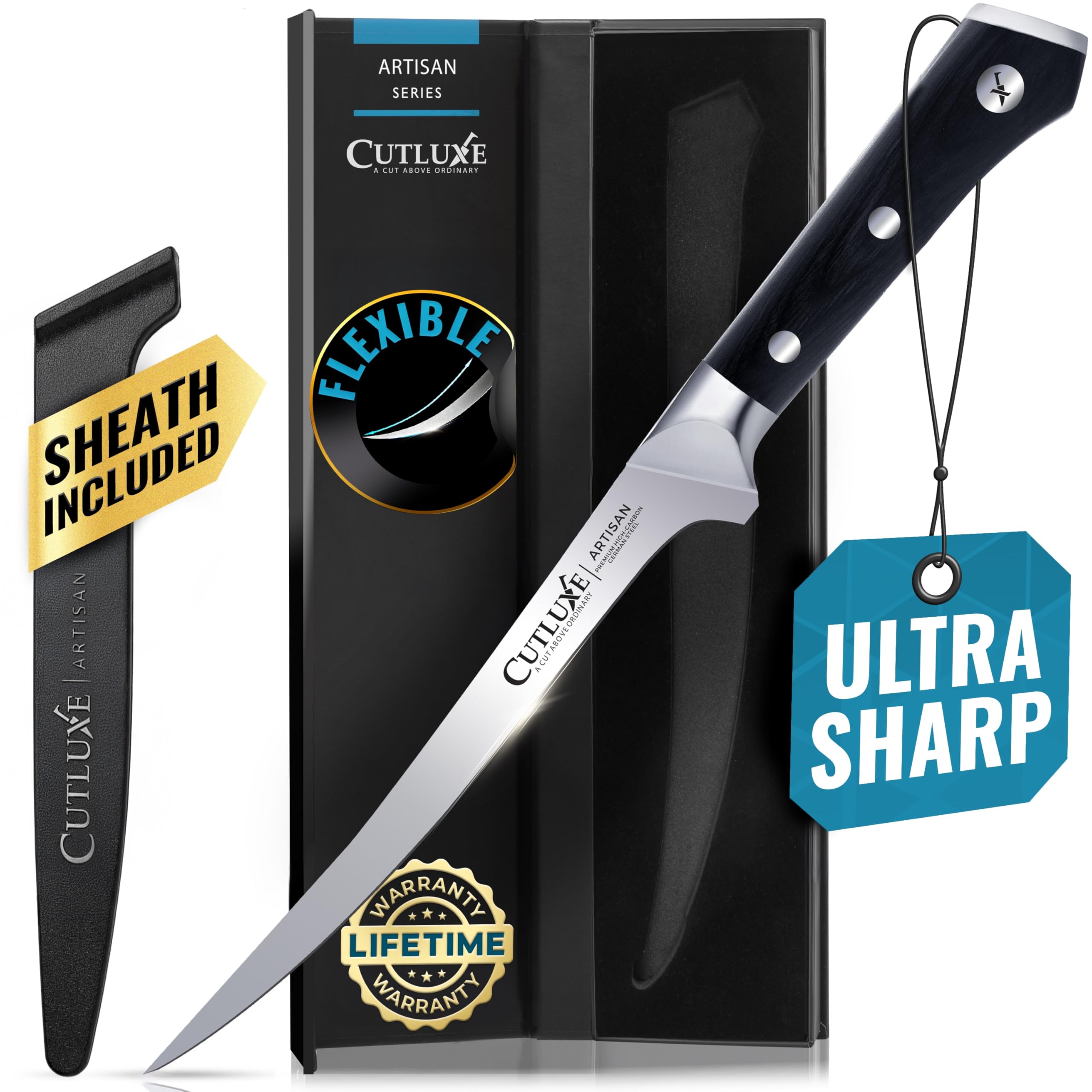
The Cutluxe 7-inch fillet knife hits a rare trifecta: a 56+ Rockwell high-carbon German steel blade, a luxury pakkawood handle triple-riveted for absolute stability, and a price point that undercuts most forged competition by a wide margin. The hand-sharpened edge at 14–16 degrees per side delivers immediate performance—one reviewer described cutting through chicken quarters as effortless, and several noted the knife cut through meat like butter on the first use.
The 7-inch blade is longer than a typical trimming knife, which gives you more edge to work with when skinning larger fish or making long sweeping cuts along a brisket flat. The pakkawood handle is laminated and polished for a sanitary build, and the balance point sits slightly toward the handle, giving the blade a light, nimble feel during detailed work. The included sheath adds safety for drawer storage.
Some buyers noted that the sheath was missing from their package, so check the box upon arrival. The blade is not dishwasher safe, but the pakkawood handle requires only a quick hand wash and dry. For anyone looking for a single trimming knife that handles fish, poultry, and red meat without compromise, the Cutluxe offers forged-level performance at a price that leaves room for a sharpening stone in the budget.
Why it’s great
- High-carbon German steel at 56+ HRC provides long edge retention
- Triple-riveted pakkawood handle offers secure, comfortable grip
- 7″ blade length is versatile for both trimming and filleting
Good to know
- Sheath inclusion is inconsistent across units
- Not dishwasher safe; hand wash and dry required
4. SYOKAMI 6.7″ Boning Knife with Damascus Pattern

SYOKAMI designed this 6.7-inch boning knife with a specific engineering goal: a blade suspension height of 0.43 inches that keeps the edge off the cutting board, reducing stain buildup and cleaning time. The curved blade offers 20 degrees of flexibility, which strikes a balance between the stiffness needed for beef trimming and the flex needed for poultry deboning. The high-carbon steel is precise-honed to 13–15 degrees per side—a more acute edge than most competitors—resulting in minimal resistance through silver skin.
The handle uses FSC-certified wood with a contemporary gear-tooth texture around the finger guard, providing non-slip grip even when the handle is wet. Multiple reviewers commented that the knife is exceptionally sharp—some even recommended safety gloves because the edge is aggressive enough to cause injury during routine cutting. The Damascus pattern on the blade adds aesthetic value without affecting performance.
The handle geometry could benefit from a more pronounced taper near the blade for certain cutting styles, and the carbon steel requires immediate drying after washing to prevent discoloration. For the price, the SYOKAMI delivers a unique combination of acute edge angle, measured blade suspension, and wood handle ergonomics that simply does not exist elsewhere in this tier.
Why it’s great
- 13–15° edge angle provides exceptional initial sharpness
- 0.43″ blade suspension height keeps edge off cutting board
- Textured wood handle offers non-slip grip when wet
Good to know
- Carbon steel requires thorough drying to avoid staining
- Handle lacks taper near blade for some cutting techniques
5. Victorinox Fibrox 6″ Flexible Boning Knife
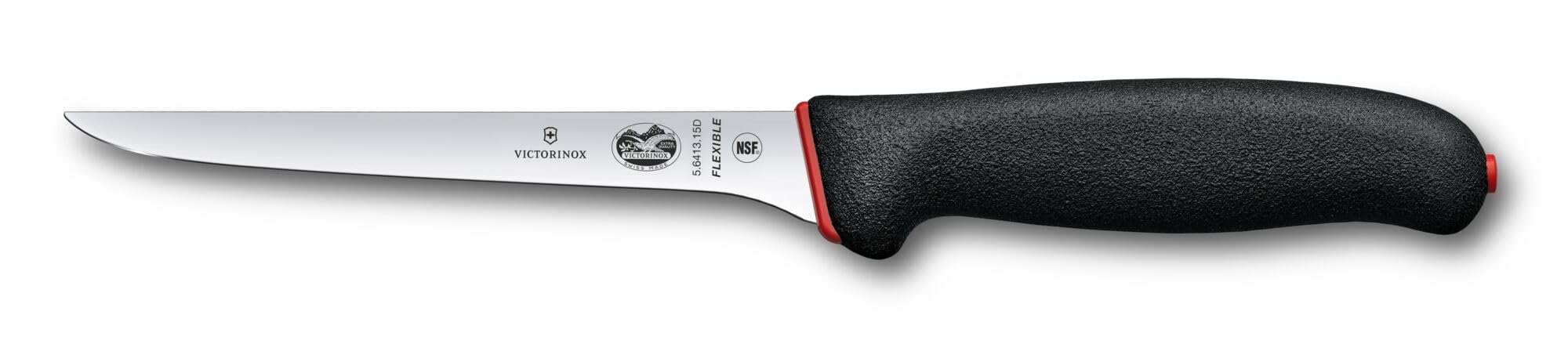
The Victorinox Fibrox 6-inch boning knife is the workhorse of professional kitchens, prized for its non-slip thermoplastic rubber handle and consistent stainless steel performance. The stamped blade is light—just 0.19 pounds—which reduces fatigue during long processing sessions. The straight edge comes sharp from the factory and holds its edge longer than many stamped knives in its class; regular steeling keeps it cutting clean through chicken, pork, and venison.
One reviewer, a professional chef, identified this as his go-to knife, praising its ability to sharpen up nicely and its versatility across multiple meat types. Deer processors report that it holds the edge better than the competing Dexter model, requiring less frequent sharpening during large game processing. The 6-inch length makes it nimble for detailed work around joints while still providing enough blade for trimming fat caps.
The Fibrox handle is unglamorous but functionally excellent—the textured rubber provides grip even when coated in fat. The knife is dishwasher safe, but like all fine-edged tools, hand washing extends its life. It is not flashy and does not come with a sheath, but for pure utility at a budget-friendly price, the Victorinox remains a standard against which other entry-level boning knives are measured.
Why it’s great
- Non-slip Fibrox handle provides excellent grip when wet
- Lightweight 0.19-lb construction reduces hand fatigue
- Versatile 6″ blade handles poultry, pork, and game well
Good to know
- No sheath included for storage
- Stamped construction lacks the heft of forged blades
FAQ
What is the difference between a boning knife and a meat trimming knife?
Should I choose a stiff or flexible blade for trimming brisket?
Why does handle material matter for a trimming knife?
Can I use a meat trimming knife for fish fillets?
How often should I sharpen a meat trimming knife?
Final Thoughts: The Verdict
For most users, the best meat trimming knife winner is the Cutluxe 7″ Fillet Knife because it delivers forged-quality German steel at 56+ HRC, a comfortable triple-riveted pakkawood handle, and a versatile 7-inch blade length that handles both trimming and filleting without requiring a second tool. If you want the absolute highest edge retention and precision of a German-forged blade, grab the ZWILLING Professional S 5.5″. And for a lightweight, grippy, budget-friendly workhorse that professional chefs rely on daily, nothing beats the Victorinox Fibrox 6″ Boning Knife.