Slicing a whole brisket for jerky or getting paper-thin pastrami at home without spending deli counter prices is the goal, but most home meat slicers turn the task into a frustrating battle with flimsy parts and uneven cuts. The wrong unit shreds the food, clogs with debris, or wobbles across the counter.
I’m Mohammad Maruf — the founder and writer behind AirfryerBite. I analyze hundreds of appliance specifications and real user reviews each quarter to separate hardware that delivers on its promise from models that simply take up counter space.
This guide breaks down the seven models that actually earn their keep, covering blade size, motor type, and safety features so you can confidently choose the best meat slicer for home use that fits your kitchen and your cooking habits.
How To Choose The Best Meat Slicer For Home Use
The home meat slicer market is crowded with cheap machines that can’t handle a single roast without stalling. Focus on four key areas and you will end up with a slicer that consistently delivers restaurant-quality cuts for years.
Blade Specs: Diameter and Material
Blade diameter dictates how large a piece of meat you can process. A 7.5-inch blade is the standard for home units and handles a full brisket flat or a large pork loin without struggle. Look for stainless steel or high-carbon steel blades — these resist rust and hold a sharp edge longer than coated alternatives. Serrated blades are excellent for crusty bread and soft cheeses, while smooth blades produce clean, drag-free cuts on raw or cooked meat.
Motor Power and Type
Most home slicers advertise 200 watts, but the motor type makes a bigger difference than the raw number. Standard AC motors are louder and can bog down under dense loads. DC motors deliver more consistent torque at lower RPMs, meaning quieter operation and less stalling when hitting a thick cut or semi-frozen meat. Units with DC power tend to be heavier and more expensive, but they slice more reliably batch after batch.
Thickness Adjustment Range
A dial that goes from 0 to 15 millimeters covers every home need. The ability to dial in paper-thin slices (around 1-2mm) for jerky or deli-style roast beef is a feature you will use constantly. Avoid models where the knob feels loose or skips increments — precision thickness control is the difference between a consistent cut and a mangled pile of meat.
Safety and Stability Features
Sharp rotating blades create legitimate injury risk. Look for non-slip suction cup feet that anchor the machine to the counter while you push food through. A food pusher that doubles as a blade guard is standard, but child safety locks that require two hands to engage add another layer of protection. Removable blades and pull-apart carriages make cleaning safer because you can wash components without reaching into the blade housing.
Quick Comparison
On smaller screens, swipe sideways to see the full table.
| Model | Category | Best For | Key Spec | Amazon |
|---|---|---|---|---|
| Borlebbi DC Motor Slicer | Mid-Range | Quiet, consistent slicing | 200W DC motor, 0-15mm | Amazon |
| Cuisinart FS-75 | Premium | Precision, trusted brand | 130W motor, 1/32″-1/2″ | Amazon |
| TOKASS 2-Blade Slicer | Premium | Beef jerky, raw meat | 200W, 2 high-carbon blades | Amazon |
| OSTBA DC Motor Slicer | Mid-Range | Overall home versatility | 200W DC motor, dual blades | Amazon |
| FOHERE 2-Blade Slicer | Mid-Range | Budget-friendly versatility | 200W, serrated + smooth | Amazon |
| Nutrichef 7.5″ Slicer | Entry Level | Light home use, bread | 200W, 0-15mm dial | Amazon |
| ROVSUN 8″ Commercial | Heavy Duty | Large batches, heavy use | 210W, 8″ chromium-plated blade | Amazon |
In‑Depth Reviews
1. Borlebbi 200W DC Motor Meat Slicer

The Borlebbi earns the top spot because its 200W DC motor runs noticeably quieter than typical AC-powered units while maintaining the torque to cut through semi-frozen brisket and pork belly without bogging down. The adjustable thickness dial covers 0-15mm precisely, and the two included 7.5-inch stainless steel blades — one serrated for bread and cheese, one smooth for raw meat — eliminate cross-contamination worries. Owners consistently report that partially freezing meat for one to two hours produces razor-thin slices perfect for pho or hot pot.
Assembly comes ready out of the box, and the blade removal tab makes disassembly for cleaning straightforward. The suction-cup feet grip the counter firmly during operation, though a few users note they stick better on a baking sheet than directly on a smooth countertop. The unit is lighter than commercial models, which is a trade-off in stability but a win for storing on a pantry shelf.
The blade lock mechanism can feel stiff initially, and meat debris sometimes migrates behind the blade into the gear compartment, requiring extra attention during cleaning. Despite these minor gripes, the Borlebbi delivers the quiet, consistent performance that home users want without the premium price tag of a deli-grade machine.
Why it’s great
- Quiet DC motor with stable torque
- Two blades included for raw and cooked foods
- Easy blade removal for safe cleaning
Good to know
- Suction cups may need a smooth surface to hold
- Debris can get behind the blade during heavy use
2. Cuisinart Kitchen Pro Food Slicer FS-75

Cuisinart brings decades of kitchen experience to the FS-75, and it shows in the build quality and precision. The 130-watt motor is paired with a 7.5-inch stainless steel blade that adjusts from an extremely thin 1/32-inch up to 1/2-inch, giving you control over everything from wispy prosciutto to hearty roast beef portions. The die-cast aluminum housing and coated steel construction feel substantial, and the non-slip feet keep the machine planted even during aggressive slicing.
The removable blade, food guide, and stainless steel carriage disassemble without tools for cleaning, though the design does have several crevices that require careful attention with a brush. Owners who take the time to learn the machine’s pace — letting the blade do the work instead of forcing the carriage — get consistently even cuts. The 10-minute continuous run recommendation before a cool-down break is standard for home slicers with this motor class.
The plastic food pusher feels flimsier than the rest of the machine, and the motor is not powerful enough to plow through frozen blocks of cheese or bone-in cuts. The limited 3-year motor warranty adds peace of mind, but the lower wattage means you need to work in smaller batches for dense items. It is a reliable choice for users who prioritize brand reputation and build quality over raw power.
Why it’s great
- Extremely thin slicing range down to 1/32 inch
- Heavy-duty die-cast aluminum housing
- 3-year limited motor warranty
Good to know
- Plastic food pusher feels fragile
- Not suitable for frozen or semi-frozen dense meats
3. TOKASS 200W Meat Slicer with 2 Blades

TOKASS targets the home jerky and deli meat crowd with a 200-watt motor and a pair of 7.5-inch German high-carbon stainless steel blades. The serrated blade handles crusty bread and cheeses without crumbling, while the smooth blade slices raw meat cleanly, reducing the risk of cross-contamination between raw and cooked ingredients. The stepless thickness adjustment knob lets you dial in a precise cut from ultra-thin to about 3/4 of an inch, which is ideal for jerky strips or roast beef sandwiches.
The safety lock system requires you to press the child lock and power button simultaneously to start the blade, which prevents accidental startups around curious hands. The removable blade and cutting platform make cleaning easier than on many competing models, but some users report that not all components disassemble fully, leaving tight spots where food residue collects. The 12-month warranty and free parts replacement from the manufacturer add a safety net that budget-priced units rarely include.
This slicer shines when working with slightly frozen meat — it produces uniform slices without the tearing or shredding that underpowered machines cause. The suction feet hold the unit in place well on smooth surfaces, and the compact footprint (just over 16 inches wide) fits easily into a standard cabinet. It is not designed for high-volume commercial use, but for weekly jerky batches and sandwich prep it more than holds its own.
Why it’s great
- High-carbon German steel blades stay sharp longer
- Safety child lock prevents accidental operation
- Stepless thickness adjustment for precision cuts
Good to know
- Some parts do not fully disassemble for deep cleaning
- Occasional debris collects behind the slide mechanism
4. OSTBA 200W DC Motor Deli Slicer

OSTBA enters the market with a strong argument: a 200W DC motor running inside a body that feels more substantial than the plastic-heavy competition. The dual 7.5-inch blades — serrated and non-serrated — give you the flexibility to switch between crusty bread and raw poultry without dulling the edge prematurely. The 0-15mm thickness dial allows for incremental adjustments that are repeatable between batches, a feature that home cooks who make jerky or sliced deli meat weekly will appreciate.
Out of the box the slicer requires minimal setup — the unit comes preassembled and is ready in roughly one minute. The removable carriage and blade make cleaning safer and more thorough, though the plastic guard and food pusher feel less durable than the metal body. Owners who have used slicers since the 1980s praise this model as the best home unit they have owned, highlighting the quiet operation and sharp blade that cuts even semi-frozen beef cleanly.
The suction-cup feet work well on smooth counters, and the compact 14.6-inch length stores easily. Some users wish more of the construction were metal rather than plastic, but for the price point the OSTBA delivers a quiet, consistent slicing experience that should satisfy anyone who regularly processes their own meats and cheeses at home.
Why it’s great
- DC motor runs quietly with stable torque
- Dual blades included for versatile slicing
- Compact footprint for easy storage
Good to know
- Plastic guard and food pusher feel cheap
- Some debris can get trapped behind the blade
5. FOHERE 200W Meat Slicer with 2 Blades

FOHERE offers a compelling entry point with a 200-watt motor, a die-cast aluminum body, and two 7.5-inch stainless steel blades for the price of many single-blade competitors. The serrated blade handles bread and cheeses without crumbling, while the smooth blade gives clean cuts on raw meat and vegetables. The 0-15mm thickness adjustment knob rotates smoothly and locks into your chosen setting without drifting during operation, a problem on some cheaper machines.
The non-slip suction feet keep the unit stable during slicing, and the included food pusher doubles as a blade guard for safety. Several users note that the slider mechanism can feel clunky because of plastic-on-plastic contact, and a half-inch gap between the slide and the blade wall allows narrow items like hot dogs or pepper sticks to fall through. The motor runs slower than deli-grade machines, which protects the blade and extends lifespan but also means you cannot rush through large batches.
Owners who use this slicer for homemade jerky, pastrami, or bread slicing report good results when they partially freeze meat for one to two hours. The FOHERE is not built for commercial volume, but for a home cook who wants a two-blade system without jumping to a higher price tier, it represents solid value. Expect to put in a little extra cleaning effort to keep the plastic parts free of grease buildup.
Why it’s great
- Two blades included at a competitive price
- Die-cast aluminum body is rust-proof and durable
- Thickness dial locks in place during use
Good to know
- Slider mechanism can feel clunky and sticky
- Gap between blade and slide lets narrow items fall through
6. Nutrichef 200W Electric Meat Slicer

Nutrichef builds a compact slicer that fits into the smallest kitchen corners while still offering a 200-watt motor and a 7.5-inch stainless steel blade. The adjustable thickness dial covers 0-15mm, and the safety guard and food pusher keep fingers away from the blade during operation. At roughly 10 inches tall and 11 inches deep, this machine is one of the most space-efficient options in the category, and the lightweight build means you can move it from the cupboard to the counter easily.
Owner reports highlight its performance on homemade sourdough bread and block cheese, where it delivers straight, even slices without tearing the crumb. The blade is very sharp out of the box, and the removable food carriage and blade simplify cleanup compared to older slicer designs. The suction-cup feet hold well on tile and stone countertops, but the lightweight body means you may need to steady it with one hand when pushing dense meat through the blade.
The primary limitation is in the build quality — the body uses ABS plastic and aluminum rather than all-metal construction, which some users describe as “flimsy” and prone to flexing under heavy load. The blade spins slower than professional models, which is kinder to the motor but extends slicing time for large batches. For light weekly use on bread, cheese, and the occasional roast, the Nutrichef hits a functional sweet spot without dominating your kitchen real estate.
Why it’s great
- Very compact design for small kitchens
- Produces clean slices on bread and cheese
- Blade and carriage remove for easy cleaning
Good to know
- Lightweight build can feel unstable during use
- ABS plastic body flexes under heavy loads
7. ROVSUN 8 Inch Commercial Meat Slicer
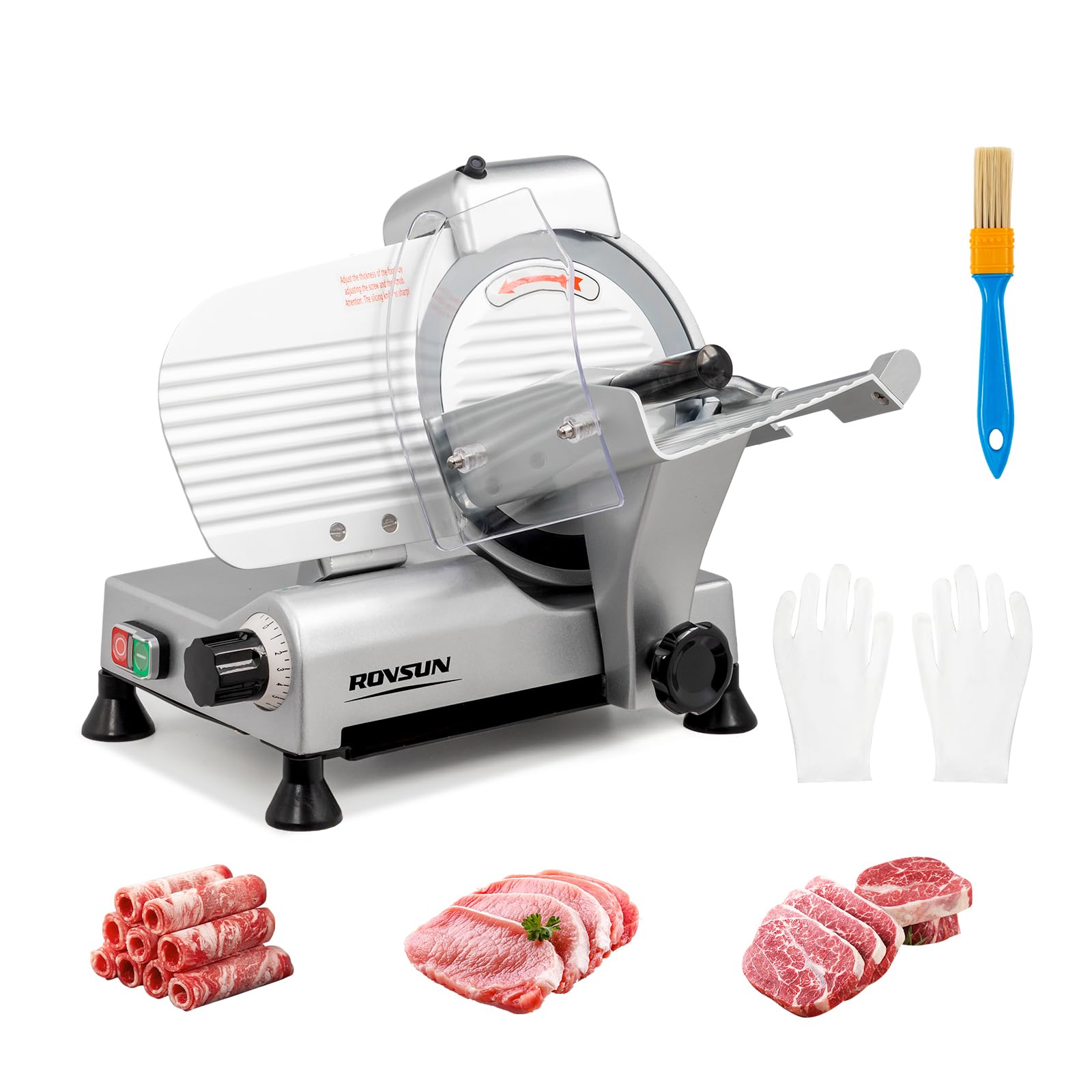
ROVSUN skips the home-grade compromises with a 210-watt all-copper high-speed motor and an 8-inch chromium-plated carbon steel blade that cuts 50 pieces of food per minute. This is the only machine on this list built to handle consistent use in a small deli, butcher shop, or serious home kitchen where volume matters. The 0-13mm thickness knob adjusts smoothly, and the built-in hidden sharpener lets you refresh the blade without disassembly, saving significant maintenance time.
The cast aluminum body weighs substantially more than any other unit reviewed here, which gives it the stability to handle frozen meats and large roasts without walking across the counter. The fixed transparent shield and included cut-resistant gloves show that ROVSUN takes safety seriously at this higher power level. Owners who make homemade bacon, brisket, and pork shoulder in large batches report that the 8-inch blade makes quick work of tasks that would overload a 7.5-inch home slicer.
The trade-off is a massive footprint — 26 inches tall and 19 inches wide means this slicer needs dedicated counter or cart space. Cleaning is more involved than smaller models, with more surface area to wipe down and a heavier blade to remove. For most home users the size and power are overkill, but for anyone who regularly processes whole primals or wants a machine that bridges home and light commercial use, the ROVSUN justifies its position with raw capability that smaller machines cannot match.
Why it’s great
- 210W high-speed motor handles frozen and heavy cuts
- 8-inch chromium-plated blade cuts 50 pieces per minute
- Built-in hidden sharpener for easy blade maintenance
Good to know
- Very large and heavy — needs dedicated counter space
- Cleaning is more involved due to size and weight
FAQ
How thick can a home meat slicer cut cheese without crumbling?
Can I slice frozen meat with a 200-watt home slicer?
How often should I sharpen the blade on a home meat slicer?
What is the difference between a serrated and a smooth blade on a meat slicer?
Final Thoughts: The Verdict
For most users, the meat slicer for home use winner is the Borlebbi 200W DC Motor Slicer because its quiet DC motor, dual stainless steel blades, and precise 0-15mm thickness control deliver consistent deli-quality cuts without the noise or bulk of commercial machines. If you want the trusted brand and extremely thin slicing range of a classic model, grab the Cuisinart FS-75. And for heavy-duty processing of large batches or semi-frozen primal cuts, nothing beats the ROVSUN 8-inch Commercial Slicer.