Breaking down a primal cut into steaks, trimming silver skin from a pork loin, or splitting a whole chicken for roasting demands a blade built for the task. A flimsy chef’s knife or a dull utility blade turns a 10-minute job into a frustrating fight, increasing the risk of slips and uneven cuts. The right tool is defined by its steel composition, edge geometry, and handle ergonomics—not just a sharp edge out of the box.
I’m Mohammad Maruf — the founder and writer behind AirfryerBite. I spend my days analyzing kitchen hardware specifications, comparing Rockwell hardness ratings across steel types, and testing edge retention claims against real-world cutting tasks to separate manufactured hype from legitimate performance.
For this guide, I’ve broken down the specs and user feedback for seven serious contenders to find the best meat cutting knife for different budgets and kitchen workflows.
How To Choose The Best Meat Cutting Knife
Three specifications separate a precision meat tool from a jack-of-all-trades kitchen knife: steel hardness, blade profile, and handle security. Ignore any of these and you risk a blade that dulls on a chicken thigh, binds on a pork butt, or slips in wet hands.
Steel Hardness and Edge Retention
The Rockwell hardness scale (HRC) tells you how well a blade holds its edge. Knives in the 56–58 HRC range are easier to sharpen and more forgiving of bone contact, making them a solid choice for butchery where you occasionally hit cartilage. Steel rated at 59–61 HRC keeps its razor edge longer but requires more care during sharpening and is less tolerant of lateral stress. High-carbon stainless steel offers better corrosion resistance than plain high-carbon steel, a critical factor when cutting raw proteins day after day.
Blade Profile and Weight Distribution
A meat cutting knife is not a vegetable slicer. Cleavers with a thick spine and flat profile are ideal for splitting joints and chopping through small bones. Curved breaking or cimeter blades excel at slicing through muscle groups and trimming fat without tearing. The balance point of the knife—where the blade meets the handle—determines fatigue during long sessions. A full tang design with multiple rivets ensures the blade won’t separate from the handle under heavy use.
Handle Material and Ergonomics
Wet hands and slippery proteins demand a non-slip grip. Pakkawood, rosewood, and textured thermoplastic rubber each provide different levels of traction and moisture resistance. Wood handles require hand washing and occasional oiling, while synthetic handles can handle more aggressive cleaning. An index finger hole or a contoured bolster gives you additional control when performing precision trimming or breaking down sub-primal cuts.
Quick Comparison
On smaller screens, swipe sideways to see the full table.
| Model | Category | Best For | Key Spec | Amazon |
|---|---|---|---|---|
| Huusk Upgraded Serbian Chef Knife | Full-Tang Cleaver | Heavy chopping & bone contact | 59–61 HRC, 13–15° edge | Amazon |
| PAUDIN 7-Inch Cleaver | Chinese Cleaver | Versatile kitchen slicing | 56+ HRC, 2.3 mm spine | Amazon |
| Huusk 3-Piece Butcher Set | 3-Piece Set | BBQ & outdoor versatility | High-carbon steel, rosewood handle | Amazon |
| Victorinox Fibrox 7-Inch Cleaver | Stamped Chinese Cleaver | Everyday dicing & smashing | Stainless steel, anti-slip Fibrox | Amazon |
| Henckels CLASSIC 6-Inch Meat Cleaver | Fully Forged Cleaver | Premium build & long-term durability | German stainless, forged construction | Amazon |
| Victorinox Curved Breaking Knife | Breaking Knife | Sub-primal breakdown & trimming | 10-inch blade, rosewood handle | Amazon |
| SYOKAMI 3-Piece Butcher Set | 3-Piece Set | Complete butchery & gifting | 56+ HRC, Wenge wood handle | Amazon |
In‑Depth Reviews
1. Huusk Upgraded Serbian Chef Knife
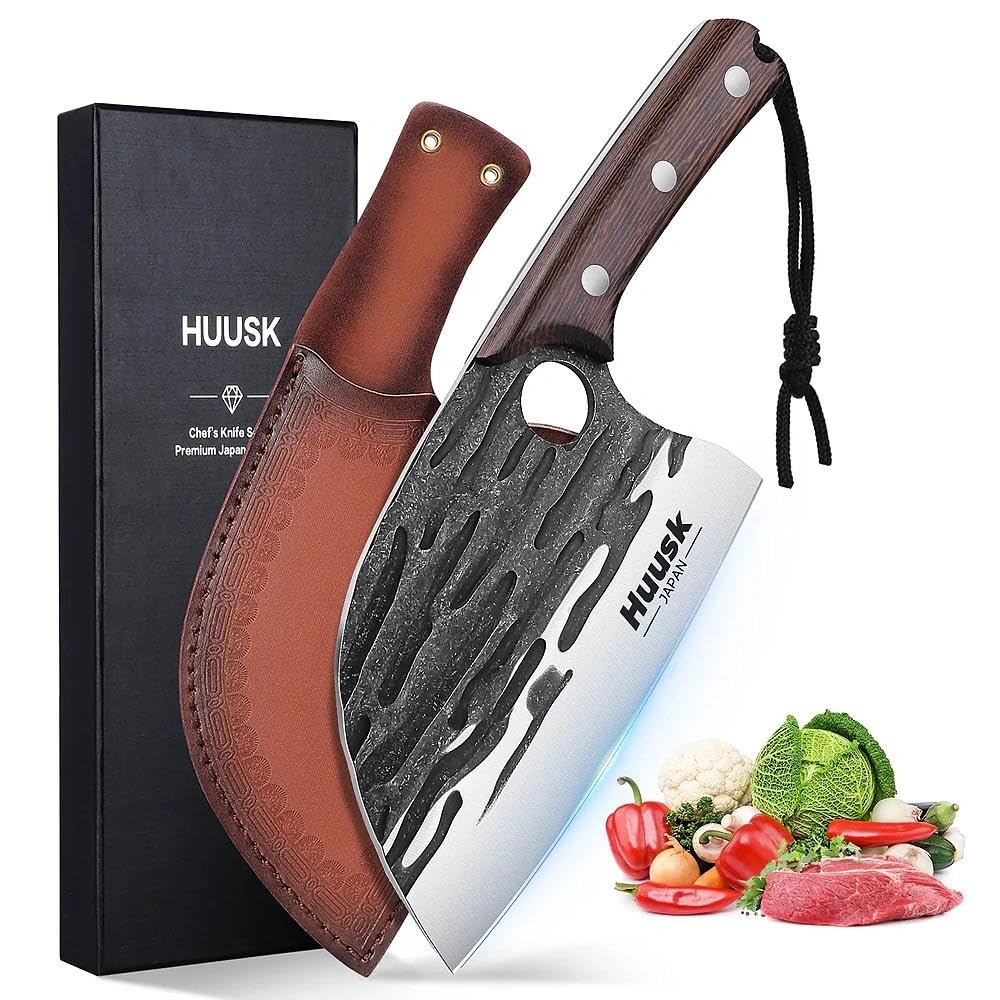
The Huusk Serbian Chef Knife hits a sweet spot between a Western cleaver and a Japanese gyuto. Forged from ATS-34 high-carbon steel hardened to 59–61 HRC, the blade is hand-sharpened to a 13–15 degree edge. This aggressive angle lets it glide through raw steaks and break down whole chickens with minimal resistance. The hammered blade finish serves a practical purpose beyond aesthetics—it creates small air pockets that reduce food stick during slicing.
The full tang oak handle is secured with three rivets and includes an index finger hole that provides extra leverage for heavy cuts. Multiple verified users with grip limitations specifically praised this design for improving safety and control. The included leather sheath and lanyard hole make this knife equally at home on a camp grill or in a professional kitchen.
Edge retention is the primary trade-off at this hardness level. Some users report needing to touch up the edge more frequently than expected, and the high-carbon steel requires immediate drying and occasional oiling to prevent discoloration. The blade is heavy and beefy, which helps power through joints but may feel cumbersome for rapid chopping.
Why it’s great
- Razor-sharp 13–15° edge cuts through meat like butter
- Index finger hole adds significant control for heavy cuts
- Full tang oak handle with leather sheath for portability
Good to know
- High-carbon steel needs thorough drying to avoid rust
- Edge retention is inconsistent, requiring more frequent sharpening
- Heavy build may feel overbuilt for light kitchen prep
2. PAUDIN Cleaver Knife, 7 Inch

PAUDIN’s 7-inch cleaver uses high-carbon stainless steel at 56+ HRC, striking a balance that prioritizes corrosion resistance and ease of sharpening over absolute edge hardness. The blade is ground to a 16-degree angle per side with a 2.3mm spine thickness, making it stiff enough for cutting through chicken cartilage without being so thick that it wedges in denser ingredients. Multiple long-term users reported that the edge held up well over six months of daily vegetable and meat prep.
The pakkawood handle is ergonomically shaped to reduce fatigue during extended use. Unlike raw wood, pakkawood is resin-stabilized, which makes it more resistant to moisture absorption than traditional wooden handles. The generous blade width doubles as a bench scraper for transferring chopped ingredients from the board to the pan—a classic Chinese cleaver trait that adds utility beyond pure meat work.
Balance is the main compromise at this price tier. Several users noted that the handle is noticeably heavier than the blade, creating a rear-heavy feel that requires adjustment during rocking cuts. The knife also lacks the distal taper found on higher-end cleavers, meaning the blade thickness stays consistent from heel to tip rather than thinning toward the point for finer work.
Why it’s great
- High-carbon stainless steel resists rust better than raw carbon steel
- Pakkawood handle resists moisture and stays comfortable during long prep
- Wide blade works as both meat cutter and vegetable chopper
Good to know
- Handle-heavy balance requires getting used to
- Not ideal for chopping through thick bones
- Lacks distal taper for precision tip work
3. Huusk Butcher Knife Set 3-Piece

The Huusk 3-piece set covers the three essential profiles for serious meat work: a Serbian chef knife for heavy chopping and bone splitting, a butcher cleaver for precise cuts through vegetables and fish fillets, and a Viking-style knife for carving and sinew removal. Each blade is forged from high-carbon steel and hand-finished, with a reported sharpness that cuts through printer paper on contact. The set earned strong scores from multiple verified buyers, including a professional chef who rated them as the best knives he had used in years.
Rosewood handles with full tang construction and three rivets provide a warm, secure grip that improves with moisture. The natural wood grain varies between knives, giving each piece a unique appearance. The knives are substantial in hand—deliberately heavy to help the blade carry through cuts with less wrist effort. This set is specifically tailored for BBQ and outdoor cooking where you need quick transitions between trimming, slicing, and chopping.
High-carbon steel demands maintenance. All three knives must be hand washed and dried immediately to prevent discoloration. The set also lacks a storage block or sheath for the smaller blades, so you will need to source your own magnetic strip or knife roll. Some users noted that the decorative leather cord on the handle tang can get in the way during use.
Why it’s great
- Three dedicated profiles cover all meat cutting tasks
- Rosewood handles provide excellent grip when wet
- Heavy blade weight helps power through bone and gristle
Good to know
- High-carbon steel requires diligent drying and oiling
- No storage block or individual blade guards included
- Leather cord on handle may need to be removed
4. Victorinox Fibrox 7 Inch Cleaver

Victorinox built their reputation on Swiss Army knives, and the Fibrox 7-inch cleaver carries that same utilitarian DNA. The blade is stamped from stainless steel rather than forged, which keeps the weight manageable and the price accessible. The straight edge and flat profile make this cleaver excellent for dicing vegetables, smashing garlic, and scooping ingredients off the cutting board. Multiple users reported that it could replace both a chef’s knife and a vegetable cleaver in a home kitchen.
The Fibrox handle is the standout feature here. The textured thermoplastic rubber provides a secure grip even when covered in fat or juices, and the material is dishwasher safe—a rare convenience in a category dominated by wood-handled knives. The blade is thin enough for precision slicing but carries enough weight for light bone work, though users consistently warn against attempting pork or duck leg bones.
The stainless steel edge rolls more easily than higher-hardness carbon steel blades. Several users reported that the edge dulled after cutting through chicken thigh bones, though it was easily restored with a honing rod. The lack of a full tang and the stamped construction mean this knife will not outlast a forged cleaver under daily professional use, but for home cooks processing whole chickens and vegetables, it delivers consistent performance.
Why it’s great
- Dishwasher-safe Fibrox handle provides excellent wet grip
- Flat blade doubles as a bench scraper for easy cleanup
- Light weight reduces fatigue during long prep sessions
Good to know
- Not designed for heavy bone chopping
- Stamped blade rolls edge on hard cartilage
- Must dry immediately to prevent water spots on stainless
5. Henckels CLASSIC 6-inch Meat Cleaver

Henckels CLASSIC series is a benchmark in the forged knife category. Made in Spain from German stainless steel, the 6-inch cleaver is fully forged with a satin-finished blade that tapers from a thick spine to a precision-honed edge. The weight is perfectly distributed—heavy enough to crush garlic and split poultry joints, yet balanced enough for controlled dicing. Users consistently describe it as light and nimble, which is uncommon for a cleaver.
The triple-rivet handle is ergonomically shaped and slightly weighted to counterbalance the blade. The stainless steel handle construction differs from the wood and synthetic handles on other knives in this guide, offering a seamless transition from blade to handle that prevents food and moisture from getting trapped. Multiple users confirmed that this knife can handle frozen foods and pork ribs without losing its edge, a testament to the heat treatment quality.
The 6-inch blade length is shorter than most Western cleavers, which may feel limiting when slicing through large roasts or wide squash. Sharpening is also more challenging due to the curved bolster, requiring either a tapered sharpening rod or professional service. The price is a significant step up from stamped alternatives, and the stainless handle can feel slick when coated in fat.
Why it’s great
- Fully forged German stainless steel for long-term durability
- Perfect weight balance for both crushing and slicing
- Lifetime warranty against manufacturer defects
Good to know
- 6-inch blade is shorter than many cleavers
- Sharpening requires tapered rod due to bolster design
- Stainless handle can be slippery when wet
6. Victorinox Curved Breaking Knife

Breaking down sub-primal cuts requires a long, curved blade that can slice through muscle groups in one smooth draw cut. The Victorinox 10-inch curved breaking knife is purpose-built for this task. The stamped stainless steel blade is thin and flexible enough to follow the natural contours of a pork loin or ribeye, producing clean steaks without the sawing motion that tears meat fibers. The rosewood handle provides a warm, secure grip that improves with handling.
Victorinox rosewood knives are a staple among butchers and meat processors for a reason: the edge geometry and heat treatment deliver reliable sharpness that is easy to restore with a steel. The 10-inch length gives you the reach needed to break down full rib sections and large roasts while maintaining control. Users pairing this knife with the Victorinox 6-inch boning knife report that the combination handles everything from initial breakdown to final cleanup.
The rosewood handle is not dishwasher safe and requires hand washing and periodic oiling to prevent cracking. The stamped construction, while adequate for home and light commercial use, lacks the heft of a forged cimeter knife. Some users may find the 10-inch blade intimidating for smaller hands, and the knife does not include a protective sheath or guard.
Why it’s great
- Long curved blade makes smooth draw cuts through muscle groups
- Rosewood handle provides excellent grip and comfort
- Easy to sharpen and maintain with standard honing steel
Good to know
- Rosewood requires hand washing and occasional oiling
- Stamped construction lighter than forged alternatives
- No sheath included for storage
7. SYOKAMI Butcher Knife Set 3-Piece
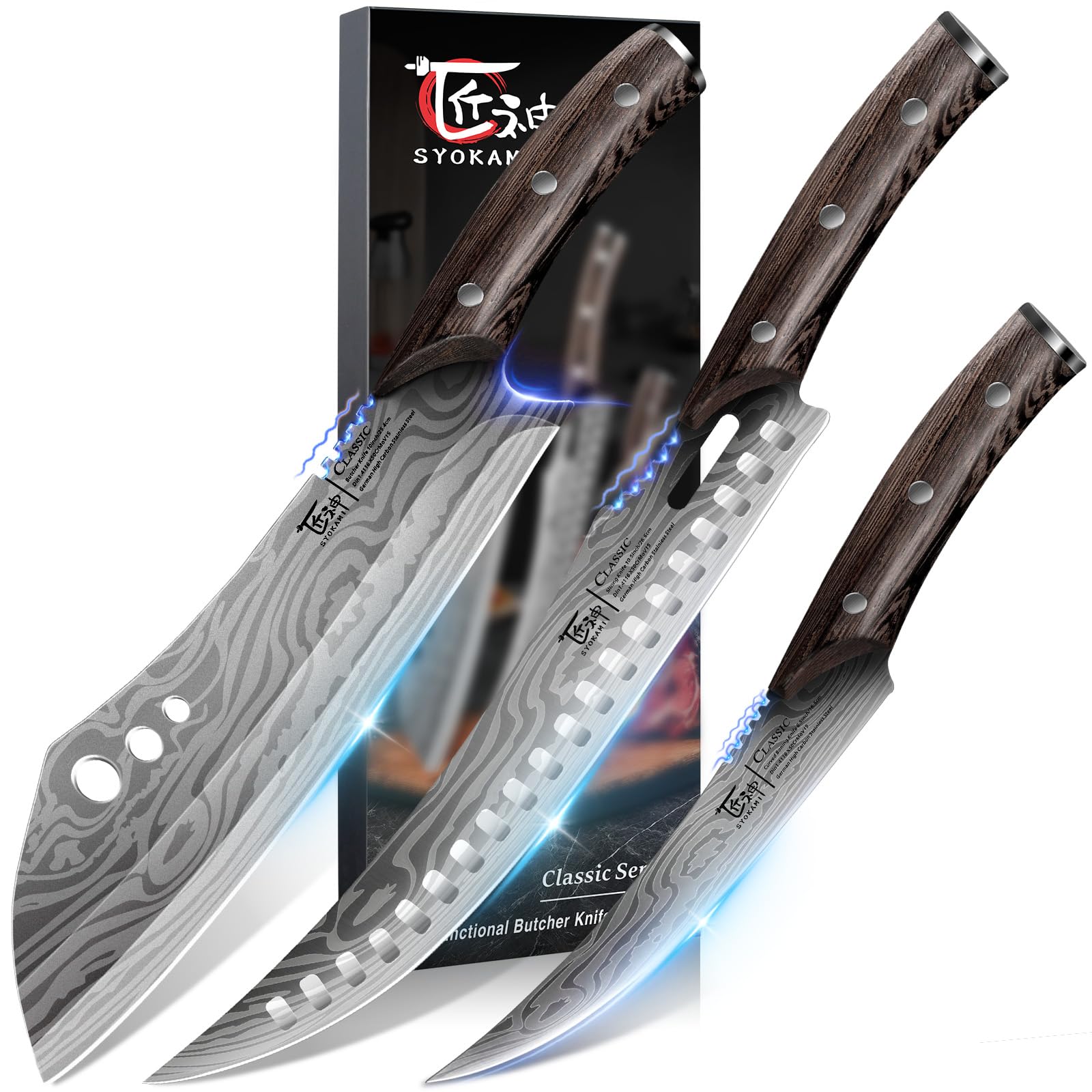
SYOKAMI designed their 3-piece set around the principle that a dedicated knife for each task outperforms any multi-purpose blade. The set includes a 10-inch butcher knife with a cleaver-style profile, a 10.5-inch curved carving knife, and a 6.5-inch curved boning knife. Each blade is forged from high-carbon stainless steel hardened to 56+ HRC, with a hand-polished edge. The boning knife features 20 degrees of flex, optimized for separating meat from bone without breaking under pressure.
The handle material is FSC-certified Wenge wood, a dense African hardwood with a naturally textured grain that provides excellent grip safety. The SYOKAMI designers added gear teeth to the handle contour for additional non-slip security. The triple-rivet full tang construction ensures the blades will not separate from the handles even under the stress of breaking down large primal cuts. A retired professional meat cutter specifically praised the hollow-ground carving knife for its spectacular slicing performance.
The faux-Damascus aesthetic finish on the blades is cosmetic rather than structural, and the large butcher knife lacks a bullnose tip, which can cause the point to snag on cutting boards during rocking cuts. The angled bolster on the chef-style blade may feel awkward to some users during sharpening. The set is priced at a premium that reflects the quality of materials and design, but represents strong value compared to established German brands.
Why it’s great
- Three dedicated blades with specific geometries for butchery
- Wenge wood handle with gear teeth provides exceptional grip
- 20° flex boning knife balances control and flexibility
Good to know
- Faux-Damascus finish is cosmetic only
- Large knife lacks bullnose tip, may snag on board
- Angled bolster can complicate sharpening
FAQ
Is a high Rockwell hardness always better for a meat cutting knife?
Can I use a meat cleaver for cutting vegetables?
How often should I sharpen a high-carbon steel meat knife?
What is the difference between a breaking knife and a cleaver?
Final Thoughts: The Verdict
For most users, the best meat cutting knife winner is the Huusk Upgraded Serbian Chef Knife because it combines a high-hardness 59–61 HRC carbon steel edge with a full tang oak handle and index finger hole for superior control during heavy chopping and slicing. If you want a versatile all-rounder that also handles vegetables and resists corrosion better, grab the PAUDIN 7-Inch Cleaver. And for breaking down whole sub-primal cuts with professional precision, nothing beats the Victorinox Curved Breaking Knife.