Chopping through poultry ribs, beef knuckles, or frozen pork chops with a standard chef’s knife is a recipe for a rolled edge and a trip to the ER. A proper bone cleaver is built with a thick, heavy blade and a high Rockwell hardness rating to absorb the impact of splitting bone without chipping or transferring jarring shock to your wrist. The difference between a frustrating hack job and a clean, confident split comes down to blade geometry, steel composition, and handle ergonomics — three variables that most home cooks overlook until it’s too late.
I’m Mohammad Maruf — the founder and writer behind AirfryerBite. I’ve spent years analyzing the material science behind kitchen cutlery, specifically the interplay between edge retention and impact resistance in high-carbon stainless steel blades designed for bone work.
This guide breaks down the specific steel grades, handle materials, and blade thicknesses that separate a true bone splitter from a glorified vegetable chopper, helping you identify the best meat cleaver for cutting bone for your kitchen volume and cutting style.
How To Choose The Best Meat Cleaver For Cutting Bone
Not every knife marketed as a “cleaver” can handle the repeated impact of bone splitting. Three factors determine whether a cleaver will crack a chicken leg in one swing or bounce off and chip its edge. Focus on steel hardness, blade geometry, and handle security.
Steel Hardness and Composition
Bone cleavers require a Rockwell hardness rating between HRC 56 and 60. Softer steel rolls under impact, while overly hard steel (above HRC 62) chips on dense bone. High-carbon stainless alloys like 7Cr17MoV or 7Cr18MoV strike the right balance — they hold a sharp edge while absorbing shock without fracturing. Look for explicit HRC ratings in the product specs; vague “high-carbon steel” claims are not enough.
Blade Thickness and Weight
A bone-cleaving blade should measure at least 4 mm thick at the spine and weigh between 1.3 and 2 pounds. Thin blades wedge into bone and get stuck; thick blades split through with momentum. The heft drives the cut, not your arm strength. Heavier cleavers (over 1.8 lbs) handle frozen meat and large joints better but fatigue the wrist faster during prolonged use.
Handle Construction and Material
Full-tang construction — where the steel extends through the entire handle — is non-negotiable for impact tasks. The handle material must absorb moisture and provide a non-slip grip even when wet. Pear wood, Pakkawood, and textured thermoplastic rubber outperform smooth stainless or polished wood. Avoid hollow-handled cleavers; they fail under repeated bone strikes.
Quick Comparison
On smaller screens, swipe sideways to see the full table.
| Model | Category | Best For | Key Spec | Amazon |
|---|---|---|---|---|
| MAD SHARK 7.5″ | Premium | Heavy bone splitting | 7.5 in / 1.3 lb / Military-grade composite steel | Amazon |
| Victorinox Fibrox 7″ | Premium | Versatile daily use | 7.1 in / Thermo handle / Swiss stainless | Amazon |
| Henckels CLASSIC 6″ | Premium | Forged precision | 6 in / 0.9 lb / German forged steel | Amazon |
| BLADESMITH 6.3″ | Mid-Range | Budget-friendly bone chopping | 6.3 in / 7Cr17MoV / Pear wood handle | Amazon |
| Kitory 6.3″ Axe | Mid-Range | Big bone & frozen meat | 6.3 in / 1.83 lb / 7Cr18MoV / Pakkawood | Amazon |
| Golden Bird 9.5″ | Mid-Range | Stylish multi-purpose | 9.5 in / High carbon steel / Tiger pattern | Amazon |
| Lamson 7.25″ Walnut | Premium | Medium-heavy domestic tasks | 7.25 in / 14.4 oz / High-carbon stainless | Amazon |
In‑Depth Reviews
1. MAD SHARK 7.5″ Meat Cleaver
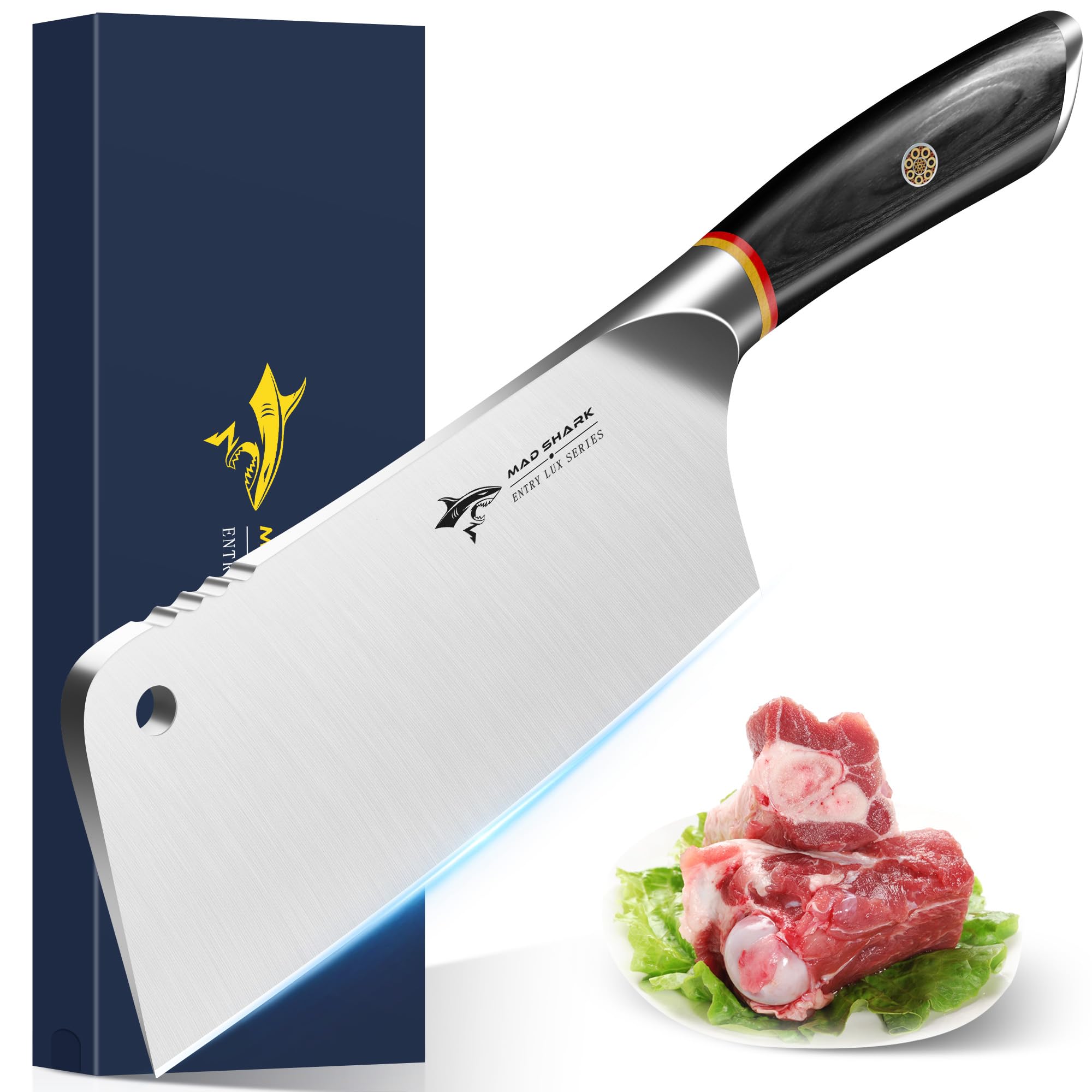
The MAD SHARK is the heaviest hitter in this lineup, built with a military-grade german composite steel that includes molybdenum and cobalt for edge toughness at high impact. The 7.5-inch blade is long enough to split a turkey breast in one pass, and the 1.3-pound weight provides momentum without exhausting your forearm during a full butchering session. The full-tang ebony wood handle is carved with brass rivets that improve grip security under wet, slippery conditions.
This cleaver excels at hacking through beef knuckles and pork shoulder bones, tasks that would roll a thinner blade immediately. The factory edge is aggressive enough to break down a chicken carcass out of the box, though some reviewers noted the edge required a quick touch-up on a fine stone to reach peak sharpness. At this price point, the composite steel formulation is genuinely unique — most competitors in the same tier use simpler 7Cr series alloys.
If you regularly break down whole birds or work with bone-in roasts, the MAD SHARK justifies its position at the top of the list. The packaging doubles as a gift box, which adds perceived value, but the real draw is the proprietary steel blend that delivers premium-level impact resistance at a mid-range price.
Why it’s great
- Military-grade composite steel resists chipping on dense bone
- Full-tang ebony handle with brass rivets stays secure when wet
- Long 7.5-inch blade handles large cuts in fewer swings
Good to know
- Edge may need a quick honing out of the box for peak sharpness
- Not dishwasher safe; requires hand washing and drying
- Ebony handle can feel heavy for users with smaller hands
2. Victorinox Fibrox 7″ Swiss Cleaver

Victorinox brings its legendary Fibrox handle to a Swiss-made cleaver that balances daily versatility with bone-capable heft. The 7.1-inch stainless steel blade is stamped rather than forged, but the steel composition and heat treatment deliver consistent edge retention at a weight that makes extended chopping sessions fatigue-free. The thermoplastic rubber handle is the standout feature — it provides a secure, non-slip grip even when your hands are coated in fat and juices, and the entire knife is dishwasher safe for easy cleanup.
This cleaver handles chicken leg quarters, pork chops, and duck joints cleanly, but it is not designed for repeated strikes on beef femur or frozen blocks. The thinner blade profile means it excels as a Chinese-style chef’s knife for slicing and dicing vegetables when you are not breaking down meat. America’s Test Kitchen has long recommended the Fibrox line for culinary students for this exact reason — one knife covering multiple stations without feeling like a compromise on either end.
For the home cook who wants a single cleaver that splits poultry bones in the morning and preps vegetables for dinner, the Victorinox Fibrox is the smartest dollar spent on this list. The trade-off is that heavy bone work will require more passes compared to a dedicated thick-spine cleaver like the MAD SHARK.
Why it’s great
- Dishwasher-safe construction for effortless cleanup
- Fibrox handle offers superior grip in wet, slippery conditions
- Versatile blade works for both bone cutting and vegetable prep
Good to know
- Stamped blade is thinner than forged competitors; not for heavy beef bone
- Requires immediate drying to prevent water spots on the stainless steel
- Heavier than a typical chef’s knife; beginners may find it cumbersome
3. Henckels CLASSIC 6″ Meat Cleaver

The Henckels CLASSIC is the precision instrument of this group. Fully forged from high-carbon German stainless steel, this 6-inch cleaver offers a blade that is both sharp and durable enough to slice through a turkey joint with minimal effort. The satin-finished edge is honed to a fine angle that slices cleanly through cartilage without the wedging effect common on thicker cleavers. The triple-rivet handle is seamlessly integrated into the forged bolster, providing a balanced feel that makes the 0.9-pound weight feel lighter than it is.
This cleaver is not built for heavy bone splitting — it is designed for controlled cuts through poultry, fish frames, and pork ribs. Reviewers consistently praise its ability to crush garlic cloves flat with the side of the blade and then pivot into precise dicing without switching tools. The forged transition from blade to handle eliminates the weak point where stamped knives often fail under lateral stress.
If you value craftsmanship and a blade that holds its edge through months of daily use, the Henckels CLASSIC justifies the higher ticket. It is also dishwasher safe, though hand washing is recommended to preserve the satin finish. This cleaver is best suited for cooks who break down proteins regularly but do not need a 2-pound axe for the job.
Why it’s great
- Fully forged German steel with satin finish for long-lasting sharpness
- Ergonomic triple-rivet handle provides excellent balance and comfort
- Precision edge handles cartilage and ribs without wedging
Good to know
- Lightweight design is not ideal for heavy bone splitting tasks
- Sharpening requires more effort due to the forged steel’s density
- Dishwasher safe but hand washing recommended to preserve finish
4. Lamson 7.25″ Heavy Duty Cleaver
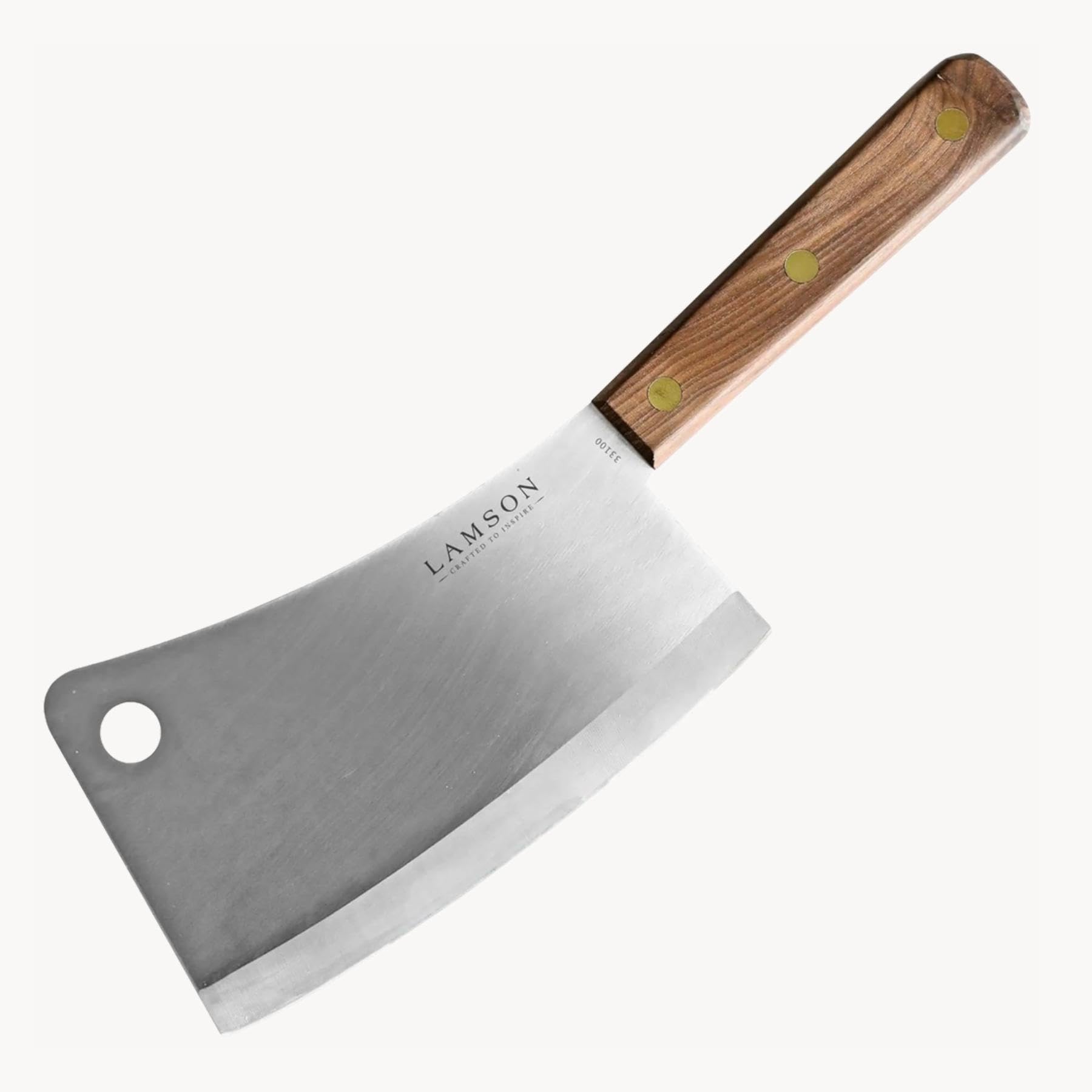
Lamson offers an American-made cleaver that strikes a careful compromise between bone-splitting mass and everyday usability. The 7.25-inch blade is thick enough to handle fish heads, chicken quarters, and semi-frozen cuts without wedging, yet light enough at 14.4 ounces to avoid wrist fatigue during longer prep sessions. The walnut handle with brass rivets brings a classic butcher aesthetic that stands out against the all-black designs dominating the category.
This cleaver was named a “Best Buy” by America’s Test Kitchen for its ability to cut through turkey necks and rabbit legs cleanly without the excessive weight of a 2-pound axe. The high-carbon stainless steel holds an edge well with regular honing, but the blade is not designed for impact on hard beef bones — the thinner grind that makes it maneuverable also limits its maximum impact threshold. The walnut handle requires hand washing and periodic mineral oil treatment to prevent drying and cracking.
For home cooks who want one cleaver for weekly protein prep and the occasional heavy task, the Lamson delivers a premium feel at a mid-range price. The USA origin and wood handle give it a heirloom quality that most budget cleavers cannot match.
Why it’s great
- Balanced weight suitable for both heavy and daily cutting tasks
- USA-made with high-quality walnut handle and brass rivets
- Thick enough for bone work without the bulk of a 2-pound cleaver
Good to know
- Wood handle requires hand washing and periodic oiling
- Not designed for repeated strikes on hard beef bones
- Some users find the walnut handle rough texture out of the box
5. BLADESMITH 6.3″ Meat Cleaver

The BLADESMITH cleaver delivers the highest HRC rating in the budget tier at 58-60 HRC from 7Cr17MoV steel. This means it can maintain a sharp edge through repeated bone strikes without the rapid dulling that plagues softer budget cleavers. The pear wood handle is a thoughtful choice for butchers — it absorbs oils from your hands over time, creating a naturally grippy surface that actually improves corrosion resistance as it ages. The axe-like profile is thick enough to smash chicken bones with the spine when needed.
This cleaver works best on poultry, rib bones, and small to medium joints. The 6.3-inch blade length is shorter than the MAD SHARK or Victorinox, which limits its reach on larger cuts but improves control for precise splitting. Some reviewers noted that the factory edge was not razor-sharp out of the box and required a quick session on a sharpening stone to reach full potential, but once dialed in, the edge retention is impressive for the price bracket.
If you are on a tight budget and need a dedicated bone cleaver for weekend butchery projects, the BLADESMITH offers the best steel-to-dollar ratio in this guide. Skip it if you want a do-it-all knife for vegetables and fine slicing — this is a single-task tool built for impact.
Why it’s great
- High HRC 58-60 rating from 7Cr17MoV steel for edge retention
- Pear wood handle absorbs oils to improve grip over time
- Excellent value for a dedicated bone-splitting tool
Good to know
- Factory edge may require sharpening before first use
- Shorter blade limits reach on large roasts or whole turkeys
- Not suitable for vegetable slicing or fine prep work
6. Kitory 6.3″ Axe Meat Cleaver

The Kitory is the heaviest cleaver on this list at 1.83 pounds, and that mass translates directly into splitting power. Forged from 7Cr18MoV steel with a traditional quenching process that increases hardness threefold compared to untreated steel, this cleaver is designed specifically for big beef bones and frozen meat. The axe-shaped blade profile channels all the weight into the cutting edge, allowing gravity and momentum to do the work rather than arm strength.
The Pakkawood handle is triple-riveted and full-tang, providing a stable platform that does not shift in your grip during impact. This cleaver is not suitable for fine work — you will not be mincing garlic or slicing tomatoes with it. Its purpose is singular: split bone cleanly, fast, and repeatedly. Customer reviews consistently report that it cuts through chicken and pork bones “like butter” and handles frozen cuts that would stop a standard cleaver cold.
If your kitchen routine involves breaking down whole animals, processing large volumes of bone-in meat, or dealing with frozen inventory, the Kitory is the right tool. The trade-off is significant wrist fatigue during extended use and a learning curve to control the heavy blade safely.
Why it’s great
- Heaviest build in this guide provides maximum splitting momentum
- 7Cr18MoV steel with quenching process for enhanced impact resistance
- Pakkawood handle with triple rivets stays secure under heavy strikes
Good to know
- Weight causes wrist fatigue during prolonged cutting sessions
- Not designed for precision or fine kitchen tasks
- Some users report the factory edge is blunt and requires sharpening
7. Golden Bird 9.5″ Tiger Cleaver
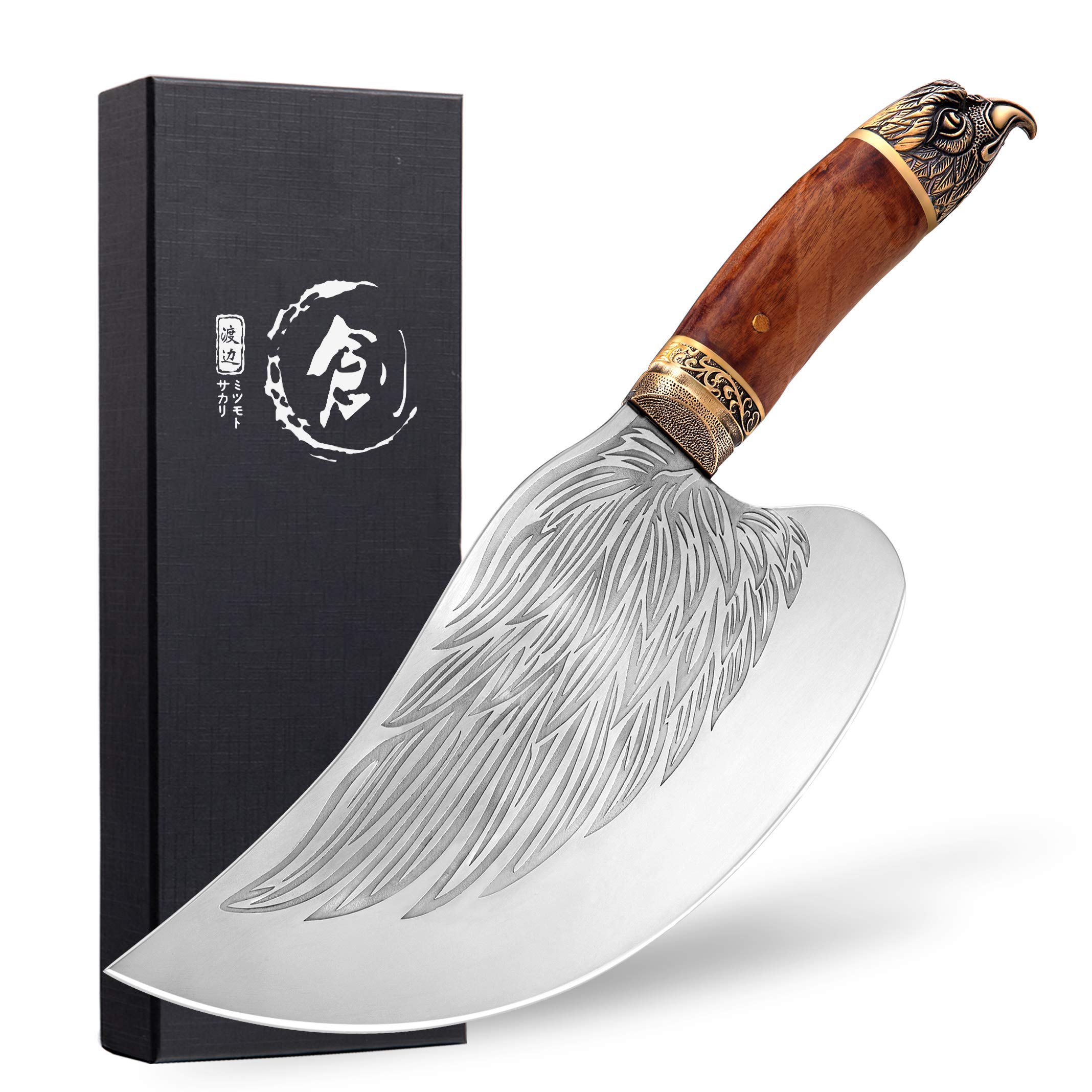
The Golden Bird cleaver stands out visually with its etched tiger pattern on a high-carbon steel blade and a brass tiger-tail butt on the solid rosewood handle. The blade is heat-treated for hardness and undergoes multiple hand-grinding passes to achieve a 16-degree double bevel edge. This cleaver is designed for versatility — it can handle small chicken bones, meat filleting, and vegetable dicing, making it a more flexible option than the single-purpose bone splitters on this list.
The 9.5-inch blade is the longest in this guide, which provides excellent leverage for slicing through large cuts of meat, but the extended length reduces the cleaver’s effectiveness on dense bone. The high-carbon steel requires diligent maintenance — hand washing and immediate drying are mandatory, and periodic oiling is recommended to prevent rust. The rosewood handle is beautiful but smooth; users with wet hands may find the grip less secure than textured rubber or oil-absorbing pear wood.
The Golden Bird is best for the cook who wants a showpiece cleaver that performs well across a range of kitchen tasks without specializing in heavy bone splitting. If your primary need is splitting beef knuckles, look elsewhere. If you want a knife that looks gorgeous on a magnetic strip and handles weekend roasts and daily veg prep, this is a strong contender.
Why it’s great
- Beautiful tiger-etched pattern and brass fittings for visual appeal
- Versatile 16-degree bevel handles meat, fish, and vegetables
- Long 9.5-inch blade provides excellent leverage for slicing
Good to know
- High-carbon steel requires careful maintenance to prevent rust
- Rosewood handle is smooth and may slip when wet
- Not designed for heavy or repeated bone splitting tasks
FAQ
Can I use a meat cleaver to cut through frozen bone?
What is the difference between a Chinese cleaver and a Western meat cleaver?
How do I maintain a carbon steel bone cleaver to prevent rust?
What size meat cleaver is best for splitting chicken bones?
Final Thoughts: The Verdict
For most users, the best meat cleaver for cutting bone winner is the MAD SHARK 7.5″ Pro because its military-grade composite steel and 1.3-pound weight deliver clean splits through beef and pork bone without chipping. If you want a versatile daily driver that transitions seamlessly from poultry to vegetables, grab the Victorinox Fibrox 7″. And for heavy-duty splitting of frozen meat and large beef bones, nothing beats the Kitory 6.3″ Axe Cleaver.