The difference between a vibrant, creamy matcha latte and a murky, bitter sip comes down to the origin, harvest, and grind of the powder you choose. A single scoop of finely stone-ground Japanese green tea can deliver steady focus and deep umami, while a poorly processed alternative often brings only astringency and disappointment.
I’m Mohammad Maruf — the founder and writer behind AirfryerBite. I’ve spent years analyzing the specific harvest seasons, cultivar blends, and stone-grinding methods that define quality in matcha, helping buyers navigate the crowded shelf of ceremonial and culinary grades.
This guide compares first-harvest ceremonial tins with budget-friendly culinary pouches, breaking down what terms like “single origin” and “first flush” actually mean for your cup. Whether you are whisking a traditional tea or blending a latte, understanding these details helps you find the best matcha powder for your taste and routine.
How To Choose The Best Matcha Powder
Matcha is not a single product. A culinary-grade powder meant for baking behaves entirely differently than a ceremonial-grade tin meant for drinking straight. Knowing the harvest, the grind, and the intended use is the only way to match the right package to your daily routine.
Ceremonial vs. Culinary Grade
Ceremonial grade uses the youngest, most tender leaves from the first harvest. The powder is stone-ground to a fine consistency that dissolves smoothly without clumps and delivers a naturally sweet, grassy, umami-rich flavor with zero bitterness. Culinary grade, often from later harvests or blended leaves, has a stronger, more astringent taste ideal for baking, smoothies, and lattes where milk or sugar balances the profile. Do not use a cheap culinary powder for a traditional usucha — the bitterness will dominate. Conversely, do not waste a premium ceremonial tin in a muffin batter where its delicate notes get lost.
Harvest Season and Origin
First harvest (first flush) leaves are packed with L-theanine, the amino acid responsible for umami and a calm energy lift. These leaves are shaded longer, which boosts chlorophyll and produces the signature vibrant green color. Later harvests contain less L-theanine and more catechins, which contribute bitterness. Genuine Japanese matcha from Uji, Kyoto, or Kagoshima carries terroir that influences the flavor — expect a fuller, rounder taste compared to mass-produced alternatives from other regions.
Grind Quality and Freshness
Authentic stone grinding uses granite mills to slowly crush the dried tencha leaves into a powder fine enough to suspend seamlessly in water. The friction heat stays low, preserving volatile aromatics and antioxidants. A resealable tin or pouch protects the powder from light, moisture, and oxygen. Once opened, use matcha within 30 to 60 days for peak vibrance — storing it in the refrigerator after opening extends its life and keeps the green hue bright.
Quick Comparison
On smaller screens, swipe sideways to see the full table.
| Model | Category | Best For | Key Spec | Amazon |
|---|---|---|---|---|
| Matcha Moon Pure Zen | Ceremonial | Traditional tea ceremony | 30g tin, first harvest, Uji Kyoto | Amazon |
| Naturebell Organic Matcha | Culinary | Baking and daily lattes | 454g (1 lb) pouch, unsweetened | Amazon |
| Midori Spring Gold No.2 | Ceremonial | Nutty flavor lovers | 5-cultivar blend, roasted tencha | Amazon |
| Jade Leaf Culinary Matcha | Culinary | Versatile everyday use | 100g resealable pouch | Amazon |
| FKRO Tea Master’s Ceremonial | Ceremonial | Single-origin purity | 30g tin, monthly fresh from Japan | Amazon |
In-Depth Reviews
1. Matcha Moon Pure Zen Ceremonial Grade Matcha Powder
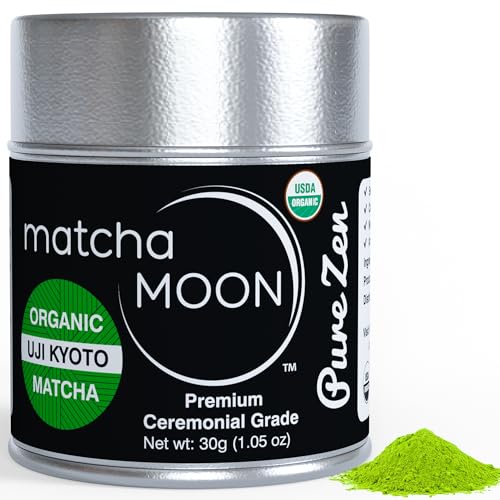
This 30g tin from Uji, Kyoto delivers the hallmark of authentic ceremonial matcha: a naturally sweet, umami-rich profile with a velvety finish that contains zero bitterness even when whisked with hot water alone. The first-harvest leaves are stone-ground to a fine powder that creates consistent micro-foam during preparation — a sign of proper particle size and freshness.
Customer reports consistently mention smoothness and non-bitter taste as the standout traits, with several noting it works equally well for traditional ceremony or a simple daily cup. The darker green hue and delicate grassy aroma confirm the careful shading and slow grinding process typical of premium ceremonial production.
Consider that the 30g tin is a smaller quantity relative to culinary pouches, so heavy daily users may find themselves reordering frequently. That said, the quality-to-budget ratio is strong for a true first-harvest ceremonial powder, making it a reliable entry point for anyone serious about drinking matcha straight.
Why it’s great
- Smooth, buttery finish with no bitterness
- Consistent micro-foam when whisked
- USDA certified organic from Uji, Kyoto
Good to know
- Small 30g tin requires frequent reordering
- Premium price per gram compared to bulk options
2. Naturebell Organic Matcha Green Tea Powder (1 Pound)
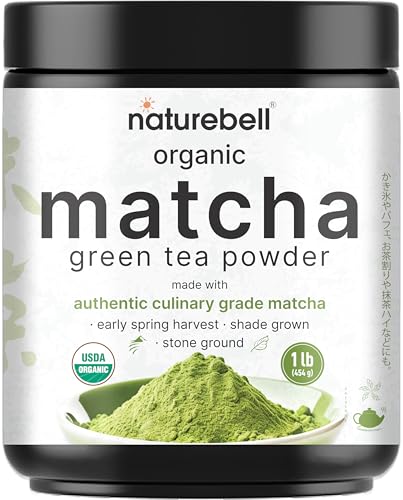
At a full pound (454g), this culinary-grade option is built for heavy daily use — baking, smoothies, lattes, and home-café creations where volume matters more than ceremonial finesse. The unsweetened powder comes from early spring leaf harvest and is third-party lab tested for purity, with no GMOs, gluten, soy, or dairy.
Reviewers consistently describe a bright green color, intense flavor, and a fine texture that dissolves easily with a frother. Several compare it favorably to other budget-friendly brands, noting less bitterness and a richer taste that makes sweetener optional. It performs well in ice cream bases, latte blends, and muffin batters.
Because this is culinary grade (C rank), the flavor profile is bolder and more astringent than ceremonial options. Drinking it straight with hot water may deliver more bite than a ceremonial powder, but mixed with milk or sweetener it holds its own beautifully. The large pouch demands proper storage — keep it sealed and refrigerated after opening to preserve freshness.
Why it’s great
- Massive 1-pound supply for frequent use
- Bright color and robust flavor with low bitterness
- Third-party tested, allergen-free
Good to know
- Culinary grade, not ideal for straight ceremonial drinking
- Requires refrigeration after opening for freshness
3. Midori Spring Gold No.2 Ceremonial Grade Matcha
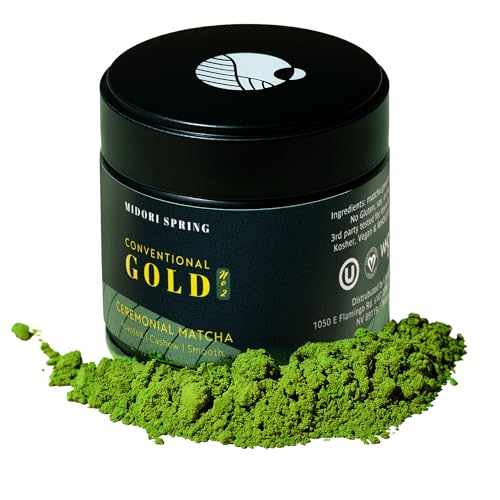
What sets this ceremonial-grade tin apart is its unique roasted flavor profile — longer roasted tencha from first-harvest young leaves produces a nutty, toasty, almost chestnut-like taste with noticeable umami but significantly less floral character than typical matcha. The 5-cultivar blend (Okumidori, Samidori, Kanayamidori, Yabukita, Sayamakaori) creates a complex, full-bodied cup.
Buyers consistently mention the smooth, creamy mouthfeel and minimal astringency, with several switching from other premium brands because this blend offers sharper mental clarity without jitters. The powder mixes easily and foams well for lattes. It is also vegan and kosher certified, with third-party lab testing for metals and toxins.
The roasted approach makes this an outlier — lovers of traditional floral, grassy matcha may find the nuttiness unexpected. It suits cold-brew preparation and pairs beautifully with oat or coconut milk. For those who find standard matcha too vegetal, this profile provides an approachable bridge into ceremonial quality.
Why it’s great
- Unique nutty, toasty flavor profile
- Exceptionally smooth with high umami
- Third-party lab tested for purity
Good to know
- Roasted flavor may not suit traditional matcha purists
- Small tin, premium cost per serving
4. Jade Leaf Matcha Organic Culinary Grade Matcha Powder

Jade Leaf’s 100g resealable pouch spans the gap between ceremonial aspirations and practical daily consumption. Sourced from Uji and Kagoshima, this culinary-grade powder uses first-harvest tea leaves but blends them to a bolder profile suited for lattes, smoothies, and baking. Each half-teaspoon serving contains roughly 16–24mg of caffeine — about a quarter of a coffee cup — with L-theanine for calm alertness.
Reviewers consistently praise the vibrant green color, smooth mixability, and lack of the bitter aftertaste commonly found in café-grade matcha. Many use it exclusively for lattes, noting that it dissolves cleanly with a whisk or frother and produces a rich, creamy drink. The pouch yields about 50 lattes at a lower per-cup cost than coffee shop alternatives.
Storage discipline matters here — the resealable pouch helps, but matcha exposed to light and warmth fades fast. Keep it in the refrigerator after opening and use within 30–60 days. This is not a ceremonial straight-drinking powder, but for the daily latte or smoothie drinker who wants organic, authentic Japanese sourcing, it is a smart mid-range choice.
Why it’s great
- Vibrant color and smooth flavor with no bitterness
- Resealable pouch for convenient daily use
- Authentic Japanese sourcing from Uji and Kagoshima
Good to know
- Culinary grade, not ideal for traditional hot water preparation
- Best stored in refrigerator after opening
5. FKRO Tea Master’s Organic Ceremonial Grade Matcha
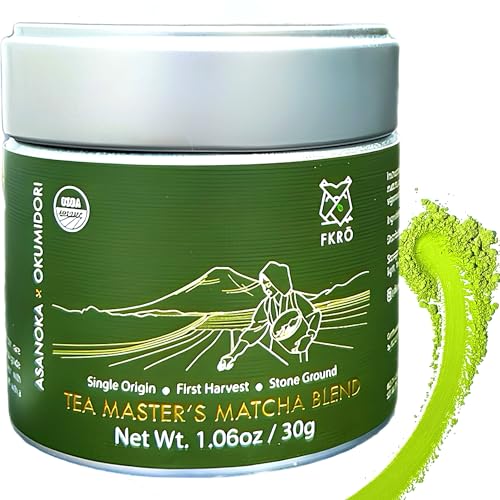
This 30g tin represents a single-origin ceremonial matcha from the Nishi family farm in Kagoshima, Japan, blended by a 4th-generation tea master who won the 58th National Tea Appraisal championship. The exclusive use of ASANOKA and OKUMIDORI cultivars produces a noticeably nutty, rounded flavor with hints of nori, sweet potato, and chestnut — a profile that stands apart from standard grassy matchas.
Customer feedback emphasizes the deep green color, super-fine texture that never clumps, and a smooth, slightly sweet taste with zero bitterness. Multiple reviewers describe it as their new favorite for daily lattes and traditional usucha alike, noting steady energy without the jittery crash common with coffee. The small-batch stone grinding and monthly fresh shipments from Japan help maintain peak vibrance.
The 30g tin is a modest quantity, and the premium nature means a higher per-gram cost than culinary pouches. Treat this as a ceremonial experience rather than a bulk pantry item. For matcha drinkers who value traceability, single-origin terroir, and master-level blending, this tin offers a refined cup that justifies the investment.
Why it’s great
- Artisan single-origin from a champion tea master
- Nutty, sweet, umami-rich flavor with no bitterness
- Smallest-batch stone grinding for peak freshness
Good to know
- Small tin with premium per-gram cost
- Rare cultivars may differ from classic grassy matcha
FAQ
What does first harvest mean for matcha quality?
Can I use ceremonial grade matcha for baking or lattes?
Why does some matcha taste bitter while others are smooth?
How do I know if matcha is fresh before buying?
What is the difference between a single-origin and a blended matcha?
Final Thoughts: The Verdict
For most users, the best matcha powder winner is the Matcha Moon Pure Zen because it delivers authentic first-harvest Uji quality with a smooth, bitter-free cup at a reasonable entry point for ceremonial matcha. If you want a massive bulk supply for daily lattes and baking, grab the Naturebell Organic Matcha. And for those who crave a unique, nutty roasted profile that stands apart from traditional grassy matcha, nothing beats the Midori Spring Gold No.2.