That persistent leg cramp at 2 A.M., the brain fog that won’t lift, or the slow recovery after a workout often trace back to a silent mineral gap. A quality magnesium and zinc supplement addresses this by delivering two of the most critical electrolytes your body uses for nerve signaling, muscle relaxation, and immune defense. But not every bottle on the shelf absorbs the same way, and the wrong ratio can leave you flushing money down the drain without feeling a thing.
I’m Mohammad Maruf — the founder and writer behind AirfryerBite. I’ve spent years dissecting supplement labels, bioavailability data, and third-party test results to separate formulas that actually deliver measurable benefits from those that just look good on a store shelf. My focus is on what the hard specs say about absorption, dosage, and purity.
After reviewing dozens of options across price tiers and formulation styles, the most reliable picks share a common thread: transparent third-party testing and a mineral ratio backed by clinical research. This guide breaks down the top contenders for the best magnesium and zinc supplement based on the specs that actually matter for your daily regimen.
How To Choose The Best Magnesium And Zinc Supplement
A magnesium and zinc supplement is not a one-size-fits-all purchase. The form of magnesium, the presence (or absence) of calcium, and the serving count all determine whether that bottle will actually correct a deficiency or just create expensive urine. Focus on three factors to filter the field quickly.
Mineral Form and Bioavailability
Magnesium oxide is cheap and common but absorbs poorly — you might end up with digestive upset and minimal serum change. Magnesium aspartate, glycinate, malate, and citrate offer far better bioavailability. For zinc, oxide is less absorbable than zinc picolinate or zinc gluconate. A blend that uses multiple chelated forms delivers more bang per capsule because your gut can actually shuttle those minerals into cells rather than flushing them out.
Serving Size and Pill Burden
Some supplements require three or four large tablets daily to hit an effective dose, which can be a dealbreaker for anyone who struggles with swallowing pills. Look at the number of tablets per serving and the total count per bottle. A 300-tablet bottle that demands three tablets daily provides 100 servings — roughly three months. A 60-capsule bottle that asks for two capsules daily lasts only 30 days. Match the serving regimen to your own consistency habits, not just the upfront bottle size.
Third-Party Testing and Manufacturing Standards
Supplements are not FDA-approved before sale, so third-party testing at ISO-accredited labs is the only real quality signal. Brands that proudly state “rigorous third-party testing” and “GMP compliant facility” on the label are demonstrating a commitment to purity and potency that unbranded or generic bottles rarely match. Look for explicit mention of independent lab verification rather than vague “quality guarantee” language.
Quick Comparison
On smaller screens, swipe sideways to see the full table.
| Model | Category | Best For | Key Spec | Amazon |
|---|---|---|---|---|
| Nature’s Way Calcium Magnesium & Zinc | Premium | Leg cramp relief & bone density | Magnesium aspartate 765 mg/serving | Amazon |
| NOW Foods Magnesium & Calcium | Premium | Nerve & muscle support + zinc | 2:1 reverse ratio, 250 tablets | Amazon |
| Viyouth Magnesium 7 Complex | Premium | Sleep & multi-mineral diversity | 7 forms of magnesium, 1000 mg | Amazon |
| Nutri Essentials Calcium Magnesium Zinc | Mid-Range | Postpartum & general wellness | 300 count, includes D3 | Amazon |
| Nutricost Calcium, Magnesium & Zinc | Value | Budget triple-mineral stack | 1,415 mg blend, 180 tablets | Amazon |
In‑Depth Reviews
1. Nature’s Way Calcium Magnesium & Zinc 765 mg per Serving 250 Capsules
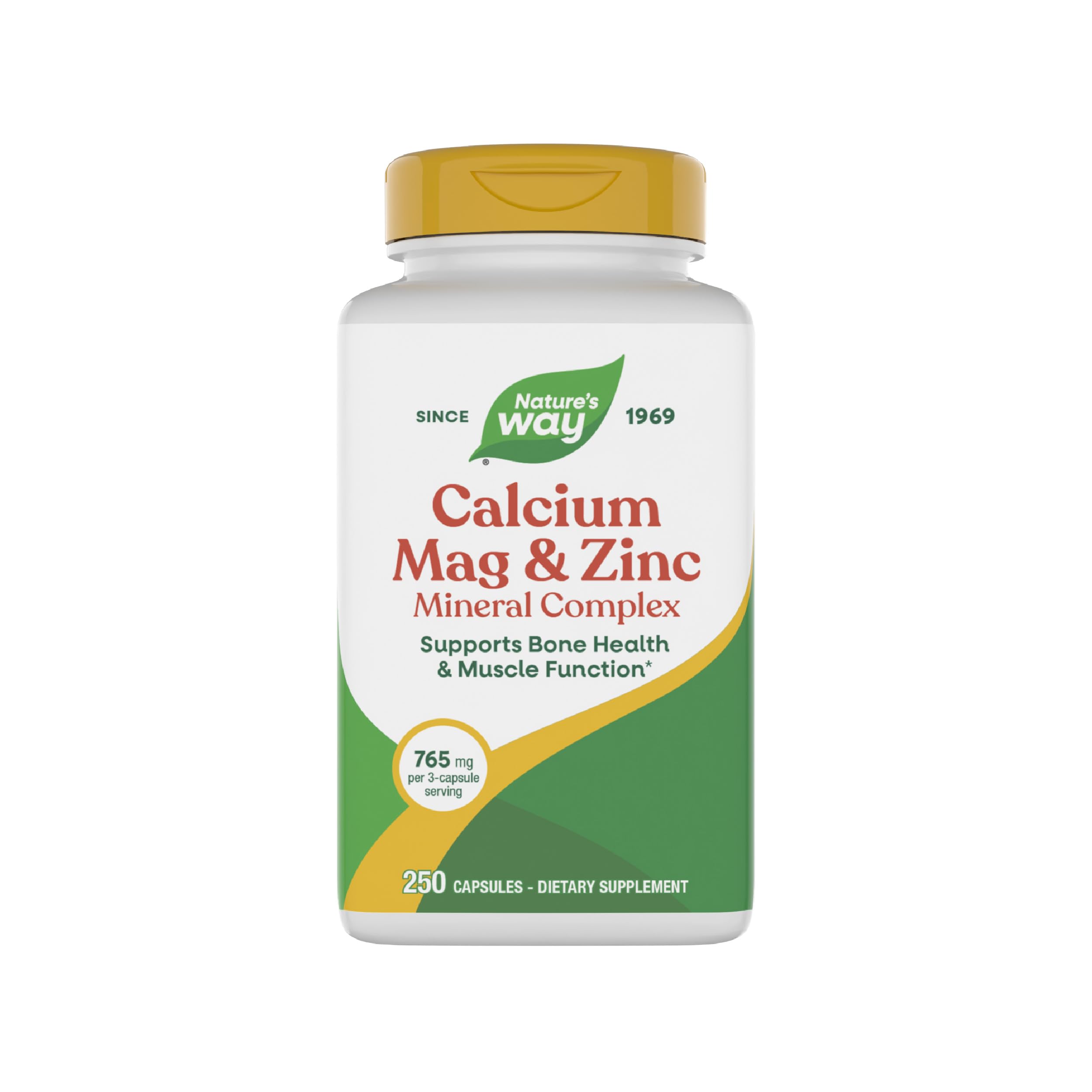
Nature’s Way has built a loyal following among users who deal with persistent nightly leg cramps — and the reason lives in the form of magnesium used here. Unlike cheaper oxide-based supplements, this formula delivers magnesium aspartate, a chelated form that the body absorbs efficiently and that directly supports calcium uptake in bone tissue. Each two-capsule serving provides 765 mg of the mineral blend, with zinc included for cellular repair.
The bottle uses 97% post-consumer recycled materials, which reflects a sustainability effort that matters to environmentally conscious buyers. The capsules are gluten-free and free from artificial colors, flavors, and preservatives.
One tradeoff is the capsule size — several users note that these are larger tablets that can feel challenging to swallow, especially for those who dislike big pills. The formula does not include vitamin D3, so buyers who want that addition will need a separate supplement. For those specifically seeking magnesium aspartate for cramp relief and bone support, this is a premium staple that earns its longevity on the market.
Why it’s great
- Uses highly absorbable magnesium aspartate for superior bioavailability.
- 250 capsules provide a long-lasting supply with less packaging waste.
- Free from gluten, soy, dairy, and artificial additives.
Good to know
- Capsules are large and may be difficult to swallow for some users.
- Does not include vitamin D3 in the formula.
- Requires two capsules per serving, not a single-tablet dose.
2. NOW Foods Supplements, Magnesium & Calcium, With Zinc and Vitamin D-3, 250 Tablets
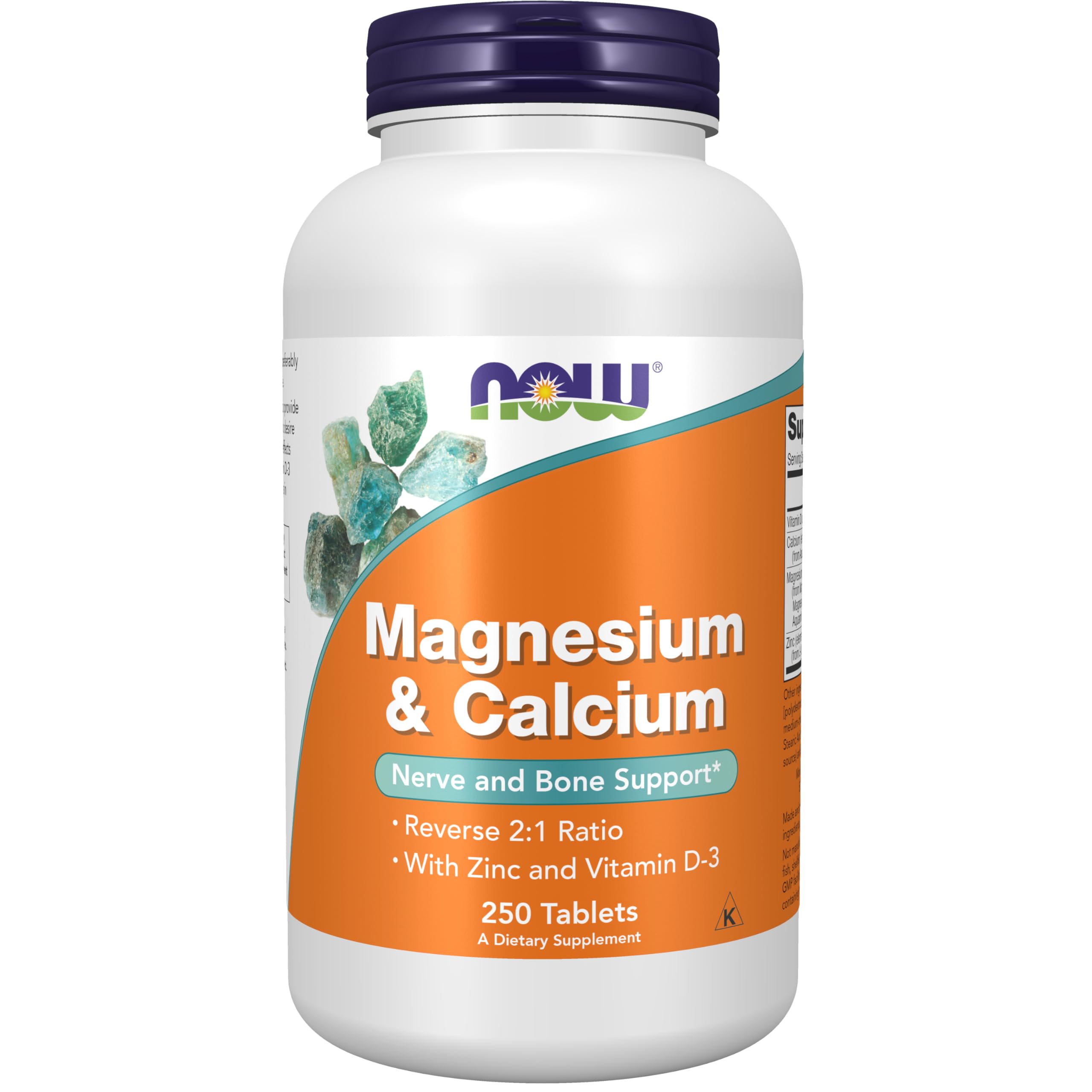
NOW Foods takes a deliberate approach with a “reverse ratio” that delivers more magnesium than calcium — a design choice that appeals to users who want the nerve-calming and muscle-relaxing benefits of magnesium without the constipation that heavy calcium doses can cause. Each tablet includes zinc and vitamin D-3, creating a four-mineral stack that targets bone metabolism and nerve function in one swallow. This is a 250-tablet bottle that covers a solid multi-month supply.
The brand’s manufacturing pedigree adds confidence: NOW operates its own ISO/IEC accredited in-house laboratories for stability, potency, and product formulation testing. The tablets are coated, which makes them easier to swallow than many uncoated mineral pills, and the formula is certified kosher, dairy-free, egg-free, and made without gluten. Long-term users report that this supplement helped reduce or eliminate prescription osteoporosis medication by improving bone density scans from osteoporosis back to osteopenia.
On the downside, this product does not use chelated magnesium forms — it relies on standard magnesium oxide, which has lower absorption rates than aspartate or glycinate. Some users with sensitive stomachs may experience mild digestive effects from the oxide form. It also requires three tablets per serving, which could be inconvenient for those who prefer a lower pill burden.
Why it’s great
- Reverse 2:1 magnesium-to-calcium ratio for users prioritizing nerve support.
- Includes zinc and vitamin D-3 for comprehensive bone health.
- In-house ISO/IEC accredited lab testing ensures batch consistency.
Good to know
- Uses magnesium oxide rather than more absorbable chelated forms.
- Requires three tablets per serving, increasing daily pill count.
- May cause mild digestive upset in sensitive individuals.
3. Viyouth Magnesium 7 Complex Supplement with 7 Forms of Magnesium, Zinc, D3 & B6, 60 Capsules
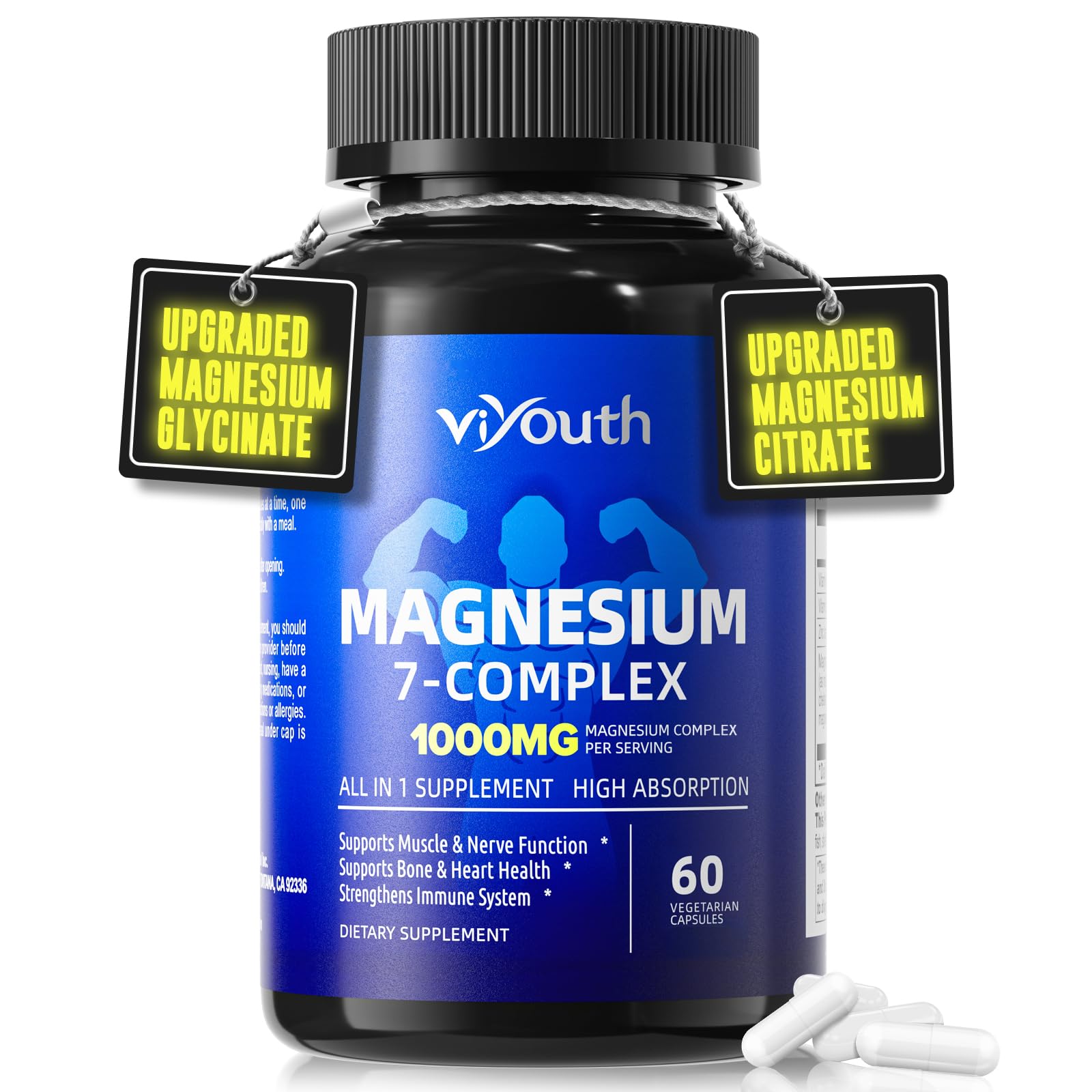
Viyouth’s Magnesium 7 Complex stands apart by packing seven distinct forms of magnesium into a single capsule — glycinate, malate, chelate, aspartate, orotate, taurine, and citrate — totaling 1000 mg per serving. This diversity is designed to cover multiple absorption pathways and support different outcomes: glycinate for sleep, malate for energy, taurine for cardiovascular function, and citrate for regularity. Zinc, vitamin D3, and vitamin B6 are added to round out the mineral and cofactor profile.
The formula is manufactured in a cGMP-certified facility and undergoes third-party laboratory testing for purity and potency, with no artificial additives or common allergens. Users report noticeable improvements in sleep quality and a reduction in thigh cramps within the first few weeks. For anyone who wants to cover as many magnesium deficit bases as possible without buying separate bottles, this complex approach saves time and cabinet space.
The shortcoming is the supply length: 60 capsules at two per serving provide only 30 days of use, making this a premium option with a higher monthly cost compared to the larger-count bottles. It also contains no calcium, so users looking for a full bone-support stack will need a separate calcium source. The capsule size is moderate and generally easy to swallow, but the price-per-serving ratio is the main factor to weigh.
Why it’s great
- Seven chelated and bioavailable magnesium forms for maximum absorption.
- Includes zinc, vitamin D3, and B6 for a comprehensive mineral blend.
- Third-party tested in a cGMP-certified facility with no artificial additives.
Good to know
- Only a 30-day supply per bottle; refills are more frequent.
- Does not contain calcium for bone-specific stacking.
- Premium cost per serving relative to larger-count alternatives.
4. Nutri Essentials Calcium Magnesium Zinc + Vitamin D3 Tablets, 300 Count
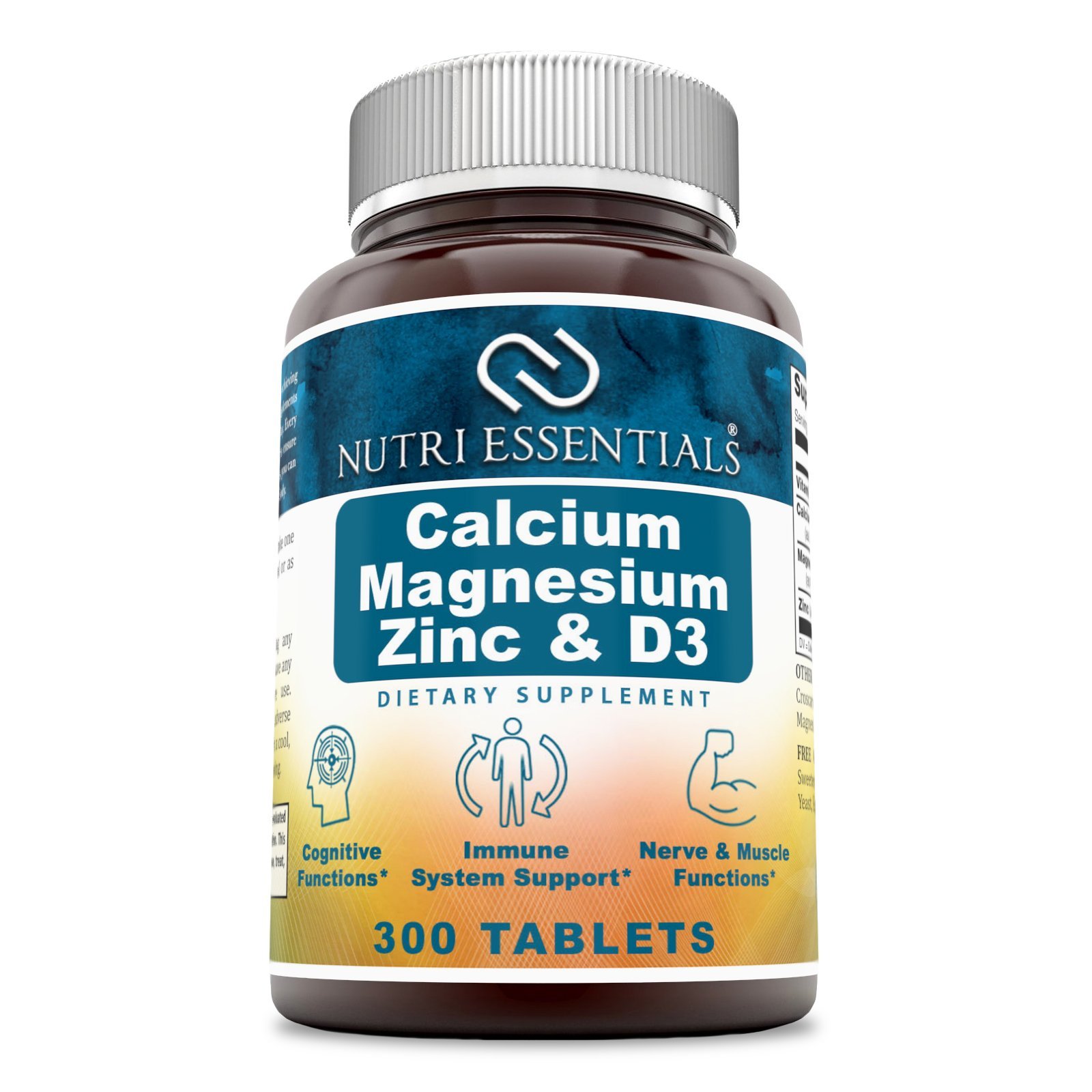
Nutri Essentials keeps the formula direct: calcium, magnesium, zinc, and vitamin D3 in a straightforward tablet that proudly states Non-GMO, gluten-free, and third-party tested. The 300-count bottle provides 100 servings (three tablets per serving), giving a solid three-month supply at an accessible cost. Vitamin D3 is a smart addition here because it directly supports calcium absorption and bone metabolism — a detail often missing in cheaper blends.
User feedback highlights two distinct groups: postpartum mothers who find it supports recovery and milk supply, and seniors who regained energy and strength after switching from other supplements. The tablets are large but described as easy to swallow, with no reported stomach upset. Manufacturing follows GMP standards in the USA, which adds a layer of quality assurance for buyers wary of overseas production.
The primary limitation is the three-tablet daily serving, which means you are consuming 900 tablets over the course of a year if you stay on this regimen. Some users prefer a two-tablet or single-capsule dose for convenience. The formula also uses standard mineral forms rather than chelated versions, so bioavailability is not maximized — but for the price and quantity, it remains a strong mid-range contender.
Why it’s great
- 300-count bottle provides a generous three-month supply per purchase.
- Includes vitamin D3 to aid calcium absorption and bone health.
- Non-GMO, gluten-free, and manufactured to GMP standards in the USA.
Good to know
- Requires three tablets per serving, increasing daily pill count.
- Uses standard mineral forms rather than highly chelated versions.
- Tablets are large, though most users report easy swallowing.
5. Nutricost Calcium, Magnesium & Zinc Tablets 1,415 mg, 180 Count
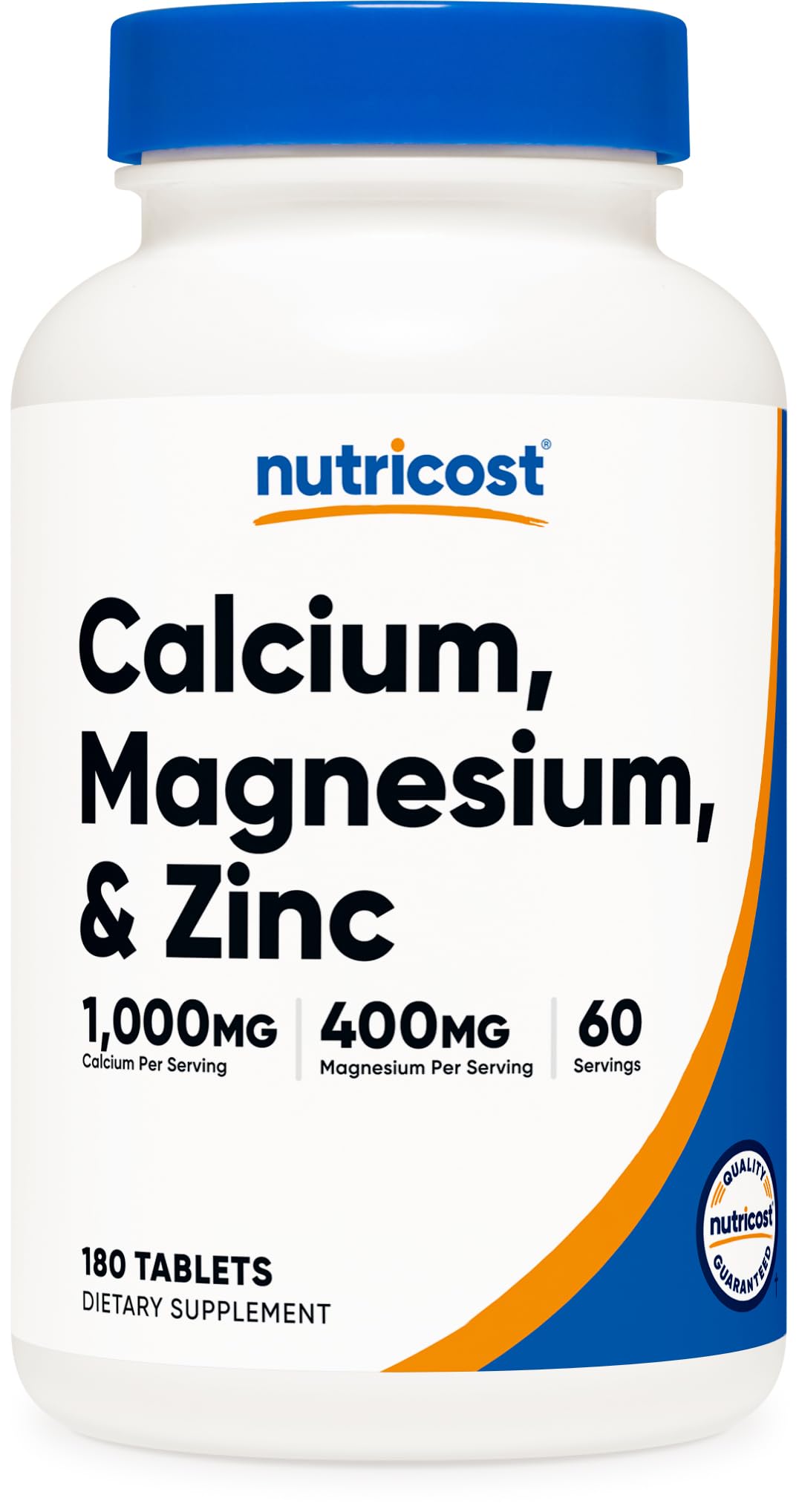
Nutricost delivers a high-potency triple-mineral stack with 1,000 mg calcium, 400 mg magnesium, and 15 mg zinc per serving — a combination that covers the RDA for all three minerals in one bottle. The 180-tablet count translates to 60 servings at three tablets daily, giving a solid two-month supply. What sets Nutricost apart at this price tier is its manufacturing discipline: NSF certification, GMP compliance, and independent testing at ISO-accredited laboratories.
Users consistently mention the value proposition — a well-tested supplement at a price that undercuts many competitors. The tablets are described as easy to swallow with no unpleasant aftertaste, and multiple reviewers report normal blood work after using this product long-term. For anyone who needs a reliable calcium-magnesium-zinc foundation without spending on premium blend formulations, this option delivers the basics with verified quality controls.
The tradeoff is that the formula does not include vitamin D3, so buyers who want that cofactor will need a separate supplement. The three-tablet serving may also be a deterrent for those who prefer fewer pills. And while the magnesium dose (400 mg) is adequate, it uses standard forms rather than the specialized chelates found in higher-end products, so absorption may vary between individuals.
Why it’s great
- NSF certified and GMP compliant with independent third-party lab testing.
- Generous 1,415 mg blend provides calcium, magnesium, and zinc per serving.
- Budget-friendly price point with verified purity and potency.
Good to know
- Does not include vitamin D3 for enhanced calcium absorption.
- Requires three tablets per serving for the full mineral dose.
- Uses standard mineral forms rather than highly absorbable chelates.
FAQ
What is the ideal daily dosage of magnesium and zinc for adults?
Should I take a magnesium and zinc supplement with or without food?
Can I take magnesium and zinc together or do they compete for absorption?
Final Thoughts: The Verdict
For most users, the best magnesium and zinc supplement winner is the Nature’s Way Calcium Magnesium & Zinc because its use of magnesium aspartate provides the highest bioavailability for cramp relief and bone support, backed by decades of consistent customer feedback. If you want a diverse multi-form approach that targets sleep, energy, and muscle function in one capsule, grab the Viyouth Magnesium 7 Complex. And for a budget-friendly triple-mineral stack with NSF-certified quality assurance, nothing beats the Nutricost Calcium, Magnesium & Zinc.