The difference between a frustrating Saturday of sawing through a bone-in pork shoulder and the smooth, rhythmic process of separating muscle from bone comes down to the single tool in your hand. A knife designed for breaking down primal cuts isn’t just about a sharp edge—it’s about the geometry of the blade, the balance of the handle, and the specific alloy that holds its grind through a whole side of beef.
I’m Mohammad Maruf — the founder and writer behind AirfryerBite. I’ve spent years testing steel alloys, handle ergonomics, and blade profiles specifically for meat processing, from thin flexible boning knives to rigid cimeter blades designed for steaking.
The guides on this site are built around real hardware specifications and practical use cases so you can confidently select the best knives for butchering that match your specific workflow and budget.
How To Choose The Best Knives For Butchering
Choosing a butchering knife isn’t like picking a general chef’s knife. The demands of slicing through connective tissue, scraping along bone, and making long uniform cuts require specific blade shapes, steel hardness levels, and handle materials. Focus on these three aspects to narrow your search.
Blade Profile and Length
The cimeter (or scimitar) knife features a curved 10-inch blade ideal for long slicing motions used in steaking and trimming. A breaking knife, also around 10 inches, has a stiffer spine for prying and cutting through joints. A boning knife, typically 5 to 6 inches, is thin and flexible—perfect for removing meat from bones and trimming silver skin. Most serious butchers own at least two of these profiles.
Steel Composition and Hardness
High-carbon stainless steel, like the DEXSTEEL alloy used in Dexter knives, offers excellent stain resistance while maintaining a sharp edge. Japanese AUS-10V super steel, found in premium brands like Dalstrong, reaches a Rockwell hardness of 62 HRC—holding its edge far longer than softer German stainless steels. Harder steel stays sharper but requires more careful honing, especially when you hit bone. Softer steel is tougher and less prone to chipping under heavy use.
Handle Ergonomics and Construction
Wet, slippery hands are the norm in butchering. Look for textured, non-slip materials like glass-reinforced nylon (Mercer BPX) or thermoplastic rubber (Victorinox Fibrox) over smooth wood or metal. Full-tang construction—where the steel extends through the entire handle—provides better balance and durability. Handles with riveted scales offer a traditional feel, while molded one-piece handles are easier to sanitize.
Quick Comparison
On smaller screens, swipe sideways to see the full table.
| Model | Category | Best For | Key Spec | Amazon |
|---|---|---|---|---|
| DALSTRONG Shogun Bull Nose | Premium | Breaking down large game & briskets | 62 HRC AUS-10V steel | Amazon |
| Shun Premier Boning | Premium | Fine boning & filleting work | 6″ Gokujo Pakkawood handle | Amazon |
| Victorinox Curved Breaking | Mid-Range | Traditional breaking tasks | 10″ rosewood handle | Amazon |
| Mercer Culinary BPX Breaking | Mid-Range | Splitting & stripping large cuts | 10″ forged German steel | Amazon |
| Victorinox Fibrox Cimeter | Value | Steaking & long slicing | 10″ Fibrox handle | Amazon |
| Dexter Russell Cimeter | Value | Processing large fish | 10″ DEXSTEEL alloy | Amazon |
| HENCKELS Premio Boning | Entry-Level | General boning & trimming | 5.5″ German stainless | Amazon |
In‑Depth Reviews
1. DALSTRONG Shogun Series ELITE Bull Nose Butcher Knife – 10 inch

The Dalstrong Shogun Series represents a serious jump in steel performance for butchering. The AUS-10V Japanese super steel core, nitrogen treated and vacuum heat treated, reaches a Rockwell hardness of 62 HRC. That means this blade holds its fine edge far longer than standard German X50CrMoV15 steel when cutting through cartilage and dense connective tissue. The 67-layer Damascus cladding adds stain resistance and a visual patina that develops with use.
The bull nose tip design is engineered for breaking—the rounded point increases tip strength so you can safely work around bone without snapping the tip off. The 10-inch blade length provides the reach needed for deep cuts on large primals like whole briskets or a side of beef. The curved spine enables long, sweeping slices with minimal drag.
Handle ergonomics are handled by a full-tang design wrapped in military-grade G-10, a glass-fiber laminate that is impervious to heat, cold, and moisture—ideal for extended butchering sessions. The included sheath protects the edge during storage. This knife is a premium, dedicated tool for serious home butchers and professionals alike.
Why it’s great
- Exceptional edge retention from 62 HRC AUS-10V steel
- Reinforced bull nose tip resists breakage
- Lifetime warranty against defects
Good to know
- Hand wash only; no dishwasher
- Requires proper honing technique to avoid chipping on bone
2. Shun Premier 6″ Gokujo Boning/Fillet Knife
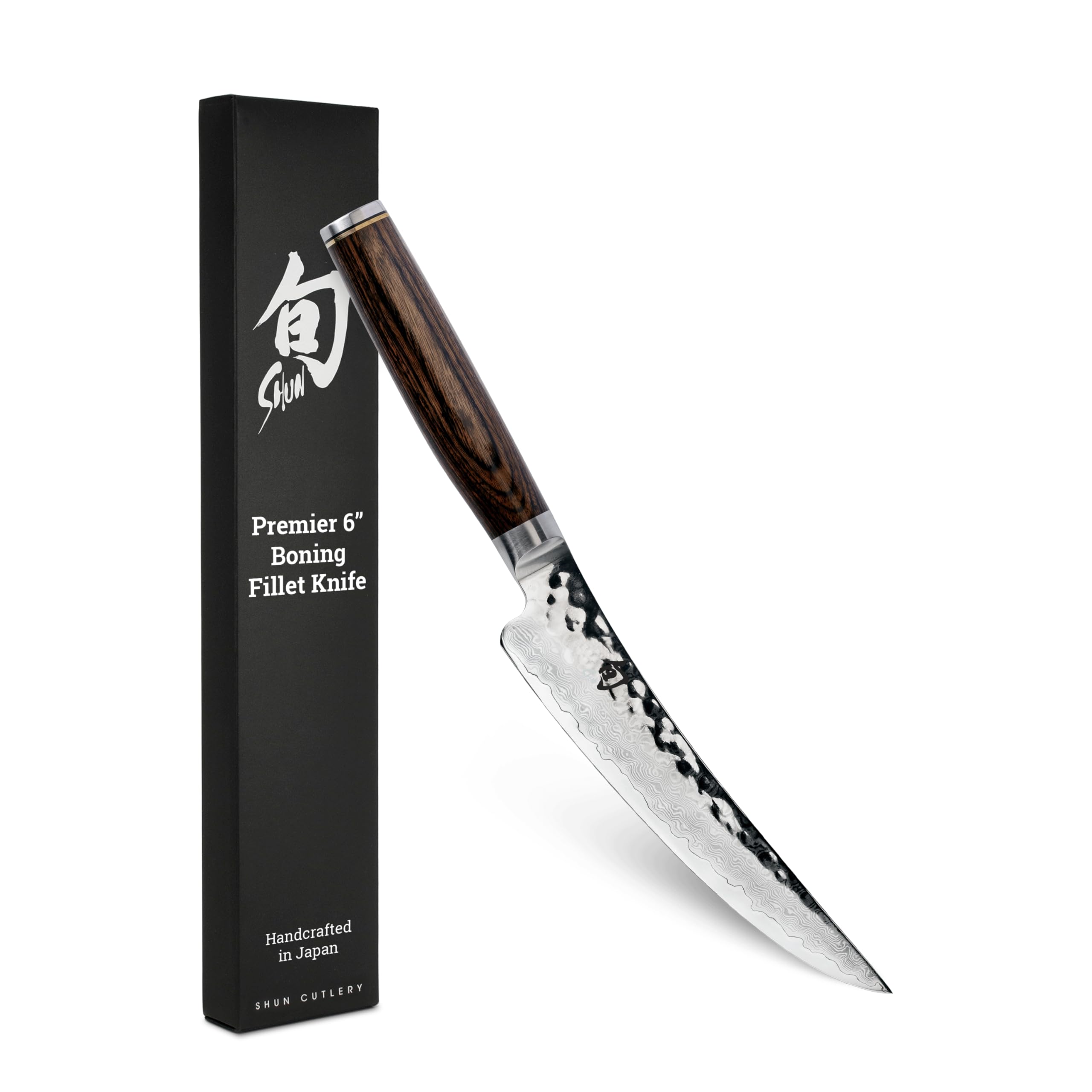
The Shun Premier Gokujo is a precision instrument for fine butchering work. Its 6-inch blade is narrow, curved, and extremely sharp—ground to a 16-degree edge angle using VG-MAX steel clad with 68 layers of Damascus. This geometry allows the knife to slide incredibly close to the bone, separating meat without leaving excess waste or tearing the flesh. It is equally capable of filleting a salmon or deboning a leg of lamb.
The hammered tsuchime finish on the blade surface serves a functional purpose beyond aesthetics—it creates micro-pockets of air that reduce friction and prevent thin strips of meat from sticking to the blade during long cuts. This is a noticeable advantage when processing multiple fillets in a row. The contoured Pakkawood handle is comfortable for both left and right-handed users and provides a secure grip even with wet hands.
As a forged Japanese knife, it demands careful maintenance. Hand washing is required, and the blade should be honed regularly with a ceramic rod to maintain that acute edge. The thin profile is not intended for prying or cutting through bone—it excels at the nuanced tasks of deboning and trimming where precision matters most.
Why it’s great
- 16-degree edge for extreme sharpness and precision
- Hammered finish prevents meat adhesion
- Handcrafted in Japan with VG-MAX core
Good to know
- Fragile edge not suitable for bone or heavy prying
- Requires hand washing and careful storage
3. Victorinox Curved Breaking Knife, 10 inch, Rosewood Handle

The Victorinox Curved Breaking Knife is a classic tool that has earned its reputation in professional kitchens and butcher shops. The 10-inch curved blade is stamped from high-carbon stainless steel, offering a good balance of edge retention and ease of sharpening. The curved profile is designed for breaking down large primals—the shape allows the blade to follow the natural contours of the animal, making it easier to separate muscle groups and cut through connective tissue.
The rosewood handle provides a warm, secure grip that ages beautifully with use. Unlike the synthetic Fibrox handles found on other Victorinox models, the rosewood offers a more traditional aesthetic and excellent wet-grip properties. The full tang construction ensures the knife is well-balanced for repetitive cutting motions without causing hand fatigue.
This knife is not dishwasher safe—the wood handle requires hand washing and occasional oiling to prevent drying and cracking. The steel is softer than premium Japanese alloys, which means it will need more frequent honing, but it is also more forgiving when accidentally contacting bone. It is a dependable, mid-range tool for anyone who values heritage and practicality over exotic materials.
Why it’s great
- Curved profile optimized for following animal contours
- Traditional rosewood handle provides excellent grip
- Swiss-made precision at a mid-range price point
Good to know
- Rosewood handle requires hand washing and maintenance
- Softer steel needs more frequent sharpening
4. Mercer Culinary BPX Breaking Butcher Knife, 10 Inch

The Mercer Culinary BPX Breaking Butcher Knife is a precision-forged blade made from high-carbon German steel that is ice-hardened for increased strength. Unlike stamped knives, the forging process aligns the grain structure of the steel, resulting in a blade that holds its edge longer and resists deformation under heavy use. The mirror-finished blade face allows for smooth cutting and helps meat release easily from the surface.
The handle is made from textured, ergonomic glass-reinforced nylon. This material is extremely durable, non-slip when wet, and resistant to impact and temperature changes. The full tang and triple-rivet construction provide a balanced feel that inspires confidence when making precise cuts through tough connective tissue. This knife is specifically designed for splitting, stripping, and cutting meat.
One trade-off is that the blade is not dishwasher safe. Hand washing with warm water and mild soap is required to preserve the edge and prevent corrosion. The BPX series is a solid choice for home butchers who want the performance of a forged blade without paying premium Damascus prices.
Why it’s great
- Precision-forged German steel with ice-hardening
- Glass-reinforced nylon handle for secure grip
- Excellent balance for repetitive cutting
Good to know
- Not dishwasher safe; hand wash only
- Heavier feel compared to stamped alternatives
5. Victorinox Fibrox Cimeter Knife, 10 inch

The Victorinox Fibrox Cimeter is arguably the most widely used breaking knife in the food service industry. Its 10-inch high-carbon stainless steel blade is stamped rather than forged, which keeps the weight down and the cost low while still providing excellent cutting performance. The cimeter profile—a curved blade with a pointed tip—is ideal for long, smooth slicing motions used to produce steaks and portion large cuts of meat.
The Fibrox handle is one of the most ergonomic designs in the industry. The textured thermoplastic rubber provides a secure, non-slip grip even when your hands are covered in fat and moisture. The handle is also NSF certified and dishwasher safe, making sanitation simple in high-volume environments. The blade itself is thin enough to minimize resistance during slicing but stiff enough to handle breaking tasks.
This knife represents exceptional value. It is not a showpiece, but a functional tool that performs reliably day after day. The steel is easy to sharpen with a standard honing steel, and the stamped construction means it is inexpensive to replace if damaged. For home butchers who process large quantities of meat, the Victorinox Fibrox Cimeter is tough to beat.
Why it’s great
- Iconic Fibrox handle offers unmatched grip in wet conditions
- Dishwasher safe and NSF certified
- Lightweight stamped design reduces fatigue
Good to know
- Edge does not hold as long as forged or premium steel
- Feels less premium than forged or Damascus blades
6. Dexter Outdoors Russell S132-10PCP 10″ Cimeter
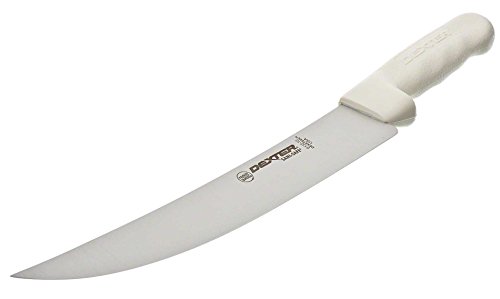
The Dexter Outdoors Russell S132-10PCP is a professional-grade cimeter knife made in the USA using DEXSTEEL, a proprietary high-carbon, high-alloy stainless steel that offers superior stain resistance and edge retention compared to standard 400-series stainless. The 10-inch blade is stamped from this specialized alloy, making it resistant to the corrosive effects of meat acids and frequent washing.
The Sani-Safe handle is constructed from a durable white plastic that is non-porous and easy to sanitize. The textured grip pattern provides a secure hold even when wet, and the handle is designed to prevent rolling on flat surfaces. This knife is NSF certified, meaning it meets strict public health standards for use in commercial food environments. It is also dishwasher safe for easy cleaning.
This knife is particularly well-suited for processing large species of fish, as stated by the manufacturer, but its cimeter profile makes it equally effective for steaking beef and pork. The blade is flexible enough to follow the contour of a fillet but stiff enough for general breaking tasks. It is a rugged, no-nonsense tool that prioritizes sanitation and durability.
Why it’s great
- Proprietary DEXSTEEL alloy resists staining
- NSF certified and dishwasher safe
- Made in the USA
Good to know
- Stamped construction feels lighter than forged knives
- Plastic handle feels less premium than wood or G-10
7. HENCKELS Forged Premio 5.5-inch Boning Knife

The HENCKELS Forged Premio Boning Knife is an entry-level forged option that delivers respectable performance for the price. The 5.5-inch blade is made from high-quality German stainless steel with a forged bolster construction that provides a seamless transition from the blade to the handle. The satin-finished blade is finely honed and offers decent sharpness right out of the box for general boning and trimming tasks.
The handle features a modern triple-rivet design that is curved for comfort, with a stainless steel endcap for a balanced feel. The handle is ergonomically shaped to reduce hand fatigue during extended use. This small boning knife is ideal for beginners or for those who need a dedicated, lightweight tool for close bone work on chicken, pork chops, or smaller cuts of meat.
One notable feature is that this knife is dishwasher safe, which simplifies cleanup for casual users. However, like most forged knives, hand washing is recommended to extend the edge life. The steel is softer than higher-end options, so expect to hone the blade more frequently. It is a solid budget-friendly starting point for someone building their first butchering kit.
Why it’s great
- Forged construction at an entry-level price
- Dishwasher safe for easy cleaning
- Comfortable ergonomic handle design
Good to know
- Softer steel requires more frequent sharpening
- 5.5-inch length limits use on large primals
FAQ
What is the ideal blade length for a butchering breaking knife?
Can I use a butchering knife for filleting fish?
Final Thoughts: The Verdict
For most users, the knives for butchering winner is the DALSTRONG Shogun Bull Nose because it combines premium Japanese steel performance with a reinforced tip designed specifically for breaking tasks. If you want the unbeatable utilitarian value and legendary grip of the Fibrox handle, grab the Victorinox Fibrox Cimeter. And for precision boning work where you need to get as close to the bone as possible, nothing beats the Shun Premier Gokujo.