A boning knife that flexes wrong or dulls fast turns a simple chicken breakdown into a shredded mess of torn skin and wasted meat. You end up fighting the joint instead of finding it, wasting minutes and losing yield on every bird. The right blade slips between bone and muscle with a single controlled cut, leaving clean portions and a whole carcass for stock.
I’m Mohammad Maruf — the founder and writer behind AirfryerBite. I have spent years dissecting kitchen hardware specifications, comparing blade steels, handle ergonomics, and edge geometries to understand what separates a frustrating deboning session from an effortless one.
Whether you are breaking down a whole chicken for a weeknight dinner or portioning thighs for meal prep, having the right knife for deboning chicken changes everything about speed and yield.
How To Choose The Best Knife For Deboning Chicken
Deboning chicken is not the same as working beef or pork. Chicken bones are smaller, joints are looser, and the meat is more delicate. A blade that suits a beef hindquarter will feel clumsy and oversized on a chicken thigh. Focus on three dimensions that directly impact your control and cut quality.
Blade Flexibility: Curved and Flexible vs. Stiff
A flexible boning knife with a curved blade is the standard for chicken because it glides along the wishbone and follows the contour of the rib cage. A stiff, straight blade fights these curves and forces you to saw, which tears the meat. Look for a 5-to-6-inch blade that bends noticeably under moderate finger pressure — that is the sweet spot for poultry work.
Steel Composition and Edge Retention
High-carbon stainless steel (German X50CrMoV15 or Japanese AUS-10V) holds a sharp edge through several birds without requiring a mid-session steel. Avoid soft mystery-steel blades that go dull after one chicken. A Rockwell hardness between 55 and 62 is ideal — soft enough to sharpen easily on a stone, hard enough to stay sharp through a whole pack of thighs.
Handle Ergonomics and Grip Texture
Chicken fat makes every surface slippery. A smooth metal or polished wood handle turns into a liability the moment your fingers get greasy. Choose a thermoplastic rubber or Santoprene handle with textured contact points. A full tang (steel running the full length of the handle) adds balance and prevents the blade from twisting in your grip during a tough joint cut.
Quick Comparison
On smaller screens, swipe sideways to see the full table.
| Model | Category | Best For | Key Spec | Amazon |
|---|---|---|---|---|
| WÜSTHOF Classic 5″ Boning Knife | Premium | Precision deboning with high edge retention | 5-inch, forged high-carbon steel | Amazon |
| Dalstrong Shogun Series ELITE 6″ | Premium | Ultra-sharp edge and Damascus layering | 6-inch, AUS-10V Japanese steel | Amazon |
| Henckels CLASSIC 5.5″ Boning Knife | Premium | Balanced forged German build | 5.5-inch, German stainless steel | Amazon |
| Mercer Culinary Genesis 6″ Flexible | Mid-Range | Ergonomic handle and forged durability | 6-inch, high-carbon German steel | Amazon |
| HENCKELS Forged Premio 5.5″ | Mid-Range | Affordable forged entry-level option | 5.5-inch, German stainless steel | Amazon |
| Victorinox Fibrox 6″ Flexible | Value | Professional standard at a low entry cost | 6-inch, stainless steel, straight blade | Amazon |
| Victorinox Swiss Classic 6″ Flexible | Budget | Best cheap option for occasional deboning | 6-inch, narrow flexible blade | Amazon |
In‑Depth Reviews
1. WÜSTHOF Classic 5″ Boning Knife
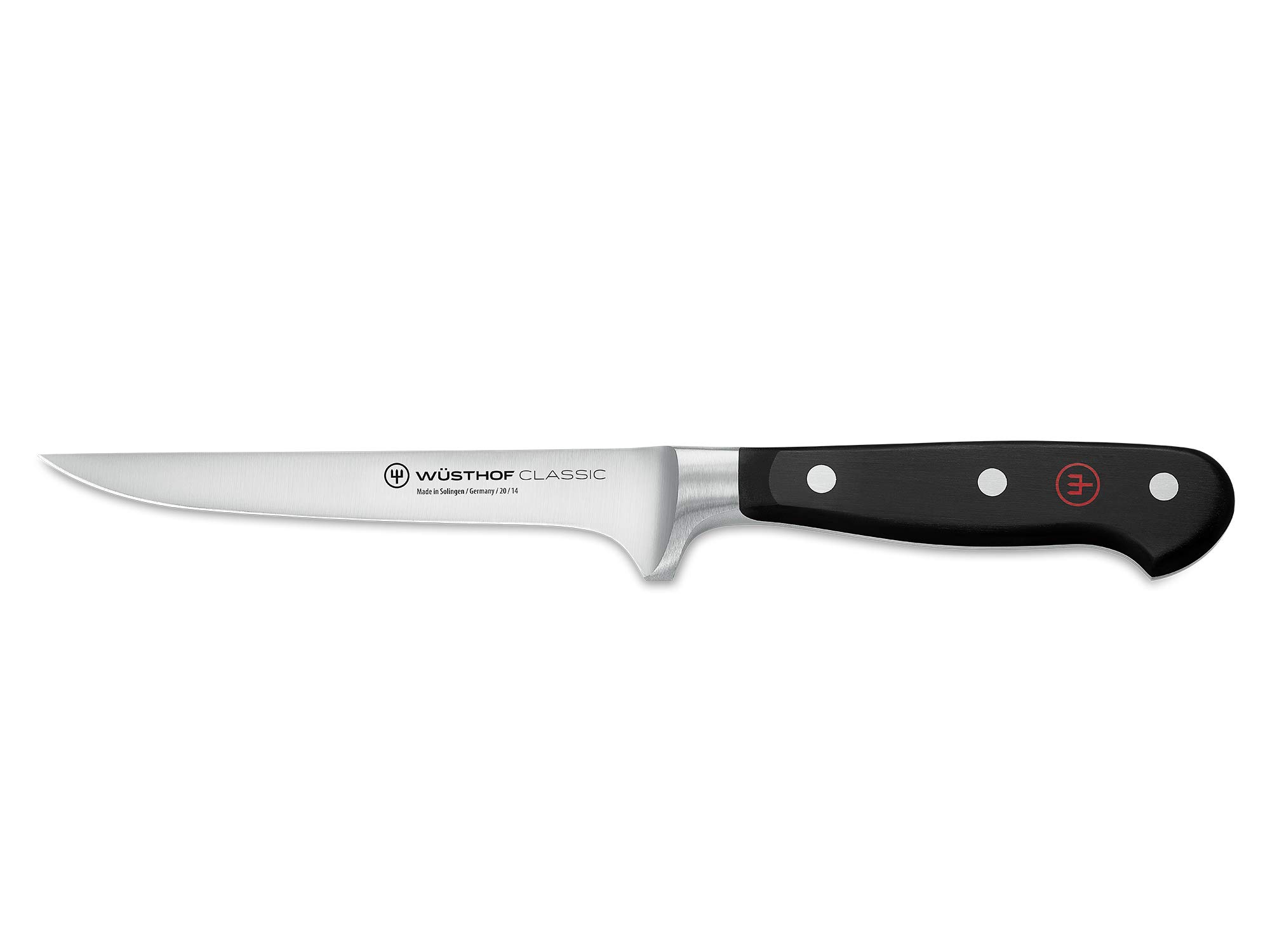
WÜSTHOF forges this 5-inch boning knife in Solingen, Germany, using a precision-forged, full-tang construction that delivers exceptional balance. The high-carbon stainless steel blade reaches a Rockwell hardness around 58, giving it superb edge retention through multiple whole chickens without needing a touch-up. The 5-inch length is ideal for tight work around chicken wing joints and thigh bones — longer blades feel clumsy in these spaces.
The triple-riveted polypropylene handle is shaped to fill your palm, and the full tang prevents any twisting when you apply lateral pressure to separate a joint. Unlike cheaper knives, the bolster is forged as one piece with the blade, creating a seamless transition that adds strength and a subtle finger guard. WÜSTHOF recommends hand washing only, which is standard for a blade at this level.
If you debone chicken more than once a week and want a knife that will hold its factory edge for months with basic honing, this is the benchmark. The upfront investment buys you decades of reliable service — many professional chefs still use WÜSTHOF Classics they bought twenty years ago.
Why it’s great
- Full-tang forged construction for outstanding balance and durability
- Edge stays sharp through multiple birds without steeling
- Ergonomic triple-riveted handle provides secure grip even with greasy hands
Good to know
- Hand wash only — dishwasher heat can degrade the handle over time
- Premium price reflects German-made quality
2. Dalstrong Shogun Series ELITE 6″ Boning Knife

Dalstrong packs this 6-inch boning knife with a 67-layer Damascus cladding over an AUS-10V Japanese super steel core that hits 62+ Rockwell. That hardness translates to an edge that stays surgically sharp through an entire case of chicken thighs without rolling or chipping. The blade is hand-finished to an 8-12 degree angle per side using the traditional Honbazuke method — noticeably sharper out of the box than any German counterpart.
The G-10 glass-filled nylon handle is impervious to moisture, heat, and cold, and its textured surface provides a confident grip even when your fingers are slick. The blade curves inward slightly, which helps you track the bone contour without gouging the meat. The included sheath is a practical bonus for drawer storage — a feature many premium boning knives omit.
At this price point, you are paying for edge geometry and steel quality that outperforms nearly everything in its class. A few users report receiving the knife less sharp than expected, likely a factory variance, but a quick pass on a fine whetstone restores the intended edge. For serious home cooks who want Japanese-style performance, this is a strong contender.
Why it’s great
- Outstanding 62+ HRC edge retention for prolonged deboning sessions
- Damascus layering adds corrosion resistance and visual appeal
- Comfortable, non-slip G-10 handle with full tang balance
Good to know
- Harder steel requires a diamond stone to sharpen, not a standard steel rod
- Not dishwasher safe — hand wash and dry immediately
3. Henckels CLASSIC 5.5″ Boning Knife

Henckels builds this 5.5-inch boning knife in Spain using fully forged German stainless steel, with a satin-finished blade that holds a working edge for weeks of regular use. The 5.5-inch length splits the difference between a 5 and 6-inch blade — long enough to reach through a whole chicken, short enough to maneuver around wing and leg joints. The traditional triple-rivet handle is curved to fit the hand, and the forged bolster provides a seamless transition from blade to handle that prevents fatigue during extended cutting.
The edge is finely honed from the factory and responds well to a honing steel between uses. The knife weighs 6.4 ounces, which is light enough to feel nimble but heavy enough to carry momentum through a cut without forcing. Henckels lists it as dishwasher safe, but hand washing is advisable to protect the handle rivets over the long term.
This is the right choice if you want a premium German boning knife without paying the WÜSTHOF price premium. The classic profile looks at home in any knife block and handles chicken, pork, and fish equally well. The forged construction gives it a reassuring heft that stamped knives lack.
Why it’s great
- Fully forged construction with a seamless bolster for durability
- Comfortable curved triple-rivet handle for extended use
- Versatile 5.5-inch length works for chicken, fish, and small roasts
Good to know
- Edge is not as hard as Japanese alternatives, requires more frequent steeling
- Blade is less flexible than a dedicated poultry boning knife
4. Mercer Culinary Genesis 6″ Flexible Boning Knife

Mercer Culinary’s Genesis 6-inch boning knife is precision-forged from high-carbon German steel and features a taper-ground edge that stays sharp through several whole chickens. The Santoprene handle is shaped with an ergonomic contour and a non-slip surface that gives you exceptional control when your hands are wet or greasy. The 6-inch flexible blade glides along chicken bones without scraping or gouging the meat, making it ideal for deboning thighs and separating breast meat from the rib cage.
Mercer explicitly advises against dishwasher use — soaking and high heat degrade the Santoprene handle over time. The knife comes with a blade guard for safe storage, though a full sheath would be a welcome improvement. The weight is well-balanced at roughly 6 ounces, with the forged bolster adding enough heft to drive the blade through cartilage without extra hand pressure.
For home cooks who want forged quality at a mid-range price, this is a standout. The ergonomic handle is noticeably more comfortable than the straight cylindrical handles on many stamped knives, and the high-carbon steel sharpens easily on a whetstone. It is also a popular choice among culinary students who need a reliable boning knife without breaking the bank.
Why it’s great
- Ergonomic Santoprene handle provides superior non-slip grip
- Forged high-carbon steel with taper-ground edge for long-lasting sharpness
- Flexible blade follows bone contours accurately
Good to know
- Hand wash only — not dishwasher safe
- No included sheath, only a blade guard
5. HENCKELS Forged Premio 5.5″ Boning Knife

HENCKELS offers the Forged Premio as an accessible entry point into forged German cutlery. The 5.5-inch blade is made from high-quality German stainless steel with a satin finish that is finely honed for a sharp, working edge. The forged bolster construction creates a smooth transition from blade to handle, adding strength and a professional feel that stamped knives cannot match. The modern triple-rivet handle is curved for comfort, and the stainless steel endcap provides a clean, balanced finish.
At this price range, you get forged construction and German steel — features typically found on knives costing significantly more. The blade is less flexible than a dedicated poultry boning knife, which can make tight work around chicken wishbones slightly more challenging, but it performs well on breast meat and thigh deboning. HENCKELS lists it as dishwasher safe, but hand washing is recommended to preserve the edge and handle.
If you want to upgrade from a stamped knife without jumping to a premium-tier brand, this is the logical next step. The forged construction gives it a weight and balance that stamped blades lack, and the steel takes a keen edge with basic sharpening tools. It is also a solid choice for deboning pork chops and trimming beef.
Why it’s great
- Affordable forged construction with German stainless steel
- Comfortable triple-rivet handle with good balance
- Versatile 5.5-inch length for poultry and small meat cuts
Good to know
- Blade is stiffer than ideal for intricate chicken deboning
- Edge retention is good but not exceptional
6. Victorinox Fibrox 6″ Flexible Boning Knife
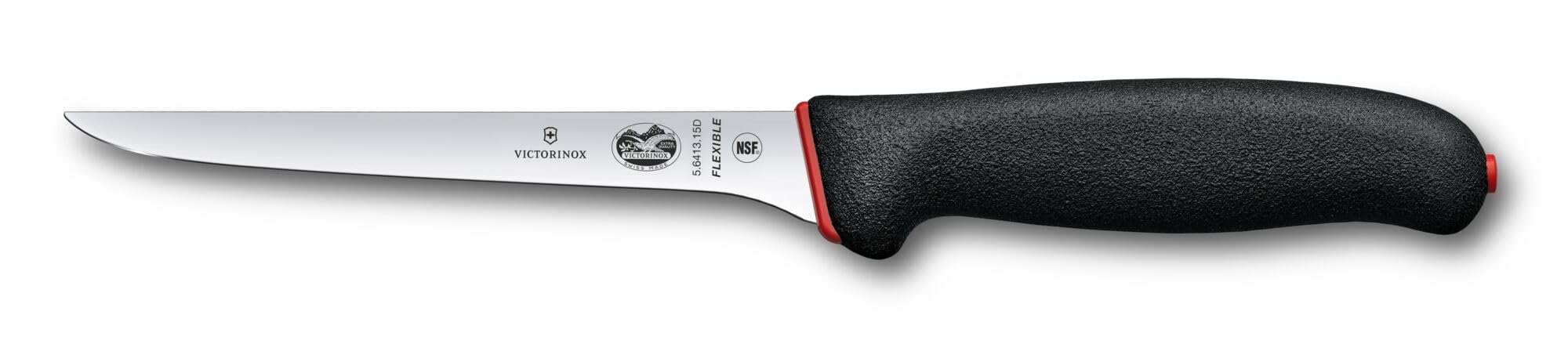
Victorinox manufactures the Fibrox 6-inch boning knife in Switzerland with a stamped stainless steel blade and a textured thermoplastic elastomer (TPE) handle that provides a reliable non-slip grip even when covered in chicken fat. The blade is flexible enough to follow bone contours closely, which is the primary requirement for clean chicken deboning. The straight edge cuts cleanly through joints without tearing the surrounding meat.
Customer feedback consistently highlights the edge retention — users report that it holds a sharp edge through processing multiple deer or whole chickens without needing a steel. The handle is ergonomically shaped to reduce wrist fatigue, and the knife is lightweight at under 3 ounces, making it easy to maneuver for extended periods. It is also NSF-approved, which confirms its suitability for repeated commercial use.
This is the most recommended boning knife among professional butchers and home cooks who value performance per dollar. The stamped construction means it will not last a lifetime like a forged knife, but at this price, replacing it after several years of heavy use is still economical. If you want a single boning knife that does everything well without a premium price, start here.
Why it’s great
- Excellent edge retention for a stamped blade, holds sharpness through multiple birds
- Non-slip TPE handle provides secure grip even when wet
- Lightweight and nimble for extended deboning sessions
Good to know
- Stamped construction is less durable than forged alternatives
- Straight blade is less curved than some poultry-specific designs
7. Victorinox Swiss Classic 6″ Boning Knife with Narrow, Flexible Blade

Victorinox offers the Swiss Classic 6-inch boning knife as the budget-friendly counterpart to the Fibrox. It uses the same stamped stainless steel blade with a narrow, flexible profile that excels at separating chicken meat from bone. The Fibro Pro handle is designed to minimize wrist tension and provide a superior grip — an important feature when you are working through multiple birds. The S-shaped edge enhances control, allowing the blade to rock along bone curves without slipping.
The knife is NSF-approved and dishwasher safe, though prolonged dishwasher cycles will eventually degrade the handle’s texture. It ships with item number 6.8413.15 on the blade, which is the same knife as the US-market version, just with European packaging. The blade is thin, which means it drifts through chicken joints effortlessly, but it also means it is more prone to bending under heavy pressure.
This is the entry-level benchmark for anyone who wants to try boning their own chicken without a big commitment. The performance per dollar is excellent, and the flexible blade is genuinely better suited for poultry than many more expensive stiff-bladed knives. The main trade-off is long-term durability — the stamped steel will dull faster than forged alternatives and will eventually need replacement.
Why it’s great
- Narrow flexible blade is ideal for following chicken bone contours
- Ergonomic Fibro Pro handle reduces wrist fatigue
- Lowest price point for reliable deboning performance
Good to know
- Thin blade bends easily under hard pressure against bone
- Stamped steel requires more frequent sharpening than forged knives
FAQ
Should I choose a curved or straight blade for deboning chicken?
Can I use a fillet knife instead of a boning knife for chicken?
How often should I sharpen a chicken deboning knife?
Final Thoughts: The Verdict
For most users, the best knife for deboning chicken winner is the WÜSTHOF Classic 5″ Boning Knife because its forged full-tang construction, precise 5-inch blade, and excellent edge retention deliver professional-grade performance for weekly poultry work. If you want a knife that combines outstanding edge geometry with Damascus aesthetics, grab the Dalstrong Shogun Series ELITE 6″. And for an unbeatable value that punches far above its price, nothing beats the Victorinox Fibrox 6″ Flexible Boning Knife.