Raw chicken presents the toughest challenge for any kitchen knife: slippery skin, uneven bone density, and the constant threat of cross-contamination from a dull edge that slips instead of bites. The right blade doesn’t just slice—it grips the meat’s surface, glides past cartilage without tearing, and lets you maintain a steady hand even when your fingers are slick with marinade.
I’m Mohammad Maruf — the founder and writer behind AirfryerBite. I’ve spent years analyzing kitchen steel from the factory floor up, studying edge retention curves, handle ergonomics under wet conditions, and how blade geometry interacts with raw poultry to prevent crushed fibers and wasted protein.
After comparing 50-plus models on Amazon for edge sharpness, handle grip, and flexibility around bone, I’ve narrowed the field down to the seven options that actually earn their place as a knife for cutting raw chicken.
How To Choose The Best Knife For Cutting Raw Chicken
Choosing a chicken knife isn’t about picking the most expensive blade on the shelf. The interaction between blade shape, steel composition, edge angle, and handle grip determines whether you get clean portions or shredded meat.
Blade Type: Boning vs. Chef’s vs. Santoku
A boning knife (5-7 inches) is purpose-built for separating meat from bone, making it the first choice for breaking down chicken thighs, legs, and breasts still attached to the rib cage. Its narrow, often flexible blade slides along bone without gouging. A chef’s knife or Santoku (7-8 inches) works better for portioning boneless skinless breasts into cutlets. Choose boning for whole birds; choose a multi-purpose blade if you only debone occasionally.
Steel Hardness and Edge Retention
High-carbon stainless steel with a Rockwell hardness of 56-58 HRC strikes the right balance: hard enough to hold a sharp edge through multiple chicken prep sessions but not so brittle that it chips against a wishbone. Blades below 54 HRC dull faster on skin and cartilage, requiring more frequent honing during a single cook.
Handle Grip and Wet-Surface Safety
Raw chicken makes every surface slippery. Handles made of textured Santoprene, Fibro Pro (NSF-approved), or contoured Pakkawood provide secure traction even when wet. Avoid fully smooth stainless steel handles—they compromise control precisely when you need it most. A full-tang design also adds balance that reduces wrist fatigue during repetitive cutting motions.
Quick Comparison
On smaller screens, swipe sideways to see the full table.
| Model | Category | Best For | Key Spec | Amazon |
|---|---|---|---|---|
| Mercer Culinary Genesis 6-Inch Boning | Premium | Professional-grade deboning | High-carbon German steel, taper-ground edge | Amazon |
| Victorinox Swiss Classic 6-Inch Boning | Mid-Range | Budget-friendly bone work | NSF-approved Fibro Pro handle, flexible blade | Amazon |
| HENCKELS Forged Premio 5.5-Inch Boning | Premium | Forged bolster durability | German stainless steel, triple-rivet handle | Amazon |
| Sunnecko 8 Inch Chef Knife | Mid-Range | Boneless breast slicing | 12-15 degree edge, Pakkawood handle | Amazon |
| Cutluxe Fillet Knife 7-Inch | Entry-Level | Thin slicing off the bone | High-carbon German steel, full tang | Amazon |
| KEEMAKE Santoku Knife 7-Inch | Entry-Level | All-around vegetable and meat cutting | 58 HRC, wave-pattern blade, Pakkawood handle | Amazon |
| SYOKAMI Cleaver Chef Knife 7-Inch | Entry-Level | Versatile chopping with herb stripper | High-carbon German steel, wenge wood handle | Amazon |
In‑Depth Reviews
1. Mercer Culinary Genesis 6-Inch Flexible Boning Knife

The Mercer Genesis 6-inch boning knife is precision-forged from high-carbon German steel, giving it a taper-ground edge that stays sharp through multiple chickens without needing a steeling mid-session. The Santoprene handle provides a non-slip grip even when your fingers are slick with poultry fat—a critical safety advantage when you’re cutting around breastbone and thigh joints.
At 6 inches, the blade offers enough length to cleanly separate a whole leg quarter in one smooth stroke without being cumbersome around smaller pieces like wings. The flexible spine lets you contour the blade along the rib cage, reducing meat waste compared to a stiff chef’s knife that tends to gouge.
This is the knife professional butchers reach for because it balances edge retention, handle security, and precise flexibility. It’s a mid-range investment that performs like a premium workhorse for anyone who breaks down whole chickens weekly.
Why it’s great
- Taper-ground edge cuts through chicken skin and cartilage without tearing
- Santoprene handle keeps grip secure even when wet
- Flexible blade follows bone contours to preserve meat yield
Good to know
- Hand-wash recommended to protect the taper-ground edge
- Blade is thin; avoid twisting against bone
2. Victorinox Swiss Classic 6-Inch Boning Knife

The Victorinox Swiss Classic boning knife is the entry-level gold standard for home cooks who need a dedicated chicken knife without spending big. Its narrow, flexible blade is shaped for separating poultry from bone, and the NSF-approved Fibro Pro handle reduces wrist tension during extended prep sessions—a feature born from the Swiss Army brand’s professional culinary heritage.
The S-shaped edge contours around thigh bones and wing joints, letting you make clean cuts that leave minimal meat behind. The blade’s flexibility is noticeably higher than a chef’s knife, which means you can feel the bone beneath the blade and adjust pressure accordingly.
For anyone who breaks down two or three whole chickens per week, this knife delivers professional-level control at a price that won’t sting. It’s been recommended by a leading gourmet consumer magazine for good reason—the blade-to-handle balance is spot-on for repetitive boning tasks.
Why it’s great
- Highly flexible blade glides along bone without gouging meat
- Fibro Pro handle minimizes wrist fatigue during long prep sessions
- Lifetime warranty against manufacturing defects
Good to know
- Blade is thin; not ideal for cutting through small bones
- Hand-washing required to maintain edge
3. HENCKELS Forged Premio 5.5-Inch Boning Knife

The HENCKELS Forged Premio boning knife uses German stainless steel with a forged bolster construction that creates a seamless transition from blade to handle. This one-piece bolster adds heft and balance, which helps when you need to apply controlled pressure to separate a chicken thigh from the backbone.
The 5.5-inch blade is shorter than most boning knives, making it slightly more maneuverable for detailed work like removing the oyster or trimming fat from tenderloins. The satin-finished edge is finely honed and holds its sharpness through several chickens before needing a steel.
Triple-rivet handle design curves to fit the palm, and the stainless steel endcap adds a touch of durability. While the blade is less flexible than the Victorinox, its rigidity works well for cutting through cartilage at the joint without bending.
Why it’s great
- Forged bolster provides excellent balance and durability
- 5.5-inch blade offers great control for precise deboning
- Dishwasher-safe design simplifies cleanup
Good to know
- Shorter blade may feel limiting for larger birds like turkey
- Less flexible than dedicated boning knives
4. Sunnecko 8 Inch Chef Knife

The Sunnecko 8-inch chef knife is a strong choice for cooks who primarily slice boneless chicken breasts into cutlets rather than deboning whole birds. Its high-carbon stainless steel blade is hand-sharpened to a 12-15 degree edge per side, which is significantly thinner than standard 20-degree bevels and glides through raw poultry with minimal resistance.
The Pakkawood handle provides a comfortable, non-slip grip even when wet, and the included sheath makes storage safe. At 8 inches, the blade offers enough length to slice a full breast in one pass, producing uniform cutlets every time.
This knife excels at clean cuts that reduce shredding—a common problem with thicker edges that crush chicken fibers. It’s best suited for cooks who do a lot of portioning rather than bone work.
Why it’s great
- Ultra-thin 12-15 degree edge reduces tearing on raw chicken
- Pakkawood handle stays grippy with wet hands
- Includes protective sheath for safe storage
Good to know
- Not suitable for deboning; thin edge may chip on bone
- Hand-wash only to preserve edge geometry
5. Cutluxe Fillet Knife 7-Inch
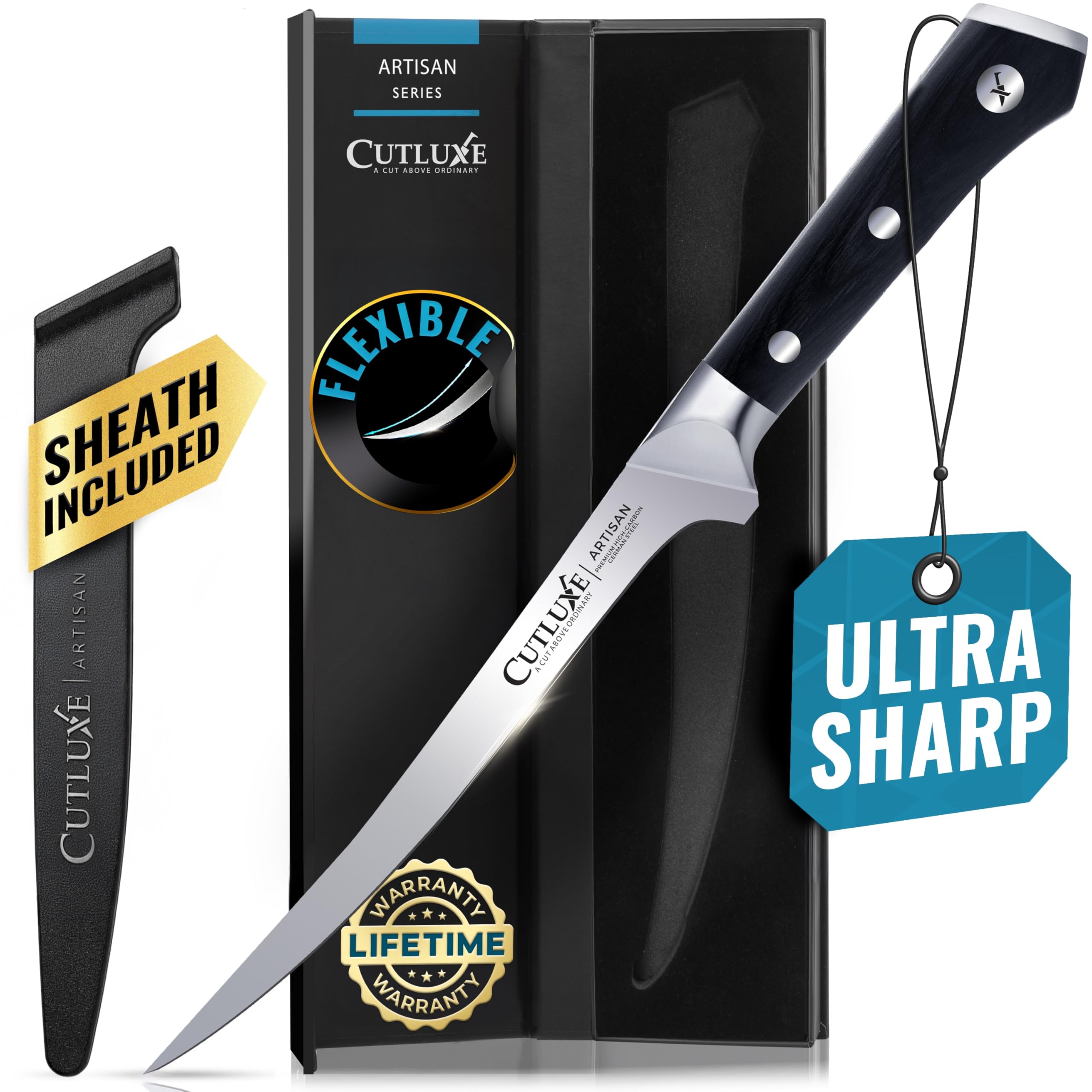
The Cutluxe 7-inch fillet knife is designed for thin, precise slicing off the bone, making it a solid budget option for cooks who want a dedicated chicken knife without spending much. The full-tang construction with high-carbon German steel provides good balance and edge retention for its price tier.
The blade is narrow and flexible, allowing it to slide between the skin and meat when removing skin from chicken breasts or thighs. The ergonomic handle features a contoured design that fits comfortably in the hand during extended prep work.
At this entry-level price, the Cutluxe delivers adequate performance for occasional chicken prep. It’s not as refined as the Mercer or Victorinox, but it gets the job done for cooks who don’t need professional everyday durability.
Why it’s great
- Full-tang construction offers good balance and control
- Flexible blade works well for skinning chicken breasts
- Budget-friendly price for a dedicated chicken knife
Good to know
- Edge may require more frequent honing than premium options
- Handle texture could be more grippy when wet
6. KEEMAKE Santoku Knife 7-Inch
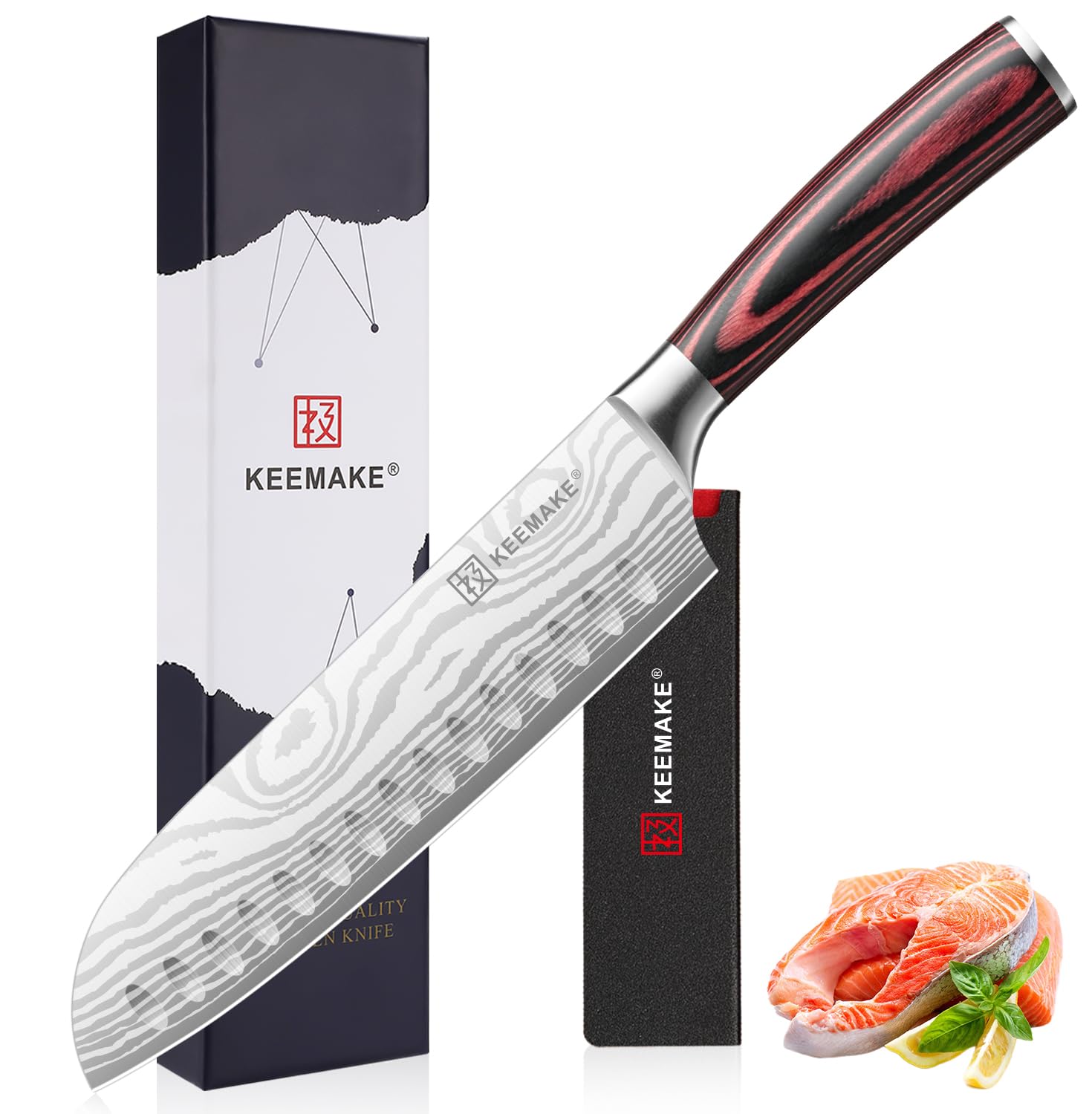
The KEEMAKE Santoku knife is a versatile 7-inch blade made from 1.4116 high-carbon stainless steel hardened to 58 HRC—hard enough to hold a sharp edge through multiple chicken prep sessions without chipping. The hand-sharpened 12-15 degree bevel per side provides clean cuts through boneless chicken skin and flesh.
The wave-pattern blade design reduces friction, which means raw chicken slices don’t stick to the blade during cutting. This is a practical advantage when you’re slicing multiple breasts for stir-fry or cutlets, as it minimizes pausing to scrape off meat.
The ergonomic Pakkawood handle is designed to reduce wrist strain, and the included sheath and gift box make it a solid gift option. Note that the manufacturer lists it as dishwasher safe, but hand-washing will preserve the edge longer.
Why it’s great
- 58 HRC hardness provides excellent edge retention
- Wave-pattern blade prevents meat from sticking during slicing
- Comes with sheath and gift box for gifting
Good to know
- Not designed for deboning; best for boneless cuts
- Dishwasher safe per manufacturer, but hand-wash recommended
7. SYOKAMI Cleaver Chef Knife 7-Inch
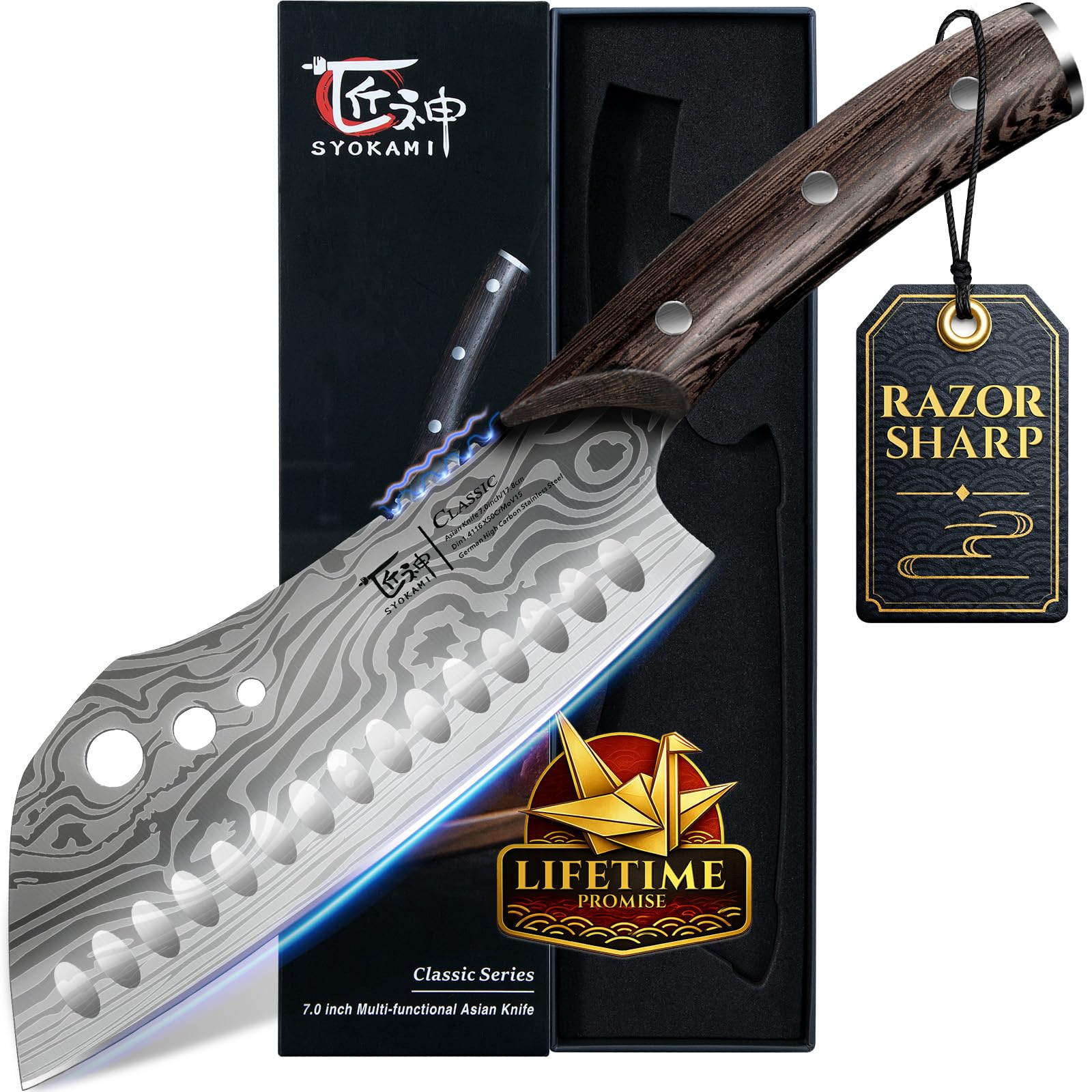
The SYOKAMI 7-inch cleaver chef knife blends the versatility of a Chinese chef’s knife with the precision of a Santoku and Nakiri, making it a unique option for cooks who want one blade for multiple poultry tasks. The high-carbon German steel full-tang blade is hand-polished to a 14-16 degree edge per side with a 56+ Rockwell hardness rating, providing a durable cutting surface that resists staining.
The wenge wood handle features contemporary gear teeth elements for a non-slip grip—a thoughtful design touch when handling raw chicken. The integrated three-hole herb stripper is a bonus for prepping herbs alongside your chicken prep.
This knife works well for chopping boneless chicken pieces, dicing vegetables for a stir-fry, or slicing herbs. It’s less suitable for deboning whole birds due to its wide blade profile, but as an all-in-one chicken prep tool, it offers solid value for cooks who prefer a cleaver-style motion.
Why it’s great
- Combines three knife styles in one versatile blade
- Gear teeth on handle provide excellent wet-surface grip
- Integrated herb stripper adds utility
Good to know
- Wide blade profile is not ideal for detailed boning work
- FSC-certified wood handle requires hand-washing
FAQ
Should I use a boning knife or a chef’s knife for raw chicken?
What handle material is safest for wet chicken prep?
Final Thoughts: The Verdict
For most users, the knife for cutting raw chicken winner is the Mercer Culinary Genesis 6-Inch Boning Knife because it combines professional-grade German steel, a non-slip Santoprene handle, and the precise flexibility needed to debone whole birds with minimal meat waste. If you want a budget-friendly option for basic boning, grab the Victorinox Swiss Classic 6-Inch Boning Knife. And for slicing boneless breasts into clean cutlets, nothing beats the Sunnecko 8 Inch Chef Knife with its ultra-thin 12-15 degree edge.