A potato is one of the most forgiving ingredients in the kitchen, yet a dull or poorly shaped blade can turn a simple prep task into a battle of crushed edges and uneven slices. The difference between a clean, satisfying cut and a frustrating, starchy mess often comes down to blade geometry, steel composition, and edge angle — three factors that separate a dedicated potato-cutting blade from a generic knife.
I’m Mohammad Maruf — the founder and writer behind AirfryerBite. I’ve spent years analyzing hundreds of kitchen knives against the specific physics of cutting dense, high-moisture tubers, measuring how edge retention, blade height, and steel hardness perform against raw potato starch and grit.
Whether you are dicing for hash browns, slicing for gratin, or cutting wedges for roasting, finding the best knife for cutting potatoes means matching the right blade profile and steel to the repetitive force of that task.
How To Choose The Best Knife For Cutting Potatoes
Cutting a potato well is not about brute force — it is about matching the blade’s geometry to the potato’s dense, spherical shape and abrasive starch content. A knife optimized for tomatoes or boneless chicken will feel sticky and clumsy here. Focus on three core attributes when evaluating your next blade for tuber work.
Blade Profile: Straight Edge or Gentle Curve
A straight-edged design — typical of a Nakiri or a vegetable cleaver — gives you a full, flat contact line against the potato’s round surface, reducing the wedging effect that causes splits. A chef knife with a moderate belly works well too, provided the curve does not force you into a rocking motion that can fracture a raw spud. Avoid highly curved blades designed for carving or slicing cooked proteins; they lack the contact area needed for clean potato cubes.
Blade Height and Thickness
Potatoes are large and round. A blade height of at least 1.8 inches (45 mm) gives you enough room to cut through the full diameter of a russet in one clean push, avoiding awkward angled cuts that waste starch and break the skin. Look for a blade thickness around 2 mm to 2.5 mm — thin enough to slide through density without wedging, thick enough to resist flex when you encounter the gritty peel or an occasional hidden rock fragment.
Steel and Edge Angle
Potato starch is mildly abrasive, and the peel carries grit. A steel with a hardness of 58–62 HRC (Rockwell Hardness Scale) maintains its bite through dozens of pounds of potatoes without requiring a mid-session touch-up. The edge angle should be 12 to 15 degrees per side — sharp enough to shear through the skin, not so fragile that the edge rolls against the dense flesh. Avoid super-thin edges below 10 degrees, which can micro-chip against the occasional grit particle in the peel.
Quick Comparison
On smaller screens, swipe sideways to see the full table.
| Model | Category | Best For | Key Spec | Amazon |
|---|---|---|---|---|
| FAMCÜTE 7-Inch Nakiri | Premium | Precision veggie dicing | 9CR18MOV steel, 62 HRC | Amazon |
| Milk Street Nakiri | Premium | Non-stick slicing | 1.4116 German steel | Amazon |
| KYOKU Shogun Chef Knife | Premium | All-purpose potato prep | VG10 Damascus core | Amazon |
| KAWAHIRO Gyuto | Premium | Luxury slicing feel | VG10/3-layer composite | Amazon |
| Mercer Genesis 7-Inch Nakiri | Mid-Range | Comfort for long prep | High-carbon German steel | Amazon |
| FINTISO Santoku | Mid-Range | Starch-resistant cuts | S35VN powder steel core | Amazon |
| Sunnecko 8-Inch Chef Knife | Value | Budget-friendly workhorse | 12-15° edge, Pakkawood | Amazon |
In‑Depth Reviews
1. FAMCÜTE 7-Inch Japanese Nakiri Knife

The FAMCÜTE Nakiri is purpose-built for vegetable prep, and its straight blade profile is precisely what dense potato cubes demand. The 9CR18MOV steel core, hardened to 62 HRC, offers a combination of edge retention and corrosion resistance that handles the abrasive starch and occasional grit from potato skins without micro-chipping. At 7.28 inches, the blade is long enough to slice through a full Yukon Gold in one clean draw, while the 5-layer clad construction adds lateral stability to prevent flex during hard cuts.
The octagonal rosewood handle provides a secure pinch grip that reduces hand fatigue during repetitive dicing sessions. Customers consistently note that the knife arrives razor-sharp out of the box and maintains that edge through dozens of pounds of potatoes before needing a light honing. The 12.2-ounce weight gives the blade enough heft to fall through dense tubers without requiring downward force, which helps keep each cut straight and even.
For anyone serious about potato prep — from hash brown dicing to perfect-1/4-inch slices for au gratin — this Nakiri delivers the blade height and edge geometry that make each cut feel effortless. The included sheath adds peace of mind for storage between tasks.
Why it’s great
- Straight Nakiri profile provides full blade contact for clean potato slices without wedging
- 62 HRC hardness resists rolling and chipping against gritty potato skins
- Octagonal rosewood handle allows fatigue-free grip during long prep sessions
Good to know
- Weight is slightly heavier than a standard chef knife, which may feel different for rocking cuts
- Hand wash only to preserve the rosewood handle and clad steel finish
2. Milk Street 6.75-inch Nakiri Knife
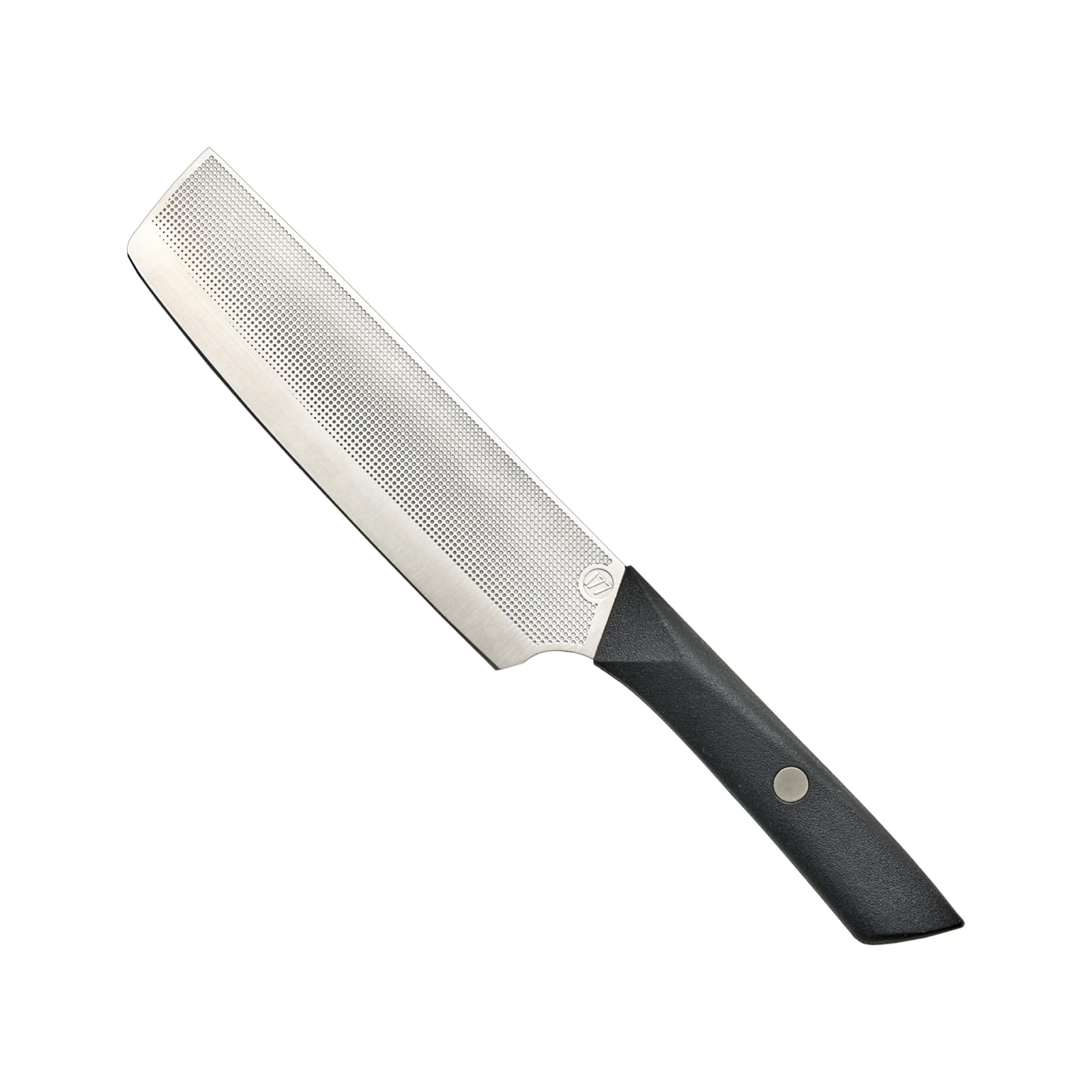
Potato starch is notorious for clinging to blade faces, turning each subsequent slice into a sticky, dragging mess. Christopher Kimball’s Milk Street Nakiri addresses this directly with a file-pattern embossed blade that creates micro-air pockets, letting potato slices release cleanly without sticking. The 1.4116 German steel is a proven mid-hardness alloy — about 56–58 HRC — that balances ease of sharpening with adequate abrasion resistance against potato grit.
The 6.75-inch blade is shorter than a standard Nakiri, which enhances control for detail work like cutting small fingerlings or slicing potatoes into thin rounds for chips. The 2-inch blade height provides ample knuckle clearance, protecting your fingers while allowing the full width of a russet to pass cleanly beneath the blade. The dual-density polymer handle features a firm core with a softer tactile exterior, giving you a locked grip even when hands are wet from washing potatoes.
If you routinely prep large batches of potatoes for roasting, frying, or mashing, the non-stick surface of this Milk Street Nakiri will save you the frustration of scraping starchy residue off the blade mid-task. The ergonomic handle and natural-resin construction also make it a solid choice for cooks who prioritize comfort over raw edge hardness.
Why it’s great
- Embossed file pattern minimizes starch sticking to the blade during repetitive cuts
- 2-inch blade height offers excellent finger safety and full potato clearance
- Dual-density polymer handle stays grippy even with wet or greasy hands
Good to know
- 1.4116 steel requires more frequent honing than high-hardness alloys like VG10
- 6.75-inch length feels short for splitting very large baking potatoes in one pass
3. KYOKU Chef Knife – Shogun Series (8-Inch)

The KYOKU Shogun combines a 67-layer Damascus cladding over a VG10 core, resulting in a blade that holds a 58–60 HRC edge for dozens of potato prep sessions without noticeable dulling. Sharpened to a precise 8 to 12 degrees per side using the traditional Honbazuke method, this chef knife glides through potato skin and dense flesh with minimal resistance — each cut feels like the blade is parting the tuber rather than forcing through it.
The 8-inch blade features a moderate belly that allows both rocking chops for dice and push cuts for uniform slices, making it a versatile choice if you also break down proteins or larger vegetables. The G10 fiberglass handle resists moisture and thermal expansion, so the handle stays cool and secure even during extended use. At 1.4 pounds, the knife has a substantial feel that helps carry momentum through dense russets without requiring extra arm effort.
For a cook who wants one knife capable of handling potato prep alongside general kitchen tasks, the KYOKU Shogun delivers premium steel performance without requiring the specialized straight-edge technique of a Nakiri. The included sheath and storage case protect the Damascus pattern when the knife is not in use.
Why it’s great
- VG10 core with 67-layer Damascus provides exceptional edge retention against potato abrasion
- 8-12° Honbazuke edge offers very low resistance through potato skin and flesh
- G10 handle stays stable and grippy even in humid kitchen environments
Good to know
- Thinner edge geometry requires careful cutting near hard surfaces like cutting boards with ceramic grit
- Heavier construction may feel fatiguing during very long prep sessions compared to a lighter Nakiri
4. KAWAHIRO Japanese Chef Knife (8.24-Inch Gyuto)
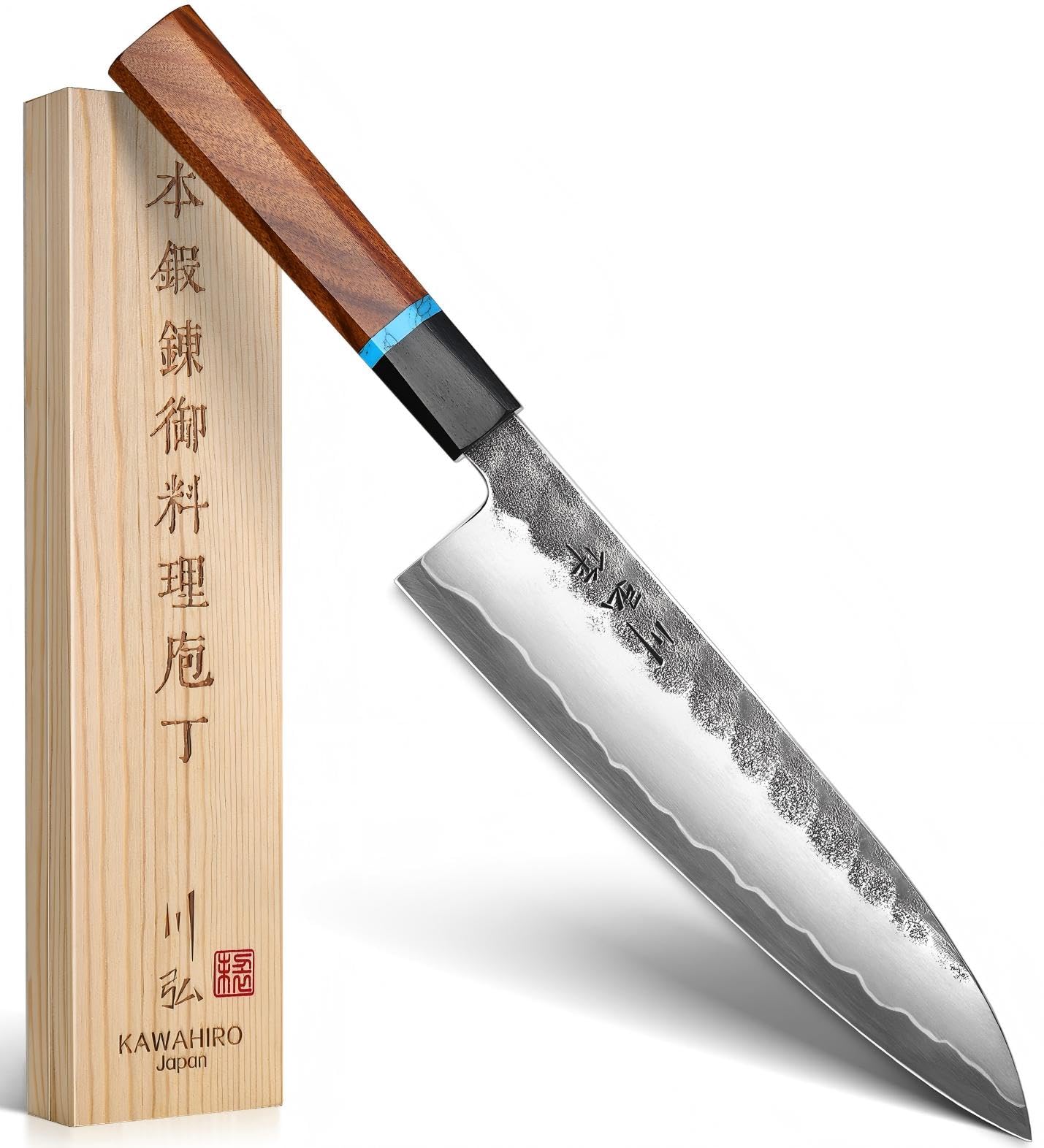
The KAWAHIRO Gyuto represents a premium tier of craftsmanship for the cook who values both performance and presentation. The blade uses a 3-layer composite construction with a VG10 stainless steel core sandwiched between softer outer layers, giving the edge the high hardness (60+ HRC) needed to slice through dense potato flesh while the outer layers provide toughness against lateral stress. The black forged finish reduces drag against starchy surfaces, helping the blade shed potato residues more effectively than polished stainless steel.
The 8.24-inch blade is longer than a standard Nakiri, making it easier to cut through large baking potatoes or sweet potatoes in a single, smooth draw cut. The octagonal handle, crafted from premium ruby wood, turquoise, and ebony, offers a secure pinch grip with a natural contour that reduces pressure points during extended dicing sessions. At just 6.72 ounces, the knife is notably lightweight, reducing fatigue while still delivering enough blade momentum for clean cuts.
If you are looking for a knife that double as a statement piece in the kitchen while delivering genuine cutting performance for potato prep, the KAWAHIRO Gyuto is the investment pick. The wooden storage case and wipe cloth make it a ready gift for a serious home cook.
Why it’s great
- 3-layer VG10 composite provides a hard cutting core with tough outer layers for stability
- Lightweight 6.72-ounce design minimizes hand fatigue during batch potato prep
- Black forged finish reduces starch adhesion compared to polished blades
Good to know
- Premium handle materials require hand washing and careful drying to preserve finish
- Higher price point may not justify the upgrade if you only cut potatoes occasionally
5. Mercer Culinary Genesis 7-Inch Nakiri Vegetable Knife

Mercer Culinary has a well-earned reputation in professional kitchens for producing reliable knives at non-professional prices, and the Genesis 7-inch Nakiri is no exception. The precision-forged high-carbon German steel blade delivers a taper-ground edge that feels sharp enough to shave through potato skin without crushing the cells beneath. The Santoprene handle — a rubberized polymer — provides a non-slip grip that becomes even more secure when your hands are wet from rinsing potatoes, reducing the risk of the knife rotating in your grip during a hard cut.
At only 4 ounces, this Nakiri is exceptionally lightweight, which is a double-edged advantage for potato prep. The low weight reduces arm fatigue during marathon dicing sessions, but it also means the knife relies on blade sharpness rather than momentum to drive through dense tubers. The 7-inch blade length is sufficient for most potato sizes, though very large baking potatoes may require an extra pass for full separation.
For home cooks who prioritize grip security and hand comfort above all else, especially those with arthritis or hand fatigue concerns, the Mercer Genesis Nakiri offers a forgiving, comfortable experience without sacrificing the clean slice quality that potatoes demand. The affordable price point makes it a low-risk entry into dedicated vegetable knives.
Why it’s great
- Santoprene handle offers exceptional non-slip grip, even with wet or starchy hands
- Lightweight 4-ounce design reduces fatigue during extended potato prep sessions
- Precision-forged German steel holds a sharp edge for basic home cutting needs
Good to know
- Light weight means the knife does not carry momentum; you rely entirely on edge sharpness
- 7-inch length may feel short for splitting whole baking potatoes in a single cut
6. FINTISO Santoku Knife 7-Inch (S35VN Powder Steel)

The FINTISO Santoku stands out for its use of S35VN powder metallurgy steel — a material more commonly found in premium outdoor knives than in the kitchen. Powder steel offers a very fine, uniform grain structure that allows the blade to take an extremely acute edge (8–12 degrees per side) while maintaining toughness. For potato prep, this translates to a blade that shears through skin and flesh with minimal tearing, producing clean, flat surfaces that cook evenly.
The 7-layer clad construction wraps the S35VN core in alternating layers of stainless steel, giving the blade visual depth while improving corrosion resistance against the acids released when cutting potato tubers. The celestial resin and stabilized wood handle is resin-impregnated, making it resistant to moisture absorption and thermal expansion — a practical advantage when you are repeatedly rinsing potatoes and handling the knife. The 0.42-pound weight strikes a comfortable middle ground between the featherlight Mercer and the heftier Kyoku.
If you want the cutting performance of a high-end powder steel knife without jumping to the luxury-tier price, the FINTISO Santoku is a strong pick for the home cook who values edge stability and precision over raw hardness. The wave-pattern blade surface also helps reduce food sticking, keeping potato slices free of the blade.
Why it’s great
- S35VN powder steel core provides very fine grain structure for a stable, acute edge
- 7-layer clad construction adds corrosion resistance against potato starch and moisture
- Resin-stabilized wood handle resists moisture absorption and stays dimensionally stable
Good to know
- 7-inch blade is shorter than a standard chef knife, limiting single-pass cutting of large potatoes
- Powder steel can be more difficult to sharpen at home without diamond stones
7. Sunnecko 8-Inch Chef Knife

The Sunnecko 8-inch Chef Knife offers an accessible entry point for cooks who need a reliable blade for potato prep without committing to a specialized Nakiri. The high-carbon stainless steel blade is hand-sharpened to a 12–15 degree angle per side, providing a sharp enough edge to cut through potato skins without crushing the cells. The 8-inch length gives you enough blade to split large russets or sweet potatoes in one draw cut, reducing the need for multiple passes that create uneven surfaces.
The Pakkawood handle is ergonomically contoured with a steel bolster for balanced weight distribution, helping the knife fall naturally into a pinch grip. At 0.44 pounds, the knife feels substantial enough to carry momentum through dense tubers, yet light enough to maintain control during detail work like cutting potatoes into thin matchsticks. The included PVC sheath protects the edge when stored in a drawer alongside other utensils.
For a budget-friendly option that does not compromise on blade length or basic edge geometry, the Sunnecko is a solid workhorse. It handles the full spectrum of potato prep — from rough chopping for soups to uniform dicing for roasting — with the versatility of a traditional chef knife profile.
Why it’s great
- 8-inch blade length provides enough reach to cut through large potatoes in one pass
- 12-15 degree edge angle offers a good balance of sharpness and edge durability for home use
- Full-tang Pakkawood construction provides stable, balanced handling during repetitive cuts
Good to know
- High-carbon stainless steel may stain if left unwashed after cutting potatoes; immediate hand drying is recommended
- Budget steel will require more frequent touch-ups than premium alloys like VG10 or 9CR18MOV
FAQ
Which knife shape is best for cutting potatoes into cubes?
Does a serrated knife work for cutting raw potatoes?
How do I maintain my knife’s edge when cutting potatoes regularly?
Final Thoughts: The Verdict
For most users, the best knife for cutting potatoes winner is the FAMCÜTE 7-Inch Nakiri because its straight blade profile, 62 HRC steel, and comfortable rosewood handle deliver the cleanest, most consistent cuts through dense tubers with minimal fatigue. If you want non-stick slicing performance that sheds potato starch mid-prep, grab the Milk Street Nakiri. And for a premium all-around knife that handles potatoes plus every other kitchen task, nothing beats the KYOKU Shogun.