Root vegetables like beets present a unique challenge — their dense, fibrous structure demands a specific type of extraction that standard centrifugal juicers simply cannot handle without producing foamy, oxidized juice and wet pulp. A proper masticating machine crushes and presses beets at slow rotational speeds, separating the deep red liquid from the tough fibers while preserving the earthy sweetness and vital nutrients.
I’m Mohammad Maruf — the founder and writer behind AirfryerBite. I’ve spent years analyzing extraction mechanics, auger designs, and motor torque ratings to understand precisely which hardware combinations deliver bone-dry pulp and high-yield juice from hard root vegetables.
Whether you’re juicing for a weekly detox or crafting consistent batches for a morning routine, finding the right juicer for beets means focusing on slow-speed masticating technology, wide feed chutes to avoid pre-cutting, and easy-clean assemblies that don’t clog from beet fiber.
How To Choose The Best Juicer For Beets
Beets are dense, high-fiber, and stain everything they touch. Selecting a juicer that processes them efficiently without clogging, overheating, or leaving behind wet pulp requires understanding three critical factors that separate beet-capable machines from general-purpose models.
Slow Masticating vs. Centrifugal Extraction
Centrifugal juicers shred beets at high speeds using a spinning blade and strain the pulp against a metal basket. This generates heat and introduces oxygen, which oxidizes betalains — the antioxidant compounds that give beets their color and health value. Slow masticating juicers operate between 60 and 80 RPM, crushing and pressing beets to extract juice with minimal heat buildup and oxidation, yielding a deeper color, richer flavor, and higher nutrient retention.
Motor Power and Torque for Root Vegetables
Beets are significantly harder than apples or oranges. A motor rated at 200 watts minimum provides sufficient torque to process beet chunks without stalling. Models with 250 or 350 watts handle continuous beet juicing sessions more reliably, especially when using the reverse function to clear fiber jams. Low-wattage motors may overheat or slow down under the strain of whole beet processing.
Feed Chute Diameter and Pulp Management
A wide feed chute — 5.3 inches or larger — allows you to drop beet quarters or even small whole beets directly into the machine without pre-cutting them into narrow strips. This reduces preparation time significantly. Additionally, check whether the pulp container capacity matches your batch size; beet fiber can fill a small pulp bin quickly, requiring frequent emptying during large juicing sessions.
Quick Comparison
On smaller screens, swipe sideways to see the full table.
| Model | Category | Best For | Key Spec | Amazon |
|---|---|---|---|---|
| TUUMIIST 3-in-1 | Premium Masticating | Whole beets, high yield | 6.5″ chute, 95% yield, smart touch | Amazon |
| ECOSELF 3-in-1 | Premium Masticating | 3-filter versatility | 6.0″ feed chute, 3 filters | Amazon |
| LUFVEBUT Slow Juicer | Mid-Range | Celery, ginger, beet mixes | 7-segment auger, 80 RPM | Amazon |
| Anybear Cold Press 200W | Mid-Range | Compact countertop use | 4.3″ chute, Tritan material | Amazon |
| Fretta Cold Press 250W | Mid-Range | Nut milk and juice | 5.3″ chute, 250W motor | Amazon |
| SMALLHOO 3-in-1 | Budget-Mid | Family-size batches | 7″ chute, 120oz hopper | Amazon |
| Fretta Cold Press PCTG | Budget | BPA-free build starter | American-sourced PCTG | Amazon |
In‑Depth Reviews
1. TUUMIIST 3-in-1 Cold Press Juicer Machine
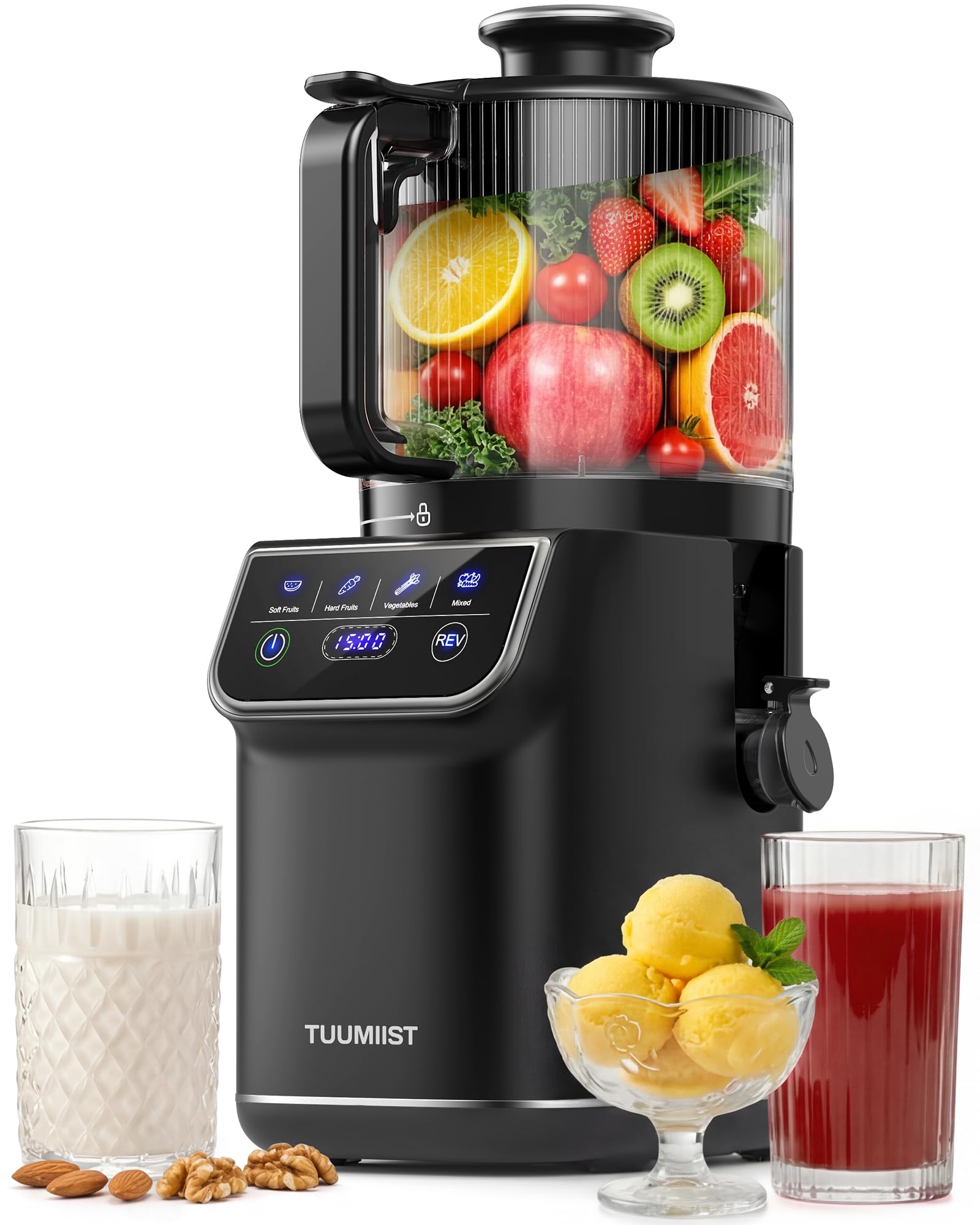
The TUUMIIST sits at the premium end with a 6.5-inch self-feeding chute that swallows whole beets without requiring you to break out a cutting board. The smart touch interface gives you one-tap control over juice, nut milk, and sorbet modes, and the quiet motor operates below 60 dB, making early-morning juicing sessions practical.
Its slow cold press technology achieves up to 95 percent juice yield, leaving beet pulp nearly bone-dry. The 100-ounce capacity pitcher and auto-shutoff feature allow batch juicing without monitoring the fill level. The stainless steel and BPA-free build gives it a durable, pro-grade feel on the counter.
The smart auto-reverse function automatically clears jams from dense beet fiber, which is a common pain point with lower-end masticating machines. Assembly involves only three main parts, and rinsing takes about three minutes — no scrubbing required.
Why it’s great
- Wide 6.5-inch chute handles whole beets with no pre-cutting
- 95 percent juice yield with bone-dry pulp from beet fiber
- Smart touchscreen and auto-reverse prevent jams
Good to know
- Premium price point may exceed entry-level budgets
- Larger footprint requires stable counter space
2. ECOSELF 3-in-1 Cold Press Juicer
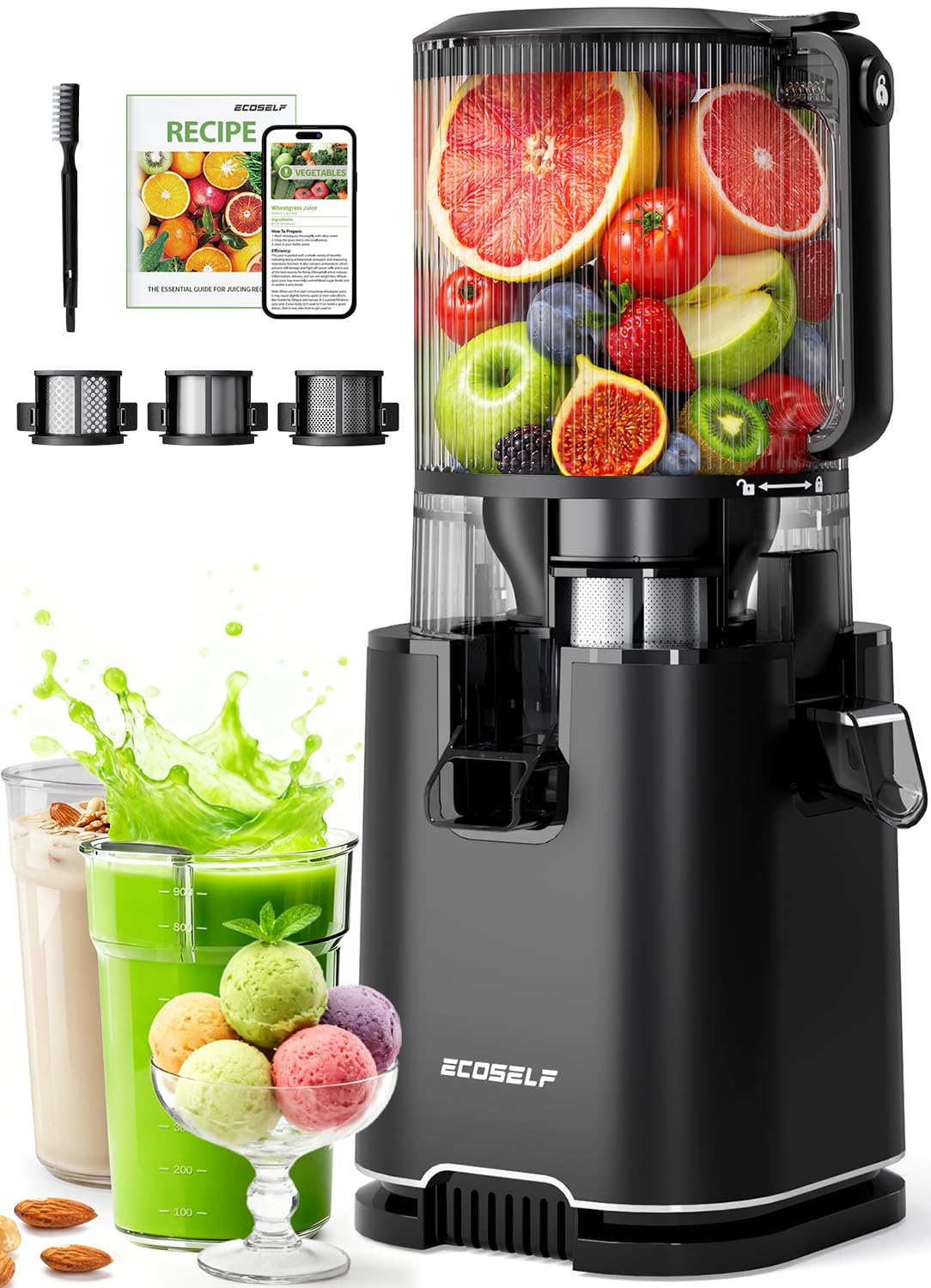
The ECOSELF distinguishes itself with three interchangeable filters — fine for smooth juice, coarse for pulp juice, and a blank filter for sorbets and nut milk. This versatility means you can switch from a clear beet juice to a thicker, fiber-rich version or even a frozen dessert using the same machine without buying extra attachments.
Its 6.0-inch wide feed mouth accommodates whole apples, small beets, and large carrot clusters without pre-cutting. The large-capacity feeding chamber is designed for hands-free operation, allowing you to load multiple beets at once while the machine self-feeds them through the auger.
The upgraded motor operates quietly while delivering consistent torque through beet processing. Cleaning is straightforward with the included brush, and the simple locking design allows disassembly in seconds. The 24-month repair and replacement service adds peace of mind for daily use.
Why it’s great
- Three filter options allow juice, pulp juice, sorbet, and nut milk
- Self-feeding design reduces babysitting during batch juicing
- Quiet motor with 24-month service coverage
Good to know
- 6.0-inch chute is slightly smaller than some wide-chute competitors
- Sorbet filter requires pre-frozen fruit, not fresh
3. LUFVEBUT Slow Juicer for Celery Ginger Beet Carrot
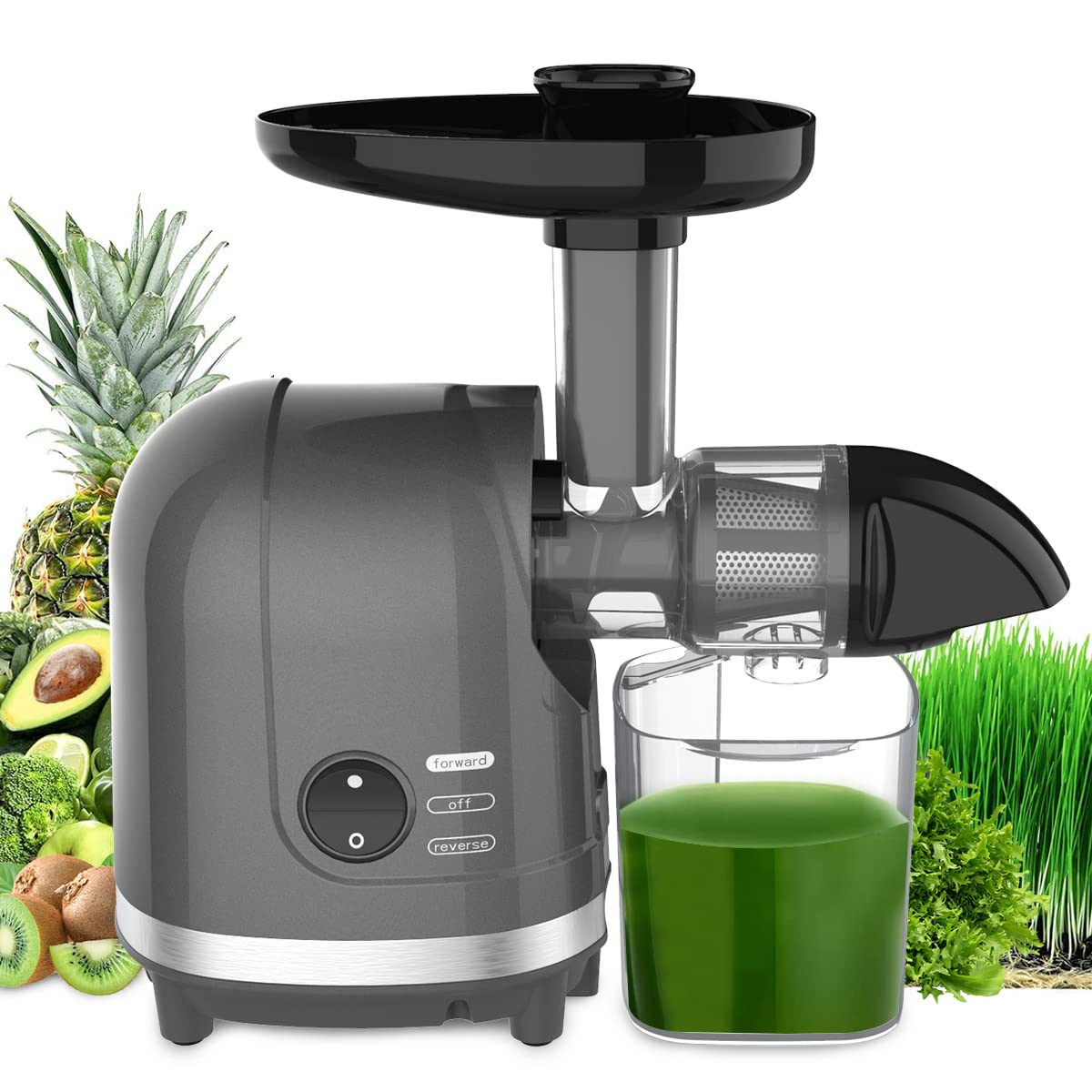
The LUFVEBUT uses a 7-segment auger system that crushes beets at 80 RPM, minimizing heat and oxidation to preserve the natural sweetness and deep red pigment. This is a mid-range option that punches above its price tier with a 200-watt motor that handles beet, carrot, and ginger mixes without stalling.
Its horizontal structure keeps the machine stable during operation, and the safety lock with lid-lift protection makes it a strong choice for families with children. The reverse function clears fiber jams quickly when dense beet chunks get stuck in the auger.
All parts are dishwasher-safe, and one-touch disassembly allows rinsing in about 30 seconds. The compact dimensions (5.5 x 5.1 x 8.1 inches) make it one of the more space-efficient options for beet juicing, fitting easily under standard cabinets.
Why it’s great
- 7-segment auger at 80 RPM maximizes nutrient retention in beets
- Compact footprint saves counter space
- Dishwasher-safe parts with 30-second rinse cleaning
Good to know
- Smaller feed chute requires beets cut into smaller pieces
- ABS plastic build is less premium than stainless steel options
4. Anybear Cold Press Juicer 200W
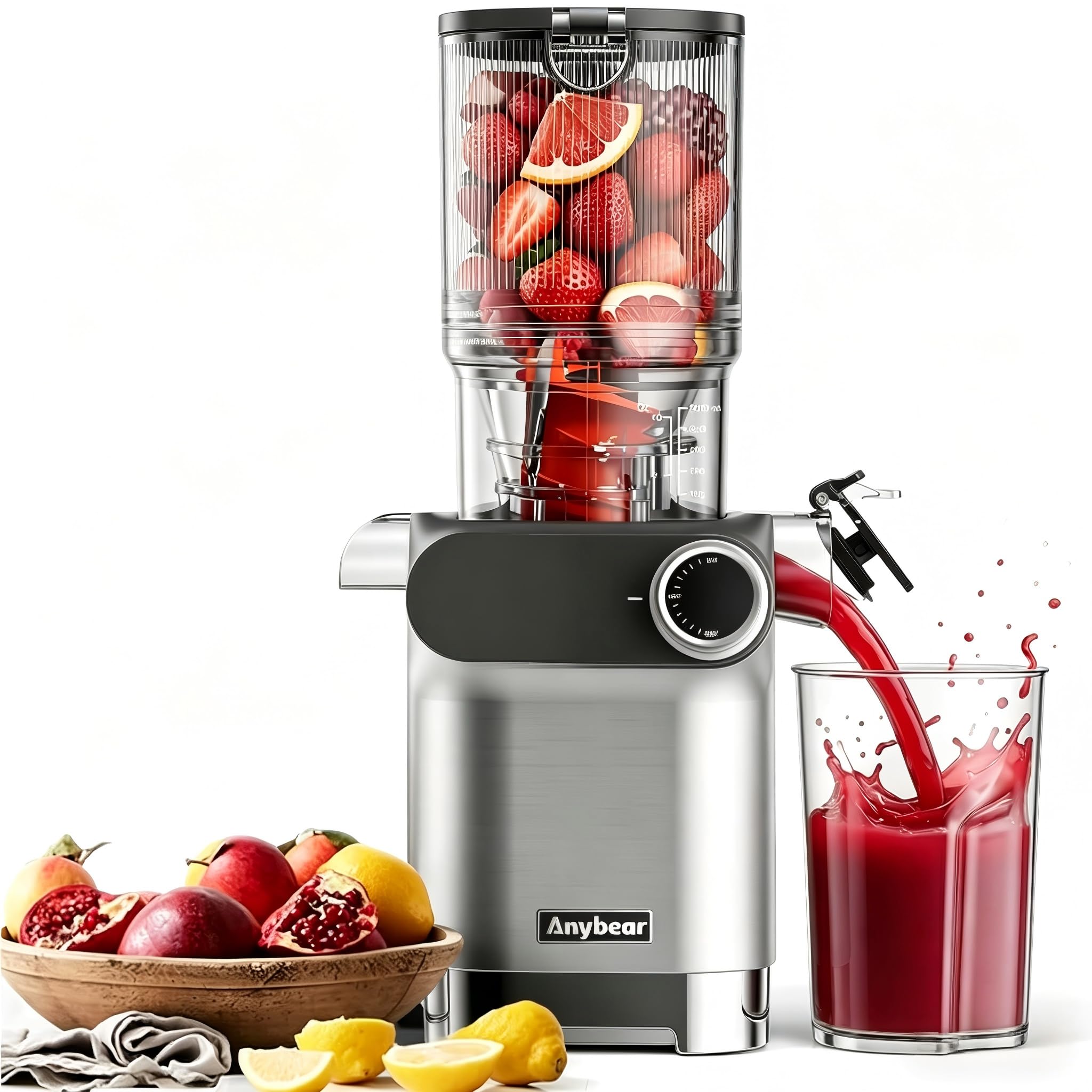
The Anybear uses a 200-watt motor with an upgraded auger designed specifically for masticating dense produce at slow speeds. Its 4.3-inch feed chute is narrower than the premium wide-chute models, but it still accepts quartered beets without requiring cutting into strips.
The juicer body is made from Tritan material, a BPA-free copolyester known for its durability and clarity, which gives it a cleaner look on the counter compared to standard ABS plastic. The machine is designed for simple disassembly, and the included juice recipe book helps new users plan beet combinations with carrots, apples, and ginger.
At 200 watts, the motor runs quietly and consistently, though processing whole beets may require occasional use of the reverse function if pieces are too large. The pulp separator works effectively, producing a dry pulp that indicates efficient extraction.
Why it’s great
- Tritan construction is BPA-free and more durable than standard plastic
- Quiet operation at 200W is suitable for early morning use
- Juice recipe book helps beginners create beet blends
Good to know
- 4.3-inch chute requires beets cut into smaller pieces
- Pulp capacity is moderate for large batch sessions
5. Fretta Cold Press Juicer Machines, 250W

The Fretta 250W cold press juicer features a 5.3-inch feed chute that strikes a balance between whole-fruit convenience and compact machine design. The 250-watt motor provides enough torque to handle beet processing without struggling, and the slow masticating mechanism produces high juice yield with minimal foam.
This model doubles as a nut milk maker, giving you a second function for almond or oat milk without needing a separate appliance. The BPA-free components are dishwasher-safe, and the reverse function is available for clearing fiber blockages from dense vegetables.
Its footprint is moderate — not as compact as the LUFVEBUT but smaller than the TUUMIIST or ECOSELF. The juice cup and pulp container are transparent, allowing you to monitor fill levels during operation.
Why it’s great
- 5.3-inch chute fits beet quarters without pre-cutting
- 250W motor provides reliable torque for dense produce
- Nut milk functionality adds versatility beyond juice
Good to know
- Not as wide as premium 6-inch chute models
- Motor may require cooldown during extended beet batches
6. SMALLHOO 3-in-1 Juicer Machines, 350W
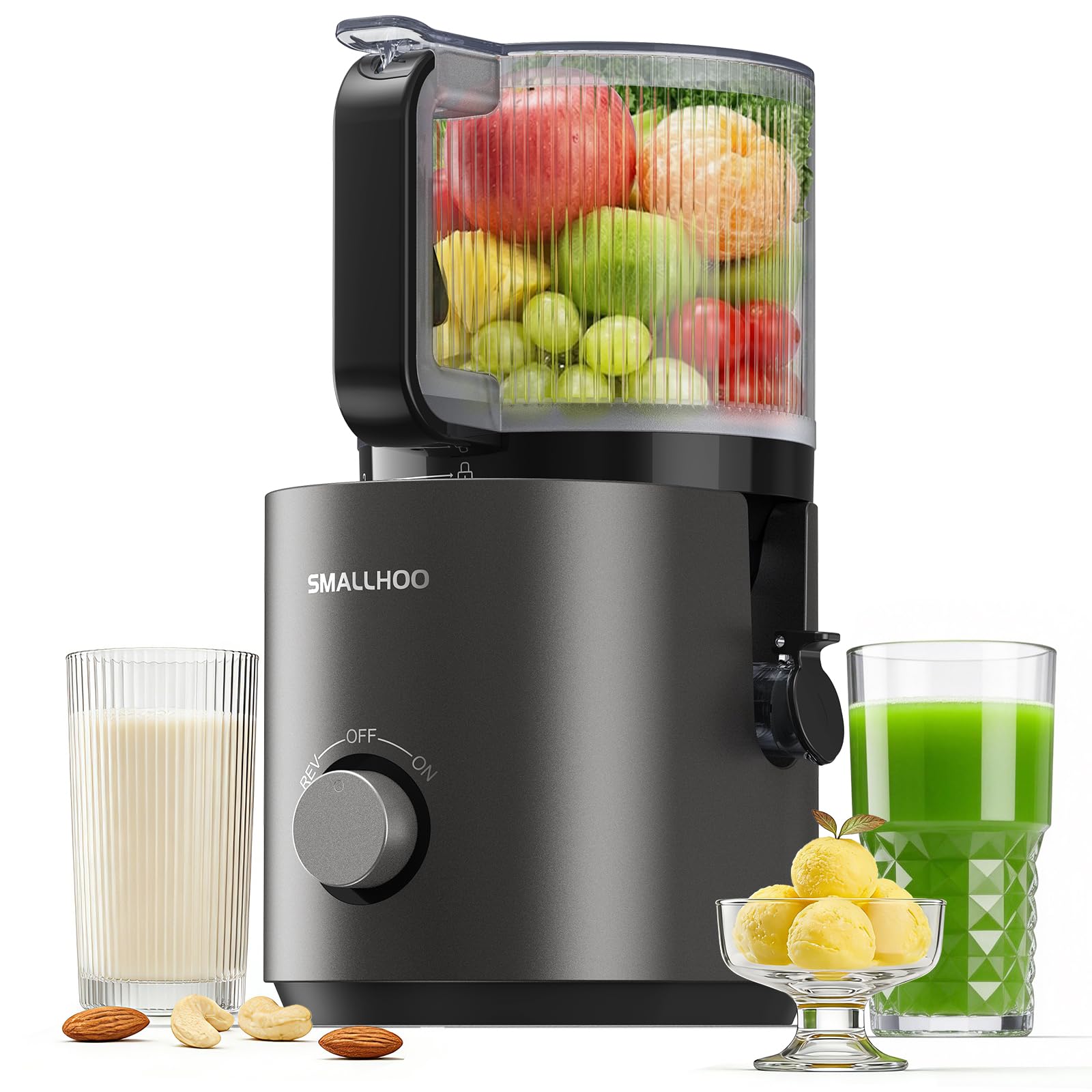
The SMALLHOO is built for bulk juicing with a massive 7-inch feed chute — the widest in this lineup — and a 120-ounce hopper that allows hands-free loading for extended sessions. The 350-watt motor is the most powerful among the reviewed models, providing ample torque to process whole beets, pineapples, and large apples without stalling.
Its 3-in-1 capability includes interchangeable strainers for pure juice, creamy nut milk, and natural sorbet. The 60 RPM slow juicer tech ensures minimal heat and oxidation, while the reverse function prevents fiber jams from dense beet pulp.
The machine runs below 60 dB, making it quiet enough for use while others are sleeping. Tool-free disassembly and dishwasher-safe parts simplify cleanup. The stainless steel blade material resists staining from beet juice, which is a practical advantage over plastic-only augers.
Why it’s great
- 7-inch chute is the widest, accepting whole beets with no cutting
- 350W motor handles continuous beet processing reliably
- 120-ounce hopper reduces reload frequency for family batches
Good to know
- Large footprint demands significant counter space
- Stainless steel finish may show water spots
7. Fretta Cold Press Juicer Machines with PCTG Material

The Fretta PCTG model uses American-sourced PCTG material, a high-clarity BPA-free plastic that is more impact-resistant than standard acrylic. This is the entry-level option among the reviewed models, making it accessible for those testing whether beet juicing fits their routine without a major upfront investment.
It accommodates whole fruits and vegetables with a standard feed chute and features an easy-to-clean design that disassembles without tools. The cold press mechanism operates at a slow speed, extracting juice with less oxidation than centrifugal alternatives.
While it lacks the wide chute and powerful motor of premium models, it delivers reliable performance for small to medium beet batches. The PCTG material resists staining and clouding better than standard plastics, so the clear components stay transparent through repeated beet juice use.
Why it’s great
- American-sourced PCTG is BPA-free and resists staining from beets
- Budget-friendly entry point for beet juicing beginners
- Easy tool-free disassembly for quick cleaning
Good to know
- Standard feed chute requires beets cut into smaller pieces
- Lower wattage may struggle with continuous whole-beet batches
FAQ
Can I use a centrifugal juicer for beets?
Do I need to peel beets before juicing?
How do I prevent beet pulp from clogging the auger?
Final Thoughts: The Verdict
For most users, the juicer for beets winner is the TUUMIIST 3-in-1 Cold Press because its 6.5-inch self-feeding chute handles whole beets, its smart touch operation simplifies batch processing, and its 95 percent yield leaves pulp nearly dry. If you want multi-filter versatility for sorbet and nut milk options, grab the ECOSELF 3-in-1. And for compact countertop use with a strong 7-segment auger, nothing beats the LUFVEBUT Slow Juicer.