A paring knife that dulls after one avocado is a tool, not an asset. The real test of a Japanese Paring Knife isn’t its initial razor edge—it’s whether that edge holds through a week of citrus, a pile of shallots, and a bag of apples without needing a steel. The category is packed with blades claiming “Damascus” and “VG-10,” but the gap between marketing and actual daily performance is wide enough to fit a global cook’s frustration.
I’m Mohammad Maruf — the founder and writer behind AirfryerBite. I’ve spent hundreds of hours analyzing steel compositions, edge geometries, and handle ergonomics to separate the true cutlery from the shelf decoration, and this guide reflects the real-world trade-offs every home cook faces when choosing a dedicated paring blade.
Whether you need something for precise vegetable peeling, quick fruit prep, or delicate garnishes, finding the best japanese paring knife means balancing steel hardness, blade thickness, handle comfort, and edge retention against your specific cutting habits.
How To Choose The Best Japanese Paring Knife
Choosing a Japanese paring knife means understanding that its small size demands specific performance characteristics that differ from larger kitchen knives. A 3.5-inch blade must be nimble, thin enough for precise work, and hard enough to hold an acute edge. The wrong combination leads to chipping or dulling.
Steel Core and Hardness Rating
The core steel determines edge retention and sharpening ease. VG-10 (58-60 HRC) is the workhorse option for paring knives—hard enough for a lasting edge but not so brittle that micro-chipping becomes a problem during routine fruit and vegetable prep. Higher-end options use VG-MAX, which boosts wear resistance without sacrificing toughness. Avoid anything below 56 HRC for a true Japanese edge.
Blade Geometry and Edge Angle
A traditional Japanese paring knife is sharpened to an 8-to-12-degree angle per side. This steep bevel gives you the precision needed for tourne cuts, coring, and removing pith without waste. Look for blades around 1.5mm to 2mm at the spine—thin enough to glide through produce but rigid enough not to flex during heavy peeling. The 3.5-inch to 4-inch length range is ideal for controlled detail work.
Handle Construction and Balance
Because a paring knife lives in your hand, the handle must be comfortable for extended use. Pakkawood (laminated wood composite) offers moisture resistance and a secure grip, while fiberglass-reinforced nylon provides durability without slipping when wet. Full-tang construction adds forward balance, which helps with controlled tip work. Avoid handles that are too heavy—they shift the balance point backward and reduce maneuverability.
Quick Comparison
On smaller screens, swipe sideways to see the full table.
| Model | Category | Best For | Key Spec | Amazon |
|---|---|---|---|---|
| Shun Classic 4″ | Premium Forged | High-end precision & edge retention | VG-MAX core, 68-layer Damascus, 16° edge | Amazon |
| KYOKU Shogun 3.5″ | Mid-Range Damascus | Best value in VG-10 Damascus | 67-layer Damascus, VG-10 core, 8-12° edge | Amazon |
| Global 3.5″ | Stamped Stainless | Lightweight, modern minimalist grip | One-piece stamped stainless, hollow edge | Amazon |
| HOSHANHO 3-Piece Set | Multi-Blade Set | Getting a chef & utility knife alongside | 10Cr15CoMoV steel, HRC 60, Pakkawood handle | Amazon |
| Shun Sora 3.5″ | Entry-Level Premium | Budget-friendly Shun entry point | VG-10 edge, 420J stainless body, D-shaped handle | Amazon |
In‑Depth Reviews
1. Shun Classic Limited Edition Paring Knife, 4 Inch
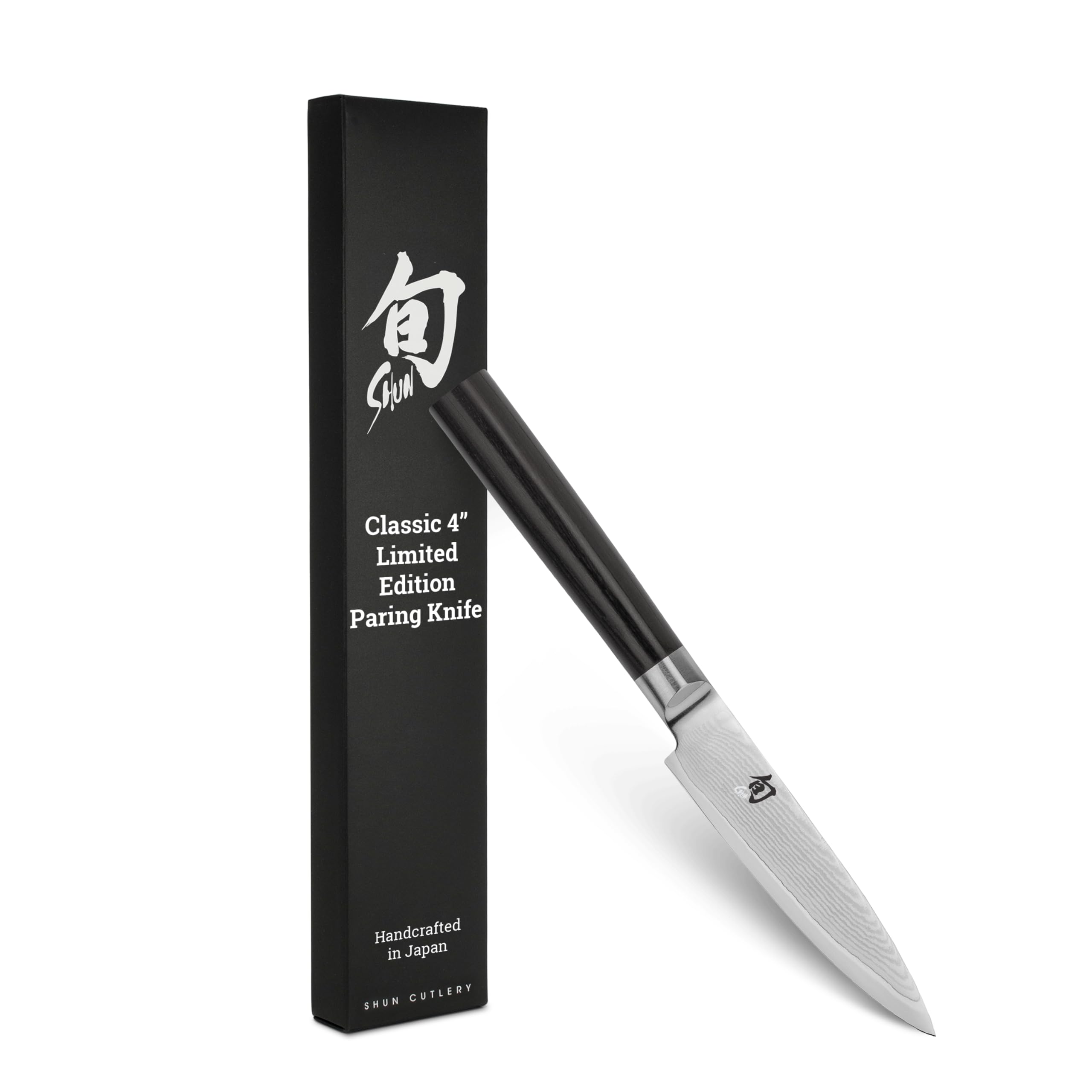
The Shun Classic 4-inch paring knife sits at the intersection of traditional Japanese craftsmanship and modern metallurgy. Its proprietary VG-MAX core steel, clad with 68 alternating layers of Damascus stainless steel, delivers an edge that holds noticeably longer than standard VG-10. The 16-degree double-bevel edge is ground and bead-blasted to reveal a flowing Damascus pattern, but this is not just a cosmetic knife—the geometry is thin enough to remove a tomato skin in one continuous ribbon without crushing the flesh.
The D-shaped ebony PakkaWood handle is a key differentiator. It fills the curve of your fingers naturally, providing a locked-in grip that reduces fatigue during repetitive peeling tasks. At 0.14 pounds, the knife feels light in hand, but the forged construction gives it enough forward weight to feel authoritative during coring and trimming. This is a dedicated paring blade, not a general utility knife, and its 4-inch length offers just enough extra reach compared to standard 3.5-inch models without sacrificing maneuverability.
Customer feedback consistently highlights the razor-sharp factory edge and the handle’s secure ergonomics. Several long-time Global users reported switching to this Shun and noticing an immediate improvement in edge retention. The main consideration is that this is a premium-tier tool—treat it accordingly. Hand wash only, no bone or frozen food, and use a ceramic or water stone for sharpening to preserve the Damascus layers. The included lifetime warranty and Seki City, Japan provenance add confidence to the investment.
Why it’s great
- VG-MAX steel offers superior edge retention over standard VG-10
- D-shaped PakkaWood handle locks into grip for fatigue-free peeling
- 4-inch blade provides extra reach without losing tip control
- Lifetime warranty and handcrafted in Seki City, Japan
Good to know
- Premium price point requires commitment to proper hand care
- Not dishwasher safe—requires hand washing and drying
- Thin edge can chip if used on bones or frozen items
2. KYOKU Paring Knife – 3.5″ – Shogun Series
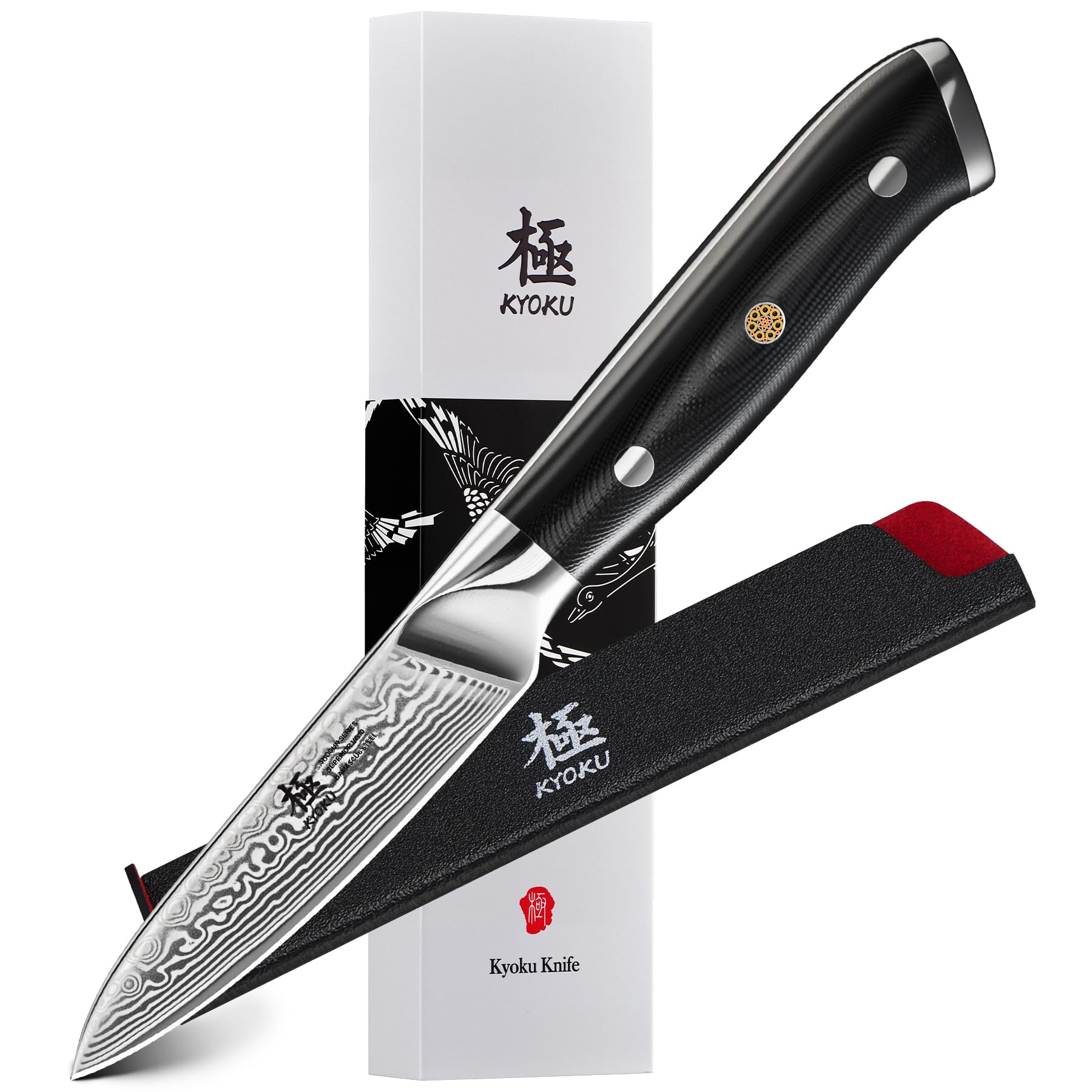
The KYOKU Shogun 3.5-inch paring knife brings a genuine VG-10 core wrapped in 67-layer Damascus cladding to a price tier where many competitors offer simpler stamped blades. The 8-to-12-degree Honbazuke edge—the traditional three-step sharpening method—delivers an out-of-box sharpness that competes directly with knives costing significantly more. At 0.55 pounds, this blade has more heft than a typical paring knife, which some users find reassuring for tasks like coring apples or trimming pineapple.
The fiberglass-reinforced nylon handle with its signature mosaic pin is intentionally built for durability. Unlike PakkaWood, this handle resists moisture absorption and thermal expansion, making it a practical choice for cooks who don’t baby their tools. The included sheath and storage case add real utility—this is a knife that can be packed into a knife roll or drawer without risking edge contact. The blade steel’s HRC 58-60 rating sits in the sweet spot for a paring knife: hard enough for lasting sharpness but not so brittle that it chips during routine vegetable prep.
The trade-off is that the extra handle weight shifts the balance point slightly toward the rear. For cooks accustomed to ultra-light parers like Global, this takes a few minutes to adjust to. However, once you adapt, the forward momentum of the blade during push cuts feels precise. KYOKU backs this with a lifetime warranty and 24/7 customer support, which adds peace of mind for first-time Japanese knife buyers. For the price, you get Damascus aesthetics, a VG-10 core, and protective accessories that many mid-range knives omit.
Why it’s great
- Genuine VG-10 core with 67-layer Damascus at a mid-range price
- 8-12 degree Honbazuke edge delivers exceptional factory sharpness
- Moisture-resistant fiberglass handle ideal for busy kitchen use
- Includes both sheath and storage case for edge protection
Good to know
- Rear-weighted balance requires slight adjustment from lighter knives
- Weight (0.55 lbs) is heavier than typical paring knives
- Fiberglass handle lacks the warmth of natural wood handles
3. Global 3.5″ Paring Knife
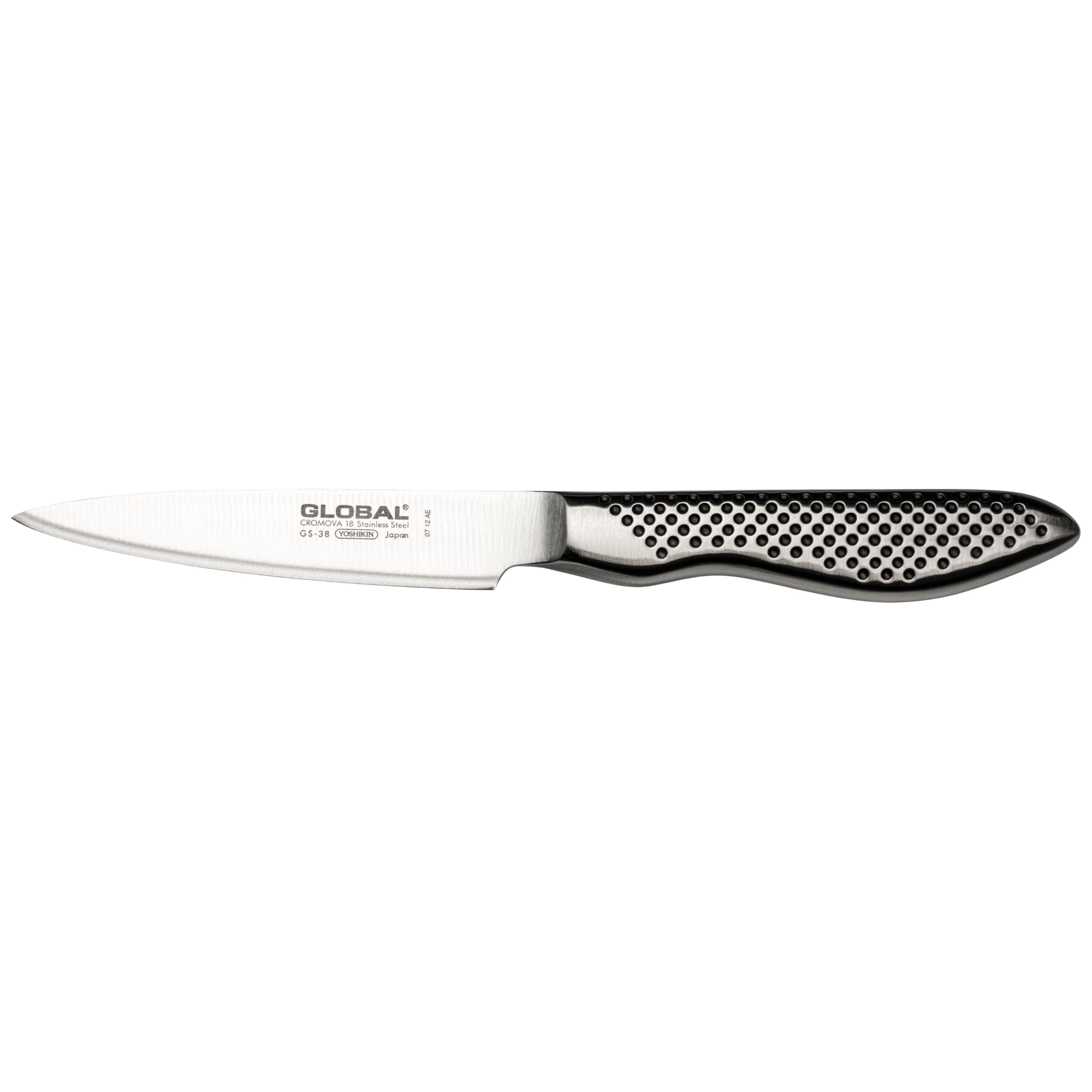
The Global 3.5-inch paring knife represents a fundamentally different design philosophy from the Damascus-clad options above. It is stamped from a single piece of CROMOVA 18 stainless steel, meaning there is no separate handle—the entire knife is one continuous metal form. This gives it a distinct weight advantage: at just 62 grams (about 2.2 ounces), it is dramatically lighter than the KYOKU or Shun models. For cooks who prioritize maneuverability and speed over heft, this featherweight design reduces fatigue during long prep sessions.
The hollow-edge grind is worth noting. Unlike a plain edge, the hollow grind creates a thinner blade profile behind the edge, which improves slicing performance on soft produce like tomatoes and citrus. The molded stainless steel handle is dimpled for grip, though some users find it slippery when wet compared to textured synthetic or wood handles. The 3.5-inch Western-style blade profile is familiar to anyone who has used German-style paring knives, making this an approachable entry point for cooks new to Japanese blades.
The edge geometry is less acute than traditional Japanese knives—Global uses a roughly 15-degree angle per side—which makes the blade more forgiving for inexperienced sharpeners. However, this also means the edge will not match the razor precision of a VG-10 or VG-MAX blade sharpened to 12 degrees. The knife is a proven workhorse; it has been in continuous production for decades and enjoys a loyal following among professional cooks who value consistency. The lack of a bolster allows for easy sharpening along the entire edge length until the knife is essentially worn out.
Why it’s great
- Extremely lightweight (62g) reduces hand fatigue during long use
- One-piece stamped construction eliminates handle joint failure
- Hollow-edge grind improves slicing on soft-skinned produce
- Wide edge angle is forgiving for home sharpening
Good to know
- Dimpled stainless handle can be slippery when wet
- Edge retention does not match VG-10 or VG-MAX steel options
- Western profile lacks the precision of a true Japanese edge angle
4. HOSHANHO 3 Pieces Knife Set
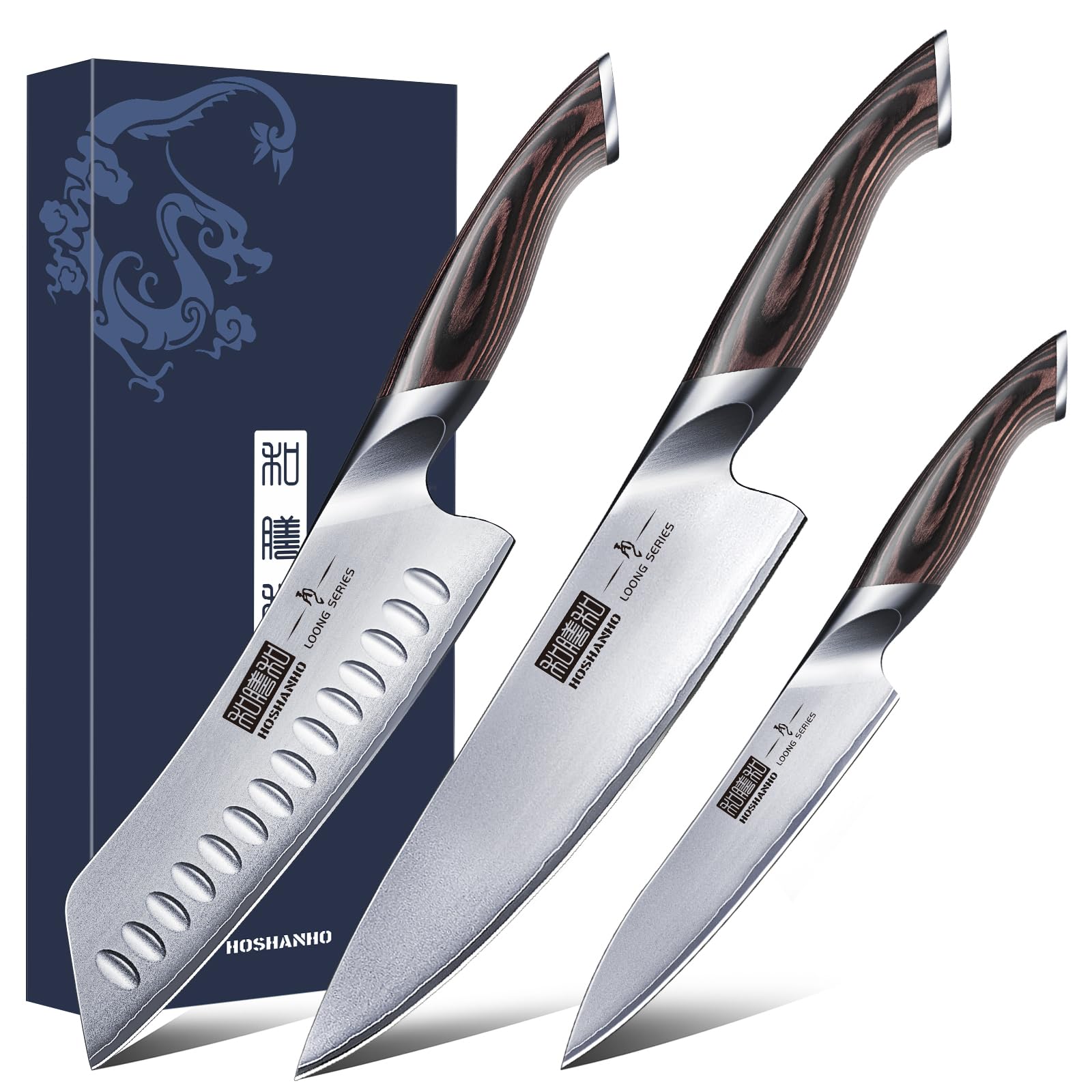
The HOSHANHO 3-piece set takes a different approach—instead of selling a single paring knife, it bundles an 8-inch chef’s knife, a 7-inch santoku, and a 6-inch utility knife. This is relevant because the 6-inch utility knife functions as a larger alternative to a traditional paring knife for cooks who prefer more blade length for slicing. The steel used here is Japanese 10Cr15CoMoV high-carbon stainless steel, heat-treated to an HRC 60 rating. This is the same steel family used in premium Japanese cutlery, offering strong corrosion resistance and long-term edge stability.
Each blade is forged, not stamped, and hand-polished at a 15-degree angle per side. The Pakkawood handles are contoured for a comfortable pinch grip, and the full-tang construction provides balanced weight distribution. For a home cook who needs more than just a parer, this set offers versatility—the chef’s knife handles heavy chopping while the utility knife covers medium slicing tasks. The included gift box packaging makes this a viable option for gifting, though serious knife enthusiasts should note that the set does not include a dedicated 3.5-inch paring knife.
The primary limitation is that the 6-inch utility knife, while versatile, lacks the fine tip control of a true paring knife for delicate tasks like deveining shrimp or making decorative garnishes. The 15-degree edge is sharper than a typical Western knife but not as acute as high-end Japanese parers. However, for the cook who wants a complete forged Japanese knife set with HRC 60 blades and doesn’t need a separate parer, this represents a strong value package. The Pakkawood handles require periodic oiling to prevent drying, and as with all high-carbon steel, immediate drying after washing is essential to prevent discoloration.
Why it’s great
- Three forged knives with HRC 60 10Cr15CoMoV steel for under one premium parer price
- Pakkawood handles and full-tang construction offer balanced feel
- 15-degree edge provides sharp performance without excessive fragility
- Versatile set covers chef, santoku, and utility roles
Good to know
- No dedicated 3.5-inch paring knife; 6-inch utility is the smallest blade
- 15-degree edge is less acute than 12-degree paring-specific knives
- High-carbon steel requires immediate drying to prevent staining
5. Shun Sora 3.5″ Paring Knife
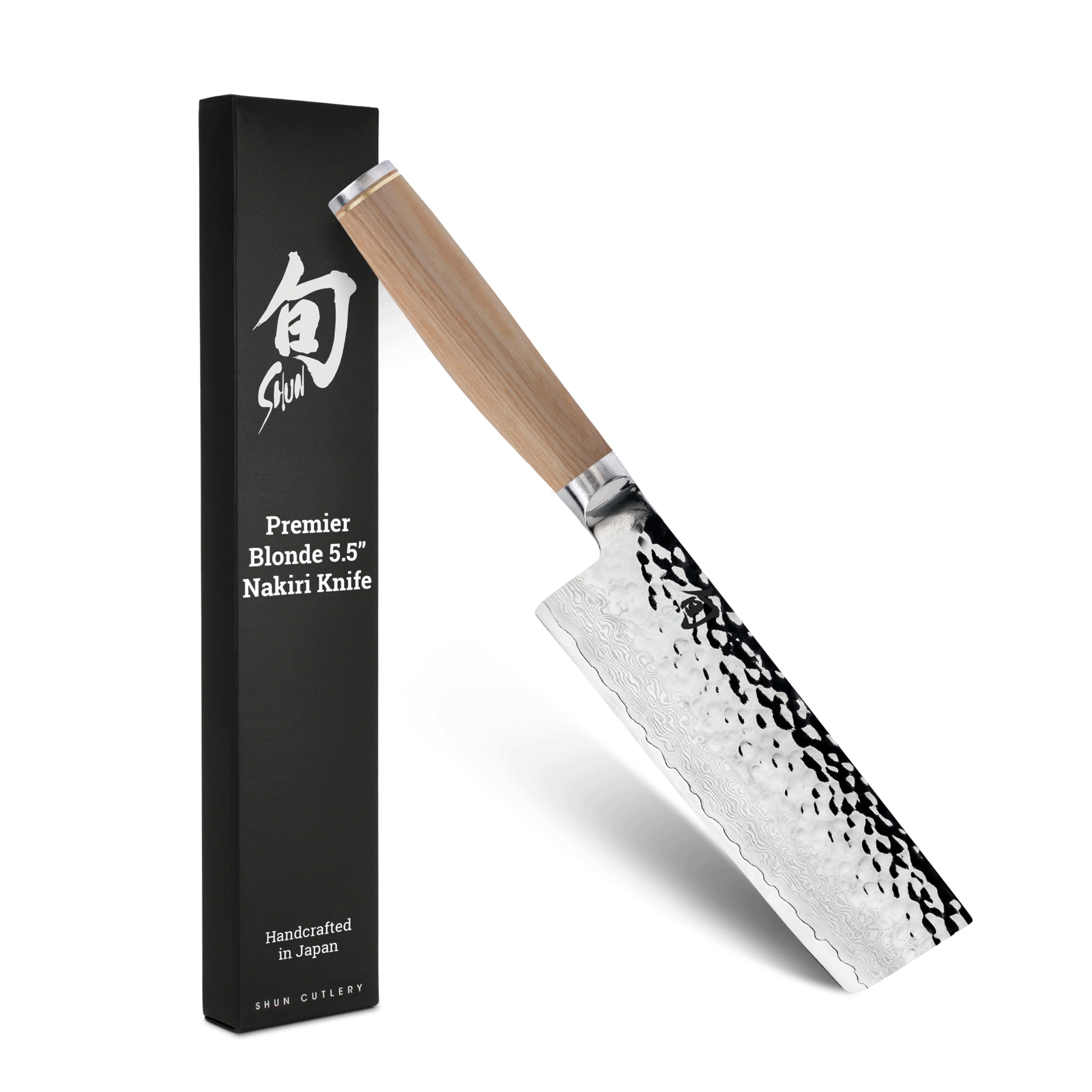
The Shun Sora 3.5-inch paring knife serves as the entry point into Shun’s lineup while maintaining a critical performance feature: a VG-10 steel cutting edge. Unlike the fully forged Classic series, the Sora uses a composite construction—a VG-10 edge layer is clad over a 420J stainless steel body. This reduces cost without sacrificing the hardness at the cutting edge, where it matters most. The 16-degree double-bevel edge is the same angle found on higher-end Shun knives, giving you genuine Japanese cutting geometry at a lower entry price.
The D-shaped handle is made from a synthetic material that mimics the texture of PakkaWood but resists moisture better. This makes the Sora a more forgiving choice for cooks who might occasionally forget to wipe the handle dry immediately. The blade is 3.5 inches long and 1.5mm thick at the spine, providing enough rigidity for medium-duty paring while remaining thin enough for precise tip work. At 0.57 pounds, it is heavier than the Global but lighter than the KYOKU, placing it in a comfortable middle ground for weight.
The Sora’s main concession is in edge retention compared to the VG-MAX used in the Classic line. You will need to hone more frequently, and the edge will gradually lose its factory sharpness faster than the premium Shun models. However, the steel is easier to sharpen at home on a whetstone because the 420J cladding is softer and responds well to honing. If you want a genuine Shun name and VG-10 edge performance without committing to the premium price of the Classic series, the Sora delivers the core experience with practical compromises. The handle is comfortable for both left and right-handed users, and the blade is fully handcrafted in Japan.
Why it’s great
- Genuine VG-10 edge steel at a lower price point than fully forged Shun models
- Moisture-resistant synthetic handle is more forgiving than natural PakkaWood
- 16-degree edge provides real Japanese cutting geometry
- Handcrafted in Japan with composite construction for practical durability
Good to know
- Edge retention is noticeably lower than VG-MAX or fully forged VG-10
- Composite construction means the blade cannot be resharpened indefinitely
- Lacks the Damascus aesthetic of premium Shun models
FAQ
Is a Japanese paring knife sharpened differently than a Western paring knife?
Can I use a Japanese paring knife for cutting cheese or bread?
Why do some Japanese paring knives have a single bevel edge?
How often should I sharpen a Japanese paring knife?
Final Thoughts: The Verdict
For most users, the best japanese paring knife winner is the Shun Classic 4-Inch because its VG-MAX core steel and D-shaped PakkaWood handle deliver unmatched edge retention and grip comfort for the price. If you want a Damascus VG-10 core with protective accessories at a mid-range price, grab the KYOKU Shogun 3.5-Inch. And for a lightweight, minimalist blade that requires less care, nothing beats the Global 3.5-Inch.