That dull, heavy Western cleaver is crushing your garlic and bruising your herbs. The knife you reach for every single night should glide through a butternut squash and still slide through a paper-thin slice of carrot without a fight. The solution is a blade geometry built for precision chopping, not hacking through bone.
I’m Mohammad Maruf — the founder and writer behind AirfryerBite. I study blade steel composition, Rockwell hardness ratings, and handle ergonomics so you can skip the guesswork and buy a knife that actually transforms your prep work.
After comparing nine models across steel types, edge angles, and handle materials, you will find the definitive best japanese cleaver for your specific cutting style and budget tier.
How To Choose The Best Japanese Cleaver
A Japanese vegetable cleaver—often called a Nakiri—differs from a Chinese cleaver in its thinner blade profile and double-bevel edge. You are buying a knife optimized for clean vegetable cuts, not bone splitting. Focus on four factors to land the right one for your kitchen.
Blade Steel and Hardness
VG-10 core steel holds an edge longer than standard German high-carbon stainless, with a hardness between HRC 58 and 60. Harder steel sharpens to a finer edge but is more brittle if you hit a bone or frozen item. Entry-level knives often use softer steel around HRC 56, which is easier to maintain but dulls faster with heavy vegetable prep.
Blade Geometry and Height
A tall blade—around two inches—provides knuckle clearance so your fingers never scrape the board during chopping. The flat profile of a Nakiri means the entire edge contacts the board each stroke, giving you consistent cuts without the rocking motion of a chef’s knife. Look for a straight or very slight curve at the tip for push-cutting.
Handle and Balance
A full-tang construction with a heavy handle material like G10 or Pakkawood balances the blade weight at the pinch grip. Lighter handles, such as Santoprene or hollow stainless, shift the balance point toward the blade, which some cooks prefer for fast chopping. Choose a handle texture that stays secure when wet—slippery handles cause fatigue and reduce control.
Quick Comparison
On smaller screens, swipe sideways to see the full table.
| Model | Category | Best For | Key Spec | Amazon |
|---|---|---|---|---|
| Kyoku Shogun Series | Premium | Razor-sharp precision | VG-10 core, HRC 58-60 | Amazon |
| Yoshihiro Nakiri | Premium | Traditional craftsmanship | 16-layer Damascus, HRC 60 | Amazon |
| HexClad Nakiri | Premium | Lifetime durability | 67-layer Damascus steel | Amazon |
| Dalstrong Gladiator | Mid-Range | Professional build, fair price | German steel, G10 handle | Amazon |
| Global Vegetable Knife | Mid-Range | Lightweight all-metal design | Hollow ground, 8-inch blade | Amazon |
| Wüsthof Chinese Chef | Mid-Range | German reliability | 7-inch stamped, POM handle | Amazon |
| Milk Street Nakiri | Mid-Range | Nonstick veggie release | 1.4116 German steel, 6.75″ | Amazon |
| Mercer Culinary Genesis | Budget | Entry-level value | Forged German steel, Santoprene | Amazon |
| PAUDIN Cleaver | Budget | Multi-purpose starter knife | HC steel, Pakkawood handle | Amazon |
In‑Depth Reviews
1. Kyoku Shogun Series Vegetable Cleaver
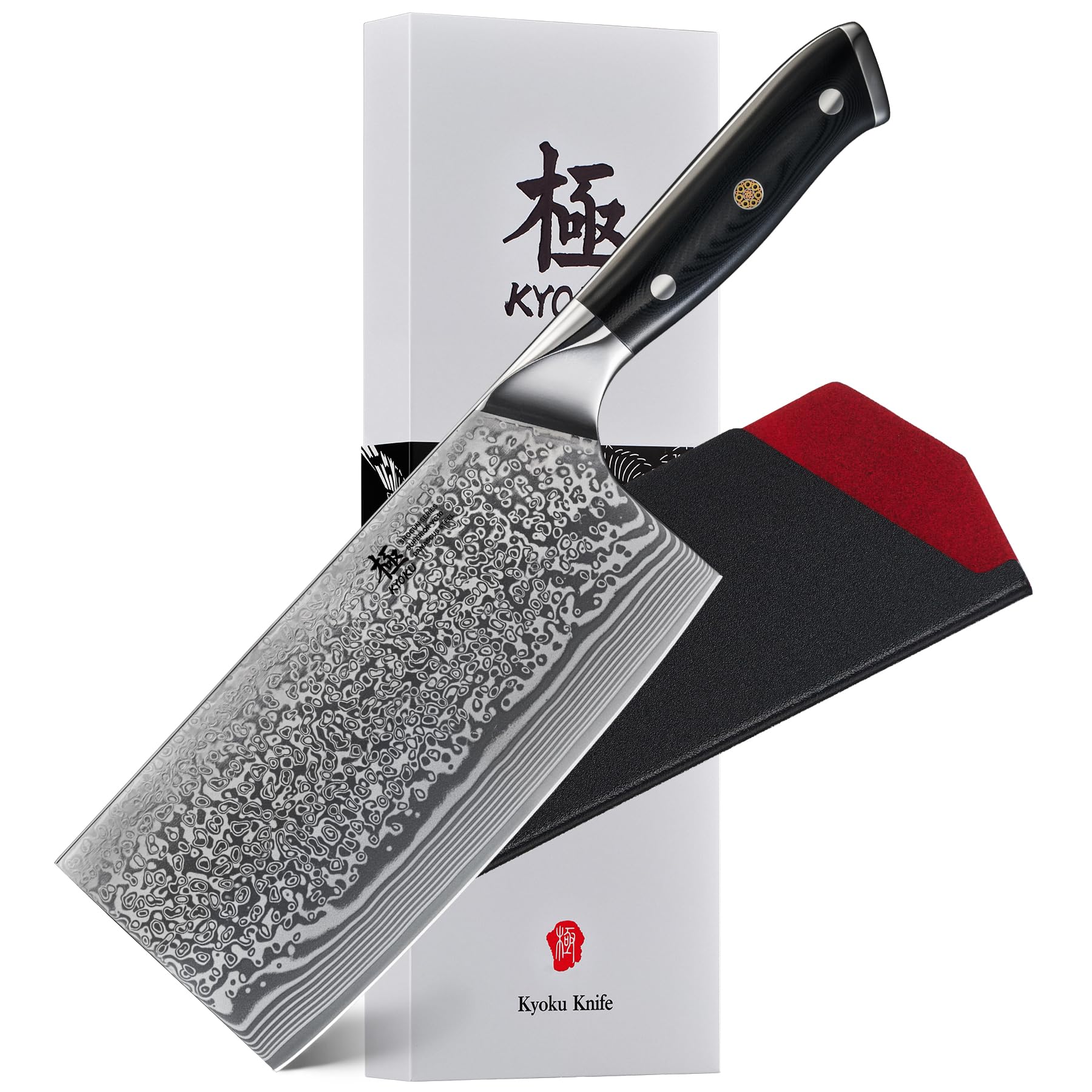
The Kyoku Shogun pairs a VG-10 Japanese steel core with a forged Damascus cladding, hitting HRC 58-60 for serious edge retention. The blade is hand-sharpened to an 8-12 degree angle per side—about half the angle of a standard chef’s knife—giving you surgical precision on onions, carrots, and even tomato skins.
The G10 handle is triple-riveted and full-tang, providing a balanced weight that sits right at the pinch grip. The included sheath and case make storage simple, though the blade’s thin geometry demands care: avoid bones and frozen items to prevent micro-chipping along that ultra-fine edge.
Customer reviews consistently praise the out-of-box sharpness and long-term edge stability. Several users note this knife quickly became their go-to for daily vegetable prep, replacing bulkier Western blades for push-cutting and fine dicing.
Why it’s great
- Razor-sharp VG-10 core with excellent edge retention
- G10 handle provides secure grip even when wet
- Full-tang balance reduces hand fatigue
Good to know
- Thin edge requires careful cutting surfaces
- Damascus pattern may appear etched rather than forged
2. Yoshihiro VG10 Hammered Damascus Nakiri

Yoshihiro’s Nakiri is forged in Japan with 16 layers of Damascus steel wrapped around a VG-10 core, hardened to HRC 60. The hammered (tsuchime) finish on the blade does more than look good—it creates tiny air pockets that reduce food sticking during rapid slicing of potatoes, beets, and dense squashes.
The Western-style handle is crafted from mahogany and runs the full tang, offering a warm, ergonomic grip that molds to the hand over time. The 6.5-inch blade is shorter than standard 7-inch options, but the tall profile still provides ample knuckle clearance for push-cutting.
User reviews highlight the exceptional out-of-box sharpness and the knife’s ability to handle delicate tasks like paper-thin cucumber slices. A few users note the edge needs maintenance on water whetstones rather than pull-through sharpeners to preserve that fine angle.
Why it’s great
- Hammered finish prevents ingredient sticking
- HRC 60 provides long-lasting sharpness
- Handcrafted in Japan with traditional technique
Good to know
- Requires water whetstone for sharpening
- No sheath included for storage
3. HexClad Nakiri Knife 6.5-Inch

The HexClad Nakiri uses 67 layers of high-carbon stainless Damascus steel to create a blade that balances hardness with flexibility. The 12-degree cutting edge, achieved through the Honbazuke heat treatment method, delivers a sharpness that holds up through weeks of heavy vegetable prep without immediate dulling.
Pakkawood handle scales are ergonomically shaped to fit the pinch grip, and the full-tang construction gives the knife a reassuring heft without feeling blade-heavy. The rectangular profile with a blunted tip makes it ideal for push-cutting and fine dicing without accidental stabs.
HexClad backs this knife with a lifetime warranty against manufacturer defects. Customer feedback emphasizes the comfortable handle and the knife’s ability to slice through hard vegetables like carrots and sweet potatoes with minimal resistance.
Why it’s great
- Very high layer count enhances durability
- Lifetime warranty from a reputable brand
- Pakkawood handle offers comfortable grip
Good to know
- Premium price point requires budget consideration
- Hand wash only to maintain warranty
4. Dalstrong Gladiator Nakiri 7-Inch

The Dalstrong Gladiator uses forged high-carbon German steel hardened to HRC 56+, with a hand-polished edge at 16-18 degrees per side. It is one of the most durable options in the mid-range, balancing sharpness with enough toughness to handle occasional knocks against cutting boards without chipping.
The black G10 handle is triple-riveted and polished to a sanitary finish, making it a solid choice for busy kitchens where cleanliness is critical. The 7-inch blade has a tall profile that gives you generous knuckle clearance for large-volume vegetable prep.
NSF certification adds professional credibility. Customer reviews note the knife feels well-balanced and heavy in a good way, with a handle that stays secure even with wet hands. Some users mention the edge could be sharper out of the box compared to premium VG-10 competitors.
Why it’s great
- NSF certified for commercial kitchens
- G10 handle is durable and sanitary
- Full-tang construction for balanced weight
Good to know
- Edge sharpness is good but not exceptional
- Heavier than some traditional Nakiri blades
5. Global 7-Inch Hollow Ground Vegetable Knife
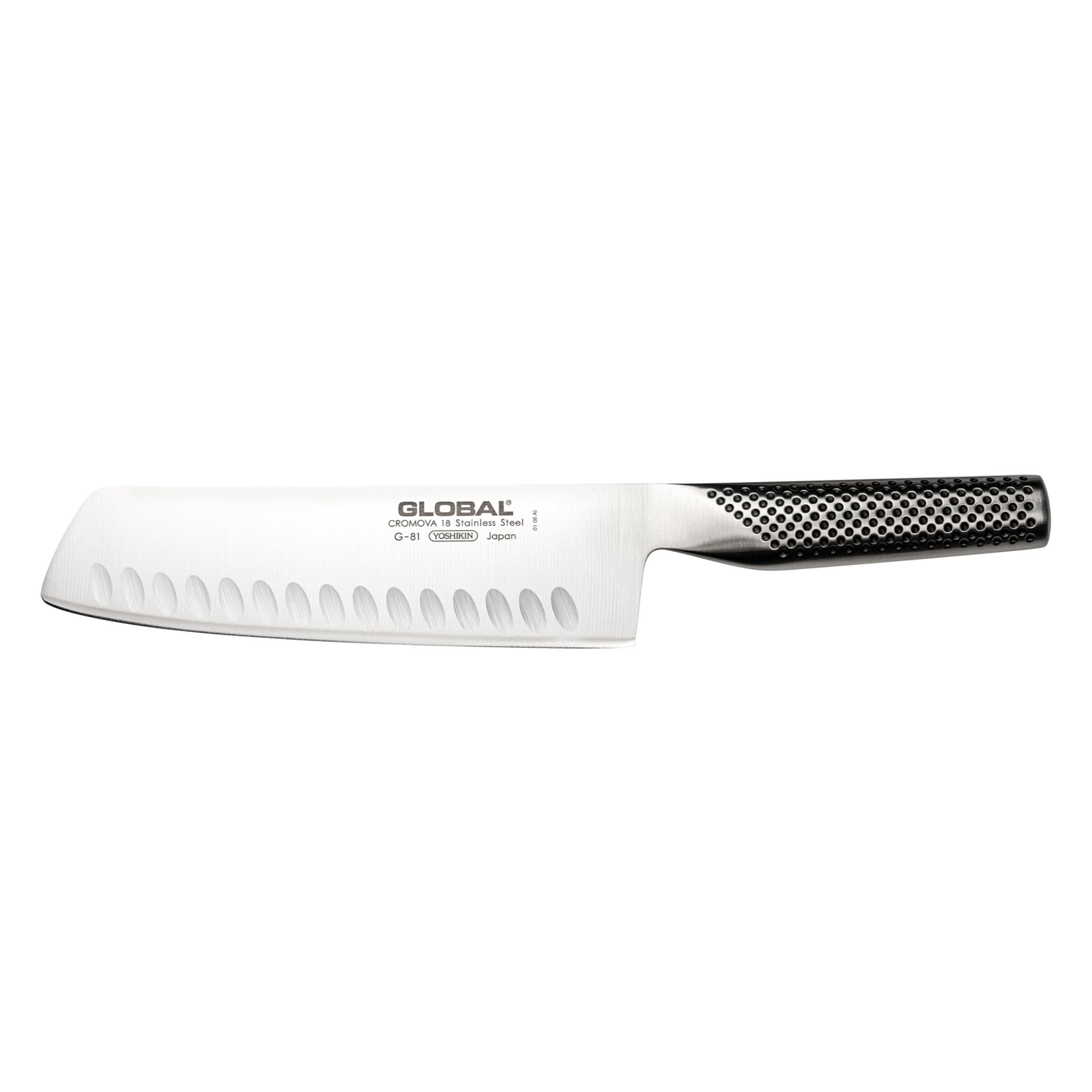
Global’s unique all-metal design uses a hollow-ground blade with a CROMOVA 18 stainless steel construction. The 8-inch length is longer than typical Japanese vegetable knives, giving you more slicing surface for large melons or whole cabbage heads.
The seamless stainless steel handle is filled with sand for balance, creating a distinctive weight distribution that sits center-heavy. The dimpled pattern on the handle and blade neck provides grip without the need for traditional handle scales.
This knife works exceptionally well for cooks who prefer a lightweight tool and don’t want to worry about wood or polymer handles degrading over time. The hollow-ground edge reduces drag, but it can be more challenging to sharpen at home compared to a standard bevel.
Why it’s great
- Unique sand-filled handle for perfect balance
- Hollow-ground edge minimizes cutting resistance
- 8-inch blade is versatile for large produce
Good to know
- Hollow ground edge is harder to resharpen
- All-metal handle can feel slippery when oily
6. Wüsthof Gourmet 7-Inch Chinese Chef’s Knife

Wüsthof applies German engineering to the Chinese cleaver shape, using high-carbon stainless steel with a laser-cut stamped construction. The blade is precise and not thick like a traditional meat cleaver, making it surprisingly light for its size at 255 grams.
The synthetic polypropylene (POM) handle resists heat, discoloration, and impact, making it a low-maintenance choice for daily kitchens. The blade thickness is moderate, allowing it to slice through vegetables cleanly while still handling light meat tasks like cutting chicken breasts.
Customer feedback is strong, with users praising the knife’s precision and handle comfort. Some note the blade could be taller for better knuckle clearance, and the stamped construction lacks the heft of forged alternatives. The limited lifetime warranty adds peace of mind.
Why it’s great
- Lightweight and easy to maneuver
- Resistant handle material for durability
- Trusted German brand with solid warranty
Good to know
- Stamped construction, not forged
- Blade height is moderate, less knuckle room
7. Milk Street Nakiri Knife by Christopher Kimball
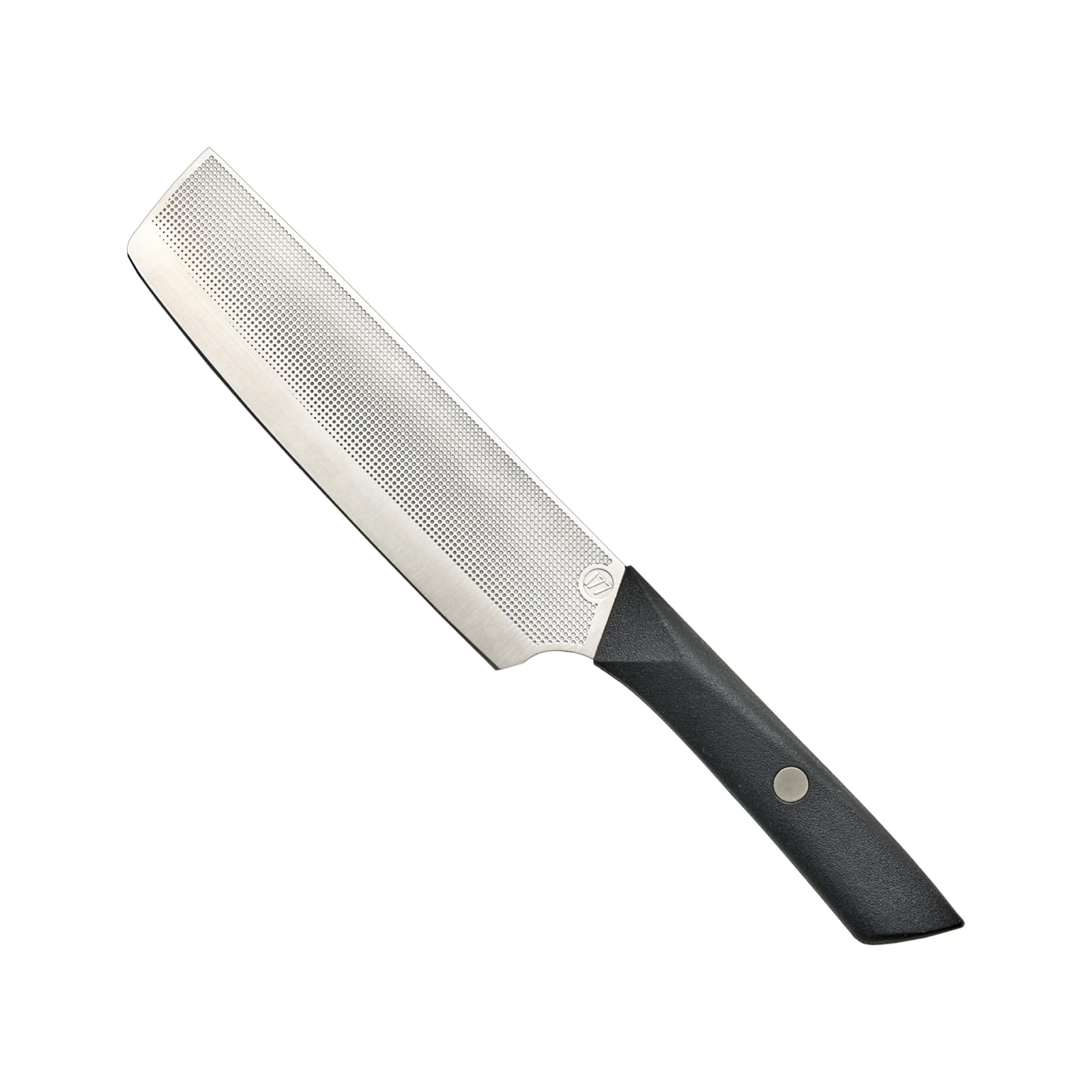
The Milk Street Nakiri uses 1.4116 German steel with a custom file-pattern embossed on the blade. This texture mimics the look of traditional Japanese Damascus while providing a practical nonstick surface that releases sliced vegetables without dragging.
The handle uses a dual-density polymer construction with a hard base layer for stability and a softer tactile exterior that conforms to your hand. The 6.75-inch blade is 2 inches tall at the heel, providing solid knuckle clearance for safe push-cutting.
Users love the lightweight feel and the sharpness out of the box. Several reviews note this knife has become their most-used kitchen tool for vegetable prep. The 17-degree sharpening angle makes it easier to maintain than ultra-fine 12-degree edges.
Why it’s great
- Embossed blade reduces food sticking
- Dual-density handle is grippy when wet
- Easy to maintain with standard sharpening angle
Good to know
- Some users find it overpriced for German steel
- Not suitable for cutting through bones
8. Mercer Culinary Genesis 7-Inch Nakiri

The Mercer Genesis delivers forged construction at an entry-level price, using high-carbon German steel with a taper-ground edge. The Rockwell hardness is not specified but falls in the standard range for German steel, providing a reliable edge that’s easy to sharpen at home.
The Santoprene handle is ergonomically shaped and textured to prevent slipping, even with wet hands. This is a favorite among culinary students and home cooks who want a proper Nakiri shape without investing in premium VG-10 steel.
The blade length is 7 inches with a moderate height, making it suitable for everyday vegetable slicing and dicing. Customer reviews highlight the comfortable handle and long-lasting sharpness for the price point. The knife should not go in a dishwasher.
Why it’s great
- Forged German steel at a budget-friendly price
- Non-slip Santoprene handle for safety
- Lightweight at 4 ounces for easy handling
Good to know
- Not as hard as premium VG-10 knives
- Santoprene handle may degrade over years
9. PAUDIN Cleaver Knife 7-Inch

The PAUDIN 7-inch cleaver uses high-carbon stainless steel with a Rockwell hardness of 56+, hand-sharpened to a 16-degree V-shaped edge. The blade thickness is 2.3mm, making it more substantial than a traditional Nakiri but capable of handling both meat and vegetable tasks.
The Pakkawood handle is ergonomically shaped and provides a comfortable grip for extended use. This knife is better categorized as a Chinese cleaver than a pure Japanese vegetable knife, with a slightly curved blade that allows for some rocking motion if needed.
It comes with a blade sheath and a gift box, making it a practical entry point for adjusting to cleaver-style chopping. Customer feedback notes the knife is sharp out of the box and handles whole chickens well. Hand washing is recommended to preserve the wooden handle.
Why it’s great
- Versatile for both vegetables and light meat cutting
- Pakkawood handle is comfortable and attractive
- Lifetime warranty against defects
Good to know
- Thicker blade than traditional vegetable knives
- Pakkawood handle requires hand drying
FAQ
What is the difference between a Nakiri and a Chinese cleaver?
Can I use a Japanese vegetable cleaver on meat?
How do I sharpen a Japanese vegetable cleaver?
Why does my Nakiri need to be hand washed only?
Final Thoughts: The Verdict
For most users, the best Japanese Cleaver winner is the Kyoku Shogun Series because the VG-10 core and G10 handle deliver professional-level sharpness and balanced control at a premium price. If you want traditional Japanese craftsmanship, grab the Yoshihiro Nakiri for its hammered finish and HRC 60 edge. And for a durable entry-level option, nothing beats the Mercer Culinary Genesis for learning the Nakiri technique without overspending.