The real test of a budget mini fridge isn’t whether it freezes your soda — it’s whether it can do that quietly, efficiently, and for more than six months without the compressor rattling or frosting up the walls. After sorting through the shelf-stack of entry-level compact refrigerators, the common pattern is clear: the cheapest ones cut corners on insulation, temperature stability, and usable shelving, costing you more in spoiled food and frustration than you saved upfront.
I’m Mohammad Maruf — the founder and writer behind AirfryerBite. I’ve spent the last decade analyzing small appliance hardware, cross-referencing real-world user reports with manufacturer spec sheets to separate the genuinely capable budget builds from the disposable ones.
The right inexpensive mini fridge depends heavily on whether you need a freezer compartment, how much noise you can tolerate in a bedroom, and whether thermoelectric cooling (chill to about 32°F below ambient) is enough for your snacks or if you need true compressor-grade refrigeration down to 32°F.
How To Choose The Best Inexpensive Mini Fridge
Buying a budget mini fridge is a trade-off dance. You are balancing cooling performance, noise level, energy consumption, and physical size. Getting it right means understanding which specs are negotiable and which are deal-breakers for your specific use case.
Cooling Technology: Compressor vs. Thermoelectric
This is the single most important decision. Compressor-based mini fridges use a sealed system just like your full-size kitchen refrigerator. They can maintain a temperature range of 32°F to 50°F regardless of the ambient room temperature. Thermoelectric models cool by passing current through two dissimilar materials, creating a temperature differential. They are quieter and lighter, but they cannot cool more than about 32°F to 36°F below the surrounding air. In a warm room, a thermoelectric fridge will struggle to keep perishables safe. For dorm rooms and bedrooms where ambient temps stay below 77°F, thermoelectric works; for garages or warm kitchens, always choose a compressor model.
Capacity vs. Footprint
Manufacturers list capacity in cubic feet, but the usable space is often less. A 1.7 cu. ft. fridge with a freezer compartment (typically 0.2 cu. ft.) leaves roughly 1.5 cu. ft. for fresh food. Also check external dimensions, not just capacity. A fridge that is 18 inches wide may not fit under a standard desk. Measure the spot before you buy, and always account for the manufacturer’s recommended 3 to 5 inches of clearance on the back and sides for heat dissipation. Thermoelectric units need even more airflow.
Adjustable Thermostat and Temperature Range
An entry-level fridge without an adjustable thermostat is a gamble. You want a range that lets you dial between 32°F and 50°F. Some budget models only have a single on/off switch or a fixed setting that may not keep milk cold enough. Look for a rotary dial with clearly marked settings (0-7 or a comparable range). This gives you the ability to compensate for ambient temperature fluctuations and store different items — skincare at 50°F, drinks at 38°F, deli meats at 34°F.
Noise Level and Location
Compressor fridges make a hum. Most budget units land around 38 to 42 dB — about the level of a quiet library. Thermoelectric units are often advertised as silent because they have no moving compressor parts (only a small fan). However, that fan can still produce 30 to 35 dB of whirring noise. If the fridge will live in a bedroom, prioritize models listed at 38 dB or lower. If it’s for an office with ambient background noise, the difference is negligible.
Reversible Door and Shelf Configuration
A reversible door hinge allows you to open the door from the left or the right, which can mean the difference between a fridge that fits your layout and one that blocks a walkway. Most budget models now offer this, but always double-check. For shelving, glass shelves are preferable to wire — they catch spills and support weight without sagging. Adjustable or removable shelves give you flexibility for tall bottles or takeout containers, which is a common pain point in small fridges with fixed shelves.
Quick Comparison
On smaller screens, swipe sideways to see the full table.
| Model | Category | Best For | Key Spec | Amazon |
|---|---|---|---|---|
| Upstreman Retro FR17 PRO | Compressor | Style-conscious dorms | 32°F-50°F thermostat, 1.7 cu. ft. | Amazon |
| Electactic 1.7 Cu.ft | Compressor | Quiet bedroom operation | 7 temp settings, 32°F-50°F range | Amazon |
| Frigidaire 1.6 cu ft | Compressor | Trusted brand reliability | 0.3 cu. ft. ice chamber | Amazon |
| Antarctic Star 1.7 cu. ft. | Compressor | Budget with freezer | 7-speed temp, 0.2 cu. ft. freezer | Amazon |
| Frestec 1.7 Cu.ft | Compressor | One-touch defrost | 6 temp modes, 0.55 kWh/day | Amazon |
| Feelfunn Beverage Cooler | Compressor | Beverage-only serving | 24 can capacity, 40°F-61°F | Amazon |
| Antarctic Star 10L Desktop | Thermoelectric | Travel and skincare | 10L capacity, AC/DC adapters | Amazon |
In‑Depth Reviews
1. Upstreman 1.7 Cu.Ft Retro Mini Fridge (FR17 PRO)
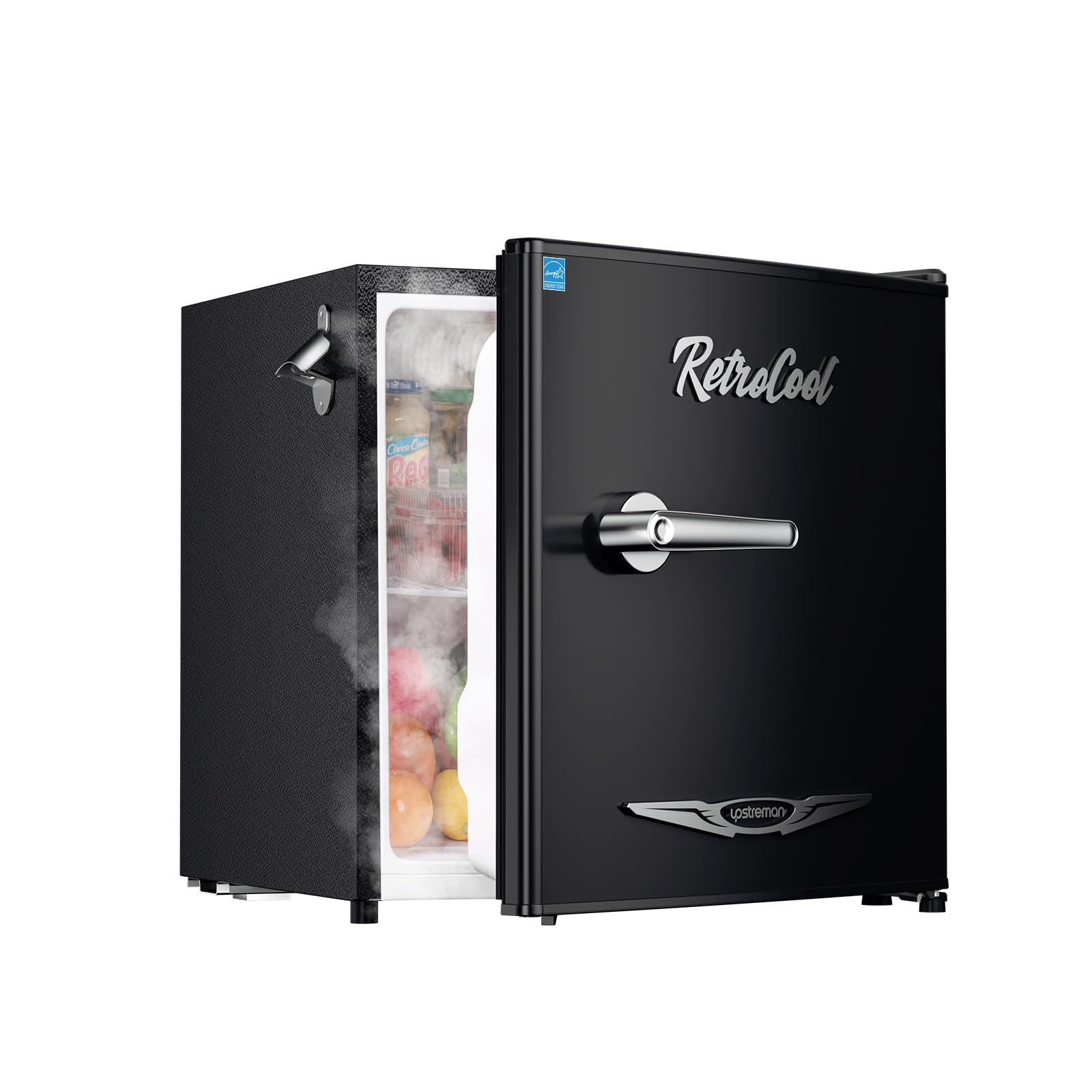
The Upstreman FR17 PRO is the best-balanced pick in the budget segment because it combines genuine compressor cooling with five thermostat settings (32°F to 50°F) and a noise floor of just 38 dB, all wrapped in a retro shell that doesn’t look like a dorm appliance. The 1.7 cu. ft. capacity is standard for this class, but the integrated bottle opener on the side and the auto-illuminating LED light on door-open are thoughtful touches you rarely see at this tier.
The compressor is the same type found in mid-range units — it holds temperature reliably without the wild swings common in thermoelectric models. The manual defrost system is simple but effective, and the single removable shelf gives you enough flexibility for taller items. At 18.8 inches wide, it fits under most desks and countertops, though the 19.3-inch height means you should measure your vertical clearance.
The retro design with a metal handle feels far more substantial than the all-plastic doors on cheaper alternatives. The energy consumption of 245 kWh per year is about average for a compressor unit this size, translating to roughly a few dollars of electricity per month. For a user who wants reliable, quiet cooling with a bit of personality, this is the sweet spot.
Why it’s great
- True compressor cooling with wide 32-50°F temperature range
- 38 dB noise level is quiet enough for a bedroom
- Built-in bottle opener and automatic interior LED
- Retro exterior with metal handle feels premium
Good to know
- Manual defrost required; no frost-free option
- Single shelf limits organizational flexibility
- Door opens left only; not reversible
2. Electactic 1.7 Cu.ft Mini Fridge with Freezer
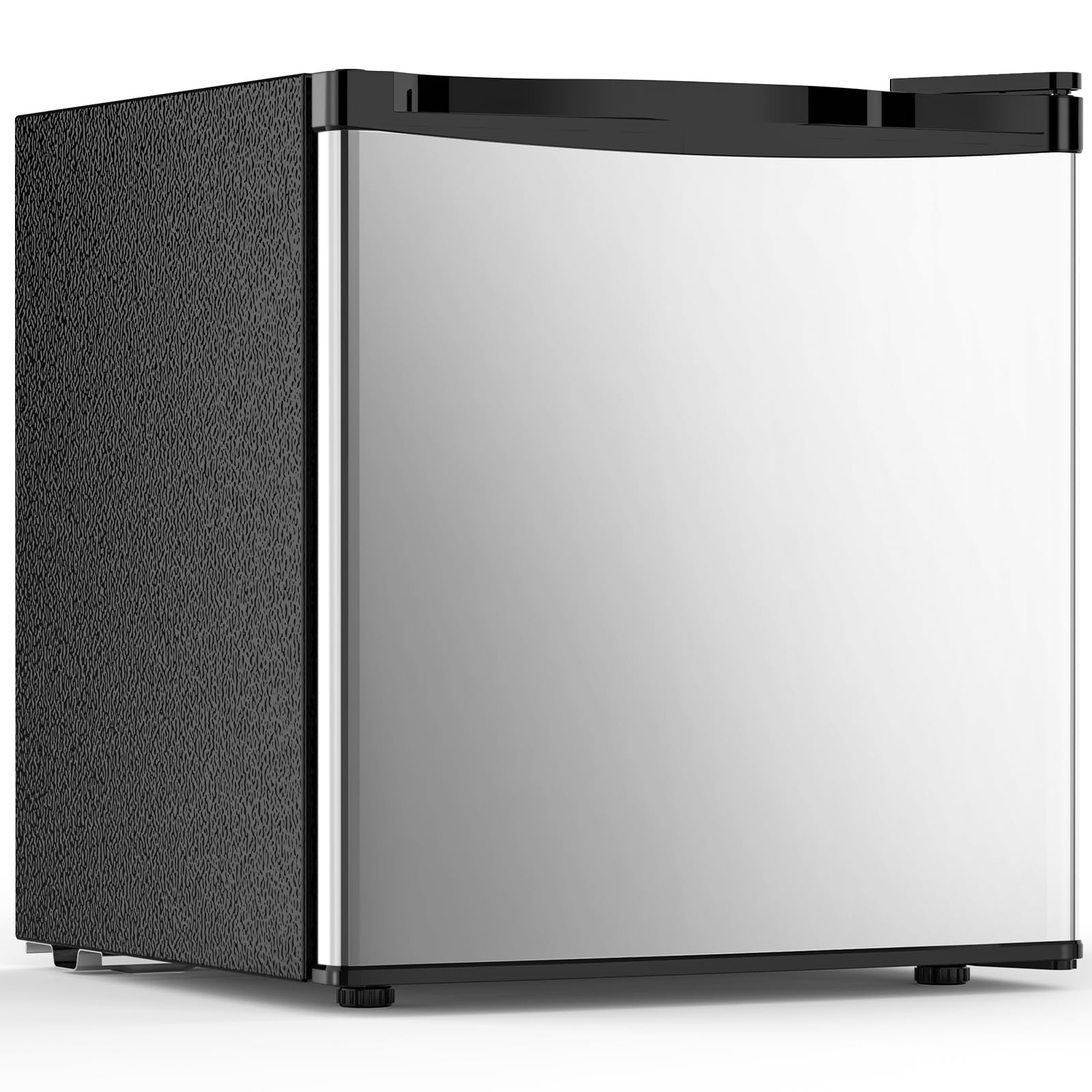
Electactic’s offering stands out specifically for its ultra-quiet compressor operation, making it arguably the best inexpensive mini fridge for a shared bedroom or a nursery where noise intrusion is the primary concern. The 7-position rotary thermostat dial gives you fine-grained control from 32°F up to 50°F, which is a wider adjustment range than the typical 5-setting budget units provide.
The freezer compartment is a respectable 0.12 cu. ft. — enough for a few ice cube trays or a pint of ice cream, but not large enough to store frozen meals. The cooling technology is compressor-based, so it will hold its set temperature even in a room that hits 80°F in the summer, something a thermoelectric model simply cannot do. The reversible door hinge is a welcome feature for tight corner placements, and the silver finish resists visible fingerprints better than glossy black models.
Daily energy consumption is quoted at about 0.5 kWh, which is very efficient for a compressor mini fridge. The annual rating of 230 kWh/year edges out the Upstreman by a small margin. The manual defrost cycle is standard, but the unit’s insulation seems adequate to minimize frost accumulation between monthly defrosts. This is a straightforward, no-gimmick fridge that prioritizes quiet operation above all else.
Why it’s great
- Exceptionally quiet compressor — ideal for sleep spaces
- 7 temperature settings for precise control
- Includes a 0.12 cu. ft. freezer for ice and small items
- Reversible door for flexible placement
Good to know
- Freezer cannot hold full-sized frozen meals
- Manual defrost required on the main compartment
- Single shelf lacks adjustable height
3. Frigidaire 1.6 cu ft Compact Mini Fridge (Blue)
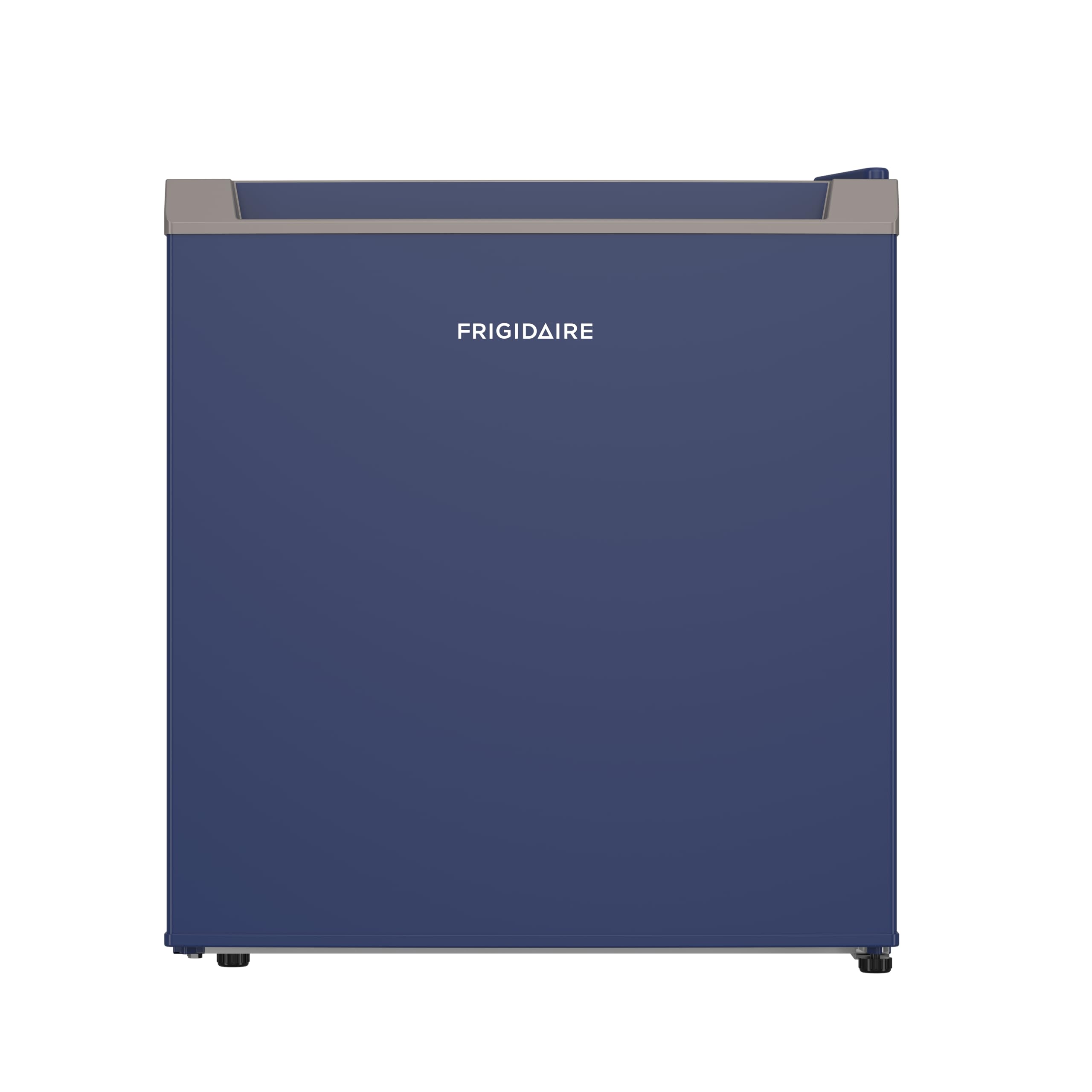
The Frigidaire 1.6 cu. ft. model brings the brand’s long-established compressor reliability into the budget tier, and it features a dedicated 0.3 cu. ft. ice cube chamber that can reach 32°F — a much more useful freezer space than the token compartments found on many competing units. The glossy blue finish is surprisingly vibrant and stands out on a desk or counter, but it’s available in other colors as well.
The adjustable thermostat dial is straightforward, labeled from Cold to Coldest with no complications. The reversible door is standard, and the one-spill wire shelf inside is functional but not as spill-proof as glass. The claimed annual energy consumption of just 5 kWh seems impossibly low — likely a typo or test-lab condition — but even real-world usage for a compressor unit of this size should be modest. The compressor cooling method ensures it can handle warmer ambient rooms without losing performance.
One notable feature is the door-ajar alarm, rare at this price point. It beeps if you leave the door unsealed, which can save your food and compressor from unnecessary strain. The manual defrost system is simple: unplug, let ice melt, dry, and restart. The plastic door material feels less premium than the metal handle on the Upstreman, but the brand backing and the larger ice compartment give it a distinct advantage for users who need some freezer capability.
Why it’s great
- 0.3 cu. ft. ice chamber is large for a budget mini fridge
- Door-ajar alarm protects food and energy use
- Trusted Frigidaire brand with consistent compressor performance
- Reversible door for flexible orientation
Good to know
- Wire shelf does not contain spills effectively
- Plastic door construction feels less durable
- Glossy finish shows fingerprints and smudges
4. Antarctic Star 1.7 Cu. Ft. Compact Refrigerator with Freezer
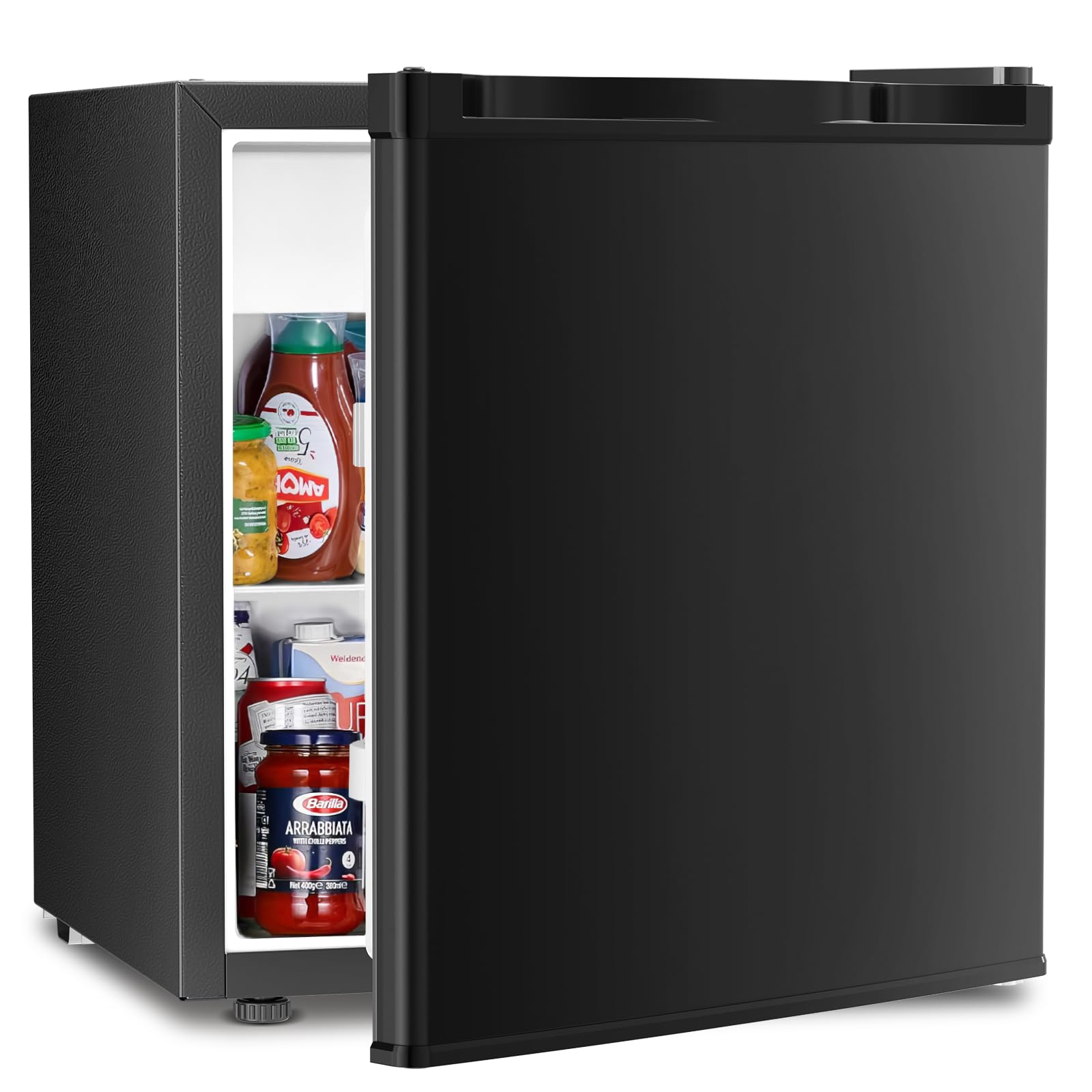
Antarctic Star slots into the budget-conscious corner of the compressor fridge market with a 1.7 cu. ft. model that includes a 0.2 cu. ft. freezer and a full 7-speed adjustable thermostat. At this price tier, the inclusion of a genuine freezer compartment with a dedicated wire shelf is a strong value proposition. The temperature range of 32°F to 50°F matches the more expensive competition, and the aluminum door construction feels sturdier than all-plastic alternatives.
The single wire shelf is adjustable in height, which adds flexibility for taller bottles or takeout containers. The reversible door is present, and the matte black finish hides dust and scuffs better than glossy models. The compressor cooling method is the correct choice for reliability, but the noise level is not explicitly listed in the specs — user reports generally place it in the 38-42 dB range, which is standard for this category. The manual defrost system is predictable and manageable.
The main drawback is the absence of interior lighting, which is a convenience many users have come to expect. The 549-watt annual energy consumption figure listed in the specs is unusually high for a 1.7 cu. ft. fridge — that would be roughly 1.5 kWh per day, which is nearly three times the efficiency of the Electactic. It is worth verifying this with the seller, as the value proposition changes significantly if the unit is power-hungry over time.
Why it’s great
- Freezer compartment for ice and frozen snacks
- Adjustable wire shelf for varied item heights
- Aluminum door material is more durable than plastic
- Reversible door swing for layout flexibility
Good to know
- High stated annual energy consumption (verify before buying)
- No interior light when door opens
- Noise rating not officially published
5. Frestec 1.7 Cu.Ft Mini Fridge with Freezer
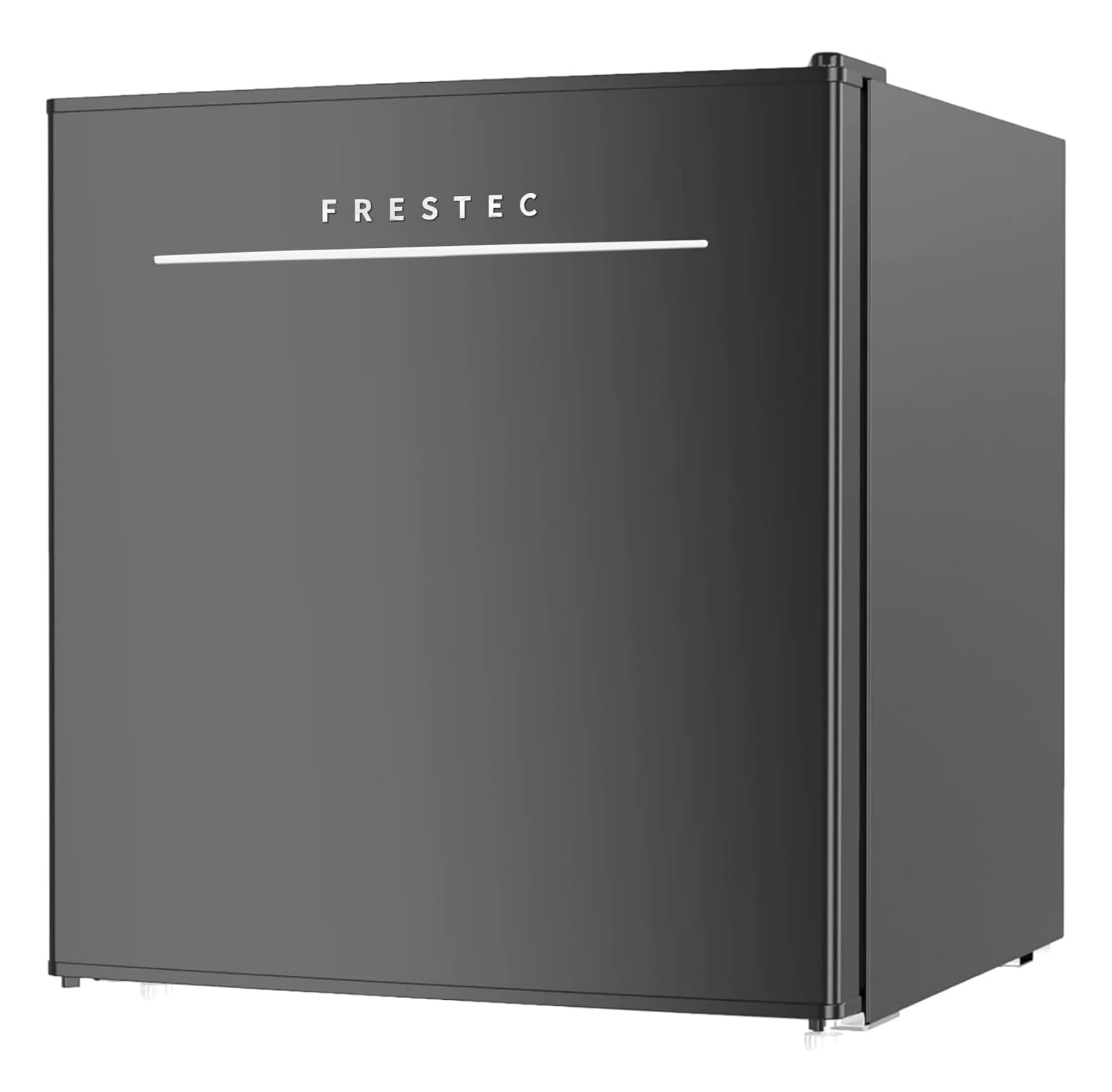
The Frestec 1.7 cu. ft. model is a value-driven compressor fridge with a standout convenience feature: a one-touch defrost button that eliminates the labor-intensive scraping of ice from the interior. The 6 temperature modes (from 28.4°F to 50°F) are selectable via a rotary dial, and the daily energy consumption of 0.55 kWh — about 200 kWh annually — is genuinely competitive for a compressor unit of this size.
The freezer compartment is listed at 0.2 cu. ft., identical to the Antarctic Star. The cooling range dips below 32°F, which gives it the capability to make ice and store frozen treats. The glass shelves are a welcome upgrade over the wire designs found on similarly priced competitors — they catch drips and provide a flat, stable surface. The reversible door and adjustable feet give you placement flexibility on uneven desk surfaces.
The noise level is rated at 37 dB, which is very low for a compressor fridge — quieter than the Upstreman and the Electactic on paper. The soft detachable door seal makes cleaning easier when spills inevitably occur. The trade-off is that the build quality is slightly less refined: the plastic door material and hinges feel adequate but not premium, and the compressor does cycle on and off auditorily in a quiet room. For the user who wants a dependable, energy-saving fridge with minimal defrost hassle, this is a strong budget contender.
Why it’s great
- One-touch defrost button saves manual effort
- Only 0.55 kWh daily energy consumption
- Glass shelves contain spills better than wire
- 37 dB noise level is among the quietest
Good to know
- Plastic door feels less durable than aluminum
- Freezer not suitable for large frozen items
- Compressor cycling noise is audible in absolute silence
6. Feelfunn 24 Can Beverage Refrigerator Cooler
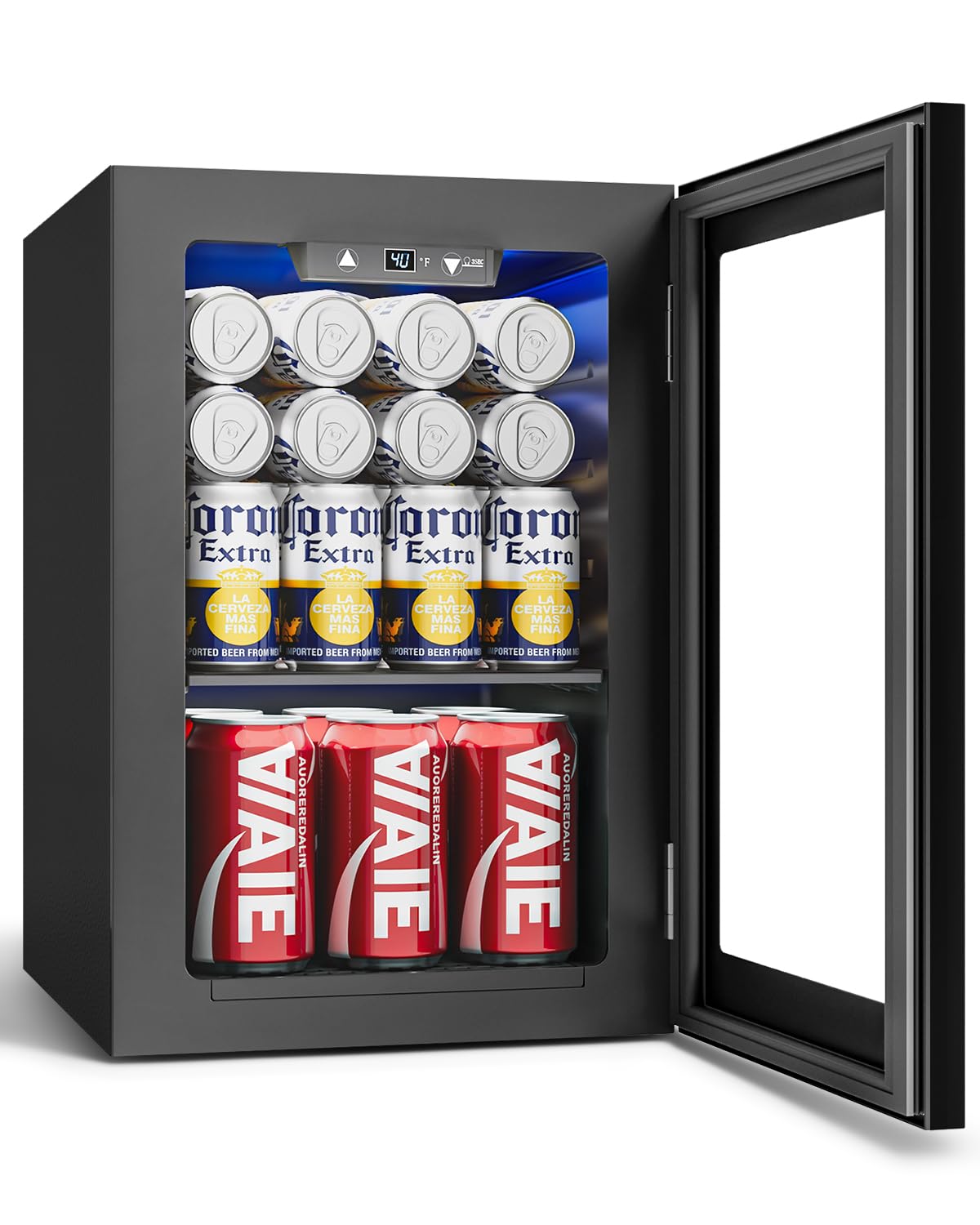
The Feelfunn beverage cooler is a specialized option for those who primarily want to chill drinks, not store a mix of perishable food. It uses a compressor with a 3D circulating air system and has a digital touch control panel with an LED temperature display — a level of control sophistication not seen on the dial-based models. The temperature range of 40°F to 61°F is better suited for wine and soda than for milk or raw meat.
The 0.6 cu. ft. capacity fits exactly 24 standard cans or 6-8 wine bottles (750ml) upright, and the removable shelf allows stacking flexibility. The UV-protective glass door and soft blue LED interior lighting give it a bar-fridge aesthetic. The noise level at ≤38 dB is respectable, and the energy consumption of 0.83 kWh per day (about 208 kWh/year) is efficient for a compressor unit. The interior LED light is activated by long-pressing the temperature down button, which is a less intuitive method than a simple door switch.
The lack of a freezer compartment and the temperature range that does not go below 40°F mean this is not a substitute for a general-purpose mini fridge. It is designed exclusively for beverages. The glossy finish and sleek front look modern, but they show fingerprints readily. The 12-hour upright resting requirement before first use is a standard compressor shipping precaution — ignoring it can damage the sealed system. This is the right choice for a home bar, gaming room, or office desk where cold drinks are the sole requirement.
Why it’s great
- Digital thermostat with LED display for precise temperature
- 3D circulating air cooling for even temps
- UV-protective glass door and interior LED lighting
- Compact 0.6 cu. ft. fits 24 cans or 6-8 wine bottles
Good to know
- Temperature range (40-61°F) is not for general food storage
- No freezer or ice-making capability
- Requires 12-24 hours upright before first use
7. Antarctic Star 10L Compact Mini Fridge
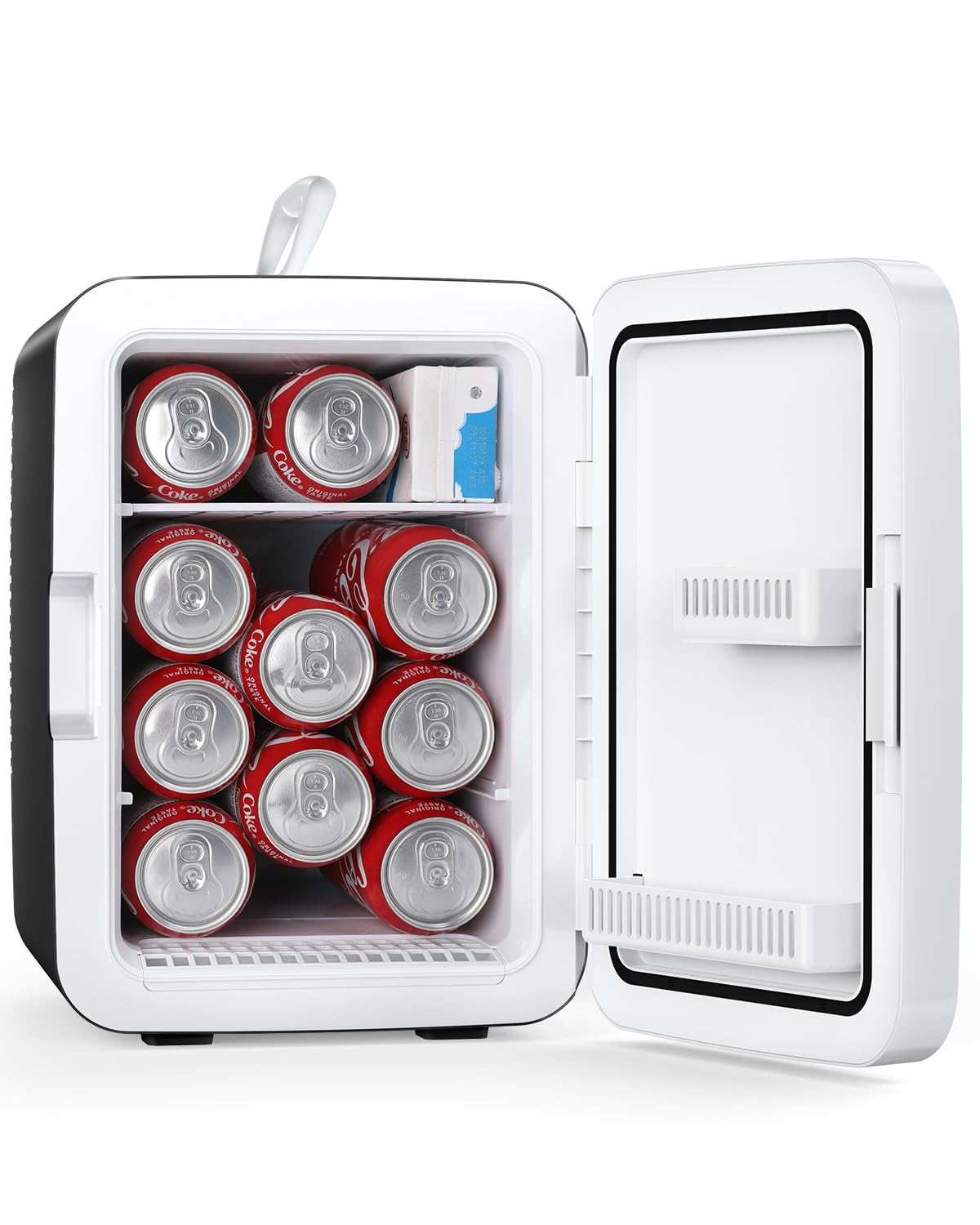
The Antarctic Star 10L is the budget-tier outlier, using thermoelectric cooling instead of a compressor. This makes it lightweight (8.38 lbs) and suited for dual use at home and in a car, as it includes both an AC (110V) and DC (12V) power cord. The cooling performance is quantified: it can drop 32°F below ambient, reaching 64°F from 86°F in one hour, and 40°F from 86°F within three hours. This works well in air-conditioned rooms but will fail to keep food safe in a hot garage or car interior during summer.
The noise level is 38 dB, and the thermoelectric technology means no compressor hum — just a quiet fan. The 10L (2.6 gallon) capacity is roughly enough for a 6-pack of cans plus a few small containers. It includes a removable shelf and a top handle for portability. The plastic door with two shelves offers limited organization. The lack of an adjustable temperature control is the biggest limitation — it simply chills to a fixed differential below ambient, not to a set temperature.
This fridge is best for skincare and cosmetics that do not require strict temperature regulation, or for keeping single-serve drinks chilled during a desk shift or a road trip. It is not intended for raw meat, dairy, or long-term food storage. The manual defrost system is present but the frost buildup is minimal with thermoelectric units. For the user who needs a truly portable, lightweight cold-storage solution and understands the cooling limitations, this fills a very specific role that compressor units cannot match in size and mobility.
Why it’s great
- AC/DC power for home and car use
- Ultra-lightweight at 8.38 lbs with carrying handle
- Near-silent fan operation with no compressor noise
- Compact footprint fits on desktop or in tight spaces
Good to know
- Cannot maintain food-safe temperatures in warm rooms
- No adjustable temperature control — fixed differential cooling
- Too small for general grocery storage
FAQ
Can a thermoelectric mini fridge keep milk and leftovers cold enough?
How often do I need to defrost a budget mini fridge?
What does 1.7 cu. ft. of capacity actually hold in real-world use?
Why does my new mini fridge need to sit upright for 12-24 hours before plugging in?
Final Thoughts: The Verdict
For most users, the inexpensive mini fridge winner is the Upstreman Retro FR17 PRO because it delivers reliable compressor cooling, a useful temperature range, and a stylish retro build at a price that undercuts most of the competition without sacrificing core performance. If you prioritize ultra-quiet operation for a shared bedroom, grab the Electactic 1.7 Cu.ft. And for a dedicated drink station with digital temperature control and a sleek glass door, nothing beats the Feelfunn Beverage Cooler.