A honesuki knife is the only tool that makes breaking down a whole chicken or turkey feel surgical rather than messy. Most boning knives flex too much or lack the stiff triangular blade geometry needed to pop joints cleanly, leaving shreds of meat on the carcass and frustration on your face.
I’m Mohammad Maruf — the founder and writer behind AirfryerBite. I’ve spent years researching Japanese cutlery specifications, comparing blade steels, handle ergonomics, and edge retention across dozens of models so you don’t waste money on a knife that can’t handle the bone work.
This guide covers nine purpose-built knives ranging from entry-level forged blades to premium Damascus-clad performers, all evaluated for the specific demands of poultry deboning. Whether you need a razor-sharp edge for delicate chicken joints or a stiff spine for heavier beef work, the right best honesuki knife will change how you prep protein forever.
How To Choose The Best Honesuki Knife
Choosing a honesuki is not the same as picking a general boning knife. The triangular profile, stiff spine, and acute edge angle demand specific attention to steel type, weight distribution, and handle geometry. Ignore these factors and you’ll end up with a blade that binds on joints or loses its bite after a single bird.
Blade Geometry and Stiffness
A true honesuki features a thick spine — usually 2.5 mm to 3 mm — that tapers to a narrow pointed tip. This profile allows the knife to pry between joints without flexing into the meat. Western boning knives often curve or flex, making clean joint separation harder. Look for a blade described as “triangular” or “east-style” to confirm you are getting a honesuki, not a general-purpose fillet knife.
Steel Composition and Edge Retention
High-carbon stainless steels in the 60–62 HRC range hold a razor edge through multiple birds without needing a steel mid-session. Budget options often use 10Cr15CoMoV or equivalent, while premium models use VG-MAX or SK-4 white steel. Softer steels around 56 HRC will dull faster when cutting through cartilage and small bones, forcing frequent honing that changes the edge geometry over time.
Handle Design for Repetitive Cuts
An octagonal Japanese handle (wa-style) gives your fingers more surface contact and allows precise rotational control when working around joints. Western-style D-shaped or riveted handles provide a more secured palm grip but can feel bulky for extended poultry breakdown sessions. Pakkawood and reinforced wood are common; natural wood handles require hand washing and occasional mineral oil treatment to prevent cracking.
Quick Comparison
On smaller screens, swipe sideways to see the full table.
| Model | Category | Best For | Key Spec | Amazon |
|---|---|---|---|---|
| Mac Knife Boning 6-Inch | Premium | All-around poultry & fish | 3 mm | 9.6 oz | Pakkawood | Amazon |
| Shun Classic Honesuki 4.5” | Premium | Poultry joints | VG-MAX core | 68-layer Damascus | Amazon |
| Yoshihiro HGB Sabaki 150mm | Premium | Traditional Japanese deboning | SK-4 white steel | HRC 61 | Amazon |
| HexClad Boning 6-Inch | Premium | Flexible fillet & debone | 67-layer Damascus | 12° edge | Amazon |
| Misono Moly Boning Square 541 | Mid-range | Beef & poultry joint work | High-carbon 13 chrome moly | Amazon |
| Misono Moly Boning Round 542 | Mid-range | Boning with curved cuts | High-carbon 13 chrome moly | Amazon |
| ZWILLING Pro Flexible Boning | Mid-range | Dishwasher-safe convenience | Ice-hardened high-carbon steel | Amazon |
| HEZHEN Multi-Purpose 5.8” | Budget | Entry-level poultry work | 10Cr15CoMoV core | HRC 60±2 | Amazon |
| Masahiro Rose Triangle Boning | Budget | Carbon steel patina seekers | High-carbon steel | wood handle | Amazon |
In‑Depth Reviews
1. Mac Knife Japanese Series Boning Knife, 6-Inch

The Mac BON-60 delivers the exact balance of stiffness and weight that defines a great honesuki. Its 3 mm spine is thick enough to pry between chicken thigh joints without flexing, yet the edge geometry is thin enough to slice through skin with no drag. At 9.6 ounces, it feels substantial in hand without being fatiguing over a full bird breakdown.
The molybdenum-vanadium steel core holds a working edge for several whole chickens before needing a touch-up on a honing rod. Pakkawood handle contours naturally to a pinch grip, and the 6-inch blade length gives enough reach for larger turkeys while maintaining precision around drumsticks. Rust resistance is excellent compared to straight carbon steel honesuki models.
The only downsides are a price tag that sits at the upper end of the mid-range and a blade that requires hand washing despite being marketed as easy-care. For anyone who debones poultry weekly and wants one knife that does everything from chicken wings to whole roasters, this Mac knife earns the top spot.
Why it’s great
- Thick 3 mm spine prevents blade flex on joints
- Molybdenum steel stays sharp for multiple prep sessions
- Balanced weight reduces hand fatigue during repetitive cuts
Good to know
- Not dishwasher safe despite the stainless description
- Price is higher than most entry-level honesuki options
2. Shun Classic Honesuki 4.5-Inch
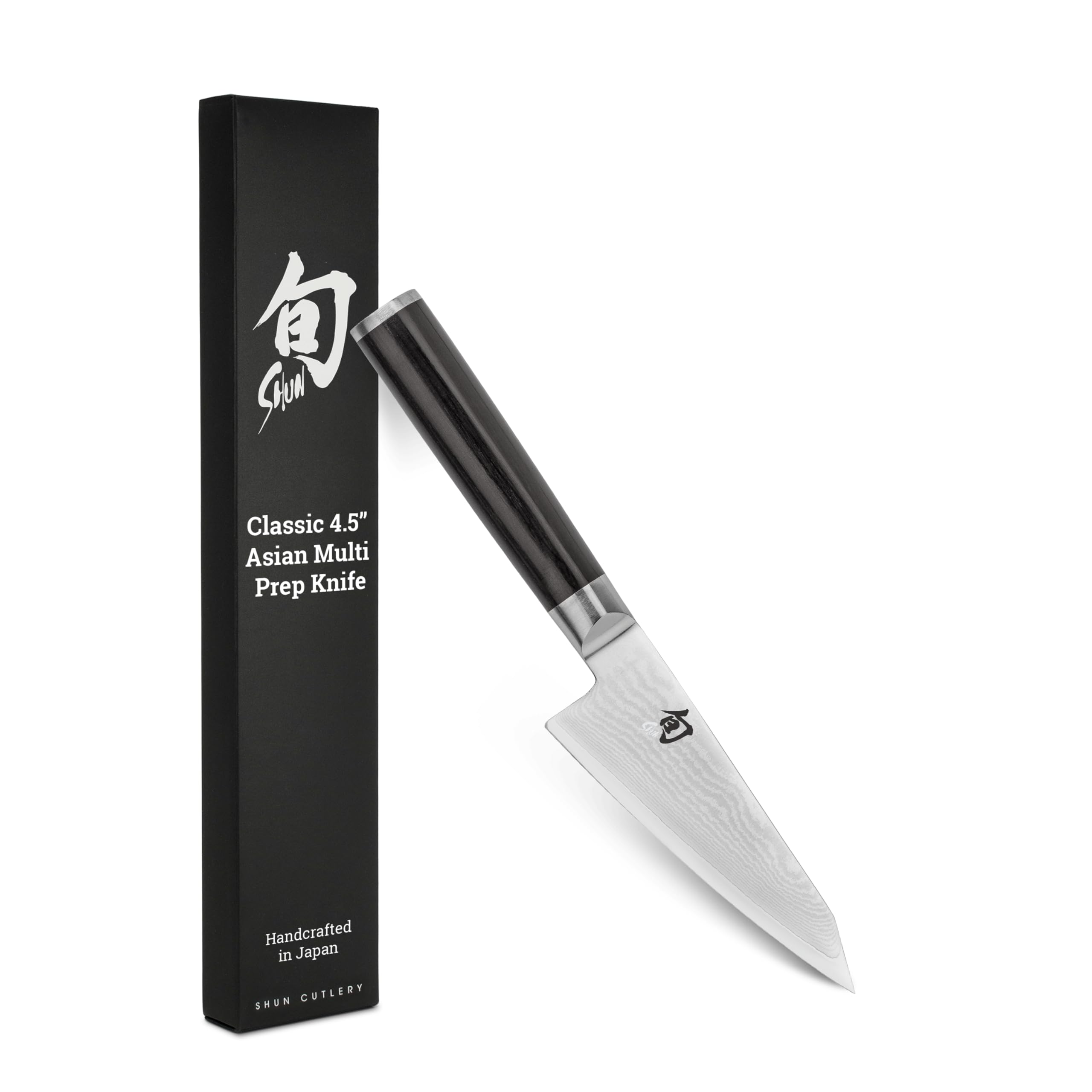
The Shun Classic Honesuki is the knife that defines the category for many chefs. Its 4.5-inch triangular blade is purpose-built for separating chicken leg quarters and cutting through wing joints with a clean pop. The proprietary VG-MAX cutting core wrapped in 68 layers of stainless Damascus delivers an edge that outlasts almost any other knife in this roundup.
Shun applies a 16-degree edge angle, creating a razor that glides through cartilage without crushing it. The D-shaped Pakkawood handle locks into a pinch grip naturally, giving you leverage for twisting motions. At under half a pound, it feels nimble and precise, though some users with larger hands may find the handle slightly short.
The shorter 4.5-inch blade limits its utility on larger cuts like whole turkeys, and the price is premium. But for the cook who primarily breaks down chickens and wants a knife that feels like an extension of their hand, the Shun Classic is a benchmark in the honesuki world.
Why it’s great
- VG-MAX steel holds a sharper edge longer than standard moly
- 68-layer Damascus cladding reduces food drag
- Short agile blade excels at tight joint work
Good to know
- 4.5-inch length feels short for larger birds
- Requires frequent honing to maintain acute edge
3. Yoshihiro Hi-Carbon HGB Sabaki Boning Knife 150mm

The Yoshihiro HGB series uses SK-4 high-carbon steel, a white steel formulation that takes a screaming sharp edge and holds it well above most stainless alternatives. At HRC 61, the blade feels almost brittle when flexed, but this hardness is exactly what makes popping joints effortless. The 150 mm blade is the classic honesuki length — long enough for turkey legs, short enough for chicken wings.
Handle construction uses a traditional wa-style octagonal shape in Pakkawood, providing excellent feedback for rotational cuts. The knife arrives with a Kasumi finish that develops a patina over time, reducing reactivity and adding character. Users report that edge restoration is straightforward on water stones because the SK-4 steel is less wear-resistant than carbide-heavy alloys.
The primary caveat is that SK-4 is not stainless — it will rust if left wet. Also, the thin spine can feel flexy compared to thicker boning knives. But for purists who value edge quality above all else, this Yoshihiro is a masterclass in traditional honesuki design.
Why it’s great
- SK-4 white steel achieves HRC 61 for exceptional sharpness
- Octagonal handle provides excellent rotational control
- Kasumi finish reduces food sticking and develops patina
Good to know
- Carbon steel requires immediate drying to prevent rust
- Spine is thinner than Western-style boning knives
4. HexClad Boning Knife, 6-Inch Japanese Damascus

HexClad brings its 67-layer Damascus construction to a boning knife that walks the line between honesuki and flexible fillet. The 6-inch blade has enough flex to follow fish bones yet retains stiffness at the spine for poultry deboning. The 12-degree edge angle is noticeably more acute than the industry-standard 15 degrees, resulting in a hyper-sharp cutting experience out of the box.
The Pakkawood handle is contoured with an ergonomic swell that fills the palm, reducing grip fatigue during long prep sessions. At 6.3 inches of blade length, it is the longest knife in this roundup, giving extra reach for larger proteins. The Honbazuke heat treatment ensures the edge holds up through multiple chickens without crumbling.
The flex may be too much for cooks who want a pure rigid honesuki for heavy joint prying. Additionally, the warranty voids if the knife is used on hard cutting surfaces or in commercial settings. Still, for the home cook who wants one knife for both poultry and fish, the HexClad is a versatile compromise.
Why it’s great
- 67-layer Damascus provides excellent edge stability
- 12-degree edge cuts through skin with minimal pressure
- Ergonomic handle reduces fatigue on long prep days
Good to know
- Flexible blade is not ideal for heavy joint prying
- Warranty excludes commercial use and hard surfaces
5. Misono Molybdenum Boning Square No. 541

The Misono 541 is a square-tip (east-type) honesuki that Japanese chefs have trusted for decades. Its high-carbon 13 chrome molybdenum steel delivers a hardness that sits around 58–59 HRC — slightly softer than the premium options but still capable of a long-lasting edge. The 2.6 mm spine is stiff enough for beef trimming and poultry joint work.
The reinforced black wood handle is larger than wa-style handles, providing a more secure grip for cooks transitioning from Western knives. At 6.3 ounces, it feels lighter than the Mac but still gives enough heft for controlled cuts. Users report blades that remain sharp for 15+ years with proper maintenance, making this a buy-it-for-life option.
The moly steel is not as flashy as VG-MAX or Damascus, and the handle lacks the aesthetic appeal of Pakkawood. But the 541’s proven track record and sub-premium price point make it one of the smartest mid-range investments for any serious home cook.
Why it’s great
- 13 chrome moly steel offers excellent corrosion resistance
- Square tip excels at separating joints cleanly
- Proven longevity with basic stone maintenance
Good to know
- Edge is not as hard as VG-MAX or white steel
- Handle feels utilitarian compared to premium competition
6. Misono Molybdenum Boning Round No. 542

The 542 is the round-tip (west-type) counterpart to the 541, designed for users who prefer a curved edge for sweeping boning cuts rather than a square tip. The same high-carbon 13 chrome molybdenum steel powers the blade, with identical 2.6 mm spine thickness and weight. The slight curve at the tip allows more rocker action for fillet-style work.
This knife is particularly effective when deboning fish or trimming silver skin off pork loins, where a curved edge glides along the bone more naturally than a flat blade. The black reinforced wood handle offers the same comfortable grip as the 541. For cooks who split their time between poultry and fish, the 542 provides better versatility.
The trade-off is that the curved tip is slightly less effective at the precise joint popping that defines classic honesuki use. It is also priced similarly to the square model, so choosing between them comes down to your primary cutting style. Both Misonos are exceptional mid-range tools.
Why it’s great
- Curved tip gives better control for fish fillet work
- Same durable moly steel as the square-tip version
- Full tang design provides balanced heft
Good to know
- Curve reduces precision for tight joint separation
- Not a pure honesuki geometry — more of a hybrid boner
7. ZWILLING Pro 5.5-Inch Flexible Boning Knife

The ZWILLING Pro is the only knife in this guide officially rated as dishwasher safe, which alone makes it appealing for high-volume kitchens. The ice-hardened Friodur blade is forged from a single piece of high-carbon stainless steel, offering a 5.5-inch length with a slight flex that suits boning and trimming. Its SIGMAFORGE construction creates a seamless bolster that acts as a natural finger guard.
The triple-riveted polypropylene handle provides a secure grip even when wet, and the full tang design gives it a substantial 8-ounce weight. The blade is sharp out of the box, though the edge geometry is not as acute as Japanese honesuki knives — expect around 20 degrees per side. This makes it more durable but less precise for fine joint work.
The flexible blade is better described as a boning knife than a honesuki; it lacks the stiff triangular profile that defines the category. For cooks who prioritize convenience and durability over traditional Japanese geometry, the ZWILLING Pro is a perfectly capable tool.
Why it’s great
- Dishwasher safe for quick cleanup
- Ice-hardened Friodur steel resists chipping
- Ergonomic handle provides secure wet grip
Good to know
- Flexible blade is not stiff enough for classic honesuki use
- 20-degree edge is less acute than Japanese alternatives
8. HEZHEN 5.8-Inch Multi-Purpose Honesuki Knife

The HEZHEN honesuki punches far above its budget price point with a 10Cr15MoV steel core that hits a verified HRC 60–62. This is VG-10 equivalent steel, meaning edge retention that rivals knives costing three times as much. The triple-layer composite forging gives the blade enough stiffness for poultry joints while keeping the edge thin at 15 degrees per side.
The octagonal redwood and buffalo horn handle is a genuine Japanese wa-style grip, providing the same surface contact and rotational control as premium knives. The black stone wash finish reduces food adhesion and gives the knife a rustic, handmade look. Multiple verified buyers report it arrives razor sharp and handles whole chickens without dulling mid-prep.
Construction quality shows minor corners — the handle wood is porous and coated rather than sealed, and the buffalo horn ferrule can crack if dropped. Still, for anyone entering the honesuki category on a tight budget, the HEZHEN delivers 90 percent of the performance of a Shun at a fraction of the investment.
Why it’s great
- 10Cr15MoV steel matches VG-10 edge retention standards
- True octagonal wa-style handle for precise grip
- Lifetime warranty at an entry-level price
Good to know
- Handle wood is porous and may need sealing
- Stone wash finish can wear unevenly over time
9. Masahiro Rose Kitchen Boning Knife 5.9-Inch

The Masahiro Rose series is a direct entry into the honesuki category with its triangular carbon steel blade. Made from high-carbon steel that takes an exceptional edge, this 5.9-inch knife is designed specifically for breaking down poultry and fish. The carbon content means the blade will develop a reactive patina that some cooks love and others find high-maintenance.
The wood handle is simple and functional, lacking the octagonal ergonomics of the HEZHEN but providing a secure grip for standard pinch holds. The knife is lightweight at around 4.5 ounces, making it nimble for intricate joint work but less capable for heavier beef trimming. Buyers should note that the steel is prone to rust if not dried immediately after use.
There are no customer reviews on file to confirm long-term performance, but Masahiro has a solid reputation in professional kitchens for producing reliable carbon steel blades. This is a good choice for the cook who wants traditional Japanese carbon steel without spending premium money on a Yoshihiro.
Why it’s great
- High-carbon steel takes a very sharp edge
- Triangular profile matches true honesuki geometry
- Lightweight and agile for detailed poultry work
Good to know
- Carbon steel rusts quickly if not dried thoroughly
- Minimal handle ergonomics compared to Pakkawood options
FAQ
What is the difference between a honesuki and a regular boning knife?
Should I choose carbon steel or stainless steel for a honesuki?
Can I use a honesuki for vegetables or fish?
What angle should I sharpen a honesuki knife?
Final Thoughts: The Verdict
For most users, the best honesuki knife winner is the Mac Knife Japanese Series Boning Knife because it combines a stiff 3 mm spine, balanced weight, and corrosion-resistant molybdenum steel at a price that undercuts premium Damascus models while outperforming cheaper alternatives. If you want a compact blade for precise chicken joint work, grab the Shun Classic Honesuki. And for a traditional white steel experience with exceptional edge quality, nothing beats the Yoshihiro HGB Sabaki 150mm.