Home water quality varies wildly, and a standard carbon pitcher won’t touch the dissolved solids, heavy metals, or fluoride lurking in your tap. A dedicated reverse osmosis system is the only way to strip out the microscopic contaminants that affect taste, health, and even the lifespan of your appliances. Moving from a basic filter to a real RO setup is a significant upgrade in water purity.
I’m Mohammad Maruf — the founder and writer behind AirfryerBite. I’ve spent hundreds of hours comparing water filtration hardware, studying independent lab certifications, and analyzing flow rates, filter stages, and drain ratios to identify which systems actually deliver on their promises for home use.
Whether you’re replacing a bulky tank unit or installing your first under-sink system, this guide breaks down the top performers on the market so you can confidently choose the right home reverse osmosis system for your kitchen.
How To Choose The Best Home Reverse Osmosis System
Choosing a reverse osmosis system involves more than just picking the cheapest unit. You need to match the system’s capabilities to your water quality, household demand, and available under-sink space. Focus on the core specs that directly impact performance and convenience.
Flow Rate: GPD and Your Household Size
Gallons per day (GPD) dictates how fast you can fill a glass or a pot. A 400-500 GPD system is adequate for a small family, while an 800-900 GPD unit is better for larger households or those who fill multiple large bottles daily. Tankless systems rely entirely on this flow rate, while tank-based systems store water for a steady supply but at a lower production rate.
Pure-to-Drain Ratio and Water Waste
Traditional RO systems wasted several gallons of water for every gallon they produced. Modern units achieve ratios like 2:1 or 4:1, meaning they waste significantly less water. A higher ratio saves water and lowers your utility bill, making it a critical efficiency metric for any home system.
Filtration Stages and Remineralization
The number of stages indicates the thoroughness of the filtration process. A standard 5-stage system removes sediment, chlorine, and dissolved solids. Higher-stage systems often include a remineralization cartridge that adds back beneficial minerals like calcium and magnesium after purification, improving the water’s taste and alkalinity.
Certifications: NSF/ANSI Standards
Certifications to NSF/ANSI standards provide independent verification of a system’s claims. NSF 58 is the critical standard for RO membrane performance and TDS reduction. NSF 372 confirms lead-free materials. Always look for these certifications to ensure the system meets safety and performance benchmarks.
Quick Comparison
On smaller screens, swipe sideways to see the full table.
| Model | Category | Best For | Key Spec | Amazon |
|---|---|---|---|---|
| iSpring RO500AK-BN | Tankless | Certified performance | 500 GPD, NSF 58 | Amazon |
| Home Master TMHP | Tank | UV sterilization | 9 stages, UV | Amazon |
| Frizzlife M800 | Tankless | No electricity | 900 GPD, cordless | Amazon |
| PHILIPS ADD6926WH/37 | Countertop | No installation | 6 stages, Aquaporin | Amazon |
| Waterdrop G3P800 | Tankless | Full certification | 800 GPD, smart faucet | Amazon |
| Frizzlife PX500-A | Tankless | Easy DIY setup | 500 GPD, alkaline | Amazon |
| Stokk S2 | Tankless | High flow rate | 800 GPD, smart faucet | Amazon |
| Waterdrop T3-T | Tank | Mineral enhancement | 220 GPD, no power | Amazon |
| Aigerri Countertop | Countertop | Portable setup | 5:1 drain ratio | Amazon |
In‑Depth Reviews
1. iSpring RO500AK-BN

The iSpring RO500AK-BN is a tankless system that delivers certified performance, holding NSF 58 certification for TDS reduction. With a 500 GPD flow rate, it fills an 8 oz cup in about 10 seconds, which is more than sufficient for most families. The 2:1 pure-to-drain ratio reduces wastewater significantly compared to older RO designs, and the brushed nickel faucet gives it a clean, modern look on your countertop.
Filtration is handled by a 3-stage process that begins with a composite sediment and carbon block filter, followed by the RO membrane, and finishes with a carbon alkaline filter that raises pH and adds minerals. The system includes an automatic self-cleaning function that flushes the membrane after 24 hours of inactivity, extending the filter’s lifespan. Installation is DIY-friendly with a detailed manual, and the internal water route is reinforced to minimize leak risks.
The real strength of this system is its transparency: you can scan a QR code on the unit to access the official NSF test report. The smart TDS monitor on the faucet shows real-time purity levels, giving you direct feedback on the system’s performance. iSpring also provides solid US-based customer support from Atlanta, GA, which adds peace of mind.
Why it’s great
- NSF 58 certified TDS reduction
- Alkaline remineralization for balanced pH
- Self-cleaning membrane flush extends filter life
Good to know
- Requires access to a power outlet
- Higher initial investment than basic tank systems
2. Home Master TMHP HydroPerfection
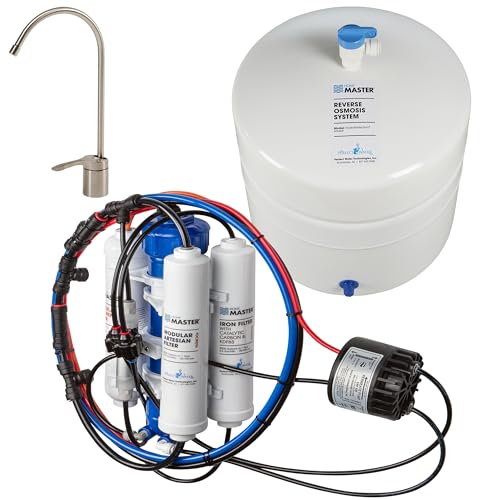
The Home Master TMHP HydroPerfection is a traditional tank-based system that uses a 9-stage filtration process with a patented 2-pass alkaline remineralization design. This unit is EPA registered for its UV sterilizer, which targets 99.9% of microorganisms, making it an excellent choice for those concerned about biological contaminants in their water supply. The system includes an iron prefilter, which is a distinct advantage for well water users.
It features a fast 4.5-second fill rate for a standard glass, driven by a non-electric permeate pump that improves efficiency without adding noise or electrical complexity. The 1:1 pure-to-drain ratio is competitive with modern tankless designs, and the 9-stage process ensures thorough removal of up to 99% of contaminants, including chemicals, metals, and microplastics. The dual remineralization process adds back beneficial minerals twice for a crisp, bottled-water taste.
This system is larger than tankless alternatives, so you need significant under-sink space for the three canisters and the storage tank. The installation requires more connections than an integrated tankless unit, but the components are well built and the instructions are clear. For users with water quality issues that extend beyond simple TDS, the UV stage and iron prefilter make this a comprehensive solution.
Why it’s great
- EPA registered UV sterilization kills germs
- Non-electric pump saves water with 1:1 ratio
- Iron prefilter ideal for well water
Good to know
- Takes up more under-sink space than tankless units
- More complex installation with multiple connections
3. Frizzlife M800
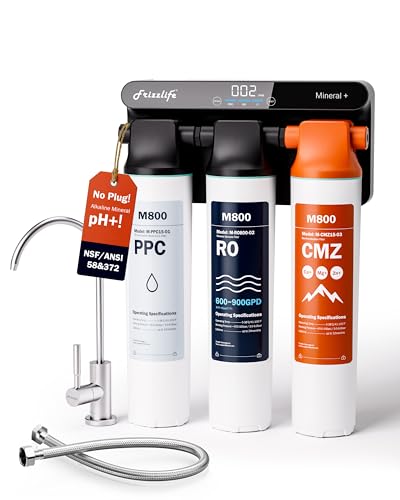
The Frizzlife M800 is a game-changer in the tankless RO category because it operates entirely without electricity, relying on existing water pressure to produce up to 900 gallons per day. This cordless design means zero noise, zero power consumption, and no need for an outlet under your sink. The system also incorporates an 8-stage filtration process that includes a remineralization stage, adding calcium, magnesium, and zinc back into the water for a healthier pH profile.
It holds certifications to NSF/ANSI 58 and 372, confirming its ability to reduce TDS and its use of lead-free materials. The smart TDS monitor on the faucet gives real-time water quality feedback, and the auto-flush function helps maintain the membrane’s longevity. The 4:1 pure-to-drain ratio is among the most efficient in its class, meaning less wastewater and lower bills.
The unit is compact at 14.5” wide and 19.7” tall, but you need to measure your under-sink space carefully because it is taller than some alternatives. The installation is straightforward with push-fit connections, and the filter cartridges last 12 months for the carbon block and remineralization stages and 24 months for the RO membrane, reducing maintenance frequency. For a high-flow, no-power-needed system, this is the top contender.
Why it’s great
- 900 GPD flow without any electrical connection
- 4:1 efficient pure-to-drain ratio
- NSF 58 and 372 certified
Good to know
- Taller design may not fit all under-sink cabinets
- Requires minimum 43.5 PSI water pressure for optimal performance
4. PHILIPS ADD6926WH/37
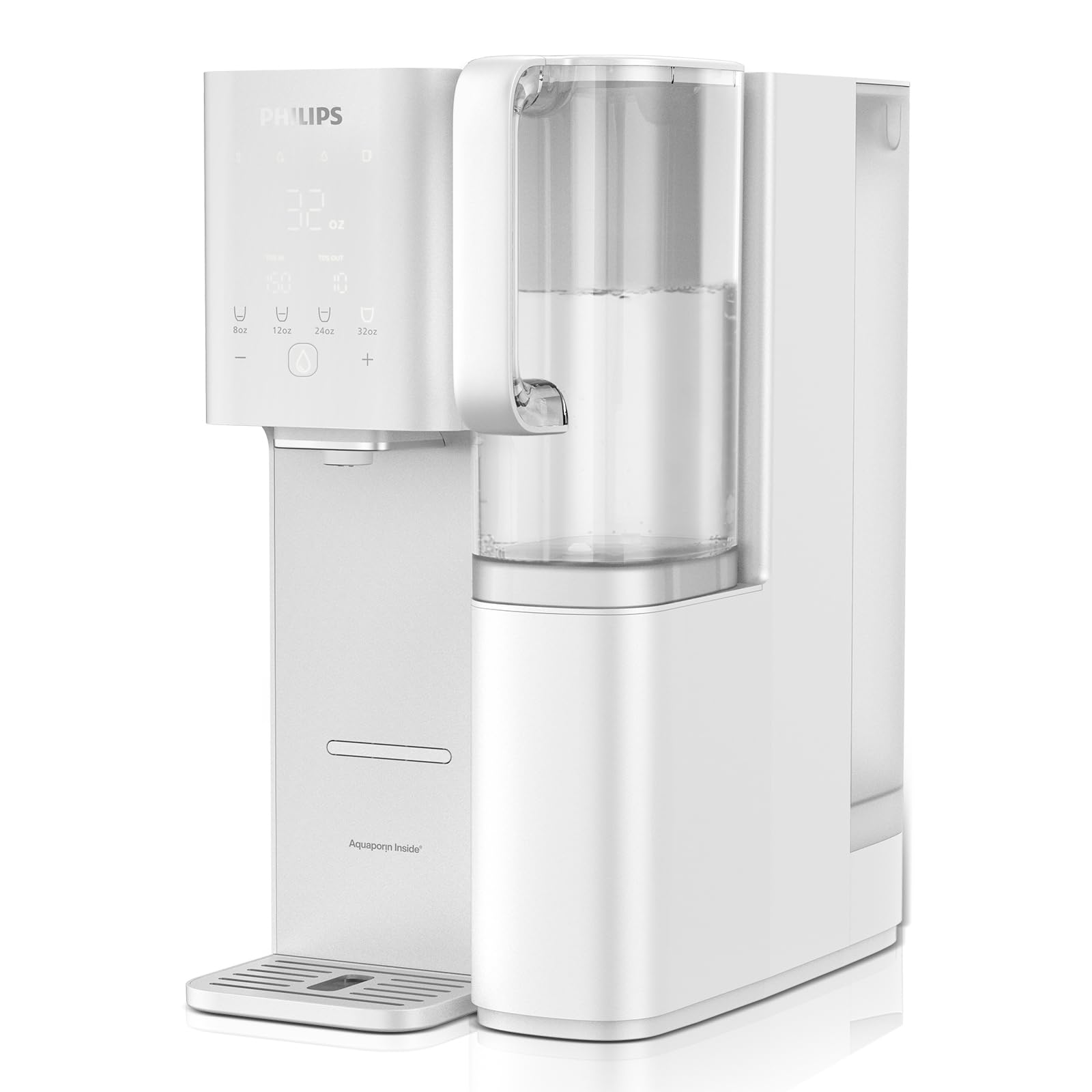
The PHILIPS ADD6926WH/37 is a countertop RO system that requires zero installation — just fill the 6L source tank and plug it in. It uses Aquaporin Inside technology, which mimics the natural water filtration process of living cells, achieving a high contaminant rejection rate. The 6-stage filtration includes a remineralization layer that improves taste and adds back essential minerals. The unit is designed for families of 2-5 people and produces about 200ml per minute of purified water.
A standout feature is the real-time TDS display showing both incoming and outgoing total dissolved solids levels, providing immediate feedback on performance. The filter lasts up to 12 months, and the machine has a built-in self-cleaning function that you run monthly to prevent mineral scale buildup. The filtered water stores automatically in a 1.8L jug inside the unit, keeping it ready on demand.
The system dispenses water at room temperature only, which is a limitation if you want hot or cold options. The waste water collects in a divided tank at the bottom, requiring you to empty it periodically or place the unit near the sink to drain it. Despite this, the no-install nature makes it perfect for renters, offices, or anyone who cannot modify their countertop.
Why it’s great
- No plumbing or installation required
- Aquaporin membrane with high contaminant rejection
- Real-time TDS input and output display
Good to know
- Only dispenses room temperature water
- Waste tank requires manual emptying
5. Waterdrop G3P800
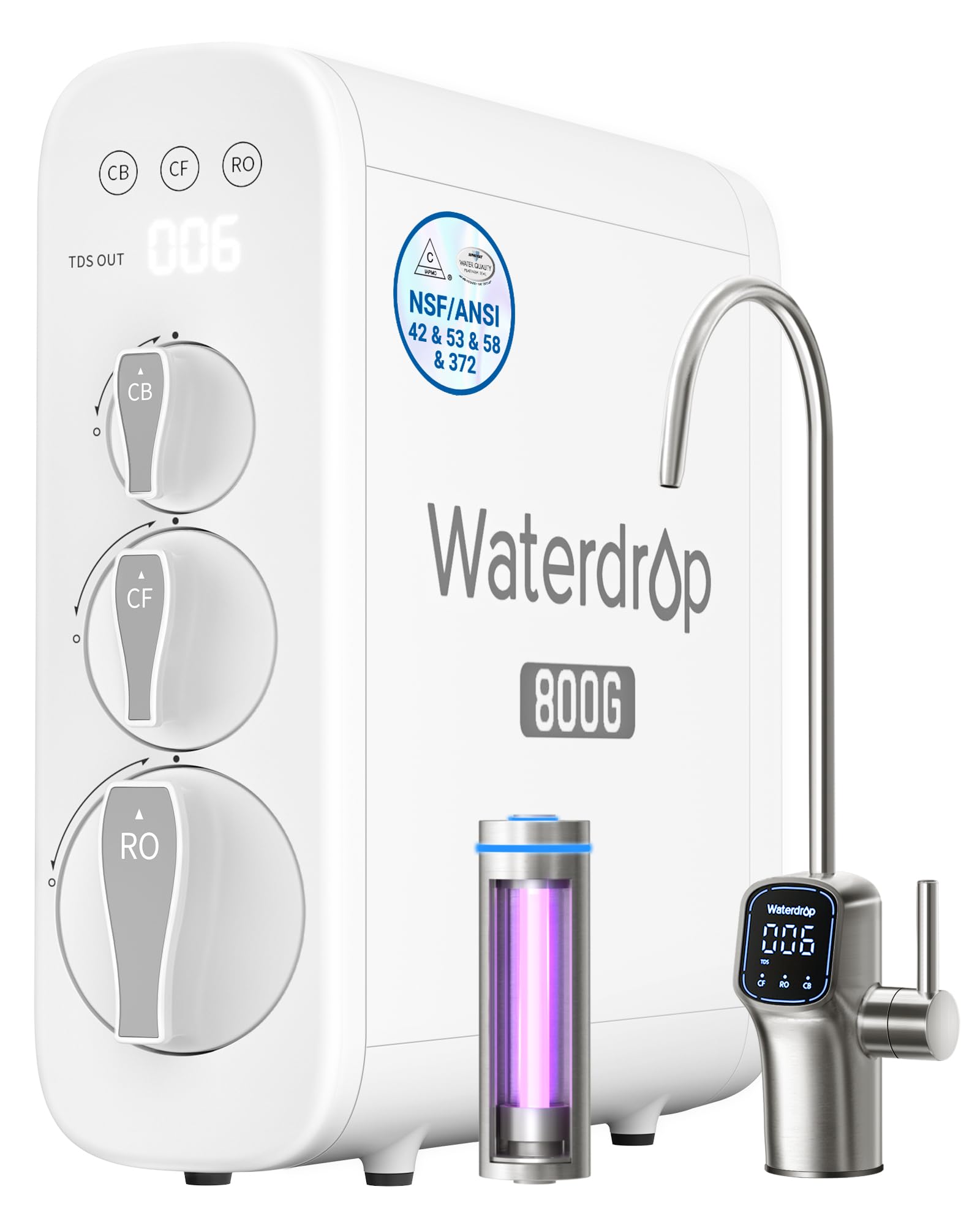
The Waterdrop G3P800 is a tankless under-sink system with an impressive list of NSF certifications: NSF 42, 53, 58, and 372. This means it has been independently tested for chlorine reduction, contaminant reduction, TDS reduction, and lead-free materials. The 10-stage filtration process is the most robust in this lineup, targeting PFAS, fluoride, heavy metals, salts, and radioactive substances. The 800 GPD flow rate delivers a cup of water in about 5 seconds.
The smart faucet includes an LED display that shows TDS levels in real time, and the LED lamp has a rated lifespan of up to 50 years, adding to the unit’s durability. The 3:1 pure-to-drain ratio is good but not the best in its class, yet the sheer flow capacity makes up for it. The tankless design saves significant under-sink space, measuring 18.1” wide and 17.7” tall.
Installation requires drilling two holes — one for the RO faucet and one for the drain connection. This is a bit more involved than some other tankless systems, but the included instruction manual and video guidance make it manageable for a DIY homeowner. The replacement filter costs are on the higher side given the 10-stage setup, but the certification suite and performance justify the premium.
Why it’s great
- NSF 42, 53, 58, and 372 certified
- 10-stage filtration covers PFAS and radioactive substances
- 800 GPD for near-instant water delivery
Good to know
- Requires drilling two holes for installation
- Higher replacement filter costs
6. Frizzlife PX500-A
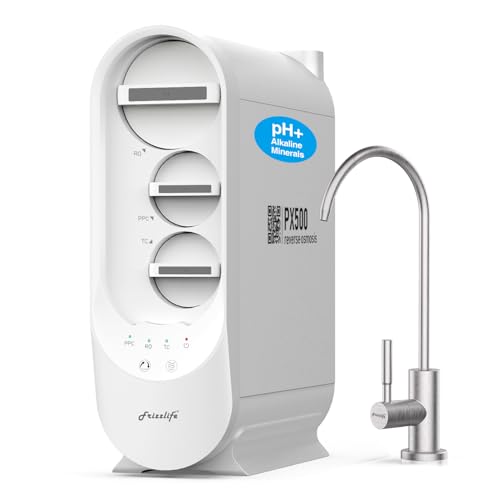
The Frizzlife PX500-A is a tankless under-sink system that delivers a solid 500 GPD flow rate with an alkaline remineralization stage that raises the pH above 7.5. The RO membrane operates at a precision of 0.0001 microns, eliminating more than 1000 contaminants including fluoride, chlorine, lead, and TDS. The tankless design is compact at only 5” deep, fitting easily into tight cabinet spaces.
One of the biggest advantages of this system is its DIY-friendly installation. The unit comes with filters pre-loaded and uses an integrated design with fewer connection points, which reduces the risk of leaks. The filter life monitor uses simple blue and red LED indicators on the operation panel, and a beep alerts you when a replacement is needed. The first stage filter lasts 6 months, the third stage lasts 12 months, and the RO membrane lasts 24 months.
The system achieves a 2:1 pure-to-drain ratio, which is reasonable but not as efficient as newer competitors. It does require electricity for the booster pump, but the power consumption is minimal. You can also connect it to your refrigerator’s ice maker using an optional connection kit, making it a versatile central water solution for the kitchen.
Why it’s great
- Ultra-thin 5” depth saves under-sink space
- Alkaline remineralization for pH above 7.5
- Quick 2-second twist-and-pull filter changes
Good to know
- Needs electrical outlet to operate
- 2:1 drain ratio is less efficient than some new models
7. Stokk S2
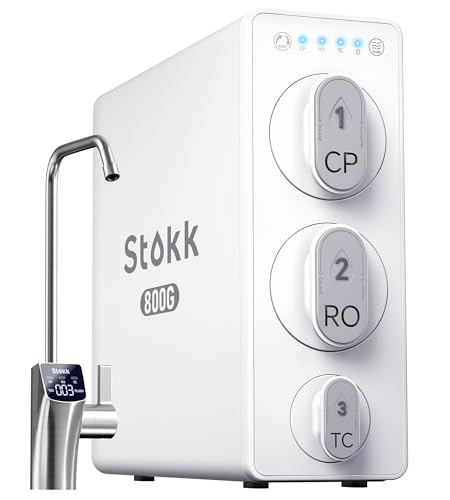
The Stokk S2 is a tankless system that emphasizes high flow rate and smart features. With an 800 GPD membrane, it can deliver a full cup of water in about 5 seconds. The 8-stage filtration process uses a 0.0001μm RO membrane to reduce over 1000 contaminants, including PFOA and PFOS, by 99.99%. The 3:1 pure-to-drain ratio is competitive, saving up to 1200% more water compared to older 1:1 systems.
The smart display faucet shows real-time TDS levels and filter life status, giving you visual confirmation of water quality. The tankless design saves over 50% of under-sink space, measuring 18.11” wide and 14.92” tall. Installation requires a power outlet and drilling holes, but the integration design reduces the number of connection points, lowering the risk of leaks.
A key concern is the cost of replacement filters, which some users report being nearly as high as the system itself. The filter cartridges are proprietary, so you cannot swap in cheaper third-party options. The water cycle timed flush feature keeps water fresh and prevents sediment buildup, so you never need to pour out the first glass of the day. If you prioritize low long-term maintenance costs, check the filter prices before buying.
Why it’s great
- 800 GPD provides fast, on-demand water flow
- Smart faucet with TDS and filter life display
- 3:1 pure-to-drain ratio for water efficiency
Good to know
- Proprietary filter replacements are expensive
- Requires electrical outlet and drilling
8. Waterdrop T3-T
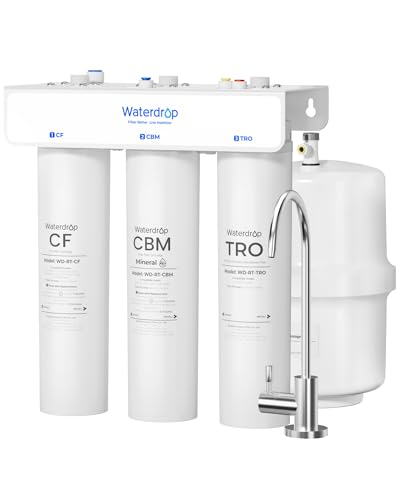
The Waterdrop T3-T is a tank-based RO system that operates without electricity, making it a strong choice for households that want a simple, low-energy solution. It uses a 7-stage filtration process with a 0.0001μm RO membrane that reduces up to 90% of TDS, chlorine, heavy metals, and PFOA/PFOS. The final stage adds essential minerals back into the water for improved taste. With a 220 GPD capacity, it refills the storage tank in about 7.5 minutes.
The 2:1 pure-to-drain ratio is efficient for a non-electric system, and the NSF/ANSI 372 certification confirms lead-free materials. The NFC smart tag feature lets you tap the system with your phone to access installation videos and track filter lifespan in real time. The twist-and-pull filter replacement is simple, and the CF filter lasts 6 months, the CBM filter lasts 12 months, and the RO membrane lasts 24 months.
Installation requires drilling a hole for the faucet, but the process is straightforward with the included instructions. The mini tank takes up some under-sink space, so measure your cabinet dimensions. The gasketed tank uses a bladder design that works with standard household water pressure. For the price point, the combination of mineral enhancement and power-free operation is hard to beat.
Why it’s great
- No electricity required for operation
- 7-stage filtration with mineral remineralization
- NFC smart tag for filter monitoring
Good to know
- Tank takes up significant under-sink space
- 220 GPD flow is slower than tankless systems
9. Aigerri Countertop RO

The Aigerri Countertop RO system is designed for portability and ease of use, requiring no plumbing or drilling. It features a 5L raw water tank and a 2L purified water reservoir, delivering up to 529 gallons of filtered water per set of included filters. The 5-stage RO process is effective at reducing TDS, PFAS, and other dissolved solids, and the unit boasts an industry-leading 5:1 pure-to-drain ratio, meaning you waste far less water than with any other system in this guide.
The system is compact, measuring 7.4” wide and 16.4” tall in its closed position, and extending to 21.7” when the lid is open. It is ideal for use in the kitchen, office, RV, or even camping. The control panel is user-friendly, and the unit comes with two replacement filter cartridges to get you started. The BPA-free food-grade material construction ensures the water pathway stays clean.
One limitation is the manual refilling of the raw water tank, which may be inconvenient for heavy users. The filtered water is stored in the 2L pressurized tank inside the unit, so you need to keep the system plugged in to maintain the pressure for dispensing. The height when open may not fit under standard upper cabinets, so measure your clearance carefully.
Why it’s great
- 5:1 pure-to-drain ratio is the best in this list
- Zero installation required — portable design
- Includes two replacement filters in the box
Good to know
- Raw water tank needs manual refilling
- Extended height may not fit under low cabinets
FAQ
Do I need an electric pump for a tankless reverse osmosis system?
How often do the filters need to be replaced in a home RO system?
Will a reverse osmosis system remove fluoride and PFAS?
Is the wastewater from an RO system safe to use for plants?
Final Thoughts: The Verdict
For most users, the home reverse osmosis system winner is the Frizzlife M800 because it combines a massive 900 GPD flow rate with a cordless, tankless design that runs silently on water pressure alone, all while providing essential mineral enhancement and NSF certifications. If you want a countertop system with zero installation and the best 5:1 drain ratio, grab the Aigerri Countertop RO. And for the highest level of certification and contaminant removal with a 10-stage process, nothing beats the Waterdrop G3P800.