Hinoki cutting boards feel different under a knife. The soft, fibrous cypress wood absorbs the blade’s impact rather than fighting it, which keeps your edge sharper for longer. That one tactile difference explains why serious cooks in Japan have chosen this material for generations over hard maple or bamboo.
I’m Mohammad Maruf — the founder and writer behind AirfryerBite. I spend my time analyzing the hardness, grain structure, and moisture resistance of kitchen cutting surfaces to help home cooks make smarter, more durable choices.
Whether you are protecting a set of high-carbon Japanese knives or just want a board that won’t slide around or absorb strong odors, finding the best hinoki cutting board means evaluating thickness, size, construction style, and whether the board comes from a trusted Japanese mill.
How To Choose The Best Hinoki Cutting Board
Hinoki, also called Japanese cypress, behaves differently from Western hardwood boards. Its porous, low-density structure provides a naturally antimicrobial surface that is gentle on knife edges, but it also requires specific care to avoid cracking. Before buying, weigh the three factors that separate a board that lasts five years from one that warps in three months.
Thickness and Construction
A thin 0.6-inch board is lightweight and easy to pull out for quick tasks like slicing citrus or herbs, but it may bow over time if exposed to moisture. A 1-inch-thick board provides deformation resistance and a more stable cutting platform for heavy chopping. Also check whether the board is a single solid piece of wood or end-grain glued strips — solid pieces resist moisture intrusion better at the joints.
Size and Anti-Twist Features
Larger boards above 17 inches in length give you room to work with whole cuts of meat or multiple ingredients at once. Some premium boards include an internal core of harder wood like maple to prevent twisting and cupping. This is a meaningful upgrade if your kitchen is humid or if the board will sit near the sink.
Care and Maintenance
Hinoki should never go in a dishwasher or sit in direct sunlight. Warped boards can sometimes be flattened by covering with a damp cloth overnight, but prevention through regular oiling and proper drying is more reliable. Look for boards that come with clear care instructions matching the wood’s specific needs.
Quick Comparison
On smaller screens, swipe sideways to see the full table.
| Model | Category | Best For | Key Spec | Amazon |
|---|---|---|---|---|
| Yoshihiro Hinoki Cypress Anti-Twist Core | Premium | Anti-warp stability | 17.72″ x 10.24″ x 0.98″ | Amazon |
| jNE Hinoki Cypress Reversible | Mid-Range | Heavy chopping | 1 inch thickness, reversible | Amazon |
| Miyabi Cutting Board Hinoki Medium | Premium | Knife-brand pairing | 35 x 20 cm single piece | Amazon |
| YAMASAN KYOTO UJI Hinoki Medium | Mid-Range | Light daily prep | 15.35″ x 8.66″ x 0.59″ | Amazon |
| Umezawa Wooden Cutting Board Hinoki | Entry-Level | Budget-friendly entry | 0.6 inch thin, lightweight | Amazon |
In‑Depth Reviews
1. Yoshihiro Hinoki Cypress Anti-Twist Core Cutting Board
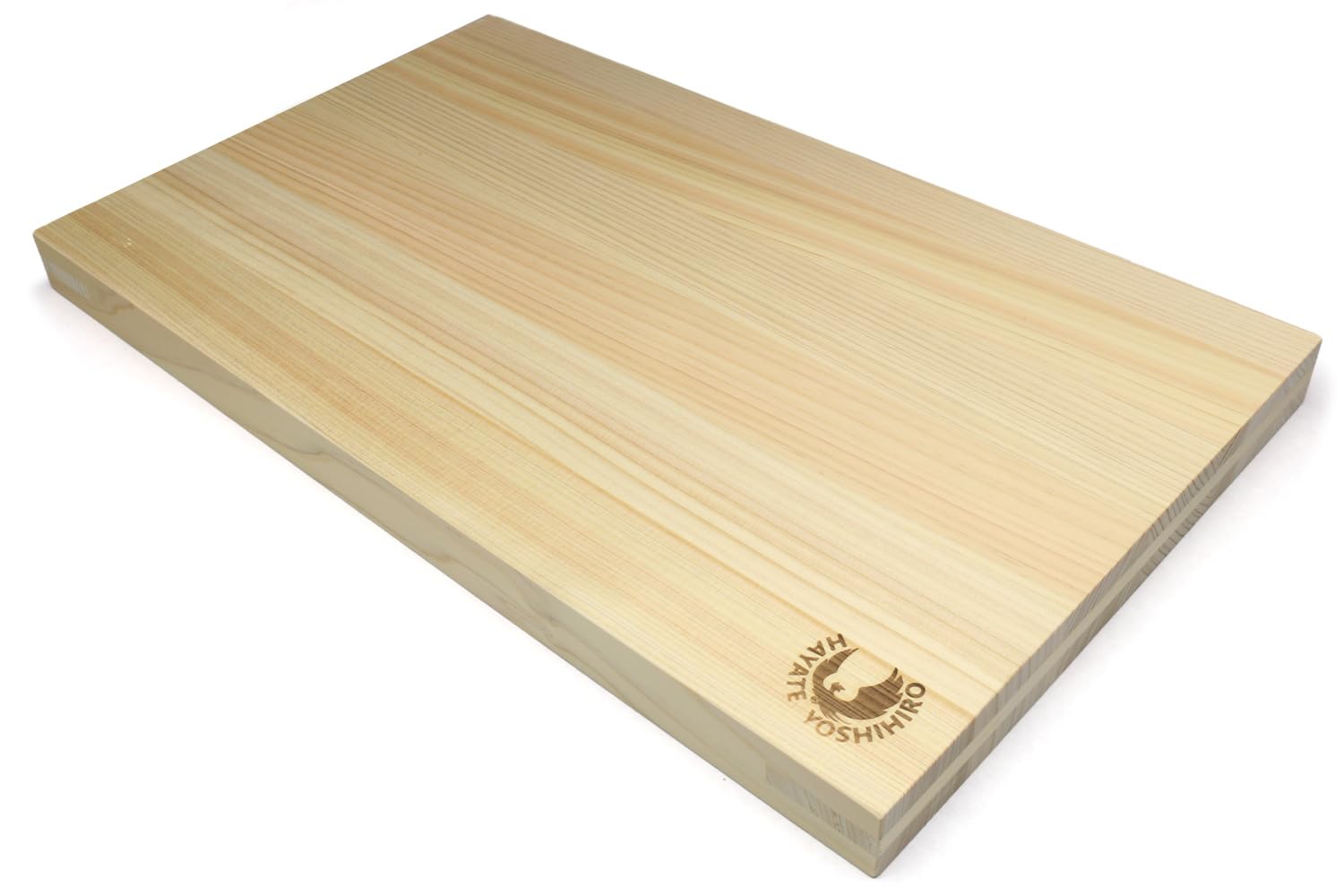
The Yoshihiro stands apart because of its maple anti-twist core, a thin layer of harder wood sandwiched between hinoki layers. This engineering prevents the cupping and bowing that commonly plague thin softwood boards in humid kitchens. At nearly 18 inches long and a full inch thick, it provides a stable, generous work surface for everything from mincing shallots to portioning a whole chicken.
The surface is naturally antimicrobial and resists odor absorption better than plastic or bamboo alternatives. Handcrafted in Japan from authentic hinoki cypress, the board arrives with a subtle citrusy fragrance that fades after a few weeks. The knife-friendly feel is immediate — your blade sinks in slightly rather than bouncing, which reduces edge wear noticeably over a month of daily use.
Three size options let you match the board to your countertop dimensions, though the X-Large reviewed here is the sweet spot for most home cooks. The board requires hand washing and occasional mineral oil conditioning, but the anti-twist core means it stays flat without constant attention.
Why it’s great
- Maple core prevents warping in humid environments
- Generous X-Large footprint (17.72″ x 10.24″) for big prep tasks
- Knife-friendly surface extends blade sharpness
Good to know
- Requires careful hand drying to avoid moisture cracks
- Premium pricing reflects the anti-twist construction
2. jNE Hinoki Cypress Reversible Cutting Board

The jNE board uses a single solid piece of hinoki cypress with no glue joints or coatings. At 17.3 by 9.5 inches and a full inch thick, it offers serious deformation resistance for heavy-duty chopping. The reversible design means you can dedicate one side to raw meat and the other to vegetables, keeping your workflow sanitary without washing between ingredients.
Every board is individually selected for grain consistency, and the lack of chemical treatment means the natural hinoki aroma remains intact. Owners frequently comment on how the board does not dull knives the way harder surfaces like walnut or maple do — a direct result of the low Janka hardness rating inherent to cypress.
Moistening the surface before each use is recommended to reduce staining, and the board should always be towel-dried immediately after washing. The 1-inch thickness also provides enough mass that the board will not slide around on the counter during vigorous work, though the bottom is not rubberized.
Why it’s great
- Solid one-piece construction with no glue lines
- Reversible surface doubles prep area for raw and ready-to-eat foods
- Thick profile resists warping over time
Good to know
- No anti-twist core — needs consistent drying routine
- May develop light knife marks faster than harder woods
3. Miyabi Cutting Board Hinoki Medium
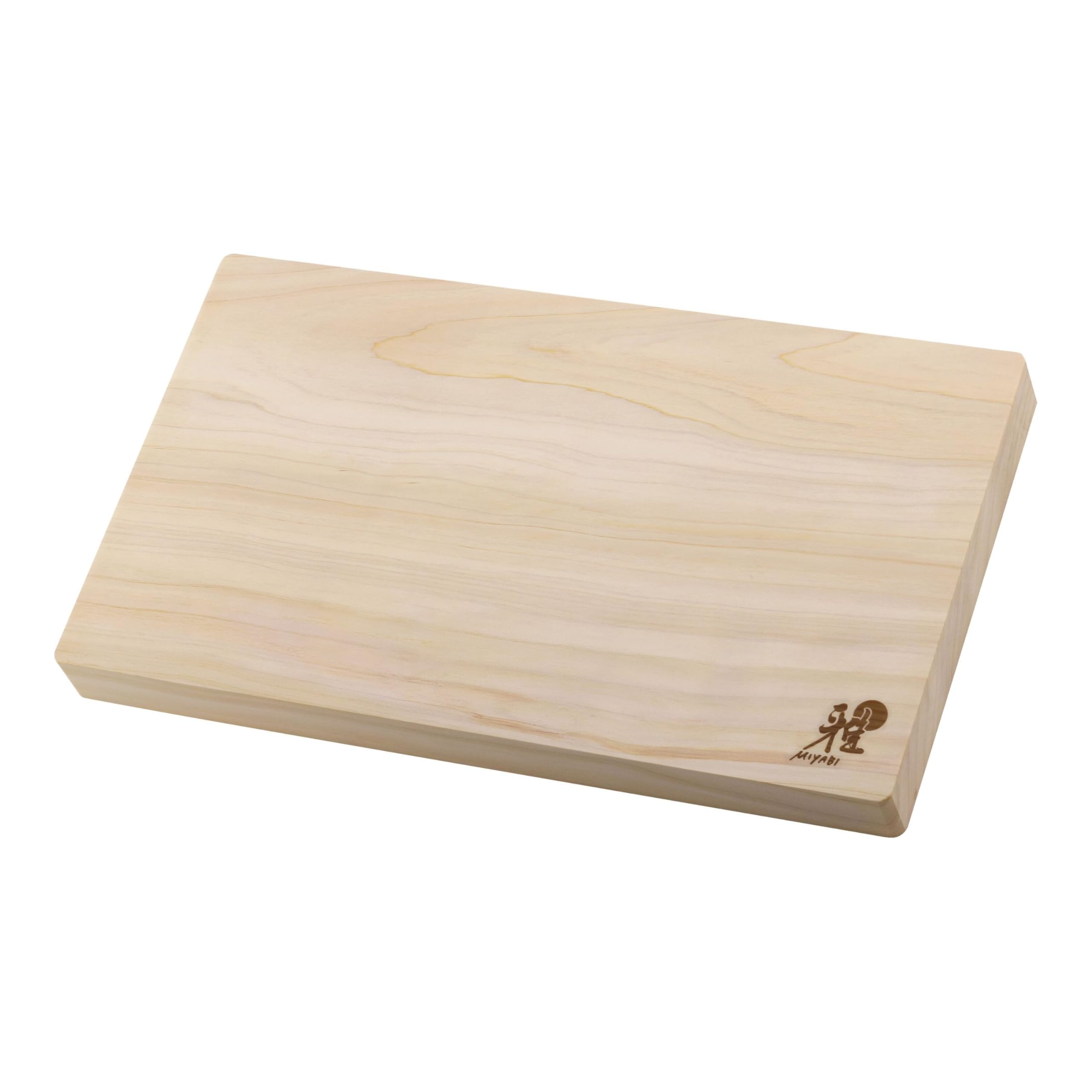
The Miyabi board is built specifically to complement high-end Japanese knives, and its design reflects that partnership. Cut from a single piece of hinoki taken from the tree trunk’s exterior, the grain runs consistently to reduce moisture absorption and splitting. The medium size (roughly 13.8 by 7.9 inches) is compact enough to store vertically in a narrow cabinet slot yet large enough for daily vegetable prep.
Miyabi labels this board water resistant because the tight grain structure naturally repels liquid better than softer, end-grain alternatives. The thin profile keeps the board lightweight and easy to flip, though it does sacrifice the deformation resistance of a thicker board. The light weight also makes it a convenient choice for taking to a cutting station or bringing out for quick tasks.
Owners report that the board pairs seamlessly with Miyabi knives, preserving edge geometry even after months of nightly use. The brown wood tone darkens slightly with mineral oil application, aging gracefully if maintained properly. Hand washing is mandatory, and the board should never be left submerged in water.
Why it’s great
- Single-piece trunk exterior construction for uniform grain
- Specifically designed to protect high-carbon Japanese knife edges
- Naturally water-resistant surface reduces staining
Good to know
- Medium size may feel small for large roasts or whole fish
- Thin board can warp if left wet or in direct sunlight
4. YAMASAN KYOTO UJI Japanese Hinoki Cutting Board Medium

The YAMASAN KYOTO UJI board hits a practical midpoint between budget entry-level boards and premium thick options. At 15.35 by 8.66 inches with a 0.59-inch thickness, it is light enough to grab one-handed but large enough to dice a few onions and a bell pepper without crowding. The medium size fits comfortably on smaller countertops or apartment kitchens where space is tight.
The cypress wood is sourced and milled in Japan, and the board carries the brand’s reputation for craftsmanship honed in Kyoto-Uji. The 0.59-inch thickness means it is best suited for fruit, vegetable, and light meat prep rather than heavy bone-in chopping. The board sits flat out of the box and does not require significant break-in before first use.
Because the board is thin, users need to be diligent about drying it promptly and storing it in a dry, ventilated area. The lightweight nature makes it a good candidate for a backup board or a dedicated cheese and bread board you keep on the counter for daily access.
Why it’s great
- Authentic Japanese hinoki from a respected Kyoto mill
- Lightweight and easy to store in narrow drawers or racks
- Balanced size works for everyday vegetable and fruit prep
Good to know
- Thin 0.59-inch profile may warp if not dried immediately
- Not ideal for heavy chopping or meat with bones
5. Umezawa Wooden Cutting Board Hinoki Thin
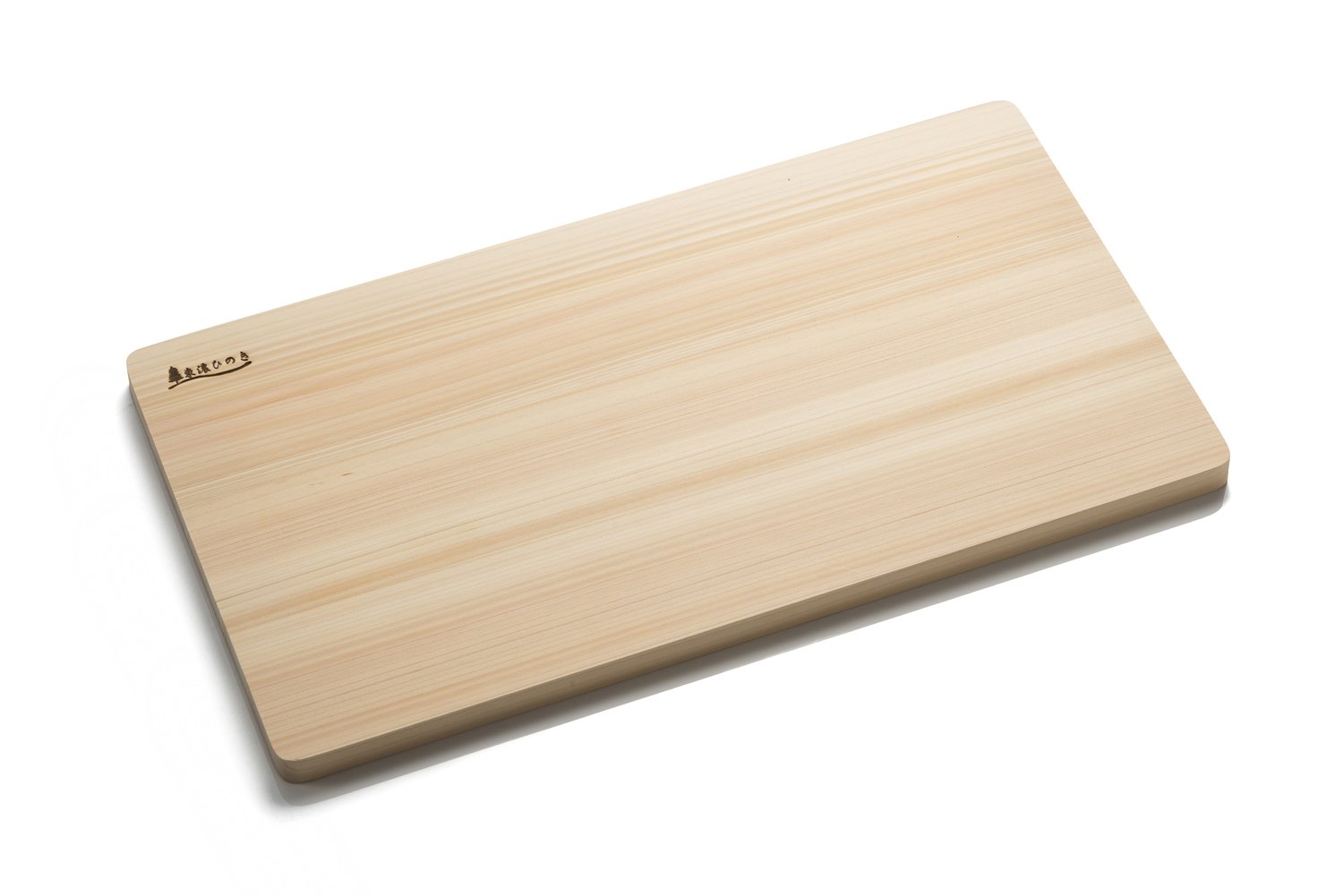
The Umezawa board is an entry-level hinoki option that prioritizes low weight and affordability. At 15.7 by 8.7 inches and only 0.6 inches thick, it is noticeably lighter than the thicker boards in this list, making it easy to pull out for quick slicing tasks. The three-pack configuration means you can dedicate separate boards for cheese, fruit, and meat, or keep spares for guests and outdoor use.
Constructed from Tsuno Hinoki in Japan, the board carries the natural antimicrobial properties and gentle knife feel characteristic of the species. The thin profile means it can be stored vertically in a slotted rack or slid into a shallow drawer without taking up much space. However, the board is more prone to warping than thicker alternatives, especially if left near a sink or in direct sunlight.
The manufacturer recommends covering a warped board with a damp cloth overnight to flatten it — a common workaround for thin hinoki boards. The surface takes knife marks readily, which is normal for soft cypress and does not affect performance. This board is best suited for cooks who want to try hinoki without a significant investment or who need multiple lightweight boards for organized prep.
Why it’s great
- Three boards in one purchase for organized food prep separation
- Lightweight design ideal for easy daily handling and storage
- Authentic Japanese hinoki at a budget-friendly entry point
Good to know
- Thin 0.6-inch boards are susceptible to warping without careful drying
- Knife marks will show more prominently on the soft surface
FAQ
Can I put a hinoki cutting board in the dishwasher?
Why does my hinoki board smell like a cedar closet?
Can I use mineral oil on a hinoki cutting board?
Final Thoughts: The Verdict
For most users, the best hinoki cutting board winner is the Yoshihiro Hinoki Cypress Anti-Twist Core because it combines the knife-friendly softness of hinoki with engineering that prevents warping — the two features that matter most for long-term satisfaction. If you want a reversible thick board for heavy chopping, grab the jNE Hinoki Cypress Reversible. And for a lightweight starter set at an entry-level investment, nothing beats the Umezawa Wooden Cutting Board three-pack.