Every glass rinser buyer shares one goal: stop hand-scrubbing narrow bottles, stemware, and baby bottles. The category exists because sponge-scrubbing every hard-to-reach interior is tedious, wasteful of water, and often leaves behind residue and water spots that require a second pass. A properly installed glass rinser turns that mess into a three-second, hands-free operation.
I’m Mohammad Maruf — the founder and writer behind AirfryerBite. I have spent hundreds of hours analyzing kitchen hardware specifications, comparing water flow rates, jet configurations, installation requirements, and material durability across dozens of glass rinser models to determine what actually separates a smart buy from a frustrating one.
This guide breaks down every major consideration for choosing the right glass rinser for your kitchen, bar, or cafe setup so you can stop scrubbing and start rinsing.
How To Choose The Best Glass Rinser
Glass rinsers look simple, but the wrong one can leave drinkware half-cleaned, take up precious counter space, or require plumbing work you weren’t prepared for. Focus on these four factors to avoid buyer’s remorse.
Dedicated Rinser vs. 2-in-1 Faucet Combo
The first fork in the road is hardware style. A dedicated glass rinser installs into an existing accessory hole on your sink deck or countertop, replacing a soap dispenser or sprayer — it is a standalone cleaning station. A 2-in-1 faucet combo integrates the rinser into a full pull-down kitchen faucet, saving counter space and often adding multiple spray modes for general dishwashing. Dedicated units are ideal if you already have a spare sink hole and want a specialized tool. Combo units suit kitchens that need a faucet upgrade anyway, but they require full under-sink water line access.
Jet Count, Pressure, and Spray Coverage
Not all rinsers blast residue equally. The number of high-pressure jets — typically between 6 and 12 — determines how thoroughly water reaches the bottom and sides of narrow containers. More jets generally mean faster cleaning, but the water flow rate measured in gallons per minute (gpm) matters just as much. A low gpm (around 1.2) paired with 9 jets can still struggle with dried milk residue, while a unit with fewer jets but a higher gpm (1.8+) usually blasts through dried-on gunk. Look for 360-degree swivel spouts or rotating jet heads that cover every angle without re-positioning the glass.
Material Durability and Finish Options
The base chassis comes in three common materials: ABS plastic, stainless steel, and brass. Budget-friendly models use ABS plastic with copper or stainless internal components — lightweight and rust-proof, but less rigid. Mid-range and premium models favor 304 stainless steel or brass bodies for superior corrosion resistance and a heavier, more stable feel. The finish also matters: polished stainless resists water spots moderately well, while matte black or spot-resistant brushed finishes hide fingerprints and mineral deposits better over time. If your water is hard, skip glossy finishes.
Installation Requirements and Sink Hole Compatibility
Before you buy, measure your sink deck. Most dedicated glass rinsers require a single hole with a minimum diameter of 1.25 inches. Check the maximum deck thickness — some units accommodate only up to 1.57 inches, while others handle thicker countertops up to 2.25 inches. You also need clearance below the sink for the supply line connection. Models that include a quick-connect water line, tee adapter, and detailed instructions are realistic for a confident DIY installer. If your sink lacks an existing spare hole, you will need to drill one or replace a faucet — a job that may require a professional.
Quick Comparison
On smaller screens, swipe sideways to see the full table.
| Model | Category | Best For | Key Spec | Amazon |
|---|---|---|---|---|
| KRAUS CleanMate KGR-500MB | Dedicated | Premium glassware care | 9 jets, max opening 4.25 in | Amazon |
| Delta GR150-SP SpotShield | Dedicated | Fingerprint resistance | Flow rate 1.2 gpm | Amazon |
| DIBTSA Pitcher Rinser | Countertop | Bar & cafe use | Stainless drip tray included | Amazon |
| HOWUWEY 2-in-1 Faucet | Faucet Combo | Complete faucet upgrade | 4 spray modes, retractable hose | Amazon |
| AquatiQ 2-in-1 Rinser | Dedicated | Stainless build quality | 304 stainless steel body | Amazon |
| MQFORU Pull-Out Rinser | Dedicated | Budget-friendly pull-out | 80 cm retractable hose | Amazon |
| Delta GR250-BL Matte Black | Dedicated | Lifetime durability | Brass body, Lifetime Warranty | Amazon |
In‑Depth Reviews
1. KRAUS CleanMate Glass Rinser KGR-500MB
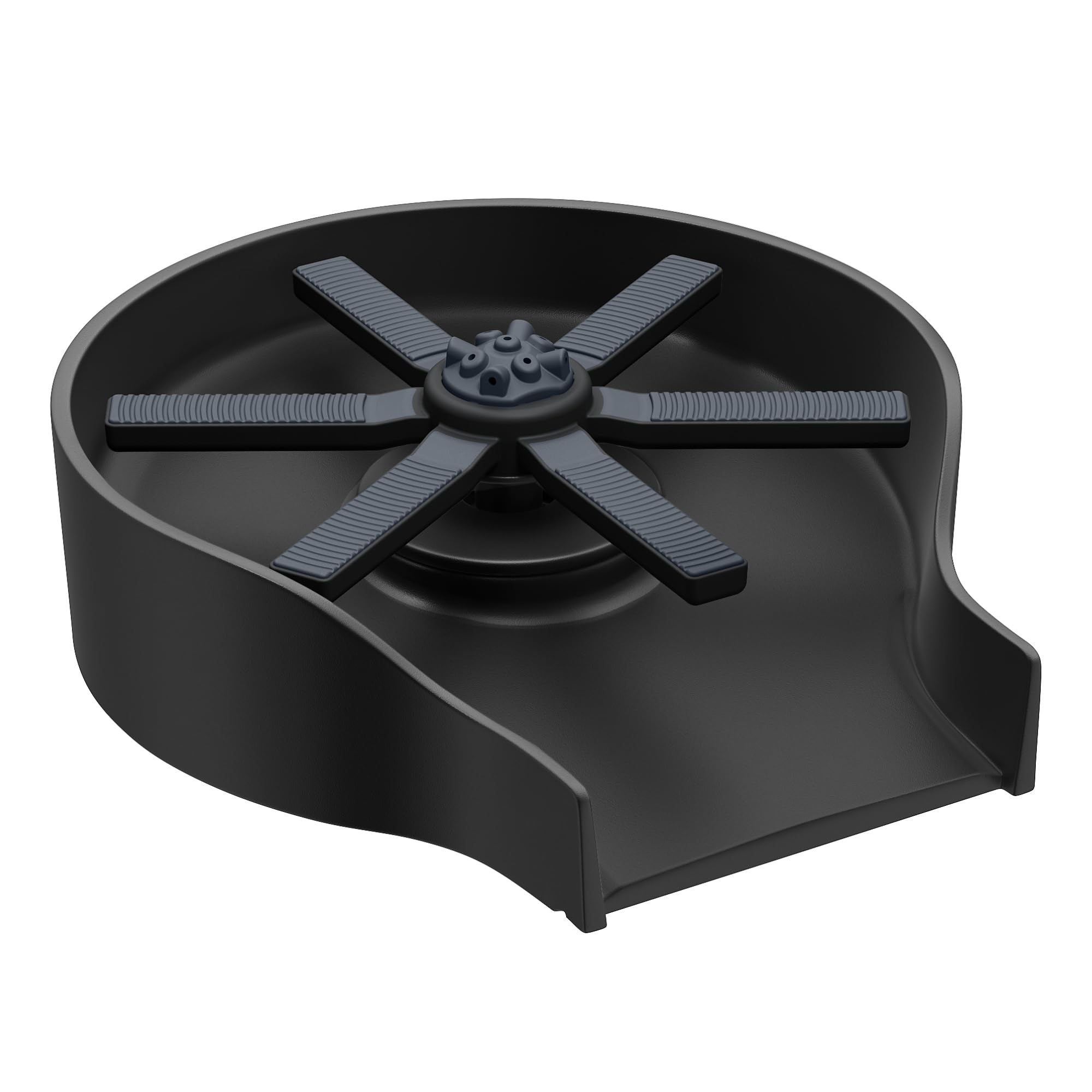
The KRAUS CleanMate takes a clear lead with 9 powerful jets and a wide 5-inch opening that accommodates everything from a narrow champagne flute to a large travel tumbler. Its integrated safety lock prevents accidental activation — a thoughtful detail when kids or guests are around — and the soft silicone-coated prongs protect delicate stemware from scratches during use. With a maximum flow rate of 1.2 gpm and a sloped base that drains quickly, it handles wet conditions without leaving puddles on the counter.
Available in several finish options including the wear-resistant Matte Black shown here, the unit resists fingerprints and water spots better than standard polished metal. The kit includes a quick-connect water line, a tee connector, and an optional spacer for sinks with ledges, so most DIY installs finish in under 30 minutes. The aluminum body construction keeps weight at just 0.88 pounds, reducing strain on the sink deck.
The main limitation is a 1/8-turn safety lock that some users find stiff initially, though it loosens with repeated use. Also, the ABS plastic housing, while durable, lacks the heft of a full brass unit. For a mid-range price point and category-leading jet performance, the KRAUS CleanMate is the most well-rounded dedicated glass rinser on the market.
Why it’s great
- 9 high-pressure jets clean residue in seconds
- Soft silicone prongs prevent glass scratches
- Integrated safety lock prevents accidental spray
Good to know
- Safety lock may feel stiff initially
- ABS plastic body not as heavy-duty as brass
2. Delta Faucet SpotShield Stainless GR150-SP

Delta’s GR150-SP brings the brand’s renowned SpotShield technology to the glass rinser category — a brushed stainless finish engineered to resist water spots and fingerprints, saving you from daily wiping. It delivers a steady 1.2 gpm flow through its internal spray jets, designed to target residue at the base of narrow drinkware. A subtle overhang on the lip directs runoff into the sink, keeping your counter dry.
The unit installs as a simple replacement for an existing soap dispenser or sink hole cover, and it comes with a supply line for connection to either hot or cold water. Delta’s Touch-Clean spray holes allow you to wipe away calcium buildup with a finger, which is a practical feature if you have hard water. At just 1.13 inches tall once mounted, it sits low and unobtrusive on the sink deck.
The plastic handle and lever are functional but feel less premium compared to all-metal competitors. The 1.2 gpm flow rate is adequate for light daily rinsing but may take an extra few seconds on dried-on milk or thick smoothie residue. For users who prioritize a spot-free finish surface and easy maintenance over raw jet power, the Delta GR150-SP is a strong choice.
Why it’s great
- SpotShield finish resists fingerprints and water spots
- Touch-Clean spray holes for easy calcium removal
- Low-profile design sits flush on sink deck
Good to know
- Plastic lever handle feels less durable
- 1.2 gpm may struggle with heavy dried residue
3. DIBTSA Pitcher Rinser (16.7×9.1 Inch)

The DIBTSA Pitcher Rinser is built differently from the typical deck-mounted unit — it is a countertop station measuring 16.7 by 9.1 inches, designed to sit beside your sink or on a bar counter. It includes a stainless steel drip tray that catches runoff and provides a drying area for rinsed glassware, and separate water inlet and drain hoses that actively channel dirty water away. This makes it ideal for high-volume environments like home bars, coffee shops, or restaurant prep stations where multiple glasses are cleaned in succession.
Construction is primarily stainless steel with an ABS plastic rinser head, and the system supports a flow rate of up to 12 liters per minute. The pressed activation is simple — place a pitcher, wine glass, or baby bottle over the rinser head, push down, and water sprays upward to blast residue. Removing the glass stops the spray instantly, which conserves water during quick rinses. The package includes two braided inlet hoses and a 3-way tee connector for easy under-sink connection.
The trade-off is footprint: this unit takes up significant counter space and requires drainage plumbing. It also lacks the 360-degree rotating spray found on some competitor models, meaning you may need to rotate tall containers manually for full coverage. For bars and cafes processing large drinkware, the DIBTSA’s capacity and drainage make it the most practical non-deck option.
Why it’s great
- Large drip tray catches water and dries glassware
- Separate drain hose keeps sink clear
- High flow rate handles big batches quickly
Good to know
- Requires dedicated counter space
- No 360-degree rotating spray head
4. HOWUWEY 2-in-1 Kitchen Faucet with Cup Washer
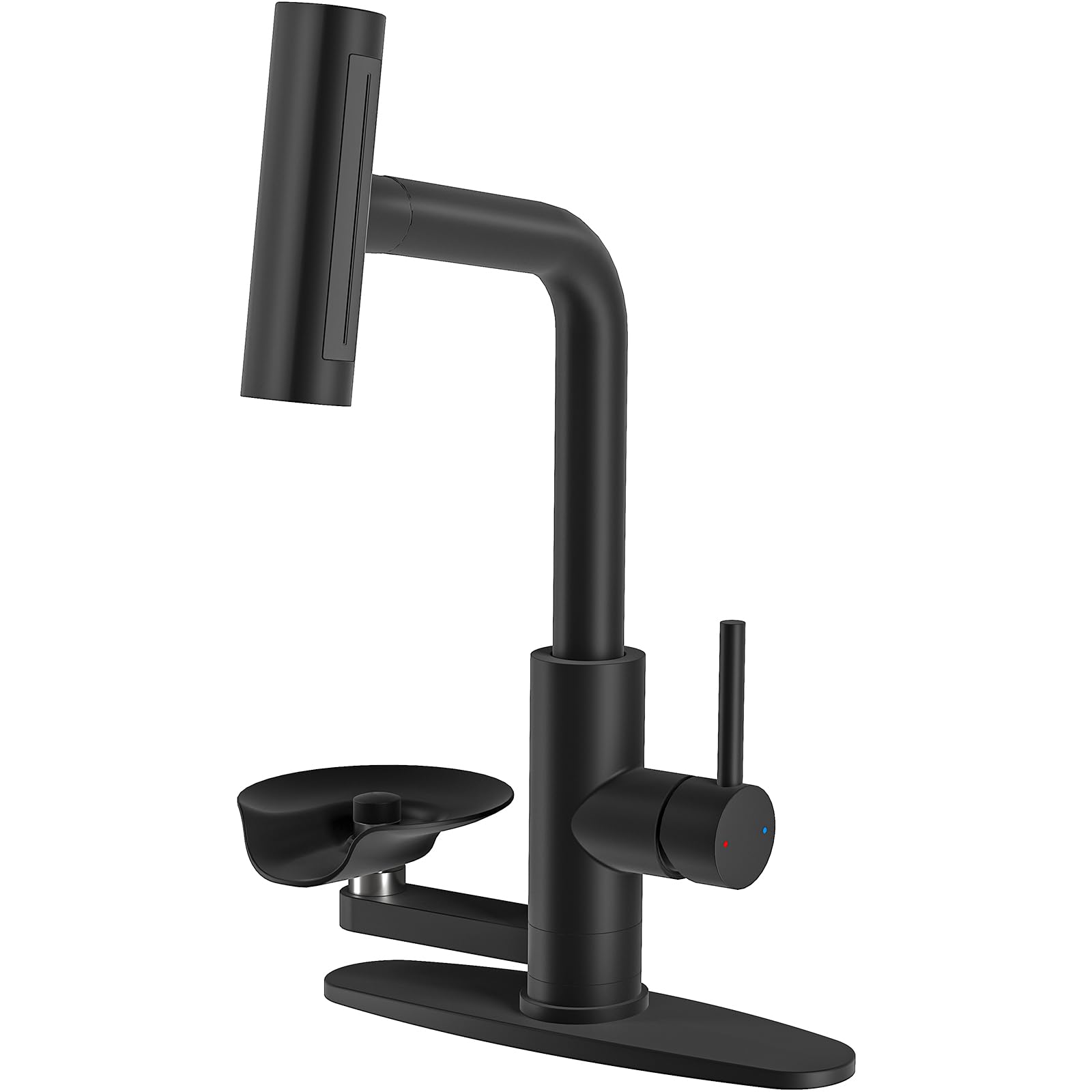
The HOWUWEY 2-in-1 Faucet eliminates the need for a separate glass rinser hole by integrating the cup washer directly into a pull-down kitchen faucet. The glass rinser tray sits on the faucet body — press a glass onto it and high-speed rotating jets activate for targeted cleaning. When you need a standard faucet, the pull-down sprayer extends up to 14.96 inches and the spout swivels 360 degrees for full sink coverage without blind spots.
This unit offers four distinct spray modes: a standard stream for filling pots, a high-pressure sweep for stuck-on food, a wide spray for general rinsing, and a waterfall mode that is gentle enough for hand-washing produce and delicate tableware. The faucet body is 304 stainless steel with a rust-proof finish, and the PEX water hoses and ceramic cartridge are rated for frequent daily use. The deck plate cover allows it to fit both 1-hole and 3-hole sink configurations, and the DIY installation is straightforward with the included wrench.
The integrated rinser tray is made from natural-colored ABS plastic, which is sturdy but may not match the visual weight of the stainless faucet body over years of use. Also, because the rinser is built into the faucet itself, you cannot mount it in a separate sink hole. This design is best for anyone remodeling a kitchen or replacing a faucet anyway, who wants to consolidate counter clutter.
Why it’s great
- Saves sink hole space by combining faucet and rinser
- Four spray modes adapt to any kitchen task
- 304 stainless body resists rust and corrosion
Good to know
- ABS rinser tray may not match metal faucet over time
- Requires full faucet replacement, not a simple add-on
5. AquatiQ 2-in-1 Glass Rinser (Nickel)
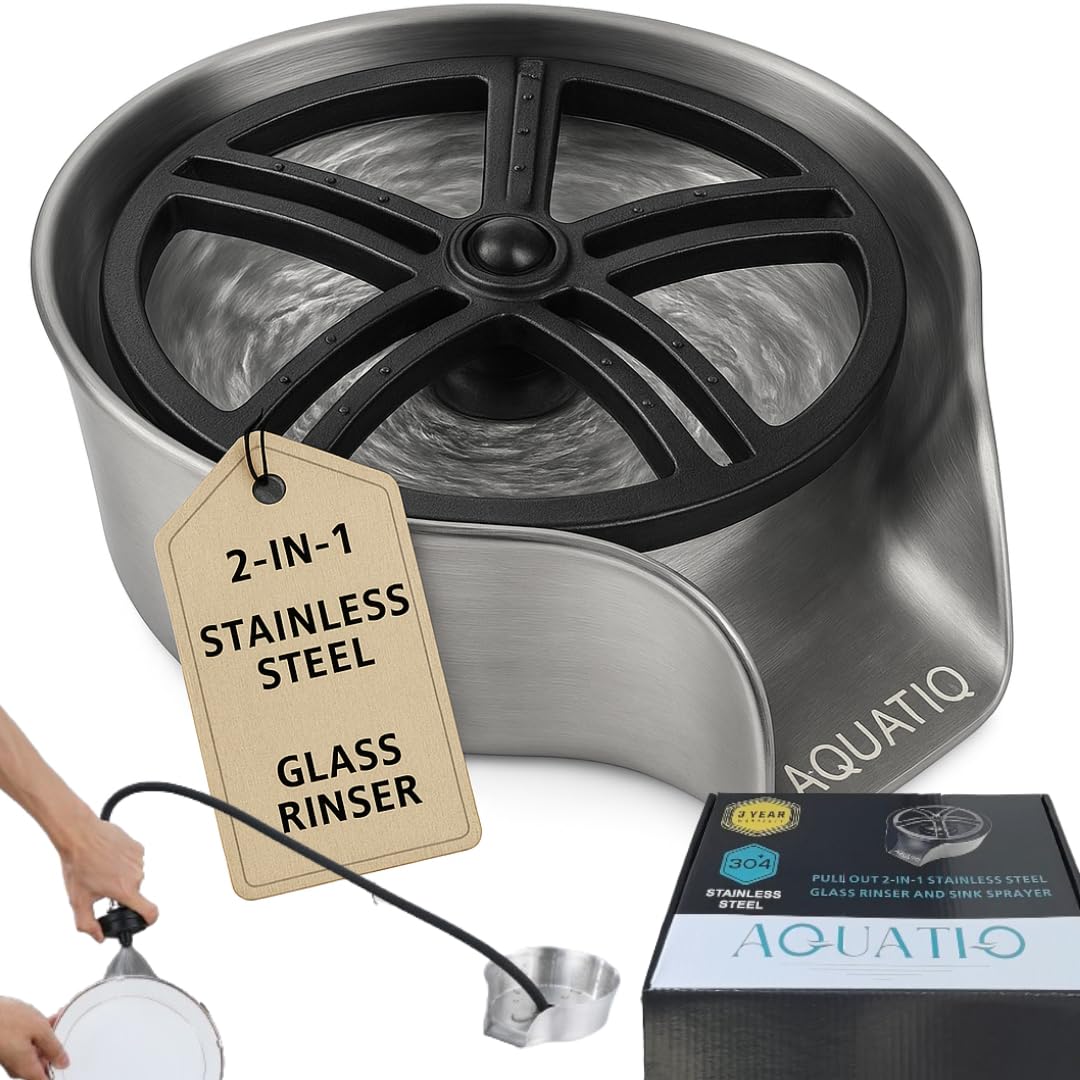
The AquatiQ 2-in-1 unit combines a dedicated deck-mounted glass rinser with a pull-out spray nozzle, all housed in a 304 stainless steel body that resists rust and wear far longer than plastic alternatives. The nickel finish is polished to a mirror-like sheen, and the unit includes a 120 cm retractable hose that extends from the rinser body to reach every corner of the sink for standard dishwashing. This makes it one of the most versatile dedicated rinsers — it cleans drinkware and then doubles as a sink sprayer.
The rinser design features a titled base that encourages water to drain directly into the sink, and taller sidewalls that contain splash-back during high-pressure use. Pressing a glass or bottle onto the activation plate triggers rotating jets that clean from the bottom up. The included installation kit — T-adaptor, braided hose, rubber gasket, and detailed booklet — is designed for a 20-30 minute install into an existing 1.25-inch sink hole.
Some users note that the polished nickel finish shows water spots more readily than a brushed or matte finish, requiring occasional wiping to maintain the mirror look. The 304 stainless steel construction adds heft — the unit feels substantial on the deck, but the weight may require a stable sink surface. For buyers who prioritize long-term corrosion resistance and want a pull-out spray function in addition to a glass rinser, the AquatiQ is a compelling mid-range value.
Why it’s great
- Full 304 stainless steel body resists rust
- Pull-out spray nozzle extends 120 cm for wide coverage
- Titled base and tall sidewalls prevent splashing
Good to know
- Polished finish may show water spots easily
- Heavier than plastic-based competitors
6. MQFORU Pull-Out Glass Rinser (Black)
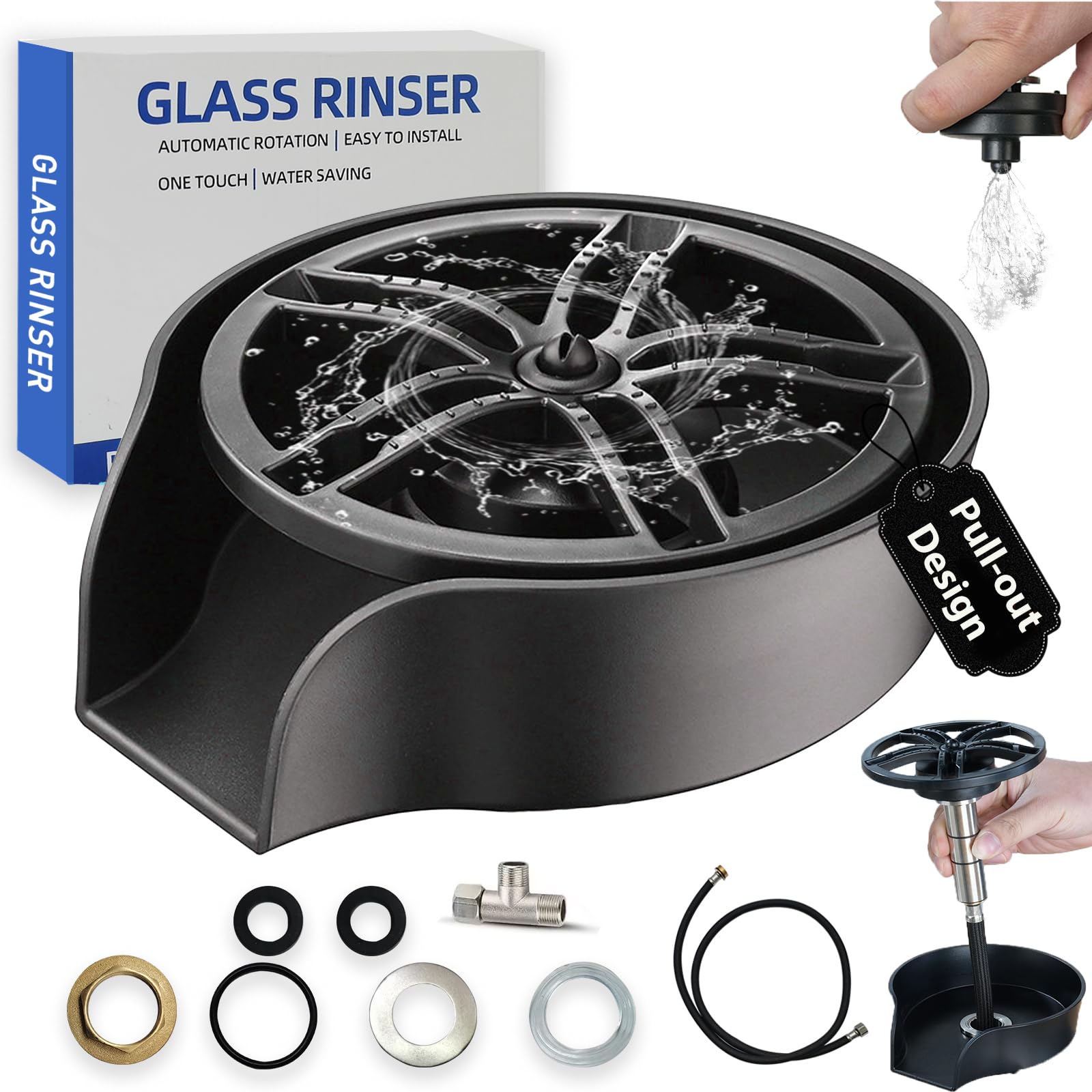
The MQFORU Pull-Out Glass Rinser takes a budget-friendly approach without sacrificing the most important feature: a retractable pull-out nozzle that extends 80 cm from the base, allowing you to direct the spray to specific containers or rinse down the entire sink. The main body is copper with a black electroplated finish, and the press-down cup cradle is high-quality ABS plastic — a combination that prevents rust while minimizing the risk of chipping glassware when you press a cup onto the cradle.
The 360-degree rotating spout sends out high-pressure water jets that reach the bottom of narrow bottles and tall vases that standard sink sprayers miss. Cleaning a dirty 16-ounce shaker bottle takes under five seconds. Installation requires no special tools — the unit connects to the sink’s cold water line via included adapters, and the copper body is thick enough to feel solid under daily use. At just 0.634 ounces of weight, it is extremely light and imposes no strain on the sink deck.
The ABS plastic cradle, while gentle on glass, may not hold up as long as a stainless steel plate under heavy commercial use. The maximum cup opening is advertised at 3.53 inches, which accommodates standard wine glasses and most tumblers but will not fit very wide pitchers or large mixing bowls. For a home kitchen user who wants an affordable, easy-to-install rinser with the versatility of a retractable spray, this is a smart entry-level pick.
Why it’s great
- Retractable nozzle extends 80 cm for directed spraying
- Copper body with ABS cradle resists rust and is gentle on glass
- Lightweight and simple to install without special tools
Good to know
- ABS cradle may be less durable than metal under heavy use
- Max cup opening of 3.53 inches limits large drinkware
7. Delta Matte Black Metal Glass Rinser GR250-BL

The Delta GR250-BL is the most premium dedicated glass rinser in this lineup, distinguished by its all-brass body and a corrosion-resistant matte black finish that is tested to exceed industry standards by a factor of two. The unit is heavy — the brass construction gives it a substantial, anchored feel on the sink deck that will not wobble or shift during use. It includes both a supply line and a tee adapter for connection to hot or cold water, and the install is a straightforward DIY job for anyone replacing a soap dispenser or sink hole cover.
Delta’s signature powerful water jets blast residue from the bottom of bottles, wine glasses, and baby bottles in seconds, and the subtle overhang channels water directly into the sink to keep the counter dry. The unit is backed by Delta’s Lifetime Limited Warranty, which covers functional defects for as long as you own the home — a level of assurance that cheaper models cannot match. The transitional style and matte black color pair well with modern farmhouse or contemporary kitchen designs.
The premium price point positions the GR250-BL as an investment piece, and it lacks the pull-out spray versatility found on mid-range competitors like the AquatiQ or the budget-friendly MQFORU. If you want a simple, beautiful, lifetime-guaranteed glass rinser that will never rust or corrode and you have the budget for it, the Delta GR250-BL is the one to buy. For most users, the KRAUS CleanMate or AquatiQ deliver 90% of the utility at a lower cost.
Why it’s great
- Solid brass body resists corrosion twice as long as industry standard
- Lifetime Limited Warranty provides long-term peace of mind
- Matte black finish looks premium and hides fingerprints
Good to know
- Significantly more expensive than comparable plastic or steel units
- No pull-out spray function for general sink rinsing
FAQ
Can a glass rinser fit any kitchen sink?
Does a glass rinser connect to hot or cold water?
Will a glass rinser scratch my wine glasses?
Final Thoughts: The Verdict
For most users, the glass rinser winner is the KRAUS CleanMate KGR-500MB because it delivers 9 high-pressure jets, a safety lock, and soft silicone prongs at a mid-range price that outperforms many more expensive rivals. If you want a fully stainless steel build with a pull-out spray nozzle for general sink cleaning, grab the AquatiQ 2-in-1. And for a lifetime-guaranteed brass unit with zero compromise on corrosion resistance, nothing beats the Delta GR250-BL Matte Black.