The difference between a good morning and a great one often comes down to that first shot of espresso. But chasing that perfect, velvety crema from a coffee shop every day adds up fast, both in time and money. A dedicated home machine changes the equation entirely, putting the power of a professional barista back in your hands.
I’m Mohammad Maruf — the founder and writer behind AirfryerBite. I’ve spent years analyzing appliance specifications, comparing extraction technologies like PID temperature control and 15-20 bar Italian pumps, and sifting through thousands of customer reports to find which machines actually deliver on their promises at every price tier.
Whether you crave a bold morning ristretto or a creamy oat milk latte, the right setup makes all the difference. This guide breaks down the top options to help you find the best espresso machines for home that match your skill level, counter space, and daily ritual.
How To Choose The Best Espresso Machines For Home
Buying an espresso machine is a multi-year investment, so the wrong choice hurts twice — once in your wallet, again every morning. The three factors that separate a smart buy from a regret are pump pressure, temperature stability, and the grinder solution. Everything else (steam wand power, water tank size, aesthetics) is secondary but still worth your attention once the foundation is solid.
Pump Pressure: Why 15-Bar and 20-Bar Matter
All espresso machines use a pump to force hot water through tightly-packed coffee grounds. The industry standard for proper extraction is around 9 bars of pressure at the puck. A 15-bar pump is more than adequate because internal valves regulate the pressure down to that optimal level. A 20-bar pump offers a wider margin for error if your grind is slightly too fine, but it does not automatically produce better espresso. What matters more is whether the machine uses an Italian-made pump known for long-term reliability vs. a generic import pump that may lose pressure after a few months of daily use.
Temperature Control: The PID Difference
Espresso extraction is unforgiving — water that is even a few degrees too hot over-extracts and creates bitterness, while water too cool under-extracts and leaves you with sour, thin coffee. Basic machines rely on a simple thermostat that cycles on and off, causing temperature swings of 5-10°F during a shot. Machines with PID (Proportional-Integral-Derivative) control maintain water temperature within a fraction of a degree for the entire extraction. If you drink straight espresso or Americanos, PID is worth the upgrade. If you mostly drink milk-based drinks like lattes and cappuccinos, a thermostat-based machine still delivers good results because the milk masks minor extraction flaws.
Grinder: Integrated vs. Separate
Pre-ground coffee loses its volatile aromatic oils within minutes of being ground. An espresso machine with a built-in conical burr grinder ensures you grind fresh beans immediately before brewing, which dramatically improves crema and flavor complexity. Machines with stepped grind settings (typically 8 to 30) let you dial in the perfect particle size for your chosen bean roast level. The trade-off is cleaning — built-in grinders accumulate stale coffee grounds in the chute and burrs, so you must brush them weekly and deep-clean monthly. A separate high-quality grinder gives you more flexibility and easier maintenance, but adds counter space and cost. For most home users, an integrated grinder on a mid-range or premium machine strikes the best balance between convenience and freshness.
Quick Comparison
On smaller screens, swipe sideways to see the full table.
| Model | Category | Best For | Key Spec | Amazon |
|---|---|---|---|---|
| CASABREWS Ultra | Semi-Auto | Customizable brew temp & LCD guidance | 20-bar pump / 1350W / 73 oz tank | Amazon |
| De’Longhi Classic | Semi-Auto | Simple, compact starter machine | 15-bar pump / Thermoblock / 2-setting steam wand | Amazon |
| Chefman Crema Supreme | Semi-Auto | Built-in grinder w/ 30 settings & pressure gauge | 15-bar pump / 1450W / 3L tank / Conical burr grinder | Amazon |
| COWSAR 20 Bar | Semi-Auto | PID temp control & pre-infusion for balanced shots | 20-bar pump / PID / 30 grind settings / 58mm portafilter | Amazon |
| De’Longhi La Specialista Arte Evo | Semi-Auto | Cold brew in 5 min & Active Temperature Control | 15-bar pump / 8 grind settings / Cold Extraction | Amazon |
| Breville Barista Express BES870XL | Semi-Auto | Pro-level integrated grinder & PID control | 15-bar pump / PID / 60 grind settings / 67 oz tank | Amazon |
| Ninja Luxe Café Pro ES701 | Multi-System | All-in-one espresso, drip, cold brew & hot water | 15-bar pump / 25 grind settings / Barista Assist tech | Amazon |
| Philips 5500 Series EP5544/94 | Super-Auto | One-touch iced coffee & fast-clean LatteGo system | 15-bar pump / SilentBrew / 20 presets / 1.8L tank | Amazon |
| Breville Barista Touch Impress BES881NRE | Semi-Auto | Guided puck prep & hands-free microfoam with cold extraction | 15-bar pump / ThermoJet 3-sec heat / 30 grind settings | Amazon |
In‑Depth Reviews
1. Breville Barista Express Espresso Machine BES870XL
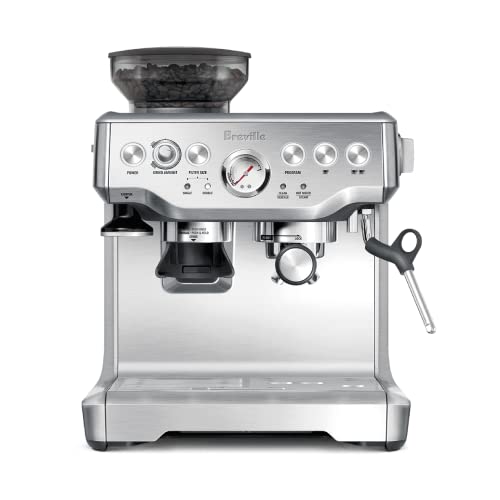
The Breville Barista Express BES870XL is the machine that every home espresso guide points to for a reason — it marries professional-grade extraction control with a fully integrated grinder in a single countertop footprint. The 15-bar Italian pump feeds into a 54mm portafilter, while the PID digital temperature control keeps water stable within a fraction of a degree, eliminating the sour or bitter surprises that plague cheaper thermostats. The dose-control grinding cradle lets you grind fresh beans directly into the portafilter, with 60 grind settings that cover everything from fine espresso to coarse plunger. Customers consistently report that after a brief learning curve (dialing in grind size and tamp pressure), the machine produces shots with thick, hazelnut-brown crema that rival local cafés.
The steam wand is powerful enough to hand-texture microfoam for latte art, though it requires the user to manually swirl the pitcher — there is no automatic frothing. The 67-ounce water tank is easy to access from the top, and the included Razor Dose Trimming Tool ensures you never overfill the basket. Multiple long-term owners mention that with routine cleaning (backflushing weekly, descaling monthly), the BES870XL holds up for years without losing pump pressure or developing leaks. It is not a one-button super-automatic; this machine rewards a few minutes of active involvement each morning. For anyone ready to learn the fundamentals of espresso while getting consistently superior results, this is the benchmark.
The primary consideration is the learning investment. Beginner users who skip the manual and simply coarse-grind may get thin, under-extracted shots. But the community support (YouTube tutorials, forums, Breville’s own guides) is massive, so help is never far away. If you value a fully automated experience, look at the Philips 5500 or Ninja Luxe. But if you want the combination of a pro-level grinder, PID stability, and manual steam control at a mid-premium price point, the Barista Express remains unshakable.
Why it’s great
- PID temperature control ensures consistent extraction shot after shot
- Integrated 60-setting conical burr grinder grinds fresh directly into the portafilter
- Manual steam wand produces microfoam suitable for latte art
- Robust build quality with all-metal construction in key areas
Good to know
- Requires patience and practice to dial in grind size and tamp pressure
- Steam wand performs best with whole milk — alternative milks need careful technique
- Water tank top-fill design can be slightly awkward under low cabinets
2. Chefman Crema Supreme 15 Bar Espresso Machine

The Chefman Crema Supreme bridges the gap between budget semi-auto machines and more expensive all-in-one units by delivering a built-in conical burr grinder with 30 grind settings, a pressure gauge, and a 15-bar pump in one polished stainless-steel package. The 1450-watt boiler heats up quickly, and the adjustable shot temperature and volume settings let you tweak extractions without digging into hidden menus. The front-mounted pressure gauge is a rare find at this price tier — it gives real-time visual feedback on whether your grind and tamp are in the optimal 9-bar zone, which massively shortens the dial-in process for beginners. Customer reviews frequently note that the included accessories (tamper, milk pitcher, cleaning tools) are genuinely usable, not throwaway items.
The automatic steam wand creates thick microfoam that holds well for cappuccinos, though some users report that the wand angle makes it slightly harder to achieve a tight vortex with smaller milk pitchers. The 3-liter removable water tank is a standout feature for households that brew multiple drinks back-to-back, as it slides out easily for sink filling. Several buyers compare this machine favorably to the Breville Barista Express, citing similar output quality for roughly half the investment. The semi-automatic operation means you still control start and stop times, which experienced users prefer for dialing in lungo or ristretto shots. Cleaning is straightforward: the drip tray lifts out, the portafilter basket is standard 58mm, and the grinder chute needs a weekly brush to prevent old grounds from mixing with fresh ones.
The main compromise is consistency over many months — a few long-term reviews mention that the grinder’s step mechanism can drift slightly after heavy use, requiring occasional recalibration. The plastic housing on the internal frame also makes it feel slightly less tank-like than all-metal competitors. Still, for its mid-range price, the Chefman Crema Supreme delivers a feature set that traditionally cost twice as much. If you want a built-in grinder and a pressure gauge without jumping to the premium tier, this is the strongest contender.
Why it’s great
- 30-setting conical burr grinder grinds fresh on demand directly into the portafilter
- Pressure gauge display helps beginners dial in the perfect 9-bar extraction
- Large 3-liter water tank is fully removable for easy filling
- Includes complete accessory kit — tamper, milk pitcher, cleaning tools
Good to know
- Grinder step mechanism may require recalibration after extended heavy use
- Steam wand angle makes microfoam technique slightly more challenging with small pitchers
- Internal frame uses some plastic components — not as heavy-duty as all-metal machines
3. De’Longhi La Specialista Arte Evo EC9255M

De’Longhi’s La Specialista Arte Evo is a standout for the home barista who wants variety — its Cold Extraction Technology delivers a concentrated cold brew in under five minutes, a feature almost no other home machine offers. The 15-bar Italian pump, combined with Active Temperature Control (three infusion temperature settings), allows you to match extraction heat to the roast level of your beans: lighter roasts benefit from higher temperatures, while darker roasts stay balanced at a cooler setting. The integrated conical burr grinder offers 8 grind settings, and while that is fewer than some competitors, the dosing and tamping guide (included as part of the barista kit) makes it easier to repeat successful shots. The machine also includes presets for espresso, americano, and hot water, plus a dedicated cold brew button.
The commercial-style steam wand is a strong performer, producing consistently velvety microfoam for latte art. The barista kit — dosing funnel, tamping mat, and cleaning needle — is not an afterthought; the dosing funnel fits snugly over the 51mm portafilter to minimize mess, and the tamping mat protects the countertop. The compact footprint (14.37 inches deep, 15.87 inches tall) fits comfortably under standard cabinets, and the removable drip tray accommodates taller travel mugs. The water tank is accessible from the top, and the included water hardness test strip helps you determine the descaling schedule for your local water type.
The main limitation is the grinder’s 8 settings — while sufficient for most beans, serious enthusiasts who switch frequently between very light and very dark roasts may want more granular control. The cold brew function, though fast and convenient, produces a concentrated shot, not a full pitcher of cold brew. If you want a dedicated cold brew carafe, you will still need a separate system. For everyday lattes, cappuccinos, and the occasional iced coffee, the Arte Evo offers an unmatched feature set at its mid-premium price. It is especially well-suited for households where one person wants hot espresso and another craves cold brew without waiting 12+ hours.
Why it’s great
- Cold Extraction Technology makes concentrated cold brew in under 5 minutes
- Active Temperature Control with 3 settings lets you match brew heat to roast level
- Barista kit with dosing funnel and tamping mat makes the workflow clean and repeatable
- Compact, durable design fits standard kitchen cabinets and holds up over years of daily use
Good to know
- Built-in grinder has only 8 settings — less granular control than 30-setting alternatives
- Cold brew function produces a single concentrated shot, not a full carafe
- No PID temperature controller; Active Temperature Control uses thermostat-based regulation
4. Breville Barista Touch Impress BES881NRE
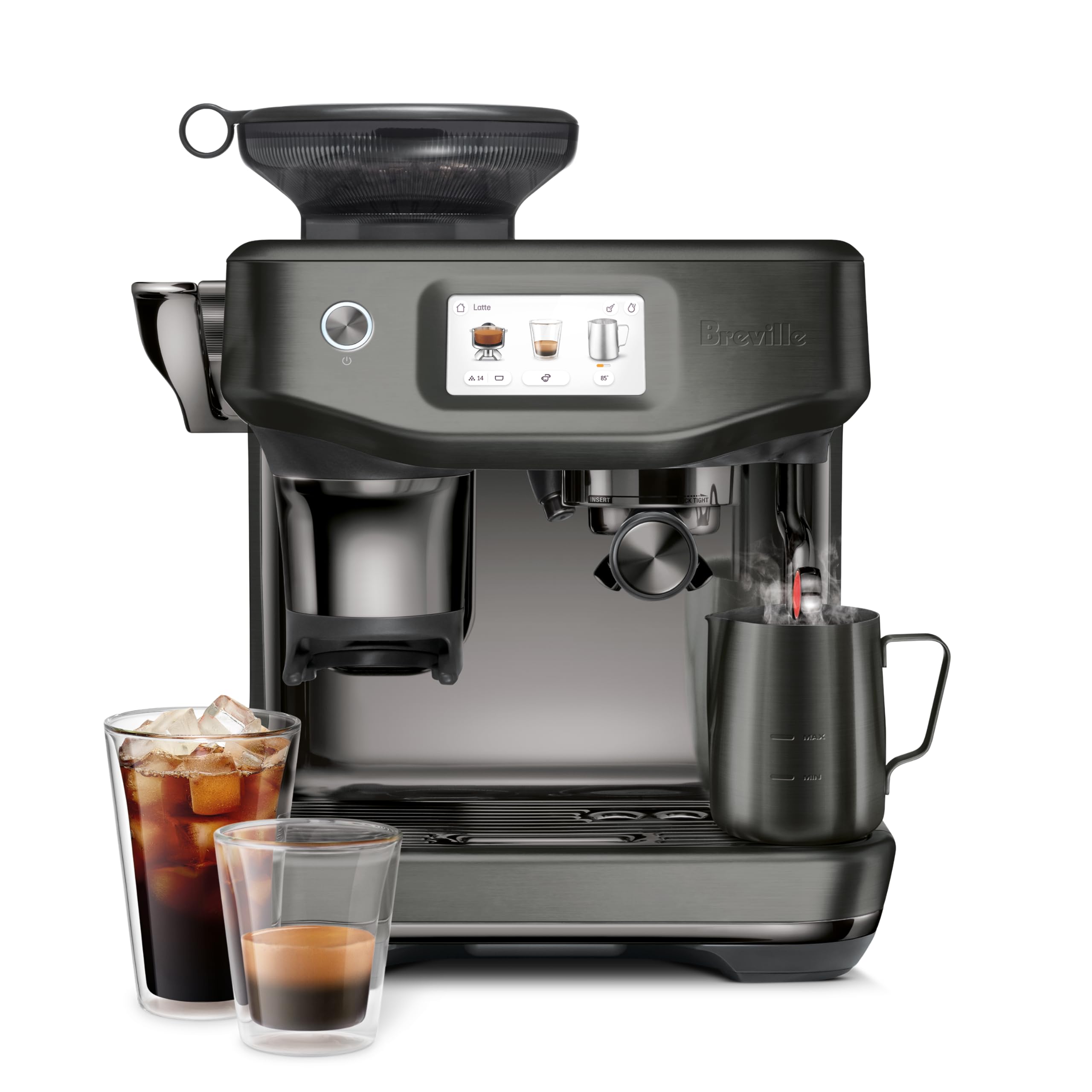
The Breville Barista Touch Impress represents the current pinnacle of semi-automatic home espresso, combining the brand’s proven Impress Puck System with ThermoJet heating (3-second warm-up) and hands-free microfoam automation. The integrated hardened steel conical burr grinder (Baratza European Precision Burrs) offers 30 grind settings, and the Impress Puck System automatically doses, tamps with 22 pounds of pressure, and adds a 7-degree twist to polish the puck — then adjusts the next dose based on the previous extraction’s result. The touchscreen interface guides you through each step with real-time feedback on grind size, tamp pressure, and extraction time. Eight café presets (espresso, lungo, latte, cappuccino, flat white, americano, cold brew, and hot water) are available, and you can customize and save up to 8 additional drinks.
The Auto MilQ feature is a genuine innovation for households that use oat, almond, or soy milk: it calibrates air injection time and temperature specifically for each milk type, producing silky microfoam that does not separate or curdle. The steam wand is fully automatic — you place the pitcher under the wand, select the milk type and texture level, and the machine handles the rest. The ThermoJet heating system means the machine is ready to brew in 3 seconds, eliminating the typical 30-60 second warm-up wait. The build quality is exceptional, with a matte noir finish, stainless steel body, and weighted components that feel premium. Customers who have upgraded from the Barista Express consistently highlight the reduced workflow friction — the Impress Puck System removes the guesswork from dosing and tamping, making café-quality espresso accessible to beginners while still allowing manual override for experienced users.
The investment is significant, and the machine’s complexity means more potential failure points over the long term — the touchscreen, electronic valve system, and automated steam wand all require careful maintenance and descaling. The 4.2-pound bean hopper and 67-ounce water tank are ample for daily use, but the machine is heavy (24.2 pounds) and takes up considerable counter space. If you want the absolute best guided espresso experience at home, with the shortest heat-up time and fully automated milk handling, the Barista Touch Impress justifies its premium positioning. For those comfortable with manual tamping and simpler controls, the Barista Express delivers most of the shot quality for less than half the investment.
Why it’s great
- ThermoJet heating reaches extraction temperature in just 3 seconds — no waiting
- Impress Puck System auto-doses, tampes at 22 lbs, and self-corrects for consistent pucks
- Auto MilQ calibrates foam texture and temperature for oat, almond, and soy milk
- Hands-free steam wand produces barista-grade microfoam without manual technique
Good to know
- Premium price point — one of the most expensive semi-automatic home machines available
- Complex electronics (touchscreen, valves) require careful descaling and may have higher long-term failure risk
- Large footprint at 14.2 inches wide and 24.2 pounds — not ideal for tight counter spaces
5. Ninja Luxe Café Pro Series ES701

The Ninja Luxe Café Pro ES701 is an ambitious multi-system that does not just make espresso — it also brews drip coffee (6-18 oz, three styles: classic, rich, over ice), produces cold brew in two forms (cold-pressed espresso and cold brew coffee), and dispenses hot water for tea or americano via an independent system. The Barista Assist Technology is the star feature: the built-in scale measures the weight of your coffee dose in real time, then the machine recommends a grind size based on your previous brew’s outcome. This feedback loop eliminates the trial-and-error grinding that frustrates new espresso users. The integrated tamper works with a push-lever mechanism, so you never touch the grounds — a genuinely mess-free experience. The conical burr grinder has 25 settings, and the portafilter accepts single, double, and luxe baskets including a quad-shot option.
The Dual Froth System Pro is another differentiator: the insulated steam wand and XL milk jug combine steaming and whisking simultaneously to create microfoam, thin froth, thick froth, extra-thick froth, and cold foam. The system works with dairy and plant-based milk without manual skill. The machine also includes built-in storage for the cleaning brush and baskets, a hard water testing kit, and descaling tablets. Multiple coffee enthusiasts who have used Breville and De’Longhi machines note that the Luxe Café’s drip coffee output is genuinely good, not a compromise — the showerhead distributes water evenly over the grounds, and the thermal carafe (sold separately, though the machine brews directly into a standard carafe included in the box) keeps coffee hot without a burner. The cold-pressed espresso function brews at a lower temperature and pressure, extracting a smoother, less acidic shot ideal for iced lattes and espresso martinis.
The primary trade-off is versatility vs. specialization. Because the machine handles multiple brew methods, it is larger than most dedicated espresso machines (13.39 inches wide, 14.84 inches tall, 27 pounds), and the interface has more menus to navigate. Some early users report that the grind-size recommendation algorithm can be overly conservative, leading to a slightly slower dial-in process for very dark roasts. The machine is also new to market (August 2025 release), so long-term reliability data is limited. For households where different members want espresso, drip coffee, and cold brew daily, the Luxe Café Pro eliminates the need for multiple appliances. If you only drink straight espresso and never make drip coffee, a dedicated machine like the Breville Barista Express or De’Longhi La Specialista will offer a more streamlined workflow.
Why it’s great
- Four-in-one functionality: espresso, drip coffee, cold brew, and hot water dispenser
- Barista Assist Technology with weight-based dosing and adaptive grind recommendations
- Dual Froth System Pro includes cold foam and works with plant-based milk
- Built-in scale eliminates the need for a separate coffee scale to dial in shots
Good to know
- Large footprint at 27 pounds — requires dedicated counter space
- New product (2025 release) with limited long-term reliability data available
- Grind size algorithm can be conservative with very dark roasts, slowing initial dial-in
6. De’Longhi Classic Espresso Machine EC9255M

The De’Longhi Classic is the straight-ahead starter machine that aces the fundamentals: a 15-bar Italian pump, Thermoblock heating for fast and stable temperature, and an adjustable two-setting steam wand that goes from silky steamed milk to rich microfoam. It strips away the bells and whistles (no built-in grinder, no PID, no touchscreen) in favor of a streamlined workflow that lets you focus on the puck prep. The compact stainless-steel body (11.14 inches deep, 12 inches tall) is one of the smallest on this list, making it a strong candidate for apartments, offices, or crowded counters. The included single and double filter baskets, scoop/tamper, and reusable filter let you start brewing immediately with either ground coffee or ESE pods. Customer reviews consistently praise its build quality and ease of use, with many calling it the best learning machine for new home baristas.
The adjustable steam wand is a highlight at this price — the two-setting control switches between gentle steaming for latte art and aggressive frothing for thick cappuccino foam. The drip tray is removable and the water tank swings out from the side for easy access without moving the machine. Experienced users note that the single boiler design means you cannot steam milk and pull a shot simultaneously, but that is standard for machines at this level; you pull the shot, then steam while the thermoblock reheats in about 30 seconds. The plastic and stainless steel construction is durable but lightweight (9 pounds), so it can slide slightly on the counter when inserting the portafilter if you do not hold the base with your other hand. Some users who tested water temperature reported that the extraction falls slightly below the ideal 195-205°F range, which can result in under-extraction with light roasts if the grind is not fine enough.
The De’Longhi Classic is the right choice if you want a no-nonsense machine that makes good espresso without a major learning curve or a heavy price tag. It will not produce the nuanced shots of a PID-equipped machine, but for milk-based drinks and medium-to-dark roasts, it delivers reliable quality. If you want to add a grinder later (recommended for best freshness), the De’Longhi Classic leaves room in your budget for a quality separate burr grinder.
Why it’s great
- Compact footprint (11.14 inches deep) fits small counter spaces and apartments
- Two-setting adjustable steam wand produces both silky microfoam and thick froth
- Thermoblock heating reaches brewing temperature quickly and maintains stable output
- Straightforward manual operation ideal for first-time espresso machine buyers
Good to know
- No built-in grinder — requires separate grinder or pre-ground coffee
- Water temperature may fall slightly below the ideal 195-205°F range for light roasts
- Single boiler means you cannot steam milk and pull a shot simultaneously
7. COWSAR 20 Bar Espresso Machine 80020KCM0
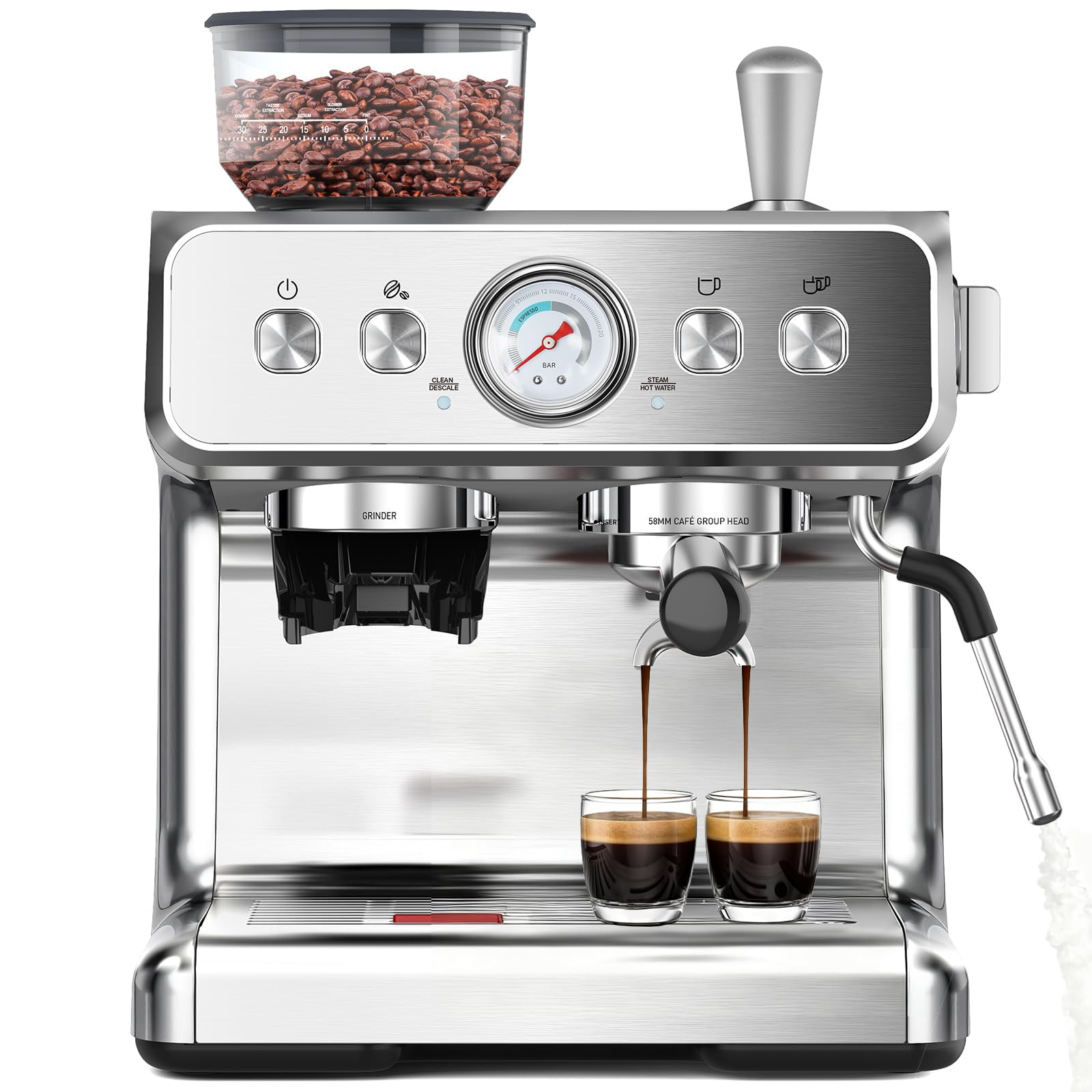
The COWSAR 20 Bar machine enters the mid-range with a stack of pro-oriented specs: a 20-bar pump, PID temperature control for stable extraction, low-pressure pre-infusion to reduce channeling, and a 30-setting conical burr grinder. The commercial 58mm portafilter accepts standard accessories, and the pre-infusion stage gently wets the puck before full pressure, which helps lighter roasts extract evenly. The integrated grinder delivers fresh grounds directly into the portafilter, and the included four filter baskets (pressurized and non-pressurized, single and double) give you room to grow from super-market grounds to precise, homemade espresso. The machine is ETL certified, and the kit includes a professional milk frothing pitcher, tamper, and cleaning brush — everything needed to start brewing well on day one. Customers consistently report that the PID control makes a noticeable difference in shot-to-shot consistency compared to thermostat-only machines in the same bracket.
The steam wand is powerful but requires a deliberate technique — some users found the initial output inconsistent until they purged the wand for several seconds before inserting the milk pitcher. The build uses a mix of stainless steel and plastic; the chrome-and-black aesthetic looks substantially more premium than the price suggests. The 58mm portafilter is compatible with aftermarket tampers and baskets, a major plus for enthusiasts who want to upgrade components over time. The 20.6-pound weight gives it a planted feel on the counter during tamping. Long-term users (2+ months of daily use) reported that the grinder holds its calibration well, though cleaning the chute every few weeks is necessary to prevent stale grounds from affecting flavor. A small number of units arrived with defective steam wands or low drip output, which suggests that QC can be inconsistent — buying from Amazon with a return policy is advisable.
The COWSAR is arguably the strongest mid-range value on this list if you want PID control and a 58mm portafilter without jumping to the premium tier. The 20-bar pump and pre-infusion give you extraction tools typically found on machines costing hundreds more. It is not as polished as the Breville Barista Express, but it offers a comparable feature set at a significantly lower entry point. If you are willing to accept occasional QC risk for a massive performance-to-price ratio, this is a smart buy.
Why it’s great
- PID temperature control provides stable, precise extraction temperature shot after shot
- Low-pressure pre-infusion reduces channeling and improves extraction with lighter roasts
- 30-setting conical burr grinder offers granular control over particle size
- Commercial 58mm portafilter compatible with standard aftermarket accessories
Good to know
- Quality control can be inconsistent — some units arrive with defective steam wands or low flow
- Steam wand requires a deliberate purging technique before it produces consistent microfoam
- Plastic and stainless steel construction does not feel as premium as all-metal machines
8. Philips 5500 Series Fully Automatic EP5544/94
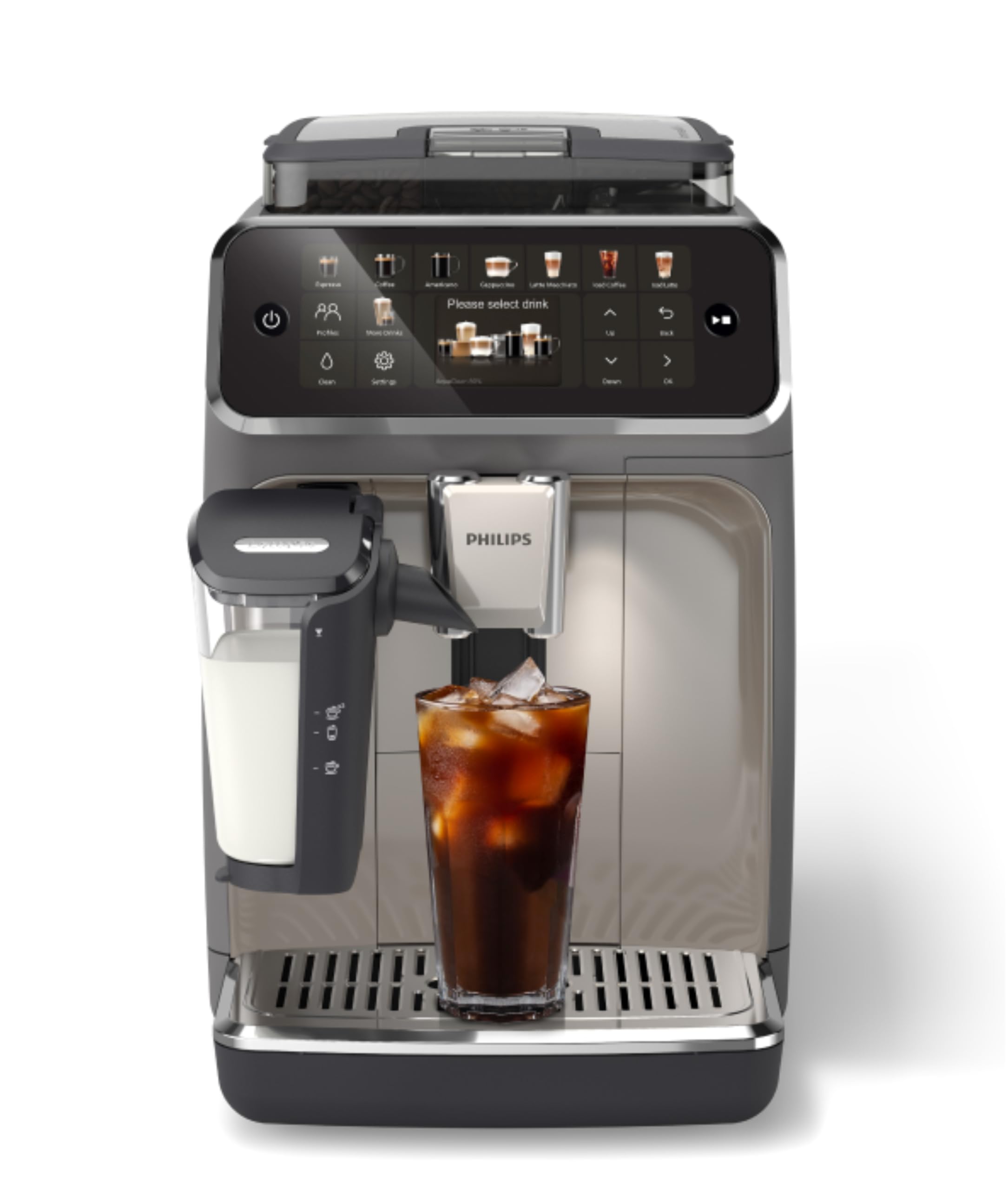
The Philips 5500 Series is a fully automatic (super-automatic) machine that grinds, tamps, extracts, and discards the puck at the push of a button — no manual portafilter handling or tamping required. It offers 20 preset drink options including hot espresso, coffee, latte, cappuccino, americano, flat white, and iced coffee, all controlled via an intuitive color display. The LatteGo milk system is the standout feature: it has only three parts, no internal tubes, and rinses clean in 10 seconds or fits in the dishwasher. The machine stores up to 4 user profiles, each with personalized strength, volume, and milk settings. The SilentBrew technology is certified by Quiet Mark and makes the grinding and brewing noticeably quieter than previous Philips models — a significant quality-of-life improvement for early-morning use.
The integrated ceramic burr grinder has 12 adjustable settings, and the machine can also use pre-ground coffee via a bypass chute. The QuickStart feature means the machine is ready to brew 3 seconds after turning on, and the 1.8-liter water tank handles multiple drinks between refills. The AquaClean filter (included) allows up to 5,000 cups before descaling if replaced on schedule. Customers consistently praise the milk system’s ease of cleaning — the LatteGo design genuinely eliminates the mold and milk residue issues that plague traditional tube-based systems. The coffee quality is consistently good, with a thick crema layer and adjustable aroma strength, though some espresso purists note that a freshly dialed-in semi-automatic can produce more nuanced shots. The machine is designed for users who prioritize speed, convenience, and consistency over manual control.
The main downside is the lack of manual control for extraction — you cannot stop the shot mid-pour or adjust pre-infusion. The 15-bar pump is adequate, but the machine’s internal algorithm determines the optimal extraction time, which may not satisfy enthusiasts who want to experiment with ristretto or lungo ratios. The plastic bean hopper and water tank feel less premium than the stainless steel of a Breville. If you want the easiest path from bean to cup with the cleanest milk system on the market, the Philips 5500 Series is the best super-automatic in its class. If you enjoy the tactile process of pulling manual shots, skip to the semi-automatic section.
Why it’s great
- Fully automatic — grinds, tamps, brews, and discards puck at the push of a button
- LatteGo milk system has only 3 parts, rinses clean in 10 seconds or dishwasher-safe
- SilentBrew technology with Quiet Mark certification for quieter morning operation
- 20 drink presets including iced coffee and 4 user profiles for personalized settings
Good to know
- Zero manual control over extraction — you cannot stop the shot mid-pour or adjust pre-infusion
- Plastic bean hopper and water tank feel less premium than stainless steel alternatives
- Espresso quality is consistently good but may not match a finely tuned semi-automatic
9. CASABREWS Ultra Espresso Machine

The CASABREWS Ultra is a budget-friendly semi-automatic machine that packs an LCD display, a 20-bar Italian pump, a 1350W boiler, and adjustable brewing temperature (four settings) into a brushed stainless steel body at a very competitive price. The LCD screen guides you through the process with clear indications for steam, hot water, and pre-programmed shot volumes, making it one of the most beginner-friendly interfaces in its tier. The 58mm portafilter is a professional size that accepts standard accessories, and the pressurized filter baskets help new users achieve decent crema even with pre-ground coffee. The 73-ounce water tank is removable from the top for easy filling, and the steam wand produces microfoam that works well for lattes and cappuccinos. The machine is also sold as a gift option, with packaging that includes a cleaning needle and detailed brewing tips.
The four-temperature adjustment (applied only to espresso brewing) is a genuinely useful feature for a machine at this level — light roast beans benefit from the highest setting, while darker roasts can be brewed cooler to avoid bitterness. The steam wand performance is adequate for home use, but it takes about 20-30 seconds to reach full steam pressure after pulling a shot. The machine weighs 13.55 pounds, which is light enough to move around but heavy enough to stay planted during portafilter insertion. Customers note that the LCD display is bright and easy to read, and the control panel layout (steam, hot water, single/double shot buttons) is intuitive. The brushed stainless steel finish resists fingerprints well and fits modern kitchen aesthetics.
The biggest compromises are build quality and long-term durability. The plastic housing on the internal frame and the steam wand’s plastic joint are potential weak points under daily heavy use. The machine also lacks a three-way solenoid valve, which means the portafilter can be wet and messy after brewing (you need to remove the basket and rinse immediately). For a secondary machine, an office, or a first espresso machine on a tight budget, the CASABREWS Ultra delivers surprising value with its adjustable temperature and LCD guidance. If you plan to brew multiple shots daily for years, consider stepping up to a De’Longhi Classic or Chefman model.
Why it’s great
- Four adjustable brewing temperature settings let you match extraction heat to bean roast level
- 20-bar Italian pump and 58mm portafilter provide professional-grade extraction fundamentals
- Clear LCD display guides new users through steam, hot water, and shot programming
- Large 73-ounce removable water tank reduces refill frequency for multiple drinks
Good to know
- Plastic internal components may not hold up to years of heavy daily use
- No three-way solenoid valve — removing the portafilter after brewing can be messy with drips
- Steam wand takes 20-30 seconds to reach full pressure after pulling a shot
FAQ
Should I buy a semi-automatic or a super-automatic home espresso machine?
What size portafilter do I need — 51mm, 54mm, or 58mm?
How often do I need to descale an espresso machine?
Can I use pre-ground coffee in a machine with a built-in grinder?
Final Thoughts: The Verdict
For most users, the best espresso machines for home winner is the Breville Barista Express BES870XL because it combines PID temperature control, a high-quality integrated conical burr grinder, and manual steam power in a proven, durable package that rewards learning and delivers café-quality espresso for years. If you want a built-in grinder but need to stay in the mid-range, grab the Chefman Crema Supreme. And for ease above all — push-button operation and the cleanest milk system on the market — nothing beats the Philips 5500 Series super-automatic.