A proper shot of espresso at home shouldn’t require a second mortgage. The reality is that most machines under the mark cut corners on pump pressure, boiler stability, or steam wand performance, leaving you with sour, weak pulls that taste more like burnt diner coffee than anything resembling a true Italian espresso. The challenge is finding a unit that delivers a consistent 9-bar extraction through a well-heated group head, paired with a steam wand that can actually microfoam milk rather than just blow bubbles.
I’m Mohammad Maruf — the founder and writer behind AirfryerBite. I have spent hundreds of hours analyzing espresso machine hardware, from the thermoblock mass and pump wattage to the portafilter diameter and steam tip design, to find which sub- models actually respect the craft.
After combing through pump ratings, boiler materials, and real-world extraction consistency across seven machines, I have narrowed down the contenders that balance price with performance. This guide is your shortcut to picking the right espresso machine under 150 that will genuinely improve your morning routine.
How To Choose The Best Espresso Machine Under 150
At this price ceiling, every component choice is a compromise. Understanding the hierarchy of specs lets you spend your budget on what actually improves the cup: stable pressure, sufficient thermal mass, and a steam wand that can actually work.
Pump Pressure: The 15-Bar vs. 20-Bar Debate
A true espresso extraction requires 9 bars of pressure at the puck. Machines rated at 15 or 20 bars use an over-spec pump that hits the 9-bar sweet spot via an overpressure valve. A 20-bar pump isn’t automatically better — what matters is whether the OPV (overpressure valve) is adjusted correctly. Many budget machines skip a precise OPV, leading to channeling or bitter shots. Look for user reports of consistent shot times rather than just pump rating numbers.
Boiler Type and Thermal Stability
Two main heating systems appear at this price: the single thermoblock and the stainless steel boiler. A thermoblock heats water on demand but struggles with temperature stability during back-to-back shots. A larger boiler, even if small, offers better thermal mass for pulling multiple shots in a row. Check the wattage — 1350W is standard — but also look for the water-to-heat exchange path; a longer, more serpentine path stabilizes temperature better than a short straight block.
Steam Wand Design: Panarello vs. Traditional
Budget machines overwhelmingly fit a panarello wand — a plastic sleeve that injects air into the milk, creating thick foam but not microfoam. For latte art or silky cappuccino texture, a traditional stainless steel steam wand with a single-hole tip is vastly superior. The trade-off is that manual steaming requires more technique, but the payoff is real control over milk texture.
Quick Comparison
On smaller screens, swipe sideways to see the full table.
| Model | Category | Best For | Key Spec | Amazon |
|---|---|---|---|---|
| SHARDOR 20-Bar | Premium | Temp display & control | 1350W, 60oz reservoir, temp display | Amazon |
| CASABREWS CM5418 | Premium | Build quality & durability | 20 bar, 1350W, 34oz tank, pressure gauge | Amazon |
| De’Longhi Stilosa | Premium | Brand reliability & manual steam | 15 bar, stainless boiler, manual wand | Amazon |
| Gevi Commercial | Mid-Range | Commercial aesthetic | 20 bar, stainless steel build | Amazon |
| Gevi Professional | Mid-Range | Adjustable shot volume | 20 bar, compact, adjustable volume | Amazon |
| CHULUX Elite | Value | Hot & iced espresso versatility | 20 bar, compact, steam wand | Amazon |
| CHULUX Slim | Budget | Space-saving & easy use | 20 bar, 40oz tank, pressure gauge | Amazon |
In‑Depth Reviews
1. SHARDOR 20-Bar Espresso Machine

The SHARDOR stands out in this price bracket with a dedicated temperature display — a rarity that lets you monitor brew water temp in real time, which drastically reduces guesswork when dialing in a new bean. The 1350W heating element paired with the 60-ounce water reservoir allows for multiple back-to-back shots without refilling, while the 20-bar Italian pump pushes consistent pressure through the 51mm portafilter. The steam wand is a traditional stainless steel design, meaning you can actually practice microfoam technique rather than relying on a panarello crutch.
Build quality feels above average for the tier, with a stainless steel body that resists fingerprints and a drip tray that slides out smoothly. The included tamper is functional but light — upgrading to a 51mm calibrated tamper will improve puck prep consistency. The machine also includes a pre-infusion function, which wets the puck at low pressure before full extraction, reducing channeling on freshly ground coffee.
The main downside is the learning curve: without a PID controller, the temperature display is informative but not closed-loop, so you still need to temp-surf manually for exacting shots. It also lacks a three-way solenoid valve, meaning the puck will retain some moisture post-shot. Still, for the combination of display, large tank, and traditional steam wand, the SHARDOR offers the most control-oriented package under .
Why it’s great
- Real-time temperature display improves shot consistency
- Traditional steam wand for real microfoam control
- Pre-infusion function reduces channeling
Good to know
- No three-way solenoid valve — wet pucks
- Included tamper is light; upgrade recommended
2. CASABREWS CM5418 Espresso Machine
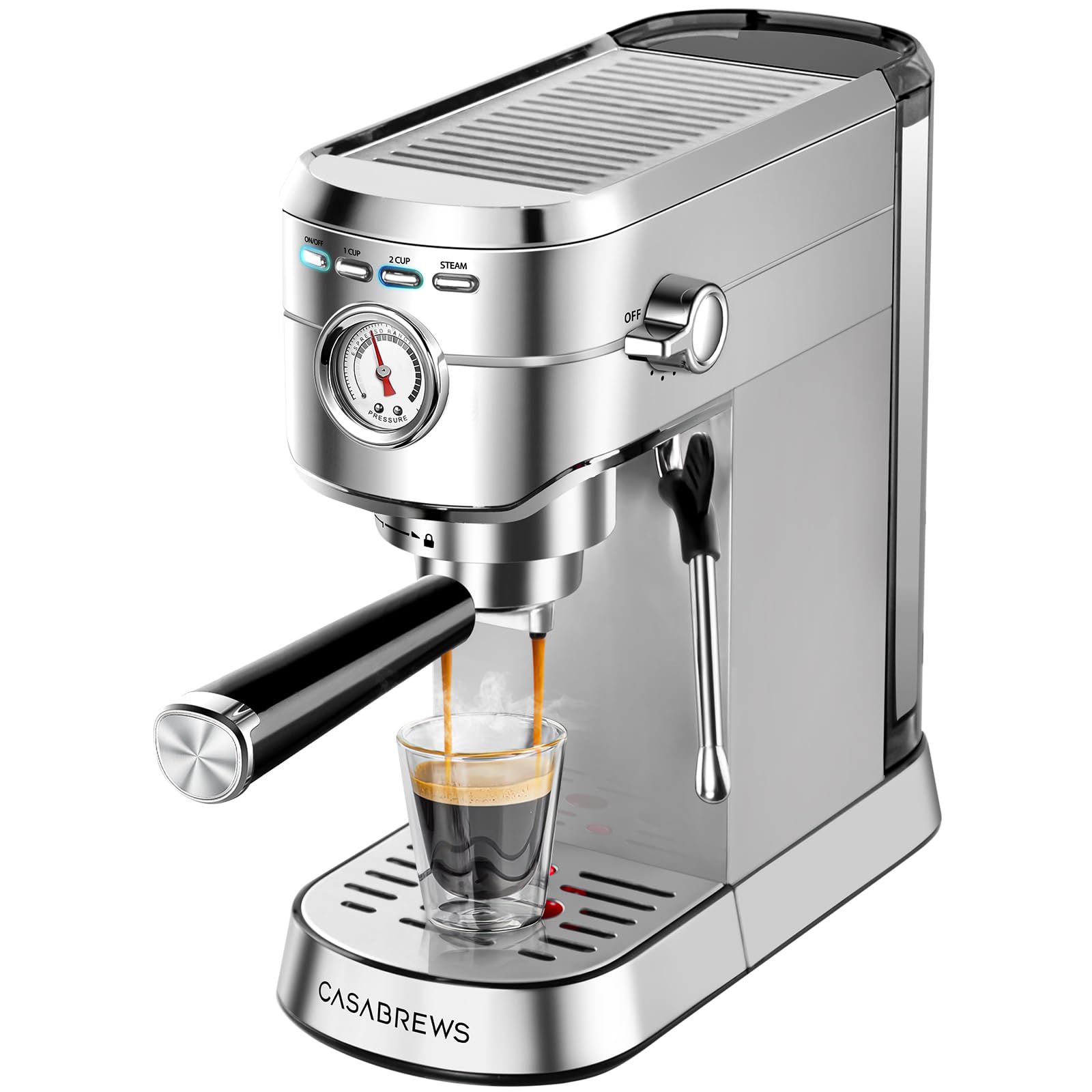
The CASABREWS CM5418 has become a staple in the budget espresso community because of its robust build and consistent 20-bar extraction from the Italian pump. The 1350W boiler heats up in about 30 seconds, and the built-in pressure gauge on the front panel gives real-time feedback on your extraction pressure — a feature that genuinely helps beginners learn to adjust grind size and tamp force. The 34-ounce water tank is removable, making refills and cleaning straightforward, and the footprint is compact enough for tight counters.
The steam wand is a panarello style, which injects air automatically to produce thick foam. This is great for beginners who want cappuccino foam immediately, but less ideal for those chasing latte art microfoam. The 51mm portafilter accepts single and double baskets, and the included tamper has a built-in spoon — functional but lightweight. The machine also has a pre-infusion stage, which helps with even saturation of the coffee puck.
One nuance: the machine enters overheat protection if you try to brew immediately after steaming. The manual recommends a cooling flush or a short wait, so workflow requires planning. The absence of a three-way solenoid also means wet pucks. But for pure extraction quality and the pressure gauge feedback loop, this is a top contender for anyone serious about improving their espresso without leaving the sub- zone.
Why it’s great
- Pressure gauge provides visual feedback for dialing in
- Fast heat-up time — ready in approximately 30 seconds
- Removable 34oz water tank for easy filling
Good to know
- Panarello wand limits microfoam control
- Needs cool-down period between steaming and brewing
3. De’Longhi Stilosa Manual Espresso Machine

The De’Longhi Stilosa is the closest you can get to a classic manual espresso machine at the top end of the sub- range. Its 15-bar pump is sufficient for home extraction, and the stainless steel boiler provides better thermal stability than thermoblock competitors. The manual steam wand is a traditional uninsulated tube — no panarello sleeve — which means you can actually practice stretching milk into silky microfoam. The included tamper and measuring scoop are functional, and the portafilter accepts both single and double baskets.
Build quality reflects De’Longhi’s decades of experience: the body feels solid, the drip tray is well-proportioned, and the water tank holds 33.8 ounces, enough for several drinks. The machine measures 13.5 inches wide, which is wider than some competitors, so measure your counter space. The operation is purely manual — you control the shot volume by pressing and releasing the brew button, which gives you direct control over extraction time.
The primary limitation is the 15-bar pump vs. the 20-bar units from other brands. In practice, the OPV on the Stilosa is set reasonably well for the 9-bar target, but you may find less forgiveness with very fine grinds. Also, there is no pre-infusion function, so puck prep (distribution and tamp levelness) becomes critical. For someone who values brand longevity and manual control over gimmicks, the Stilosa is a solid long-term investment at this price cap.
Why it’s great
- Stainless steel boiler for better temperature stability
- Manual steam wand allows real microfoam technique
- Brand reputation and service part availability
Good to know
- 15-bar pump less forgiving on very fine grinds
- No pre-infusion — puck prep is critical
4. Gevi Commercial Espresso Machine
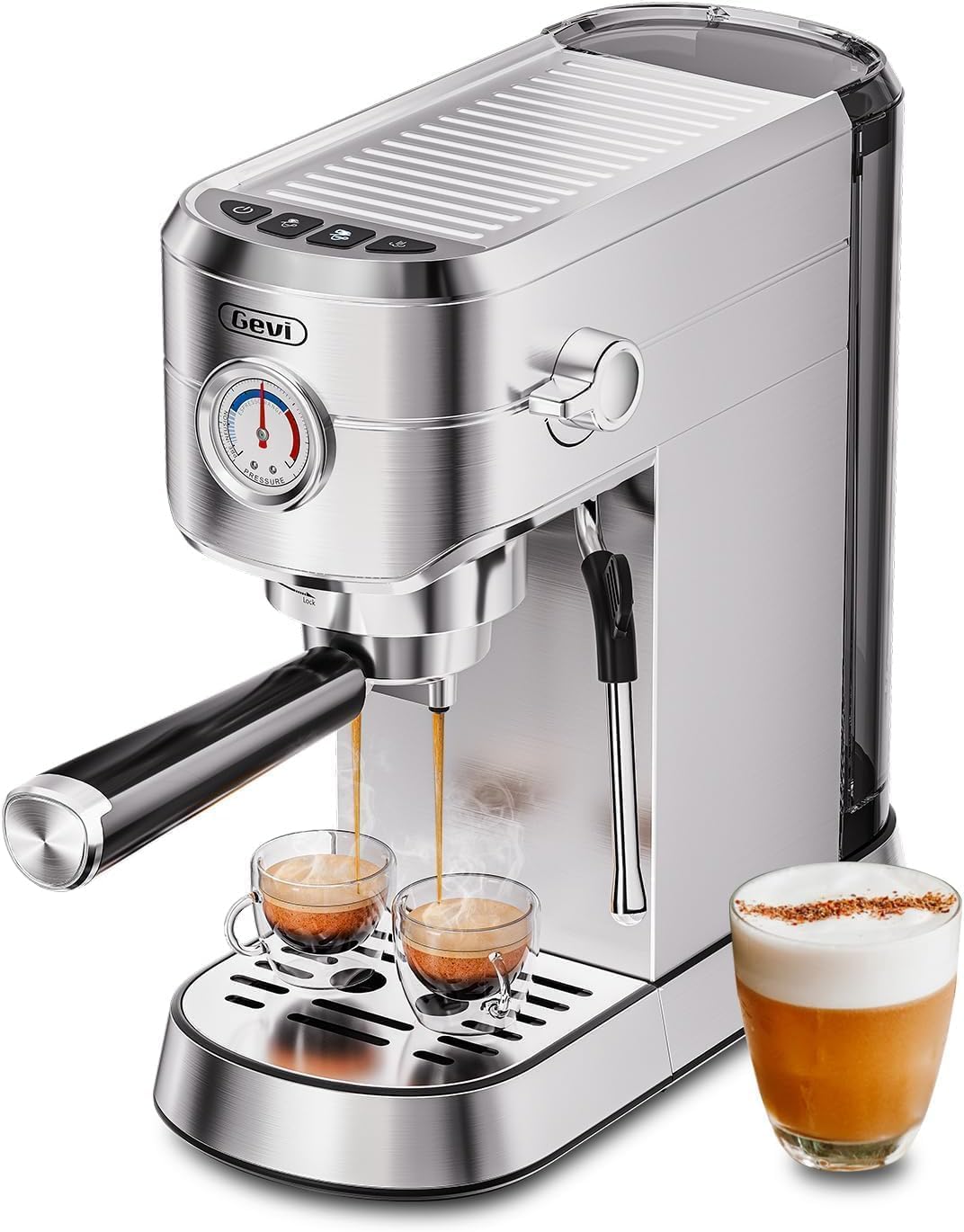
Gevi’s “Commercial” naming reflects the aesthetic intent — a brushed stainless steel body with bold lines and a portafilter that feels weighty in the hand. The 20-bar Italian pump and 1350W boiler are standard for the tier, but the larger water capacity and dual-output steam wand (which can steam and dispense hot water simultaneously) add genuine convenience. The pressure gauge is present on this model too, giving you visual confirmation of extraction pressure.
The steam wand is a panarello type, which makes milk frothing easy but limits fine control. The included portafilter is a 51mm size, and Gevi supplies both single and double baskets. The drip tray is generous and removes easily for cleaning. The machine has a hot water function separate from the steam wand, useful for Americanos or preheating cups.
Where this model falters slightly is in shot consistency over multiple drinks. The thermoblock design means the first shot is often hotter than the third, so pulling two cappuccinos back-to-back will require a short pause for the block to re-stabilize. Also, the build, while attractive, uses some plastic internal components that may not last as long as an all-brass group head. For a home barista who wants the commercial look and doesn’t need precision repeatability, the Gevi Commercial is a strong mid-range choice.
Why it’s great
- Dual wand for steam and hot water simultaneously
- Pressure gauge aids learning and dialing in
- Stainless steel design looks premium on counter
Good to know
- Thermoblock temps drift on consecutive shots
- Some plastic internals affect long-term durability
5. Gevi Professional Espresso Machine
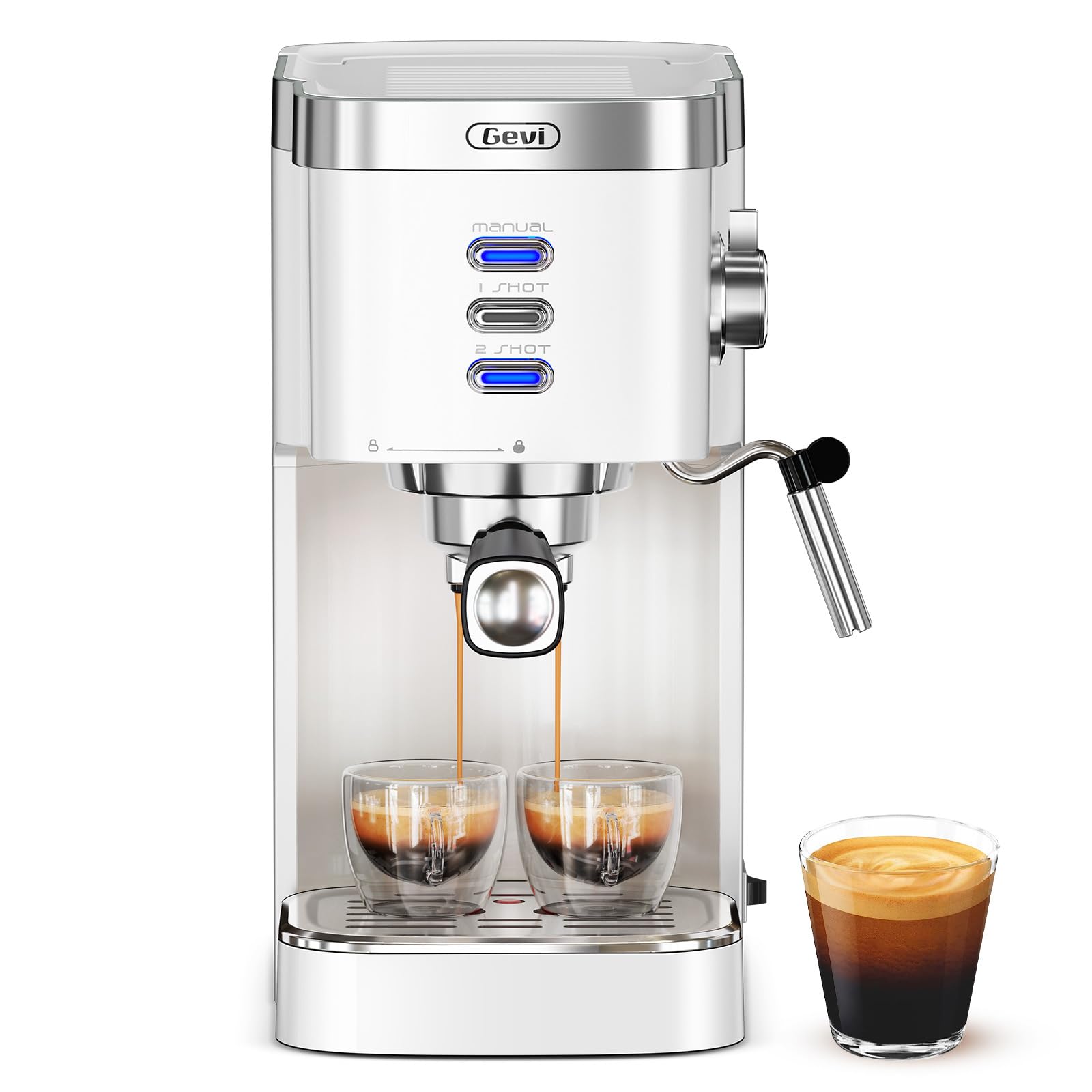
The Gevi Professional focuses on user-friendliness with an adjustable shot volume feature — a rotary dial lets you set the water output from 1 oz to 4 oz, which is handy for dialing in different roast levels without manually timing each shot. The 20-bar pump and 1350W heater deliver standard performance, and the compact footprint (similar to the CHULUX Slim) saves counter space while still including a steam wand.
The steam wand is a panarello style, producing thick foam quickly for cappuccinos. The white finish option is a welcome departure from the usual silver or black, and the build quality feels solid for the price point. The drip tray is smallish but sufficient for a couple of shots before emptying. The machine also has a removable water tank for convenient refilling.
The main compromise is temperature stability. The thermoblock is efficient but not heavily insulated, so the brew temperature can vary by a few degrees between shots, especially if you are not letting the machine fully warm up. Also, the panarello wand means you won’t get silky microfoam for latte art. For a beginner who values simplicity and adjustable volume over absolute temperature precision, the Gevi Professional is a capable entry-level machine.
Why it’s great
- Adjustable shot volume dial eliminates guesswork
- Compact size fits small kitchens easily
- White color option adds design flexibility
Good to know
- Thermoblock temperature drifts shot-to-shot
- Panarello wand limits milk texture control
6. CHULUX Elite Espresso Machine
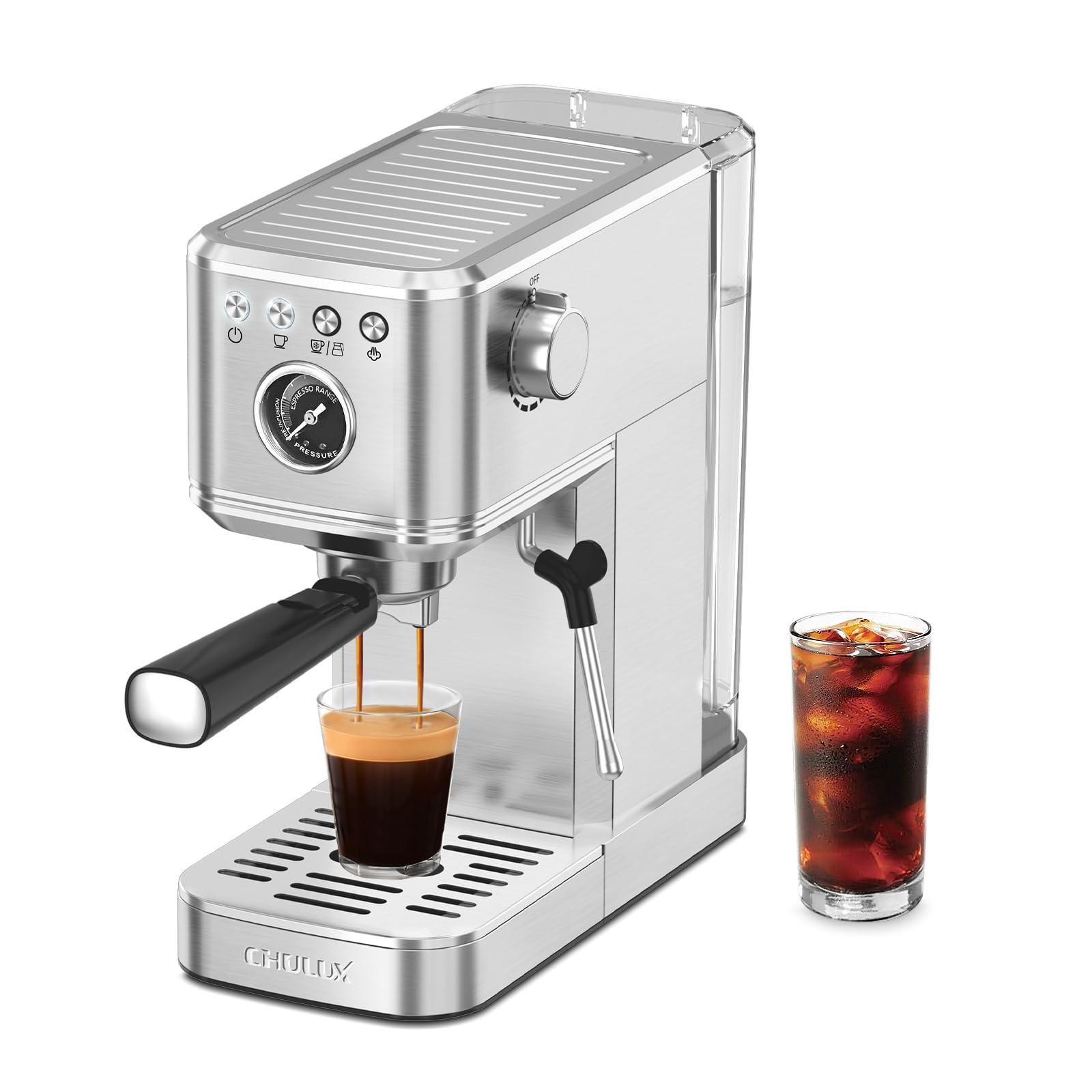
The CHULUX Elite is marketed for both hot and iced espresso, with a brewing system that can push water through the puck at the optimal temperature for either style. The 20-bar pump is standard, but the compact stainless steel body feels denser than its slim profile suggests. The steam wand is a panarello design, so milk frothing is straightforward if not art-grade, and the 1350W boiler brings water up to temperature quickly.
The water tank is not huge — slightly smaller than the CASABREWS — but sufficient for a couple of drinks before refilling. The portafilter is a standard 51mm size, and the included tamper is functional. The machine’s standout feature is its ability to brew at a slightly lower temperature for iced espresso, which helps avoid the bitter notes that can come from over-extraction when hot water hits ice.
The trade-offs are the usual for this price tier: the panarello wand, the absence of a pressure gauge, and a thermoblock that can be inconsistent on temperature. Also, the drip tray is small, requiring frequent emptying if you flush the group head between shots. For someone who wants a compact machine that can handle both hot espresso and iced Americanos without fuss, the CHULUX Elite is a solid value pick.
Why it’s great
- Dedicated iced espresso brewing profile
- Compact size fits tight counter spaces
- Quick heat-up time with 1350W boiler
Good to know
- Small drip tray needs frequent emptying
- No pressure gauge for extraction feedback
7. CHULUX Slim Espresso Machine
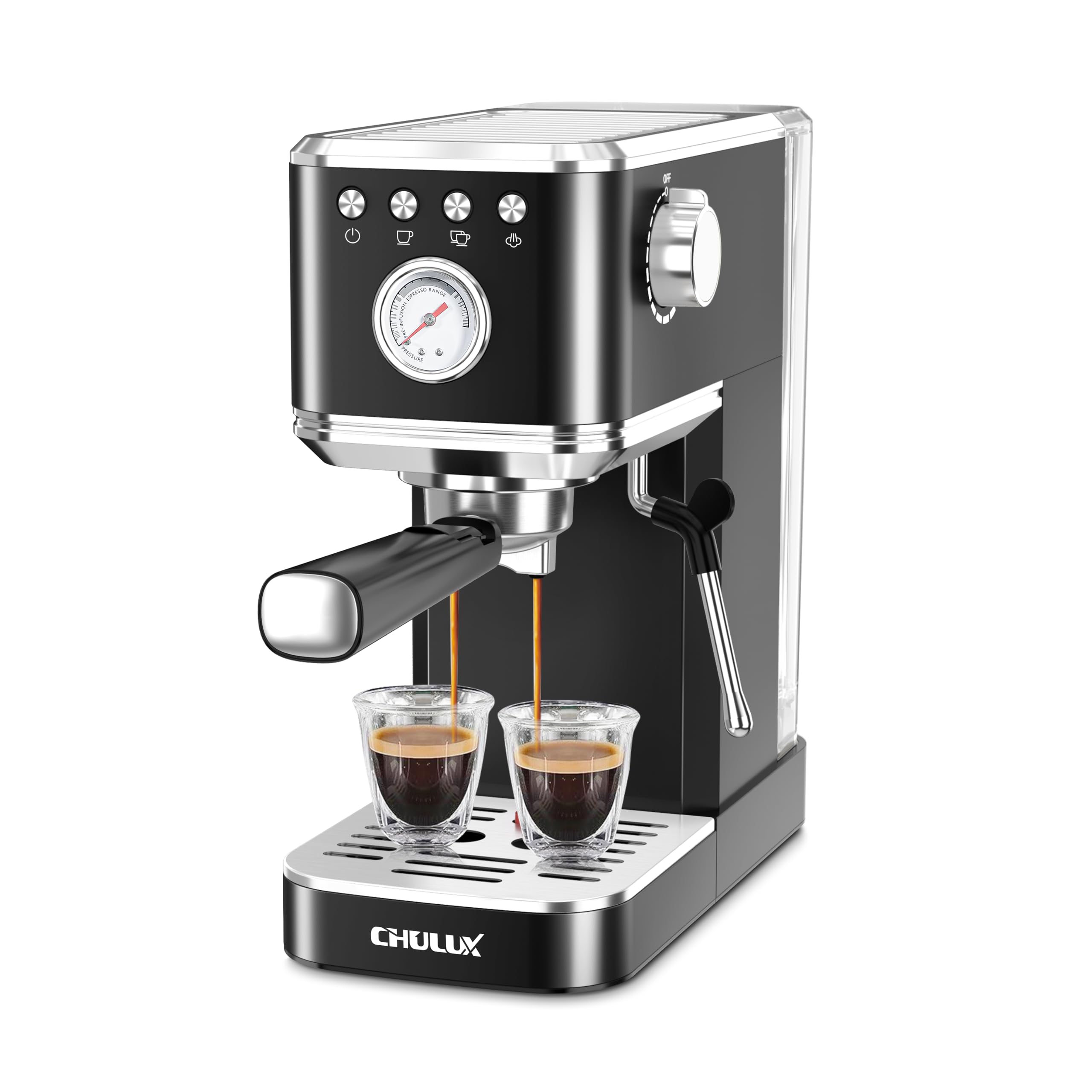
The CHULUX Slim is the most affordable entry in this guide, but it doesn’t feel cheap in the hand. The 20-bar Italian pump is paired with a pressure gauge on the front panel — a feature typically reserved for more expensive machines — which helps you monitor your extraction in real time. The 40-ounce water tank is generous for its size, and the 1350W boiler preheats in about 30 seconds. The machine also includes a pre-infusion function for even puck saturation.
The steam wand is a panarello style, which froths milk rapidly but doesn’t produce the silky microfoam needed for latte art. The portafilter is a standard 51mm, and the included tamper and spoon are basic but serviceable. The machine has an auto shut-off after 25 minutes of inactivity, which is a nice safety feature. The build is mostly plastic with a stainless steel front panel, keeping the weight low at under 8 pounds.
The compromises are predictable: the thermoblock heating element has no PID control, so brew temperature can drift. The pressure gauge is functional but not highly accurate. The steam wand’s panarello sleeve is fixed, limiting milk texture control. For the price, the CHULUX Slim delivers an impressive feature set — especially the gauge and pre-infusion — making it the best budget option for someone who wants to learn espresso fundamentals without a significant investment.
Why it’s great
- Pressure gauge included at an entry-level price
- Generous 40oz water tank for multiple shots
- Auto shut-off for safety and energy saving
Good to know
- Plastic body with stainless steel front only
- Panarello wand cannot produce microfoam
FAQ
Can I use pre-ground coffee in a pressurised basket under ?
How often should I descale a budget espresso machine?
Is a 15-bar pump enough for espresso or must I get a 20-bar model?
Final Thoughts: The Verdict
For most users, the espresso machine under 150 winner is the SHARDOR 20-Bar because it combines a temperature display, large water tank, and traditional steam wand in a package that offers real control for dialing in shots. If you want a pressure gauge for extraction feedback and a proven build, grab the CASABREWS CM5418. And for the most reliable brand experience with manual steam control, nothing beats the De’Longhi Stilosa.