Creating photo-realistic, personalized cakes and cookies at home or in a bakery once required the steady hand of a master artist. The reality is that hand-piping complex logos, portraits, or intricate patterns on icing takes hours of practice. An edible printer for cakes bypasses this entirely, converting digital images into precise, food-safe prints on frosting sheets in minutes. This technology shifts the bottleneck from artistic skill to hardware capability, making it a practical necessity for modern bakeries and ambitious home decorators.
I’m Mohammad Maruf — the founder and writer behind AirfryerBite. My market analysis has focused on the intersection of food-safe consumables and digital print hardware, comparing resolution standards, ink certification protocols, and media handling across production-ready and entry-level units.
The right unit needs to handle edible ink cartridges matched to PFOA-free frosting sheets without nozzle clogging. This guide breaks down the differences between dedicated edible printers, converted inkjets, and handheld food pens so you can confidently narrow your search for the edible printer for cakes that matches your output volume and resolution needs.
How To Choose The Best Edible Printer For Cakes
Selecting the right system depends on your output consistency expectations and the physical format of your cake orders. The core components are the printer engine itself, the edible ink system, and the frosting media it can handle. A mismatch in any of these three ruins the final result.
Ink System Certification
Not all edible inks are created equal. Look for cartridges explicitly labeled with FDA-compliant ingredients and PFOA-free, BPA-free certifications. Inks designed for food printing use food colorings (FD&C dyes) suspended in a water-based or glycerin solution. Units that rely on modified standard printer cartridges carry a higher risk of nozzle corrosion and off-flavor transfer. Dedicated systems provide a sealed ink path that prevents contamination from previous use of non-edible pigments.
Media Compatibility
The printer must handle the specific thickness and surface texture of edible frosting sheets (also called icing sheets) and wafer paper. Standard office printers often have aggressive paper feed rollers that can tear thin edible sheets. Look for a printer with a straight paper path or a rear feed tray that minimizes bending. The media size (typically 8.5 x 11 inches or A4) must match your cake platter dimensions to avoid wasted sheet material.
Resolution and Color Gamut
Print resolution in DPI (dots per inch) dictates how fine the detail appears. For edible applications, 1200 x 1200 DPI produces sharp text, logos, and facial features. Lower resolutions (600 x 600 DPI) may show visible dot patterns on the frosting sheet, especially in gradient areas like skin tones. Color gamut matters because edible inks have a narrower range than standard photo inks. Printers using a six-color system (C,M,Y,K plus light cyan and light magenta) yield smoother pastels and flesh tones than basic four-color systems.
Quick Comparison
On smaller screens, swipe sideways to see the full table.
| Model | Category | Best For | Key Spec | Amazon |
|---|---|---|---|---|
| Epson EcoTank Photo ET-8550 | Mid-Range | High-volume bakery with multi-media needs | 13×19 inch borderless support | Amazon |
| Canon imagePROGRAF PRO-310 | Premium | Ultra-fine photo prints on icing sheets | 9-color LUCIA PRO II pigment ink | Amazon |
| Epson SureColor P900 | Premium | Wide color gamut for portrait cakes | 10-channel UltraChrome PRO10 ink | Amazon |
| EVEBOT Handheld PrintPen | Entry-Level | Direct decoration on cookies and macarons | Curved surface printing | Amazon |
| Canon PIXMA TR150 | Entry-Level | Compact portable set for traveling decorators | 9 ppm black print speed | Amazon |
| DNP RX1 DS-RX1HS | Mid-Range | Dye-sub event printing on cake toppers | 300×600 dpi high resolution | Amazon |
| HP DesignJet T210 | Mid-Range | Large format edible sheet printing | 24-inch wide media roll | Amazon |
| HP DesignJet T630 | Premium | Full-size bakery production runs | 36-inch wide media roll with stand | Amazon |
| Creality K2 Pro Combo | Niche | 3D printed cake molds and stencils | 300x300x300mm build volume | Amazon |
In‑Depth Reviews
1. Epson EcoTank Photo ET-8550

The EcoTank ET-8550 uses a six-color Claria ET Premium ink system that produces wide gamut prints on edible frosting sheets without the need for costly cartridge replacements. Its borderless printing capability up to 13 x 19 inches means you can produce a full-sheet edible topper for a larger celebration cake in a single pass. The flatbed scanner and copier functions also allow you to digitize hand-drawn designs and print them directly onto icing sheets, which is a workflow shortcut many bakeries appreciate.
This unit is best suited for bakeries that need a reliable workhorse capable of handling both edible media and standard photo paper for promotional materials. The automatic duplex printing saves time when printing backing instructions or order tags. The 4.3-inch color touchscreen simplifies media type selection and maintenance routines, reducing the learning curve for new staff.
One limitation is that the EcoTank refill bottles are not pre-filled with edible ink. You must empty and thoroughly flush the tank system before introducing food-safe edible ink cartridges, a conversion process that voids the standard warranty. For most buyers, this represents a dedicated commitment rather than a casual use scenario.
Why it’s great
- 13×19 borderless output handles large cake toppers without seams
- Supertank refill system reduces long-term ink cost per print
- Built-in scanner supports direct digitize-and-print workflow for custom orders
Good to know
- Requires complete ink system conversion to use edible ink, voiding warranty
- Heavier build at over 21 pounds limits countertop portability
2. Canon imagePROGRAF PRO-310

The Canon PRO-310 employs a nine-color LUCIA PRO II pigment ink system plus a Chroma Optimizer that delivers exceptional gloss uniformity on coated edible media. This printer was designed for gallery-quality photographic output, which translates directly to the precise color gradients needed for portrait cakes. The anti-clogging system is critical for edible printers that may sit idle between custom orders, preventing dried ink from blocking the fine nozzles.
Skew correction and automatic feed calibration ensure the delicate frosting sheet enters the print path straight, reducing wasted media from misaligned prints. The single-sheet manual feed slot is ideal for loading individual edible sheets without disturbing the main paper tray. Print speeds of approximately 2 pages per minute at highest resolution mean each edible sheet takes about 30 seconds to complete.
The lack of duplex printing is irrelevant for edible media since frosting sheets are printed single-sided. However, the PRO-310 is a print-only device, so separate scanning equipment is needed if you want to digitize hand-drawn artwork. Setup requires careful alignment of the nine ink cartridges, and the initial cost is a significant investment for a home baker.
Why it’s great
- Nine-color pigment system delivers true-to-life flesh tones on icing sheets
- Anti-clogging mechanism preserves nozzles during idle periods between custom orders
- Skew correction prevents wasted edible media from misaligned sheet feeding
Good to know
- Print-only device requires separate scanner for digitizing artwork
- Heavy 31.6-pound chassis demands dedicated counter space
3. Epson SureColor P900
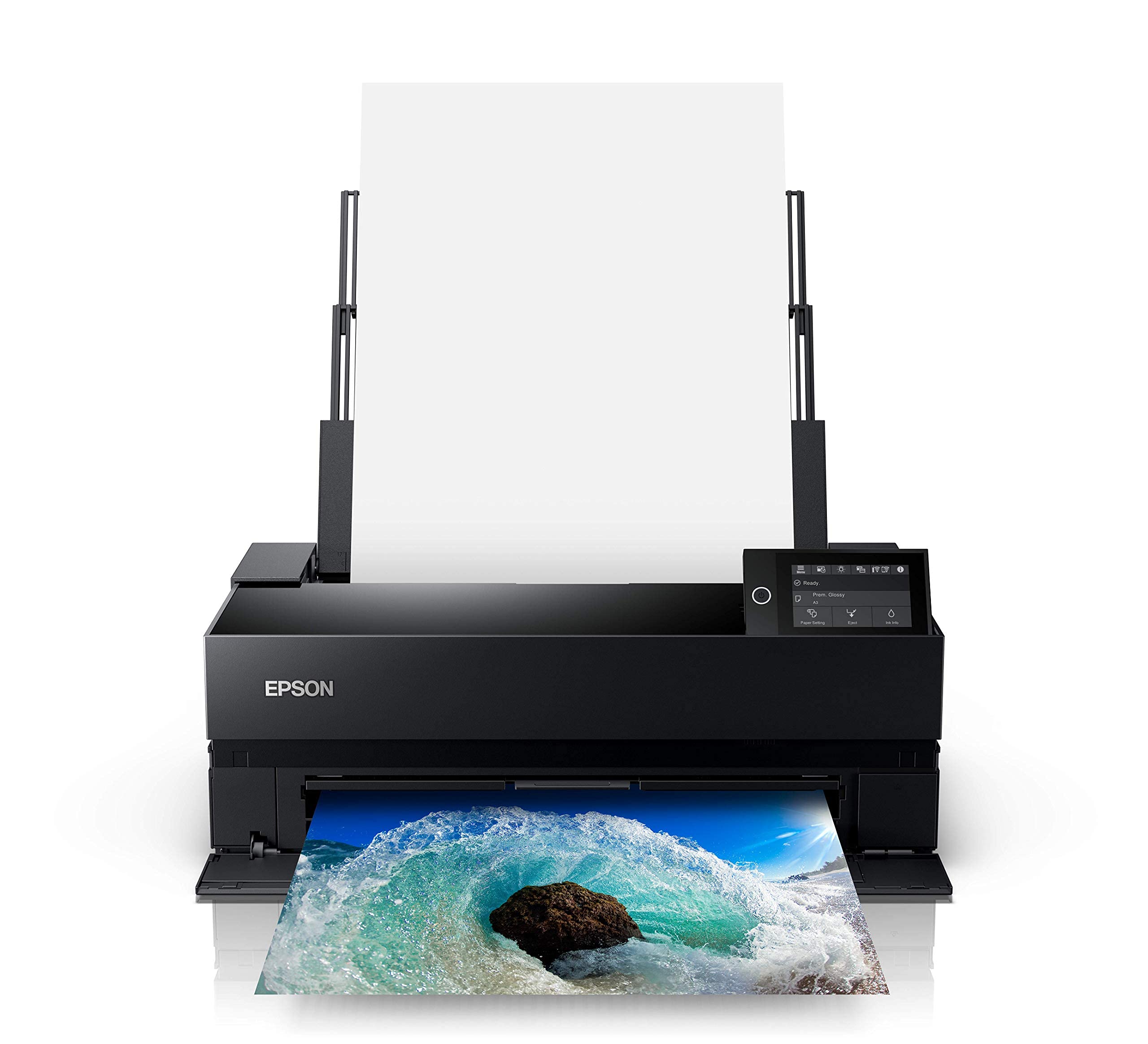
The SureColor P900 introduces a tenth channel with Violet ink, expanding the color gamut significantly compared to standard CMYK systems. This extra channel is particularly beneficial for edible printing because edible inks typically have a narrower gamut than photo inks, and the Violet enhances the reproduction of purples and deep blues often used in themed cakes. Dedicated nozzles for Photo Black and Matte Black eliminate the switching waste that occurs on other printers, saving edible ink.
The 4.3-inch customizable touchscreen provides direct media type selection for edible sheets without navigating through desktop menus. The interior LED light illuminates the print path so you can visually inspect nozzle patterns on the frosting sheet immediately after ejection. Roll media support up to 17 inches wide allows long-format edible prints for multi-tier cake wraps.
The P900 is a significant investment, and the initial ink set included in the box is half-capacity starter cartridges, which you must replace with full carts or edible ink conversions sooner than expected. The driver lacks a dedicated “edible media” preset, so you must create a custom profile for icing sheets, which requires some trial printing.
Why it’s great
- Violet ink channel expands edible color gamut for complex cake designs
- Simultaneous Photo Black and Matte Black nozzles eliminate ink switching waste
- 17-inch roll support enables seamless long-format edible prints for tiered cakes
Good to know
- Starter ink cartridges are half-full, requiring early replacement
- No dedicated edible media profile in the driver; custom calibration needed
4. EVEBOT Handheld PrintPen
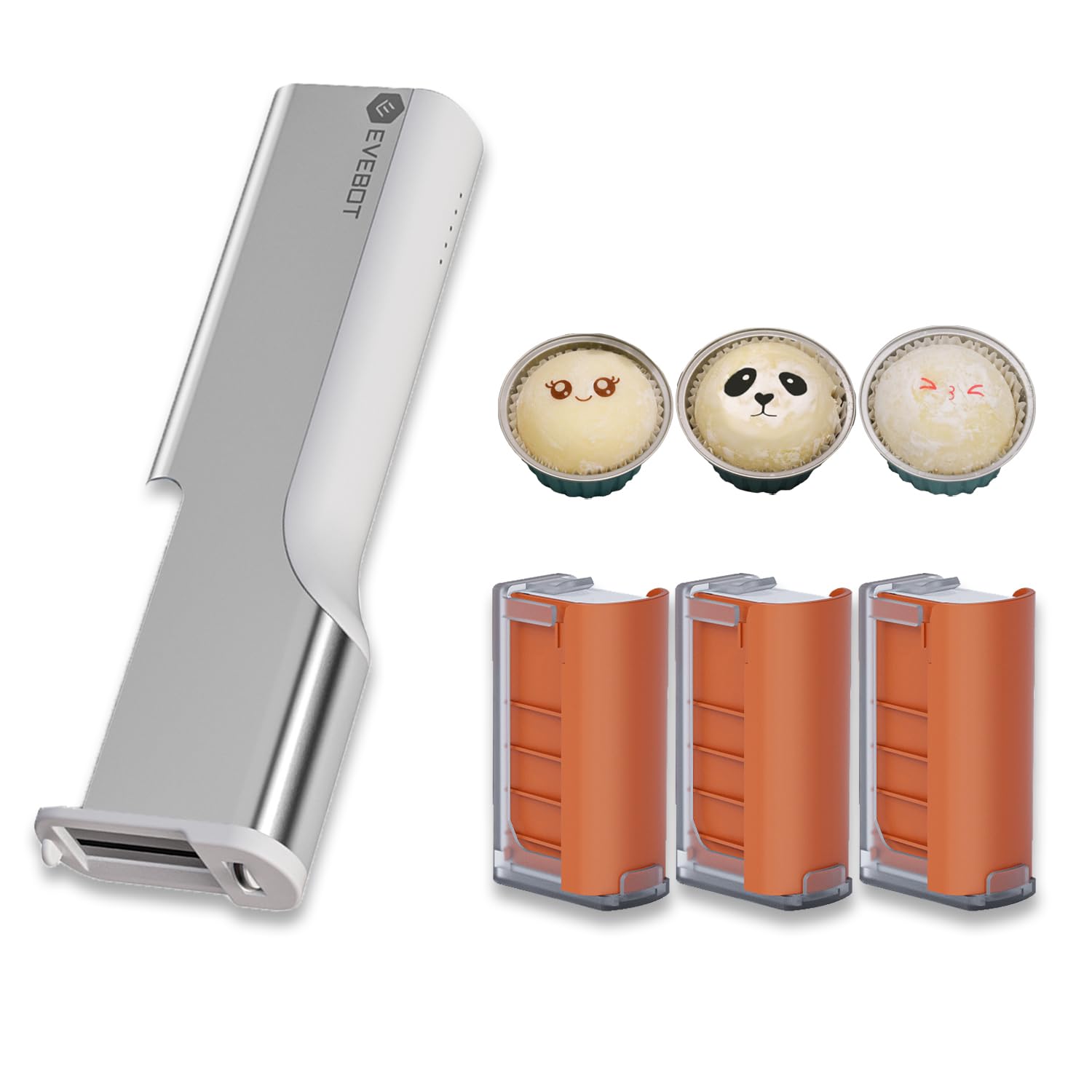
The EVEBOT PrintPen takes a fundamentally different approach to edible printing by eliminating the flat sheet requirement. This handheld device uses roller sensor technology that detects curved surfaces, allowing direct printing onto the side of a frosted cake, a macaron shell, or the foam of a latte. The Bluetooth 4.2 connection to the EVEBOT SNAP app lets you upload logos, text, or QR codes directly from a smartphone, bypassing a computer entirely.
The FancyBox ink cartridges are pre-filled with food-grade edible ink and are rated for approximately 7,000 prints at 26mm x 50mm size. The ergonomic design with an auxiliary ruler helps maintain consistent print alignment on curved surfaces. The memory function stores the last uploaded pattern, so you can power off and restart without re-uploading the design, a useful feature for decorating multiple cookies in a batch.
Print quality is limited to simple two-color logos and text rather than full photographic detail. The recommended surface conditions call for fine, dense foam or thick liquids, meaning the PrintPen works best on buttercream that has been chilled firm, not on soft whipped cream. Clogged nozzles can be cleared with a tissue wipe, but the ink dries if the cartridge is left out of the protection clip for extended periods.
Why it’s great
- Prints directly onto curved cake surfaces without needing flat edible sheets
- Bluetooth app control allows on-the-fly design uploads from a smartphone
- Compact 9-ounce design fits in a decorating apron pocket for mobile use
Good to know
- Limited to simple line art and logos; no full-color photographic output
- Requires firm, level surfaces like chilled buttercream for best adhesion
5. Canon PIXMA TR150

The PIXMA TR150 is a lightweight portable printer weighing under 5 pounds, designed for decorators who travel to event venues and need to print edible sheets on location. Its compact design fits into a medium tote bag alongside decorating tools. The optional detachable battery allows printing up to 330 pages on a full charge, meaning you can produce edible toppers at a wedding venue without needing a wall outlet.
Automatic duplex printing and a 9 ppm black print speed keep production moving during event rush periods. The custom template feature stores up to five frequently used designs directly on the printer, so you can reprint a standard “Happy Birthday” or logo without reconnecting to a device. Mopria Print Service compatibility allows direct printing from Android smartphones, which is convenient for last-minute design changes sent by the client via text.
The TR150 is designed as a standard office printer, not a dedicated edible system. You must purchase third-party edible ink cartridges that are compatible with the PIXMA TR150 cartridge format, and the printer’s internal software will show an error message when non-OEM cartridges are used. The lack of a rear straight paper path means edible sheets must bend around the internal rollers, increasing the risk of creasing thin frosting sheets.
Why it’s great
- Under 5 pounds with optional battery enables on-location edible printing at events
- Custom template store prints five common designs without device reconnection
- Mopria support allows direct Android printing for last-minute client edits
Good to know
- Standard office printer requires unofficial edible cartridge conversions with error warnings
- Curved paper path increases risk of creasing thin edible sheets
6. DNP RX1 DS-RX1HS

The DNP RX1 uses dye-sublimation technology rather than inkjet, which embeds dye into the coating of the print media rather than depositing it on the surface. For edible applications, this means the printed image is less prone to smudging when applied to moist frosting. The 300×600 DPI resolution produces sharp text and logos suitable for event cake toppers, and the print speed of 290 4×6 prints per hour is fast enough for high-volume event bakery production.
Roll media support up to 6×8 inches provides up to 700 prints per roll, reducing media change frequency during busy production runs. The USB 2.0 connection is stable and reliable for continuous operation, though it lacks wireless flexibility. The compact footprint compared to large-format inkjets makes it easier to fit into a bakery workspace.
Dye-sublimation requires specially coated media, which means you cannot use standard frosting sheets from generic suppliers. You must source edible media specifically compatible with the DNP RX1 dye-sub process, which limits your purchasing options to a smaller pool of vendors. The printer also requires periodic maintenance cartridge replacements that add to the per-print cost compared to refillable inkjet systems.
Why it’s great
- Dye-sub process embeds color into media coating, resisting smudge on moist icing
- 290 prints per hour speed handles high-volume event bakery orders efficiently
- Roll media reduces sheet change frequency during continuous production runs
Good to know
- Requires specially coated edible media, limiting supplier options and raising cost
- No wireless connectivity; must remain tethered via USB 2.0
7. HP DesignJet T210
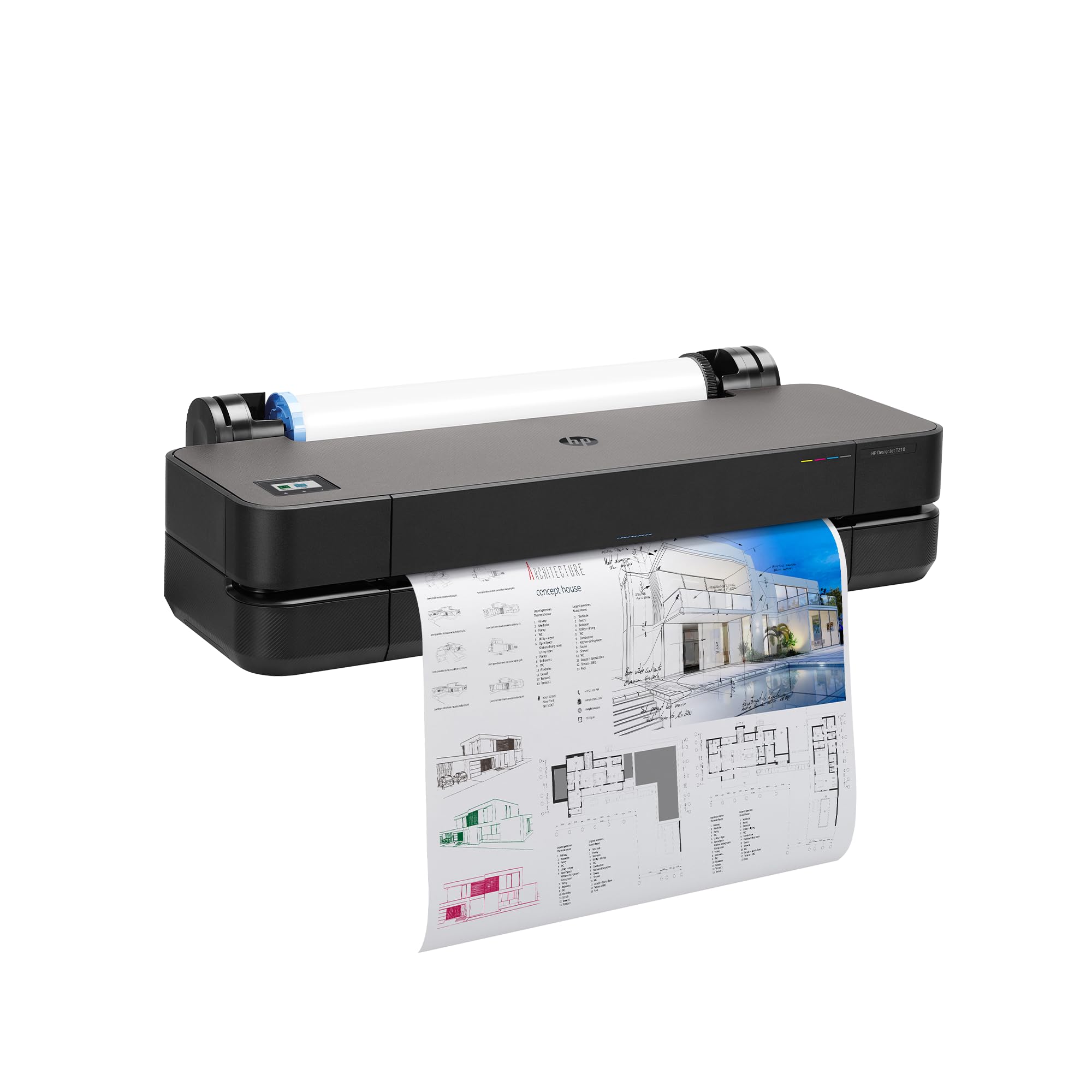
The HP DesignJet T210 is a large-format plotter that accepts 24-inch wide media rolls, enabling edible sheets that wrap around a full 12-inch or 14-inch round cake without seams. The automatic horizontal cutter trims each sheet to length, which minimizes waste when you are producing a specific number of custom orders. The roll feed system reduces the need for manual sheet alignment, which is a common failure point with thin edible media in standard printers.
The HP Click software includes PDF error checking and auto-nesting features that can save edible media by positioning multiple small designs on a single sheet without overlapping. The Gigabit Ethernet and Wi-Fi connectivity allow placement in a central bakery location shared by multiple decorating stations. The 500MB memory buffer handles large design files without slowdown.
This printer uses HP 712 ink cartridges that are not food-safe out of the box. Conversion to edible ink requires a complete flush and the use of third-party edible ink cartridges shaped for HP DesignJet cartridge slots. The printer’s internal calibration is tuned for dense technical line drawings, so producing smooth color gradients on edible media requires building a custom ICC profile through trial prints.
Why it’s great
- 24-inch roll width produces seamless edible wraps for 12-inch and 14-inch cakes
- Auto horizontal cutter reduces media waste from manual sheet trimming
- HP Click software nesting feature optimizes edible sheet usage for multi-design orders
Good to know
- Standard HP ink requires full conversion to food-safe edible cartridges
- Custom ICC profile needed for smooth edible color gradients as driver is CAD-optimized
8. HP DesignJet T630

The DesignJet T630 expands on the T210 format with 36-inch wide roll capability, making it suitable for bakery production lines that handle multi-tier cakes needing continuous edible wraps. The included stand with media bin provides a dedicated floor-mounted workstation, freeing counter space for decorating. The automatic sheet feeder accessory allows switching between roll media and pre-cut sheets without manual intervention.
The auto sheet/roll switch is advantageous when you need to print a batch of standard 8×10 edible sheets from a roll and then immediately switch to pre-cut wafer paper sheets for a custom order without rethreading. The HP Click software’s PDF error checking prevents printing to an empty roll, which avoids wasting edible ink on a partial sheet. Wi-Fi connectivity enables remote upload from a client consultation tablet in the front of the house.
This unit requires the same edible ink conversion as the T210 but at a higher cartridge volume due to the larger print area. The printer’s weight of approximately 60 pounds with the stand means it is a permanent installation. The lack of duplex printing is irrelevant for edible media, but the print-only function means you need a separate scanner for artwork digitization.
Why it’s great
- 36-inch roll width covers full multi-tier cake wraps without seams
- Included stand with media bin creates a dedicated floor-mounted bakery workstation
- Auto sheet/roll switch handles both bulk rolls and custom pre-cut sheets
Good to know
- Requires same edible ink cartridge conversion with custom profiling as T210
- Heavy floor-standing design is a permanent fixture, not moveable between stations
9. Creality K2 Pro Combo
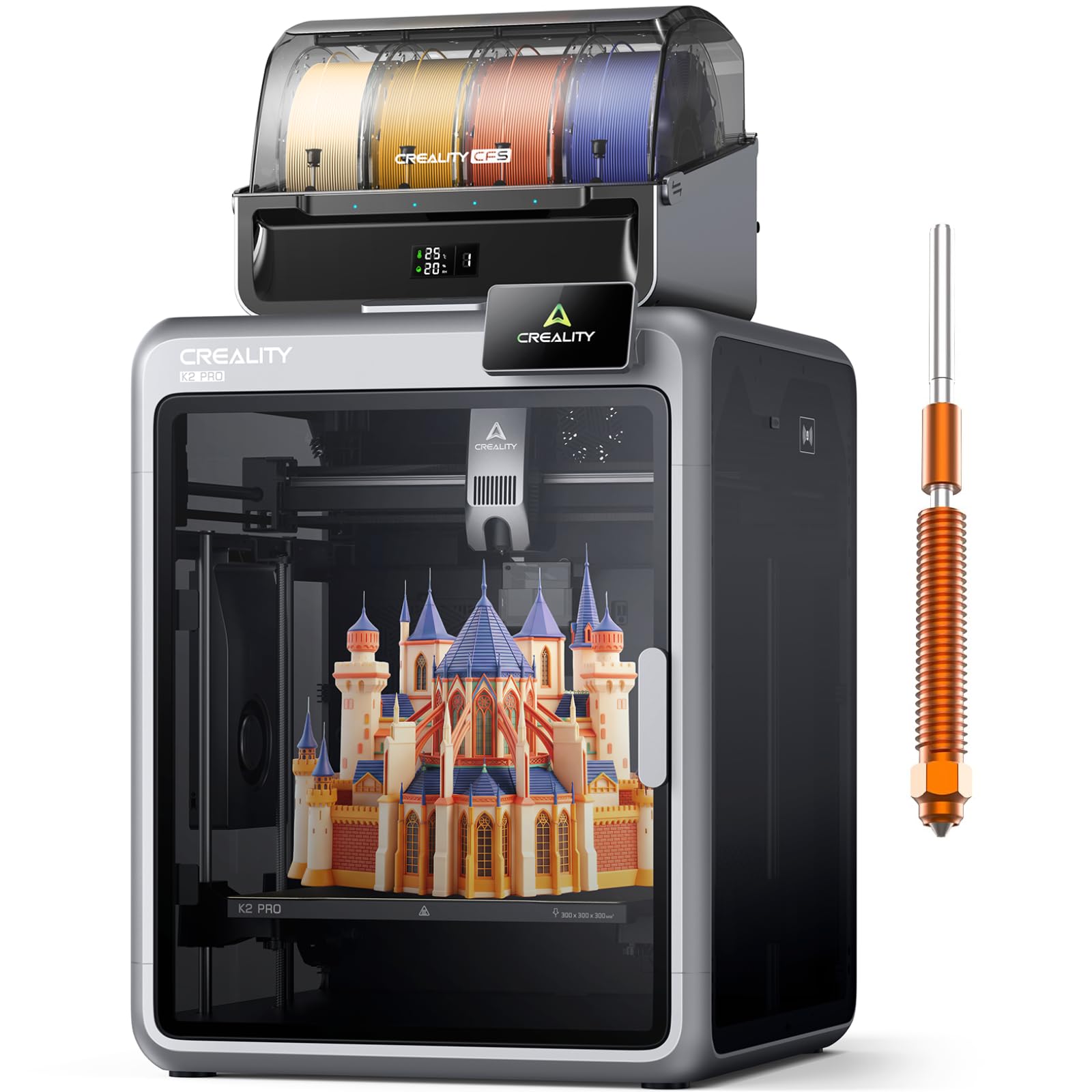
The Creality K2 Pro is a 3D printer, not a flat media printer, but it enables a distinct approach to cake decoration through edible 3D printing. By using food-safe silicone molds or directly extruding edible filament materials (such as sugar paste or chocolate-based filament), you can produce custom cake toppers, stencils, and structural elements that are impossible to create with a flat inkjet system. The CFS smart filament system supports up to 16-color multicolor printing, allowing gradient and multi-material edible toppers.
The 300x300x300mm build volume accommodates cake toppers up to 12 inches in height. The active chamber heating up to 60°C maintains temperature stability for materials like sugar-based filaments that warp in cooler environments. The dual AI camera system monitors the print in real-time, detecting failures early to prevent wasted edible material.
The edible 3D printing filament market is still in its early stages, with limited options compared to traditional edible ink cartridges. The learning curve for 3D modeling software is steep, and designing an edible stencil requires CAD skills that most bakers do not possess. This unit is best suited for a bakery that already has 3D printing experience and wants to expand into custom sculpted toppers and molds.
Why it’s great
- 16-color multicolor CFS system enables gradient and multi-material edible toppers
- 300mm³ build volume produces cake toppers up to 12 inches tall
- Active chamber heating prevents warping of sugar-based edible printing materials
Good to know
- Edible filament supply chain is nascent with limited material options
- Requires 3D CAD modeling skills for design, not a drop-in decorating solution
FAQ
Can I use any inkjet printer for edible printing on cakes?
What resolution in DPI do I need for edible cake prints?
How long do edible ink cartridges last after opening?
Final Thoughts: The Verdict
For most users, the edible printer for cakes winner is the Epson EcoTank Photo ET-8550 because its six-color ink system and 13×19 inch borderless output handle both standard edible sheets and large cake wraps with minimal seam lines, all while reducing per-print ink costs through the supertank refill system. If you want gallery-level portrait reproduction on individual cake toppers, grab the Canon imagePROGRAF PRO-310. And for on-the-go decorating or direct printing onto fondant and cookies, nothing beats the EVEBOT Handheld PrintPen.