A dull knife is a dangerous tool in the kitchen—it requires more force, slips easier, and tears food instead of slicing cleanly. The fix isn’t a complicated skill class or a workshop full of gear; it’s a reliable tool that puts a sharp edge back on your blade with minimal effort and zero guesswork.
I’m Mohammad Maruf — the founder and writer behind AirfryerBite. I have spent years analyzing the mechanical specs and real-world usability of hundreds of kitchen tools, and I evaluate knife sharpeners by their abrasive material, preset geometry, and how the design removes the margin for human error.
After reviewing nine of the most popular models on the market, this guide covers the best options for keeping your blades razor-ready without frustration or skill. Here is a complete breakdown of the best easy-to-use knife sharpener choices for every type of home cook.
How To Choose The Best Easy-To-Use Knife Sharpener
The market is full of gadgets that promise a razor edge, but the real difference between a sharpener that works and one that frustrates you is in the type of abrasive and the angle control. A truly easy-to-use sharpener removes the need to hold a perfect 20-degree angle by hand—it either guides the blade for you or locks the abrasive into a preset slot.
Abrasive Material: Carbide vs. Diamond vs. Ceramic
Tungsten carbide rods are the most aggressive and fastest at removing metal to repair a chipped edge, but a stone or diamond plate is better for finer polishing. Diamond abrasive, whether bonded to steel plates or embedded in an electric wheel, cuts quickly and stays flat over years of use. Ceramic rods offer a balanced middle ground—they refine an already sharp edge without stripping too much steel.
Fixed-Angle vs. Freehand Operation
Pull-through sharpeners with preset slots set the sharpening angle for you, making them the most foolproof category on this list. Manual folding sharpeners and whetstones require you to maintain the angle yourself, which takes practice but rewards you with better control over the final edge geometry.
Quick Comparison
On smaller screens, swipe sideways to see the full table.
| Model | Category | Best For | Key Spec | Amazon |
|---|---|---|---|---|
| Brod & Taylor VG2 Classic | Pull-Through | All knife types, minimal effort | Spring-loaded tungsten carbide bars | Amazon |
| dskiley 3-Stage Electric | Electric | Speed and consistency | 100% diamond abrasive, 20° preset | Amazon |
| VN3 Professional | Pull-Through | Adjustable 11° to 21° angles | Stainless steel & tungsten carbide | Amazon |
| ZWILLING 4-Stage | Pull-Through | Japanese and Western blades | Two ceramic grits + scissor slot | Amazon |
| Work Sharp Pull Through | Pull-Through | Chef, paring, and serrated knives | Compact design, multi-blade | Amazon |
| DMT Dia-Fold (FWEF) | Foldable Stone | Portability and fine honing | Extra Fine/Fine diamond dots | Amazon |
| Smith’s Pocket Pal | Compact | Outdoor and tactical carry | 2-stage with diamond rod | Amazon |
| The Edgemaker Pro 331 | Pull-Through | Budget-friendly home use | Safe honing, any blade | Amazon |
| Dalstrong Whetstone Kit | Whetstone | Premium edge polish | #1000 / #6000 corundum stones | Amazon |
In-Depth Reviews
1. Brod & Taylor VG2 Classic Knife Sharpener

The VG2 Classic uses spring-loaded tungsten carbide arms designed by an Austrian master knife maker. Drop your blade into the V-shaped slot and pull through—the arms self-adjust to the correct angle for any knife, whether it’s a 15-degree Japanese gyuto or a 20-degree Western chef’s knife. No manual angle calculation is needed.
The sharpening bars are rated to last between five and ten years of regular use and are easily replaceable when they wear down. The unit weighs 16 ounces and has a non-slip base that keeps it planted on the counter during aggressive pulls. It also hones serrated blades by pulling through at an angle.
Unlike electric sharpeners that risk overheating your blade’s temper, the VG2 is entirely hand-operated and removes only the minimum amount of metal needed to restore the edge. The nylon base is durable but the optional stainless steel version adds extra weight for those who want more stability.
Why it’s great
- Automatic angle adjustment works on virtually any kitchen blade
- Carbide bars stay sharp for 5+ years before needing replacement
- Safe for serrated, carbon steel, and Damascus blades
Good to know
- Nylon base can slide if you pull too fast without pressing down
- Not designed for heavy reprofiling of very damaged edges
2. dskiley 3-Stage Electric Knife Sharpener
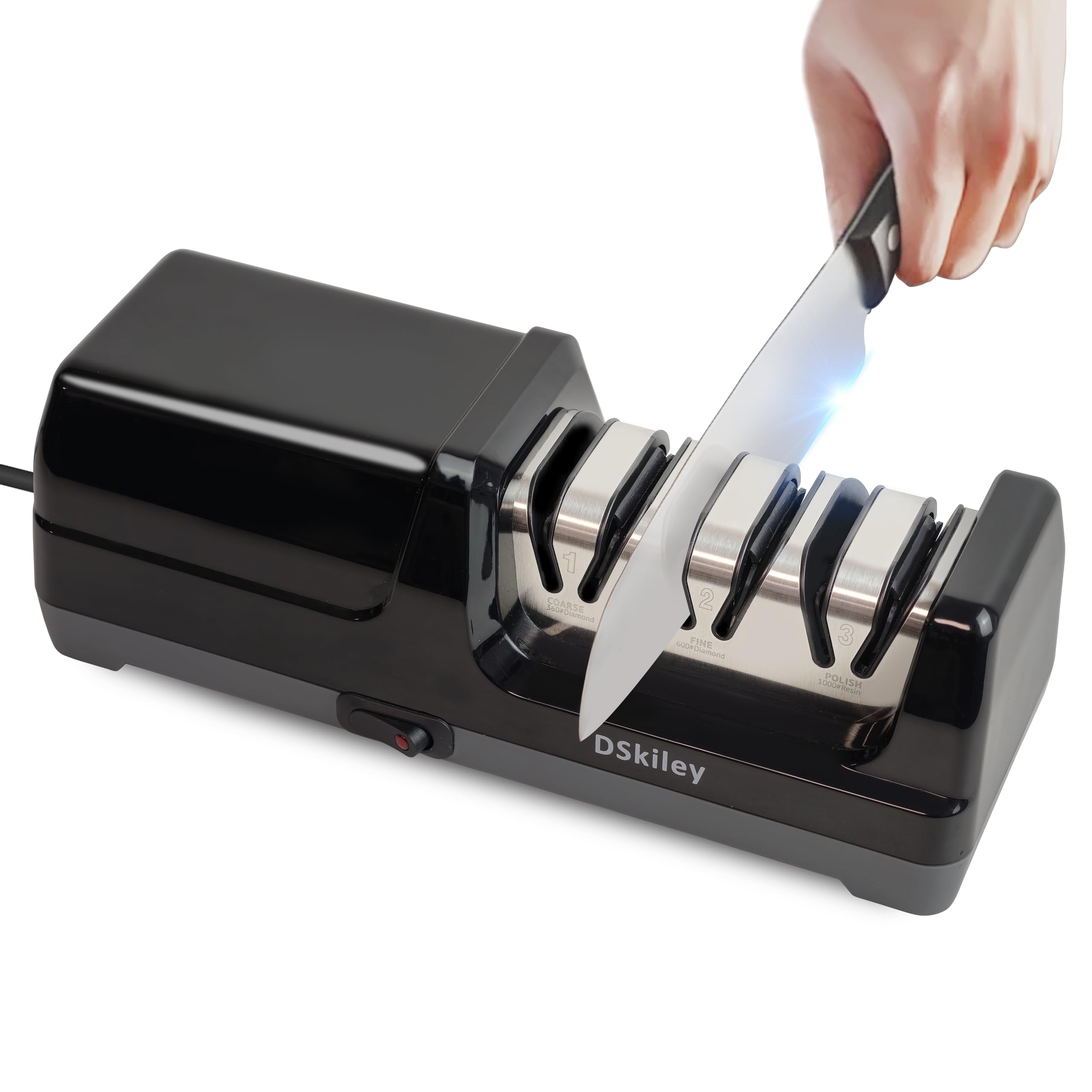
This electric model uses a three-stage 100-percent diamond abrasive system that repairs, sharpens, and polishes in a single pass. The preset 20-degree angle guide locks your knife into the correct geometry automatically, which eliminates the risk of uneven grinding that often happens with manual pull-throughs.
The motor delivers consistent speed without overheating or stalling, and a built-in magnetic collector traps metal shavings so cleanup is just a wipe of the slot. It handles chef’s knives, santoku, slicing, and paring knives—anything non-serrated that fits through the slot. The overall footprint is 12 inches long and weighs 2.4 pounds.
Diamond abrasive cuts faster than ceramic or carbide and stays flat over many cycles. That makes this unit ideal for homes where multiple knives are sharpened every week. The packaging is gift-ready, so it works as a practical present for older cooks who want sharp knives without hand fatigue.
Why it’s great
- Diamond grit delivers fast, consistent sharpening with less blade damage
- Magnetic shavings collector makes post-sharpening cleanup effortless
- Three-stage system restores very dull knives in one cycle
Good to know
- Requires a standard 110V outlet and counter space near power
- Not suitable for serrated or single-bevel Japanese blades
3. VN3 Professional Knife Sharpener
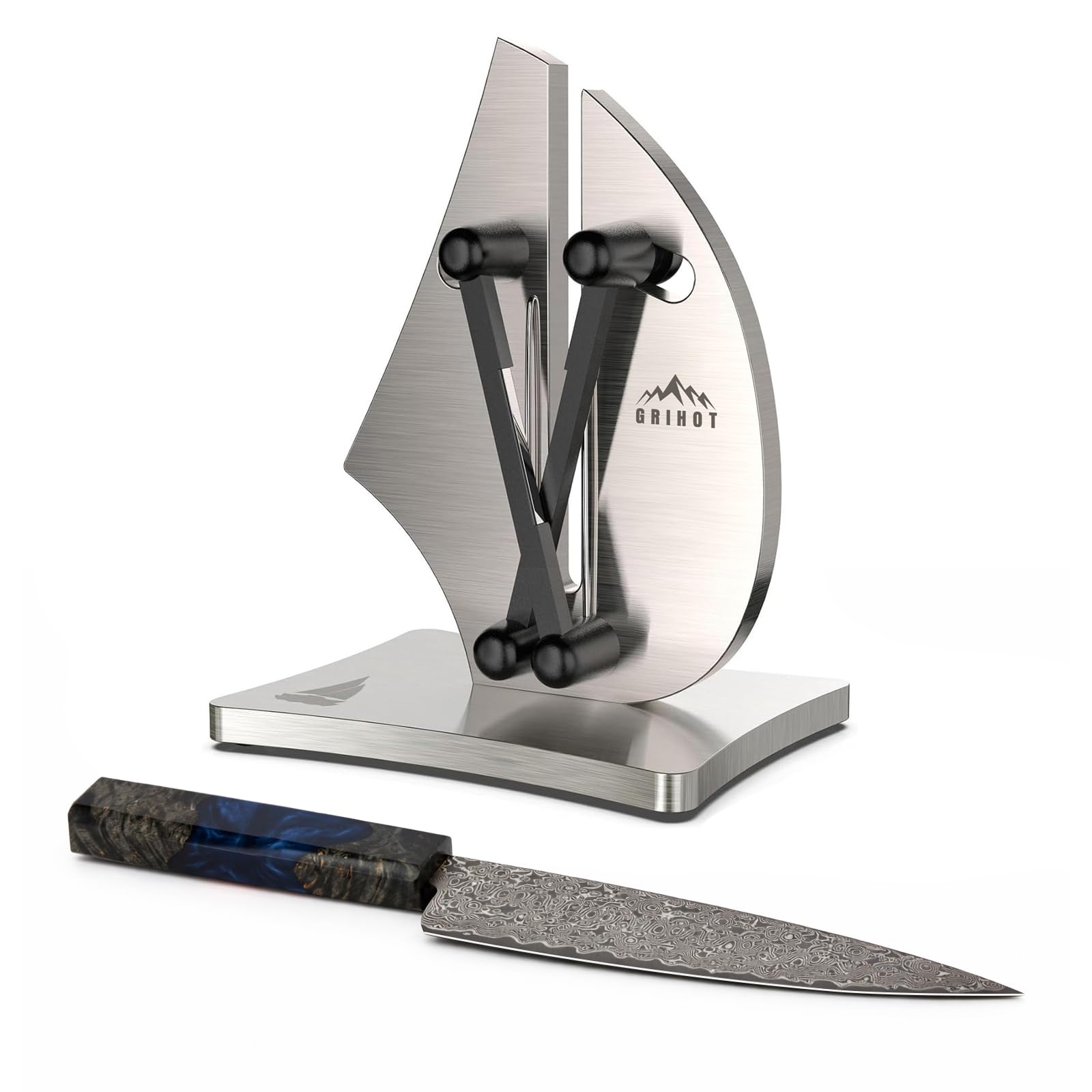
The VN3 uses two independent spring arms made from tungsten carbide that automatically adjust the sharpening angle between 11 and 21 degrees. That range covers both low-angle Japanese knives and standard Western edges. The body is machined from 304 stainless steel and weighs 1.9 pounds, which gives it a solid, premium feel on the counter.
The “3-Action” system offers distinct slots for repair, restoration, and fine sharpening, plus a separate channel for serrated blades. The manufacturer reports 196 hours of polishing process on the steel housing, and the unit comes with a 60-month warranty. The ergonomic sailboat shape provides a comfortable grip during repeated pulls.
Because the sharpening arms pivot dynamically, the VN3 can follow the existing edge angle of a blade rather than forcing a fixed geometry. This makes it gentler on thin, high-hardness steel than a rigid pull-through. It works on all non-serrated steel knives, including pocket knives and hunting blades.
Why it’s great
- Dynamic angle range (11°–21°) fits both Japanese and Western knives
- Stainless steel housing is heavy and exceptionally durable
- Separate serrated slot for bread and steak knives
Good to know
- Heavier than most pull-through sharpeners
- Not ideal for ceramic knives
4. ZWILLING Razor-Sharp 4-Stage Pull Through

ZWILLING’s four-stage design includes coarse and fine ceramic slots on each side, plus a fifth dedicated slot for sharpening scissors. The labeling on each slot is clear and color-coded, so there is no confusion about which stage to use. The non-slip rubberized bottom prevents movement during sharpening.
Ceramic is less aggressive than tungsten carbide, which makes this model better suited for maintaining an already-decent edge rather than reprofiling a badly damaged blade. The fine side works well for Japanese knives that need a lighter touch. The safety grip positions your fingers away from the blade path.
The scissor slot is a practical addition for households that maintain kitchen shears or office scissors. The 8-ounce weight makes it easy to store in a drawer. It accommodates both 15-degree and 20-degree edge angles, covering most domestic European and Asian knives.
Why it’s great
- Scissor sharpener integrated into the same unit
- Non-slip base keeps the sharpener stable during pulls
- Color-coded slots remove any guesswork
Good to know
- Ceramic grits are slower at re-cutting very dull edges
- Lightweight body can lift if pulled aggressively
5. Work Sharp Pull Through Kitchen Knife Sharpener

Work Sharp condensed a full-angle-guided system into a compact footprint that fits in a silverware drawer. The pull-through design includes separate slots for chef’s knives, paring knives, and serrated blades. It uses a rod-and-slot construction that keeps the knife aligned without requiring the user to hold a steady angle.
The compact size—smaller than most smartphone docks—makes it the most travel-friendly option on this list. Despite its size, it handles the full range of kitchen knives from 6-inch utility blades to 10-inch chef’s knives. The serrated slot uses a cylindrical rod that follows the scalloped edge profile.
Because the sharpening surfaces are fixed, this model works best for regular maintenance. If your knives are very dull or chipped, you will need multiple passes to restore the edge. The trade-off for portability is that the narrow base can tip if you pull sideways.
Why it’s great
- Extremely compact for easy drawer storage
- Dedicated serrated knife slot with round rod
- Intuitive slot labeling for each knife type
Good to know
- Requires more passes for severely dull blades
- Lightweight base can slide if not held in place
6. DMT Dia-Fold Double Sided Sharpener (FWEF)

The DMT Dia-Fold uses micronized monocrystalline diamonds bonded to a steel plate in a dot pattern that keeps debris from clogging the abrasive surface. This FWEF model provides an Extra Fine and Fine grit combination, ideal for honing an already-sharp blade rather than grinding away heavy damage. The diamond surface cuts dry or with a splash of water.
At 2.4 ounces and folding down to the size of a large credit card, this is the most portable sharpening tool in the lineup. The color-coded sides make it obvious which grit you are using. It is a freehand stone—there is no angle guide—so it demands a steady hand and consistent stroke.
DMT stones are manufactured in the USA and are trusted by professional sharpeners for their consistent grit distribution. The diamond plate will outlast multiple ceramic or carbide sharpeners. It can be used on any steel blade including pocket knives, kitchen knives, and even woodworking chisels.
Why it’s great
- Ultra-portable folding design fits in a pocket or wallet
- Diamond dots stay clean and cut fast for years
- Made in the USA with professional-grade materials
Good to know
- Requires freehand angle control—not beginner-friendly
- Fine grits are slow for repairing chipped edges
7. Smith’s Pocket Pal Tactical Knife Sharpener

The Pocket Pal is a compact two-stage sharpener that combines a preset carbide slot for coarse sharpening and a tapered diamond-coated rod for honing. The diamond rod also handles serrated and hook blades, including fish hooks and gut hooks. A pocket clip keeps it attached to a belt or pack.
The carbide slot uses a V-shaped cross section that forces the blade into a consistent angle—pull through a few times to set a new edge, then finish with the diamond rod to polish. The whole unit weighs less than 2 ounces, making it nearly unnoticeable in a cargo pocket or hunting vest.
This model is specifically designed for outdoor use: hunting knives, tactical folders, and field-dressing tools. The diamond rod doubles as a hook sharpener, which saves space in a fishing kit. It produces a functional edge quickly, but it lacks the precision of a multi-stage stone system.
Why it’s great
- Incredibly compact with belt clip for EDC carry
- Diamond rod sharpens serrated edges and fish hooks
- Carbide slot sets a new edge in seconds
Good to know
- Carbide slot removes a lot of metal quickly
- Not ideal for kitchen knives that need a fine edge
8. The Edgemaker Knife Sharpener Pro 331

The Edgemaker Pro 331 is a straightforward pull-through sharpener built around simplicity. Its V-shaped carbide notch realigns the edge on each pass, and the bright orange body is easy to locate in a cluttered drawer. It is marketed as safe enough for anyone to use, including seniors and children under supervision.
There are no multiple stages, angle adjustments, or grit selections—just one slot for coarse sharpening and a honing zone for finishing. This simplicity is its strength for households that want to maintain basic knife sharpness without overthinking the process. It works on any steel blade, from budget kitchen knives to pocket knives.
Because it relies on a single carbide blade, it removes more metal per pass than multi-stage systems. Over time, frequent use can wear down thin blade edges faster. It is best used as a quick touch-up tool rather than a primary sharpening solution for high-end knives.
Why it’s great
- Extremely simple—no learning curve at all
- Durable plastic body withstands drops and storage wear
- Low cost entry point for basic home use
Good to know
- Single carbide slot removes metal aggressively
- No fine-grit stage for a polished edge
9. Dalstrong Premium Whetstone Kit

The Dalstrong kit includes two oversized corundum (aluminum oxide) stones—a #1000 grit for sharpening and a #6000 grit for polishing. The stones are thicker and larger than typical whetstone sets, providing more surface area and a longer working life. They come housed in a portable oak box that doubles as a stone holder.
This is the most skill-dependent option in the guide. You need to soak the stone, maintain a consistent angle by hand, and progress from the coarse side to the fine side. The reward is a screamingly sharp, mirror-polished edge that pull-through sharpeners cannot replicate. It works on German and Japanese blades as well as scissors.
Dalstrong backs the kit with a lifetime warranty against defects and a 100-percent satisfaction guarantee. The kit is packaged in a premium gift box, making it an attractive option for knife enthusiasts. Over 250,000 chefs and cooks have trusted the brand for knife maintenance.
Why it’s great
- Large corundum stones provide plenty of working surface area
- #6000 grit produces a razor-polish finish
- Oak storage box protects stones and serves as a base
Good to know
- Requires soaking and freehand technique—not beginner-friendly
- Slower to set a new edge than carbide or diamond systems
FAQ
How many pulls should I make on a pull-through sharpener?
Can I use a carbide sharpener on a Japanese knife?
What does the grit number on a whetstone mean?
How often do I need to replace the sharpening rods on a pull-through?
Final Thoughts: The Verdict
For most users, the easy-to-use knife sharpener winner is the Brod & Taylor VG2 Classic because its spring-loaded tungsten carbide arms automatically adapt to any blade angle, making it both foolproof and versatile. If you want the speed of an electric motor with diamond-grade precision, grab the dskiley 3-Stage Electric. And for the knife enthusiast who values a hand-polished mirror edge above all else, nothing beats the Dalstrong Premium Whetstone Kit.