Your tap water likely carries chlorine, lead, and microplastics you never taste until you switch. The difference between a good glass of water and a great one comes down to what you filter out, not what you leave in.
I’m Mohammad Maruf — the founder and writer behind AirfryerBite. I’ve spent years analyzing water filtration hardware, reading certification reports, and comparing contaminant reduction specs across hundreds of pitcher, faucet, under-sink, and countertop systems.
Every home deserves water that tastes clean without needing a plastic bottle. This guide breaks down the five most important factors when choosing the drinking water filter for home that matches your tap chemistry and household size.
How To Choose The Best Drinking Water Filter For Home
Not all filters handle the same contaminants. Before you buy, match the system to what’s actually in your local water supply. A simple test kit reveals lead, chlorine, hardness, and pH — then you choose the stage count that targets those specific impurities.
Certification Depth: NSF/ANSI Standards Explained
A filter that claims to “reduce lead” must be backed by NSF/ANSI 53 testing to prove it. NSF/ANSI 42 covers chlorine taste and odor. NSF/ANSI 58 governs reverse osmosis systems. Always look for the actual standard number on the product page, not just a generic “certified” badge.
Filter Type: Pitcher, Under-Sink, Countertop, or Whole-House
Pitchers fit any countertop and cost the least upfront, but require frequent refills and filter changes every 2–3 months. Under-sink units hide away and deliver higher flow rates (1–1.6 GPM) while lasting 6–12 months between swaps. Countertop RO systems need no plumbing and produce near-zero-TDS water, but use electricity and take up counter space. Whole-house filters treat every tap in your home but do not lower TDS — they handle sediment, chlorine, and sulfur odors at the main line.
Filter Lifespan and Cost Per Gallon
Lower upfront prices often hide expensive replacement filters. A pitcher that costs may require filters every 60 days, adding up fast. An under-sink system rated for 20,000 gallons may cost initially but spread that cost across 12 months of daily use. Calculate the total cost over two years, not just the sticker price.
Quick Comparison
On smaller screens, swipe sideways to see the full table.
| Model | Category | Best For | Key Spec | Amazon |
|---|---|---|---|---|
| ZeroWater 32-Cup Dispenser | Pitcher | Zero TDS water on a budget | 5-stage + TDS meter included | Amazon |
| Waterdrop ED01W | Electric Pitcher | High-flow electric dispensing | 200-gallon capacity, rechargeable | Amazon |
| SimPure V7 | Under-Sink | High-flow, no-drill installation | 1.6 GPM, 20,000 gallons | Amazon |
| Clearly Filtered Pitcher | Pitcher | Broadest contaminant reduction (365+) | NSF certified for 365+ contaminants | Amazon |
| Aarke Purifier | Premium Pitcher | Design-forward kitchen countertop | Glass & stainless steel build | Amazon |
| DREO RO Countertop | Countertop RO | Installation-free zero TDS water | 3:1 pure-to-drain ratio | Amazon |
| Express Water Whole House | Whole-House | Full-home chlorine & sediment removal | 100,000-gallon capacity | Amazon |
In‑Depth Reviews
1. ZeroWater 32-Cup 5-Stage Water Filter Dispenser

The ZeroWater 32-Cup dispenser uses a five-stage filtration process that removes total dissolved solids until the meter reads zero. You get a built-in TDS meter right on top, so there is no guesswork about when the filter is exhausted — you simply test the water and know. The 32-cup capacity is generous enough for a family of four to drink, cook, and fill a kettle without constant refills.
IAPMO certification backs its reduction of lead, chromium, and PFOA/PFOS. That certification matters because it means an independent lab verified the claims, not just the manufacturer. The dispenser design fits most refrigerator shelves and the spigot is easy to operate with one hand even when full.
One real-world trade-off: the five-stage filter removes virtually everything, including beneficial minerals, so the water tastes “flat” to some people. Replacement filters cost more than standard carbon-block pitchers, so factor that into your two-year budget. If you want zero TDS and you are willing to pay for it, this is the most honest system at this price tier.
Why it’s great
- Real-time TDS reading shows filter life with no guessing
- Five-stage filtration removes lead, chromium, and PFOA/PFOS with IAPMO certification
- Large 32-cup capacity reduces countertop refill frequency
Good to know
- Strips beneficial minerals, producing a flat taste some dislike
- Replacement filters are costly compared to standard carbon pitchers
2. Waterdrop ED01W Electric Water Filter Pitcher
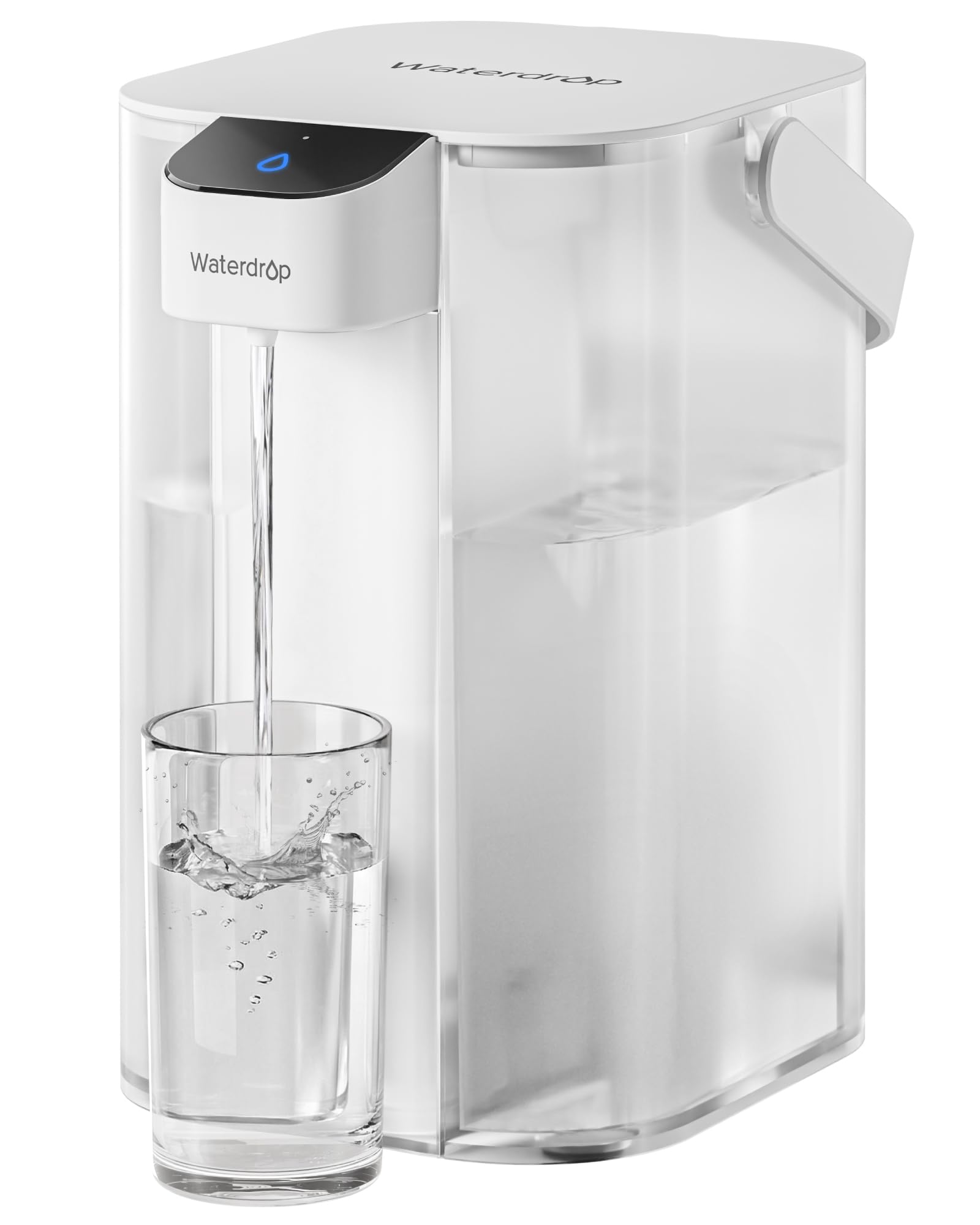
The Waterdrop ED01W breaks away from the manual pitcher mold — it is a rechargeable electric dispenser that pours filtered water at the touch of a button. With a 15-cup (200-gallon) capacity and NSF/ANSI 42, 53, 401, and 372 certifications, it reduces 99.6% of lead and over 45 different impurities. The electric pump means you do not tilt or lift a heavy pitcher; perfect for anyone with limited wrist strength or arthritis.
Unlike the ZeroWater system, the ED01W does not lower TDS. It preserves the natural mineral content while removing chlorine, lead, and other contaminants. This results in water that still has a rounder mouthfeel. The filter lasts approximately 200 gallons before needing a swap, which is about three months for an average household.
The unit runs on a rechargeable battery, so it needs to be plugged in every few weeks. The plastic build feels sturdy but is not as premium as glass or stainless alternatives. If you prioritize convenience and want a low-effort dispensing experience with certified contaminant reduction, this electric pitcher delivers consistently.
Why it’s great
- Electric dispensing with rechargeable battery eliminates tilting heavy pitchers
- NSF/ANSI 42&53&401&372 certified for lead and 45+ impurities
- Preserves beneficial minerals while removing harmful contaminants
Good to know
- Battery requires periodic recharging every few weeks
- Plastic body does not match the aesthetic of glass alternatives
3. SimPure V7 Under Sink Water Filter System

The SimPure V7 tucks completely under your sink and connects directly to the cold water line with no drilling required. It uses a five-stage filtration process with double sediment membranes, KDF-55, and double activated carbon to reduce lead, chlorine, bad tastes, and odors. The flow rate hits 1.6 gallons per minute, which is faster than most pitcher systems and keeps up with filling pots and kettles without waiting.
At 20,000 gallons of rated capacity, the filter lasts about 12 months for an average family. The housing is made from 304 food-grade stainless steel rather than plastic, so there is no risk of cracking or leaking over time. SimPure has been serving the US market since 2006, which adds some confidence that replacement filters will stay available.
The system does not lower TDS, meaning it leaves beneficial mineral content intact. If you are specifically looking to strip everything down to zero TDS, this is not the right choice. Installation takes about three minutes if you have standard 3/8-inch or 1/2-inch supply lines, and it includes the converter fittings in the box. For renters who cannot modify plumbing, this is a solid fit.
Why it’s great
- Three-minute installation with no drilling required — ideal for renters and apartments
- 304 food-grade stainless steel housing resists leaks and corrosion better than plastic
- 1.6 GPM flow rate keeps up with cooking and filling without delay
Good to know
- Does not reduce TDS — preserves minerals rather than stripping them
- Only filters the kitchen sink line; requires separate unit for fridge or ice maker
4. Clearly Filtered Filtered Water Pitcher
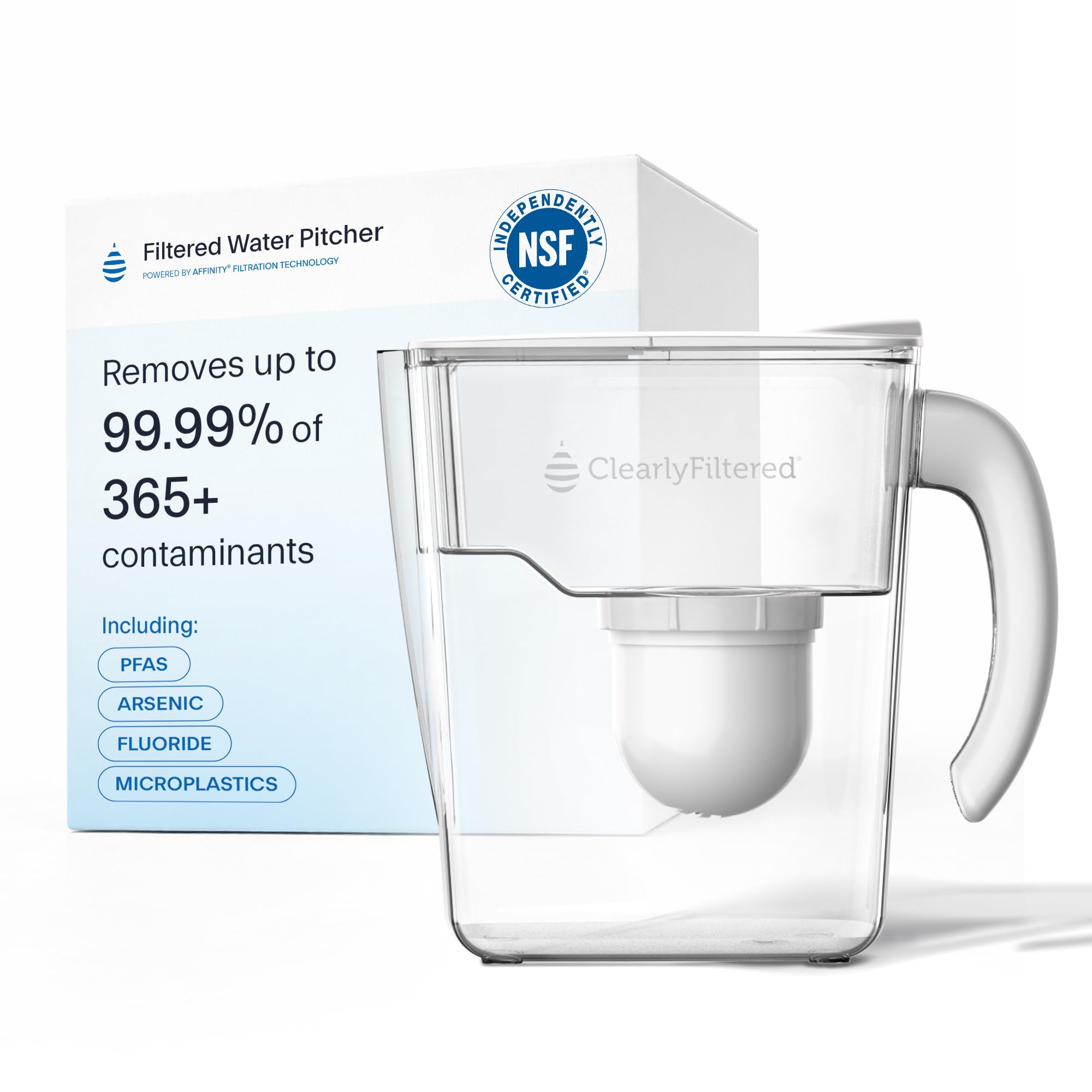
The Clearly Filtered pitcher targets an industry-leading 365+ contaminants, including fluoride, PFAS, lead, chlorine, and microplastics. NSF certification backs those claims, which puts it ahead of many pitcher brands that test only a few common pollutants. The 80-ounce (10-cup) capacity fits well on a countertop and the BPA/BPS-free construction means the plastic does not leach its own chemicals into the filtered water.
What sets this pitcher apart is the filter media depth. Most standard carbon-block pitchers use a single stage; Clearly Filtered uses a three-stage proprietary media blend that traps both chemical and microbial particles. That extra stage directly translates to broader contaminant reduction but also creates more resistance, so the filtration rate is slower than a standard Brita or Pur.
Filter replacements are more expensive than typical pitcher cartridges — roughly double the cost. However, the longer certified list of reduced contaminants means you are paying for verified performance rather than marketing puffery. For households concerned about PFAS and fluoride specifically, this pitcher justifies its higher ongoing cost.
Why it’s great
- Targets 365+ contaminants with independent NSF certification — rare for a pitcher
- Three-stage media reduces PFAS, fluoride, lead, and microplastics simultaneously
- BPA/BPS-free plastic body avoids secondary chemical leaching
Good to know
- Filtration rate is slower than standard carbon pitchers due to denser media
- Replacement cartridges cost about twice as much as basic pitcher filters
5. Aarke Purifier Premium Glass and Stainless Steel Pitcher

The Aarke Purifier is a design-first water filter pitcher made from glass and stainless steel that sits on your countertop like a piece of kitchen sculpture. The 2.8-liter total capacity with 1.66 liters of filtration capacity is smaller than plastic pitchers, but the refillable filter granules let you customize the media — you can add activated carbon, ion-exchange resin, or other media depending on your local water chemistry.
Unlike sealed cartridge systems, the Aarke uses loose granules that you replace yourself. This means you control exactly what goes into the filter, but it also means more hands-on maintenance. The glass body does not absorb odors or stain over time, and the stainless steel spout dispenses smoothly without dripping. Aarke is best known for its carbonation machines, so the build quality expectation is high.
The trade-off is clear: this pitcher costs significantly more than comparable plastic pitchers, and the refillable granule system requires more effort than snapping in a pre-made cartridge. If you value aesthetics and want a filter that does not scream “kitchen appliance,” the Aarke delivers. It is not the most practical for large families, but for a single person or couple who wants a beautiful countertop piece, it works beautifully.
Why it’s great
- Glass and stainless steel construction looks premium and resists staining and odors
- Refillable granules allow customization of filter media for specific water chemistry
- Smooth, drip-free pouring from stainless steel spigot
Good to know
- High upfront investment compared to standard plastic pitchers
- Smaller filtration capacity (1.66L) requires frequent refills for larger households
6. DREO Reverse Osmosis Water Filter Countertop
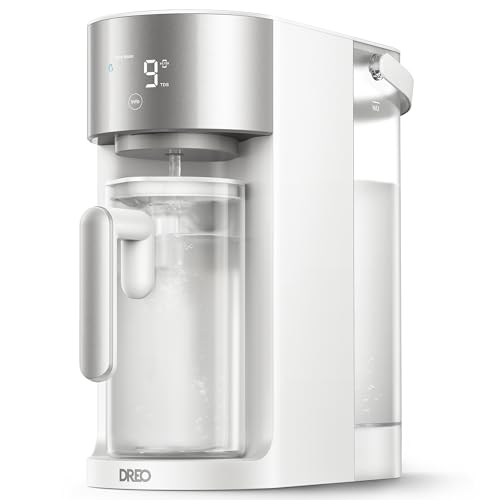
The DREO countertop RO system delivers water that tests near zero on the TDS meter by forcing water through a 7-in-1 RO membrane that removes up to 99.99% of impurities including PFOA, PFOS, chlorine, and fluoride. It sits on your countertop with no plumbing required — just plug it in and it starts filtering. The 3:1 pure-to-drain ratio means for every three cups of clean water, only one cup goes to waste, which is efficient for a countertop RO system.
Real-time TDS monitoring on the display shows both raw and pure water readings, so you know exactly what your incoming water looks like versus what you are drinking. The auto-fill sensor refills the 1.1-liter pitcher hands-free, and the self-cleaning system flushes the internal tubes automatically to prevent biofilm buildup. Filter life lasts between 6 and 12 months, and replacement filters cost about 5 per bottle equivalent — cheap compared to buying bottled water.
The slim footprint (14.5 x 6.7 x 13.4 inches) fits smaller counters, but it does require a power outlet nearby. The 3-liter tank plus pitcher suits 1–2 people best; larger families may need to refill more often. If you want true reverse osmosis without hiring a plumber, this is the most practical installation-free solution on the market right now.
Why it’s great
- Installation-free countertop RO with 3:1 pure-to-drain efficiency — no plumber needed
- Real-time TDS monitoring shows raw and pure water readings on the display
- Auto-fill sensor and self-cleaning cycle reduce maintenance significantly
Good to know
- Requires a power outlet and counter space; not suitable for tight kitchens
- 3-liter + 1.1-liter capacity is better suited for 1–2 person households
7. Express Water Whole House Water Filter System

The Express Water Whole House system installs at your main water line and filters every tap in your home — kitchen, bathroom, showers, and ice maker. Its three-stage process uses a 5-micron sediment filter to catch dirt and silt, followed by granular activated carbon to reduce chlorine taste and sulfur smell, and a final activated carbon block for polishing. The stainless steel bracket and pressure gauges give it a professional-grade feel that stands up to long-term use.
With a 100,000-gallon capacity, the filters need replacement every 6 to 12 months depending on your water quality and household consumption. At 0.25 gallons per second (45–80 PSI), the flow rate is adequate for simultaneous use in a medium-sized home but may drop noticeably if you try to run the washing machine and shower at the same time. The system does NOT reduce TDS, so if you want mineral-stripped RO water at every tap, you will need a separate under-sink RO unit for drinking.
Installation requires cutting into your main water line and fitting 1-inch connections — it is not a beginner DIY project unless you are comfortable with basic plumbing. NSF-certified filters add peace of mind, and the system works well with a water softener installed downstream. For homeowners who want better-tasting shower water and protected appliances without buying bottled water, this is the complete solution.
Why it’s great
- Filters water for the entire home — every faucet, shower, and appliance benefits
- 100,000-gallon capacity means filter changes only once or twice a year
- Heavy-duty stainless steel bracket and pressure gauges for system monitoring
Good to know
- Requires cutting into main water line with 1-inch fittings — moderate plumbing skill needed
- Does not lower TDS; you still need an RO system for zero-mineral drinking water
FAQ
What is the difference between a carbon block filter and a reverse osmosis system for home drinking water?
How often should I replace the filter cartridge in my drinking water pitcher?
Does a drinking water filter remove fluoride?
Can I install an under-sink water filter myself without a plumber?
Final Thoughts: The Verdict
For most users, the drinking water filter for home winner is the ZeroWater 32-Cup Dispenser because it combines IAPMO-certified five-stage filtration with a built-in TDS meter that takes the guesswork out of filter life, all at a price that undercuts premium pitchers with fewer stages. If you want a no-plumbing reverse osmosis solution that achieves near-zero TDS without drilling or soldering, grab the DREO Countertop RO System. And for whole-home chlorine and sediment protection that benefits every shower and faucet, nothing beats the Express Water Whole House System.