The quiet crackle of a clay pot over a gas flame is the only sound you need to hear. A donabe rice cooker isn’t an appliance—it’s a ceramic vessel that transforms raw grains into fluffy, sweet-tasting rice through gentle steam and even heat distribution. This ancient Japanese method locks in moisture and releases starches at a rate that electric cookers simply cannot match, producing individual, non-mushy kernels with every batch.
I’m Mohammad Maruf—the founder and writer behind AirfryerBite. I’ve spent years analyzing the thermal properties of ceramic earthenware, comparing glaze compositions, and studying how different clay bodies from the Banko and Iga regions affect heat retention and moisture release during the rice cooking cycle.
After reviewing seven distinct models ranging from compact single-serving pots to large family-sized vessels, this guide breaks down the material science and real-world performance of each. This is your complete resource for finding the best donabe rice cooker that matches your stove and your serving needs.
How To Choose The Best Donabe Rice Cooker
Choosing a donabe isn’t like picking an electric rice cooker. You are selecting a piece of handmade pottery that will live on your stovetop and then move to your dining table. Three factors determine whether it serves you for decades or cracks after the first use: the clay origin, the lid construction, and the capacity relative to your household size.
Clay Origin and Firing Temperature
Japanese family-run kilns have refined their clay bodies for generations. Banko ware from Mie Prefecture—used by Ginpo—is known for its dense, fine-grained ceramic that heats evenly and holds moderate thermal mass. Iga ware, the material used in Nagatani Seitou’s kamado-san, is coarser and porous, acting like a moisture sponge that wicks excess steam away. This porosity prevents the rice from becoming gluey. For a beginner, Banko ware is more forgiving; Iga ware rewards precision but delivers a superior, distinct grain separation.
Double Lid vs. Single Lid Construction
A single lid works for slow braises and stews, but a double lid is the defining feature of a proper Japanese rice donabe. The inner lid sits directly on the rice, trapping steam and creating pressure that pushes moisture into the grain. The outer lid seals the pot and prevents condensation from dripping back onto the rice, which can create mushy spots. Every serious rice cooker on this list uses a double-lid design. If you see a single-lid pot marketed as a rice cooker, it will produce inconsistent results unless you carefully adjust the heat manually.
Capacity Matching Your Stove and Table
Donabe sizes are measured in liters or fluid ounces and correspond to the number of raw rice cups they can cook. A 0.89-liter No. 6 pot cooks exactly one cup of dry rice—perfect for a single person. A 2.1-quart model serves two to three people. A 4,000 cc No. 10 pot feeds four to five. Match the capacity to your burner width as well: a 12-inch pot on a small burner will create uneven heat zones. Measure your largest burner’s grate diameter before ordering a wide donabe.
Quick Comparison
On smaller screens, swipe sideways to see the full table.
| Model | Category | Best For | Key Spec | Amazon |
|---|---|---|---|---|
| Nagatani Seitou Kamado-san | Premium | Fluffiest grain separation | Double lid + Iga clay, 1.5L | Amazon |
| Ginpo Banko Chrysanthemum Double Lid | Mid-Range | Traditional double-lid rice | 1.8L double lid, Banko ware | Amazon |
| Kotobuki Donabe Hot Pot | Premium | Group hot pot meals for 4-5 | 11-inch diameter, 100 fl oz | Amazon |
| Ginpo Flower Mishima No. 10 | Premium | Large family earthenware | 4,000 cc, serves 4-5 people | Amazon |
| lake tian 2.1QT Ceramic Pot | Mid-Range | Versatile stew & rice combo | 2.1 qt, anti-spill rim, glazed | Amazon |
| lake tian 3.4QT Flower Pot | Mid-Range | Larger batch bibimbap & soup | 3.4 qt, dishwasher safe | Amazon |
| Ginpo Chrysanthemum No. 6 Single | Budget-Friendly | Solo rice cooker starter | 0.89L, one-cup capacity | Amazon |
In‑Depth Reviews
1. Nagatani Seitou ACT-01 Hase-en Kamado-san
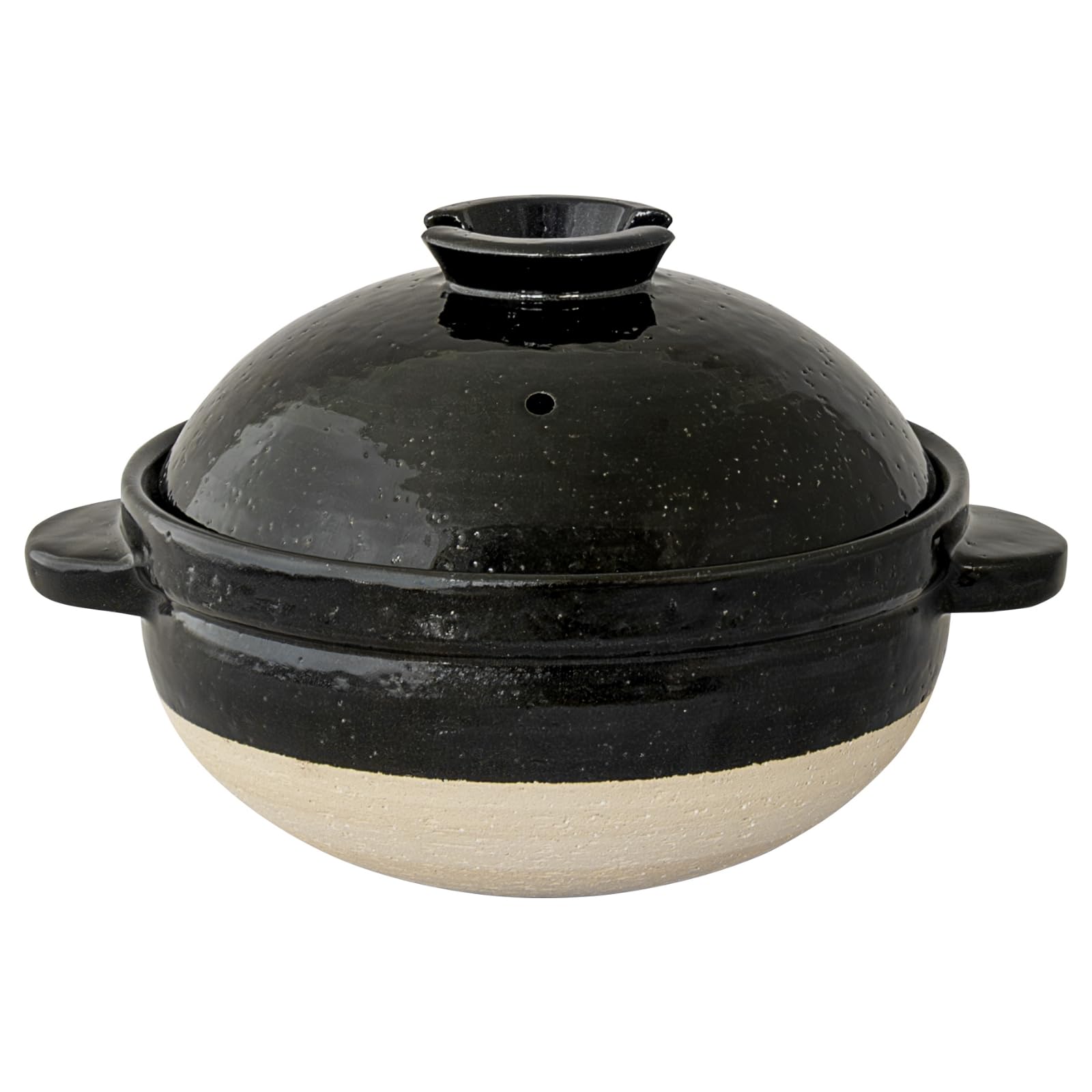
This kamado-san (stove-top rice cooker) from Nagatani Seitou is the closest you can get to a traditional Japanese kamado without building a wood-fire hearth. The body is made from porous Iga clay, which absorbs and releases steam in a way that prevents the rice from becoming sticky. The double-lid construction is specifically engineered for pressure cooking: the inner lid traps steam, the outer lid seals it, and a measured 20-minute steaming period after the boil produces rice with distinct, non-clumping grains.
At 1.5 liters, this donabe cooks three to four cups of dry rice, making it ideal for a family of four. The included rice scoop and recipe guide are thoughtful, but the real draw is the coarse clay texture. Beginners may have a learning curve with heat control because Iga ware heats up slower than glazed Banko ware, but the reward is rice that tastes noticeably sweeter and more aromatic.
The weight is substantial at 8.8 pounds—this is a thick-walled vessel, not a delicate ceramic. Make sure your burner grate is sturdy enough to support the weight when full. The black, unglazed finish absorbs heat efficiently but will develop a patina over time. This pot is made in Japan with no lead or cadmium in the clay body.
Why it’s great
- Porous Iga clay prevents gluey rice
- Double-lid pressure design for fluffy grains
- Includes rice scoop and recipe guide
Good to know
- Heavy at 8.8 pounds
- Longer heat-up time due to thick clay walls
- Price reflects premium handcrafted construction
2. Ginpo Pottery Chrysanthemum Double Lid Rice Pot

Ginpo’s double-lid Chrysanthemum pot is the most accessible entry point into authentic Japanese rice cooking. Made from Banko ware—a fine-grained ceramic fired at high temperatures in Mie Prefecture—this pot includes separate inner and outer lids that create a self-basting environment. The inner lid rests on the rice, distributing steam evenly across the surface. The outer lid seals the chamber, preventing condensation from falling onto the grains and turning them mushy.
The capacity is 1.8 liters, enough for three cups of dry rice. The lapis blue glaze is painted by hand, giving each pot a unique gradient. Polished finish makes the exterior easy to wipe down after use. As with all unglazed interiors on the lids, you should soak the pot for an hour before first use to saturate the pores and prevent cracking.
One practical advantage of Banko ware over Iga ware is its faster heat response. On a gas flame, this pot reaches a simmer in about 8 minutes. The thermal shock resistance is solid, but you should still avoid placing the hot pot directly on a cold countertop. Made in Japan, lead and cadmium free.
Why it’s great
- Authentic double-lid rice cooking design
- Easy to clean polished glaze
- Fast heat-up on gas stovetops
Good to know
- Requires pre-soaking before first use
- No recipe guide included
- Lid knobs get hot—use a potholder
3. Kotobuki Donabe Japanese Hot Pot

The Kotobuki donabe is a social cookware piece—designed for shared meals where the pot stays on the table. With an 11-inch diameter and 100 fluid ounce capacity, this earthenware vessel serves four to five people comfortably. The painted brown exterior with a forest green accent gives it an earthy, rustic look that suits a communal dining table.
Be aware that this model does not include a lid and is not designed specifically for rice cooking. It is a hot pot vessel meant for simmering broths, vegetables, and proteins. If your primary goal is jasmine or sushi rice, the lack of a lid makes it unsuitable because steam escapes too quickly to cook the grains evenly. However, for nabe (hot pot) enthusiasts or those who want to serve a one-pot meal directly from the stove, this is the most capacious option on the list.
Handcrafted in Japan, the Kotobuki is oven safe and suitable for stovetop use. The weight is manageable at 6.4 pounds. Some users pair this with a portable butane stove (sold separately) to cook tableside. The earthenware develops a beautiful patina after repeated use but requires careful seasoning.
Why it’s great
- Large capacity for group dining
- Rustic handcrafted aesthetic
- Works with portable butane stoves
Good to know
- No lid—unsuitable for rice cooking
- Requires seasoning before use
- Not stackable for storage
4. Ginpo Flower Mishima Earthenware Pot No. 10

The No. 10 Ginpo Flower Mishima is the largest pure earthenware cooking vessel on this list. With a 4,000 cc capacity (approximately 4.2 quarts), it handles five to six cups of dry rice, making it the strongest pick for large families or meal preppers who want to batch-cook rice for the week. The gray polished finish with flower Mishima patterning is understated enough for a dinner table centerpiece but durable enough for daily stovetop use.
Like all Ginpo products, this is made from Banko ware in Mie Prefecture. The clay body is dense and heat-retentive, which means the pot stays hot for a long time after being removed from the burner. This residual heat works for steaming after the boil, but you must account for it or risk overcooking the bottom layer of rice. The polished finish resists exterior stains better than unglazed options.
The physical footprint is significant—13.4 inches deep by 12.2 inches wide—so measure your stove grate before purchasing. The pot is oven safe and works on gas, electric, and ceramic cooktops. No inner lid is included, so for best rice results you should use a homemade aluminum foil lid under the main ceramic lid to trap pressure.
Why it’s great
- Largest capacity—feeds 4-5 people easily
- High thermal mass for residual steaming
- Resistant polished finish
Good to know
- No included inner lid for rice
- Large dimensions may not fit all burners
- Heavy footprint at 7.5 pounds
5. lake tian Ceramic Cooking Pot 2.1QT
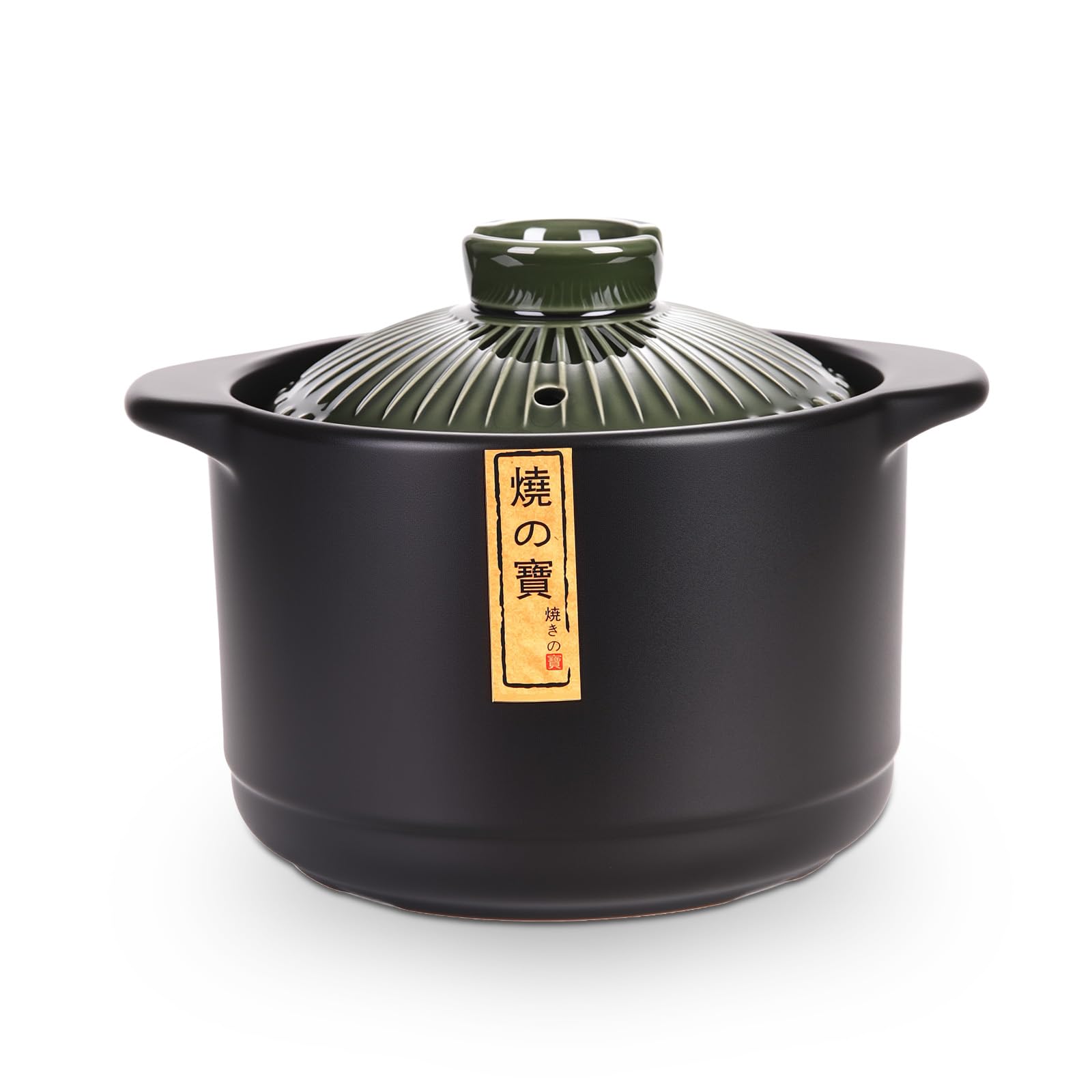
The lake tian 2.1-quart ceramic pot is a mid-range workhorse that straddles the line between a traditional donabe and a Western casserole dish. The fully glazed interior means this pot is effectively non-stick and dishwasher safe—a convenience that purist donabe users may scoff at but that every home cook will appreciate. The snug-fitting green lid includes a small steam hole and a raised rim that prevents bubbling over.
Customer feedback consistently notes the non-stick performance: rice does not cling to the glazed surface even without heavy oiling. The 2.1-quart size cooks two to three cups of dry rice, making it a strong candidate for a couple or small family. Users have also repurposed it for hot pot and beef soup with success, noting that food stays hot longer than in stainless steel pots.
One reported case of cracking exists in the review history, which may reflect thermal shock from rapid temperature changes. To prevent this, always warm the pot gradually over low flame before increasing heat. The pot is oven safe up to moderate temperatures and works on gas, electric, glass, and ceramic cooktops. Made from lead-free ceramic.
Why it’s great
- Fully glazed non-stick interior
- Dishwasher safe for easy cleanup
- Anti-spill lid design works well
Good to know
- Risk of cracking if heated too fast
- Not a traditional unglazed donabe
- Only available in one green color
6. lake tian 3.4QT Flower Pattern Ceramic Pot
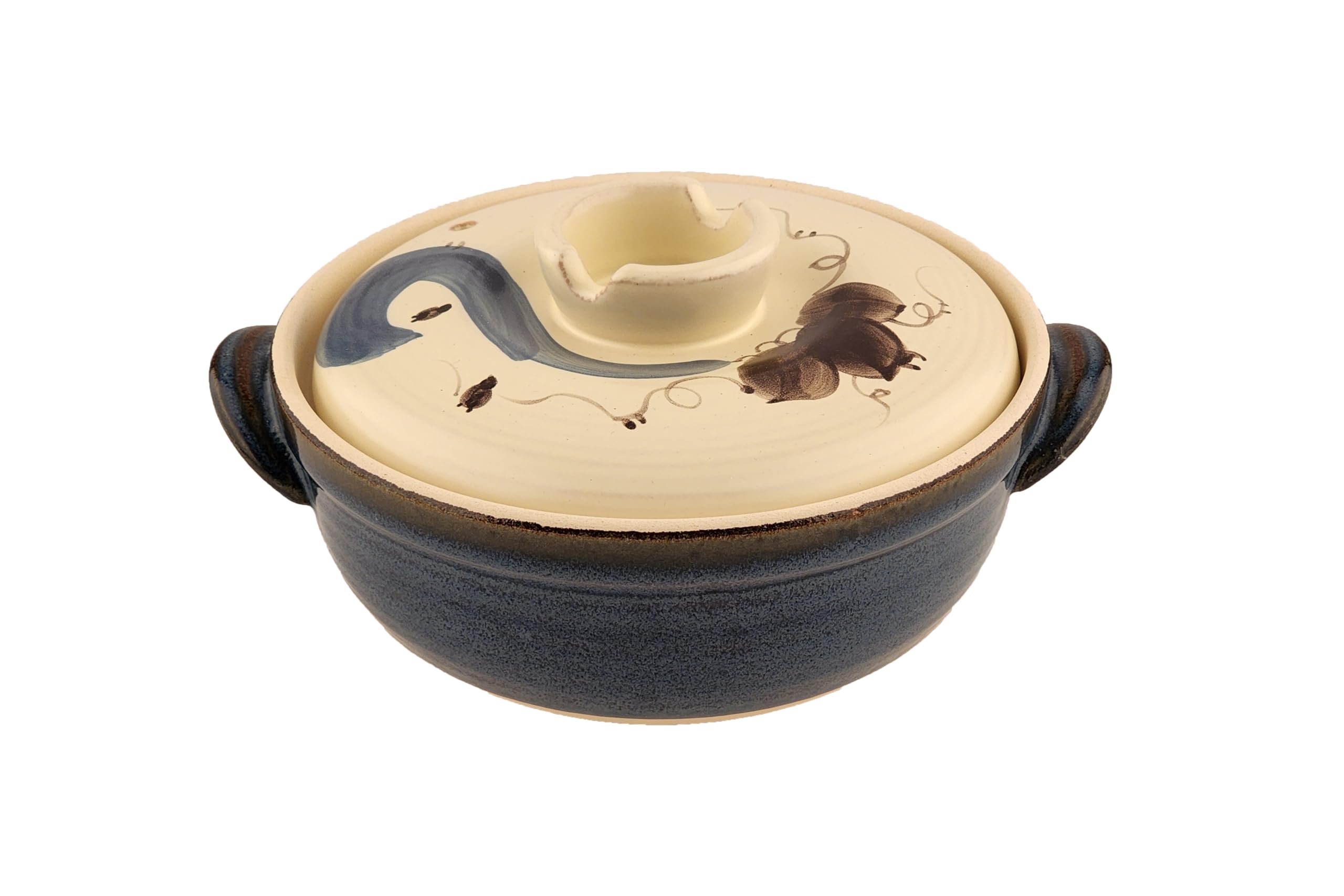
The 3.4-quart flower pattern pot from lake tian is the larger sibling to the 2.1QT model, offering 3.2 liters of cooking volume. The white ceramic body with painted floral motifs makes it a table-friendly serving vessel. The stainless steel lid knob is heat resistant and easy to grip, a thoughtful upgrade from ceramic knobs that become dangerously hot.
This pot is marketed as a Chinese-style clay casserole, and it handles multiple cooking methods: gas, electric, glass, ceramic, halogen, and oven. The manufacturer claims high thermal shock resistance, but as with any ceramic, you should avoid slamming the hot pot into cold water. The smooth, non-absorbent surface prevents food residues from sticking, and the pot is dishwasher safe per the specifications.
For rice cooking, the single lid design means you need to manually adjust the heat more carefully than with a double-lid donabe. Without an inner lid, the steam has a single escape route through the small hole in the top, which works fine for jasmine rice but may require a 5-minute rest period for short-grain sushi rice to absorb fully. The 3.4-quart capacity is enough for four to five cups of dry rice.
Why it’s great
- Large batch for family meals
- Heat-resistant steel lid knob
- Stain-resistant glazed finish
Good to know
- Single lid—no inner pressure cap
- Hand painted designs may vary
- Not a traditional Japanese donabe shape
7. Ginpo Chrysanthemum No. 6 Single Person Pot

The Ginpo Chrysanthemum No. 6 is specifically proportioned for one cup of dry rice, making it the most compact donabe on the list. The 0.89-liter capacity is designed for single-person households or as a side pot for preparing rice while your main dish cooks elsewhere. The lapis blue glaze is the same hand-painted finish found on Ginpo’s larger models, delivering a premium aesthetic in a small package.
This pot uses the same Banko ware clay body and is oven and stovetop safe. The simple cooking instructions are printed on the box: fill with 200 cc of water per rice cup, bring to a boil over medium heat, and turn off the fire when steam is visible. The residual heat finishes the cooking in about 30 minutes. The earthenware construction retains heat very efficiently, so the rice stays warm at the table for an extended period.
The single-person size means this is not a multi-purpose vessel. You cannot cook a stew or large batch of soup in it. The painted finish also requires gentle handling; abrasive scrub pads will wear down the glaze over time. For a solo cook who wants fluffy Japanese rice without investing in an electric cooker, this is the most space-efficient choice.
Why it’s great
- Perfect single-serving rice size
- Hand-painted lapis blue glaze
- Simple cook-and-steam method
Good to know
- Too small for soups or stews
- Painted finish requires gentle cleaning
- Single lid—no double-lid pressure
FAQ
Can I use a donabe rice cooker on an induction cooktop?
Why does my donabe crack after the first use?
What is the best rice-to-water ratio for a double-lid donabe?
Final Thoughts: The Verdict
For most users, the best donabe rice cooker winner is the Nagatani Seitou Kamado-san because its Iga clay body and double-lid pressure construction produce the fluffiest, most distinct rice grains without an electric cord. If you want a traditional double-lid design at a mid-range price, grab the Ginpo Chrysanthemum Double Lid. And for a budget-friendly entry into solo rice cooking, nothing beats the Ginpo Chrysanthemum No. 6 Single Person Pot.