The gently bubbling sound of a simmering broth inside a porous clay vessel is the quiet architecture of deeply flavored Japanese home cooking. Unlike metal cookware that conducts heat with aggressive speed, a donabe’s earthen walls absorb, store, and release heat in a slow, enveloping wave that transforms simple ingredients into something profoundly tender.
I’m Mohammad Maruf — the founder and writer behind AirfryerBite. I’ve spent years analyzing the thermal properties of ceramic cookware, from thermal shock resistance ratings to the specific porosity that defines authentic Banko ware versus mass-produced glazed alternatives.
This guide breaks down the nine most compelling options on the market right now, from compact rice pots to large family-sized stew vessels. Whether you are new to clay pot cooking or upgrading from a basic model, choosing the right donabe pot comes down to understanding heat retention, capacity, and material composition rather than just brand recognition.
How To Choose The Best Donabe Pots
Choosing a donabe is not like buying a stainless steel stockpot. The material itself — porous earthenware or high-fired ceramic — dictates how heat moves through your food. A mismatch between pot size, lid type, and your primary cooking method will produce mediocre results regardless of brand prestige.
Capacity and Portion Fit
Donabe capacity is measured in liters or quarts, but the real consideration is how many people you typically serve. A 1.1-liter pot works well for cooking rice for two, while a 4.4-liter pot handles a full shabu-shabu dinner for four to six. Oversizing leads to shallow liquid levels that evaporate too quickly; undersizing forces overcrowding that prevents proper heat circulation.
Lid Construction: Single vs. Double
Single lids are standard for stews and hot pots where some steam escape is desirable. Double-lid designs, common in specialized Japanese rice donabe, trap steam more effectively and create a self-basting environment that yields evenly cooked grains with a fluffy texture. If you plan to cook rice frequently, a double-lid pot justifies the investment.
Glazed vs. Unglazed Interiors
A fully glazed interior is easier to clean, resists staining, and does not require seasoning. Unglazed clay, however, absorbs moisture and releases it during cooking, creating a humid environment that enhances flavor concentration. The trade-off is maintenance — unglazed pots need thorough drying and are more prone to cracking if heated too quickly.
Quick Comparison
On smaller screens, swipe sideways to see the full table.
| Model | Category | Best For | Key Spec | Amazon |
|---|---|---|---|---|
| Kotobuki Donabe Japanese Hot Pot | Premium | Family hot pot meals | 90 fl oz / 10-inch diameter | Amazon |
| Ginpo Double Lid Rice Pot (B01KJ83QHG) | Premium | Perfect stovetop rice | 1.8L / Double lid design | Amazon |
| Ginpo Chrysanthemum Rice Pot (B0D1FYPFY5) | Premium | Small batch rice cooking | 1.1L / Lapis glaze | Amazon |
| Ceramic Cooking Pot 4.2L (Blue) | Mid-Range | Large stews and casseroles | 4.4QT / Lead-free ceramic | Amazon |
| Heavy Duty Claypot by Souped Up Recipes | Mid-Range | Everyday soups and congee | 4.5QT / Heavy-duty porcelain | Amazon |
| Ginpo Banko Ware No. 8 (Deep Pot) | Mid-Range | Traditional Japanese nabe | 2.2L / Handcrafted in Japan | Amazon |
| Natural Terracotta Casserole 3.6QT | Budget | Unglazed clay cooking | 3.6L / Unglazed terracotta | Amazon |
| Dezin 5-QT Divided Shabu Shabu Pot | Budget | Dual-broth hot pot parties | 5QT / Nonstick divided pot | Amazon |
| Ceramic Cooking Pot 2.1QT (Green) | Budget | Small meals for 1-2 people | 2.1QT / Glazed ceramic interior | Amazon |
In‑Depth Reviews
1. Kotobuki Donabe Japanese Hot Pot

The Kotobuki Donabe hits the sweet spot between traditional craftsmanship and practical family-sized cooking. Its 10-inch diameter fits a standard tabletop burner perfectly, allowing you to serve a bubbling nabe directly from pot to bowl without transferring vessels. The earthy brown finish with forest green accents gives it a rustic yet refined look that complements any dinner spread.
At 90 fluid ounces, this pot holds enough broth and ingredients for three to four people, making it ideal for winter hot pot sessions or leisurely simmered chicken and vegetable dishes. The ceramic construction retains heat remarkably well, keeping food warm even after the flame is off. Handcrafted in Japan, the quality of the glaze application and the even wall thickness are immediately noticeable compared to mass-produced alternatives.
One trade-off is the weight — at 5.5 pounds, it is heavier than a similarly sized glazed ceramic pot, but that heft translates directly into superior heat stability. This is not a pot you want to move while full, but it is a pot that will reward patient, slow cooking with deeply concentrated flavors.
Why it’s great
- Authentic handcrafted Japanese construction with even wall thickness
- Generous 10-inch diameter for family hot pot meals
- Excellent heat retention keeps food warm at the table
Good to know
- Heavier than glazed ceramic pots of similar capacity
- Limited color options — only the brown/green finish is available
2. Ginpo Pottery Chrysanthemum Flower Earthenware Rice Pot (B01KJ83QHG)

Ginpo is a household name in Japanese earthenware, and this double-lid rice pot exemplifies why serious home cooks gravitate toward this brand. The dual-lid system creates an internal steam loop that produces rice with individual, separate grains rather than the clumpy texture common in single-lid pots. The lapis blue glaze is visually striking without being distracting.
The 1.8-liter capacity comfortably cooks two to three cups of raw rice, which translates to roughly four to six servings. The inner lid sits directly on the rice, while the outer lid seals the pot, mimicking the steam management of a traditional kamado. Experienced users note that the water level markings on the interior wall help eliminate guesswork after a few practice runs.
This pot requires a gentler learning curve than cheaper alternatives — you must start with cold water and gradually increase heat to avoid thermal shock. Once mastered, the results rival high-end electric rice cookers. The smooth interior glaze makes cleanup straightforward, unlike unglazed clay pots that demand careful drying.
Why it’s great
- Double-lid design produces consistently fluffy, separate grains
- Glazed interior is easy to clean and stain-resistant
- Trusted Ginpo craftsmanship with genuine Banko ware heritage
Good to know
- Requires careful heat management — no rapid temperature changes
- Water level markings can be difficult to see in low light
3. Ginpo Chrysanthemum Flower Rice Pot (B0D1FYPFY5)

This smaller Ginpo pot is purpose-built for the single person or couple who wants perfectly cooked rice without the bulk of a full-sized donabe. The chrysanthemum flower motif on the lid adds a decorative touch that makes this pot suitable for bringing directly to the table as a serving vessel. The double-lid configuration mirrors its larger sibling, delivering similar steam retention in a more compact footprint.
At 1.1 liters, it holds approximately one to two cups of raw rice, enough for two to four side servings. The thick walls provide excellent heat distribution, but some users note that achieving a crispy bottom crust, or okoge, is more difficult compared to single-lid pots because the double lid retains too much moisture. For those who prefer soft, springy rice, this is actually a feature rather than a flaw.
Packaging has been a notable pain point — several buyers reported the pot arrived damaged due to insufficient padding in the outer box. If you order this unit, inspect it immediately upon delivery. Inside Japan, this pot is a staple; international shipping adds risk.
Why it’s great
- Ideal 1.1L size for singles or couples
- Double-lid design produces soft, evenly cooked rice
- Beautiful chrysanthemum motif suitable for table service
Good to know
- Fragile packaging increases risk of breakage during shipping
- Not ideal for achieving crispy rice crust
4. Ceramic Cooking Pot – Blue 4.2L/4.4QT

This large ceramic pot from lake tian bridges the gap between authentic Asian clay cookware and modern durability expectations. At 4.4 quarts, it is large enough for a substantial chicken stew or a multi-vegetable hot pot for four people. The lead-free, non-toxic ceramic construction provides peace of mind, and the fully glazed interior resists staining from turmeric-heavy broths or tomato-based sauces.
One standout feature is the thermal shock resistance — this pot can move from stovetop to oven to refrigerator without cracking, provided you avoid extreme temperature swings. The blue painted exterior gives it a cheerful, contemporary look that works on a modern kitchen counter. It is also dishwasher safe, which solves the biggest complaint about traditional unglazed donabe: tedious hand-washing.
The lid knob stays cool enough to grip without a mitt, a small but meaningful detail during busy meal prep. However, the weight of 3.45 kilograms makes it a two-hand carry when full. This is a solid workhorse for anyone who wants the flavor benefits of clay cooking without the fuss of seasoning and hand-drying.
Why it’s great
- Large 4.4QT capacity at a mid-range price point
- Dishwasher safe and stain-resistant glazed interior
- Good thermal shock resistance for multi-appliance use
Good to know
- Heavy when full — requires two hands to move
- Handmade finish means slight cosmetic variations between units
5. Heavy Duty Claypot by Souped Up Recipes

Developed in collaboration with the popular Chinese cooking channel Souped Up Recipes, this clay pot was designed to address specific frustrations with traditional clay pots: fragility, uneven heating, and difficult cleaning. The heavy-duty porcelain body with enamel coating offers the browning performance of a Dutch oven without the weight — at 2.94 kilograms, it is noticeably lighter than cast iron of comparable volume.
Testers report excellent caramelization when searing meat before adding liquid, thanks to the thick walls that hold steady heat. The 4.5-quart capacity handles a whole chicken or a large batch of congee with room to spare. The blue and white painted finish with floral motifs is attractive enough for table service, and the glass lid allows you to monitor cooking progress without lifting the cover and releasing steam.
Customer feedback highlights the exceptional packaging — the pot arrives in a reinforced box with ample cushioning, reducing the risk of shipping damage. Some users note that despite the enamel coating, the clay body is still somewhat brittle, and the pot should be handled with care during washing to avoid chipping the rim.
Why it’s great
- Lighter than cast iron but with similar heat retention
- Enamel coating allows excellent browning and easy cleaning
- Thoughtful packaging reduces breakage risk during delivery
Good to know
- Enamel rim can chip if knocked against hard surfaces
- Not suitable for induction cooktops without a ferromagnetic base
6. Ginpo Banko Ware Earthenware Pot No. 8

This deep pot from Ginpo’s Banko ware line represents the gold standard for traditional Japanese earthenware. The No. 8 size, approximately 2.2 liters, is perfectly proportioned for two to three people, making it a versatile choice for weekday nabe or weekend simmered dishes. The hanamishima pattern — carved floral motifs filled with white slip — gives the pot a handcrafted character that mass-produced alternatives cannot replicate.
The high-fired ceramic body offers robust thermal shock resistance, allowing it to go directly from the refrigerator to a gas flame as long as the heat is introduced gradually. The uncoated interior requires initial seasoning with a starch slurry to seal microscopic pores, a simple process that pays dividends in flavor development over time. The lid fits snugly, minimizing steam loss during long simmering sessions.
One consideration is the price-to-size ratio — this is a premium pot for its capacity. You are paying for artistry and material quality rather than sheer volume. If your priority is traditional aesthetics and provenance, this pot delivers. If you need maximum capacity for your budget, you may want to look at larger glazed options.
Why it’s great
- Authentic Banko ware with hand-carved hanamishima decoration
- Robust thermal shock resistance when heated gradually
- Excellent steam seal from the well-fitted lid
Good to know
- Requires initial seasoning before first use
- Premium price for a relatively modest 2.2L capacity
7. Natural Terracotta Casserole with Lids – 3.6QT
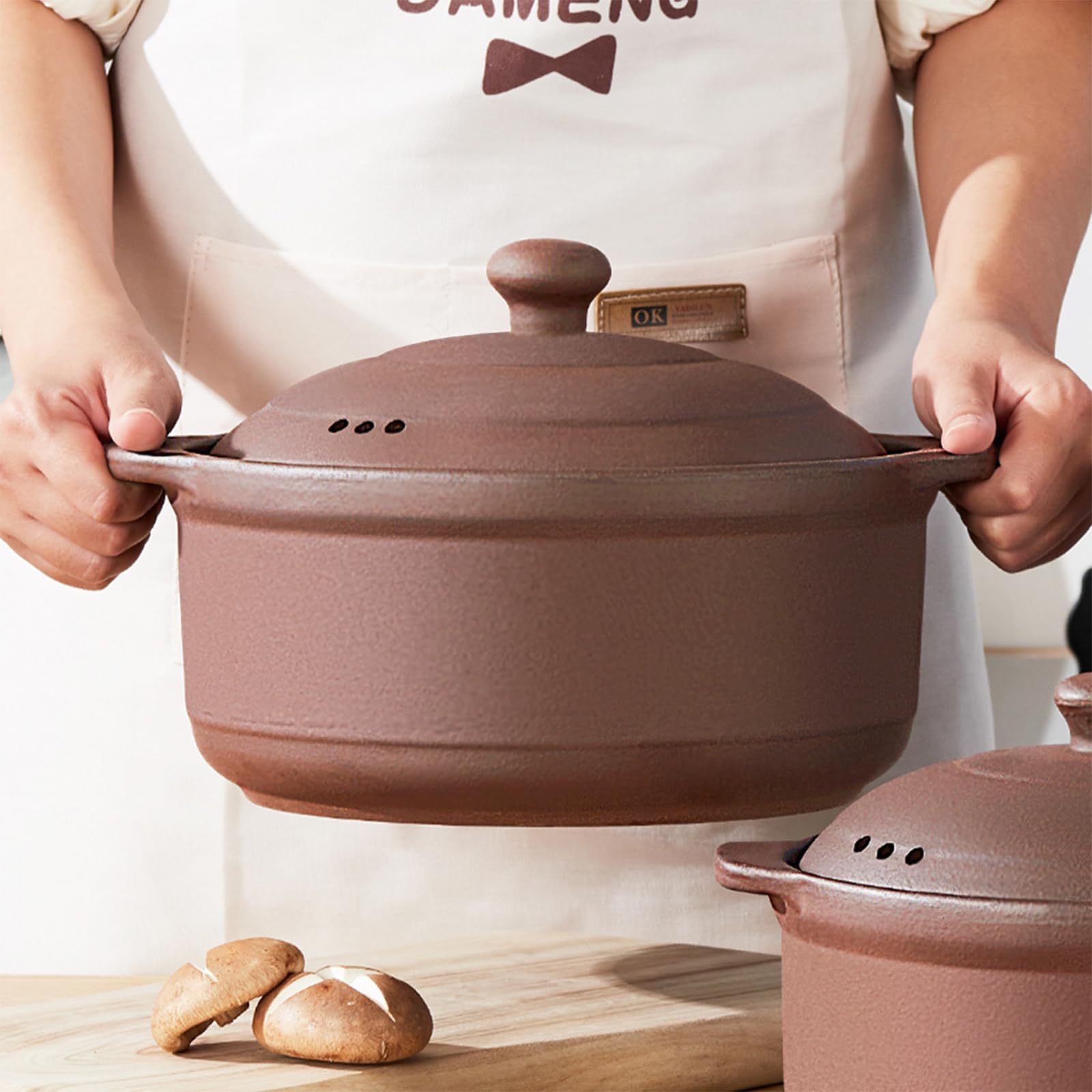
This unglazed terracotta pot appeals to cooks who want the purest possible clay cooking experience without synthetic coatings. The 3.6-liter capacity is large enough for a substantial batch of stew or braised meat, and the raised rim design effectively prevents spillovers during vigorous simmering. The stainless steel lid is a practical touch — unlike ceramic lids, it will not crack if accidentally dropped.
The unglazed interior requires a different approach to maintenance: the pot must be soaked before first use to saturate the clay, then thoroughly dried after each wash to prevent mold growth. Seasoning develops over time as oils and flavors penetrate the porous surface, gradually creating a natural non-stick patina. Proponents argue this yields superior flavor depth compared to glazed pots.
Durability is the main concern here. Customer reports indicate that some units developed circumferential cracks after months of regular use, leading to leakage. The pot also runs small relative to its advertised dimensions — one buyer noted the actual capacity felt closer to a smaller serving vessel. This is best suited for cooks committed to traditional clay care who accept a shorter lifespan in exchange for unadulterated material purity.
Why it’s great
- True unglazed terracotta for maximum flavor absorption
- Stainless steel lid is more durable than ceramic alternatives
- Raised rim reduces stovetop mess from bubbling over
Good to know
- Long-term cracking reports suggest limited lifespan
- Requires thorough drying after each use to prevent mold
8. Dezin 5-QT Double-Flavor Shabu Shabu Pot
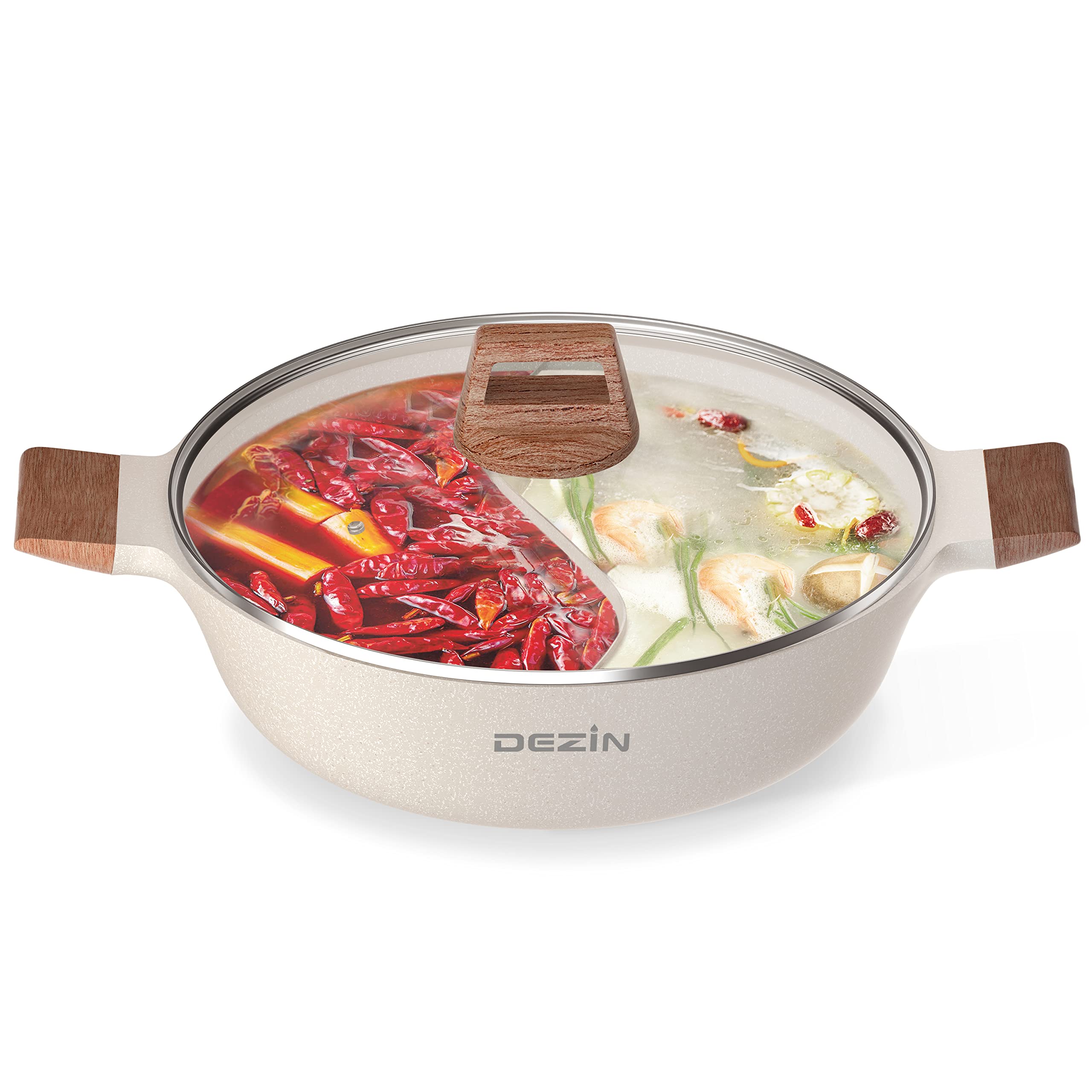
This pot takes a different approach to the donabe tradition by introducing a divided interior that allows you to serve two broths simultaneously — one spicy, one mild — from a single vessel. At 5 quarts, it is the largest option in this lineup and comfortably serves six to eight people for hot pot gatherings. The S-shaped seamless divider prevents broth crossover, which is critical for maintaining distinct flavor profiles.
The die-cast aluminum body with non-stick coating heats quickly and evenly, a departure from the slow, gentle heat characteristic of traditional clay. This makes it better suited for boiling-style cooking like shabu-shabu rather than slow simmering. The tempered glass lid with a steam vent lets you monitor doneness without lifting. The heat-resistant handles stay cool during use, a safety advantage over some clay pots that lack handle insulation.
Purists will note that this is not a true donabe in material or cooking behavior — it is a non-stick metal pot with a divider. It is also not oven-safe due to the aluminum construction. However, for anyone hosting hot pot parties who values dual-broth convenience over traditional clay authenticity, this pot fills that role effectively. The included soup ladle is a nice bonus.
Why it’s great
- Divided interior lets you serve two broths in one pot
- Large 5QT capacity ideal for group hot pot meals
- Non-stick coating simplifies cleanup
Good to know
- Aluminum body is not a traditional clay donabe material
- Not oven-safe — stovetop and induction use only
9. Ceramic Cooking Pot 2.1QT – Authentic Japanese Donabe Clay Pot
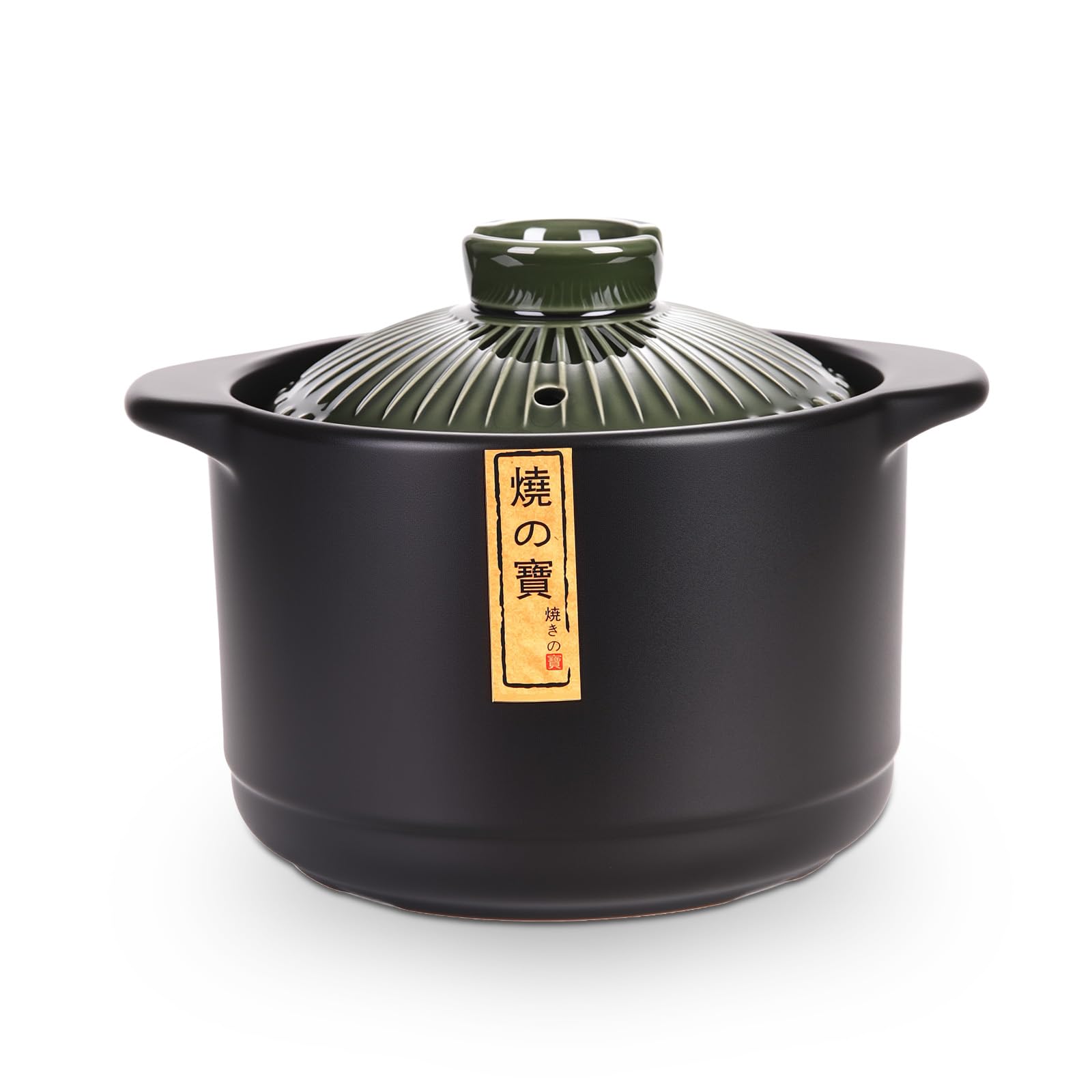
This entry-level donabe from lake tian is an accessible starting point for anyone curious about clay pot cooking without a major financial commitment. The 2.1-quart capacity is proportioned for one to two people, making it suitable for small-batch soups, rice dishes, or individual portions of Japanese curry. The green glazed finish gives it a fresh, modern aesthetic that looks good on a dinner table.
The lead-free, non-toxic ceramic construction is compatible with gas, electric, ceramic, and glass cooktops, as well as oven use. The snug-fitting lid with a small steam hole prevents splattering while trapping enough moisture to keep ingredients tender. The fully glazed interior eliminates the need for seasoning and resists staining, which is a significant convenience advantage over unglazed clay pots.
The compact size and stackable design are practical for small kitchens with limited storage. The main trade-off is the smaller capacity — you cannot cook a whole chicken or a large batch of stew in this vessel. It is specifically a small-batch tool. For an individual or couple seeking an affordable introduction to donabe cooking, this is a low-risk entry point.
Why it’s great
- Compact 2.1QT size ideal for singles or couples
- Glazed interior requires no seasoning and resists stains
- Compatible with multiple cooktop types including induction
Good to know
- Too small for whole chicken or multi-serving stews
- Budget-tier construction may show wear sooner than premium pots
FAQ
Do I need to season a glazed donabe before first use?
Can I use a donabe on an induction cooktop?
Why does my donabe crack after a few uses?
Final Thoughts: The Verdict
For most users, the donabe pot winner is the Kotobuki Donabe Japanese Hot Pot because its 10-inch diameter, handcrafted Japanese construction, and excellent heat retention make it the most versatile option for both family hot pot meals and daily one-pot cooking. If you want precise rice cooking with fluffy, separate grains, grab the Ginpo Double Lid Rice Pot. And for budget-conscious cooks or first-time buyers, nothing beats the Ceramic Cooking Pot 2.1QT as an affordable, low-maintenance entry into the world of clay pot cooking.