A dull blade demands four times the pressure, slips more often, and tears fibrous ingredients instead of slicing them. A diamond sharpening stone fixes that by removing steel fast, laying a crisp apex that holds its bite through dozens of prep sessions.
I’m Mohammad Maruf — the founder and writer behind AirfryerBite. I’ve spent hundreds of hours analyzing electroplated diamond plates, monocrystalline coatings, and grit progressions to understand which stones deliver repeatable edges without cutting corners on durability.
This guide breaks down the real-world difference between a 400/1000 double-sided plate and a three-grit system that takes you to a mirror polish. We’re here to find the best diamond sharpening stone for your specific steel, skill level, and sharpening routine.
How To Choose The Best Diamond Sharpening Stone
Diamond sharpening stones are graded by grit, particle quality, and plate construction. Choosing the wrong combination leads to slow cutting or, worse, scratched blades. Focus on three factors: grit spread, diamond type, and base stability.
Grit Range and Progression
A two-sided 400/1000 plate covers basic repair and everyday sharpening. For a polished edge that slices paper cleanly, a third grit around 1200 or 8000 ceramic refines the scratch pattern. Budget-friendly stones often skip the fine stage, leaving a toothy edge that works fine for axes but not for chef’s knives.
Monocrystalline vs. Polycrystalline Diamond
Monocrystalline diamonds have fewer internal fractures, so they cut aggressively and wear evenly over years of use. Polycrystalline particles break down faster, which reduces cutting speed. Premium stones specify monocrystalline diamond coating; generic listings often omit this detail.
Plate Size and Non-Slip Base
A plate under seven inches long forces you to drag the entire blade across a short surface, making consistent angle maintenance harder. Look for at least a seven-inch length paired with a non-slip silicone or rubber base. A stone that slides mid-stroke will round your edge and frustrate progress.
Quick Comparison
On smaller screens, swipe sideways to see the full table.
| Model | Category | Best For | Key Spec | Amazon |
|---|---|---|---|---|
| Schaaf Tools Diamond Plate | Premium Dual-Grit | Heavy kitchen & woodworking use | 400/1000 grit monocrystalline | Amazon |
| Goodjob GB-3D | Triple-Grit System | Polishing to mirror finish | 400/1000/8000 grit | Amazon |
| SHARPAL 127N | File-Style Stone | Outdoor tools & hatchets | 325/1200 grit + leather strop | Amazon |
| YCAMMIN Double-Sided Plate | Entry Dual-Grit | Budget-friendly kitchen use | 400/1000 grit honeycomb | Amazon |
| SHARPAL 116N Pocket Card | Ultra-Portable | Field sharpening & touch-ups | 325/600/1200 grit dry use | Amazon |
In‑Depth Reviews
5. Schaaf Tools Heavy Duty Diamond Sharpening Stone Set
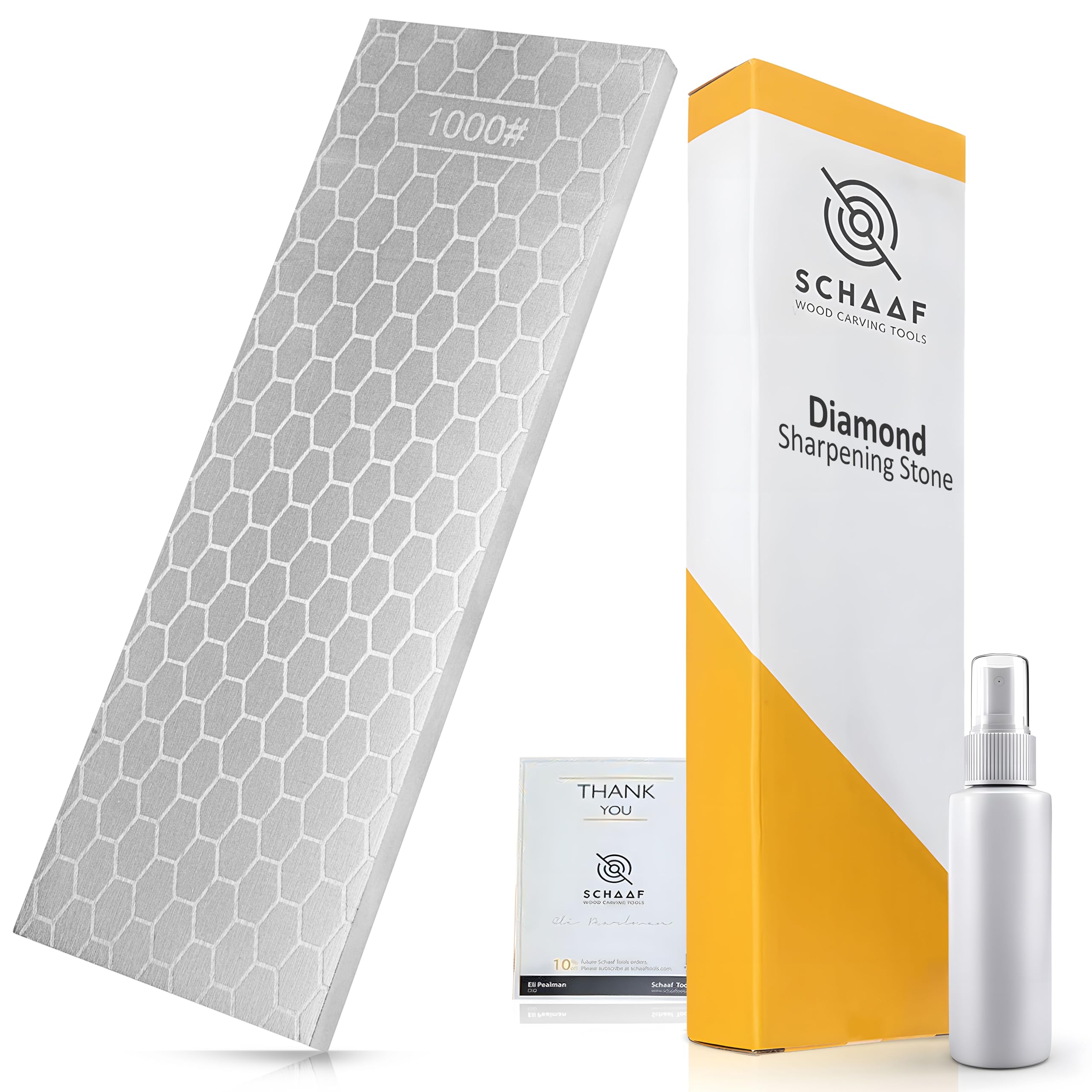
Schaaf Tools uses professional monocrystalline diamond electroplated onto a flat steel plate that won’t dish or hollow like traditional whetstones. The 400 grit coarse side removes metal fast on a chisel or chef’s knife, and the 1000 grit fine side refines the edge to a hair-whittling sharpness. Cutting time is roughly half what you’d expect from a bonded aluminum oxide stone.
The honeycomb pattern on the plate directs swarf away from the cutting zone so you don’t have to stop mid-stroke to wipe the surface. No soaking or oil is required — just a splash of water and you’re sharpening. At eight inches long, it accommodates full-length kitchen blades without repositioning multiple times.
Schaaf includes a beginner-friendly guide that explains angle consistency and burr formation, which reduces the learning curve for first-time users. The lifetime warranty backs a plate that holds its diamond particles through hundreds of sharpenings, making this a true buy-once product for serious cooks and woodworkers.
Why it’s great
- Monocrystalline diamond cuts faster than standard stones
- Flat steel plate never needs flattening or truing
- Eight-inch length suits full-size chef’s knives
Good to know
- No included angle guide — you supply your own or rely on feel
- Base lacks silicone grip pad; may slide on wet counters
4. Goodjob 3-Side Diamond Sharpening Stone GB-3D

Goodjob’s GB-3D stacks two industrial diamond faces (400 and 1000 grit) with an 8000 grit ceramic side for final polishing. The 400 side repairs rolled edges or nicks quickly, the 1000 side sets a keen working edge, and the ceramic 8000 side burnishes the apex to a mirror finish that glides through tomato skin without crushing.
The kit ships with a three-angle guide set at 14, 17, and 20 degrees, which takes the guesswork out of angle maintenance for beginners. The non-slip plastic base measures over ten inches long, giving you a stable platform and enough travel space for long blades. A single pass on the ceramic side after diamond sharpening removes the microscopic burr that causes edge instability.
Diamond is bonded to the plate using a multi-layer electroplating process that resists peeling. The ceramic side, however, is a separate bonded bar that can chip if dropped. For home cooks who want a sushi-grade finish without buying a separate strop, this three-in-one system delivers.
Why it’s great
- Three grits cover repair, sharpening, and polishing
- Angle guide set at 14/17/20 degrees simplifies technique
- Large non-slip base improves stability
Good to know
- Ceramic polishing side is more brittle than diamond plates
- Requires water during use to prevent loading
3. SHARPAL 127N Dual-Grit Diamond Sharpening File

SHARPAL’s 127N is shaped like a flat file with monocrystalline diamond coating on a full-tang stainless steel body. The coarse 325 grit side sets a fresh edge on a dull axe or lawn mower blade, and the extra-fine 1200 grit side hones that edge to shaving sharpness. No oil or water is required — this stone sharpens dry.
The leather sheath is made from genuine cowhide and doubles as a strop. After honing on the 1200 side, a few passes on the leather remove the burr and polish the micro-bevel for a cut that bites into wood fibers cleanly. The ergonomic handle with molded grip keeps your fingers away from the abrasive surface during heavy-pressure work.
At 8.43 inches long, the 127N handles hatchets, hedge shears, and plane irons with full contact. The rigid tang prevents flex that would round an edge. For kitchen use, the 325 grit is aggressive enough to reshape a damaged blade, though you’ll want a finer stone for daily touch-ups.
Why it’s great
- Monocrystalline diamond coating on full-tang steel
- Leather sheath doubles as a strop for burr removal
- Dry sharpening — no oil or water mess
Good to know
- File shape less intuitive for kitchen knives than flat plate
- Only two grits; no medium step between 325 and 1200
1. YCAMMIN Double-Sided Diamond Sharpening Stone

YCAMMIN’s double-sided plate pairs a 400 grit coarse face for material removal with a 1000 grit fine face for everyday sharpening. The laser-cut honeycomb pattern creates micro-channels that trap swarf, preventing it from embedding into the diamond matrix and slowing cut rate. This is the same surface engineering found on premium plates at a fraction of the cost.
The stone comes attached to a molded plastic base with a textured bottom that holds firm on most countertops. At 0.74 pounds, it’s light enough to store in a drawer and carry to a campsite. The seven-inch length is adequate for standard chef’s knives, though longer blades require a sweeping motion to cover the full edge.
Diamond particles are bonded with a nickel electroplating process rather than resin, which improves particle retention over time. The 1000 grit side produces a refined edge that slices printer paper cleanly after ten passes per side. For a -class entry, this plate outperforms many aluminum oxide whetstones that cost twice as much and require flattening.
Why it’s great
- Honeycomb surface reduces clogging from steel debris
- Non-slip base keeps stone stable during use
- Electroplated diamond holds up better than resin bond
Good to know
- Seven-inch plate is short for full 10-inch chef’s knives
- No included angle guide or strop for final finish
2. SHARPAL 116N Pocket Diamond Sharpening Card
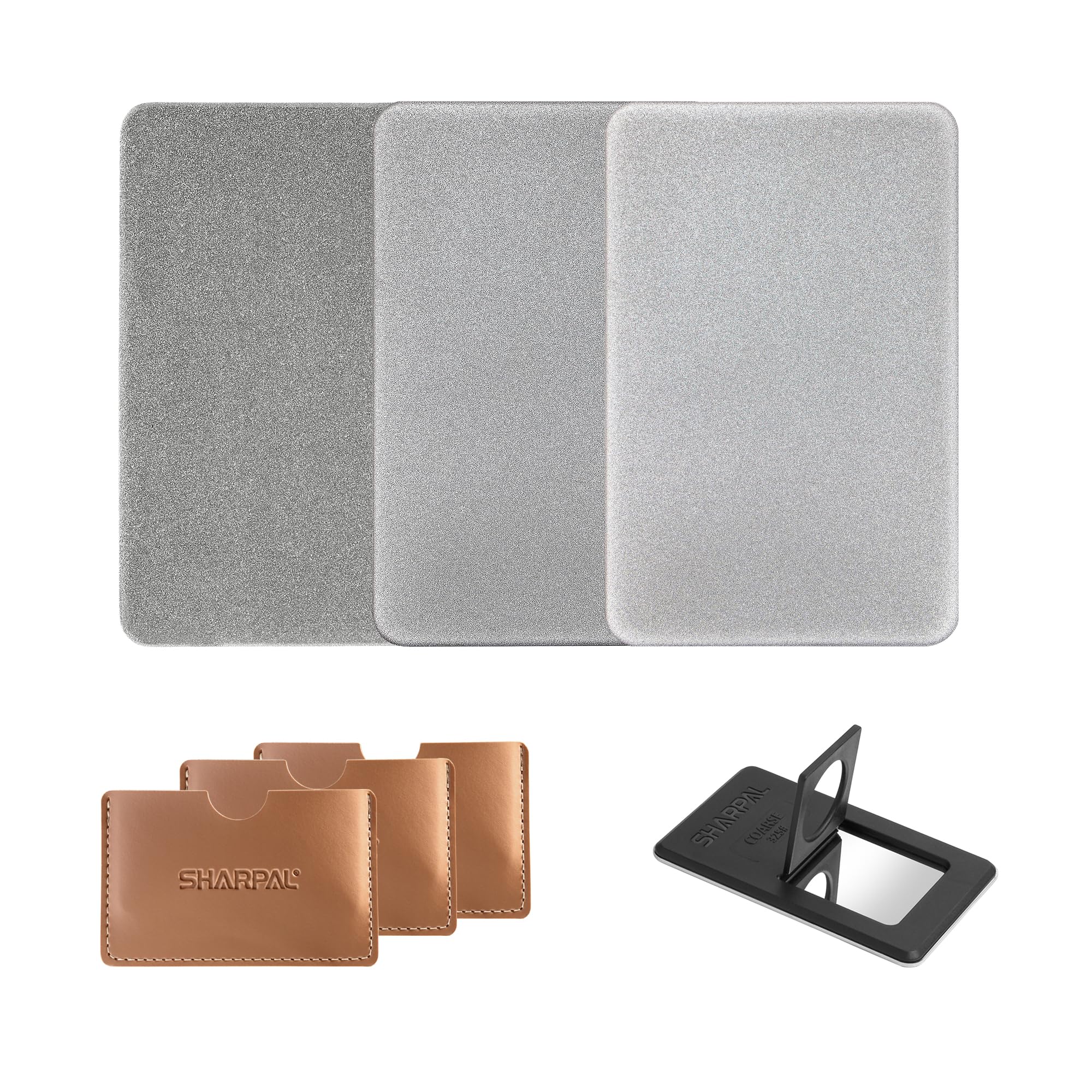
SHARPAL 116N packs three grits into a credit-card-sized steel plate that slides into a pouch or backpack. The 325 grit coarse face sets a new edge on a dull survival knife, the 600 grit medium refines the scratch pattern, and the 1200 grit extra-fine face hones to a working sharpness. Monocrystalline diamond is bonded to a rigid steel core that won’t flex during use.
The ring grip design pulls double duty: you thread a finger through the ring for control when sharpening small blades, or insert the entire handle to protect your palm during heavy passes on a machete. The plate works dry, so there’s no need to carry oil or water bottles to a job site. Each grit is clearly laser-engraved on the steel, preventing confusion mid-task.
At 0.14 inches thick, this card fits into a wallet or tool roll without adding noticeable bulk. The included storage pouch keeps the grit surfaces separated from metal tools that could scratch the diamond coating. For camp cooks, hikers, and tradespeople who need a reliable edge in the field, the 116N eliminates the hassle of bulkier systems.
Why it’s great
- Three grits in a pocketable, wallet-thin package
- Ring grip provides safe hand control on small blades
- Dry sharpening eliminates need for lubricants
Good to know
- Too short for full-length kitchen knife strokes
- No coarse grit below 325 for heavy repair work
FAQ
Do I need to soak a diamond sharpening stone before use?
Can a diamond stone sharpen high-hardness steel like VG-10 or S30V?
Final Thoughts: The Verdict
For most users, the best diamond sharpening stone winner is the Schaaf Tools Heavy Duty Set because monocrystalline diamond on a flat steel plate cuts fast, lasts through heavy kitchen and woodworking use, and never needs flattening. If you want a polished mirror edge, grab the Goodjob GB-3D for its 8000 grit ceramic polishing side and included angle guide. And for field touch-ups, nothing beats the SHARPAL 116N Pocket Card.