Every time you chop an onion or slice a tomato on a plastic cutting board, you are shaving off microscopic polymer fragments that end up in your meal. That plastic debris does not break down in the body, it accumulates. The only way to stop it is to switch to a surface that simply cannot shed those particles.
I’m Mohammad Maruf — the founder and writer behind AirfryerBite. I have spent months analyzing the molecular structure, hardness ratings, and maintenance requirements of alternative cutting-board materials to separate marketing claims from genuine microplastic-free solutions.
This guide evaluates tempered glass, bamboo, acacia, and hard maple boards on their ability to resist gouging, repel bacteria, and stay intact through daily use. Choosing from the best cutting boards to avoid microplastics means prioritizing a non-porous or grain-dense material that will never release synthetic fibers into your food.
How To Choose The Best Cutting Boards To Avoid Microplastics
Eliminating microplastics from your cutting surface is not just about picking a non-plastic material — it is about picking a material that stays intact under your knife. Soft surfaces deep-groove quickly, trapping food and requiring heavy scrubbing that abrades the surface further. Hard, non-porous, or well-oiled wood surfaces resist that damage cycle.
Hardness and Surface Density
Tempered glass ranks the highest on the Janka hardness scale — it will not scratch, so it releases zero material into your food. Wood and bamboo sit much lower on the scale, meaning they require proper oiling to maintain a sealed surface. Without regular mineral oil application, even natural wood can begin to release fibers that, while not plastic, still introduce debris into your meal.
Pore Structure and Bacterial Retention
Glass is non-porous — bacteria cannot penetrate, and cleaning is complete with a single soap-and-water pass. Bamboo and acacia have open grain structures that can trap moisture if left wet. Hard maple, used in the John Boos board, has a closed grain that resists liquid absorption better than most tropical hardwoods, making it one of the safest natural options for hygiene.
Knife Wear and Maintenance Tradeoffs
A glass surface will dull your blade faster than any other material. If you value edge retention on expensive chef knives, hard maple or end-grain bamboo is the better compromise. If you prioritize absolute zero-microplastic assurance and do not mind honing your knife more frequently, tempered glass wins.
Quick Comparison
On smaller screens, swipe sideways to see the full table.
| Model | Category | Best For | Key Spec | Amazon |
|---|---|---|---|---|
| LANGBOHOS 2-Piece Glass Set | Tempered Glass | Zero-microplastic guarantee | 0.8″ thick tempered glass | Amazon |
| John Boos B12S Maple | Hard Maple Wood | Pro-grade knife-friendly surface | 1.5″ edge-grain maple | Amazon |
| Socisen 3-Pack Bamboo Set | Bamboo Splice | Multi-board household versatility | 2.8″ thick 5-layer splice | Amazon |
| GAOMON 20″ Acacia | Acacia Hardwood | Large-format chopping & serving | 1.5″ thick acacia wood | Amazon |
| Keechee Bamboo Board | Bamboo Wood | Lightweight dishwasher-safe option | 0.4″ slim bamboo build | Amazon |
In‑Depth Reviews
1. LANGBOHOS 2-Piece Tempered Glass Cutting Board Set
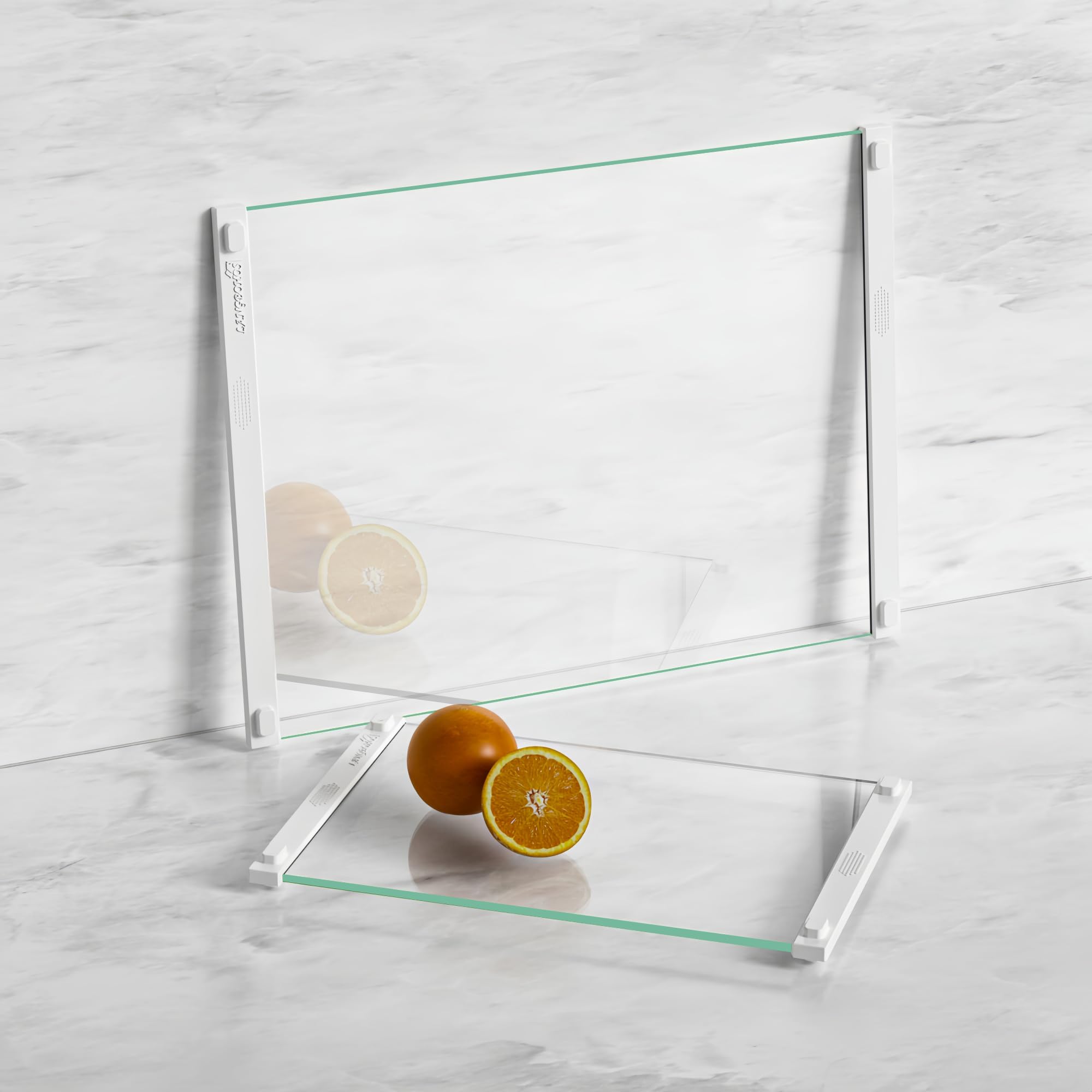
This set delivers two tempered glass boards — a full-size 16-by-12-inch surface plus a smaller 12-by-8-inch prep board — at a thickness of 0.8 inches. Tempered glass is the single material that absolutely cannot shed microplastics because it contains no polymer matrix. The enhanced silicone grip ring around each board increases shatter resistance significantly compared to bare glass boards, and the non-porous surface means no liquid or bacteria can penetrate the cutting area.
The surface is ultra-hard, which means it will never develop the knife scars that trap food particles on plastic boards. Cleanup is dishwasher-safe, and the boards can handle continuous heat up to 150 degrees Celsius, making them usable as hot pads or trivets. The clear glass construction also eliminates odors — no lingering garlic or onion smell after washing.
Be prepared for a slight cutting noise that is inherent to glass surfaces, and understand that your knives will require more frequent honing because glass is harder than any steel edge. For anyone whose primary concern is eliminating plastic contamination entirely, this is the most straightforward solution available.
Why it’s great
- Zero microplastic shedding — glass surface cannot scratch into particles
- Dishwasher-safe and heat-resistant up to 150°C
- Includes two sizes for different prep needs
Good to know
- Produces a pronounced scraping noise during cutting
- Will dull knife edges faster than wood or bamboo
2. John Boos B12S Square Maple Cutting Board
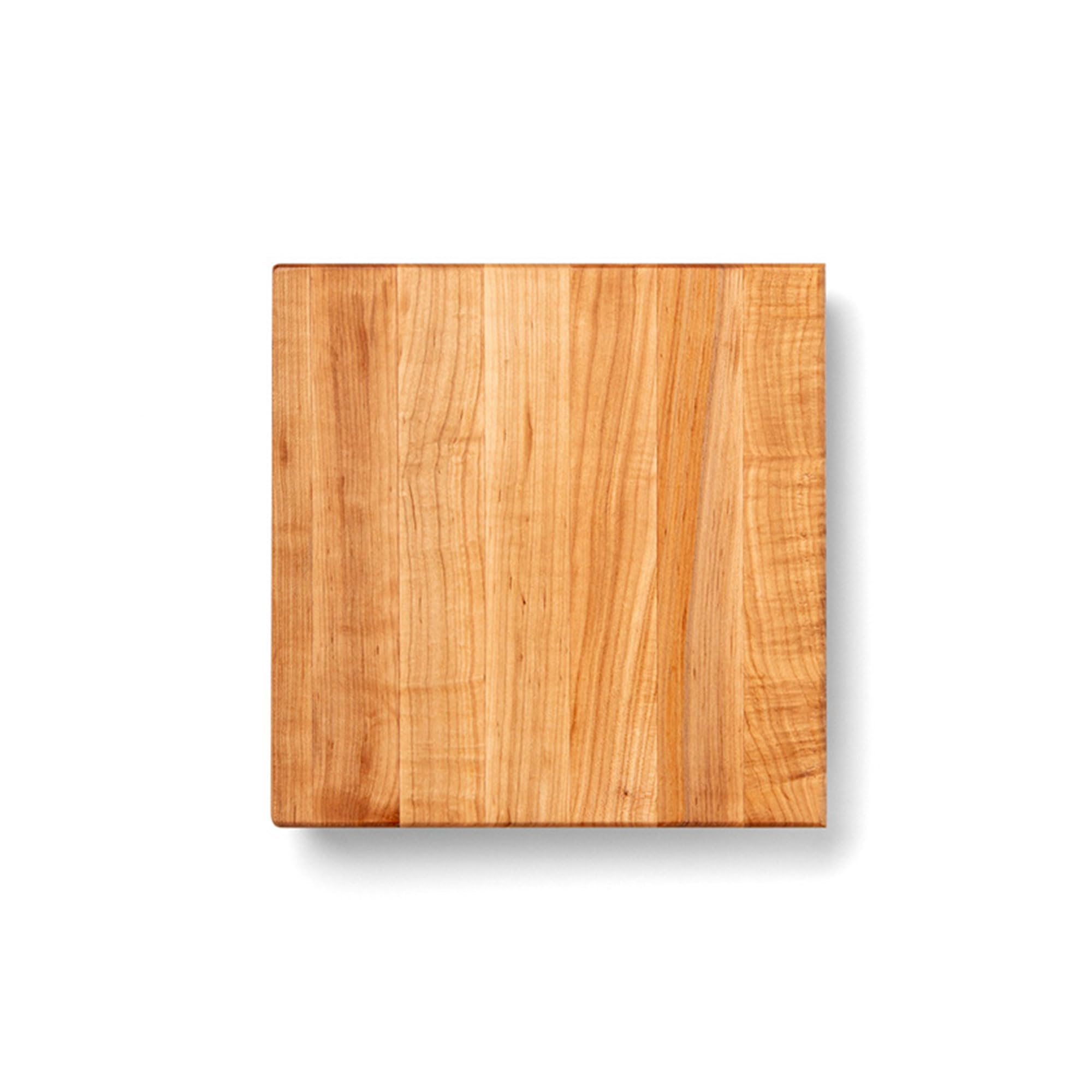
John Boos has been making butcher blocks since 1887, and the B12S model is a 12-inch square of solid hard maple with a 1.5-inch edge-grain construction. Hard maple has one of the tightest grain structures of any domestic hardwood, meaning it resists moisture penetration and bacterial growth better than acacia or bamboo. The raised bun feet lift the board off the counter, allowing air circulation underneath to prevent mold formation.
This board is non-reversible, which is actually a benefit for microplastic concerns — a single dedicated cutting side develops a consistent patina that seals the surface, while the bottom stays clean for serving or display. The edge-grain orientation provides excellent knife-edge retention; your blades will stay sharp far longer than they would on glass. The weight of six pounds keeps the board planted during heavy chopping without any slip-pad required.
Maintenance requires hand-washing only and periodic application of Boos Block Mystery Oil or food-grade mineral oil. Without oiling every four to six weeks, the maple can dry out and develop small cracks that could trap food. For serious cooks who want a professional surface that will never shed synthetic particles, this board delivers decades of reliable service.
Why it’s great
- Closed-grain hard maple resists moisture and bacterial penetration
- Raised feet provide airflow and prevent countertop moisture damage
- Edge-grain construction is gentle on knife edges
Good to know
- Requires regular mineral oil treatment to maintain sealed surface
- Hand-wash only — heat and moisture in dishwashers will warp the wood
3. GAOMON 20-Inch Acacia Wood Cutting Board

At 20 inches long and 15 inches wide with a full 1.5-inch thickness, this acacia board provides the largest uninterrupted cutting surface in this lineup. Acacia is a tropical hardwood with a Janka rating around 2,400 — significantly harder than maple — which gives it excellent resistance to deep gauge marks that can harbor bacteria and release wood fibers into food.
The board has a deep perimeter juice groove that channels liquids away from the cutting center, preventing cross-contamination between meat drippings and vegetable prep. Cutout handles on both sides make it easy to lift and transfer, even with the board fully loaded with chopped ingredients. The natural acacia grain pattern is visually dense, making it suitable for doubling as a charcuterie or cheese presentation board.
Acacia is denser than bamboo or maple, which means it will not warp as easily in humid environments, but it also requires thorough drying after washing — never let it soak. The manufacturer does not certify this board as dishwasher-safe, so hand-washing with mild soap and immediate drying is the correct care routine. For heavy-volume prep sessions where you need maximum surface area without plastic exposure, this board earns its place.
Why it’s great
- Spacious 20×15-inch surface handles large ingredient batches
- Deep perimeter groove contains juices and prevents countertop mess
- High-density acacia resists warping better than softer woods
Good to know
- Hand-wash only — soaking or dishwasher use will damage the wood
- Weighs over eight pounds, making it less portable than thinner boards
4. Socisen 3-Pack Heavy Duty Bamboo Cutting Board Set

This set includes three bamboo boards in graduated sizes, each constructed from a five-layer vertical bamboo splice that reaches a total thickness of 2.8 inches — nearly double the thickness of most standard bamboo boards. The multi-layer splicing technique creates a dense cross-section that resists cracking and warping significantly better than single-piece bamboo. FSC-certification confirms the bamboo source is sustainably harvested.
Each board has non-slip rubber feet on the underside that grip the countertop firmly during chopping, eliminating the need for a damp towel underneath. The bamboo surface is hand-sanded to a smooth finish without burrs or splinters, and the boards come pre-treated with food-grade mineral oil. The largest board in the set measures 17 by 12 inches, which is adequate for most meal-prep tasks without dominating the counter.
Bamboo is naturally antimicrobial, but it is also harder than maple — expect slightly more knife wear compared to the John Boos board. The set is hand-wash only because dishwasher heat and moisture degrade the bamboo splice adhesive over time. For households that want separate boards for meat, vegetables, and fruit without buying individual boards, this three-piece system provides organized, microplastic-free prep zones.
Why it’s great
- Three boards for dedicated meat, veggie, and fruit prep zones
- Thick 5-layer bamboo construction resists cracking and warping
- FSC-certified bamboo with food-grade mineral oil pre-treatment
Good to know
- Hand-wash only — dishwasher heat damages the bamboo laminate
- Bamboo is harder than maple and may dull knives slightly faster
5. Keechee Dishwasher Safe Bamboo Cutting Board
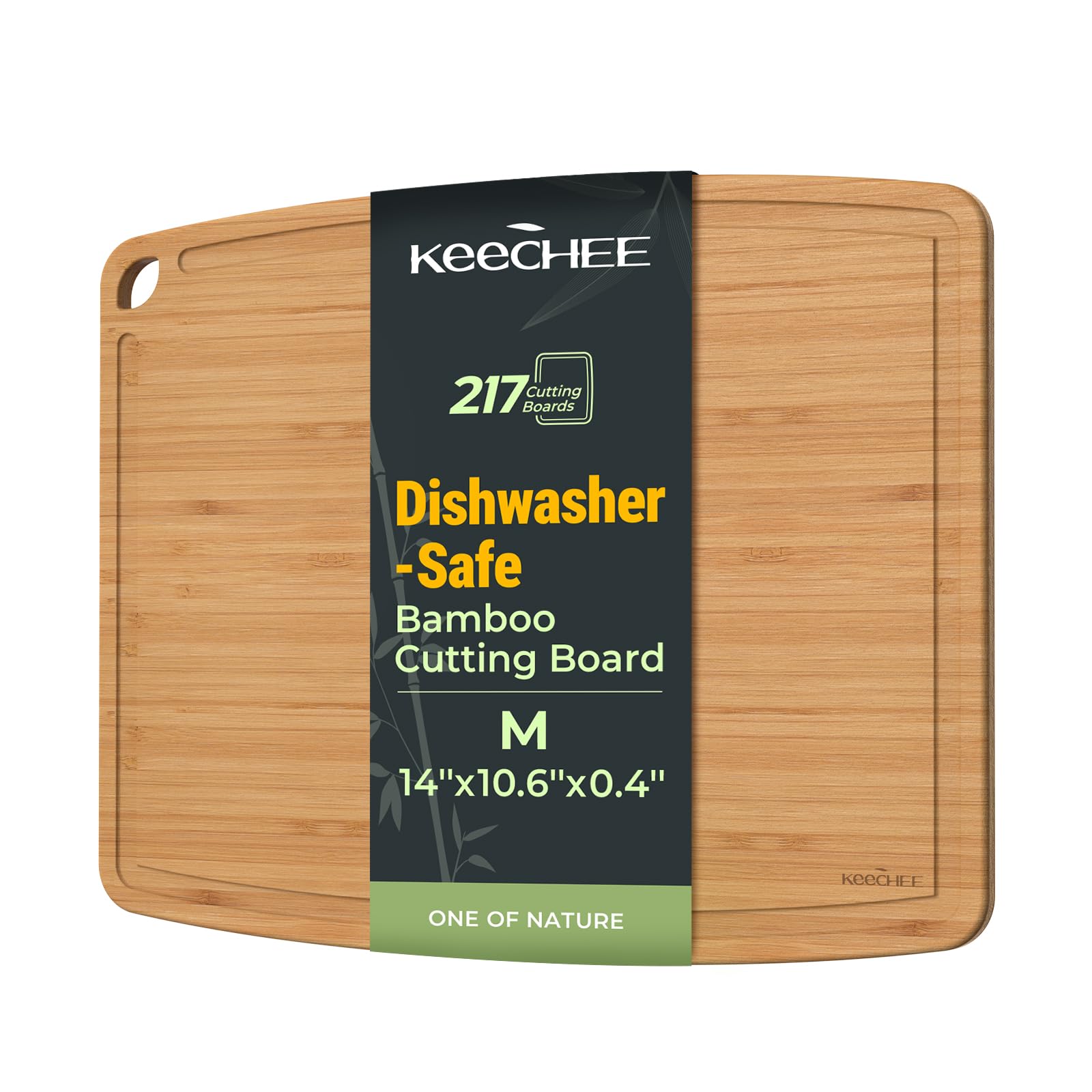
Keechee engineered this bamboo board specifically to survive dishwasher cycles — a rare claim among wood cutting boards. The bamboo is treated to withstand heat and moisture without warping or cracking, solving the biggest maintenance headache that keeps people using plastic boards. At just 0.4 inches thick and 1.56 pounds, it is the lightest board in this guide, ideal for small kitchens, RVs, or outdoor cooking where portability matters.
The board is reversible, with one side designed for cutting and the other suitable for serving charcuterie or cheese. A juice groove is integrated into the cutting side to catch runoff from meats and fruits. The slim profile means it stores easily in a drawer or against the backsplash, but the thinness also means it will flex slightly under heavy pressure from a cleaver or heavy chopping motion.
Keechee backs this board with a one-year warranty and a money-back guarantee, which provides confidence for buyers who are skeptical about dishwasher-safe bamboo. The board is lab-tested for strength and is constructed without the splinters that plague cheaper bamboo boards. For users who prioritize convenience and the ability to sanitize in the dishwasher without introducing plastic, this is the most practical entry-level option.
Why it’s great
- Dishwasher-safe bamboo — no hand-washing required
- Ultra-lightweight design is easy to carry and store in small spaces
- Reversible surface with juice groove for dual cutting and serving use
Good to know
- 0.4-inch thickness may flex under heavy chopping or cleaver work
- Smaller surface area limits large-batch meal prep
FAQ
Does bamboo cutting board release microplastics?
Why do glass cutting boards dull knives faster than wood?
How often should I oil a wooden cutting board to maintain its microplastic-free surface?
Is an acacia wood cutting board truly microplastic-free?
Final Thoughts: The Verdict
For most users, the cutting boards to avoid microplastics winner is the LANGBOHOS 2-Piece Tempered Glass Set because it is the only material that guarantees zero particle shedding regardless of how aggressively you chop. If you want a knife-friendly surface that still eliminates synthetic contamination, grab the John Boos B12S Maple Board — hard maple with proper oiling gives you a natural, durable surface that protects both your food and your blade edges. And for households that need multiple prep zones without plastic, nothing beats the Socisen 3-Pack Bamboo Set.