The difference between a struggling juice bar and a profitable one often comes down to the durability of the equipment.
I’m Mohammad Maruf — the founder and writer behind AirfryerBite. I’ve spent over a decade analyzing commercial kitchen hardware, specifically identifying which components — from motor wattage to bearing construction — determine whether a juicer survives its first year of continuous use.
If you are outfitting a bar, restaurant, or dedicated juice station, finding the right piece of heavy-duty equipment is critical. That is why I have assembled this detailed guide to help you confidently select the best commercial citrus juicer for your specific operation.
How To Choose The Best Commercial Citrus Juicer
Selecting a juicer for a professional environment requires a different set of priorities than a home appliance. You need to consider throughput, sanitation speed, and the machine’s ability to withstand thousands of cycles without failure. The following factors will help you filter the right machine for your volume.
Manual Lever Press vs. Electric Automatic Juicer
Manual lever presses, like the Hamilton Beach Commercial 932 or Nemco 55850, generate enormous squeezing force — often exceeding 2,000 pounds — without an electric motor. This makes them extremely durable and quiet, ideal for bars or small cafes where the volume is under 100 oranges per day. Electric automatic juicers, such as the VEVOR or Nurxiovo models, use a motor-driven reamer system that processes 20 to 30 fruits per minute. They are the right choice for high-volume operations like juice bars or hotel breakfast buffets, but they require more counter space and a dedicated electrical outlet.
Motor Power and Construction Material
For electric models, motor wattage directly dictates throughput speed and durability. A machine with a 120W copper motor is a baseline for reliable commercial use. The chassis material is equally critical: look for stainless steel or heavy-duty die-cast aluminum that resists the corrosive effects of citric acid. Avoid units with painted or enameled surfaces on food-contact areas, as these will degrade. Models like the Nurxiovo or Sunkist J-1 that use 304 stainless steel for the body and internal components offer a much longer service life.
Cleaning and NSF Certification
In a commercial kitchen, a juicer that is difficult to clean will not stay sanitary. Look for models with removable strainer cones, funnels, and pulp filters that can be quickly washed. For high-volume electric juicers, features like a pull-out filter box or a water tap for draining residual juice greatly speed up cleaning. NSF certification is a non-negotiable standard for most commercial settings — it verifies the equipment is designed for food safety and easy sanitation. A dishwasher-safe rating is a bonus, but ensure the motor housing and electrical components remain protected from water exposure.
Quick Comparison
On smaller screens, swipe sideways to see the full table.
| Model | Category | Best For | Key Spec | Amazon |
|---|---|---|---|---|
| Nemco 55850 | Manual Press | Consistent high yield per press | 2000 lb squeezing force | Amazon |
| Sunkist J-1 | Electric Press | Rapid through-put for high volume | 20 gallons per hour | Amazon |
| VEVOR Commercial | Electric Auto | Automatic peeling and juicing | 20 oranges per minute | Amazon |
| Nurxiovo | Electric Auto | High-speed juice production | 25-30 oranges per minute | Amazon |
| Kuvings CS600 | Electric Slow Juicer | Whole fruit masticating juicing | 88mm wide feed chute | Amazon |
| Hamilton Beach 932 | Manual Press | Durable manual operation | 2000 lbs of force | Amazon |
| Waring BJ120C | Electric Bar Juicer | Compact countertop juicing | 120 oranges per hour | Amazon |
| Tribest MJP-100 | Manual Press | All-metal cold press juicing | 200 lbs squeezing pressure | Amazon |
| Hurom H310 | Electric Slow Juicer | Home or low-volume use | 150 Watt slow motor | Amazon |
In‑Depth Reviews
1. Nemco 55850 Manual Crank Type Heavy Duty Easy Citrus Juicer

The Nemco 55850 is the gold standard for manual citrus juicing in a professional setting. It uses a stainless steel rack and pinion system with two self-lubricating bronze bearings that ensure consistent, smooth pressure every time you pull the lever. This design maximizes juice yield while minimizing operator fatigue, making it ideal for back-to-back pressing during a busy service.
The construction is a blend of aluminum and stainless steel, with high-strength steel posts and stainless steel fasteners that resist rust from citric acid. It weighs nearly 12 pounds and has a sturdy footprint that keeps it planted on the counter. The removable stainless steel strainer cone simplifies cleaning, and the NSF listing confirms it meets strict food safety standards for commercial kitchens.
This machine is best for bartenders, small cafes, and juice bars that value durability and consistent yield over raw speed. The lever mechanism requires physical effort, so it is not suitable for processing hundreds of oranges per hour, but for volumes up to a few dozen fruits per day, nothing else in the manual category matches its build quality.
Why it’s great
- Self-lubricating bronze bearings provide smooth, long-lasting operation without maintenance.
- Removable strainer cone and aluminum body make daily cleaning fast and straightforward.
Good to know
- Not dishwasher safe; requires hand washing to preserve the components.
- Manual operation limits throughput compared to automatic electric juicers.
2. Sunkist Growers J-1 Commercial Juicer

The Sunkist J-1 is built for volume. With a throughput of up to 20 gallons per hour, this electric press is a workhorse for high-demand juice bars and restaurant chains. It features three interchangeable extracting bulbs of different sizes to handle everything from small limes to large grapefruits, ensuring you get maximum juice yield from each fruit without tearing the rind.
Its chrome-plated finish looks iconic on any countertop and offers good corrosion resistance, while the metal and PC construction keeps the weight manageable at 31 pounds. The unit is dishwasher safe, which significantly reduces the time needed for sanitation between shifts. A corded electric power source means it is always ready to run without battery concerns.
The Sunkist J-1 is a significant investment, but its high throughput and reliable motor make it a top contender for any operation processing dozens of cases of citrus per week. It is less suitable for a low-volume bar where a manual press would suffice, but for a dedicated juice station, it is a proven winner.
Why it’s great
- Interchangeable bulbs allow precise juicing for different citrus sizes, increasing yield.
- Dishwasher-safe components make thorough cleaning fast and compliant with health codes.
Good to know
- Chrome finish requires careful cleaning to maintain its luster over time.
- The machine is heavy and requires dedicated counter space; not easily portable.
3. VEVOR Commercial Orange Juicer Machine

The VEVOR Commercial Orange Juicer packs a lot of automation into a relatively accessible price point. Its 120W motor drives an automatic peeling and juicing system that processes up to 20 oranges per minute. The upgraded concave-convex pressing balls improve juice extraction compared to older designs, and the large feed chute handles oranges from 55 to 80mm without jamming.
Built from food-grade SUS304 stainless steel and high-quality PC, this machine prioritizes hygiene. The pull-out filter box is a standout design choice that allows you to quickly remove and rinse the pulp filter without disassembling the whole unit. A built-in water tap provides precise control over the juice flow, reducing waste when transferring to bottles or service pitchers.
Safety is well-handled with a pressure sensor that stops the motor if the transparent protective cover is removed during operation. The waterproof switch cover adds an extra layer of protection against splashes. This machine is ideal for grocery stores, fruit shops, and medium-volume juice bars that want automatic operation without the highest upfront cost.
Why it’s great
- Automatic peeling and juicing significantly reduces manual prep time for staff.
- Pull-out filter box and water tap make cleaning and juice collection very efficient.
Good to know
- Large footprint at 30.7 inches tall requires significant counter clearance.
- The 120W motor is sufficient but not as powerful as some premium competitors.
4. Nurxiovo Commercial Orange Juicer Machine

If raw speed is your priority, the Nurxiovo model is a top contender. Its 120W pure copper motor drives a system that can squeeze 25 to 30 oranges per minute, making it one of the fastest automatic juicers in its class. It uses a 304 stainless steel construction for the main body, ensuring excellent corrosion resistance and durability under constant use.
The machine is designed with a safety interlock that prevents operation without the cover, a critical feature for busy environments where staff may be distracted. It includes two peel collecting buckets to keep the work area tidy during long juicing sessions. Cleaning is described as quick, but the unit is not fully dishwasher safe, so you will need to hand rinse the pulp components.
This juicer is best suited for high-volume settings like supermarkets, canteens, and large juice bars where every minute of operation translates directly to sales. The 20-liter capacity bin reduces the frequency of pulp removal, allowing staff to focus on production. It is less ideal for operations that need to juice a mix of citrus sizes, as the feed chute is optimized for standard oranges.
Why it’s great
- High throughput of 25-30 oranges per minute can handle a breakfast rush efficiently.
- Pure copper motor and 304 stainless steel body promise a long service life.
Good to know
- Not dishwasher safe; requires hand washing of the pulp collectors and reamer.
- Safety interlock stops the machine if the cover is opened, so training is needed.
5. Kuvings CS600 Whole Slow Juicer

The Kuvings CS600 is a different beast — it is a commercial-grade vertical slow juicer that can handle whole fruits and vegetables. Its 88mm flip-gate feed chute is the largest in its class, allowing you to drop in entire apples, oranges, or carrots without cutting. This machine uses a low-speed masticating technology that squeezes ingredients gently to preserve nutrients and produce a smooth, pulp-free juice.
Designed for continuous operation, the CS600 features an advanced cooling system that prevents overheating, even when running 24 hours a day. The body is constructed from a mix of stainless steel and high-grade Ultem and Tritan, making it BPA-free and very durable. A drip-free Smart Cap allows you to mix juices and rinse between recipes without making a mess.
This juicer is ideal for high-end juice bars or health-focused cafes that prioritize juice quality and nutrient retention over raw speed. While it is slower per fruit than the centrifugal electric juicers, its yield is higher and the resulting juice has a longer shelf life due to reduced oxidation. It is a significant investment that pays off in product quality and operational flexibility.
Why it’s great
- Continuous 24-hour operation capability with a built-in cooling system for heavy use.
- 88mm feed chute accepts whole fruit, drastically reducing prep labor time.
Good to know
- Lower throughput compared to centrifugal juicers; not for high-speed orange pressing.
- Requires hand washing; the Ultem and Tritan components are not dishwasher safe.
6. Hamilton Beach Commercial 932 Manual Citrus Juicer
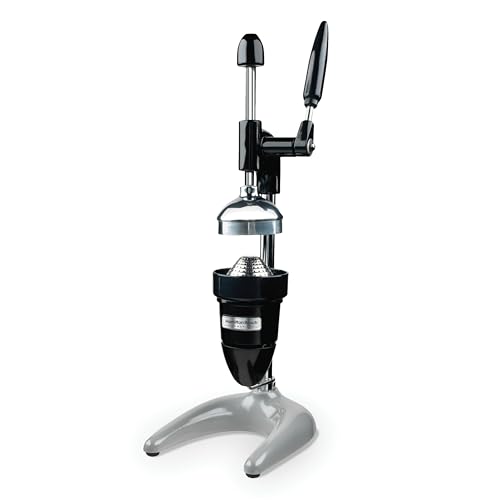
The Hamilton Beach 932 is a classic manual juicer that has been in professional kitchens for decades. Its lever arm system exerts up to 2,000 pounds of force, which is more than enough to extract maximum juice from lemons, limes, oranges, and grapefruits while leaving behind a dry, compressed fruit half. The acid-resistant enamel finish on the metal components protects against the corrosive effects of daily citrus juicing.
It features Sure Grip feet that keep the base firmly planted on the counter, preventing dangerous tipping during operation. The stainless steel strainer cone and ABS plastic funnel are removable, which makes cleaning and sanitizing a straightforward task. NSF certification ensures that the design meets strict food safety standards for commercial use.
This juicer is perfect for bars and small restaurants that need a reliable, no-nonsense manual press. It is quiet, requires no electricity, and will last for years with basic maintenance. The trade-off is purely physical — the operator must pull the lever for every fruit, so it is not suitable for processing large batches during a rush.
Why it’s great
- NSF certification confirms it meets commercial food safety and sanitation standards.
- Acid-resistant enamel finish and metal construction resist corrosion from citrus juices.
Good to know
- Manual operation requires significant physical effort; not for high-volume production.
- Some users find the enamel finish chips over time if not handled carefully.
7. Waring Commercial BJ120C Compact Citrus Juicer
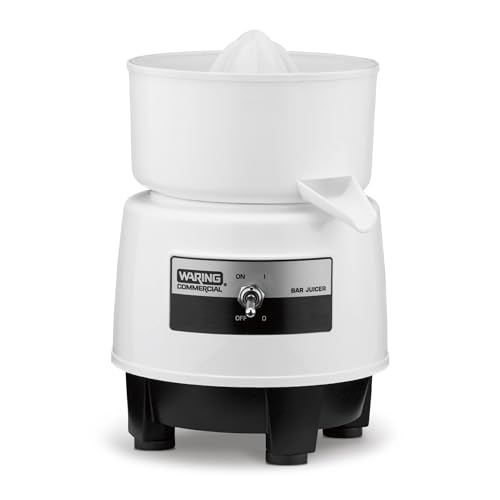
The Waring BJ120C is built for small spaces where counter real estate is at a premium. Its compact footprint — just over 7 inches square — fits easily behind a bar or on a crowded prep station, yet it can still process up to 120 oranges per hour. The 150W motor provides more than enough power for continuous reaming, and the heavy-duty die-cast base with vibration-dampening feet keeps operation quiet and stable.
The universal reamer is designed to handle all types of citrus, from small limes to larger oranges, with a single motion. The 1-quart capacity bowl catches the juice and is dishwasher safe, a major plus for busy bar staff who need to clean quickly between shifts. The sealed finish protects the motor housing from juice splashes.
This electric juicer is ideal for bars, cocktail lounges, and small cafes that need a reliable electric juicer but cannot spare the counter space for a larger automatic model. Its throughput is respectable for its size, though it will not match the speed of the fully automatic peel-and-juice machines. It is a straightforward, durable tool for consistent daily use.
Why it’s great
- Compact 7×7 inch footprint fits easily in tight bar or countertop spaces.
- Dishwasher-safe juice bowl and reamer make post-service cleanup fast.
Good to know
- Not intended for high-volume commercial juicing; best for smaller operations.
- Plastic funnel and strainer may need replacement after extended heavy use.
8. Tribest Pro MJP-100 Professional Manual Cold Press Juicer

The Tribest MJP-100 is a manual press that prioritizes material purity. It uses a fully stainless steel strainer, bowl, and load-bearing bars, ensuring that your juice never contacts aluminum or plastic. The ergonomic handle activates heavy-duty internal gears that generate 200 pounds of squeezing pressure, which is sufficient for most citrus and soft fruits.
One of its clever design features is the fully locking parts — the strainer and bowl click into place and unlock with a twist for fast cleaning. The swing drip cup prevents spills between presses, a thoughtful touch for a tidy workflow. Weighing 12.1 pounds, it has enough heft to stay stable during use without being too heavy to move.
This juicer is best for health-conscious cafes or juice bars that want to avoid plastic contact with their ingredients and appreciate the durability of all-metal construction. The manual operation requires some physical effort, and the 200-pound pressing force is lower than the Hamilton Beach or Nemco models, so it works best for softer citrus like oranges and lemons.
Why it’s great
- All stainless steel components ensure no juice comes into contact with plastic or aluminum.
- Locking parts and swing drip cup make operation and cleanup less messy.
Good to know
- 200-pound squeezing force is lower than other manual presses; not ideal for grapefruit.
- Not dishwasher safe; requires hand cleaning of all stainless steel parts.
9. Hurom H310 Easy Clean Slow Juicer

The Hurom H310 uses patented Slow Squeeze technology to masticate fruits and vegetables, producing a nutrient-rich juice with less oxidation than centrifugal models. Its strainer-free chamber design is a major breakthrough for cleaning — there is no mesh screen to scrub, just a smooth chamber set that rinses clean quickly. The self-feeding hopper accommodates whole fruits, reducing prep time.
At 150 watts, the motor is quiet and compact, making this machine unobtrusive on a countertop. It is 100% BPA free and uses no sharp blades, relying instead on a two-part auger that presses and strains the juice. This design is gentle on ingredients and yields a very smooth juice texture with minimal pulp.
The Hurom H310 is best suited for home kitchens or very low-volume commercial settings like a small health food store that offers fresh juice by the glass. It is not designed for the high throughput of a busy juice bar, but for an entry-level commercial or heavy home use, its ease of cleaning and superior juice quality make it a compelling option.
Why it’s great
- Strainer-free chamber eliminates the need for scrubbing a mesh screen.
- Quiet 150W motor and compact design fit easily into small spaces.
Good to know
- Not a high-speed juicer; throughput is slow compared to centrifugal models.
- Not dishwasher safe; all parts require hand washing for longevity.
FAQ
What is the difference between a manual and an electric commercial citrus juicer?
How important is NSF certification for a commercial citrus juicer?
Can I juice limes and grapefruits using the same machine?
What does dishwasher safe mean for a commercial juicer, and why does it matter?
Final Thoughts: The Verdict
For most users, the best commercial citrus juicer winner is the Nemco 55850 because it offers the perfect balance of build quality, consistent yield, and low maintenance for a manual press. If you want the highest possible throughput for a busy juice bar, grab the Sunkist J-1 for its 20-gallon-per-hour speed. And for a commercial kitchen that prioritizes nutrient retention and whole-fruit juicing, nothing beats the Kuvings CS600.