A manual can opener that stalls on a #10 can of tomato sauce is a liability in a busy kitchen. When you are opening dozens of cans per shift, the difference between a tool that cuts cleanly and one that skips, jams, or sheds metal shavings shows up in wasted time and frustrated staff. The market is full of stamped-steel lightweights that feel solid in the box but fail within weeks under real commercial use. Finding a unit built with a cast-steel body, a reversible blade, and a base that bolts down securely separates a true workhorse from a throwaway gadget.
I’m Mohammad Maruf — the founder and writer behind AirfryerBite. I have spent years analyzing kitchen equipment hardware specifications, comparing motor torque, blade metallurgy, base mounting systems, and the engineering tolerances that determine whether a can opener survives thousands of cycles in a professional setting.
This guide focuses on five models that represent the spectrum of real commercial-grade build quality. Whether you need a manual tabletop unit for a high-volume prep station or an electric model for a front-of-house service area, I have selected only options that demonstrate proven durability. After reading, you will confidently choose the best commercial can opener for your specific kitchen layout and volume demands.
How To Choose The Best Commercial Can Opener
Selecting a commercial can opener requires evaluating three core factors that consumer-grade units rarely address. The blade material and attachment method dictate how many cans you open before replacement. The base construction and mounting system determine stability under repetitive force. The handle leverage and gear ratio decide how much physical effort each rotation demands. Ignore marketing claims about “heavy duty” and look at the actual metal thickness, blade retention mechanism, and whether replacement parts are readily available.
Blade Material and Reversibility
The cutting edge is the first component to dull. A blade stamped from thin stainless steel and held by a single screw will wobble and lose bite quickly. Commercial-grade units use thicker stainless steel blades that are either reversible (two usable cutting edges on one blade) or replaceable with a simple hex key. A reversible blade effectively doubles the service life before you need to stock a replacement part. For high-volume kitchens, a blade that cuts cleanly through the rolled seam of a #10 can without leaving jagged edges is non-negotiable.
Base Material and Mounting System
A can opener that shifts or lifts during use wastes energy and increases the risk of the can slipping. Stamped steel bases flex under pressure. Cast steel or cast iron bases provide the mass needed to absorb the downward force of the cutting action. The base must include pre-drilled mounting holes and should bolt directly into a countertop or a dedicated mounting board. Clamp-on or suction-base models are not suitable for commercial applications because they cannot withstand the lateral torque generated when opening large cans.
Maximum Can Height and Diameter
Standard #10 cans measure about 7 inches tall, but many commercial kitchens also handle taller institutional cans up to 11 or even 13 inches. The opener’s clearance between the blade and the base determines the maximum can height it can accommodate. Always verify the stated maximum can height against the largest cans your operation uses. A unit that fits cans up to 11 inches covers virtually all restaurant and cafeteria needs. Specs like 13-inch capacity add versatility for specialty bulk ingredients.
Quick Comparison
On smaller screens, swipe sideways to see the full table.
| Model | Category | Best For | Key Spec | Amazon |
|---|---|---|---|---|
| Edlund 11100 Old Reliable #1 | Manual / Premium | Maximum volume prep kitchens | Reversible two-sided blade | Amazon |
| Wadoy Commercial (Red) | Manual / Mid-Range | Tall cans up to 13 inches | Fits cans up to 13″ tall | Amazon |
| Wadoy Commercial (Silver) | Manual / Value | Smaller operations / budget buy | Includes spare stainless blade | Amazon |
| Cuisinart Deluxe Electric | Electric / Mid-Range | Low-volume / front-of-house use | Power Cut™ blade | Amazon |
| Hamilton Beach Smooth Touch | Electric / Budget | Home kitchen / light duty | Eliminates sharp lid edges | Amazon |
In‑Depth Reviews
1. Edlund 11100 Old Reliable #1 Manual Can Opener
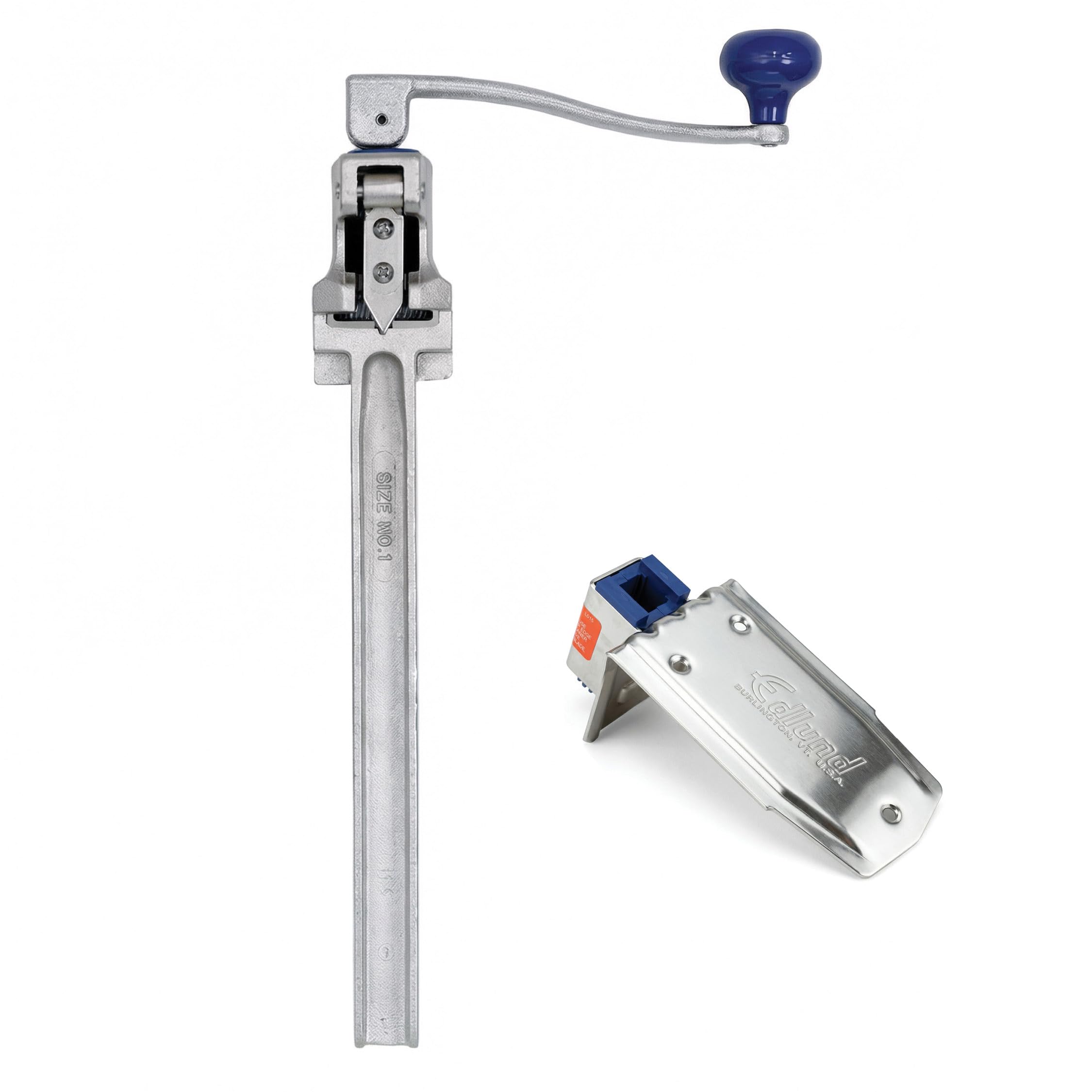
Edlund has been the benchmark in commercial can openers for decades, and the 11100 Old Reliable #1 justifies every bit of that reputation. The unit is built around a plated steel base that provides the mass needed to stay planted during heavy use. The reversible two-sided blade is the standout feature — when one edge dulls, you flip it instead of replacing it, effectively doubling blade life before you need to stock a spare. Edlund rates this model for up to 5,000 cans before any parts replacement, which places it in a completely different durability tier than anything sold at a retail kitchen store.
The handle action is smooth and the gear ratio is optimized for the high torque required to cut through the thick rolled seams of #10 cans without skipping. The entire mechanism is designed for straightforward maintenance: the blade and the drive gear can be swapped in minutes with basic hand tools. This matters in a professional kitchen where downtime during a lunch rush is not an option. The 11-inch maximum can height covers standard restaurant-size cans and most institutional containers.
The only trade-off is that you must mount it to a countertop or a sturdy cutting board — there is no clamp or suction option, and you should not attempt to use it unmounted. The plated steel base is functional rather than decorative, but in a commercial kitchen, visual polish takes a back seat to reliability.
Why it’s great
- Rated for 5,000 cans before parts replacement.
- Reversible two-sided blade extends cutting life.
- Plated steel base provides stable, wobble-free operation.
Good to know
- Requires permanent mounting to a surface.
- More expensive upfront than value-priced manual models.
2. Wadoy Heavy Duty Commercial Can Opener (Red)
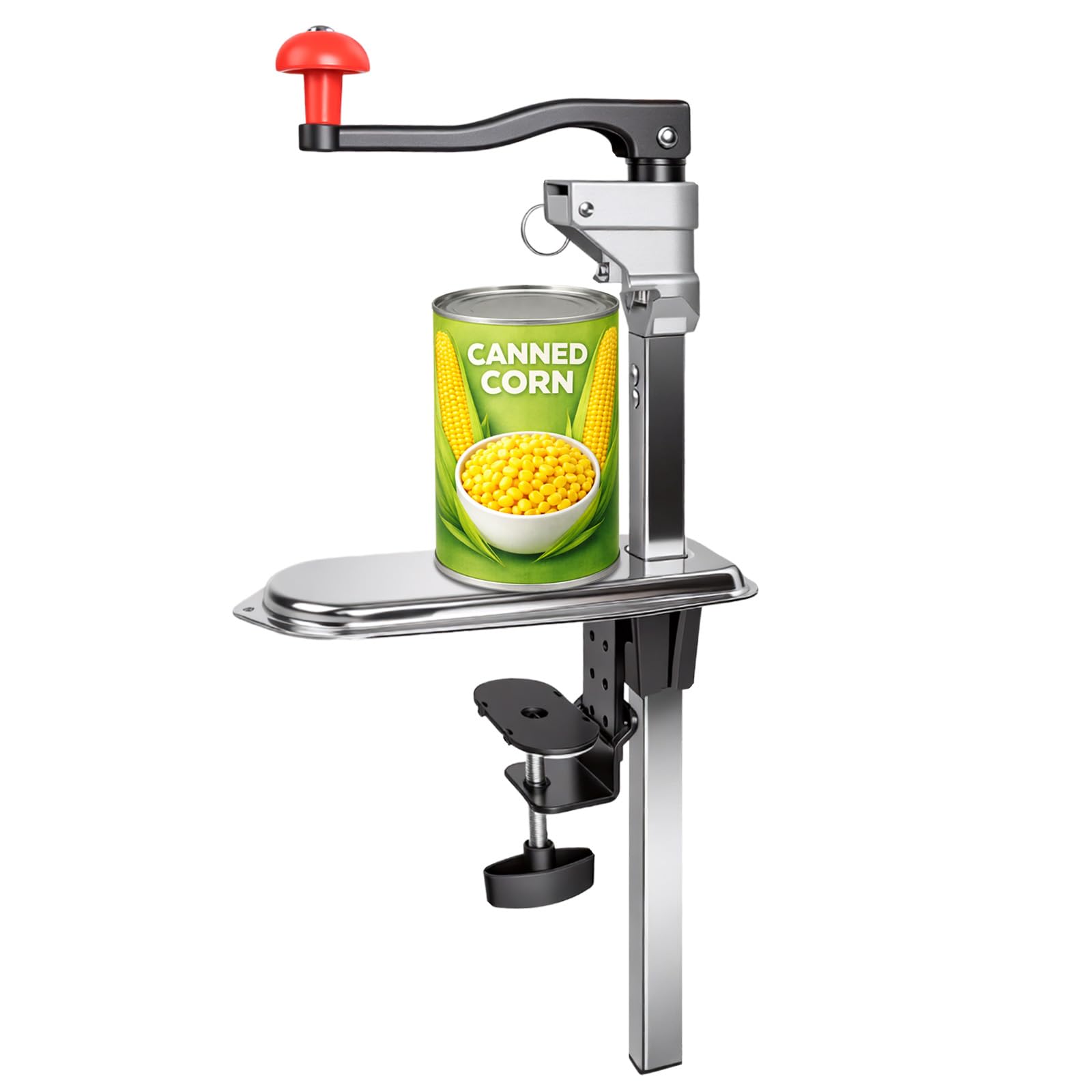
The red-handled Wadoy commercial opener offers the widest can height compatibility in this lineup at 13 inches. This extra clearance makes it the right choice for kitchens that handle taller institutional cans of bulk fruits, vegetables, or sauces that exceed the standard #10 height. The base is cast steel, which provides the mass necessary to resist lifting during the cutting cycle, and the pre-drilled mounting holes allow secure attachment to any countertop or prep table.
The stainless steel blade is pre-installed and cuts through the can seam with consistent bite. The handle is ergonomically shaped and the rotation is smooth, though the gear ratio feels slightly more aggressive than the Edlund — you need to apply a bit more force per revolution, but the cut remains clean. The unit includes three mounting screws and a spare blade in the box, which is a practical bonus for operations that want a backup on hand without placing a separate order.
One notable detail is the manufacturer’s warning that metal shavings may be produced during use due to the metal-on-metal cutting action. This is inherent to any manual can opener that cuts through the rolled seam, but it is worth noting for kitchens that are particularly concerned about metal fragments. Routine wiping of the blade and can rim before serving mitigates this. For the price point, the 13-inch capability and included spare blade deliver strong value for mid-volume commercial settings.
Why it’s great
- Accommodates cans up to 13 inches tall.
- Cast steel base resists flexing and lifting.
- Includes spare stainless blade and mounting hardware.
Good to know
- Metal shavings possible during cutting.
- Requires more handle force per rotation than premium units.
3. Wadoy Commercial Can Opener Heavy Duty (Silver)
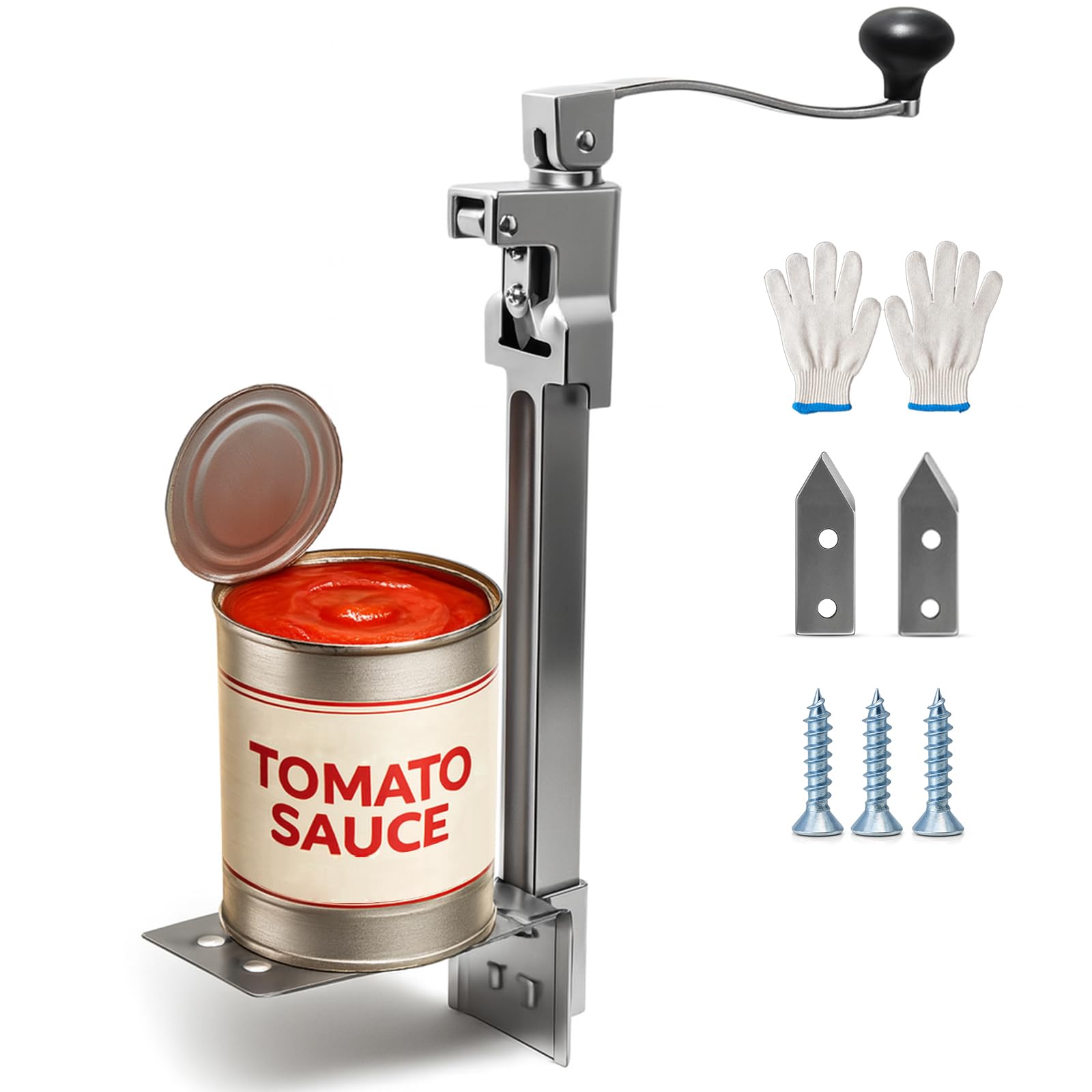
This silver-handled Wadoy model is the entry point into genuine commercial-grade manual openers without straying into the premium price territory of the Edlund. It features a plated steel base and a stainless steel cutting blade that handles standard #10 cans up to 11 inches tall. The kit includes two blades — one pre-installed and one spare — plus a pair of gloves and three mounting screws, so you have everything needed for installation and an immediate replacement blade when the first one dulls.
Customer feedback consistently mentions that the unit feels tight when new but loosens up after a few cans, which is characteristic of cast-metal components wearing into their final tolerances. The handle is comfortable and the rotation is fluid once broken in. The 3.36-kilogram weight of the unit gives it a planted feel when mounted, though the plated steel base is not quite as massive as the cast steel base on the red Wadoy or the Edlund. For a small restaurant, church kitchen, or bar that opens a moderate number of cans per day, this strikes a practical balance between cost and build quality.
The one-year warranty provides some peace of mind, though the design is simple enough that most users will never need to file a claim. The downside is the same metal shaving concern that applies to the red model, and the plated steel base may show scratches over time. If your operation needs a dependable manual opener without paying for the Edlund name, this is the most cost-effective path into commercial-grade performance.
Why it’s great
- Includes a spare blade and mounting hardware out of the box.
- Plated steel base provides solid stability when mounted.
- Budget-friendly entry into commercial-grade construction.
Good to know
- Plated steel base less rigid than cast steel alternatives.
- Parts availability not as broad as Edlund.
4. Cuisinart Deluxe Stainless Steel Electric Can Opener

The Cuisinart Deluxe shifts from the manual tabletop category into electric operation, which changes the value proposition entirely. This unit uses Cuisinart’s Power Cut™ blade and one-touch lever activation — press down the lever and the motor drives the blade around the can automatically. The stainless steel housing gives it a polished look that fits front-of-house environments like catered events or open kitchen layouts where the can opener sits in plain view.
The motor handles standard-size cans well, and the blade cuts along the side of the can rather than the top rim, which produces a smooth lid with no sharp edges. This is a meaningful safety advantage in settings where staff might otherwise cut themselves on traditional jagged lids. The removable activation lever simplifies cleaning, and the overall footprint is compact enough to store in a cabinet when not in use.
The trade-off is that this is not designed for high-volume commercial throughput. The motor and plastic internal gearing are not built to cycle through dozens of cans per day over multiple years. It is best suited for a break room, a small cafe, or a front counter where you open a few cans per shift and want the convenience of hands-free operation. If your kitchen runs through cases of cans weekly, the manual models above will outlast this Cuisinart by a wide margin.
Why it’s great
- One-touch operation reduces hand fatigue.
- Side-cut blade leaves a smooth, sharp-edge-free lid.
- Stainless steel housing looks clean in front-of-house areas.
Good to know
- Not built for high-volume daily commercial use.
- Plastic internal components limit long-term durability.
5. Hamilton Beach Smooth Touch Electric Automatic Can Opener
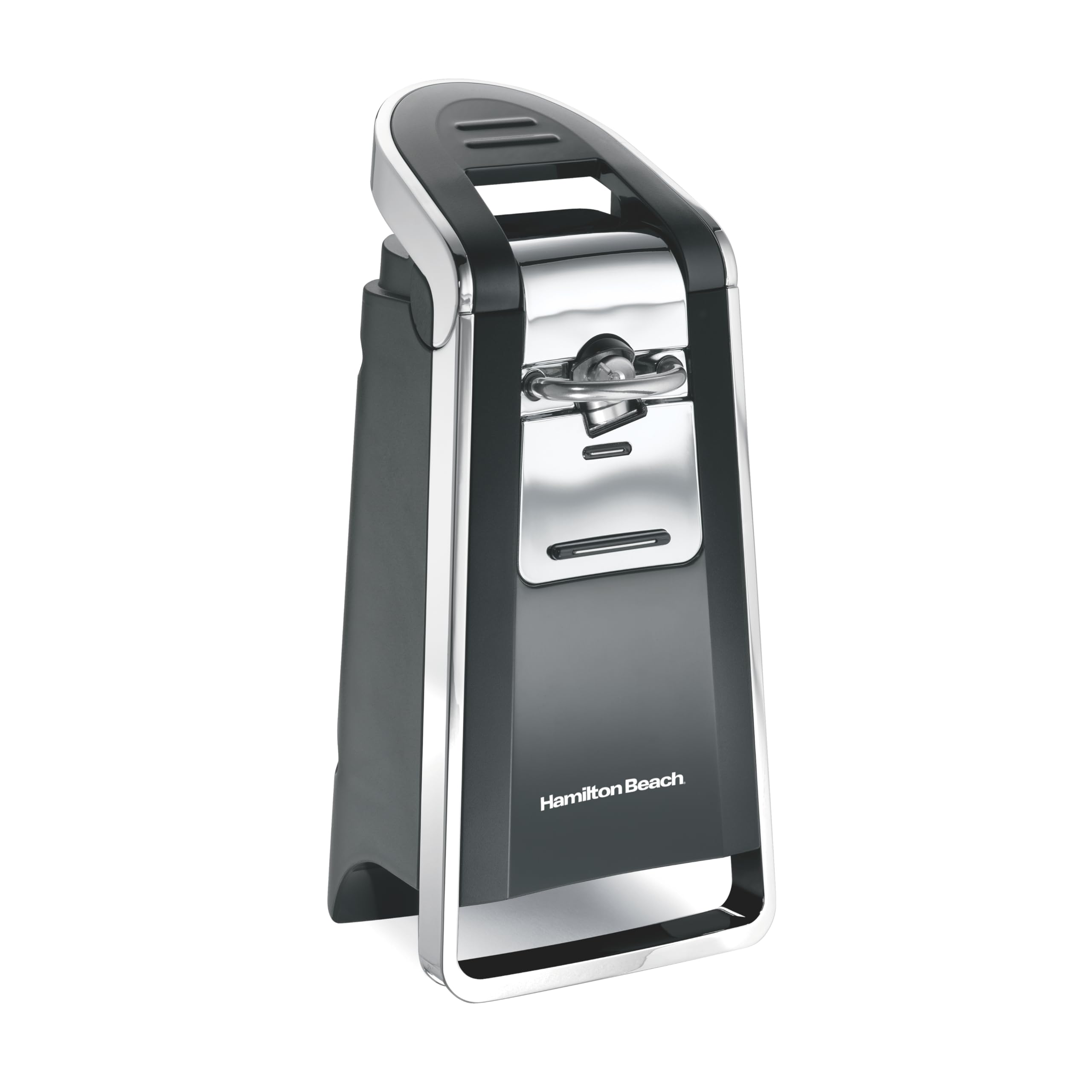
The Hamilton Beach Smooth Touch is a popular electric model that uses a side-cutting mechanism to eliminate sharp lid edges entirely. You align the can under the blade, push the top lever down, and the unit automatically cuts around the can and stops when the lid is free. The smooth lid can be reused as a cover for leftover storage, which is a clever feature for reducing plastic wrap usage in a home kitchen or small cafe.
The extra-tall design accommodates cans up to the size of a standard #10, though the plastic housing and internal gearing are not reinforced for the repetitive opening cycles that a commercial kitchen demands. The blade is stainless steel, but the drive mechanism relies on plastic components that wear faster under frequent use. Customer feedback confirms that this unit works flawlessly for home use and light office break rooms, but it is not a replacement for a cast-steel manual opener in a restaurant setting.
Where this unit excels is as a secondary opener for front-of-house or administrative areas where convenience matters more than throughput. The sleek black and chrome design looks presentable on a countertop, and the one-hand lever operation is genuinely easy for anyone to use. If your commercial operation is limited to a small number of cans per day and you prioritize lid safety and ease of use, this electric option saves effort — but it will not survive a busy prep shift.
Why it’s great
- Side-cut design eliminates sharp lid edges entirely.
- One-hand push-down lever is simple to operate.
- Extra-tall body fits standard and #10 cans.
Good to know
- Plastic drive components limit commercial durability.
- Not rated for high-volume daily cycling.
FAQ
Can I use a manual commercial can opener without mounting it to a countertop?
How do I clean metal shavings from a manual can opener?
How often should I replace the blade on a commercial can opener?
Can an electric can opener handle the volume of a commercial kitchen?
Final Thoughts: The Verdict
For most users, the best commercial can opener winner is the Edlund 11100 Old Reliable #1 because it delivers a reversible blade, a proven 5,000-can lifespan, and a plated steel base that stays planted under heavy use. If you want extra can-height versatility for taller institutional containers, grab the Wadoy Heavy Duty (Red). And for a budget-friendly entry into commercial-grade construction with an included spare blade, nothing beats the Wadoy Commercial (Silver).