The difference between a thin, sour shot and a syrupy, crema-topped espresso isn’t luck—it’s the machine. Whether you’re chasing latte art microfoam or a quick morning ristretto, the boiler type, pump pressure, and temperature stability of your espresso machine determine every sip. The wrong choice leaves you with bitter, under-extracted coffee and a countertop ornament you’ll resent.
I’m Mohammad Maruf — the founder and writer behind AirfryerBite. I’ve spent months dissecting pump specifications, PID temperature curves, and boiler materials across dozens of espresso machines to separate genuine performance from marketing fluff.
This guide cuts through the noise to help you find the best coffee machine for espresso that matches your skill level, counter space, and daily ritual. coffee machine for espresso shopping is about matching boiler technology and pressure stability to your specific brewing habits.
How To Choose The Best Coffee Machine For Espresso
Choosing the right espresso machine is a balance of three factors: your tolerance for manual workflow, the quality of temperature and pressure control, and the machine’s physical footprint. Beginners often over-prioritize boiler size while ignoring the pump and temperature regulation—the two specs that actually define shot quality.
Pump Pressure vs. Brew Pressure
Most machines advertise a 15 or 20 bar pump rating, but the actual extraction pressure at the group head should be around 9 bars. An over-pressure valve (OPV) regulates this. Machines without an OPV often deliver over-extracted, bitter shots, especially with dark roasts. Look for an OPV or adjustable pressure system rather than blindly chasing a higher pump number.
Boiler Type and Temperature Stability
Single boiler machines heat both brewing and steaming from the same chamber, requiring a temperature switch delay between pulling a shot and steaming milk. Dual boiler or thermoblock designs allow simultaneous brewing and steaming. For consistent shot temperatures, PID digital controllers hold the water within a single degree—essential for dialing in light roasts and replicating results.
Portafilter Size and Accessory Ecosystem
A 58mm portafilter is the industry standard, giving you access to aftermarket baskets, tampers, and distribution tools. 54mm or 51mm portafilters limit your upgrade path. If you plan to grow as a home barista, a 58mm group head is a long-term advantage. Pressurized baskets help beginners using pre-ground coffee, but switching to a non-pressurized basket unlocks real crema when you start grinding fresh.
Quick Comparison
On smaller screens, swipe sideways to see the full table.
| Model | Category | Best For | Key Spec | Amazon |
|---|---|---|---|---|
| Gevi 20 Bar with Touch Display | Mid-Range Pro | PID precision with commercial portafilter | 58mm Portafilter, PID+NTC, OPV | Amazon |
| MiiCoffee Apex V2 | Premium Dual Boiler | Dual PID, OPV, commercial steam | 550ml Boiler + Thermoblock | Amazon |
| Breville Barista Express | Integrated Grinder | All-in-one bean-to-espresso | 54mm Portafilter, PID, 15 Bar | Amazon |
| Philips 5500 Series | Super-Automatic | One-touch specialty drinks | LatteGo Milk System, 20 Presets | Amazon |
| De’Longhi La Specialista Arte Evo | Cold Brew Feature | Cold extraction + integrated grinder | 8 Grind Settings, 15 Bar Pump | Amazon |
| COWSAR 20 Bar | Grinder Combo | Built-in grinder with 30 settings | PID Control, 58mm Portafilter | Amazon |
| CASABREWS Ultra | Large Tank | High volume and LCD control | 73 oz Water Tank, 20 Bar | Amazon |
| Electactic 15 Bar with Grinder | Entry-Level Grinder | Budget-friendly integrated grinding | Anti-Clog Chute, 2.3L Tank | Amazon |
| HIBREW H10B | Budget Starter | Entry-level with pressure gauge | 20 Bar, NTC Sensor, 44 oz Tank | Amazon |
In‑Depth Reviews
1. Gevi 20 Bar Espresso Machine with Smart Touch Display
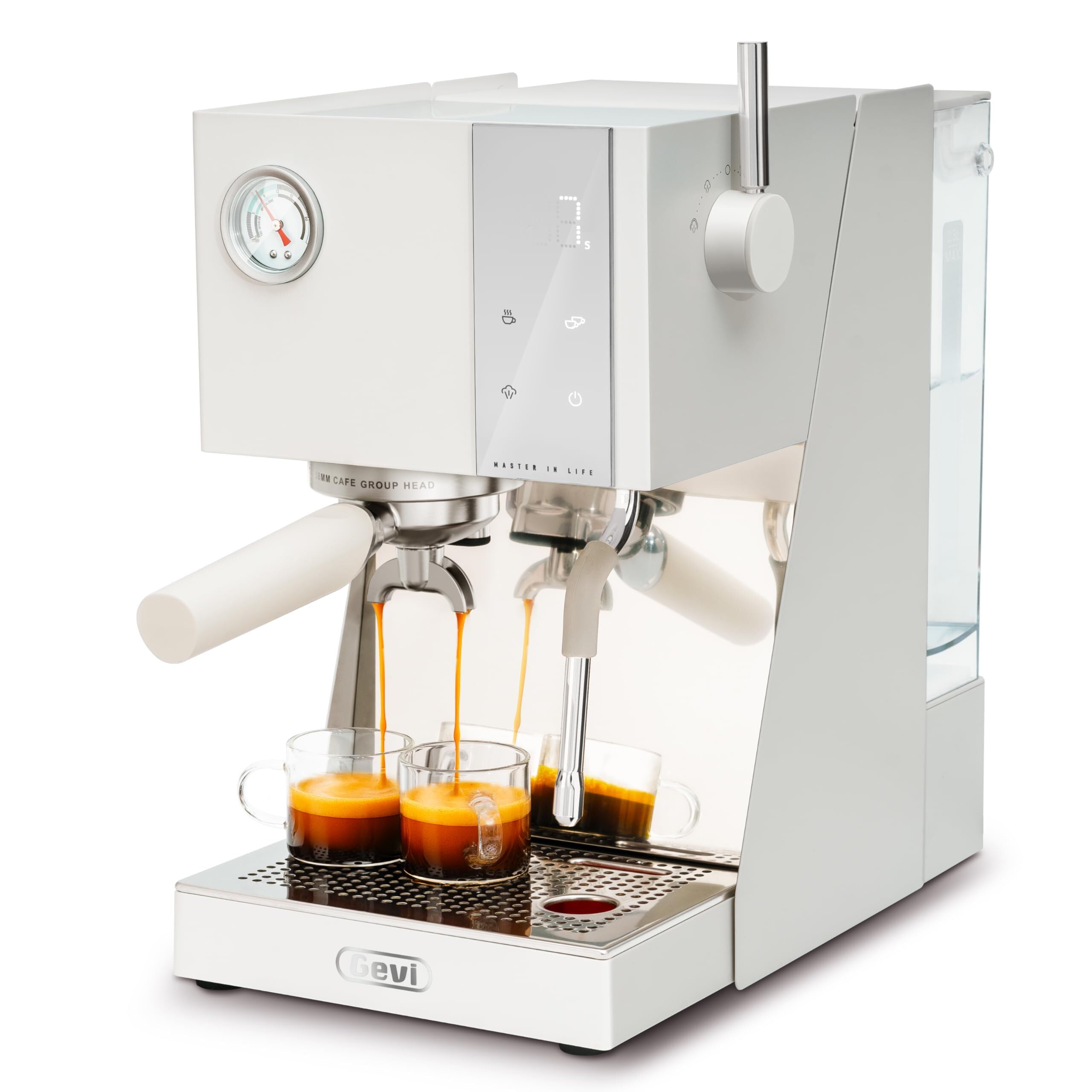
The Gevi strikes an impressive balance for the home barista who wants commercial-grade tools without the commercial price tag. Its 58mm portafilter matches the standard used in specialty coffee shops, meaning you can upgrade baskets and tampers without being locked into a proprietary size. Paired with a 20 bar Italian Ulka pump and an OPV relief valve that holds extraction pressure at the 9-12 bar sweet spot, this machine addresses the most common cause of bitter espresso—unregulated pressure.
The PID and NTC dual-temperature system offers three presets (92°C, 94°C, 96°C), giving you real control over roast profile extraction. Light roasts benefit from the higher setting to avoid sourness, while darker beans stay balanced at the lower end. A three-way solenoid valve releases pressure immediately after brewing, producing dry pucks that knock out cleanly. The real-time touch display shows shot timer, temperature, and pressure simultaneously, making dialing in grind size a visual exercise rather than guesswork.
At 21.6 pounds with a 2.3-liter detachable water tank, this is a solid, counter-anchoring machine. The steam wand produces microfoam dense enough for latte art, though beginners will need a few practice runs to find the wand’s sweet spot. For the price, the combination of a commercial portafilter, PID control, and an OPV is rare—this is the machine that grows with your skills from pressurized baskets to precision single-wall shots.
Why it’s great
- 58mm commercial portafilter opens the door to endless aftermarket accessories
- OPV and three-way solenoid valve deliver dry pucks and consistent extraction pressure
- Live touch display with shot timer, temp, and pressure feedback
Good to know
- Steam wand requires a learning curve for microfoam texture
- No built-in grinder—budget for a separate burr grinder if you don’t own one
2. MiiCoffee Apex Espresso Machine V2

MiiCoffee’s Apex V2 represents a genuine step up in thermal stability with its dual PID architecture. One PID controls the 550ml stainless steel boiler temperature (adjustable between 85°C and 102°C), while a second PID governs a dedicated thermoblock for steam generation. This separation means you can steam milk immediately after pulling a shot without waiting for the boiler to climb—no temperature surfing required. The Italian-made 15 bar vibratory pump is paired with an OPV, allowing you to fine-tune the brew pressure down to the 9 bar extraction ideal.
The pressure gauge mounted on the front panel gives real-time feedback during extraction, and the pre-infusion water amount and duration are configurable, giving you control over bloom phases for lighter roasts. The 58mm commercial portafilter comes with dual spouts, and the one-hole steam wand tip is a deliberate choice—it produces concentrated, dry steam that textures milk quickly with large, stretchable bubbles for latte art. The 1.7-liter removable water tank and top cup warming plate round out the feature set for daily workflow.
This machine is for the enthusiast who already understands that boiler temperature drift is the enemy of repeatable espresso. The dual PID system essentially eliminates that drift. Weighing 19 pounds and measuring 11 inches deep, it fits under standard cabinets without looking cramped. The only trade-off: you need a separate grinder, and you’ll want a quality one to match the Apex’s precision.
Why it’s great
- Dual PID completely decouples brew and steam temperature control
- OPV and configurable pre-infusion give total pressure management
- One-hole steam tip creates pro-level microfoam for latte art
Good to know
- No built-in grinder—expect to add – for a capable burr grinder
- Small water tank may require refilling for multiple back-to-back drinks
3. Breville Barista Express Espresso Machine BES870XL
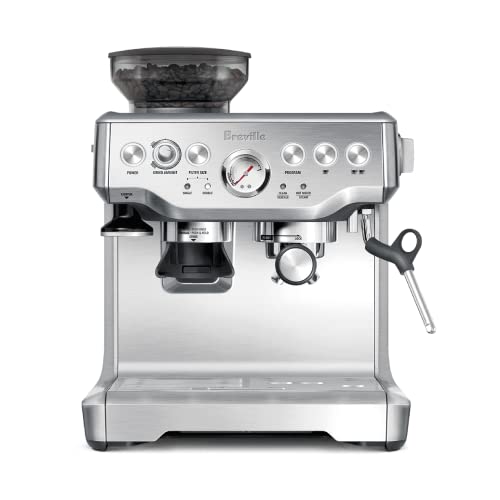
The Breville Barista Express is the machine that proved home espresso doesn’t require a separate grinder investment. Its integrated precision conical burr grinder grinds on demand directly into the 54mm portafilter, and the dose control system ensures consistency shot to shot. The grinder offers adjustable settings, and the included Razor Dose Trimming tool levels the puck to eliminate headspace—a detail that matters more for extraction evenness than many beginners realize.
Digital temperature control (PID) maintains water temperature stability, and the low-pressure pre-infusion gradually ramps up pressure at the start of the extraction. This pre-infusion stage wets the puck evenly before full 15 bar pressure hits, reducing channeling. The steam wand is powerful enough to texture milk for latte art, though it lacks the dry steam of a dedicated thermoblock system—you will need to purge water from the wand before achieving silky foam.
With a 67-ounce water tank, a half-pound bean hopper, and a 1600 watt heating element, this machine is built for daily use. The all-in-one format saves counter space and simplifies the learning curve. The trade-off for convenience is the 54mm portafilter, which limits aftermarket accessory compatibility compared to 58mm machines. Still, for anyone who wants espresso, cappuccino, and latte from a single appliance, the Barista Express remains a benchmark in the integrated category.
Why it’s great
- Integrated grinder with dose control eliminates the need for a separate grinder
- PID temperature control and pre-infusion improve shot consistency
- Razor Dose trimming tool and integrated tamper streamline workflow
Good to know
- 54mm portafilter limits aftermarket accessory options
- Steam wand requires a water purge before dry steaming
4. Philips 5500 Series Fully Automatic Espresso Machine EP5544/94
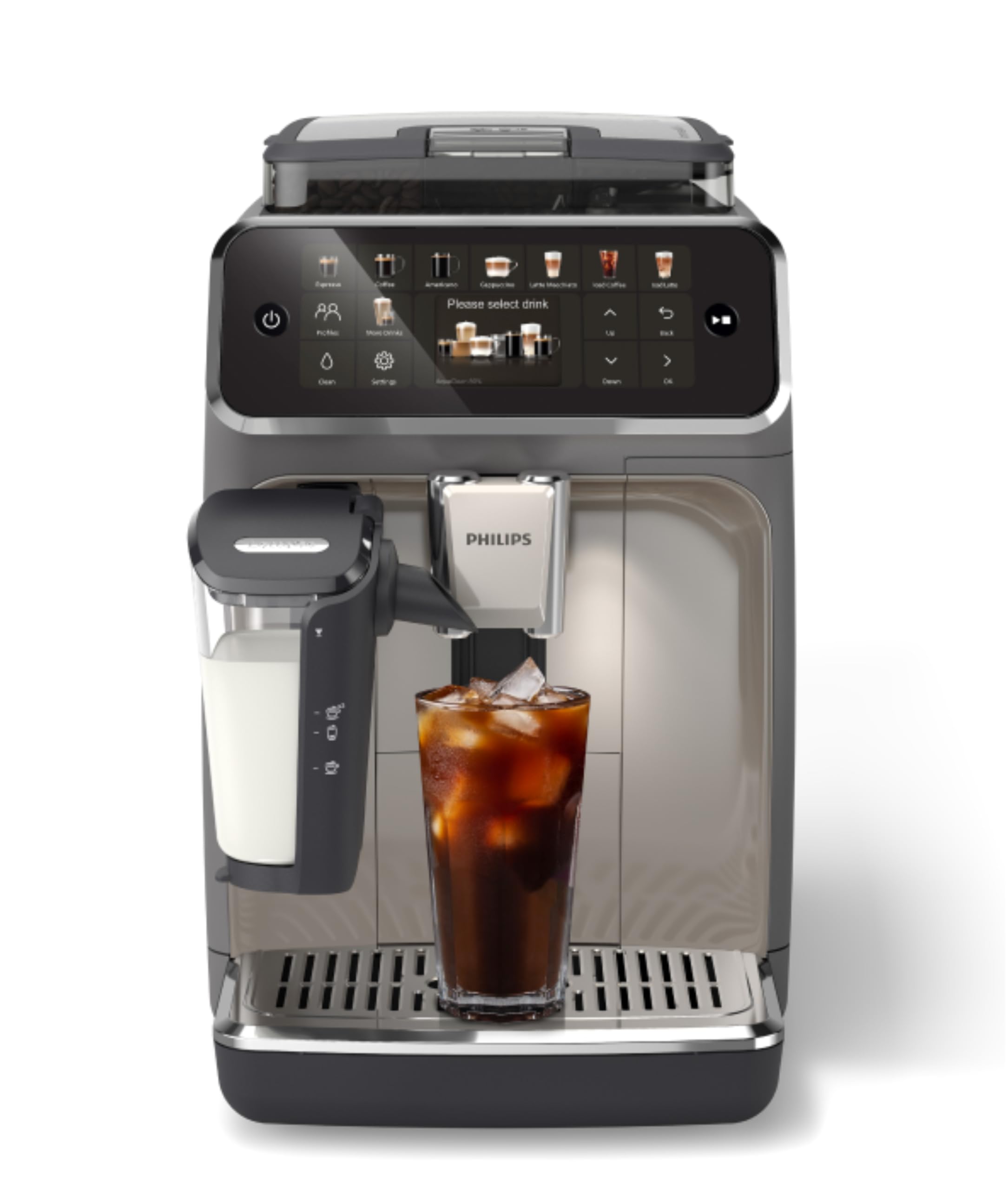
The Philips 5500 Series takes the manual work out of espresso entirely. It automatically grinds, tamps, and brews using whole beans or pre-ground coffee, then dispenses milk through the LatteGo system—a two-part milk frother with no hidden tubes. The LatteGo froths milk to a silky consistency for lattes and cappuccinos and can be rinsed clean in ten seconds. This machine is for the user who values speed and convenience over hands-on brewing craft.
Twenty preset recipes cover hot and iced espresso, Americano, latte, cappuccino, and cold brew variations. The intuitive color display lets you save up to four user profiles for strength, volume, and milk preferences. SilentBrew technology reduces grinding noise by up to 40% compared to earlier Philips models, and the QuickStart feature heats the thermoblock in three seconds. The 15-bar pump is paired with a metal filter holder, and the bypass chute allows you to use a second type of ground coffee without emptying the bean hopper.
At 3.63 pounds the machine is lighter than many semi-automatic options, but its footprint is larger at 14.6 inches wide. The ceramic burr grinder is durable and quiet, and the 1.8-liter water tank supports multiple drinks before refilling. The main trade-off is that you lose the tactile control over grind size, dose, and tamp pressure that semi-automatic machines provide. If your priority is a fast, consistent cappuccino before work, the 5500 delivers. If you want to obsess over extraction ratios, you’ll miss the manual control.
Why it’s great
- LatteGo milk system produces great microfoam and cleans in seconds
- 20 presets and four user profiles cover virtually any drink preference
- SilentBrew and QuickStart make it the fastest and quietest super-automatic in its class
Good to know
- Full manual control over grind and tamp is not available
- Larger width requires dedicated counter space
5. De’Longhi La Specialista Arte Evo EC9255M

De’Longhi’s La Specialista Arte Evo stands out for its Cold Extraction Technology, which brews cold coffee concentrate in under five minutes—a feature developed in collaboration with the Specialty Coffee Association. It uses specific water flow rates and extraction temperatures to produce cold brew without the traditional 12-24 hour steep. For iced latte drinkers, this is the defining feature that separates the Arte Evo from conventional espresso machines.
The integrated conical burr grinder offers eight settings, and the 15 bar Italian pump delivers low-pressure pre-infusion before ramping to full extraction pressure. Active Temperature Control provides three infusion temperature settings to match different roast levels, and the four presets cover espresso, Americano, cold brew, and hot water. The commercial-style steam warms up quickly and produces smooth microfoam, and the included tamping mat and dosing funnel reduce mess during preparation.
Weighing 21.5 pounds with a footprint of 14.37 inches deep, the Arte Evo feels substantial but fits on most countertops. The removable water tank is accessed from the front, and the barista kit includes a stainless steel milk jug and cleaning tools. The machine’s primary limitation is the 54mm portafilter, which again restricts aftermarket accessory upgrades. For the cold brew enthusiast who also wants solid espresso and steam performance, this is a unique hybrid that delivers on its signature feature.
Why it’s great
- Cold Extraction Technology produces cold brew in minutes, not hours
- Active Temperature Control with three infusion temps for roast matching
- Included tamping mat and dosing funnel reduce counter mess
Good to know
- 54mm portafilter limits aftermarket basket and tamper options
- Steam wand performance is good but not at the level of dedicated dual-boiler machines
6. COWSAR 20 Bar Espresso Machine with Grinder
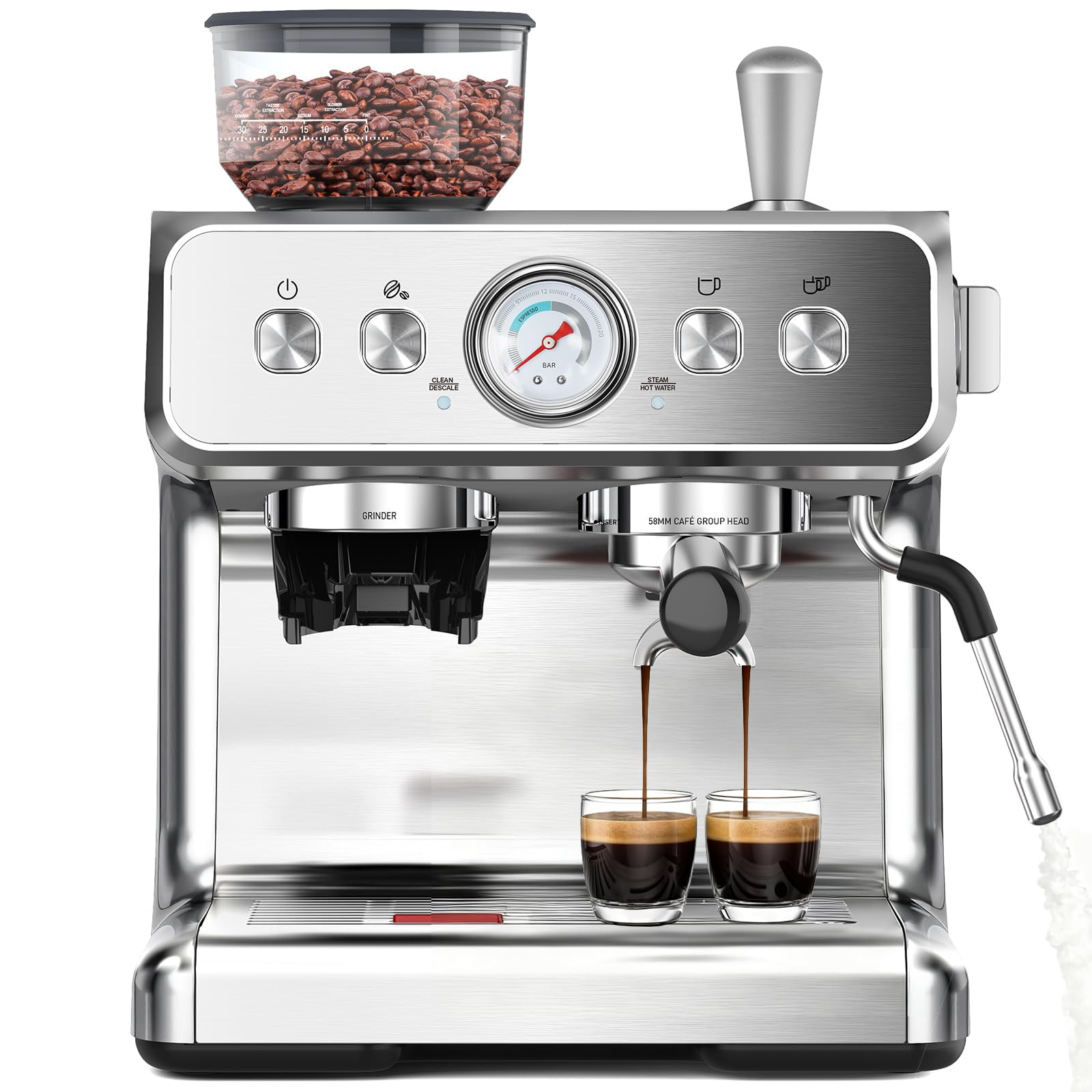
The COWSAR 20 Bar machine integrates a conical burr grinder with 30 preset grind size adjustments, giving you fine control over extraction without buying a separate grinder. This is a powerful argument for the all-in-one category: the grind range covers everything from fine Turkish-style to coarser French press, but the real value is in the espresso fine-tuning. Combined with PID temperature control, the machine maintains stable brew water temperature, reducing the sour or bitter notes that plague machines without thermal regulation.
Pre-infusion at low pressure saturates the grounds before full 20 bar extraction, which minimizes channeling. The 58mm portafilter is a welcome feature at this price tier, allowing you to use standard commercial baskets and tampers. The steam wand is positioned with a ball joint for easy angle adjustment, and the stainless steel milk pitcher included in the bundle is thick-gauge and well-balanced. Four precision filter baskets (single and double, single-wall and dual-wall) give you options for both pre-ground and freshly ground coffee.
At 20.57 pounds with a 4.9-pound bean hopper capacity, this machine is built for daily volume. The ETL certification adds a layer of safety confidence. The cleaning kit, including brushes and a steam nozzle needle, keeps maintenance manageable. The primary downside is the plastic component feel on some exterior parts, which contrasts with the stainless steel interior. For the user who wants PID control, a 58mm portafilter, and an integrated grinder in one machine, the COWSAR delivers strong value.
Why it’s great
- 30 grind settings with a conical burr grinder cover the full espresso spectrum
- PID control and pre-infusion for consistent, balanced shots
- 58mm portafilter opens the door to commercial accessories
Good to know
- Some exterior components have a plastic feel that doesn’t match the internal build quality
- Steam wand microfoam quality is good but not at the level of dedicated steam boiler machines
7. CASABREWS Ultra Espresso Machine with LCD Display

The CASABREWS Ultra prioritizes volume and convenience. Its 73-ounce water tank is the largest in this lineup, meaning fewer refills when making multiple drinks for guests or a busy household. The 20 bar Italian pump and 1350-watt boiler provide consistent pressure and fast heat-up, and the LCD display walks you through steam, hot water, and pre-programmed shot modes with clear visual guidance.
Four adjustable brewing temperature settings allow you to match the extraction heat to your bean roast. The steam wand is powerful and produces thick microfoam for cappuccinos and lattes, though it takes a few seconds of purging to reach dry steam consistency. The brushed stainless steel finish resists fingerprints and matches most kitchen aesthetics. The 58mm portafilter is included, with single and double baskets, and the machine accepts standard 58mm accessories for those who want to upgrade.
Weighing 13.55 pounds, it is lighter than many competitors, which makes it easier to move for cleaning but also means it can slide on the counter during vigorous tamping. The included cleaning needle and drip tray are functional but basic. For home users who make multiple milk-based drinks daily and want a large water reservoir without paying for a super-automatic, the CASABREWS Ultra offers a practical middle ground.
Why it’s great
- 73-ounce water tank is the largest in this comparison for fewer refills
- Four adjustable brew temperatures give flexibility for different roast profiles
- 58mm portafilter is standard, allowing aftermarket upgrades
Good to know
- Lighter weight means the machine can shift during tamping if not held steady
- Steam wand requires a brief purge to reach dry steam output
8. Electactic 15 Bar Espresso Machine with Built-In Grinder
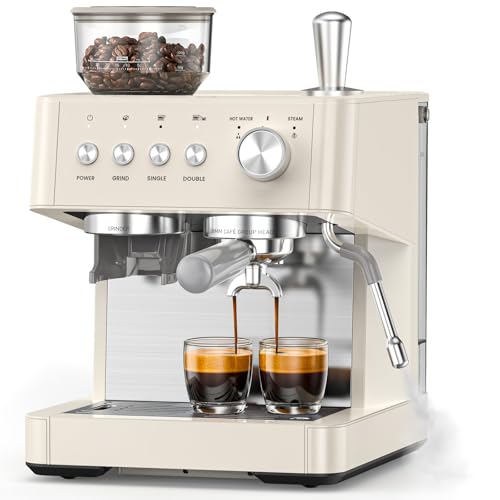
The Electactic machine targets the beginner who wants a built-in grinder without the premium price. Its upgraded grinder chute is 20% wider than earlier versions, with a reinforced helical auger designed to push oily dark-roast grounds through without jamming—a common pain point in entry-level grinder machines. The 15 bar pump is adequate for producing crema, and the 58mm portafilter is a surprise at this price tier, giving you the option to upgrade to non-pressurized baskets later.
The steam wand is basic but functional for frothing milk for lattes and cappuccinos. The 2.3-liter removable water tank is generous for the category, and the detachable drip tray simplifies cleanup. The machine is ETL certified, which adds peace of mind for an entry-level purchase. The almond color option offers an alternative to the standard stainless steel look that dominates the category.
The main compromise is temperature stability—this machine lacks PID control, so brew temperature can drift slightly between shots, especially when pulling back-to-back. The grind adjustment is stepped rather than stepless, meaning you may not find the exact setting for every bean. For someone testing whether home espresso is their long-term hobby, the Electactic provides a low-risk entry point with the essential tools built in. Expect to outgrow it as your palate and technique develop.
Why it’s great
- 58mm portafilter at an entry-level price for future upgrade potential
- Wider anti-clog grinder chute handles oily dark roasts reliably
- ETL certified with a large 2.3L tank for fewer refills
Good to know
- No PID temperature control means shot temperature can drift
- Stepped grind adjustment limits fine-tuning for specific beans
9. HIBREW H10B Professional Espresso Machine

The HIBREW H10B is built for the budget-conscious beginner who still wants feedback tools to learn proper extraction. The real-time pressure gauge on the front panel shows you exactly what is happening during the shot—a feature usually reserved for machines at twice the price. The NTC temperature sensor provides stability within a 194°F to 204°F adjustable range, and the adjustable pre-infusion function lets you experiment with bloom times to reduce channeling.
The 20 bar pump and pressurized filter basket work with pre-ground coffee, so you can start pulling shots with a standard bag of supermarket grounds. The stainless steel steam wand has adjustable temperature settings between 257°F and 302°F, and with practice it produces microfoam suitable for latte art. The 44-ounce removable water tank is sufficient for a few drinks before refilling, and the machine’s 9.6-pound weight makes it easy to reposition or store when not in use.
The compact footprint (12 x 5 x 11 inches) fits on small countertops, and the LED display shows preset temperature and real-time extraction timer. The included accessories—portafilter, single and double shot baskets, and a tamper with a spoon—cover the essentials. The main limitation is the 51mm portafilter, which limits aftermarket basket and tamper options. For its entry-level price, the pressure gauge is the standout educational tool that helps beginners understand what a proper extraction looks like before upgrading to a larger machine.
Why it’s great
- Real-time pressure gauge helps beginners learn proper extraction dynamics
- Adjustable pre-infusion and NTC temperature control for this price tier
- Compact footprint and light weight fit small kitchens and dorms
Good to know
- 51mm portafilter limits aftermarket accessory compatibility
- Build quality is good for the price but not as heavy-duty as larger machines
FAQ
What is the ideal brew pressure for espresso extraction?
Should I get a single boiler or dual boiler espresso machine?
Does portafilter size affect espresso quality?
What does pre-infusion do in an espresso machine?
Final Thoughts: The Verdict
For most users, the coffee machine for espresso winner is the Gevi 20 Bar because it combines a 58mm commercial portafilter, PID+NTC temperature control, and an OPV at a mid-range price that grows with your skills. If you want fully automated one-touch lattes with minimal cleanup, grab the Philips 5500 Series. And for the enthusiast who demands dual PID separation and configurable pre-infusion, nothing beats the MiiCoffee Apex V2.