A cleaver knife is not just a larger chef’s knife—it’s a purpose-built tool designed to handle heavy-duty tasks that would dull or damage a standard blade. From splitting chicken quarters to smashing garlic cloves and slicing through dense squash, the right cleaver transforms prep work from a struggle into a fluid, satisfying motion. However, the market is flooded with options that range from stamped steel that goes dull in a week to forged heirlooms that can last decades, making the selection process genuinely critical for anyone serious about their kitchen workflow.
I’m Mohammad Maruf — the founder and writer behind AirfryerBite. My analysis focuses on blade metallurgy, handle ergonomics, edge geometry, and long-term durability, drawing from extensive market research and technical specification comparisons across hundreds of culinary tools.
This guide cuts through the noise to help you find the best cleaver knife for your specific cooking style, whether you need bone-splitting power, precise vegetable work, or a versatile daily driver that balances both worlds without breaking the bank.
How To Choose The Best Cleaver Knife
Selecting a cleaver is more nuanced than picking any other kitchen knife because the category spans two distinct use cases—heavy-duty butchery and versatile Chinese-style chopping—and the wrong choice will leave you fighting your tool. You need to match the blade geometry, steel composition, and handle construction to your specific cutting tasks, not just to a price point or aesthetic preference.
Blade Steel and Hardness
The steel type dictates how often you sharpen, how easy that sharpening is, and how well the edge resists corrosion. High-carbon steel (like ATS-34 or proprietary alloys in the 56-61 HRC range) holds a razor edge longer and can be honed to a finer angle, but requires immediate drying after each use to prevent rust. Stainless high-carbon blends offer better corrosion resistance at the cost of slightly lower edge retention. For a cleaver that splits bones, aim for 56-59 HRC—hard enough to hold an edge but not so brittle that the blade chips on impact. For vegetable-centric Chinese cleavers, 58-61 HRC is ideal for thin, precise slicing.
Blade Thickness and Geometry
A Western butcher cleaver uses a thick spine (3mm or more) and a moderately acute edge to withstand the lateral stress of chopping through cartilage and small bones. A Chinese chef’s cleaver, by contrast, has a thinner blade (around 2.3mm) with a wide, rectangular profile that doubles as a bench scraper and crushing tool. The edge angle matters—15 to 16 degrees per side is standard for most cleavers, balancing sharpness with durability. Anything thinner risks chipping on hard ingredients; anything thicker struggles through onions and herbs.
Handle and Balance
A cleaver’s weight distribution determines how fatiguing it is over a long prep session. Full-tang construction (the steel extends through the entire handle) is non-negotiable for durability and balance. Handle materials range from moisture-resistant thermoplastic rubber (grippy even when wet) to natural hardwoods like oak, walnut, or rosewood (classic feel but requires oiling). Pakkawood—layered resin-impregnated wood—offers a middle ground with the look of hardwood and the water resistance of a synthetic. The handle shape should fill your palm comfortably; an ergonomic curve reduces wrist strain during repetitive chopping.
Quick Comparison
On smaller screens, swipe sideways to see the full table.
| Model | Category | Best For | Key Spec | Amazon |
|---|---|---|---|---|
| Victorinoix Fibrox 7″ Cleaver | Premium Mid-Range | Versatile daily chopping & dicing | 7.1″ blade, 56 HRC, dishwasher-safe | Amazon |
| Dexter-Russell S5288 Heavy Duty | Premium | Heavy butchery & bone work | 8″ blade, rosewood handle, 1.25 lb | Amazon |
| Dexter-Russell S5198 Chinese Chef’s | Premium | Traditional Chinese chopping & slicing | 8″ x 3.25″ blade, walnut handle | Amazon |
| Huusk Upgraded Serbian Chef Knife | Mid-Range | Outdoor camping & heavy meat cutting | 6.5″ blade, 59-61 HRC, oak handle | Amazon |
| PAUDIN 7″ Cleaver | Mid-Range | Home kitchen multi-purpose use | 7″ blade, 56 HRC, 2.3mm thick | Amazon |
| ROCOCO Effort Saving Cleaver | Mid-Range | Labor-saving, fatigue-free prep | 8.66″ blade, 60 HRC, stainless handle | Amazon |
| Mercer Culinary Asian Collection | Budget-Friendly | Entry-level Chinese cleaver tasks | 6″ blade, German steel, Santoprene grip | Amazon |
In‑Depth Reviews
1. Victorinox Fibrox 7 Inch Swiss Made Cleaver

The Victorinox Fibrox cleaver is the Swiss Army knife of the cleaver world—literally Swiss-made and engineered for versatility rather than specialization. Its 7.1-inch stainless steel blade hits a 56 HRC hardness, striking a practical balance that resists chipping on small bones while staying easy to hone on a steel rod. The Fibrox handle is the standout feature here: a textured thermoplastic rubber that provides a secure, non-slip grip even when your hands are slick with poultry fat or wet from washing greens. At roughly 0.27 grams (the lightest cleaver on this list), it feels almost like a large chef’s knife rather than a traditional heavy cleaver, making it ideal for cooks who want cleaver utility without cleaver fatigue.
What sets this cleaver apart from the competition is its designation as dishwasher safe—a rare claim in the cleaver category that simplifies cleanup significantly. The straight edge is taper-ground for sharpness out of the box, and the blade’s stain resistance means you don’t have to rush to dry it after every rinse. The trade-off is that the thin profile and moderate hardness mean this isn’t your tool for splitting chicken backs or hacking through pork ribs; it’s a chopping, dicing, and slicing workhorse that excels on vegetables, boneless proteins, and soft cartilage. The Fibrox line has been a professional kitchen staple for decades precisely because it prioritizes reliability over flashy specs.
For the home cook who wants one knife that does 90% of prep tasks—from mincing garlic to cubing butternut squash to portioning chicken thighs—the Victorinox Fibrox cleaver is the most intelligent purchase on this list. It won’t win a beauty contest, and the blade is too thin for heavy butchery, but its ergonomic handle, low-maintenance steel, and budget-friendly positioning make it the default recommendation for anyone who isn’t a professional butcher. The 7-inch length is nimble enough for detailed work yet substantial enough to feel authoritative on a cutting board.
Why it’s great
- Dishwasher-safe blade resists rust and simplifies cleaning
- Fibrox handle offers exceptional wet-grip security
- Lightweight profile reduces wrist fatigue during long prep sessions
- Proven professional kitchen track record for decades
Good to know
- Not designed for heavy bone splitting or frozen meat
- Moderate 56 HRC steel requires more frequent honing than harder alloys
2. Dexter-Russell S5288 8″ Stainless Heavy Duty Cleaver

When your prep list includes breaking down whole chickens, splitting spare ribs, or crushing ginger for a stir-fry, the Dexter-Russell S5288 is the cleaver you want in your hand. This is a traditional American butchery cleaver, built in the USA with a thick, stain-free high-carbon steel blade that tips the scales at a substantial 1.25 pounds. The 8-inch blade is noticeably heavier than standard cleavers, and that mass translates directly to momentum—each downward stroke carries force that does the work for you, making bone separation feel effortless. The hand-honed edge comes razor-sharp from the factory and holds well thanks to the high-carbon composition.
The rosewood handle with brass compression rivets is a classic choice for heavy-use knives, offering a warm, natural grip that conforms to your hand over time. Unlike synthetic handles, rosewood requires occasional mineral oil treatments to prevent drying and cracking, but the payoff is a handle that becomes more comfortable the longer you use it. The full-tang construction, visible through the three rivets, provides the structural integrity needed for repeated impact with hard materials. This knife is not dishwasher safe—the wood handle would degrade—and hand washing with immediate drying is mandatory to protect both the steel and the wood.
The S5288 is not the best choice for precision vegetable work or thin slicing because its blade thickness and weight sacrifice agility for power. It excels in exactly one role: heavy, repetitive chopping tasks where you need the blade to bite through resistance without stalling. The DEXSTEEL technology used in manufacturing gives this cleaver a reliable, long-lasting edge that professional butchers and serious home cooks will appreciate. If your cooking involves regular bone-in meat preparation, this cleaver will outperform every other knife on your magnetic strip.
Why it’s great
- Heavy 1.25-pound blade delivers superior chopping momentum
- Rosewood handle with brass rivets offers classic durability
- Stain high-carbon steel resists corrosion while holding a sharp edge
- Hand-honed precision edge ready out of the box
Good to know
- Rosewood handle requires occasional oiling to prevent cracking
- Too heavy and thick for fine vegetable slicing or delicate work
3. Dexter-Russell S5198 Traditional Chinese Chef’s Knife
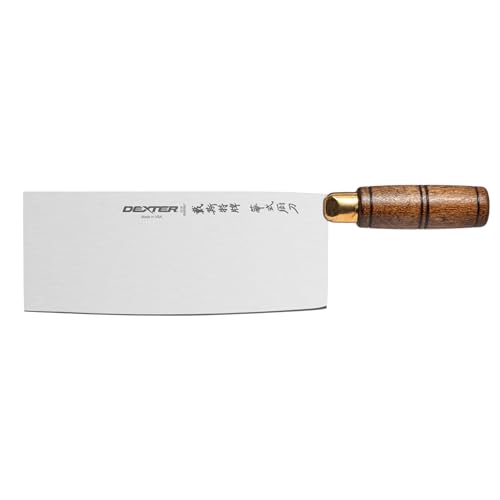
The Dexter-Russell S5198 is a true Chinese chef’s knife, also known as a caidao, designed with a wide rectangular blade measuring 8 inches by 3.25 inches. This is not a Western cleaver for hacking bones—it is a thin, nimble blade built for the rapid, continuous chopping motion that defines Chinese stir-fry preparation. The high-carbon stain-free steel takes a fine edge that allows you to slice scallions into perfect rings, dice carrots into uniform cubes, and mince ginger into a fine paste without crushing the fibers. The blade’s broad face doubles as a bench scraper, letting you scoop chopped ingredients directly from the board to the wok.
The walnut handle is a premium touch that sets this cleaver apart from standard Chinese knives, which often come with plain wood or plastic handles. Walnut is denser and more water-resistant than common hardwoods, providing a secure, comfortable grip that improves with age. The full-tang construction and solid feel inspire confidence during fast chopping, and the individually ground and honed edge from the factory is impressively sharp. At 0.75 pounds, the S5198 is light enough for prolonged use but substantial enough to feel balanced in hand. The blade is not designed for bone contact—thin and hard enough to chip if you try to hack through a femur or a frozen chicken.
This cleaver is a specialist tool for anyone who regularly prepares Asian cuisine or wants to master the push-cut chopping technique. It excels at high-volume vegetable prep, slicing proteins for stir-fry, and smashing garlic with the flat of the blade. The made-in-USA quality and traditional walnut handle give it a heirloom feel, though it requires hand washing and drying immediately after use to maintain the blade’s finish. If your cooking leans toward Western roasts and bone-in cuts, look elsewhere. But if you want to elevate your vegetable knife skills, this is the cleaver to buy.
Why it’s great
- Wide 8×3.25″ blade perfect for rapid chopping and scooping
- Premium walnut handle offers comfort and moisture resistance
- Individually ground and honed edge for exceptional sharpness
- Lightweight design reduces fatigue during extended prep sessions
Good to know
- Not suitable for chopping through bone or hard cartilage
- High-carbon steel requires immediate drying to avoid staining
4. Huusk Upgraded Serbian Chef Knife
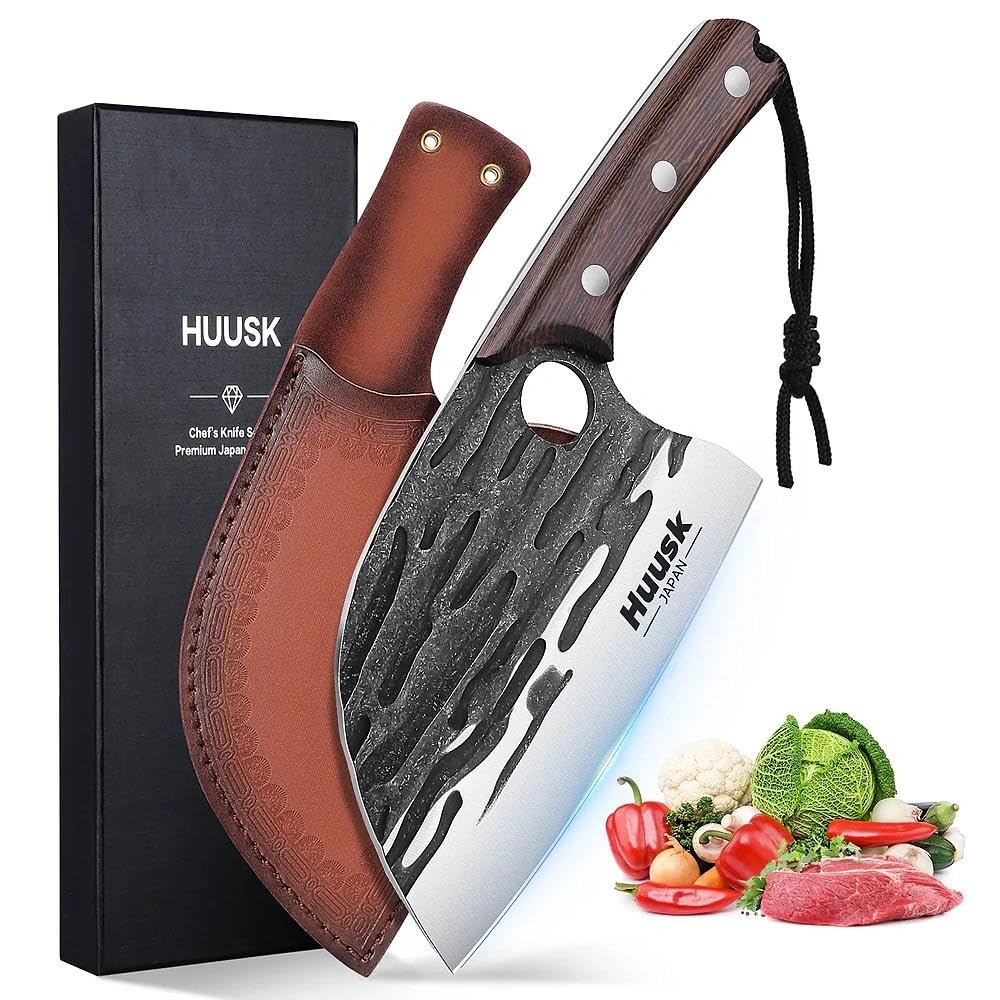
The Huusk Serbian chef knife is a shape-shifter in the cleaver category—its distinctive curved profile is designed for rock-chopping motions that feel natural during heavy meat-breaking tasks. The blade is forged from Japanese ATS-34 high-carbon steel heat-treated to a hard 59-61 HRC, placing it among the hardest blades on this list. That hardness translates to exceptional edge retention; the 13-15 degree hand-sharpened edge can slice through raw steak “like butter” and handle cartilage without losing bite. The hammered blade surface (tsuchime finish) serves a practical purpose: it prevents food from sticking to the blade during slicing, reducing drag and improving cutting efficiency.
The full-tang oak handle with three rivets is built for stability, and the leather sheath included in the packaging makes this cleaver genuinely portable for outdoor cooking. The lanyard hole at the handle’s base allows hanging storage or clipping to a backpack—a thoughtful touch for campers and hunters who need a reliable field knife. At 1.03 pounds, the Huusk has substantial heft, and the thick spine (not specified but visibly heavy in the images) gives it the power to process bone-in meat sections. The oak handle requires regular oiling and must never go in the dishwasher, and the high-carbon blade will develop a patina over time if not dried immediately after use.
The curved Serbian profile is not traditional for a cleaver, which may feel unfamiliar to cooks accustomed to flat rectangular blades. However, for anyone who processes large cuts of meat, breaks down whole animals, or wants a single rugged knife that transitions from kitchen to campsite, the Huusk is a uniquely capable option. The included gift box and leather sheath add value, but the real story is the ATS-34 steel—a premium alloy more commonly found in Japanese chef’s knives that brings genuine hardness and edge stability to the cleaver category. Just be aware that the 6.5-inch blade is shorter than standard cleavers, which limits its effectiveness for large volume vegetable chopping.
Why it’s great
- Hardened ATS-34 steel at 59-61 HRC delivers outstanding edge retention
- Leather sheath and lanyard hole make it portable for outdoor use
- Hammered blade finish prevents food sticking during slicing
- Full-tang oak handle provides secure, stable grip
Good to know
- 6.5-inch blade is shorter than traditional cleavers
- High-carbon steel requires diligent drying to prevent rust
5. PAUDIN 7″ Cleaver Knife

The PAUDIN 7-inch cleaver is the definition of a mid-range multipurpose tool, designed to handle the full spectrum of kitchen tasks without excelling at any single one. Its high-carbon stainless steel blade is rated at 56 HRC with a V-shaped edge ground to 16 degrees per side, making it sharp enough for precise vegetable cuts while maintaining enough toughness for cartilage and small bone work. The blade thickness is a moderate 2.3mm—thinner than heavy butchery cleavers but thicker than standard chef’s knives—which gives it a versatile feel suitable for both meat breaking and vegetable slicing. The pakkawood handle is a hybrid material combining wood fibers with resin, offering the warm look of natural wood with superior moisture resistance that doesn’t require periodic oiling.
PAUDIN includes a blade sheath with the knife, and the packaging is gift-box ready for occasions like Father’s Day or housewarming events. The 7-inch blade length is a practical sweet spot: longer than the Huusk’s 6.5-inch blade for better coverage on a cutting board, but not as unwieldy as an 8-inch Western cleaver for detailed work. The included sheath protects the edge during storage, though the sheath is a basic friction-fit design that may loosen over time. The knife’s weight is 0.63 kilograms (about 1.4 pounds), which is heavier than the Victorinox but lighter than the Dexter-Russell heavy duty model, placing it in a comfortable middle ground for most home cooks.
What the PAUDIN cleaver lacks is specialization—it won’t outperform the Victorinox in nimble slicing, the Dexter-Russell S5288 in bone splitting, or the Dexter-Russell S5198 in traditional Chinese chopping. But for the cook who wants one cleaver that does everything reasonably well, the PAUDIN delivers solid performance with an attractive pakkawood handle and a lifetime warranty. The high-carbon stainless steel is rust-resistant enough for casual care but still benefits from hand washing. It’s a competent, well-priced entry into the cleaver world that leaves room to upgrade later if your needs become more specific.
Why it’s great
- Versatile 7-inch blade handles meat, vegetables, and light cartilage
- Pakkawood handle combines wood aesthetics with water resistance
- Lifetime warranty against defects provides long-term confidence
- Includes blade sheath and gift-ready packaging
Good to know
- Not specialized enough to excel at heavy butchery or fine slicing
- Basic sheath may loosen over time with repeated use
6. ROCOCO Meat Cleaver Knife
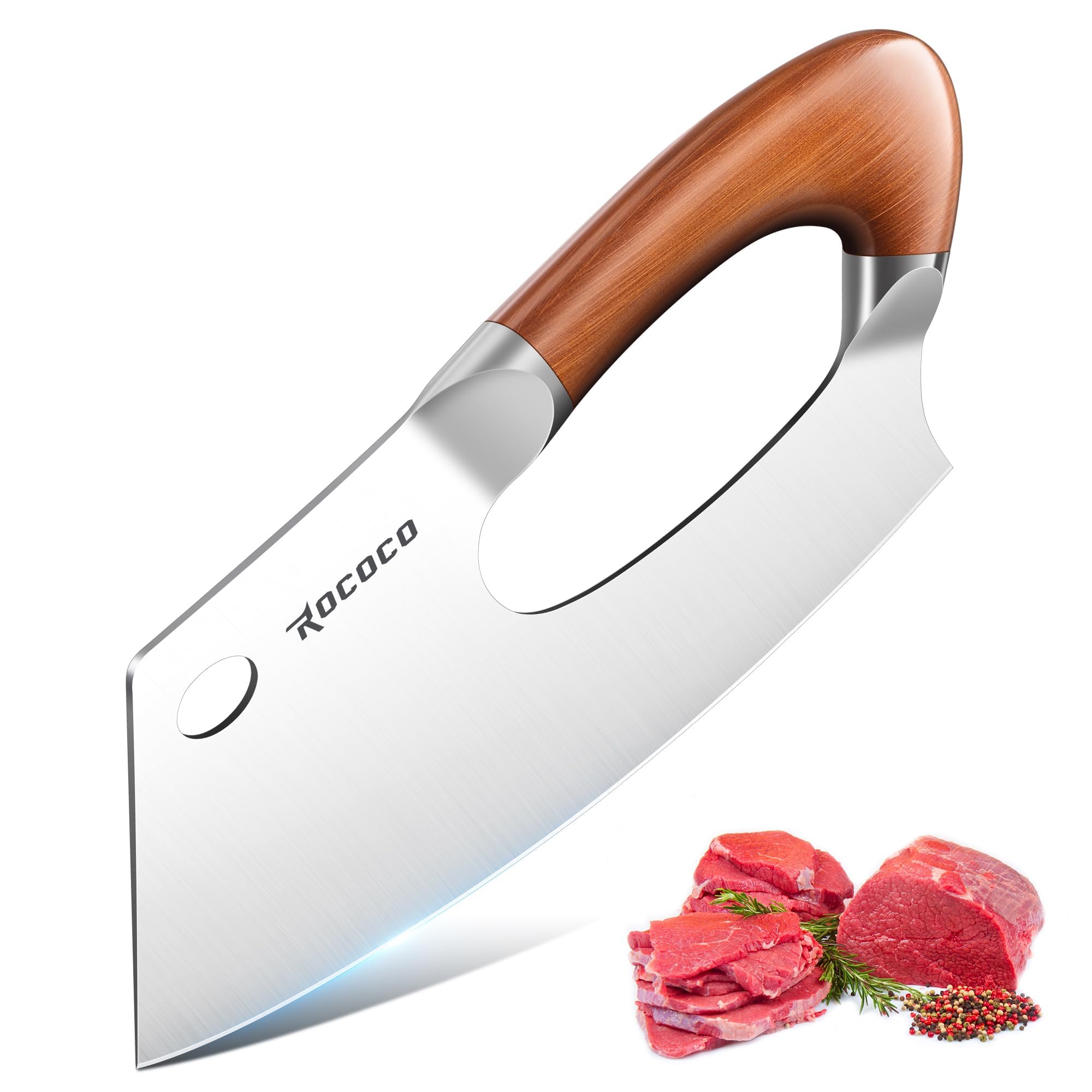
The ROCOCO cleaver takes a design-first approach to the category, with a curved up-swept handle and a seamless stainless steel construction that prioritizes ergonomics. The blade is forged from premium stainless steel and heat-treated to 60 HRC with a hand-polished 15-degree V-shaped edge—making it one of the sharpest and hardest blades in this comparison. The integrated stainless steel handle is a rarity in the cleaver world; most handles are wood, thermoplastic, or pakkawood. Stainless offers a seamless transition from blade to handle that is easy to clean and impossible to crack, though it provides less grip texture than synthetic materials. The forward-curved handle design shortens the distance between your hand and the blade, reducing the lever arm and making each cut feel more controlled and less fatiguing.
The 8.66-inch blade length is the longest on this list, giving you substantial cutting surface for large ingredients like whole cabbages, watermelons, or thick cuts of meat. The curved cleaver shape is unconventional—most cleavers have a flat or gently curved edge—but the design is intentional: the curve concentrates force on a smaller contact point for easier initial penetration, then the wide blade distributes pressure for a clean slice. ROCOCO explicitly states this knife is not intended for bone work, which is consistent with the hard 60 HRC steel that could chip on impact with bone. Instead, it’s optimized for through-cuts in meat, poultry, vegetables, and fruit where precision and reduced resistance matter most.
The stainless handle is a love-it-or-hate-it proposition. It offers zero maintenance, seamless hygiene, and modern aesthetics, but it can feel slippery when your hands are wet or greasy—a significant drawback for a cleaver that will likely be used on raw proteins. The overall feel is balanced and substantial, and the labor-saving ergonomics genuinely reduce wrist fatigue during long prep sessions. The ROCOCO cleaver is a strong choice for cooks who prioritize cutting efficiency and modern design over traditional aesthetics, and who are willing to trade a bit of grip security for a handle that will never rot, crack, or require oiling.
Why it’s great
- Ergonomic curved handle reduces wrist fatigue during extended use
- Hard 60 HRC stainless steel with hand-polished 15-degree edge
- Seamless stainless handle is zero-maintenance and hygenic
- Long 8.66-inch blade handles large ingredients efficiently
Good to know
- Stainless handle can become slippery with wet or greasy hands
- Not designed for bone contact due to hard, brittle edge
7. Mercer Culinary Asian Collection Chinese Chef’s Knife

The Mercer Culinary Asian Collection Chinese Chef’s Knife is the entry-level gateway to the cleaver world, offering professional-grade construction at a price that won’t make you hesitate to use it hard. The blade is stamped from high-carbon German steel (a common alloy that balances edge retention with corrosion resistance) and features a taper-ground edge with a fine stone finish that produces good sharpness right out of the box. At 6 inches, the blade is the shortest in this lineup, which limits its utility for large-volume chopping but makes it highly maneuverable for detailed tasks and small cutting boards. The Santoprene handle is the same material Mercer uses on their professional Fibrox-like line—a thermoplastic rubber that provides excellent grip even when wet, with a comfortable ergonomic shape that fills the hand well.
The dual-edge blade is rated for cutting through thin or soft bones (such as chicken ribs) and hard vegetables like winter squash, making it more versatile than its compact size might suggest. The included care instructions emphasize hand washing and immediate drying, which is standard for high-carbon steel knives even at this price tier. The stamped construction (as opposed to forged) means the blade is lighter and thinner than premium options, which reduces fatigue but also reduces momentum for heavy cuts. The 10.2-ounce weight is the second-lightest on this list, and the balance point is slightly handle-heavy, which some users may find less intuitive than a blade-forward cleaver.
The Mercer is an ideal first cleaver for cooks who aren’t sure they need one, or for anyone who wants a reliable, low-risk introduction to Chinese cleaver techniques. It won’t hold an edge as long as the hardened Japanese steel of the Huusk or the ROCOCO, and the 6-inch blade is too short to replace a full-size chef’s knife for all tasks. But the Santoprene handle is genuinely comfortable, the German steel is a proven performer, and the price leaves room in your budget to buy a second, more specialized cleaver later if your needs grow. For the money, this is the best entry-level Chinese-style cleaver available.
Why it’s great
- Comfortable Santoprene handle offers excellent wet grip security
- High-carbon German steel provides good edge retention and corrosion resistance
- Versatile enough for thin bones and hard vegetables
- Lightweight and nimble for a beginner-friendly introduction to cleavers
Good to know
- Stamped construction doesn’t offer the durability of forged blades
- 6-inch blade is shorter than standard cleavers for large-volume chopping
FAQ
Can I use a cleaver knife to chop through bone?
How often should I sharpen my cleaver knife?
Should I get a wooden or synthetic handle on my cleaver?
Final Thoughts: The Verdict
For most users, the best cleaver knife winner is the Victorinox Fibrox 7″ Cleaver because it combines a razor-sharp, dishwasher-safe blade with a non-slip ergonomic handle at a price that delivers exceptional value for versatile daily prep work. If you want heavy-duty bone-splitting power, grab the Dexter-Russell S5288 Heavy Duty Cleaver. And for traditional Chinese-style vegetable and protein chopping, nothing beats the Dexter-Russell S5198 Chinese Chef’s Knife with its classic walnut handle and wide rectangular blade.