A professional chef’s knife endures eight hours of repetitive mincing, slicing, and rocking, often through dense squash or sinewy proteins. The wrong blade—one that flexes on a bell pepper or loses its bite mid-shift—forces extra wrist load and slows a cook’s rhythm. The subcategory demands a knife that can hold a 12- to 15-degree edge through a full service without a mid-shift hone.
I’m Mohammad Maruf — the founder and writer behind AirfryerBite. I’ve spent years parsing the metallurgy and ergonomics of commercial cutlery, tracking HRC ratings, steel compositions, and tang construction to separate true line-ready knives from marketing-heavy shelf stock.
Whether steeling your station for the first time or upgrading a worn-out blade from culinary school, finding the right tool means balancing edge retention, handle geometry, and blade height. This guide breaks down the best chef knife for professional chefs across seven models engineered for speed and consistency.
How To Choose The Best Chef Knife For Professional Chefs
Buying a knife for a pro station is different from outfitting a home kitchen. The blade must endure high-volume prep, aggressive board contact, and frequent steeling without chipping or losing geometry. Here are the three specs that separate a line-ready knife from one that will fail mid-service.
Steel Hardness and Edge Retention
Hardness is measured on the Rockwell C scale (HRC). A blade with an HRC of 58 or higher holds a fine edge longer, which reduces how often you need to stop and sharpen. Japanese steels like VG-10 (HRC 60–61) or VG-MAX (HRC 61–62) are standard in professional gyuto knives. German X50CrMoV15 steel typically sits around HRC 57–58, offering more toughness but requiring more frequent steeling. For high-volume chopping and slicing, a hardness of HRC 60 or above is the threshold.
Blade Geometry and Height
The profile of the blade determines how the knife moves through food. A taller blade—around 4.7 to 5.2 cm in height—provides knuckle clearance during rocking cuts and prevents fatigue on long prep sessions. The edge angle also matters: a 12- to 15-degree edge is typical for Japanese knives and delivers cleaner cuts through vegetables, while a 20-degree edge is more common on German knives and provides slightly more durability against hard board impact. A thinner spine behind the edge reduces wedging on dense produce.
Tang Construction and Handle Ergonomics
A full-tang blade—where the steel runs the entire length of the handle—provides balance and reduces hand fatigue during repetitive tasks. Handle materials like Pakkawood (resin-stabilized wood) offer moisture resistance and a secure grip when wet, while olive wood adds natural oils for grip. The handle shape also matters: octagonal or D-shaped profiles (common in Japanese wa-handles) allow a pinch-grip that aligns the wrist with the blade spine, cutting strain during long shifts. Avoid plastic or hollow handles—they lack the weight distribution needed for professional control.
Quick Comparison
On smaller screens, swipe sideways to see the full table.
| Model | Category | Best For | Key Spec | Amazon |
|---|---|---|---|---|
| Wüsthof Performer 8″ | Premium | High-volume commercial prep | HRC 104 DLC-coated blade | Amazon |
| Yoshihiro VG10 Gyuto | Premium | Precision vegetable work | HRC 60, 46-layer Damascus | Amazon |
| Shun Classic Kiritsuke | Premium | All-purpose line work | 16-degree edge, VG-MAX steel | Amazon |
| Made In 8″ Chef | Mid-Range | French-forged balance | 2 mm spine, X50CrMoV15 | Amazon |
| ZWILLING Professional S | Mid-Range | Rugged everyday use | Sigmaforge, ice-hardened | Amazon |
| HexClad 8″ Chef | Mid-Range | Damascus versatility | 12-degree edge, 67 layers | Amazon |
| Cangshan L1 Set | Bundle | Full station in one buy | HRC 58, 17-piece set | Amazon |
In‑Depth Reviews
1. Wüsthof Performer 8″ Chef’s Knife

The Wüsthof Performer pushes the hardness envelope for a German knife by applying a diamond-like carbon coating that brings the blade to HRC 104 on the surface layer. This DLC finish resists scratches, acids, and alkalis, making it unusually durable for a chef knife that sees constant board contact and acidic ingredient exposure.
The hexagon power grip handle uses an offset honeycomb structure that provides non-slip control even with wet or greasy hands—a critical feature during a busy service. The 8-inch high-carbon stainless steel blade holds a plain edge well, and the forged construction from Solingen, Germany, ensures the full-tang design delivers reliable forward balance.
This knife is built for extreme-control environments where grip security and blade longevity outweigh the premium cost. It is not dishwasher safe and requires careful hand washing to preserve the DLC coating, but for chefs who prioritize durability and a locked-in feel, this is the top-tier option.
Why it’s great
- DLC coating resists corrosion and wear
- Hexagon handle offers superior grip in wet conditions
- Extremely scratch- and heat-resistant blade
Good to know
- Premium price point limits accessibility
- Requires hand washing; DLC can scratch on metal surfaces
- Heavier than comparable Japanese gyuto knives
2. Yoshihiro VG10 46-Layer Hammered Damascus Gyuto
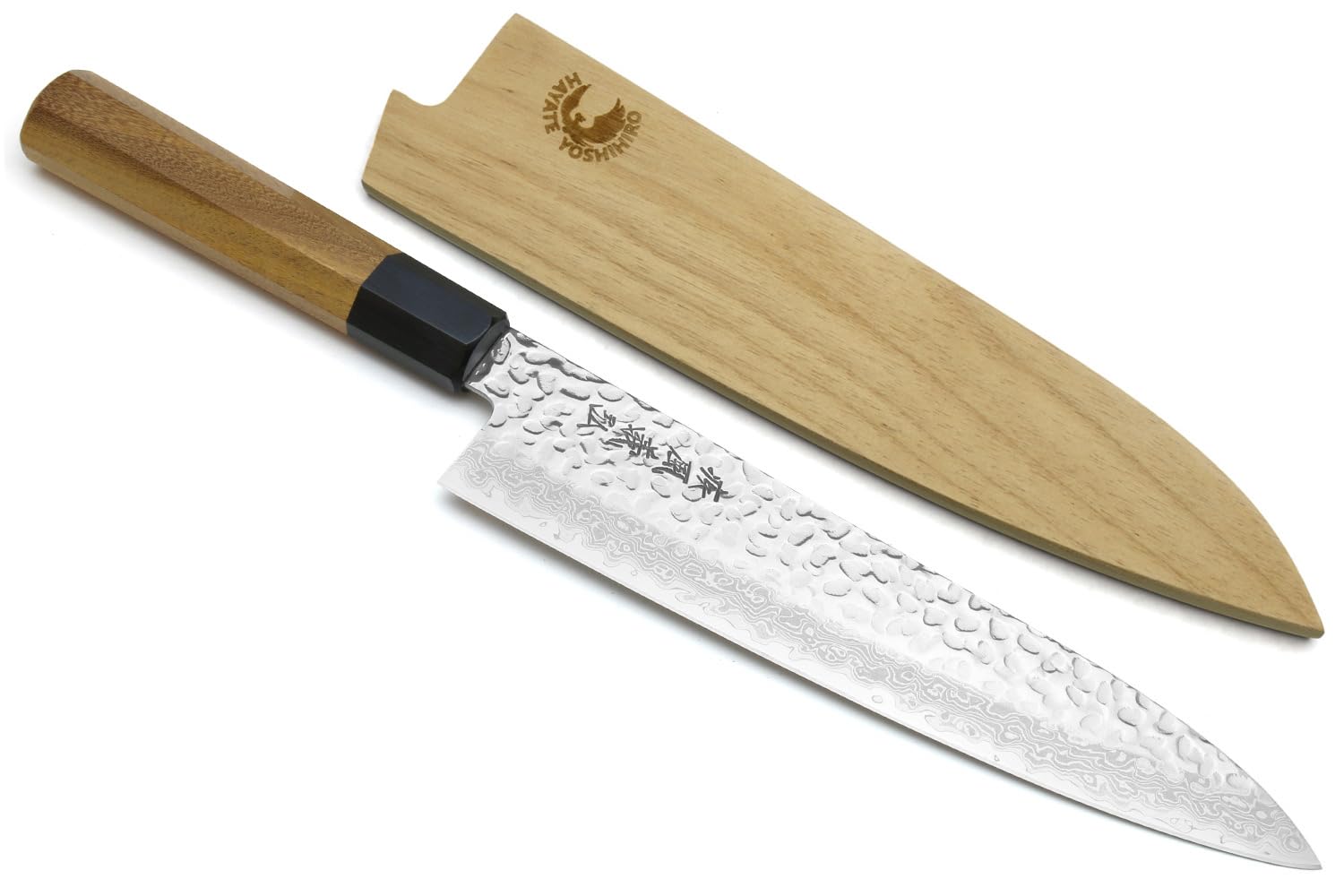
The Yoshihiro Gyuto uses a VG10 stainless steel core clad in 46 layers of Damascus steel, giving it an HRC of 60. This hardness translates to exceptional edge retention for a gyuto profile, and the hammered tsuchime finish reduces food sticking—a practical advantage when moving through onions, potatoes, or fatty proteins.
The octagonal Ambrosia wood handle follows the traditional wa-style design, which aligns the wrist directly over the blade spine when using a pinch grip. This reduces lateral wrist strain during long prep sessions. The included magnolia wood saya protects the blade in storage, and the 8.25-inch blade length hits the sweet spot between maneuverability and slicing reach.
Because VG10 is harder than standard German steel, the edge is more prone to chipping on bones or frozen foods. This knife is best for vegetable, fish, and boneless meat prep. The double-edged blade is symmetrical, making it suitable for right- or left-handed cooks.
Why it’s great
- Hammered texture prevents food adhesion
- Octagonal handle supports neutral wrist position
- Includes protective wooden saya sheath
Good to know
- Not suitable for bones or frozen foods
- Requires water whetstone sharpening only
- Hand wash only; no dishwasher
3. Shun Classic 8″ Kiritsuke Knife

The Shun Classic Kiritsuke combines the flat profile of a traditional kiritsuke with a curved belly, allowing both push-cutting and rocking motion. The VG-MAX steel core, clad in 68 layers of Damascus, reaches an HRC of 61–62, delivering sustained sharpness through long prep lists.
The D-shaped Pakkawood handle fits both left- and right-handed users and provides a secure grip during repetitive slicing. The 16-degree edge angle is optimized for clean cuts through vegetables and boneless meat. Shun includes a free sharpening service, which reduces long-term maintenance costs for professional users.
This knife excels as an all-purpose line tool. Its narrower tip than a standard gyuto allows precise scoring and detail work, while the 8-inch length handles bulk chopping. Like most high-hardness Japanese blades, it should not be used on bones, frozen items, or hard squash seeds.
Why it’s great
- 68-layer Damascus cladding with VG-MAX core
- 16-degree edge for refined precision cuts
- Free sharpening service included
Good to know
- Avoid bones and frozen foods
- Hand wash only; not dishwasher safe
- Premium price tier
4. Made In 8″ Chef Knife
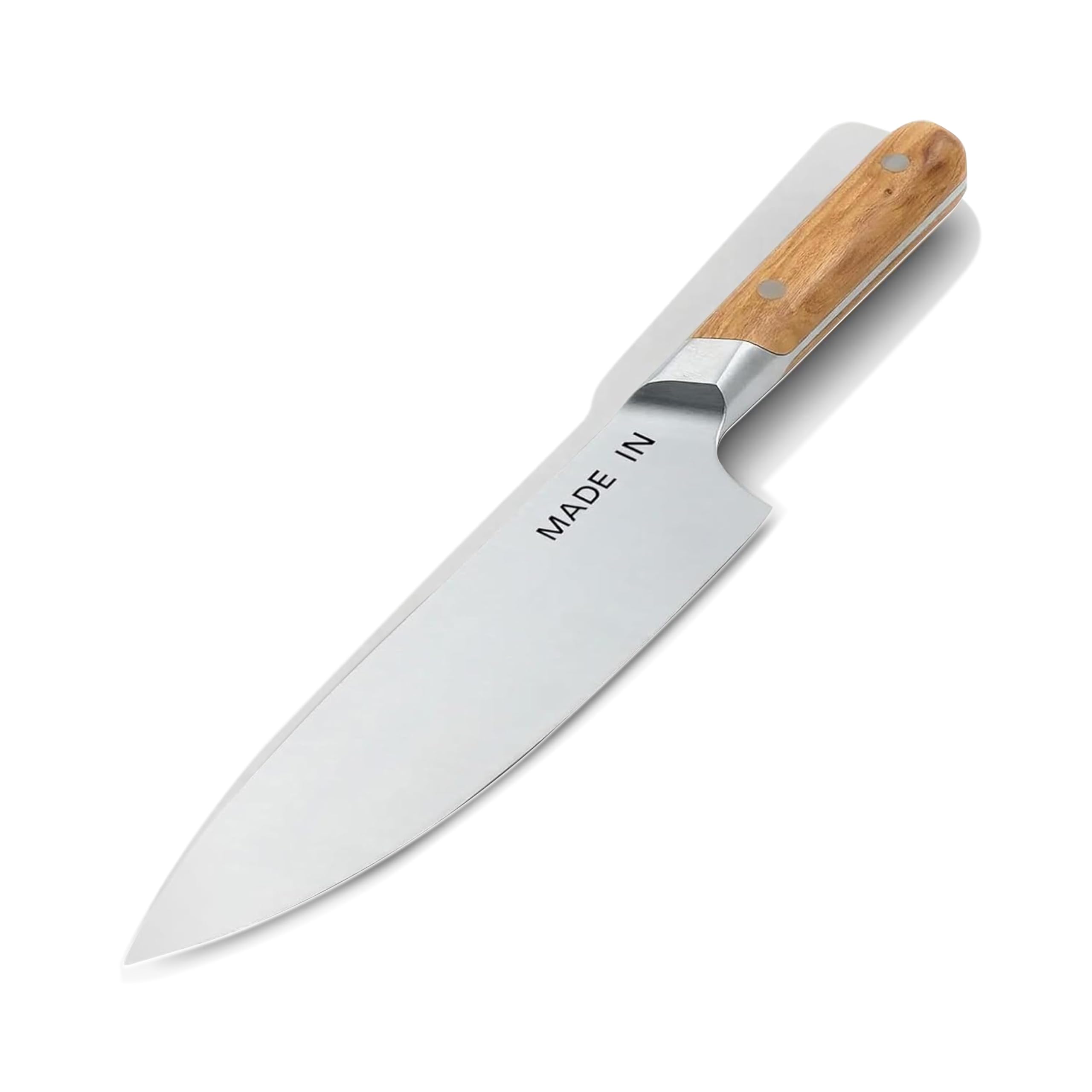
Made In’s 8-inch chef knife is forged in Thiers, France, by a fifth-generation bladesmith using nitrogen-treated X50CrMoV15 stainless steel. The 2 mm spine thickness provides a nimble feel that allows precise slicing without wedging, while the full-tang construction keeps the blade balanced for all-day prep.
The olive wood handle adds natural oils that improve grip as your hand warms up. The 8.5-inch blade height (1.96 inches) offers good knuckle clearance for rock-chopping herbs or mincing garlic. This knife is not particularly hard (around HRC 57–58) but is extremely tough—less likely to chip on hard vegetables or when hitting a cutting board edge.
For chefs who prefer a lighter knife that can handle a variety of tasks without the brittleness of high-HRC steel, the Made In is a versatile mid-range option. It requires hand washing and frequent honing to maintain the edge, but the nitrogen treatment resists staining better than untreated stainless.
Why it’s great
- Forged in Thiers, France by experienced bladesmiths
- Full tang provides excellent balance
- Olive wood handle offers natural grip security
Good to know
- Requires frequent honing to maintain edge
- Not dishwasher safe
- Lower HRC than Japanese alternatives
5. ZWILLING Professional S 8″ Chef’s Knife

The ZWILLING Professional S uses the Sigmaforge process, where the blade is forged from a single rod of high-carbon NO STAIN steel and then ice-hardened via the Friodur method. This yields a blade that starts sharp, resists corrosion, and maintains its edge longer than standard German stainless.
The ergonomic polymer handle with three rivets is bonded to the full tang, providing a secure grip even when wet. The precision-honed, laser-controlled edge ensures a consistent cutting angle along the entire 8-inch blade. This knife is dishwasher safe, though hand washing is recommended to preserve the edge.
With an HRC around 57–58, the ZWILLING Professional S is tougher than harder Japanese blades, making it suitable for cutting through squash, breaking down chickens, or any task where edge chipping is a concern. The curved belly allows easy rock-chopping, and the 12.8-ounce weight gives it authority on the board.
Why it’s great
- Ice-hardened Friodur blade for extended sharpness
- Sigmaforge one-piece forged construction
- Rugged enough for bones and hard squash
Good to know
- Heavier than Japanese gyuto knives
- Polymer handle less traditional feel
- Dishwasher safe but edge degrades faster
6. HexClad 8″ Chef’s Knife

The HexClad Chef’s Knife features 67 layers of Damascus steel with a 12-degree cutting edge, achieved through the Honbazuke three-step heat treatment. This produces a blade that is both hard and flexible, reducing the risk of chipping during high-volume prep.
The ergonomic Pakkawood handle is 5.2 inches long, providing a comfortable pinch-grip area. The 7.5-inch blade length (8-inch total) is slightly shorter than standard, offering nimble control for detail work like trimming silverskin or julienning peppers. The Damascus pattern also reduces food drag on the blade surface.
HexClad includes a lifetime warranty against manufacturing defects, though misuse through dishwasher cleaning, hard surface cutting, or foodservice use voids coverage. This knife is best for cooks who want a moderately hard blade (estimated HRC 58–60) combined with the visual appeal of layered Damascus steel.
Why it’s great
- 67-layer Damascus for strength and beauty
- 12-degree edge for clean cuts
- Ergonomic Pakkawood handle
Good to know
- Warranty voids with dishwasher or foodservice use
- Hand wash and frequent honing required
- Slightly shorter blade than standard chef knives
7. Cangshan L1 Series 17-Piece Knife Set
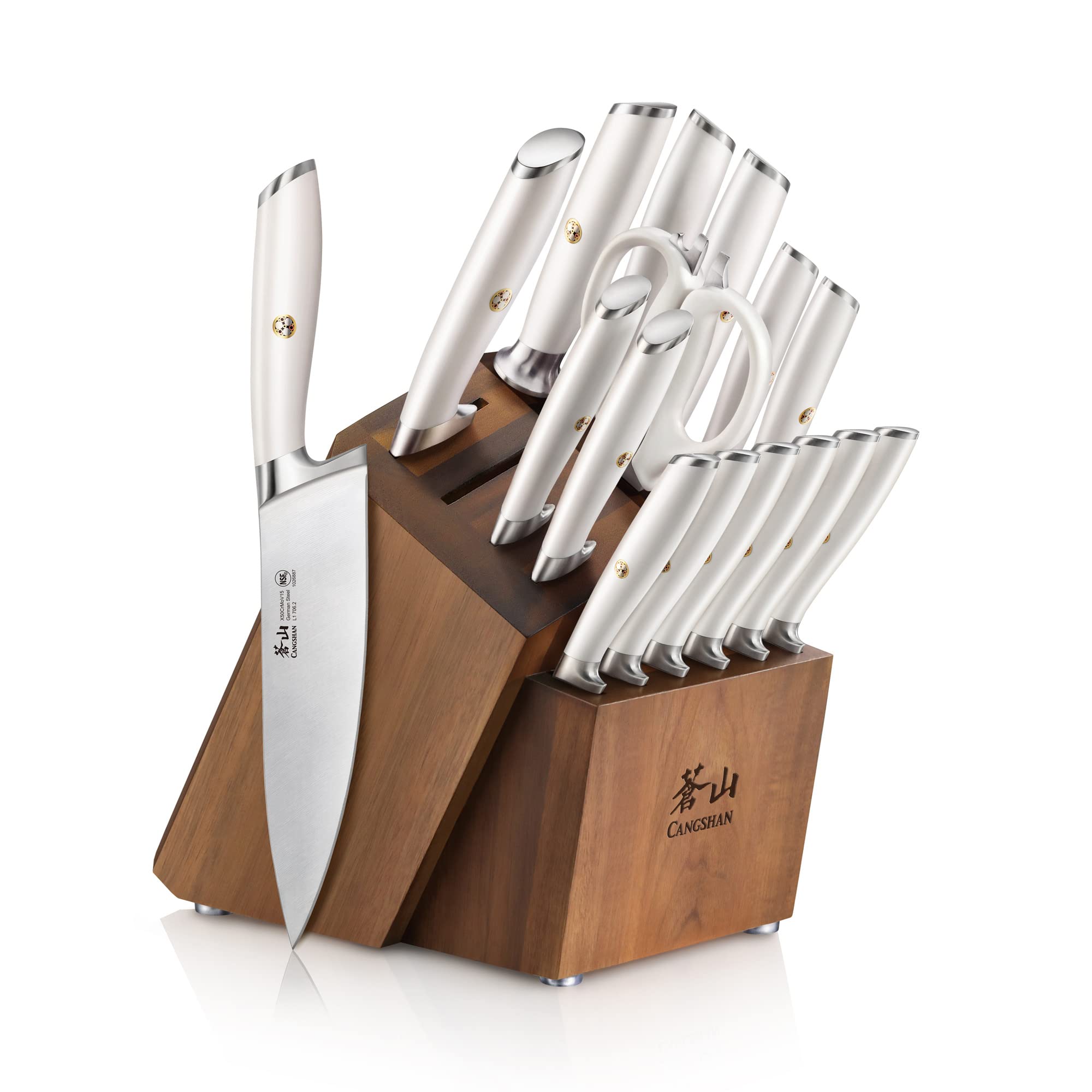
The Cangshan L1 Series delivers a 17-piece set including an 8-inch chef’s knife, 7-inch santoku, 8-inch bread knife, boning knife, serrated utility, paring knife, peeling knife, six steak knives, shears, honing steel, and a walnut knife block. The chef knife in this set is forged from X50CrMoV15 German steel with an HRC of 58 +/- 2, hand-sharpened to a 16-degree angle per side.
The patented ergonomic handle uses a single mosaic rivet and is NSF International certified, meaning it meets sanitation standards for commercial food contact. The cream-colored ceramic-infused handle resists bacteria and cleans easily. The full-tang blades provide balanced weight distribution for repetitive cutting.
While the set covers a full station, the individual chef knife’s HRC 58 is lower than premium Japanese options, making it better suited for general kitchens rather than high-volume fine-dining prep. The walnut block organizes all tools neatly, and the lifetime warranty protects against manufacturing defects.
Why it’s great
- 17-piece set covers an entire kitchen station
- NSF certified for commercial hygiene
- Hand-sharpened to 16-degree angle per side
Good to know
- Chef knife HRC 58 is mid-range hardness
- Not dishwasher safe
- Set format includes specialized knives some may not need
FAQ
What HRC rating should I look for in a professional chef knife?
Can I use a Japanese chef knife on bones or frozen food?
How often should a professional chef sharpen their knife?
Why do professional chefs prefer a pinch grip over a handle grip?
Final Thoughts: The Verdict
For most users, the chef knife for professional chefs winner is the Yoshihiro VG10 Gyuto because it delivers the optimal combination of HRC 60 edge retention, 46-layer Damascus for reduced drag, and an octagonal handle that aligns the wrist naturally for long shifts. If you want extreme durability and a non-slip grip for wet commercial kitchens, grab the Wüsthof Performer. And for a versatile all-purpose line tool with free sharpening, nothing beats the Shun Classic Kiritsuke.