Finding a juicer that delivers fresh, flavorful juice without demanding a premium price tag is the real challenge for anyone looking to build a healthier routine. The budget-friendly market is crowded with options that promise high yield but often deliver watery results, frustrating cleanup, or a motor that gives out after a few uses. Navigating this space requires knowing exactly which specs matter and which flashy features are just marketing noise.
I’m Mohammad Maruf — the founder and writer behind AirfryerBite. I’ve spent countless hours analyzing motor wattages, feed chute diameters, and extraction technologies across dozens of entry-level to mid-range juicers to separate the worthwhile contenders from the disposable ones.
Whether you want a quick morning apple-carrot blend or a slow-extracted green juice packed with nutrients, this guide cuts through the clutter to help you find the right cheap juicer for your kitchen and your routine.
How To Choose The Best Cheap Juicer
When shopping on a tighter budget, the decision often boils down to choosing between a fast centrifugal juicer for quick, everyday use or a slow masticating juicer for higher nutrient retention and yield. Understanding a few key specs will keep you from wasting money on a machine that doesn’t fit your needs.
Centrifugal vs. Masticating: Speed vs. Yield
Centrifugal juicers use a high-speed blade to shred produce and spin the juice out through a mesh filter. They are faster, cheaper, and great for hard fruits like apples and carrots. However, they introduce more heat and oxygen, which can degrade nutrients and reduce shelf life. Masticating juicers, also called cold press juicers, crush and squeeze produce at low speeds. They yield more juice from leafy greens and produce less foam, but they operate slower and typically cost more upfront. For a budget buy, a centrifugal model offers the best value for fast, mixed-fruit juicing, while a budget masticator is ideal if you prioritize green juices and nutrient retention.
Motor Power and Chute Size
Motor wattage is a direct indicator of how well a juicer handles dense ingredients. Look for at least 400 watts in a centrifugal juicer to process carrots and beets without stalling. In a masticating juicer, lower wattage (150-300W) is standard because the motor doesn’t need to spin fast, but it must be paired with a robust gear mechanism. The feed chute size determines how much precutting you must do. A 3-inch chute fits whole apples and significantly cuts prep time. A smaller chute means you’ll be chopping produce into smaller pieces, which adds minutes to every juicing session.
Quick Comparison
On smaller screens, swipe sideways to see the full table.
| Model | Category | Best For | Key Spec | Amazon |
|---|---|---|---|---|
| Ninja JC150 NeverClog | Masticating | Clog-free green juice | 150W Motor, 24 oz Capacity | Amazon |
| Godspeeds 5.8″ Chute | Masticating | Whole fruit convenience | 300W Motor, 5.8″ Feed Chute | Amazon |
| SUSTEAS Cold Press | Masticating | High yield, low prep | 300W Motor, 5.3″ Feed Chute | Amazon |
| Juilist 800W | Centrifugal | Fast family juicing | 800W Motor, 3″ Feed Chute | Amazon |
| Hamilton Beach HealthSmart | Centrifugal | Compact daily use | 400W Motor, 2.4″ Feed Chute | Amazon |
| Ventray Ginnie Mini | Masticating | Personal single servings | 60 RPM Slow Speed, 400 ml | Amazon |
| SIFENE 3 Speed | Centrifugal | Entry-level apartment use | 500W Peak Power, 2.5″ Chute | Amazon |
In‑Depth Reviews
1. Ninja JC150 NeverClog Cold Press Juicer (Renewed)

The Ninja JC150 brings premium cold-press performance to a more accessible price point, especially in its renewed form. Its signature NeverClog technology uses a low-speed auger and a specialized screen to prevent the pulp buildup that plagues many masticating juicers, allowing for continuous operation with fibrous ingredients like celery and kale. The 150-watt motor is optimized for torque, not speed, ensuring efficient crushing without overheating the juice.
One of the standout features is the Total Pulp Control system, which includes two interchangeable filters. You can switch between a low-pulp screen for silky smooth juice and a high-pulp filter for a thicker, fiber-rich drink. The 24-ounce juice jug and 30-ounce pulp container are thoughtfully sized for single to small-batch sessions. All removable parts are dishwasher safe, making cleanup straightforward.
As a renewed product, this juicer offers a path to a high-end feature set—specifically the clog-resistant extraction—without the full retail cost. It is an excellent choice for users who prioritize green juice and want a machine that processes leafy vegetables without constant disassembly to clear blockages.
Why it’s great
- NeverClog technology eliminates the main hassle of slow juicers.
- Dual pulp filters let you control the texture of your juice.
- All dishwasher-safe parts for effortless cleanup.
Good to know
- As a renewed unit, cosmetic wear or minor packaging differences may occur.
- Lower motor wattage means it processes slowly compared to centrifugal models.
2. Godspeeds Juicer Machine with 5.8″ Feed Chute
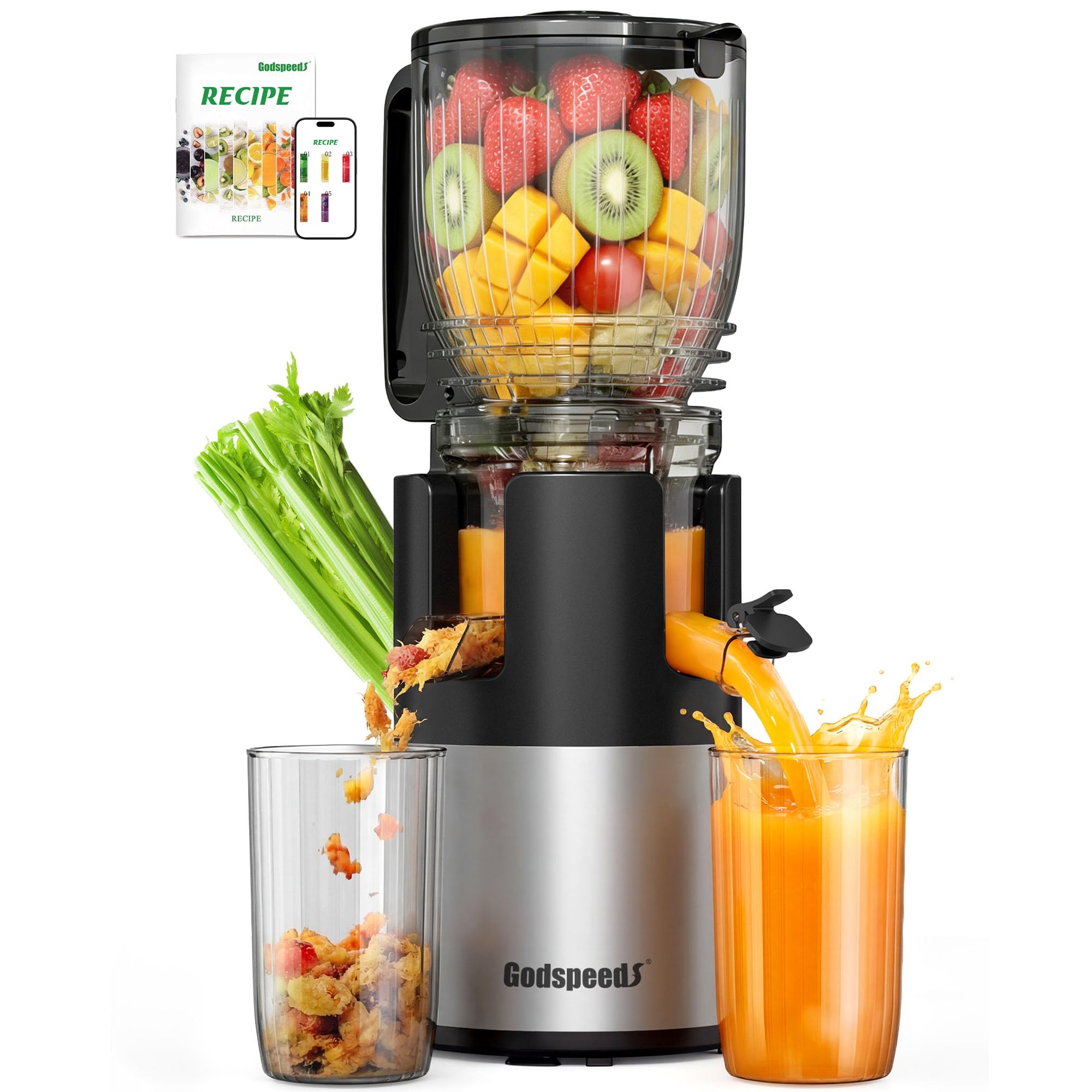
The Godspeeds juicer attacks the biggest time-waster in juicing: prep work. Its massive 5.8-inch feed chute swallows whole apples, cucumbers, and oranges without any chopping, making it one of the most convenient budget slow juicers on the market. The 300-watt motor drives a masticating auger that slowly crushes produce to maximize juice yield from both hard roots and leafy greens.
Cleaning is a strong point here, as the removable filter is designed to resist pulp buildup and rinses clean under running water without needing a scrub brush. The machine’s 3-step assembly is intuitive, and the brushed black plastic finish looks more substantial than its price suggests. The 473-milliliter juice cup is best suited for single servings, so heavy users may need to process in batches.
While the plastic blade material may raise eyebrows for longevity, the real-world performance is solid for a mid-range masticator. If your primary goal is to juice a whole apple or a handful of celery without pre-cutting, this model delivers that convenience without stepping into premium price territory.
Why it’s great
- 5.8-inch chute eliminates nearly all fruit prep time.
- Easy-clean filter resists clogging and rinses quickly.
- Slow masticating action preserves nutrients and reduces oxidation.
Good to know
- Plastic blade construction may wear faster than stainless steel over years.
- Limited juice cup capacity at 473 ml for single-serve use.
3. SUSTEAS Cold Press Juicer with 5.3″ Feed Chute
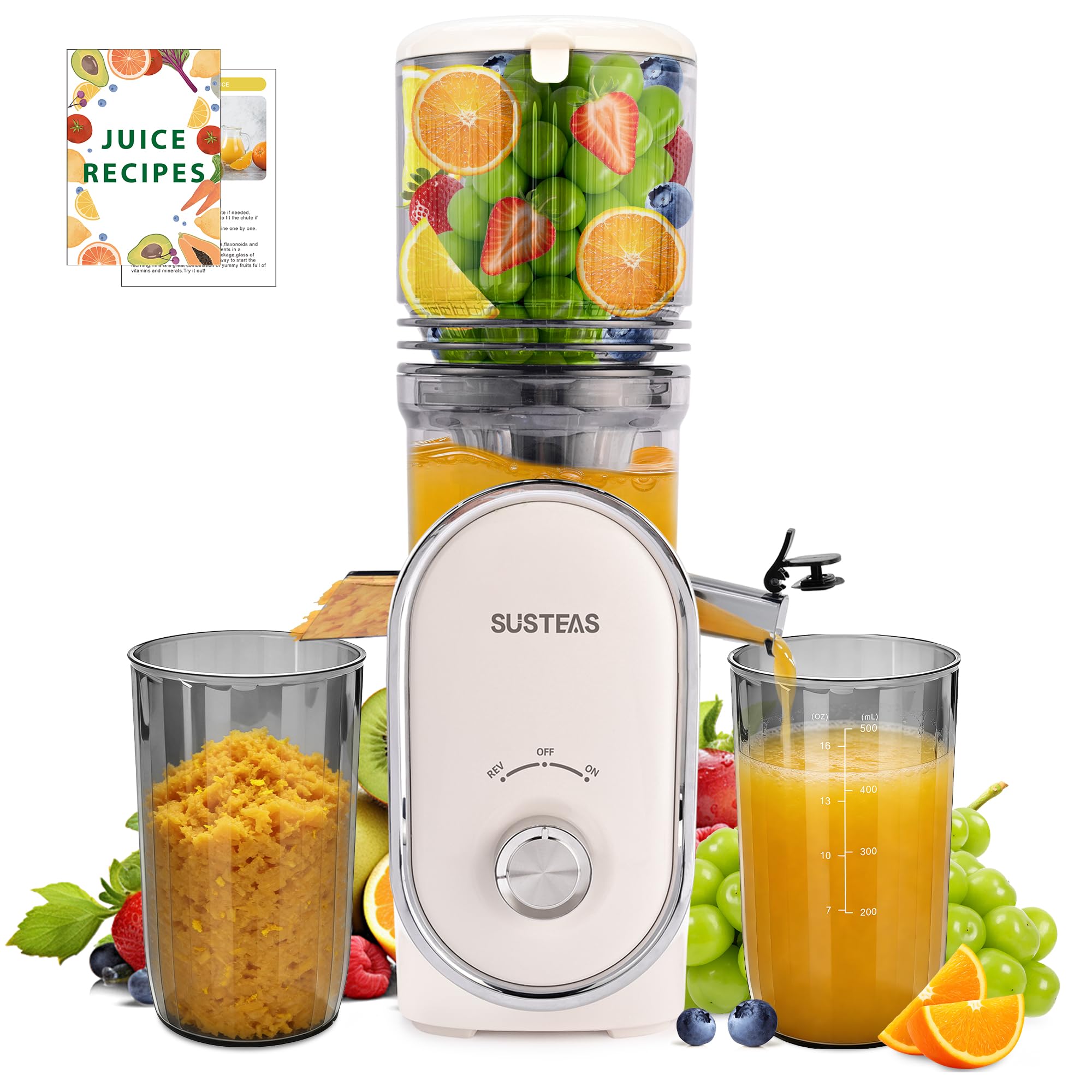
The SUSTEAS Cold Press Juicer offers a compelling balance of wide-mouth convenience and high juice yield at a price that undercuts most slow juicers. Its 5.3-inch feed chute accepts whole fruits, significantly reducing prep time, while the 300-watt motor powers a masticating system that effectively separates pulp from juice. The included 550 ml juice cup and 470 ml pulp cup are larger than what many low-end masticators provide, allowing for a more satisfying single session without frequent emptying.
A practical safety feature is the automatic shut-off if the lid is opened during operation, which is a useful safeguard in busy kitchens. The reverse function also helps clear blockages if the auger gets jammed with stringy produce. The unit is designed for simple assembly, with a streamlined juicing bowl that rinses easily.
One notable limitation is that the manufacturer advises against juicing acidic fruits like lemons to prevent rotor corrosion, which is an atypical restriction. For everyday apple, carrot, celery, and orange juicing, however, the SUSTEAS delivers excellent value and performance that rivals more expensive models.
Why it’s great
- Large 5.3-inch chute handles whole fruit with minimal prep.
- Includes both a 550 ml juice cup and a 470 ml pulp cup.
- Safety locking arm and reverse function for easy operation.
Good to know
- Avoid juicing acidic fruits like lemons to prevent rotor corrosion.
- Requires careful assembly and lid locking to ensure proper start.
4. Juilist 800W Centrifugal Juicer with 3″ Feed Chute

The Juilist 800W is a high-speed centrifugal juicer designed for users who value speed and raw power over slow extraction. The 800-watt motor is significantly stronger than most budget centrifugal models, allowing it to juice a whole apple in roughly six seconds. The 3-inch wide feed chute fits whole fruits, and the 1100 ml juice cup comes with a built-in foam separator, which is a thoughtful addition for reducing froth.
The dual-speed control gives you flexibility: low speed (13,000-17,000 RPM) for soft berries and citrus, and high speed (17,000-21,000 RPM) for hard produce like carrots and beets. The stainless steel blade and three-layer mesh filter are designed for high juice yield, though centrifugal juicers inherently produce more foam and pulp separation than masticators. An included cleaning brush makes it easier to tackle the mesh filter.
Safety features include a locking arm and overload protection that shuts the motor down if it exceeds 105°C. This model is best suited for a family that wants to churn out large batches of mixed fruit juice quickly, but it is less ideal for leafy greens or those seeking maximum nutrient retention.
Why it’s great
- 800W motor juices whole apples in seconds, ideal for busy mornings.
- Dual-speed control optimizes extraction for both soft and hard produce.
- Large 1100 ml juice cup with foam separator for cleaner servings.
Good to know
- Centrifugal design introduces more foam and oxidation than cold press models.
- Mesh filter requires prompt rinsing to prevent pulp from caking on.
5. Hamilton Beach HealthSmart Juicer Machine (67501)

Hamilton Beach is a trusted name in budget countertop appliances, and the HealthSmart juicer lives up to that reputation with a no-fuss design. The 400-watt motor is adequate for most hard and soft fruits, though it will struggle with very dense produce like whole beets if not cut into smaller pieces. The 2.4-inch feed chute is a step down from the larger chutes on other models, but it still reduces precutting by about half compared to standard 1.5-inch chutes.
The machine excels in simplicity: a single on/off button and a compact footprint (6.02 x 8.39 x 12.64 inches) that fits easily under cabinets. The stainless steel filter and pulp bin are dishwasher safe, making cleanup painless. At just under 5 pounds, it is lightweight enough to move around the kitchen and store away if counter space is scarce.
This is a classic entry-level centrifugal juicer. It won’t win any awards for yield on leafy greens, but it is a reliable, affordable workhorse for apple-carrot-celery blends. The motor protection system helps extend its lifespan, which is a critical factor in the budget segment where motors often burn out prematurely.
Why it’s great
- Trusted brand with a simple, reliable design that just works.
- Compact size saves counter space and is easy to store.
- Dishwasher-safe parts make cleanup quick and minimal.
Good to know
- 2.4-inch chute still requires some produce cutting for larger items.
- 400W motor may stall on very hard, dense vegetables without proper prep.
6. Ventray Ginnie Mini Cold Press Juicer
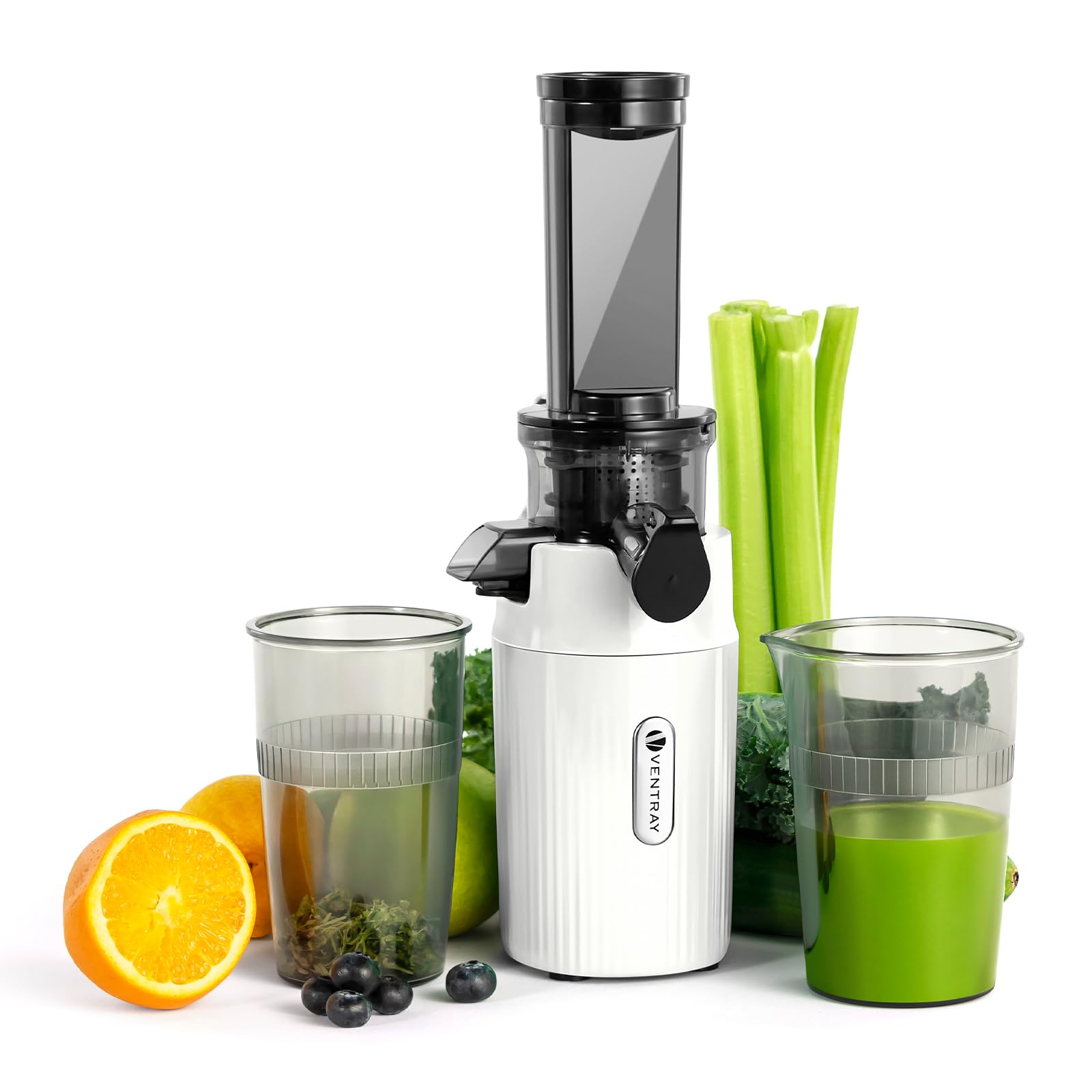
The Ventray Ginnie Mini is a dedicated single-serve cold press juicer that prioritizes a tiny footprint and quiet operation. At only 4.8 x 4 x 11.9 inches and weighing 2.2 pounds, it is easily the most portable option in this roundup, making it suitable for dorm rooms, offices, or occasional travel. The 60 RPM slow masticating technology minimizes heat and oxidation, preserving the nutrient profile of the juice better than any centrifugal model.
User feedback highlights that it excels with soft fruits and produces a genuinely good single glass of juice, but it requires patience. The 400 ml capacity means you are limited to one drink per session, and the motor has a recommended 20-minute rest period to prevent overheating. Several users note that celery and leafy greens need to be packed carefully to avoid clogging the small chute.
This juicer is not built for speed or volume, but it shines for someone who wants a fresh glass of orange or apple juice without the noise and bulk of a full-sized machine. If you judge a juicer by the quality of a single glass rather than how fast it fills a pitcher, the Ginnie Mini is a charming and capable little device.
Why it’s great
- Extremely compact and lightweight — ideal for small kitchens or travel.
- Cold press technology yields nutrient-rich, low-foam juice.
- Quiet 60 RPM operation won’t wake the household.
Good to know
- Small 400 ml capacity and slow speed make batch juicing impractical.
- Leafy greens require manual prodding and can clog the chute.
- Motor needs rest every 20 minutes, extending total session time.
7. SIFENE Centrifugal Juicer Machine 3 Speed
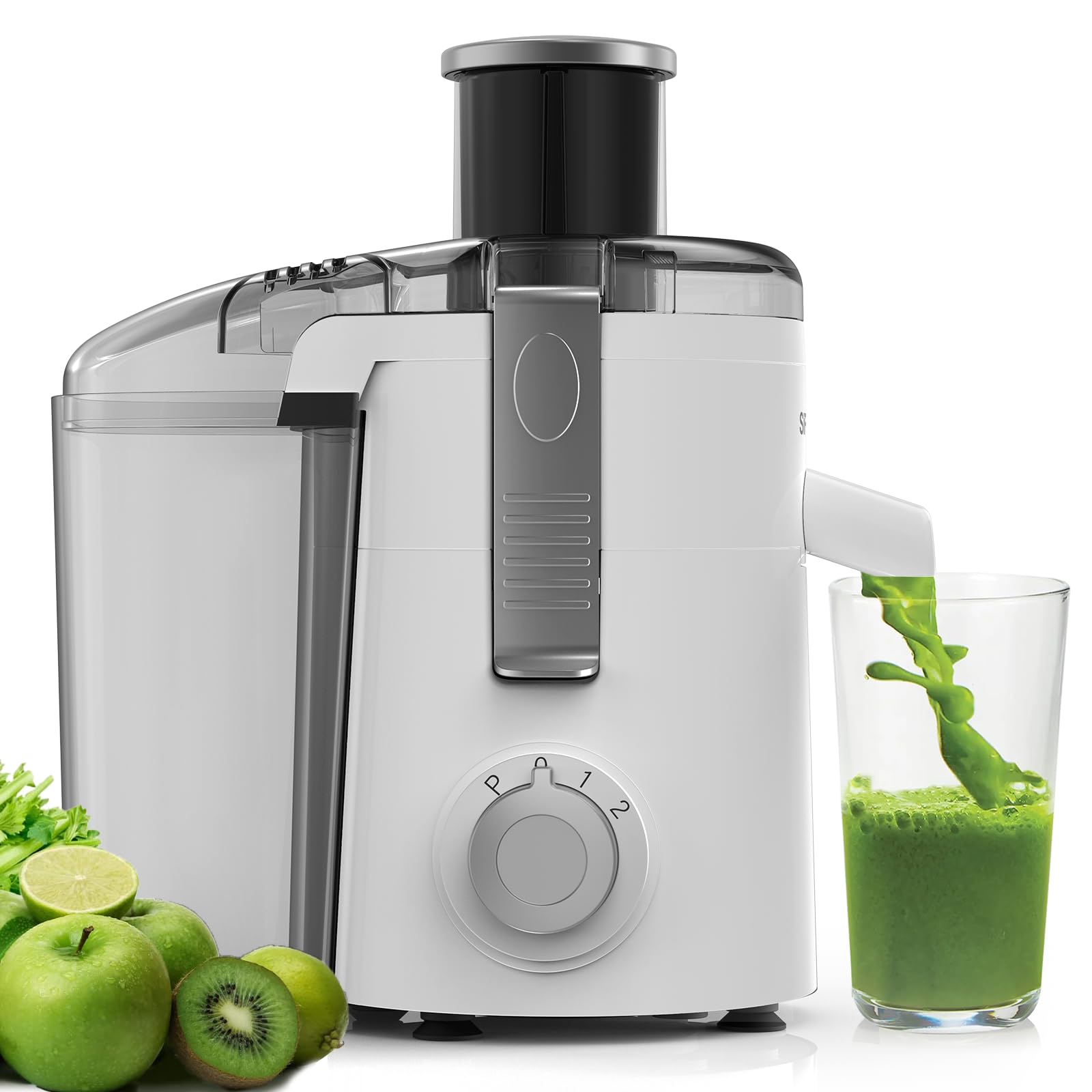
The SIFENE centrifugal juicer is the most accessible entry point in this list, offering a 500-watt peak motor and a three-speed control system that includes a pulse function for extra power on tough ingredients. A low speed is dedicated to soft berries, a high speed for carrots and apples, and the pulse setting gives you manual control for quick bursts. The 2.5-inch wide mouth chute is decent for the price, though larger apples will still need halving.
Safety and stability are addressed with a locking arm that prevents operation unless the lid is secured and non-slip rubber feet that keep the machine planted during the high-speed spin. The detachable pulp collector, cutting disc, and other components are made from BPA-free materials and are dishwasher safe, which is a welcome feature at this price tier.
This is a true budget option for someone who wants to test the waters of juicing without a significant investment. It will get the job done for soft and medium-hard fruits, but users should keep expectations realistic regarding build longevity and juice yield, especially with leafy greens. It is best viewed as a starter juicer that can handle the basics.
Why it’s great
- Three-speed plus pulse control provides flexibility with different produce.
- Dishwasher-safe, BPA-free parts for easy and safe cleaning.
- Compact footprint and non-slip feet for stable countertop use.
Good to know
- 2.5-inch chute is not large enough to fit whole apples without cutting.
- Plastic build and lower wattage limit long-term durability and heavy use.
FAQ
Is a cheap centrifugal juicer good enough for leafy greens like kale and spinach?
How do I clean a cheap juicer without damaging the mesh filter?
Why does my cheap juicer produce so much foam?
Can a 300W slow juicer handle whole apples and carrots?
Are cheap juicer parts like plastic blades and BPA-free materials safe?
Final Thoughts: The Verdict
For most users, the best cheap juicer depends on what you actually juice most often. If you drink green juice daily and hate unclogging a machine, the Ninja JC150 NeverClog is the standout pick for its clog-resistant design and pulp control. If you want to juice whole fruits with almost no prep and prefer a slow press, the Godspeeds with the 5.8-inch chute saves the most time. And if speed and affordability for a family are your top priorities, the Juilist 800W delivers fast, large-batch juicing without breaking the bank. Choose the one that matches your daily routine and stick with it.