A brisket that spent 14 hours over smoke deserves a final cut as precise as the cook. The wrong blade shreds the bark, tears the grain, and turns a masterpiece into mush before it hits the board.
I’m Mohammad Maruf — the founder and writer behind AirfryerBite. I’ve spent dozens of hours comparing blade geometries, steel chemistries, and handle ergonomics across the narrow category of long-blade brisket slicers to separate real performance from marketing talk.
Whether you’re pulling a packer off the smoker or slicing a flat for a competition turn-in, finding the best carving knife for brisket comes down to how the blade handles the fat cap, the crust, and the long pull across a cutting board without binding.
How To Choose The Best Carving Knife For Brisket
A brisket knife faces a unique challenge: a thick, uneven bark that resists entry, a fat cap that turns slick, and a long pull through tender meat that can bind a straight edge. The right blade balances length, edge geometry, steel toughness, and handle control to make every slice clean from end to end.
Blade Length and Shape
Brisket flats can run 10 to 14 inches long. A blade shorter than the cut length forces a sawing motion that tears the surface. A 12-inch blade covers most full-packer slabs in one smooth draw. The curved cimeter shape lifts the tip naturally during the pull, reducing the need to lift the heel off the board.
Edge Design: Granton vs. Scalloped vs. Straight
Granton edges (small oval indentations along the blade face) create air pockets that prevent cooked meat from sticking to the steel. Scalloped edges use serrated points to pierce bark first, then scalloped valleys glide through the interior. Straight edges demand sharper initial geometry but deliver the cleanest cut on lean, flat muscle. For brisket, Granton or scalloped designs reduce drag more reliably.
Steel and Hardness
High-carbon stainless steel resists staining from smoked fats and holds a finer edge angle than standard 400-series stainless. Look for a Rockwell hardness rating of 56–62 HRC: below 56, edge retention suffers during the long brisket pull; above 62, the blade becomes brittle and harder to field-sharpen mid-session. Japanese AUS-10V and German X50CrMoV15 both perform well at this range.
Handle Ergonomics
Brisket slicing involves dozens of long, horizontal strokes. A slick or thick handle forces the wrist to grip harder, causing fatigue. Textured polypropylene, G-10, or contoured wood handles with a full tang provide secure purchase even when wet or greasy. Avoid fully round handles that allow the blade to rotate in hand during the cut.
Quick Comparison
On smaller screens, swipe sideways to see the full table.
| Model | Category | Best For | Key Spec | Amazon |
|---|---|---|---|---|
| Dalstrong Shogun Series ELITE | Premium | Precision slicing with edge retention | AUS-10V core at 62+ HRC | Amazon |
| Victorinox Fibrox Pro | Premium | Reliable, comfortable workhorse | 12-inch Granton blade | Amazon |
| WÜSTHOF Gourmet 14″ | Premium | Extra-long reach for full packers | 14-inch hollow edge | Amazon |
| Mercer Culinary BPX | Mid-Range | Budget-friendly cimeter style | 12-inch Granton cimeter | Amazon |
| KESSAKU Samurai Series | Mid-Range | Forged blade with wood handle | 7Cr17MoV steel, Granton edge | Amazon |
| Dexter-Russell SANI-SAFE | Mid-Range | Scalloped glide through bark | 12-inch scalloped slicer | Amazon |
| PAUDIN 12-Inch Carving Knife | Budget | Entry-level Granton slicer | 12-inch Granton, G10 handle | Amazon |
In‑Depth Reviews
1. Dalstrong Carving Slicing Knife – 12 inch – Shogun Series ELITE
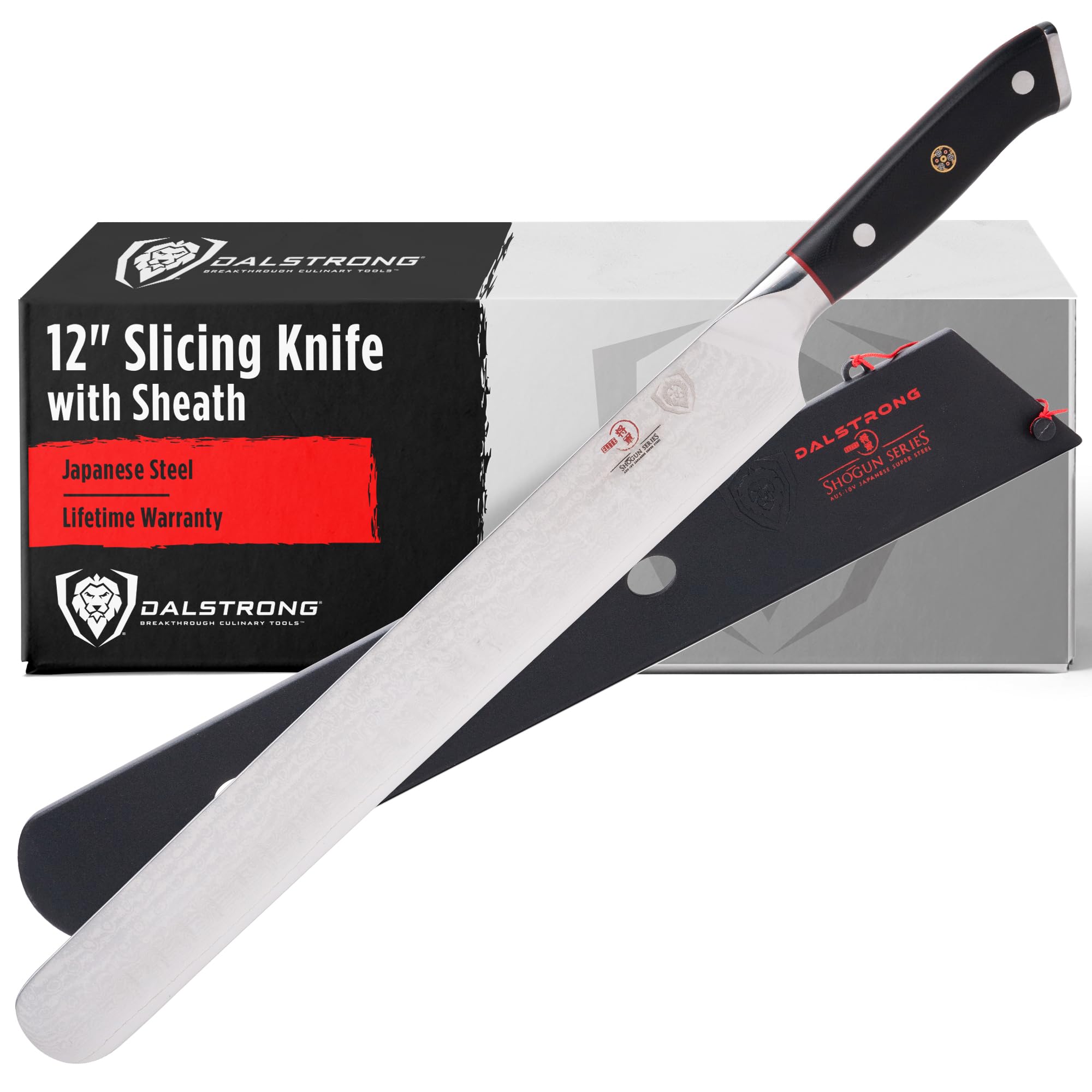
The Shogun Series ELITE is built around a Japanese AUS-10V super steel core vacuum-treated to a Rockwell hardness of 62+ HRC. That hardness translates directly to longer intervals between sharpening sessions, even after slicing through crusty bark and fat-heavy point meat. The 67-layer Damascus cladding adds lateral strength and a corrosion-resistant surface that won’t stain from smoked residue.
Dalstrong hand-finished the edge to an 8–12 degree angle per side, which produces a razor geometry that parts the brisket fibers cleanly rather than crushing them. The G-10 handle resists moisture absorption and provides a secure grip through the long pull, even when your hands are slick with rendered fat. A fitted blade guard is included for safe storage.
This knife demands respect during sharpening: the high hardness means you’ll need diamond stones or ceramic rods to restore the edge, not a standard pull-through sharpener. For pitmasters who want competition-level slice quality without frequent honing, this is the benchmark.
Why it’s great
- Exceptional edge retention from AUS-10V steel at 62+ HRC
- Granton edge reduces friction through bark and fat
- Moisture-resistant G-10 handle stays secure when greasy
Good to know
- Requires diamond or ceramic sharpening stones
- Premium-tier price reflects the super steel and Damascus build
2. Victorinox 12 Inch Slicing Knife | Fibrox Pro Handle

The Victorinox Fibrox Pro has been the default slicer in professional kitchens for decades, and its brisket performance justifies that reputation. The high-carbon stainless steel blade takes a keen edge and holds it through several briskets, while the Granton scallops on both sides of the blade create air pockets that prevent slices from sticking to the steel during the pull.
The Fibrox handle is the defining feature for long slicing sessions: the textured polypropylene surface provides positive grip even when wet, and the ergonomic contour reduces wrist fatigue over dozens of cuts. The blade flexes slightly under pressure, which helps following the natural grain of a brisket flat without veering off course.
Victorinox stamps this blade rather than forging it, which keeps the weight low and the cost manageable. The edge angle is factory-set at a practical 15 degrees per side, so it sharpens easily on a standard honing rod or whetstone. For backyard pitmasters who slice multiple briskets per session, this is the workhorse that never complains.
Why it’s great
- Textured Fibrox handle stays secure and comfortable during long cuts
- Granton edge reduces sticking on bark and fat
- Easy to sharpen with standard kitchen tools
Good to know
- Stamped blade lacks the heft of a forged knife
- Factory edge may need a quick touch-up out of the box
3. WÜSTHOF Gourmet 14″ Hollow Edge Brisket Knife
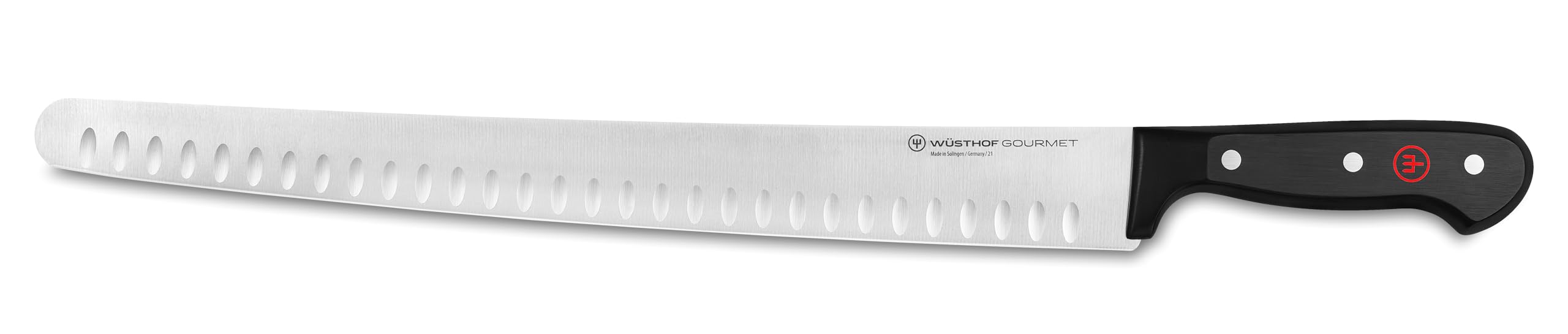
The WÜSTHOF Gourmet 14-inch brisket knife is designed specifically for whole packers that exceed the reach of a standard 12-inch blade. The extra two inches let you slice the entire length of a large flat in one uninterrupted draw, which preserves the bark edge and avoids the torn surface that comes from stopping and restarting mid-cut.
The hollow edge (WÜSTHOF’s term for Granton-style scallops) runs along both blade faces, creating air pockets that prevent the cooked meat from creating suction against the steel. The X50CrMoV15 German steel is precision-stamped and laser-tested to 58 HRC, striking a practical balance between edge retention and ease of sharpening.
At this blade length, balance becomes critical. WÜSTHOF uses a polypropylene handle with a full tang and three rivets to keep the weight centered near the bolster. The handle texture is subtle but sufficient when dry; wet hands may need a firmer grip. Restaurant supply houses have trusted this model for decades, and it’s a legitimate option for serious home cooks who prefer one continuous slice.
Why it’s great
- 14-inch blade covers extra-large packers in one stroke
- Hollow edge reduces drag and sticking
- German steel at 58 HRC is easy to field-sharpen
Good to know
- Longer blade demands more careful storage
- Handle texture could be more aggressive for greasy conditions
4. Mercer Culinary BPX, 12-Inch, Granton Edge Cimiter

Mercer’s BPX line is the mid-range workhorse that culinary schools issue to students, and the 12-inch cimeter is a natural fit for brisket slicing. The curved blade profile lifts the tip during the cutting motion, which reduces the tendency to dig into the board at the end of the stroke. The Granton edge features deep scallops that clear cooked brisket from the blade face more aggressively than shallower designs.
The blade is precision-forged from high-carbon German steel and hardened to 56-58 HRC. This Rockwell range is soft enough to take a quick edge on a steel rod between briskets but firm enough to resist rolling during contact with the crust. The textured polypropylene handle is NSF-certified and resists absorbing fat and moisture.
Weight distribution leans slightly blade-heavy, which helps the knife carry through the cut with less wrist effort. This is a no-fuss tool that delivers above its price tier in slice quality. The trade-off is that the edge will need more frequent touch-ups compared to the harder Dalstrong or the precision-stamped Victorinox.
Why it’s great
- Curved cimeter shape lifts the tip for smoother slicing
- Deep Granton scallops aggressively clear meat from the blade
- NSF-certified handle resists grease absorption
Good to know
- Softer steel requires more frequent honing
- Blade-heavy balance may feel off to users accustomed to neutral weight
5. KESSAKU Carving Knife – 12 inch – Samurai Series

KESSAKU’s Samurai Series 12-inch carving knife brings a forged 7Cr17MoV high-carbon stainless steel blade with a Rockwell hardness around 58-60 HRC. This Chinese-milled steel offers decent edge retention and corrosion resistance for the price, and the Granton edge scallops run deep enough to prevent brisket slices from clinging to the blade during the pull stroke.
The wood handle sets this knife apart visually from the polypropylene-heavy competition. The contoured Pakkawood scales are fitted to a full tang and finished with a smooth satin texture that gains grip as your hand warms up. A fitted blade guard is included, which protects the edge during drawer storage.
In practice, the OOTB factory edge is serviceable but benefits from a quick pass on a 1000-grit stone before the first brisket. The blade profile is straighter than a traditional cimeter, so you’ll need to lift the heel slightly at the end of the cut to avoid board contact. For pitmasters who prefer a natural handle material and a forged feel without paying a premium, this is a strong option.
Why it’s great
- Forged 7Cr17MoV steel offers good edge retention for the price
- Pakkawood handle warms up and grips better with use
- Includes a fitted blade guard for safe drawer storage
Good to know
- Factory edge needs refinement before heavy use
- Straight blade profile requires lifting the heel at the end of the cut
6. Dexter-Russell 12″ Scalloped Slicer, S140-12SC-PCP
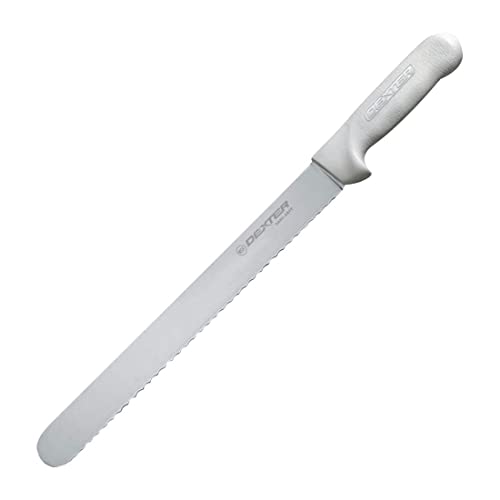
Dexter-Russell approaches brisket slicing from the scalloped angle: a series of sharp points along the edge pierce the bark first, and the scalloped valleys between each point glide through the soft interior without compressing the meat. This edge design is especially effective when the bark is thick and brittle, as the points break through without the lateral pressure that can shatter a straight edge or cause a Granton blade to skid.
The high-carbon stainless steel blade is individually ground and honed in Dexter-Russell’s American facility. The handle is a slip-resistant polypropylene contour that meets NSF sanitation standards. At 12 inches, the scalloped blade covers most packer flats in a single pass, and the scallops reduce the sticking that plagues straight-edge slicers on fatty point meat.
The trade-off is that the scalloped edge leaves a slightly coarser surface on the cut than a sharp straight edge or Granton blade. For competition presentation where mirror-smooth slices matter, a straight or Granton edge may be preferable. For backyard BBQ where bark integrity and ease of cutting are the priorities, this Dexter-Russell slicer delivers consistent results.
Why it’s great
- Scalloped edge pierces brittle bark without cracking it
- American-made with individually ground and honed blades
- NSF-certified handle resists grease and cleans easily
Good to know
- Scalloped cut leaves a slightly coarser surface than straight edges
- Not ideal for competition slicing where mirror-smooth cuts are required
7. PAUDIN Carving Knife, 12 Inch Brisket Knife
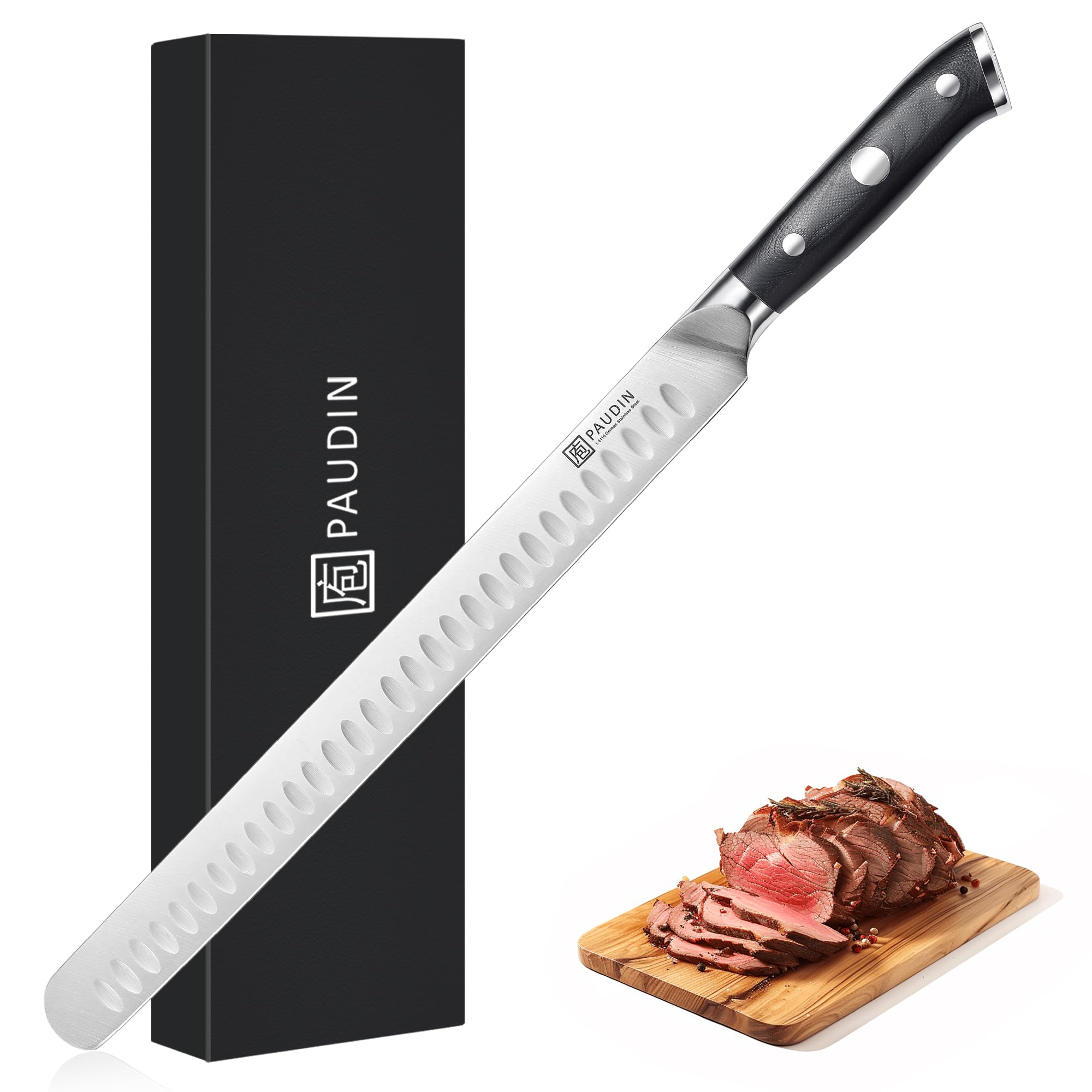
PAUDIN’s 12-inch carving knife enters the budget tier with a surprising material choice: a G-10 handle, which is the same glass-epoxy laminate used in high-end custom knives. G-10 resists moisture, heat, and cold better than standard polypropylene and provides a secure grip profile even when wet. The blade is a stamped high-carbon stainless steel with a Granton edge that runs the full length of the cutting surface.
The Granton scallops are shallower than those on the Mercer or Victorinox, which means cooked brisket can still create some suction against the blade during the pull. The factory edge is reasonably sharp out of the box but benefits from a honing pass before tackling a full packer. The blade profile is relatively straight, similar to the KESSAKU, so you’ll need to manage the heel lift at the end of the cut.
For the price, the PAUDIN delivers decent slice quality for occasional brisket cooks. The G-10 handle is genuinely nice at this price point and sets it apart from other budget slicers. Frequent pitmasters who slice multiple briskets weekly will find the edge retention limited compared to the Victorinox or Dalstrong, but for a season opener or holiday brisket, this knife performs well above its cost.
Why it’s great
- G-10 handle at a budget price offers better grip than standard polypropylene
- Granton edge reduces sticking better than a straight blade
- 12-inch length covers standard brisket flats
Good to know
- Shallow Granton scallops still allow some blade suction
- Edge retention falls behind mid-range and premium options
FAQ
Is a 12-inch blade long enough for a full packer brisket?
What is the difference between a cimeter and a Granton carving knife?
Can I use a scalloped brisket knife for competition slicing?
How do I sharpen a Granton edge brisket knife?
Final Thoughts: The Verdict
For most users, the best carving knife for brisket winner is the Dalstrong Shogun Series ELITE because its AUS-10V core at 62+ HRC delivers exceptional edge retention through bark and fat without frequent sharpening. If you want a comfortable, proven workhorse that handles multiple briskets per session, grab the Victorinox Fibrox Pro. And for a budget-friendly entry with a premium-feel G-10 handle, nothing beats the PAUDIN Carving Knife.