The brisket is the true test of a pitmaster. It demands steady temperatures, consistent smoke flow, and a cooking environment that can handle a twelve-hour commitment without drying out the flat or rendering the point perfectly. Choosing the wrong smoker for this cut means a hard bark, uneven internal temperature, and a whole day of frustration.
I’m Mohammad Maruf — the founder and writer behind AirfryerBite. I’ve spent months analyzing thermal dynamics, material thickness, airflow engineering, and real user results across hundreds of vertical, offset, and pellet smoker builds specifically for large, collagen-heavy cuts.
Whether you are chasing competition-grade results or feeding the neighborhood on a Sunday, this guide to the best brisket smoker will help you match your cooking style to the right fuel type and chamber design without burning through your patience.
How To Choose The Best Brisket Smoker
Brisket is one of the least forgiving cuts in barbecue because of its high collagen content and uneven thickness. The smoker you choose must manage a steady chamber temperature, a constant supply of clean smoke, and enough fuel capacity to run for ten to fifteen hours without a mid-cook refill panic.
Offset vs. Vertical vs. Pellet: Fuel and Flow Matter
Traditional offset smokers burn charcoal or wood splits in a side firebox; the smoke and heat travel horizontally across the cooking chamber. This design delivers an aggressive smoke profile that builds a deep bark, but it requires active fire management every 45 to 60 minutes. A vertical water-pan smoker runs on propane or charcoal and uses a water pan to stabilize temperature and add moisture — a more beginner-friendly environment, though the smoke intensity is milder. Pellet smokers use an auger-fed system and digital controller to hold temperature within a few degrees, but the smoke flavor is lighter unless a dedicated smoke mode or smoke tube is added.
Cooking Capacity and Chamber Geometry
A full packer brisket typically weighs 12 to 16 pounds and needs at least 600 square inches of primary cooking space. For offsets, longer chambers (over 36 inches) help distribute heat more evenly, reducing the hot spot near the firebox. Vertical units rely on multiple racks, but the distance between the heat source and the top rack can create a 20 to 30 degree temperature variance — something to consider when loading several briskets at once.
Temperature Control and Monitoring Tools
Look for a built-in temperature gauge that is mounted at grate level, not in the lid. Many stock gauges are inaccurate by 20 to 50 degrees — replacing them with a certified thermometer or using a dual-probe wireless monitor is standard practice. On pellet models, a PID controller (proportional-integral-derivative) provides tighter temperature swings of plus or minus 5 degrees compared to a basic on-off controller that can oscillate by 20 degrees.
Build Quality and Air Sealing
Heavy-gauge steel (14-gauge or thicker) retains heat better and prevents warping over high-temperature burns. Inspect the fit of the cooking chamber door and firebox lid — gaps leak heat and waste fuel. Many offset owners add high-temperature gasket tape and latch clamps as standard modifications to reduce smoke loss.
Quick Comparison
On smaller screens, swipe sideways to see the full table.
| Model | Category | Best For | Key Spec | Amazon |
|---|---|---|---|---|
| Traeger Woodridge Pro | Pellet | Large batch low-and-slow | 970 sq. in. / Super Smoke Mode | Amazon |
| Masterbuilt Gravity 1050 | Charcoal | Digitally controlled charcoal | 1,050 sq. in. / 225°F in 8 min | Amazon |
| Oklahoma Joe’s Longhorn Reverse Flow | Offset Charcoal | Competition-style bark | 1,060 sq. in. / Reverse Flow | Amazon |
| Camp Chef Woodwind Pro WiFi 24 | Pellet | WiFi monitoring + sidekick add-ons | 24 in. / Down & Out Ventilation | Amazon |
| Traeger Pro 780 | Pellet | Smart set-and-forget | 780 sq. in. / D2 Drivetrain | Amazon |
| Oklahoma Joe’s Highland Offset | Offset Charcoal | Entry-level offset performance | 900 sq. in. / Porcelain Grates | Amazon |
| Pit Boss 3-Series Vertical Gas | Propane Vertical | Easy propane smoking | 880 sq. in. / 100°F – 320°F | Amazon |
| Sophia & William Vertical Offset Charcoal | Vertical Charcoal | Large vertical charcoal capacity | 961 sq. in. / Hanging Racks | Amazon |
| Masterbuilt MPS 230S Propane | Propane Vertical | Budget vertical smoker | 30 in. / 15,400 BTU Burner | Amazon |
In‑Depth Reviews
1. Traeger Grills Woodridge Pro Electric Wood Pellet Grill and Smoker
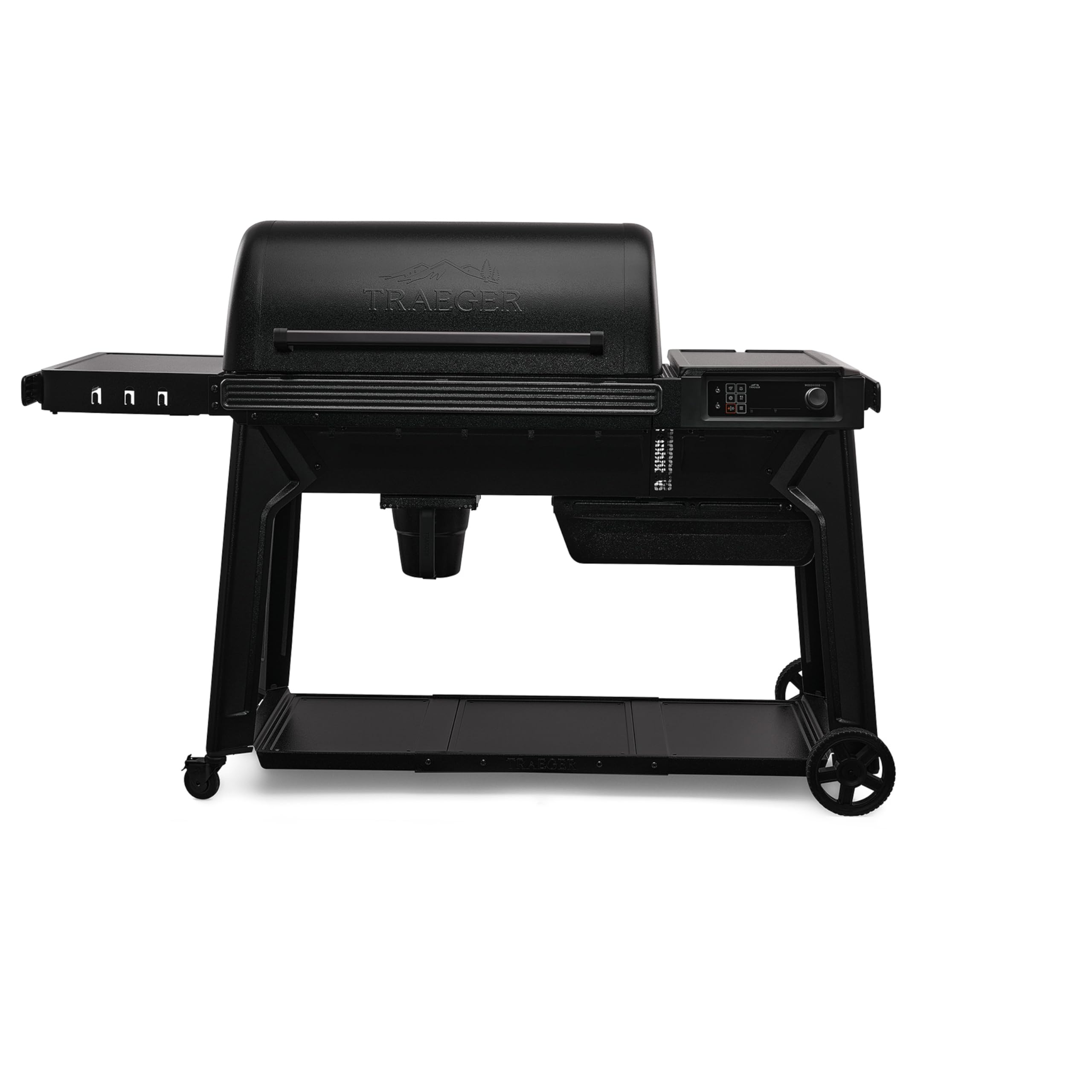
The Woodridge Pro is Traeger’s answer to the pitmaster who wants pellet convenience without sacrificing smoke depth. The 970-square-inch cooking surface fits up to seven pork butts or nine racks of ribs, giving you room to run multiple briskets side by side. What sets this apart is the Super Smoke Mode, which forces more wood-pellet combustion at low temperatures to produce a noticeably heavier smoke profile on the meat — a feature that matters when you are building bark on a brisket flat.
WiFIRE connectivity lets you monitor the smoker from anywhere via the Traeger app, so you can track chamber temperature and the built-in meat probe without standing guard. The digital pellet sensor alerts you before the hopper runs dry, which is a genuine time-saver on an overnight brisket cook. The EZ-Clean Grease and Ash Keg simplifies post-cook cleanup, and the folding side shelf adds practical prep space.
The chamber is built from alloy steel with a powder-coated finish that holds up to all-weather exposure, and the heavy-duty wheels make repositioning manageable. If you want pellet-fed precision with a serious effort on smoke flavor, this unit occupies a sweet spot between the simpler Pro 780 and the larger Timberline line.
Why it’s great
- Super Smoke Mode creates noticeably denser smoke at low temperatures for better bark formation.
- 970 sq. in. of primary grate space handles three full packers comfortably.
- WiFIRE app control with pellet-level monitoring and dual meat probes for set-and-forget overnight cooks.
Good to know
- At this price point, the exterior steel gauge is thinner than a heavy-gauge offset.
- The default smoke output still benefits from an aftermarket smoke tube if you crave an aggressive charcoal-style bark.
2. Masterbuilt Gravity Series 1050 Digital Charcoal Smoker Grill

The Masterbuilt Gravity 1050 brings digital PID control to real charcoal — not pellets. Its gravity-fed hopper feeds lump charcoal or briquettes into a burn chamber continuously, letting you set a target temperature on the digital panel and have a fan maintain it within a few degrees. The chamber reaches 225°F in about eight minutes, which is unheard of for a charcoal cooker, and can go up to 700°F for high-heat searing.
The 1,050-square-inch cooking surface includes two porcelain-coated warming racks in addition to the primary grates, so you can hold a finished brisket while another is still cooking. The Masterbuilt app provides remote monitoring for both chamber temperature and the included meat probe, and the stainless steel front shelf offers stout prep space. Reversible cast-iron grates let you switch between a flat side for smoking and a ridged side for searing.
Because this runs on actual charcoal, the smoke flavor is closer to a traditional offset than any pellet grill can produce. The trade-off is that the gravity hopper takes up significant width, and the steel gauge, while adequate, is not as thick as premium offsets. If you want digital charcoal precision without pellet compromises, this is a category-defining unit.
Why it’s great
- Gravity-fed charcoal system delivers real wood-smoke flavor with PID temperature precision.
- Rapid heat-up to 225°F in about eight minutes eliminates the long warm-up typical of offsets.
- App control with dual probes and a large 1,050 sq. in. cooking area for multiple briskets.
Good to know
- The unit is wide and heavy, requiring a dedicated patio spot with enough clearance for the lid.
- The digital fan can be audible during quiet overnight cooks; some users add a fan silencer.
3. Oklahoma Joe’s Longhorn Reverse Flow Offset Charcoal Smoker

Oklahoma Joe’s Longhorn Reverse Flow is a workhorse offset with a clever chamber design. Instead of smoke and heat traveling directly from firebox to smokestack, a steel plate runs the length of the cooking chamber, forcing the flow to travel under the plate, up the far end, and back across the food. This eliminates the classic hot spot near the firebox and creates a more even temperature gradient — critical for brisket, where the flat and point cook at different rates.
The total 1,060 square inches of cooking area (751 primary and 309 secondary) can hold two full-packers on the main grate with room for sides on top. The smokestack can be repositioned to the traditional offset orientation if you prefer that flow, giving you two cook profiles in one smoker. Heavy-gauge steel construction keeps temperatures stable after the initial fire management dial-in, and the large wagon-style wheels make moving the 226-pound unit possible.
Real owners consistently note that adding high-temperature gasket tape around the firebox and cooking chamber doors is a first-day upgrade to eliminate smoke leaks and improve heat retention. The professional temperature gauge on the lid is mounted at eye level, though many experienced users still swap it for a Tel-Tru unit at grate height for accuracy.
Why it’s great
- Reverse flow design evens out chamber temperatures and produces more consistent brisket results across the whole grate.
- Massive 1,060 sq. in. capacity with switchable smokestack positions lets you run traditional or reverse flow.
- Heavy-gauge steel with a large charcoal basket supports extended burn times without warping.
Good to know
- Visible gaps around the firebox and cook-chamber doors require aftermarket gaskets and latch clamps for optimal seal.
- The stock temperature gauge is notoriously inaccurate; plan to upgrade to a grate-level thermometer.
4. Camp Chef Woodwind Pro WiFi 24 Pellet Grill

The Camp Chef Woodwind Pro WiFi 24 is a pellet grill built for the modular pitmaster. Its down-and-out ventilation system routes smoke downward before exiting, which promotes even heat distribution across the cooking chamber — a design that reduces the temperature variance between left and right sides when running a long brisket cook. The stainless steel construction resists rust, and the 24-inch chamber provides enough primary space for a full packer with a rack of ribs alongside.
The integrated WiFi and Bluetooth connectivity let you monitor and adjust the smoker from your phone, set timers, and receive alarms when the meat probe hits your target temperature. The Sidekick attachment port opens the door to adding a flat-top griddle, a sear box, or an Artisan pizza oven, making this a truly multi-functional outdoor cooking station. The hopper is large enough for an overnight cook without refilling.
Smoke flavor on pellets naturally falls lighter than charcoal offsets, but the down-draft airflow design helps the wood smoke linger around the meat longer. For users who want the convenience of pellet control with the option to expand into griddle cooking or high-heat searing later, this is a platform that grows with your ambitions.
Why it’s great
- Down & Out ventilation system provides more even heat distribution across the entire chamber.
- WiFi and Bluetooth control with a large hopper supports unattended overnight smokes.
- Sidekick compatibility adds griddle, pizza oven, or sear box capability for multi-function use.
Good to know
- Pellet smoke output is still milder than a charcoal offset; a smoke tube can help boost intensity.
- The stainless steel body holds up well, but the thinner gauge can struggle with heat retention in sub-freezing weather.
5. Traeger Grills Pro 780 Wood Pellet Smoker Grill

The Traeger Pro 780 is the middle child of Traeger’s lineup that quietly outperforms many larger models in temperature stability. Its 780-square-inch cooking space can hold two smaller packers or one full packer with plenty of room for sausage or chicken. The D2 drivetrain includes a brushless motor and an upgraded controller that reduces temperature swings to plus or minus 5 degrees — a real advantage for brisket, where a 15-degree fluctuation can stall the cooking process unpredictably.
WiFIRE technology connects to the Traeger app so you can adjust the smoker, monitor the wired meat probe, and receive notifications from anywhere. The 18-pound hopper capacity runs well over ten hours at 225°F, which covers an overnight brisket without topping off. TurboTemp mode recovers heat quickly after the lid is opened, minimizing temperature drops during basting or wrapping.
The powder-coated steel exterior and heavy-duty wheels make it durable for all-season use. Several owners note that adding a pellet smoke tube significantly increases smoke density for brisket, as the standard smoke setting produces a cleaner, lighter profile. If you prioritize convenience and reliable temperature control over maximum smoke flavor, the Pro 780 is a proven performer.
Why it’s great
- D2 controller and brushless motor maintain tight temperature regulation ideal for brisket’s long cook times.
- WiFIRE app integration with meat probe and push notifications for remote monitoring.
- 18-pound hopper provides enough fuel for overnight smoking without interruption.
Good to know
- Stock smoke output is mild; an additional smoke tube is a common upgrade for deeper bark.
- The 780 sq. in. primary area is tight if you want to cook multiple full packers at once.
6. Oklahoma Joe’s Highland Offset Smoker

Oklahoma Joe’s Highland Offset has been a standard-bearer for entry-level offset smokers for years. It provides 619 square inches of primary cooking space and an additional 281 square inches of secondary rack space, bringing the total to roughly 900 square inches — enough for one full brisket on the main grate with a second small packer or a pan of beans on the top. The bowl and lid are constructed from porcelain-enamel steel, which retains heat significantly better than standard painted steel and resists rust in humid environments.
The dampers on the firebox and smokestack give you fine control over airflow and temperature. After a learning curve of about three or four cooks, most users can dial in 225°F to 250°F for six to eight hours using charcoal and hardwood chunks, though you will need to re-fuel the firebox every 45 to 60 minutes. The professional temperature gauge on the lid is decent, but as with most offsets, placing a digital thermometer at grate level gives more accurate readings.
The firebox door with an integrated damper makes ash removal straightforward, and the wagon-style wheels are large enough to roll over grass or gravel. At its price point, the Highland offers the most authentic offset smoking experience for brisket without jumping into the premium tier. Expect to add a gasket kit and possibly a charcoal basket upgrade to get the most consistent results.
Why it’s great
- Porcelain-enamel steel construction provides superior heat retention compared to painted steel alternatives.
- Dual dampers and a large firebox give active fire managers precise temperature control.
- 900 sq. in. total capacity accommodates a full packer brisket and a side dish.
Good to know
- This is a true stick-burner — you need to tend the fire every 45 to 60 minutes during a brisket cook.
- Gaps around the cooking chamber door benefit from an aftermarket gasket and latch upgrade.
7. Sophia & William Heavy-Duty Vertical Offset Charcoal Smoker
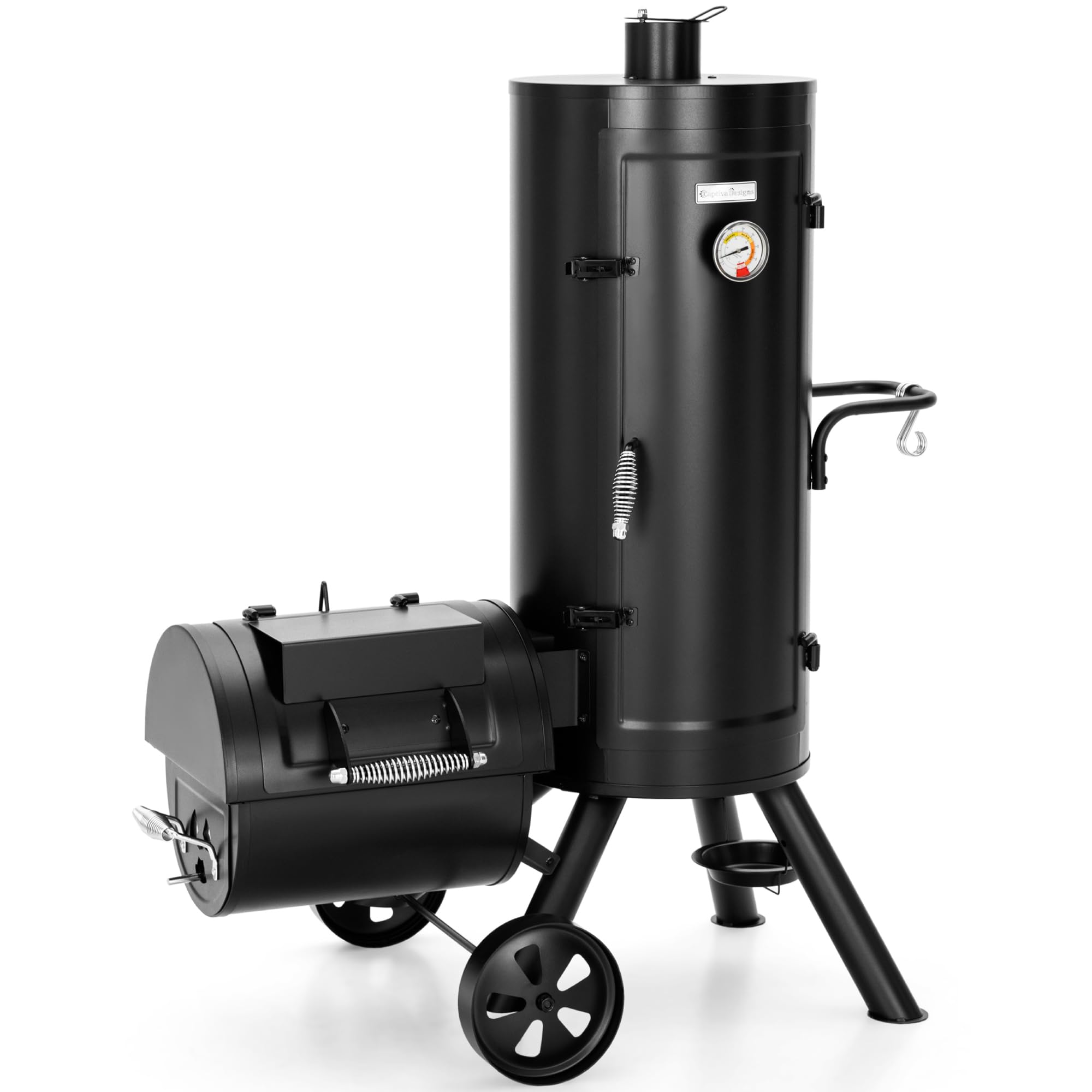
The Sophia & William heavy-duty vertical offset smoker uses a different approach than a traditional side-offset. The firebox is offset at the bottom, but the cooking chamber is vertical, meaning heat and smoke rise through stacked grates. This vertical arrangement provides more uniform heat distribution than a standard horizontal offset because the chamber lacks a single hot side — the cooking surfaces are all at similar distance from the fire source.
Total cooking area is 961 square inches, split across five chrome-plated primary racks plus a 106-square-inch offset section. The inclusion of hanging racks is a real differentiator for brisket smokers who also cook ribs, sausages, or whole poultry — you can hang spareribs on the hooks while dedicating the lower grates to briskets. The heavy-duty steel construction with adjustable door latches helps minimize smoke loss, and a water-filling side door lets you add moisture without opening the main chamber.
Cleaning is handled by a push-out ash tray at the bottom and a front grease cup, which keeps the post-cook routine manageable even after a long smoke session. The large wheels and thickened legs provide stability on uneven ground. For a charcoal smoker at this capacity, the vertical offset design offers a genuinely different heat profile that many brisket cooks appreciate for its consistency.
Why it’s great
- Vertical offset layout provides more even heat across all grates compared to horizontal offsets.
- Hanging racks add versatility for ribs and poultry while the main grates hold brisket.
- Side water-filling door allows you to add moisture without opening the cooking chamber and losing heat.
Good to know
- Chrome-plated racks can degrade faster than stainless steel with frequent high-heat use.
- The vertical design limits the size of the cut you can place on the upper racks — a full packer brisket needs a lower grate spot.
8. Pit Boss 3-Series Gas Vertical Smoker
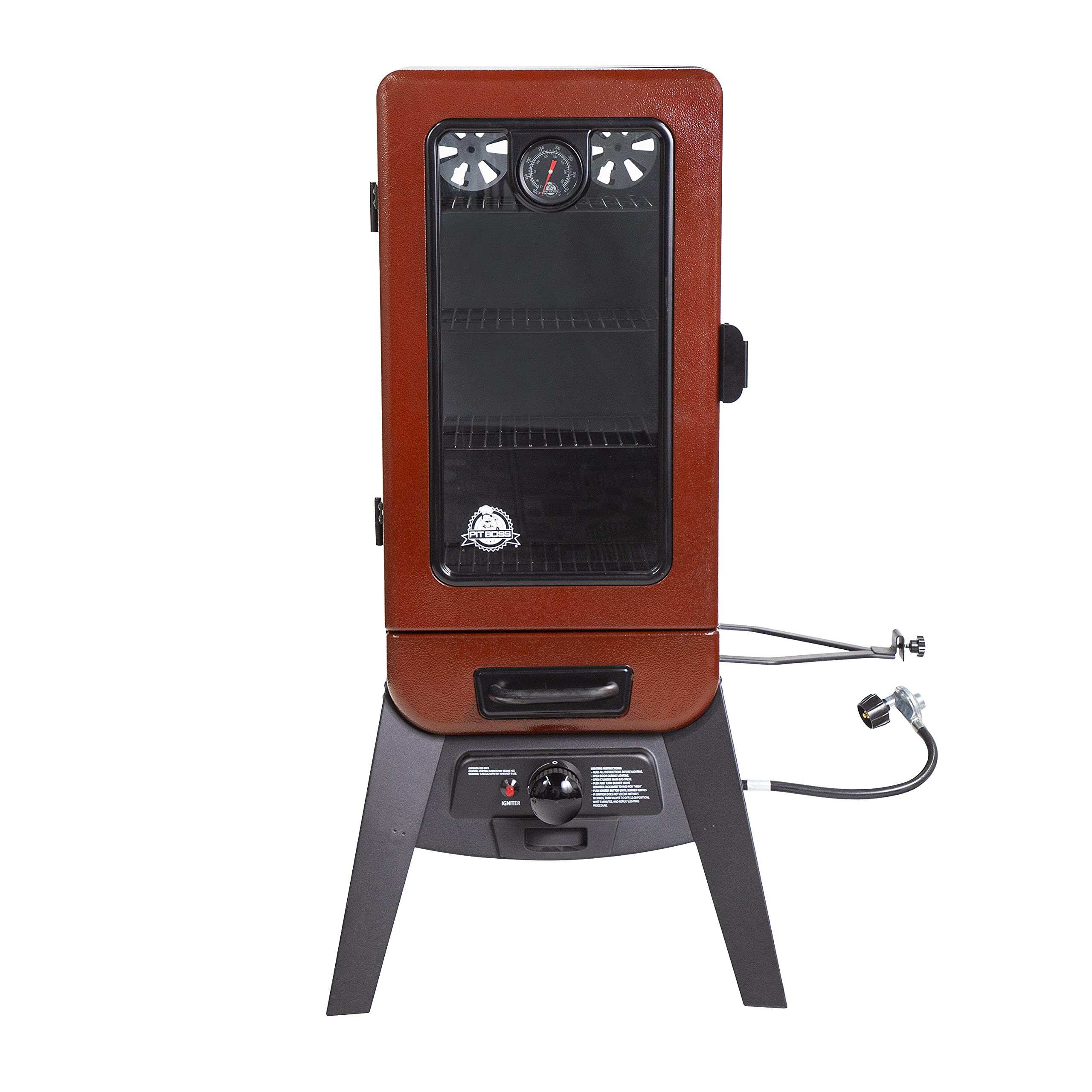
The Pit Boss 3-Series Gas Vertical Smoker brings propane convenience to long brisket cooks. Its dual valve and dual burner system deliver 12,500 BTU across two porcelain-coated stainless steel burners, creating a temperature range of 100°F to 320°F. The 880-square-inch cooking area is split across four racks that each measure 14.75 by 12.25 inches — enough to hold two full packers on separate racks, or one packer plus several racks of ribs.
Piezo ignition lights the burners quickly, and the external wood chip and ash removal tray lets you reload wood chips or discard ash without opening the main door. A front-access grease drawer simplifies cleanup. The rear rolling wheels make positioning straightforward. The large viewing window with a professional heat indicator gives you a visual on the smoke density without disturbing the chamber environment.
The high-temperature door seal helps maintain steady cooking temperatures, which is especially important for brisket because even small temperature swings can extend the stall. The 3-Series runs reliably once dialed in, and the propane fuel source means you can smoke all day without feeding a fire. For users who want the hands-off approach of a pellet grill but prefer propane fuel economics, this is a strong mid-range contender.
Why it’s great
- Dual valve and dual burner system provides a wide temperature range from cold smoking up to 320°F.
- External wood chip and ash tray eliminates the need to open the smoker door mid-cook.
- Large viewing window lets you monitor smoke and food condition without losing heat.
Good to know
- The 12,500 BTU total output is adequate for low-and-slow but not designed for high-heat searing or grilling.
- Propane smokers deliver a lighter smoke flavor than charcoal offsets; a smoke tube can help deepen the profile.
9. Masterbuilt MPS 230S Propane Smoker, 30 inch

The Masterbuilt MPS 230S is a straightforward vertical propane smoker that focuses on function over frills. The 30-inch cabinet houses four chrome-coated smoking racks with enough total space for a single full packer brisket on the lower racks while storing wood chips or water pans on the top. The push-button piezo ignition lights the 15,400 BTU stainless steel burner quickly, and the built-in temperature gauge on the door gives you a rough reference for chamber conditions.
Masterbuilt’s patented porcelain-coated flame disk bowl shields the burner from grease drips while letting the flame reach the wood chips resting on top. This reduces the risk of flare-ups during a long cook. The 66.5-pound unit is lighter than most offsets, making it easy to move around a patio, and the alloy steel body holds up reasonably to weather exposure.
Temperature control on a propane vertical smoker requires adjusting the gas valve manually — there is no digital PID or automatic fan. You will need to dial in the valve position over the first hour and monitor the built-in thermometer for stability. For someone new to brisket smoking who wants a low entry barrier and consistent propane operation, the MPS 230S offers a reliable starting point without a major investment.
Why it’s great
- 15,400 BTU stainless steel burner with push-button ignition provides quick and reliable heat-up.
- Porcelain-coated flame disk bowl protects the burner from grease drips and reduces flare-ups.
- Lightweight 66.5-pound cabinet is easy to move and set up on a standard patio.
Good to know
- No digital temperature controller — you must manually adjust the gas valve to maintain 225°F over a long cook.
- Chrome-coated racks can begin to rust after extended use in humid environments; stainless upgrades are common.
FAQ
Should I choose a reverse flow offset or a standard offset for brisket?
How much cooking capacity do I need for a single full brisket?
Can I get a good bark on a pellet smoker, or do I need charcoal?
Final Thoughts: The Verdict
For most users, the best brisket smoker winner is the Traeger Woodridge Pro because it combines spacious capacity, enhanced smoke output via Super Smoke Mode, and WiFi-enabled temperature management that frees you from fire-tending without sacrificing food quality. If you want a charcoal-fired cooking experience with digital precision, go for the Masterbuilt Gravity Series 1050. And for the traditional offset purist who values even heat distribution and competition-level bark, nothing beats the Oklahoma Joe’s Longhorn Reverse Flow.