A soggy, under-seasoned turkey or bland pork shoulder is the direct result of a poor brining setup. Using a flimsy trash bag or a bucket not designed for food contact risks leaks, contamination, and uneven salt distribution. A dedicated brining container solves these problems with a sealed, food-safe environment that keeps your protein fully submerged for consistent flavor penetration.
I’m Mohammad Maruf — the founder and writer behind AirfryerBite. I’ve spent years analyzing kitchen hardware specifications, from plastic thickness in millimeters to lid seal pressure, to separate the containers that actually keep food submerged from those that let everything float to the surface.
To help you pick the right vessel, I’ve broken down the best options on the market. After comparing capacity, durability, and submersion design, this guide to the best brining containers will save you from a messy fridge and a disappointing meal.
How To Choose The Best Brining Containers
Selecting a brining container comes down to three non-negotiable factors: material safety, volumetric capacity, and submersion mechanics. Skipping any one of these leads to a brine that fails to penetrate the meat or creates a sanitation hazard in your refrigerator.
Food-Grade Material & BPA-Free Certification
The container must be explicitly labeled food-grade. Look for BPA-free polycarbonate (PC) or polyethylene vinyl acetate (PEVA). Avoid any plastic that feels brittle or has a strong chemical odor, as those compounds can leach into the brine and alter the flavor of the meat.
Capacity: Gallons vs. Meat Weight
A standard rule is 1 gallon of brine per pound of meat. For a 14-pound turkey, you need a container that holds at least 14 quarts (3.5 gallons) of liquid plus the bird. Always choose a container listed by quarts or gallons, not just by brand terminology like “for turkeys up to X pounds.”
Submersion Design to Prevent Floating
Floating food is the number one complaint in brining. Some containers solve this with a dedicated weighted lid or a built-in plate that pushes the meat down. Others rely on a tight-fitting snap lid that you vacuum-seal by pressing out the air. If a container lacks a mechanism to hold food under the surface, you will need a separate plate or a heavy bag of water to weigh it down.
Quick Comparison
On smaller screens, swipe sideways to see the full table.
| Model | Category | Best For | Key Spec | Amazon |
|---|---|---|---|---|
| The Briner | Premium Rigid | Turkeys up to 25 lbs | 22-quart capacity with weighted lid | Amazon |
| Cuisinart XL Collapsible | Collapsible | Storage space savers | 3.7 gallons collapsible to 1.9 inches | Amazon |
| Tiger Chef 8 qt Square | Commercial Polycarbonate | Small batches and fermenting | 8-quart shatterproof polycarbonate | Amazon |
| Lerine 3 Gallon Reusable Bags | Reusable Bag | Medium turkeys (10-16 lbs) | 3-gallon PEVA with double-seal zipper | Amazon |
| Tupperware Season-Serve | Compact Container | Small cuts and poultry | 2.9-liter (12.5-cup) sealed container | Amazon |
In‑Depth Reviews
1. The Briner

The Briner is the only container in this lineup built specifically to solve the floating-food problem mechanically. Its patent-pending design includes a lid that presses down and locks into place, forcing the meat to stay fully submerged even in a heavy brine solution. This is the same container used by award-winning competition BBQ teams, and the reasoning is straightforward: no floating parts means no uneven seasoning.
With a 22-quart capacity, it handles turkeys up to 25 pounds, plus four to five chickens or multiple racks of ribs. The plastic body is thick and rigid, holding up to repeated scrubbing without cracking or warping. Hand wash only, but the smooth interior wipes clean quickly. It measures 12.5 x 12.5 x 15.75 inches, which fits in most bottom-shelf fridge configurations.
The included instructions list standard soaking times and brine quantities for various proteins, effectively flattening the learning curve for beginners. If you are serious about holiday turkeys or competition cooking, the submersion mechanism alone justifies the investment over any generic bucket or bag.
Why it’s great
- Patent-pending weighted lid eliminates floating food
- 22-quart capacity fits turkeys up to 25 lbs
- Used by professional chefs and competition teams
Good to know
- Hand wash only; not dishwasher safe
- Relatively large footprint requires dedicated fridge space
2. Cuisinart XL Collapsible Marinating Container

Cuisinart’s collapsible container solves the storage problem that rigid brining bins create. When not in use, the silicone sidewalls fold down to a height of just 1.9 inches, making it easy to slide into a deep drawer or cabinet. Expanded, it measures 17.1 x 10 x 5 inches and holds 3.7 gallons—enough for a 12-pound pork shoulder, a 9-pound rib roast, or two 6-pound chickens.
The snap-on lid creates a leak-free seal that keeps brine contained during transport or fridge storage. The plastic is food-safe, though it is not designed for the microwave or dishwasher. Hand washing is required to preserve the collapsible silicone seams. The rectangular shape is efficient for fridge shelf use, unlike round buckets that waste space.
This container is ideal for cooks who brine only a few times a year and do not want a bulky, dedicated bin occupying permanent kitchen real estate. The collapsible design collapses flat, which is the primary advantage over the rigidThe Briner or the Tiger Chef polycarbonate box.
Why it’s great
- Collapses to 1.9 inches for easy storage
- Snap-on lid provides a leak-proof seal
- Rectangular shape fits fridge shelves efficiently
Good to know
- Not dishwasher or microwave safe
- Requires hand washing to maintain silicone integrity
3. Tiger Chef 8 Quart Commercial Grade Square Polycarbonate Container

The Tiger Chef 8-quart is a commercial-grade polycarbonate container built for daily abuse in a professional kitchen. NSF-listed, shatterproof, and resistant to stains and odors, it is the only option here that is both dishwasher-safe and microwave-safe. The square design stacks neatly with other polycarbonate boxes, making it a good fit for sous-vide cooks who also need a brine vessel.
Its 8-quart capacity is best suited for smaller cuts like chicken quarters, fish fillets, or pork chops. It is too small for a whole turkey. The red measurement gradations along the side help you see exactly how much brine you have mixed, which is useful when scaling a recipe. The snap-tight red lid locks securely in place.
Users have also repurposed this container for bulk-fermenting sourdough and soap making, which speaks to the durability of the polycarbonate. If you prioritize a container that can go from brining to dishwasher to stacking without wear, this is the most versatile option in the list.
Why it’s great
- NSF-listed commercial-grade polycarbonate
- Dishwasher and microwave safe
- Square shape for compact stacking
Good to know
- 8-quart capacity is too small for whole turkeys
- Indented sides can make cleaning a little less smooth
4. Lerine 4 Pack Reusable 3 Gallon Freezer Bags
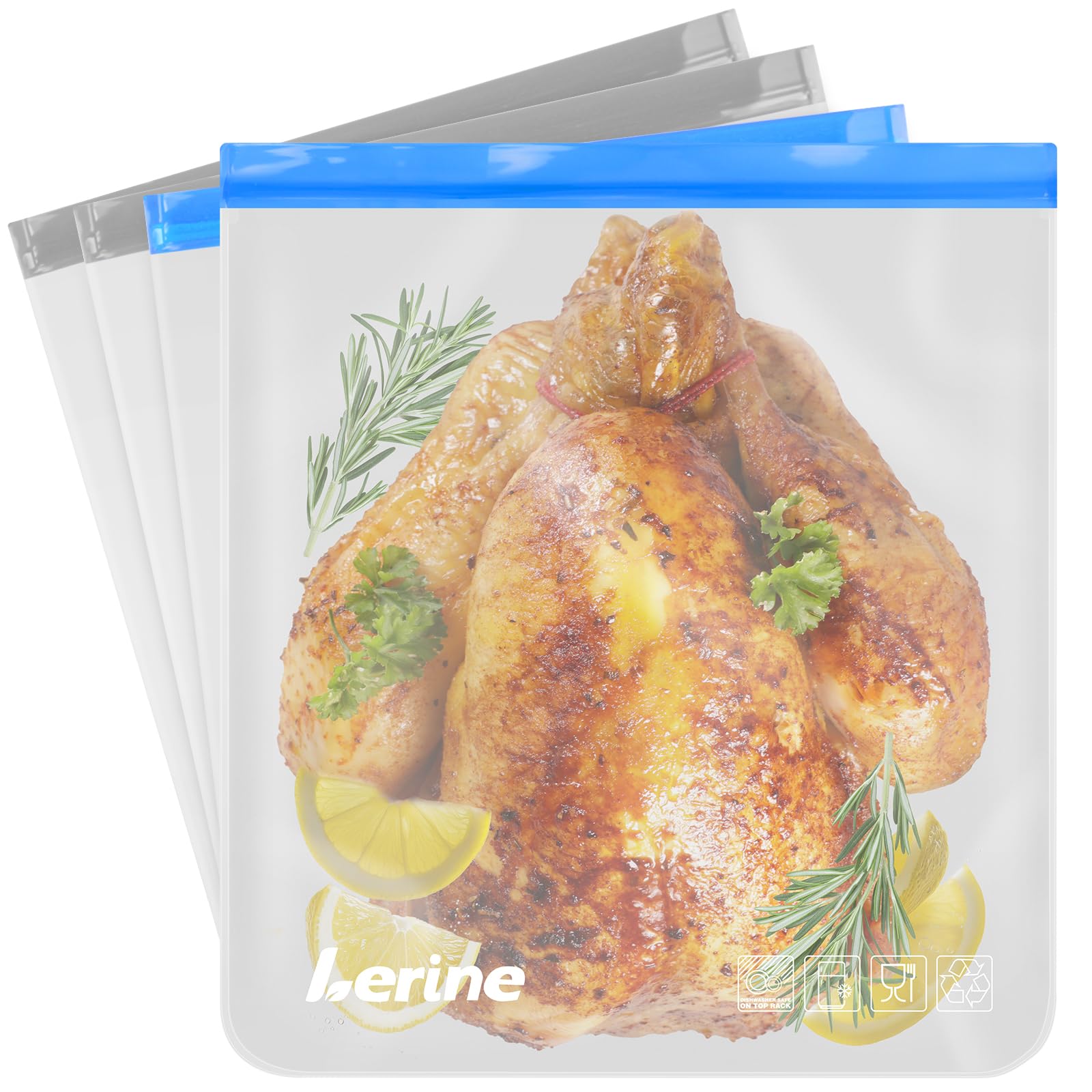
Made from BPA-free PEVA, each bag measures 16 x 18 inches and comfortably fits a 10 to 16-pound turkey alongside brine, herbs, and aromatics. The double-seal zipper is leak-resistant and keeps salty brine contained during submersion.
The biggest practical advantage is the bag format: it takes up almost no storage space when empty, and the clear material lets you visually monitor the brine level. The PEVA is thick enough to handle repeated uses, and the manufacturer claims each bag can replace up to 450 disposable plastic bags. However, the large size makes hand washing the only practical cleaning method, even though the bag is labeled top-rack dishwasher safe.
The bag does not have a built-in submersion mechanism. For the brine to fully cover the meat, you will need to press out as much air as possible before sealing, or add a small plate or food-safe weight on top. This is a minor inconvenience given the low entry cost and the fact that you get four bags in the pack, but it is a trade-off compared to the rigid containers.
Why it’s great
- Extremely compact storage when not in use
- Four bags included for multiple brining sessions
- BPA-free PEVA with double-seal zipper
Good to know
- No built-in submersion mechanism; needs a weight
- Hand washing recommended despite dishwasher label
5. Tupperware Season-Serve Marinating Container

The Tupperware Season-Serve is a compact 2.9-liter (12.5-cup) container designed for smaller brining jobs. It is ideal for a single chicken breast, a pork tenderloin, or a batch of fish. The container is BPA-free and dishwasher safe, making cleanup effortless after a brine session. The one-piece lid seals tightly to prevent leaks.
Unlike the larger collapsible or rigid options, this container fits easily in a crowded fridge door or side shelf. Its size does not require a deep freezer layout, which is helpful for kitchens with limited space. The square footprint also stacks well with other Tupperware pieces.
If your brining needs are limited to small proteins or occasional quick marinades, this container avoids the overkill of a 22-quart bin. It does not offer a submersion plate, so you will need to press the food down or use a smaller ramekin to keep everything under the brine. For the targeted use case of weekly meal prep for small cuts, it performs exactly as expected.
Why it’s great
- Dishwasher safe for easy cleaning
- Compact footprint fits fridge doors and tight shelves
- Trusted BPA-free material from a known brand
Good to know
- 2.9-liter capacity is too small for whole turkeys or large roasts
- No built-in weight to prevent food from floating
FAQ
Is a 3-gallon bag large enough to brine a 15-pound turkey?
What is the real advantage of a weighted lid on a brining container?
Final Thoughts: The Verdict
For most users, the best brining containers winner is the The Briner because its weighted lid eliminates the single biggest frustration of brining—floating food—while offering a 22-quart capacity that handles holiday turkeys and competition cooks. If you want a container that disappears when not in use, grab the Cuisinart XL Collapsible. And for small, weekly brining jobs, nothing beats the convenience of the Tupperware Season-Serve.