Struggling to separate chicken breasts from the bone without shredding the meat or leaving silver skin behind is a sure sign your knife is working against you. A proper boning knife uses a narrow, curved blade to glide around joints and connective tissue, giving you clean cuts with minimal waste.
I’m Mohammad Maruf — the founder and writer behind AirfryerBite. I study chef forums, blade metallurgy data, and user reviews across hundreds of kitchen knives to identify the models that actually perform under daily use.
This guide compares seven top-rated models by blade flexibility, steel composition, handle grip, and edge retention so you can pick the best boning knife for your kitchen routine.
How To Choose The Best Boning Knife
Boning knives look similar at a glance, but the wrong specs will make every cut frustrating. You need to match blade flexibility, steel quality, handle ergonomics, and blade length to the specific protein you work with most often.
Match Blade Flexibility to Your Protein
A flexible boning knife bends easily along the spine, which lets you follow the contours of fish fillets and poultry bones without tearing the meat. A stiff blade is better for beef and pork, where you need leverage to cut through cartilage and tendons without the blade wobbling. Some brands offer both a flexible and a semi-flexible version of the same model.
Steel Hardness and Edge Retention
Rockwell hardness ratings between 56 and 61 are standard for boning knives. Softer steel (56-58 HRC) is easier to sharpen but dulls faster. Harder steel (59-61 HRC) holds its edge longer but can be brittle if you hit bone at the wrong angle. High-carbon stainless steel offers the best balance of stain resistance and edge longevity for everyday use.
Handle Comfort and Safety
Boning involves repetitive wrist movement and wet hands, so a non-slip handle is safety-critical. Thermoplastic rubber (Fibrox) and Santoprene handles provide grip even when greasy, while Pakkawood handles look elegant but can become slick. Triple-riveted full-tang construction adds stability and prevents the blade from loosening over time.
Blade Length: 5 to 7 Inches
A 5-inch blade gives you maximum control for tight joint work on chickens and small game. A 6-inch blade is the all-purpose standard, long enough to reach deep into large cuts but nimble enough for detail work. A 7-inch blade suits larger roasts and fish filleting, where a longer sweep reduces the number of passes.
Quick Comparison
On smaller screens, swipe sideways to see the full table.
| Model | Category | Best For | Key Spec | Amazon |
|---|---|---|---|---|
| WÜSTHOF Classic 5″ Boning Knife | Premium | Precision poultry deboning | Forged high-carbon steel, 58 HRC | Amazon |
| Shun Premier 6″ Boning/Fillet Knife | Premium | Fish fillet and delicate trim work | VG-MAX core, 16-degree edge, 68-layer Damascus | Amazon |
| Mercer Culinary Genesis 6″ Flexible Boning Knife | Mid-Range | All-purpose home and pro use | Forged German steel, Santoprene handle | Amazon |
| HENCKELS Forged Premio 5.5″ Boning Knife | Mid-Range | Everyday deboning on a budget | Forged German stainless, 5.5-inch blade | Amazon |
| Victorinox Fibrox 6″ Flexible Boning Knife | Mid-Range | Professional kitchen standard | Stamped stainless, NSF-approved Fibrox handle | Amazon |
| Cutluxe Artisan 7″ Boning Knife | Value | Filleting fish and large roasts | Forged German steel, 56+ HRC, Pakkawood handle | Amazon |
| Victorinox Swiss Classic 6″ Boning Knife | Value | Entry-level trim and debone | Stamped stainless, flexible blade, Fibrox handle | Amazon |
In‑Depth Reviews
1. WÜSTHOF Classic 5″ Boning Knife
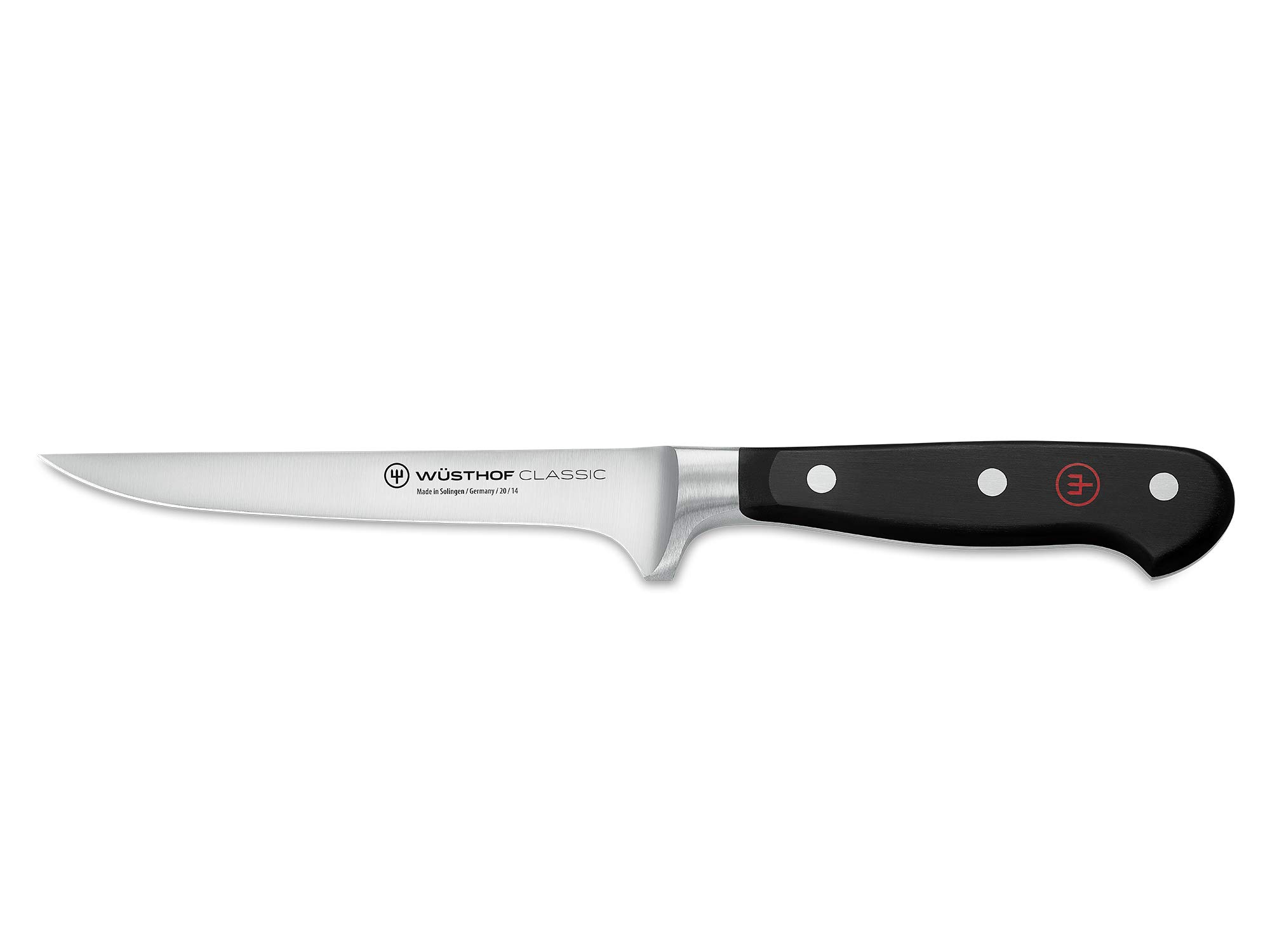
WÜSTHOF’s Classic series is a benchmark in western knife manufacturing, and this 5-inch boning knife is a masterclass in control. The forged high-carbon stainless steel blade hits 58 Rockwell, giving you a fine edge that holds up to daily trimming without chipping. The shorter length lets you pivot around chicken wing joints and Oyster cuts with surgical precision, which is why professional butchers often reach for this as their poultry knife.
The black synthetic polypropylene handle is triple-riveted to a full tang and contoured to fill the palm. It lacks the rubbery grip of Fibrox handles, so your hand needs to be dry for a secure hold — a minor tradeoff for the weight and balance you get. The blade spine is slightly thicker than most flexible boning knives, providing better leverage when you need to cut through cartilage.
This knife demands respect for its edge geometry. A few passes on a honing steel before each session will keep it slicing cleanly for years. Hand-washing is mandatory; the dishwasher will dull the edge and degrade the handle seal over time.
Why it’s great
- Exceptional edge retention from forged German steel
- Shorter blade offers precise control for poultry work
- Full-tang construction delivers balanced weight distribution
Good to know
- Handle can become slippery when wet
- Premium price point for a specialized knife
- Not designed for flexible fish filleting
2. Shun Premier 6″ Boning/Fillet Knife
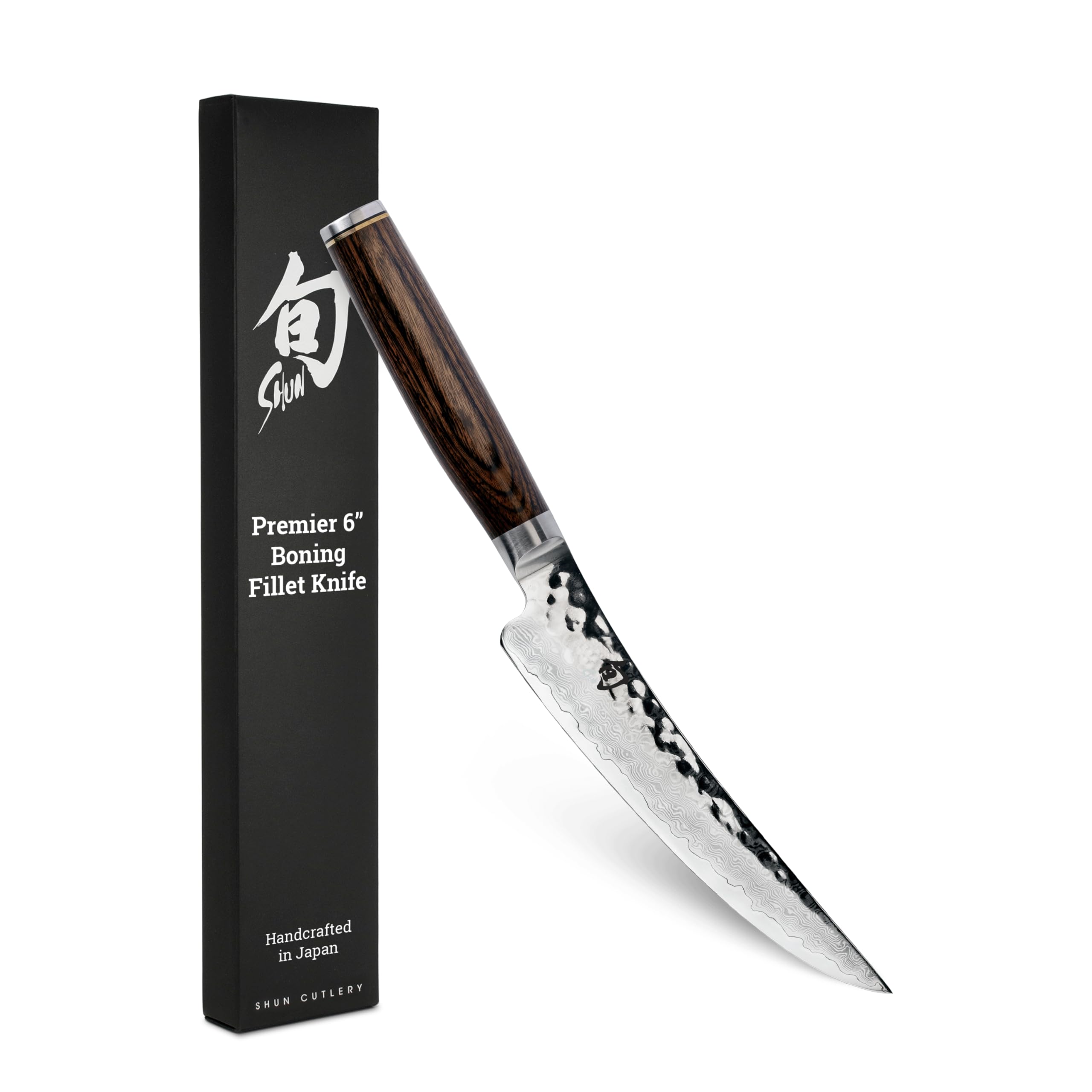
Shun’s Premier Gokujo blade (Gokujo translates to “extremely sharp”) is a hybrid design that pulls double duty as a boning knife and a fillet knife. The VG-MAX core is clad in 68 layers of Damascus steel, producing a 16-degree edge that glides through skin-on fish fillets and silver skin equally well. The narrow, curved profile is optimized to cut close to bone without dragging on connective tissue.
The hammered tsuchime finish on the blade face reduces surface tension, so thin strips of raw meat release cleanly instead of sticking to the steel. This is a real advantage when you are working through a large batch of chicken thighs or a whole salmon. The contoured Pakkawood handle is comfortable in both left and right hands, though it becomes noticeably slippery when coated in fish oil or poultry fat.
Because the edge is hardened to around 61 HRC, this knife stays sharp longer than almost any western steel knife in this guide. That hardness also means you should avoid twisting the blade against bone, as the thin edge can micro-chip under torque. Shun includes free sharpening service, which adds long-term value for this investment.
Why it’s great
- Razor-sharp 16-degree edge requires less cutting force
- Hammered finish prevents meat from sticking to the blade
- Free sharpening service from the manufacturer
Good to know
- Pakkawood handle gets slippery when wet or greasy
- Hard steel can micro-chip if twisted against bone
- Not dishwasher safe and requires hand washing only
3. Mercer Culinary Genesis 6″ Flexible Boning Knife

Mercer Culinary’s Genesis series is a staple in culinary school kitchens, and this 6-inch flexible boning knife explains why. The blade is precision-forged from high-carbon German steel and taper-ground so the edge gets progressively thinner toward the tip. This geometry improves slicing efficiency and creates a flexible spine that can bend along fish ribs or chicken breastbones without snapping.
The Santoprene handle is over-molded onto a full tang, providing a soft, non-slip grip that stays secure even when your hands are wet or coated in chicken fat. The balance point sits just ahead of the bolster, giving you a neutral feel that reduces wrist fatigue during long trimming sessions. A textured finger guard adds safety when your hand slides forward during repetitive cuts.
Mercer recommends hand washing only, and following that advice will keep the edge true for years. The blade arrives factory-sharpened to a working edge that needs only a light honing before first use. For the price, this knife delivers forged construction and pro-grade ergonomics that rival options costing three times as much.
Why it’s great
- Forged German steel at a mid-range price point
- Santoprene handle provides excellent wet grip
- Taper-ground edge improves slicing efficiency
Good to know
- Not dishwasher safe despite some claims
- Blade is more flexible than ideal for heavy beef work
- Factory edge benefits from a quick honing before first use
4. HENCKELS Forged Premio 5.5″ Boning Knife

HENCKELS brings German engineering to a compact 5.5-inch format that works exceptionally well for cooks with smaller hands or anyone working in tight spaces. The forged bolster creates a seamless transition from blade to handle and adds a bit of forward weight, which helps drive the blade through connective tissue with less effort. The satin-finished blade resists staining and is finely honed to maintain a workable edge between sharpenings.
The modern triple-rivet handle curves to fit the natural shape of your palm, though it is made from stainless steel and stamped steel rather than a synthetic grip material. This gives the knife a sleek, sanitary look, but the smooth metal surface offers less traction than rubberized handles when your hands are wet. The logo-stamped endcap provides a visual counterweight and prevents the knife from rolling off the cutting board.
HENCKELS lists this knife as dishwasher safe, but exposing the forged bolster and riveted handle to dishwasher heat cycles will eventually weaken the seal and dull the edge. Hand washing is strongly recommended for longevity. This is a solid everyday boning knife for cooks who prioritize compact storage and classic styling.
Why it’s great
- Compact 5.5-inch blade for tight joint work
- Forged bolster adds durability and balance
- Stainless steel handle is easy to sanitize
Good to know
- Smooth metal handle is slippery when wet
- Dishwasher safety claim contradicts best care practices
- Blade width feels thick for detailed fish filleting
5. Victorinox Fibrox 6″ Flexible Boning Knife
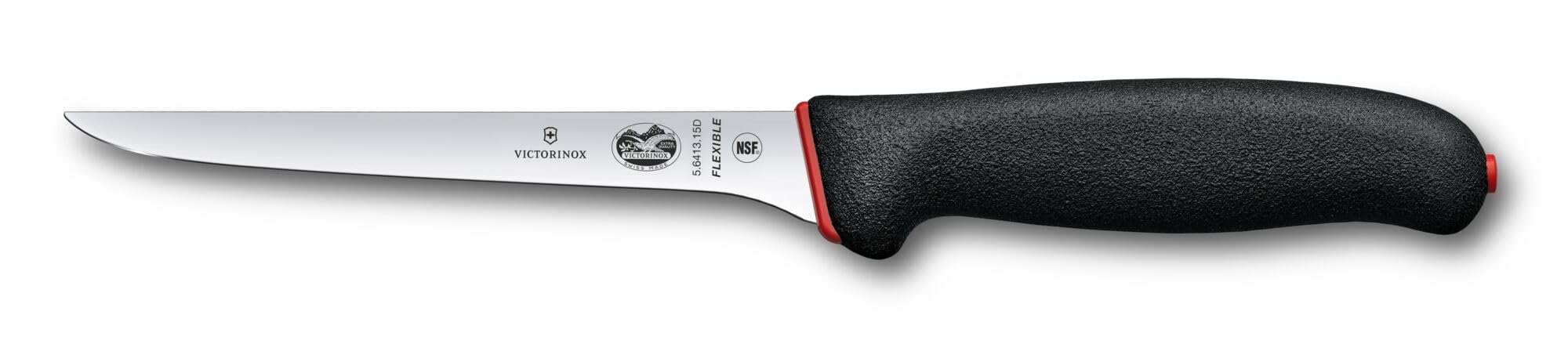
The Victorinox Fibrox 6-inch flexible boning knife is the workhorse of professional kitchens for a reason. The stamped stainless steel blade is thin, highly flexible, and ground with a straight edge that makes it easy to maintain on a steel or stone. The flexibility lets you follow the curves of poultry carcasses and fish frames with minimal resistance, which is why many commercial butchers keep two of these in their roll.
The Fibrox handle is NSF-approved and made from a textured thermoplastic rubber that provides exceptional grip even when your hands are slick with fat. The handle is molded directly onto the tang without rivets, creating a seamless, hygienic surface that resists bacterial buildup. The balance point is slightly blade-heavy, which aids cutting momentum but may feel unusual if you are used to a neutral-weight knife.
This knife is labeled dishwasher safe thanks to the seamless handle construction, but frequent dishwasher cycles will accelerate edge dulling. The stamped blade is softer than forged alternatives, meaning it requires more frequent honing to maintain peak sharpness. The tradeoff is a lightweight, affordable tool that is easy to resharpen and replace when needed.
Why it’s great
- NSF-approved handle offers unmatched wet grip
- Highly flexible blade excels at poultry and fish work
- Lightweight design reduces fatigue during long shifts
Good to know
- Stamped blade dulls faster than forged steel options
- Blade-heavy balance may not suit all users
- Requires frequent honing to maintain peak sharpness
6. Cutluxe Artisan 7″ Boning Knife
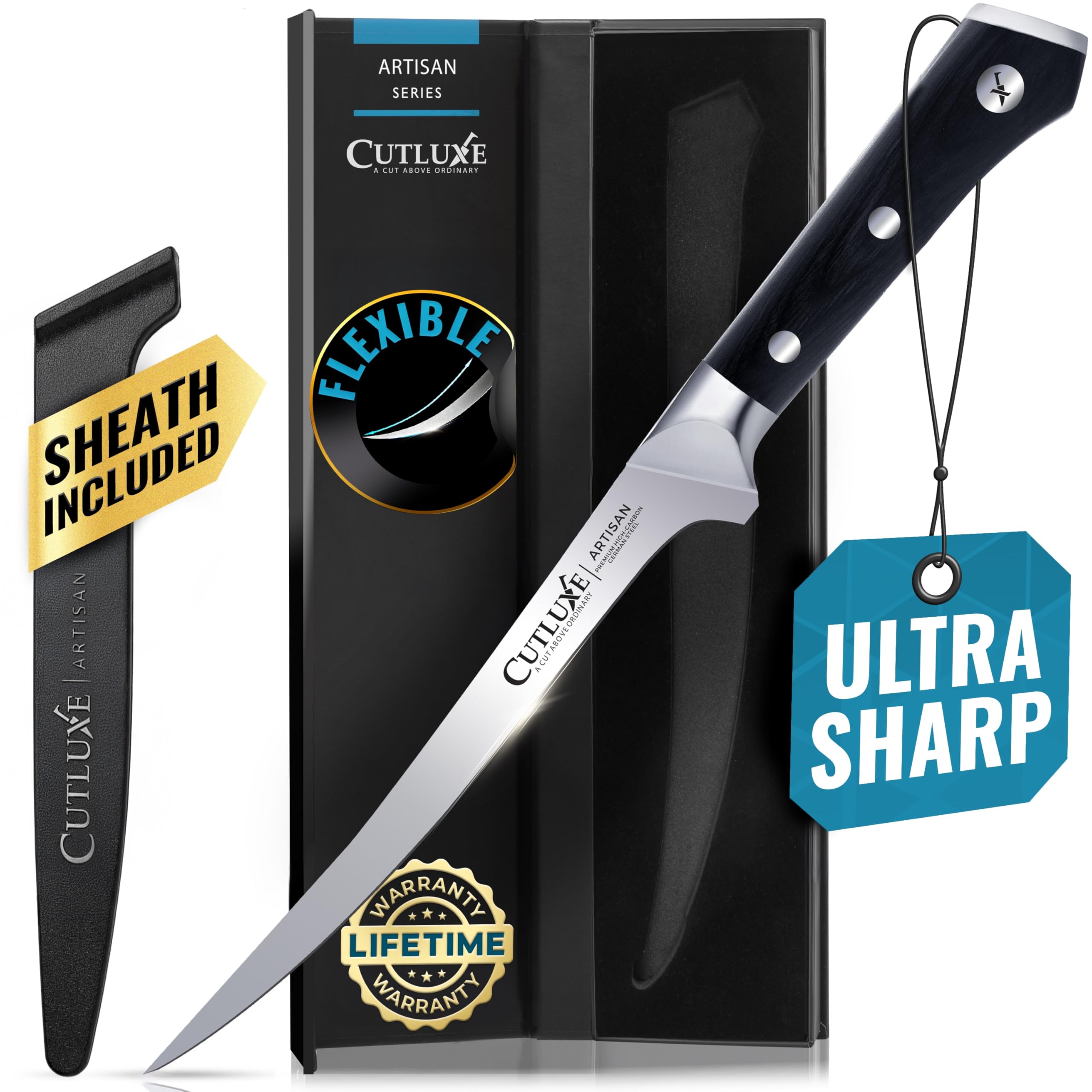
Cutluxe’s Artisan Series delivers a forged high-carbon German steel blade with a 7-inch length that is ideal for larger fish fillets, whole roasts, and deep trimming work. The blade is hand-sharpened to 14-16 degrees per side, producing a razor edge that reviewers consistently describe as cutting through meat like butter. The 56+ Rockwell hardness offers a good balance of edge retention and ease of sharpening.
The full-tang Pakkawood handle is triple-riveted for stability and polished to a sanitary finish. Several buyers have noted that the knife arrived without the advertised sheath, so check the packaging upon delivery. The handle shape fills the hand well and provides good maneuverability, though Pakkawood becomes visibly marked with use and is less grippy than textured synthetic handles when wet.
At this length and with a forged blade, the Cutluxe competes directly with knives priced at double the cost. The included storage box is presentation-quality, and the lifetime warranty against material defects adds peace of mind. This is a strong entry-level forged option for home cooks who want premium features without the premium price tag.
Why it’s great
- Forged German steel at an entry-level price
- 7-inch blade suits large fish and roast prep
- Lifetime warranty against material defects
Good to know
- Sheath may not be included with every unit
- Pakkawood handle gets slippery when wet
- Not dishwasher safe and requires careful hand washing
7. Victorinox Swiss Classic 6″ Boning Knife

The Victorinox Swiss Classic shares the same Fibro Pro handle and 6-inch flexible blade design as the Fibrox model, but with a slightly different S-shaped edge geometry that some users prefer for separating meat from bone. The Swiss Classic uses the same stamped stainless steel construction made in Switzerland, so the cutting performance is nearly identical to the Fibrox line.
The Fibro Pro handle is ergonomically shaped to minimize wrist tension and is NSF-approved for use in commercial kitchens. The thermoplastic rubber material offers a secure grip even when your hands are submerged in water or coated in grease. The knife is lightweight at around 0.08 kilograms, which makes it easy to control during long prep sessions but may feel insubstantial to cooks who prefer a heavier blade.
This knife ships with the item number 6.8413.15 stamped on the blade rather than the older 6.6413.15US1 marking, but the dimensions and material are identical. Victorinox covers it with a lifetime warranty against material and workmanship defects. For cooks on a tight budget who still want a reliable, NSF-approved boning knife, this is a sensible pick.
Why it’s great
- NSF-approved handle with excellent wet grip
- Very lightweight and easy to maneuver
- Lifetime warranty against material defects
Good to know
- Stamped blade requires frequent honing
- Lightweight build may feel flimsy to some users
- Edge geometry is similar to Fibrox but not identical
FAQ
What is the difference between a boning knife and a fillet knife?
Should I choose a stamped or forged boning knife?
What blade length is best for home butchery?
Can I use a boning knife for general kitchen tasks?
Final Thoughts: The Verdict
For most users, the best boning knife winner is the Mercer Culinary Genesis 6″ Flexible Boning Knife because it delivers forged German steel, a wet-grip Santoprene handle, and a taper-ground edge at a mid-range price that outperforms many premium competitors. If you want uncompromising edge sharpness and a layered Damascus blade for precision filleting, grab the Shun Premier 6″ Boning/Fillet Knife. And for a budget-friendly forged option with a 7-inch blade suited to larger cuts, nothing beats the Cutluxe Artisan 7″ Boning Knife.