Trimming a whole packer brisket demands a blade that follows the curve of the bone without gouging the flat or wasting the point. The wrong boning knife turns a two-hour prep into a frustrating fight against sinew and silver skin, while the right one lets you separate the deckle, remove the fat cap, and clean the ribs with surgical precision.
I’m Mohammad Maruf — the founder and writer behind AirfryerBite. I have spent hundreds of hours analyzing blade geometries, steel compositions, and handle ergonomics to separate genuine performance tools from countertop ornaments in the meat-preparation niche.
After close examination of the leading options in this field, the guide you are reading now delivers a focused, no-nonsense breakdown of the best boning knife for brisket.
How To Choose The Best Boning Knife For Brisket
Brisket is not a forgiving cut. The intercostal bones on the back, the dense cartilage around the sternum, and the thick fat cap between the point and the flat each demand a blade that can flex, steer, and hold an edge. Selecting the wrong knife leads to torn meat, wasted trimmings, and unnecessary effort.
Blade Length and Flexibility
A 5-inch blade works well for tight bone channels inside a steer, but a 6-inch blade gives the extra reach needed to sweep around the entire contour of a full brisket. Flexibility is the real discriminator: a stiff blade is safer for heavy cutting through cartilage, while a semi-flexible or fully flexible blade makes the clean sweeps required to separate the deckle from the lean meat. Look for a blade that bends about 10 to 15 degrees under moderate thumb pressure — that is the sweet spot for brisket.
Steel Composition and Edge Retention
High-carbon stainless steel provides the corrosion resistance needed for wet trimming sessions and the hardness that holds a fine edge through a whole packer. German X50CrMoV15 steel (around 56-58 HRC) is tougher and easier to sharpen, while Japanese AUS-10V (60-62 HRC) holds its edge longer but requires more care. For home cooks who sharpen every few cooks, the German alloy is more forgiving. For competition cooks who want peak sharpness without mid-cook honing, the Japanese alloy is the better pick.
Handle Ergonomics and Grip
Brisket trimming is a wet, fatty operation. A handle with a contoured shape and a textured surface — such as Santoprene, thermoplastic rubber (TPR), or G10 — provides a secure grip even when coated in tallow. Full-tang construction adds balance and reduces hand fatigue over a long prep session. Avoid smooth metal or polished wood handles that become slippery within minutes.
Quick Comparison
On smaller screens, swipe sideways to see the full table.
| Model | Category | Best For | Key Spec | Amazon |
|---|---|---|---|---|
| Wüsthof Classic 6″ Flexible Boning | Premium | Pro-grade edge retention & full-tang balance | High-carbon stainless, 6 in, full-flex | Amazon |
| Dalstrong Shogun ELITE 6″ Boning | Premium | Damascus edge for competition slicing | AUS-10V Japanese steel, 60-62 HRC | Amazon |
| Shun Classic 6″ Boning/Fillet | Premium | Ultra-thin grind for clean sweeps | VG-MAX steel, 6 in, flexible | Amazon |
| WÜSTHOF Gourmet 5″ Boning | Mid-Range | Compact control for tight bone channels | High-carbon stainless, 5 in, semi-flex | Amazon |
| HENCKELS Forged Premio 5.5″ Boning | Mid-Range | Budget-friendly forged German build | German stainless, 5.5 in, stiff | Amazon |
| Mercer Culinary Genesis 6″ Flexible Boning | Mid-Range | Best value for home cooks | High-carbon German steel, 6 in, flexible | Amazon |
| Victorinox Fibrox 6″ Flexible Boning | Entry-Level | Reliable entry point for beginners | Swiss stainless, 6 in, flexible | Amazon |
In‑Depth Reviews
1. Wüsthof Classic Flexible Boning Knife, 6-Inch

The Wüsthof Classic line has been a professional kitchen staple for generations, and the 6-inch flexible boning knife is the most targeted tool in this lineup for brisket work. The full-tang, triple-riveted handle provides a perfectly balanced feel that minimizes wrist fatigue during the extended trimming sessions a full packer demands.
The high-carbon stainless steel blade is laser-cut rather than forged, yet the edge geometry holds up exceptionally well against the dense cartilage found around brisket bones. The full flex allows the blade to ride along the rib arc without biting into the lean meat, making it a strong choice for anyone who wants to maximize yield from a whole brisket.
Hand washing is required, and the edge benefits from a quick honing before every cook, but the combination of precision, balance, and a lifetime warranty makes this the reference standard for brisket boning.
Why it’s great
- Full-tang balance reduces hand fatigue during long trimming sessions.
- Full-flex blade follows bone contours without gouging meat.
- Lifetime warranty from a German manufacturer with over 200 years of cutlery tradition.
Good to know
- Not dishwasher safe; requires hand washing and drying.
- Premium pricing reflects its professional-grade build.
2. Dalstrong Boning Knife – 6 inch – Shogun Series ELITE

The Dalstrong Shogun ELITE represents the premium Japanese approach to boning knives. The AUS-10V core steel is hardened to 60-62 HRC, which delivers exceptional edge retention — you can trim an entire brisket without needing a touch-up. The 67-layer Damascus cladding provides aesthetic appeal and, more practically, corrosion resistance during wet work.
The 6-inch blade is semi-flexible, offering enough give to navigate the rib cage while retaining stiffness for cutting through the sinew cap. The G10 handle is textured and ergonomically contoured, providing a secure grip even when hands are slick with tallow. A fitted sheath is included, protecting the edge between cooks.
This knife is not for beginners. The high-hardness edge is more brittle than German alloys and requires careful use around bones. For the competition cook who demands peak sharpness, this is an elite tool.
Why it’s great
- AUS-10V steel holds a razor edge through a full packer.
- G10 handle offers superior grip in greasy conditions.
- Includes a high-quality sheath for safe storage.
Good to know
- Higher hardness (60-62 HRC) can chip if used carelessly against bone.
- Premium cost places it at the high end of the market.
3. Shun Classic 6″ Boning/Fillet Knife

Shun’s Classic line uses a proprietary VG-MAX steel that combines fine-grain structure with high hardness, and the 6-inch boning/fillet knife is ground extremely thin behind the edge. This geometry makes it one of the most nimble tools for sweeping around the brisket’s intercostal bones, producing clean cuts with minimal resistance.
The blade is fully flexible, allowing it to bend along the curvature of the rib cage. The traditional Japanese D-shaped handle in walnut-colored PakkaWood provides good wet grip, though it is not as aggressively textured as synthetic options. The knife is hand-sharpened to a 16-degree angle, delivering a factory edge that easily cuts through silver skin.
Because the blade is thin, it requires careful handling to avoid edge chipping on hard cartilage. This knife is best suited for cooks who value a nimble, laser-like cutting experience and have honing skills to match.
Why it’s great
- Ultra-thin grind provides the cleanest meat separation.
- VG-MAX steel offers excellent edge stability over long cooks.
- Hand-sharpened 16-degree edge is factory-razor sharp.
Good to know
- Thin blade is more vulnerable to chipping on heavy bone contact.
- PakkaWood handle requires careful drying to maintain appearance.
4. WÜSTHOF Gourmet 5″ Boning Knife

The WÜSTHOF Gourmet 5-inch boning knife is a shorter, more maneuverable option that excels when working inside tight spaces, such as cleaning the deckle off the back of the brisket ribs. The blade is laser-cut from high-carbon stainless steel, producing a uniform edge that sharpens easily on a steel or stone.
The polyoxymethylene (POM) handle is smooth but has a subtle ergonomic curve that promotes a pinch-grip hold. The semi-flexible blade provides enough bend for typical brisket bone work, though it is stiffer than the full-flex options from the Classic line. This stiffness makes it safer for beginners who are still learning to feel the bone contour.
This knife represents a solid mid-range entry point. It lacks the premium feel of the Classic series but delivers reliable WÜSTHOF quality at a lower cost. Hand washing is required, and the edge will need regular honing to maintain peak performance.
Why it’s great
- Shorter 5-inch blade offers superior control in tight areas.
- Semi-flexible profile is forgiving for less experienced trimmers.
- German brand reputation for consistent quality and longevity.
Good to know
- Not a full-flex blade; less adept at sweeping large arcs.
- Smooth handle can become slippery when wet.
5. HENCKELS Forged Premio 5.5-inch Boning Knife

The HENCKELS Forged Premio boning knife bridges the gap between entry-level and premium with a forged bolster construction at a reasonable cost. The German stainless steel blade is satin-finished and finely honed, delivering a sharp edge out of the box that is suitable for trimming fat and separating meat from the brisket bones.
The 5.5-inch blade is stiffer than the flexible competition, making it a safer tool for cutting through the thick fat cap and dense connective tissue. The triple-rivet handle is curved for comfort, though the stainless steel endcap adds a bit of weight at the back that helps with balance during downward cuts.
This knife is dishwasher safe, a rare claim among boning knives, though hand washing is still recommended to preserve the edge. It is the most affordable forged option on this list and represents a solid value for the home cook who wants a durable, no-fuss tool.
Why it’s great
- Forged bolster construction offers durability and balance.
- Dishwasher safe for easy cleanup.
- Budget-friendly price for a forged German blade.
Good to know
- Stiff blade profile is less effective for sweeping around ribs.
- Edge dulls faster than higher-end Japanese steel options.
6. Mercer Culinary Genesis 6-Inch Flexible Boning Knife

The Mercer Culinary Genesis 6-inch flexible boning knife is built around a precision-forged high-carbon German steel blade with a taper-ground edge. The blade geometry is designed for efficiency, producing a keen edge that slices through brisket fat and silver skin without dragging. At a mid-range price, this knife competes well against options costing twice as much.
The Santoprene handle is one of the best in its class for wet grip. It is ergonomically contoured and non-slip, providing confidence during long trimming sessions. The 6-inch flexible blade is ideal for the sweeping cuts needed to separate the flat from the point and to clean the rib bones.
This knife requires hand washing and is not dishwasher safe. The steel responds well to honing, and the edge can be restored quickly with a few passes on a steel rod. For the home cook who wants professional performance without the premium price, this is the strongest contender.
Why it’s great
- Outstanding grip from a comfortable Santoprene handle.
- Taper-ground edge offers excellent cutting efficiency.
- One of the best price-to-performance ratios in the boning knife category.
Good to know
- Not dishwasher safe; must be hand washed.
- Edge responds well to honing but benefits from frequent touch-ups.
7. Victorinox Fibrox 6 Inch Flexible Boning Knife
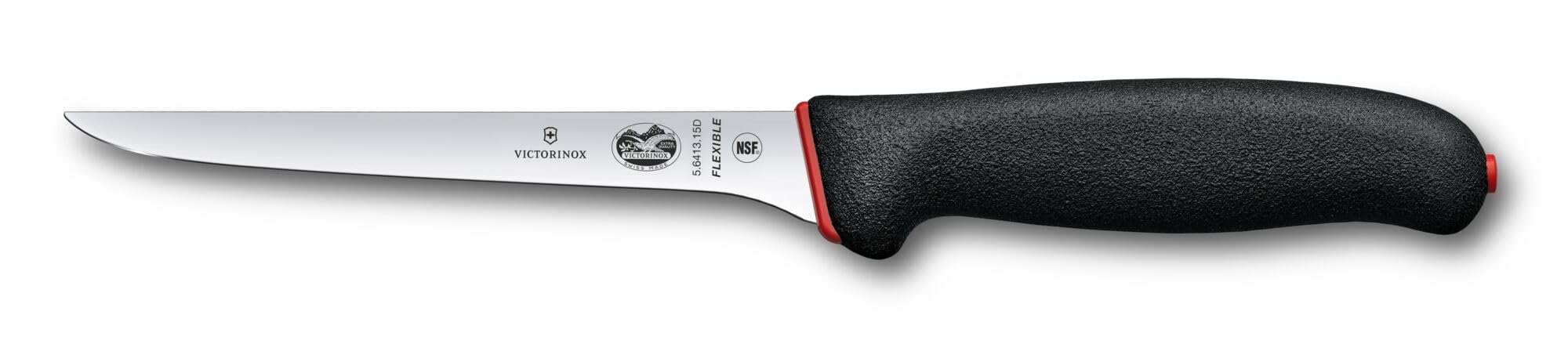
The Victorinox Fibrox 6-inch flexible boning knife is a Swiss-made entry-level tool that has earned a loyal following among commercial butchers and home cooks alike. The straight-edge blade is crafted from Victorinox’s proprietary stainless steel, which strikes a good balance between sharpness and ease of maintenance. The narrow, curved blade profile is specifically designed to move cleanly along bones.
The thermoplastic rubber (TPR) handle is the defining feature of the Fibrox line. It is non-slip, comfortable, and extremely durable, making it ideal for wet, fatty trimming environments. The 6-inch flexible blade provides the necessary bend for brisket bone work, though it is not as refined as the premium Japanese alternatives in terms of edge retention.
This knife lacks the prestige of forged construction, and the edge will require more frequent sharpening than high-carbon competitors. However, its low cost and proven performance make it the perfect starting point for anyone new to trimming their own briskets.
Why it’s great
- Excellent non-slip TPR handle for greasy conditions.
- Proven reliability in commercial butcher environments.
- Very accessible entry price for beginners.
Good to know
- Steel requires more frequent sharpening than premium alloys.
- Lacks the premium balance and weight of forged alternatives.
FAQ
Should I choose a stiff or flexible boning knife for brisket?
Can I use a fillet knife instead of a boning knife for brisket?
How often should I sharpen a boning knife used for brisket?
Final Thoughts: The Verdict
For most users, the best boning knife for brisket winner is the Wüsthof Classic 6-Inch Flexible Boning Knife because it combines full-tang balance, a full-flex blade, and reliable German edge retention at a price that reflects its professional pedigree. If you want peak edge retention in a semi-flexible package, grab the Dalstrong Shogun ELITE 6-Inch. And for the home cook who wants outstanding value for money, nothing beats the Mercer Culinary Genesis 6-Inch Flexible Boning Knife.