A basic refrigerator should just work — keep your milk cold, your ice cream frozen, and your vegetables crisp without fuss, noise, or a surprise layer of frost on the back wall. Yet, sorting through capacity options, defrost types, and energy ratings can make a simple purchase feel surprisingly complex.
I’m Mohammad Maruf — the founder and writer behind AirfryerBite. I’ve spent years analyzing how appliance specs translate into daily kitchen performance, focusing specifically on the features that separate a genuinely useful refrigerator from one that generates headaches down the line.
Whether you’re outfitting a first apartment, replacing a decades-old unit, or adding a secondary fridge for the garage, choosing from the best basic refrigerator options means focusing on reliable cooling, straightforward maintenance, and a capacity that truly fits your household’s rhythm.
How To Choose The Best Basic Refrigerator
A basic refrigerator doesn’t mean you should settle for flimsy shelves or a noisy compressor. The goal is to find a unit that hits the right balance of usable storage, efficient cooling, and low maintenance while skipping the extras you’ll never use — like a built-in tablet or ice maker that breaks after a year.
Capacity and Configuration
The most important decision you’ll make is between a top-freezer or a compact form factor. Top-freezer models ranging from 10 to 18 cubic feet are the sweet spot for most households: they offer the most usable shelf space per square foot of floor area, and the freezer section is easier to organize than a bottom-mount drawer. For a two-person household, a 10-cubic-foot model provides enough room for a weekly grocery run plus frozen staples. For a family of four, look at 17 to 18 cubic feet to avoid playing Tetris with your leftovers.
Defrost System: Frost-Free vs. Manual
Every basic refrigerator in this guide uses a frost-free defrost system, and for good reason. Manual-defrost freezers require you to empty the compartment, unplug the unit, and chip away at ice buildup every few months — a chore nobody enjoys. Frost-free models circulate cold air and automatically cycle warm refrigerant through the evaporator coils to prevent ice accumulation. The trade-off is slightly higher energy consumption and a gentle fan noise, but the convenience of never dealing with ice crust is worth every watt.
Energy Efficiency and Compressor Type
An Energy Star certification means the refrigerator uses at least 10% less energy than the federal minimum standard. For a basic refrigerator that runs 24/7, that translates to real savings on your electricity bill over the appliance’s 10-to-15-year lifespan. Inverter compressors — found on models like the Kenmore 18.1 cu. ft. unit — are especially valuable because they adjust their speed based on cooling demand rather than cycling on and off at full power, which reduces wear, noise, and energy spikes.
Quick Comparison
On smaller screens, swipe sideways to see the full table.
| Model | Category | Best For | Key Spec | Amazon |
|---|---|---|---|---|
| Kenmore 18.1 cu. ft. | Mid-Range | Family-sized storage with inverter compressor | 18.1 cu. ft. / 367 kWh/yr | Amazon |
| Upstreman 17.6 cu. ft. | Premium | Fingerprint-resistant stainless steel finish | 17.6 cu. ft. / 360 kWh/yr | Amazon |
| BLACK+DECKER 18.1 cu. ft. | Premium | Large capacity in a black matte finish | 18.1 cu. ft. / Frost-Free | Amazon |
| Frigidaire 10 cu. ft. | Mid-Range | Compact apartment-friendly top-freezer | 10 cu. ft. / 300 kWh/yr | Amazon |
| BLACK+DECKER 10 cu. ft. | Budget | Entry-level value for small kitchens | 10 cu. ft. / 297 kWh/yr | Amazon |
In‑Depth Reviews
1. Kenmore 30″ Top Mount Refrigerator with Freezer – 18.1 cu. ft.
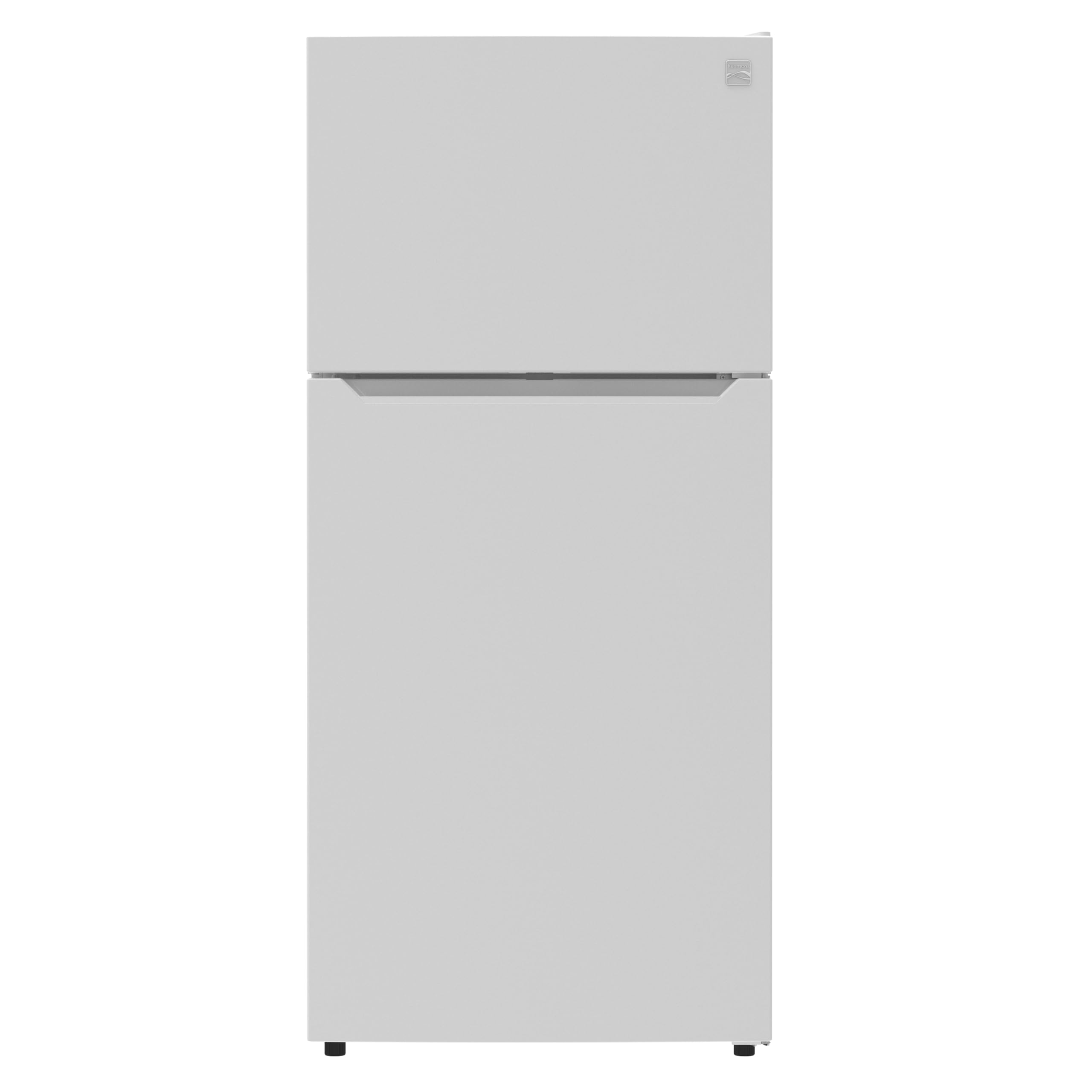
The Kenmore 18.1-cubic-foot model earns the top spot because it delivers the most useful features per dollar without dipping into luxury pricing territory. Its inverter compressor is the standout component — it runs quietly and maintains a steady internal temperature by adjusting its speed rather than cycling on and off, which also reduces energy spikes and mechanical stress over the long haul. The 30-inch width means it fits standard kitchen openings while still offering generous interior volume.
The adjustable edge-to-edge glass shelves let you reconfigure the interior to accommodate sheet cakes, tall bottles, or bulky leftovers without losing usable space. Four clear door bins plus a dedicated gallon-sized bin handle condiments and large jugs efficiently. The two humidity-controlled crispers are wide enough to store a week’s worth of produce, and the long-lasting LED lighting makes it easy to find items even on the bottom shelf.
At 367 kWh per year, it’s Energy Star certified and reasonably efficient for its size. The reversible door swing adds flexibility for tight kitchen layouts. The only trade-off is the lack of an adjustable temperature control knob — the inverter compressor manages temperatures automatically, which works well but offers less manual override for users who prefer hands-on tweaking.
Why it’s great
- Inverter compressor ensures consistent temperature and low noise
- 18.1 cu. ft. capacity fits families without requiring a wider cabinet
- Humidity-controlled crispers keep produce fresher for longer
Good to know
- No manual temperature control knob — relies on automatic inverter regulation
- White finish only; no stainless steel option for this model
2. Upstreman 17.6 Cu.Ft Top Freezer Refrigerator

The Upstreman 17.6-cubic-foot model stands out for its fingerprint-resistant stainless steel finish — a rare find in the basic refrigerator category. Instead of the standard white or black matte doors, this unit offers a reflective stainless exterior that resists smudges from daily kitchen use, making it look cleaner with less frequent wiping. It measures 27.56 inches wide, 30.12 inches deep, and 66.9 inches tall, fitting neatly into standard cutouts.
Inside, the electronic temperature control gives you precise adjustment ranges: the freezer zone can be set from 3.2°F down to -9.4°F, while the refrigerator zone operates between 33.8°F and 41°F across three variable settings. The frost-free system circulates cold air automatically to prevent ice buildup in the freezer section, and the Energy Star certification means it consumes only 360 kWh per year — slightly better than the Kenmore unit despite a similar capacity.
The 4.2-cubic-foot freezer area is deeper than many competitors at this size, which makes storing bulk frozen items more practical. The reversible door gives you flexibility for left or right opening. Noise levels are low, and the company claims an average daily operating cost that’s budget-friendly. The minor downside is the absence of humidity-controlled crisper drawers, which some buyers may miss for long-term produce storage.
Why it’s great
- Fingerprint-resistant stainless steel door stays clean without daily polishing
- Electronic temperature control offers precise freezer and fridge adjustments
- Low energy consumption at 360 kWh per year
Good to know
- No humidity-controlled crispers for produce storage
- Freezer door bins are smaller than some competing models
3. BLACK+DECKER 18.1 Cu. Ft. Top Mount Refrigerator with Freezer – BR1810HB
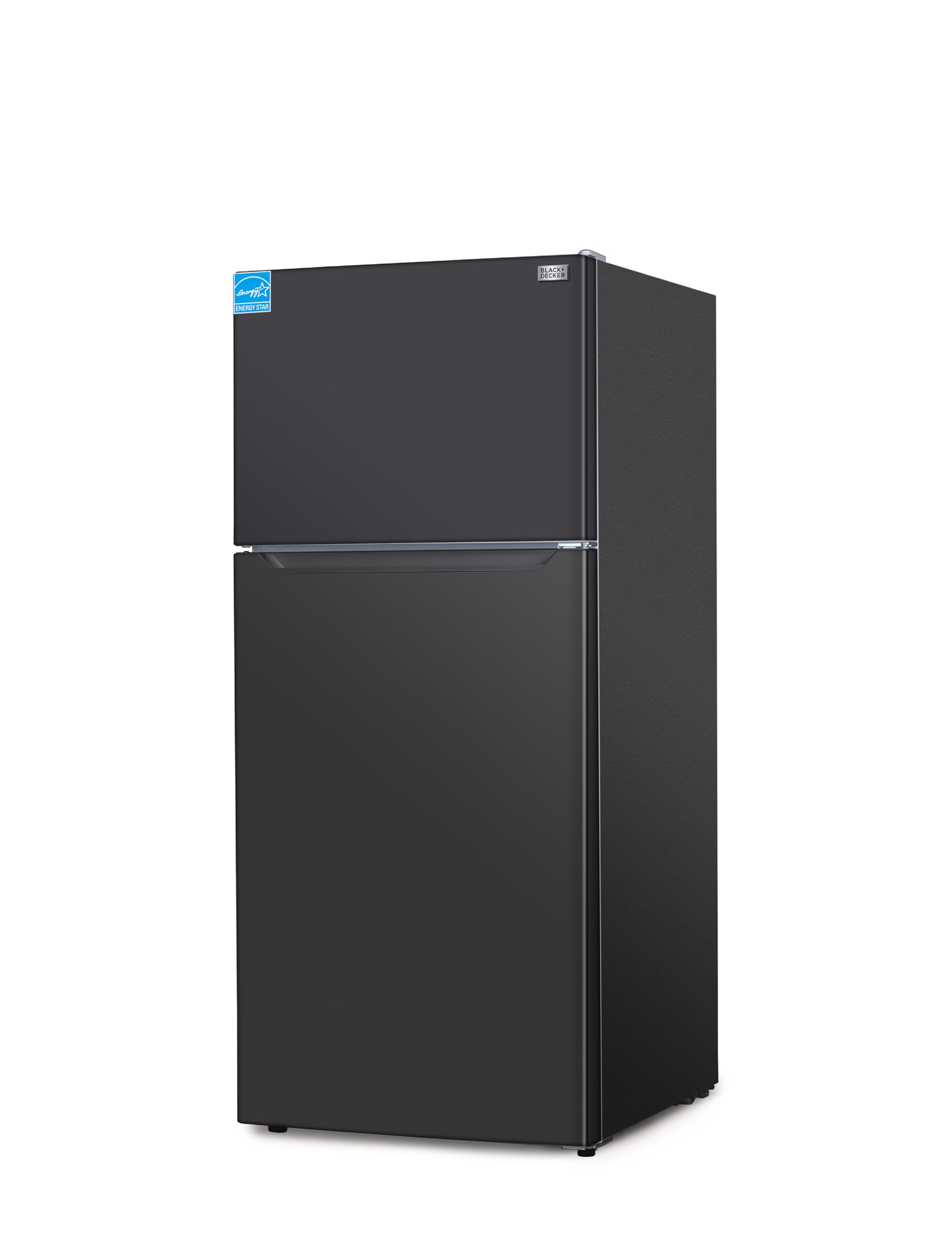
The BLACK+DECKER BR1810HB is essentially the larger sibling of the 10-cubic-foot model, offering 18.1 cubic feet of total capacity with a 4.7-cubic-foot freezer compartment. This makes it a strong contender for households that need extra freezer space for bulk meat purchases or frozen meal prep. The black matte finish gives it a more modern aesthetic than white alternatives while still hiding minor scuffs well.
The frost-free auto-defrost system handles the freezer compartment automatically, so you never need to chip away at ice. Adjustable temperature control lets you fine-tune cooling levels for both the fresh food and freezer sections independently. The Energy Star certification and annual consumption of 367 kWh keep operating costs competitive for a full-size unit.
The interior layout is straightforward: adjustable wire shelves in the freezer and glass shelves in the refrigerator section. The wire freezer shelf is removable to store larger frozen items. The reversible door adds placement flexibility. The primary limitation is the lack of humidity-controlled crisper drawers — you get simple open bins for produce — and the temperature control is a manual dial rather than an electronic panel, which some users may find less precise.
Why it’s great
- 4.7 cu. ft. freezer compartment is larger than many competitors at this price
- Frost-free auto-defrost eliminates manual ice removal
- Matte black finish resists visible smudges and scratches
Good to know
- No humidity-controlled crispers — basic open produce bins only
- Manual temperature dial offers less fine control than electronic systems
4. Frigidaire Frost Free Top Mount 2 Door Apartment Size Refrigerator – 10 CU FT
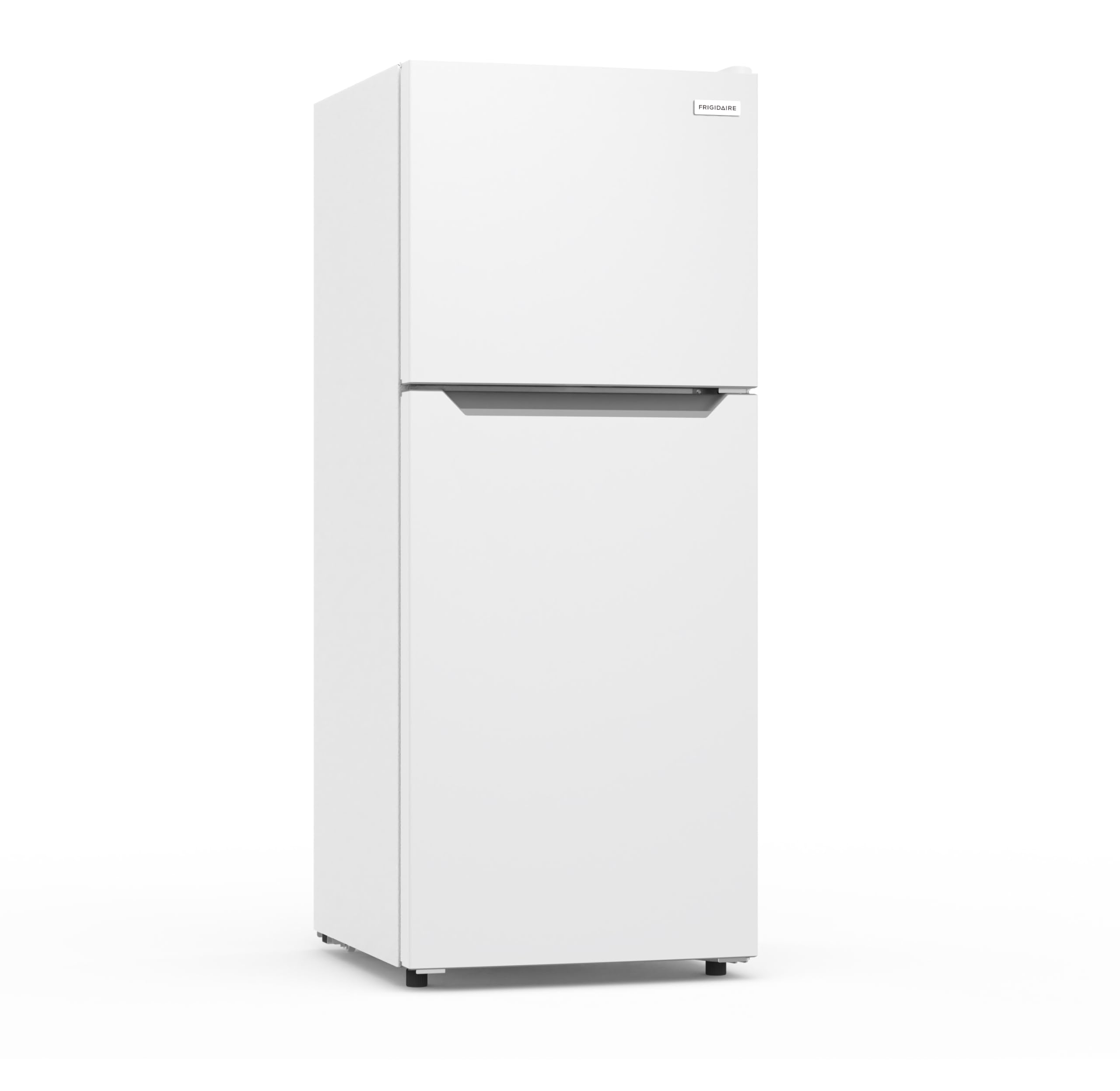
The Frigidaire 10-cubic-foot model is the most compact full-size option in this lineup, specifically engineered for apartments, small condos, or as a secondary unit for a home office kitchenette. It uses a standard top-freezer layout with a separated freezer compartment that maintains proper freezing temperatures. The frost-free defrost system means you won’t need to periodically empty and defrost the freezer section.
The adjustable thermostat gives you direct control over the internal temperature. Adjustable feet help level the unit on uneven floors, and the adjustable shelves let you customize the interior layout for taller containers or smaller items. The built-in interior lamp makes it easy to see contents even in dim kitchen lighting.
At 300 kWh per year, it’s energy-efficient for its size. The freezer capacity is roughly 2 cubic feet — enough for a few frozen pizzas, bags of vegetables, and ice cream. The reversible door allows you to switch the hinge side during installation. The main compromises are the single door shelf and the lack of crisper drawers, which means you’ll need to store produce in bags or containers on the main shelves.
Why it’s great
- Compact 10 cu. ft. footprint fits small kitchens and apartments
- Frost-free operation eliminates manual defrosting chores
- Adjustable thermostat and shelves offer flexible temperature and storage control
Good to know
- Only one door shelf limits condiment storage space
- Freezer capacity of 2 cu. ft. is smaller than many competing compact models
5. BLACK+DECKER 10 Cu. Ft. Top Mount Refrigerator with Freezer – BR1000HW
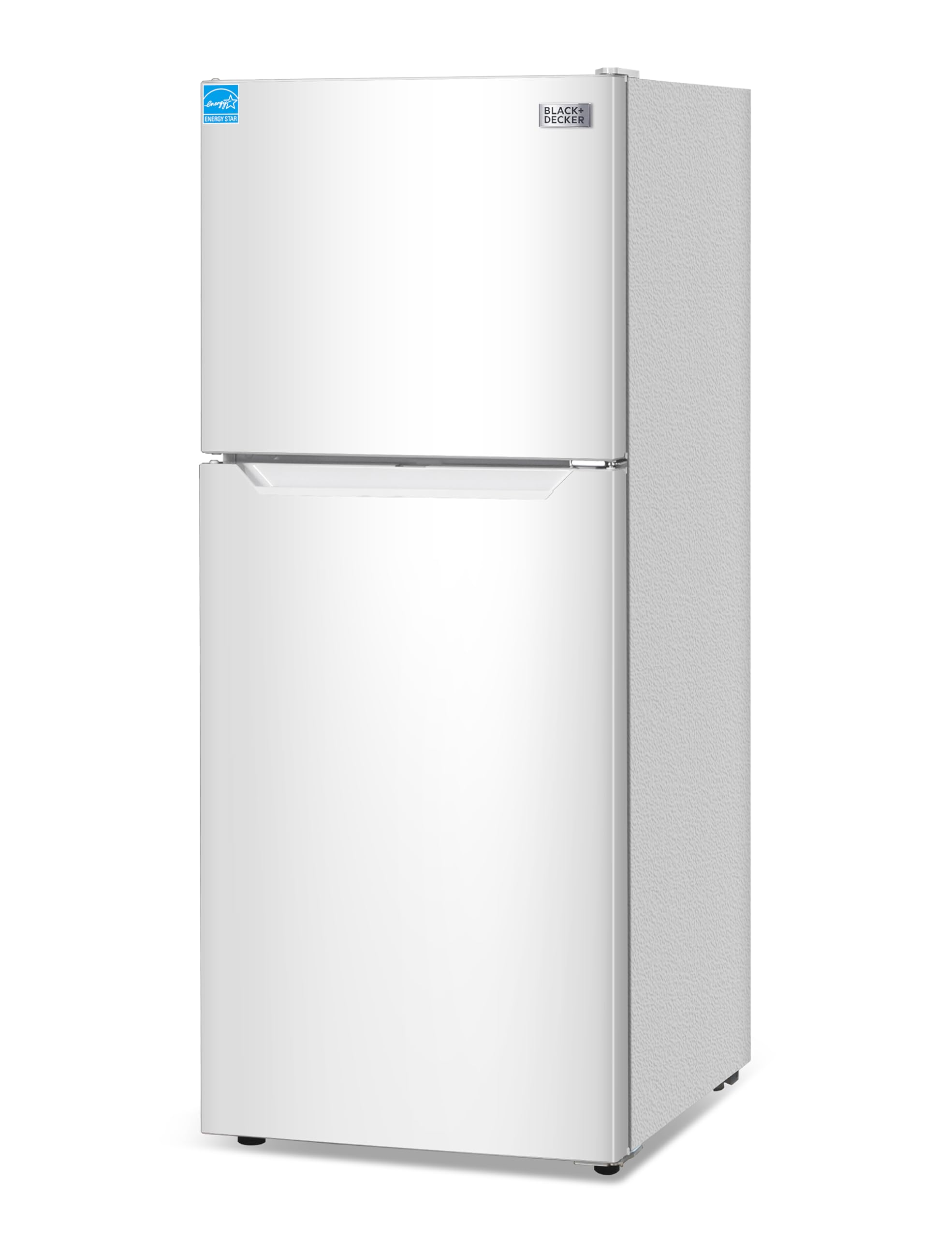
The BLACK+DECKER BR1000HW is the gateway into full-size refrigeration for buyers on a strict budget. It offers 10 cubic feet of total capacity with a 2.8-cubic-foot freezer section, making it ideal for a single person or a couple living in a small rental who still want a proper refrigerator rather than a dorm-size mini fridge. The white matte finish keeps things simple and blends with most kitchen decors.
It includes an adjustable temperature control dial that lets you set the cooling level for both the refrigerator and freezer compartments. The frost-free auto-defrost system is a welcome inclusion at this price point — many budget models still require manual defrosting. The Energy Star certification and annual energy consumption of just 297 kWh make it one of the most efficient models in this guide.
The interior features a wire freezer shelf that can be removed to accommodate larger frozen items, and the reversible door swing adds installation flexibility. The main downsides are the lack of crisper drawers, limited door storage with only basic bins, and the fact that the capacity may feel tight for a family doing weekly bulk shopping. For the price, though, it delivers reliable basic refrigeration without frills.
Why it’s great
- Very low energy consumption at 297 kWh per year
- Frost-free auto-defrost at a budget-friendly price point
- Reversible door allows flexible installation orientation
Good to know
- No crisper drawers — produce must be stored in bags on shelves
- 10 cu. ft. total capacity may be insufficient for households of more than two people
FAQ
Can a basic refrigerator be used in an unheated garage during winter?
How much space should I leave around a top-freezer refrigerator for proper ventilation?
What does a reversible door mean and does it affect refrigerator performance?
Final Thoughts: The Verdict
For most users, the best basic refrigerator winner is the Kenmore 18.1 cu. ft. model because its inverter compressor delivers the quietest, most temperature-stable performance in this class while offering generous storage for a family. If you want a fingerprint-resistant stainless steel finish that stays clean without effort, grab the Upstreman 17.6 cu. ft. model. And for the best value in a compact footprint that still includes frost-free convenience, nothing beats the BLACK+DECKER 10 cu. ft. refrigerator for small households or budget-focused buyers.