A floppy, pale-bottomed loaf fresh from the oven is a heartbreak no home baker should endure. The hardware you bake on determines whether your dough transforms into a crusty artisan masterpiece or a disappointing, lightly toasted brick. The thermal mass and conductivity of your baking surface directly dictate oven spring, crust color, and crumb structure.
I’m Mohammad Maruf — the founder and writer behind AirfryerBite. I’ve spent years dissecting the thermal properties of baking surfaces, comparing heat transfer coefficients of cordierite versus carbon steel versus cast iron to identify which materials consistently produce professional-grade bread at home.
Your search for the ideal thermal baking surface ends here. I’ve tested the thermal retention specs, real-world preheating demands, and maintenance trade-offs to build the definitive guide to the baking stone for bread.
How To Choose The Best Baking Stone For Bread
Selecting the right baking surface for bread involves more than just picking a slab of material that fits your oven. The interaction between thermal mass, conductivity, and surface texture directly affects how your dough rises and browns. Ignoring these variables leads to undercooked centers or burnt bottoms regardless of your recipe skills.
Material Matters: Cordierite vs Carbon Steel vs Cast Iron
Cordierite stones offer excellent thermal shock resistance, meaning they can handle sudden temperature changes without cracking. Their porous surface wicks moisture from the dough, contributing to a crispier crust. However, their thermal conductivity is significantly lower than steel, resulting in slower heat transfer to the dough. Carbon steel baking plates, on the other hand, conduct heat roughly 20 times faster than cordierite, delivering intense bottom heat that drives rapid oven spring and deep caramelization. Cast iron loaf pans provide superior heat retention in a contained shape, ideal for sandwich loaves but less versatile for free-form artisan boules or baguettes.
Thickness and Heat Recovery
Thicker surfaces store more thermal energy, which means they recover temperature faster after you load a cold dough onto them. A 0.25-inch steel plate holds enough energy to maintain high surface temperature during the first critical minutes of baking, when oven spring occurs. Thinner stones, around 0.47 inches, can cool down significantly when a cold loaf is placed on them, leading to a flatter rise and denser crumb. For back-to-back baking sessions, a thicker surface is non-negotiable for consistent results.
Surface Area and Dough Management
A baking surface should provide enough room for your dough to expand without overhanging the edges. Rectangular stones sized 15 by 12 inches comfortably accommodate a standard boule or batard, with space for a small baguette alongside. Larger surfaces like 16 by 14 inches allow for multiple smaller loaves or oversized pizzas. Corners and edges matter too — tapered edges make sliding the loaf on and off easier, while sharp corners can damage dough during transfer.
Quick Comparison
On smaller screens, swipe sideways to see the full table.
| Model | Category | Best For | Key Spec | Amazon |
|---|---|---|---|---|
| Chef Pomodoro Pizza Steel | Steel Plate | High-conductivity baking | 0.25-inch thick carbon steel | Amazon |
| Artisan Steel Pizza Steel | Steel Plate | Maximum heat retention | 16-pound solid steel slab | Amazon |
| Primica Pizza Steel XL | Steel Plate | Fast oven spring | 20x conductivity vs ceramic | Amazon |
| UMAID Pizza Steel | Steel Plate | Pre-seasoned convenience | Includes 15-recipe booklet | Amazon |
| Unicook 15×12 Cordierite Stone | Cordierite Stone | Moisture wicking and crispness | 0.53-inch thick cordierite | Amazon |
| Unicook 15×12 0.47-inch Stone | Cordierite Stone | Thermal shock resistance | 0.47-inch thin profile | Amazon |
| Brod & Taylor Bread Steel Original | Thin Steel Plate | Quick preheating, light weight | 0.1-inch thick, 5.6 pounds | Amazon |
| Brod & Taylor Ultralight Baking Shell | Aluminum Cover | Steam trapping for sourdough | 1-pound aluminum shell | Amazon |
| GRMImosa Cast Iron Loaf Pan | Cast Iron Pan | Sandwich loaf baking | 9×5 inch with lid, 9 pounds | Amazon |
In‑Depth Reviews
1. Chef Pomodoro Pizza Steel for Oven 16 Inch

The Chef Pomodoro steel plate delivers the kind of thermal conductivity that cordierite stones simply cannot match. At 0.25 inches thick, this pre-seasoned carbon steel slab transfers intense bottom heat directly into your dough, driving rapid oven spring and creating a deeply caramelized crust within minutes. The 16 by 13.25-inch surface provides ample real estate for oversized artisan boules or multiple batards, and the built-in lifting holes make handling the 14.6-pound plate far less cumbersome than a comparably sized stone.
Bakers who prioritize crust development and fast cook times will immediately notice the difference. The steel reaches temperature in sync with your oven, requiring no extended preheat beyond the standard 45 to 60 minutes. Its smooth, low-friction surface allows dough to slide off easily with a dusting of semolina or cornmeal, and cleanup requires only a quick scrape and a wipe — no soap necessary. The pre-seasoned coating improves with each use, building a natural non-stick patina over time.
One consideration is the steel’s weight. At nearly 15 pounds, it requires a sturdy oven rack, and the initial thermal mass means it stays hot long after your bake is done. This is an advantage for multiple loaves but requires careful handling when removing from the oven. The maximum temperature rating of 932 degrees Fahrenheit far exceeds any home oven, so thermal degradation is not a concern.
Why it’s great
- Superior thermal conductivity for rapid oven spring and deep crust color
- Pre-seasoned surface eliminates prep work out of the box
- Lifting holes provide secure handling despite the heavy weight
Good to know
- Heavier than most cordierite stones, requiring a sturdy oven rack
- Thinner profile cools faster than thicker steel plates during consecutive bakes
2. Artisan Steel Pizza Steel 16 x 14.25 Inch

Artisan Steel produces a no-compromise baking slab that prioritizes thermal mass above all else. Weighing 16 pounds and measuring 0.25 inches thick, this 16 by 14.25-inch plate stores an enormous amount of thermal energy, ensuring your oven temperature barely drops when a cold loaf hits the surface. The result is explosive oven spring, a crackling crust, and an even crumb structure that rivals professional deck ovens. The low-friction steel surface allows steam to escape laterally, preventing a soggy bottom crust.
The construction is straightforward: a solid slab of American-made steel with no coatings or gimmicks. It arrives unseasoned, meaning you need to apply a thin layer of high-smoke-point oil and bake it for an hour before first use. Once seasoned, the surface becomes naturally non-stick and improves with every bake. The rectangular shape fits standard home ovens, and the steel’s flatness ensures even contact across the entire dough bottom, eliminating hot spots.
The trade-off is weight and handling. At 16 pounds, this is one of the heavier options, making it difficult to maneuver in and out of the oven — especially when hot. It does not include lifting holes, so you will need to grip it from the sides with oven mitts. Additionally, the steel can rust if not dried thoroughly after washing, so immediate drying and occasional re-seasoning are necessary maintenance steps.
Why it’s great
- Massive thermal mass for superior heat recovery between back-to-back loaves
- Bare steel construction with no coatings for long-term durability
- Made in the USA using domestically sourced materials
Good to know
- Requires initial seasoning before first use
- No lifting holes makes handling hot steel challenging
3. Primica Pizza Steel XL 16 x 13.4 Inch

Primica positions its XL steel plate as a direct upgrade to ceramic stones, and the numbers back it up. This pre-seasoned 0.25-inch carbon steel slab offers roughly 20 times the thermal conductivity of cordierite, translating to significantly faster heat transfer into your dough. The 16 by 13.4-inch surface fits comfortably in standard home ovens and provides enough space for a large sourdough boule alongside a small baguette. The pre-seasoned surface is ready for immediate use, sparing you the initial seasoning step required by bare steel plates.
The practical result is a dramatic improvement in bottom crust development. Bakers who have struggled with pale, gummy loaf bottoms on ceramic stones will see immediate improvement. The steel’s high conductivity also shortens total bake time slightly, as the intense bottom heat accelerates internal crumb setting. Users report achieving restaurant-quality blistering on their crust after just a few minutes at 500 degrees Fahrenheit. The surface is easy to maintain — a quick rinse and towel dry after each use, with an occasional light oiling to maintain the seasoned layer.
One notable limitation is the steel’s weight at 14.4 pounds, which may be challenging for bakers with wrist or back concerns. The square shape, while maximizing usable surface area, has sharper corners that can catch parchment paper during loading. Some users have reported minor warping when preheating on a stovetop burner, so this plate is best used exclusively inside an oven or grill.
Why it’s great
- 20x higher thermal conductivity than ceramic stones for rapid crust formation
- Pre-seasoned and ready to use out of the box
- Generous surface area for multi-loaf baking
Good to know
- Rear corners are sharp and can snag parchment paper during dough transfer
- Not suitable for stovetop preheating due to risk of warping
4. UMAID Pizza Steel 16 x 13.4 Inch
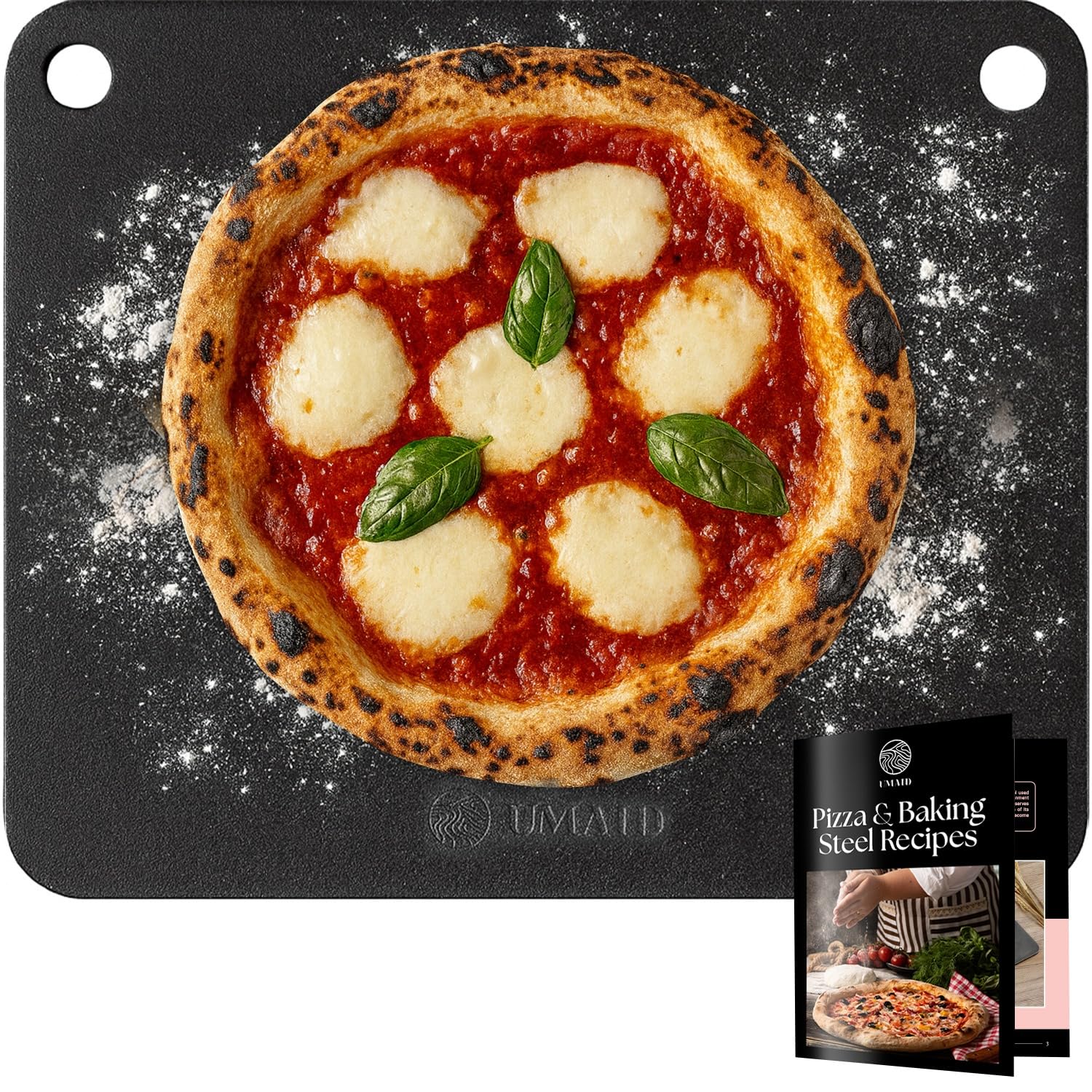
UMAID enters the baking steel market with a strong mid-range offering that balances performance and affordability. The 0.25-inch thick carbon steel plate measures 16 by 13.4 inches, matching the dimensions of premium competitors at a more accessible entry point. It comes pre-seasoned with flax oil, meaning you can place it in the oven and start baking immediately. The steel delivers the same high-conductivity advantages as other carbon steel options, producing crisp, well-colored crusts on sourdough and yeasted loaves alike.
A standout addition is the included 15-recipe booklet, which provides specific baking instructions for artisan pizzas and breads calibrated to the steel’s thermal properties. This is particularly useful for beginners who are transitioning from a stone or baking sheet. The steel’s moderate weight of 14.5 pounds is manageable for most bakers, and the rectangular shape fits standard oven racks without overhang. Cleaning is straightforward — scrape off residue after cooling and wipe with a damp cloth.
The maximum temperature rating of 550 degrees Fahrenheit is the primary limitation. While this is sufficient for most home bread baking, it means the steel cannot be used in grills or ovens that exceed this temperature. Additionally, the pre-seasoned coating is relatively thin and may require touch-ups after several months of heavy use, especially if acidic doughs are baked directly on the surface.
Why it’s great
- Pre-seasoned with flax oil for immediate use without prep
- Includes a printed recipe booklet with bread and pizza recipes tailored to the steel
- Good thermal conductivity at a lower price point than comparable steels
Good to know
- Maximum temperature limited to 550 degrees Fahrenheit
- Pre-seasoned coating may need reapplication after extended use
5. Unicook 15 x 12 Inch Cordierite Stone

Unicook’s rectangular cordierite stone offers a reliable, traditional baking surface at an accessible price. At 0.53 inches thick, it provides decent thermal mass for its category, and the porous cordierite material actively wicks moisture from the dough surface, contributing to a crispier crust. The 15 by 12-inch footprint accommodates a standard 12-inch pizza or a medium-sized artisan loaf, with enough room for a small baguette on the side. The stone is rated to withstand temperatures up to 1,450 degrees Fahrenheit, effectively eliminating any risk of thermal shock or cracking during normal use.
The stone’s porous surface absorbs excess moisture from the dough, which helps create the brick-oven texture that many home bakers seek. It can be used on both sides, effectively doubling its lifespan. The included plastic dough scraper is a useful bonus for handling wet doughs or cleaning residue from the stone surface. Users report that the stone performs well for both bread and pizza, delivering consistently crisp bottoms without burning the toppings.
One common complaint is staining. Like all porous baking stones, this one will discolor over time as oils and dough residue absorb into the surface. This is cosmetic and does not affect performance, but it may bother bakers who prefer a pristine appearance. Additionally, the stone is fragile compared to steel — dropping it or subjecting it to rapid temperature changes can cause cracking, despite the thermal shock resistance rating.
Why it’s great
- Porous cordierite actively wicks moisture for a crispier crust
- Extreme heat tolerance up to 1,450 degrees Fahrenheit
- Reversible surface doubles the usable lifespan
Good to know
- Porous surface will stain and darken over time with normal use
- Brittle material can crack if dropped or subjected to rapid thermal shock
6. Unicook 15 x 12 Inch 0.47-Inch Stone

This variation of Unicook’s cordierite stone shares the same 15 by 12-inch dimensions but uses a thinner 0.47-inch profile. The reduced thickness makes it lighter and easier to handle than the thicker version, weighing approximately 7.5 pounds. It still offers the same thermal shock resistance up to 1,450 degrees Fahrenheit and the moisture-wicking porous surface that defines cordierite baking stones. The thinner profile means it preheats faster, requiring about 30 minutes instead of the 45 to 60 minutes typically needed by thicker stones or steel plates.
Bakers with smaller ovens, RV ovens, or portable grills will appreciate the thinner profile’s compatibility with tight spaces. The stone fits perfectly in standard RV ovens and helps even out their notoriously uneven heat distribution. The included plastic dough scraper is the same as the thicker model, useful for handling dough and cleaning the stone. Users consistently report that the stone produces crispy, evenly baked crusts without the soggy bottom that plagues baking on standard sheet pans.
The thinner construction has a downside: reduced thermal mass. A cold dough placed on this stone will cause a greater temperature drop compared to a thicker stone or steel plate, potentially reducing oven spring. This is especially noticeable when baking multiple loaves in succession, as the stone takes longer to recover its surface temperature. Bakers who make single loaves or have a relaxed baking pace will find this trade-off acceptable.
Why it’s great
- Thinner profile preheats faster and weighs less for easier handling
- Fits perfectly in small ovens including RV and countertop models
- Excellent thermal shock resistance prevents cracking during normal use
Good to know
- Lower thermal mass leads to greater temperature drop when cold dough is loaded
- Longer recovery time between consecutive bakes compared to thicker stones
7. Brod & Taylor Bread Steel Original 14 x 14 Inch

Brod & Taylor takes a fundamentally different approach with their Bread Steel, prioritizing rapid preheating and easy handling over thermal mass. At only 0.1 inches thick and weighing 5.6 pounds, this carbon steel plate preheats in sync with your oven, eliminating the 45 to 60 minute preheat required by thicker stones and steels. The 14 by 14-inch square surface provides generous space for artisan loaves, and the lightweight design makes it easy to slide in and out of the oven without strain.
The thin profile delivers intense heat transfer to the dough bottom, producing a crisp crust and good oven spring despite the lower thermal mass. The pre-seasoned flax oil coating provides a naturally non-stick surface that improves with use. The steel is versatile beyond bread baking — it can be used under a broiler for flatbreads or placed on a grill for pizza. Cleanup is simple: a quick rinse and dry, with occasional re-oiling to maintain the seasoning. The square shape fits most home ovens easily, leaving room for steam pans if you bake with added humidity.
The primary limitation is heat recovery. Because the steel is thin, its surface temperature drops significantly when a cold dough is placed on it. For single-loaf bakers this is rarely an issue, but those baking multiple consecutive loaves may notice a reduction in bottom crust crispness after the first loaf. Additionally, the thin steel can warp if subjected to extreme temperature differentials, such as placing a cold steel into a preheated oven.
Why it’s great
- Ultra-thin design preheats in just 10 to 15 minutes, saving significant time
- Weighs only 5.6 pounds, making it the easiest steel to handle and store
- Pre-seasoned and ready for immediate use with no prep required
Good to know
- Thin profile loses surface temperature quickly with cold dough, affecting multiple-bake sessions
- Can warp if placed into a fully preheated oven from a cold state
8. Brod & Taylor Ultralight Baking Shell for Sourdough

The Brod & Taylor Baking Shell solves one of the most persistent challenges in home sourdough baking: trapping steam without using a heavy, preheated Dutch oven. This ultralight aluminum dome weighs just over 1 pound and measures 13 inches square by 5.5 inches tall, creating a sealed environment that traps steam released from the dough during the first 20 minutes of baking. The trapped steam delays crust setting, allowing maximum oven spring and producing a glossy, crackling crust.
The key innovation is that the shell requires no preheating. You simply place your risen dough on a hot baking surface — whether a stone, steel, or baking sheet — and cover it with the shell before placing the assembly in the oven. After 20 minutes, you remove the shell to allow the crust to brown and crisp. This eliminates the burn risk and awkward maneuvering associated with placing dough into a preheated Dutch oven. The aluminum construction is food-safe, contains no PTFE or PFOA coatings, and withstands temperatures up to 550 degrees Fahrenheit.
The shell is not a standalone baking surface; it must be used in conjunction with a stone or steel. This means you need two components for the full setup, increasing both cost and storage requirements. Additionally, the shell’s square shape may not accommodate very large oval boules, and the aluminum surface can dent if mishandled. It also functions as a bread dome for storage, adding a secondary use that offsets some of its single-purpose nature.
Why it’s great
- No preheating required, eliminating burn risk and saving energy
- Traps steam effectively for superior crust and crumb development
- Ultralight at just over 1 pound for easy handling and storage
Good to know
- Requires a separate baking stone or steel to function as intended
- Square shape may not cover extra-large or oval boules completely
9. GRMImosa 2 in 1 Cast Iron Bread Loaf Pan

The GRMImosa cast iron loaf pan takes a different approach than flat baking surfaces, offering a contained baking environment specifically for sandwich loaves. The 9 by 5-inch inner dimensions are standard for loaf pans, but the cast iron construction provides exceptional heat retention that aluminum or glass loaf pans cannot match. The included lid creates a steam-trapping environment similar to a mini Dutch oven, promoting oven spring and a tender crumb while preventing excessive top browning during the first half of the bake.
The 2-in-1 design allows the lid to be flipped and used as a second baking surface, effectively doubling the pan’s utility for small flatbreads or rolls. The pre-seasoned surface is naturally non-stick and improves with regular use. At 9 pounds, the pan is heavy but manageable, and the cast iron construction means it will last for decades with proper maintenance. The heat retention properties ensure even baking from all sides, eliminating the pale sides and gummy centers that plague thin metal loaf pans.
The primary limitation is specificity: this pan is designed for loaf bread, not free-form artisan loaves or baguettes. Bakers who primarily make sourdough boules will find their dough slumps into a sandwich loaf shape rather than retaining its round form. The 3.8-quart capacity is suitable for standard loaves but may be small for large, high-hydration doughs that expand significantly. Additionally, the 9-pound weight makes it less convenient to handle than aluminum or steel loaf pans.
Why it’s great
- Cast iron construction provides unmatched heat retention and even baking
- Included lid traps steam for improved oven spring and tender crumb
- 2-in-1 design with reversible lid adds baking versatility
Good to know
- Specifically designed for loaf bread, not suitable for free-form artisan boules
- 9-pound weight is heavy compared to standard loaf pans
FAQ
Should I choose a baking stone or a baking steel for bread?
How thick should a baking steel be for sourdough bread?
Can I use a baking stone for bread on a gas grill?
Why does my bread stick to the baking stone?
Is a cast iron loaf pan better than a baking stone for sandwich bread?
Final Thoughts: The Verdict
For most users, the baking stone for bread winner is the Chef Pomodoro Pizza Steel because its 0.25-inch carbon steel construction delivers the ideal balance of thermal conductivity, heat recovery, and pre-seasoned convenience for consistently excellent sourdough and artisan loaves. If you want a lightweight option that preheats in sync with your oven, grab the Brod & Taylor Bread Steel Original. And for steam-trapping power without the weight of a Dutch oven, the Brod & Taylor Ultralight Baking Shell paired with any steel surface produces the best crust and crumb for dedicated sourdough bakers.