That pale, soggy-bottomed pizza you keep pulling out of your home oven has a single fix: thermal mass. A ceramic stone leaks heat the moment you slide the pie on. A baking steel absorbs, holds, and slams back that energy into the dough, driving off steam fast enough to produce the leopard-spotted, crackling crust a pizzeria oven delivers. The difference isn’t subtle — it’s structural.
I’m Mohammad Maruf — the founder and writer behind AirfryerBite. I’ve spent years comparing thermal conductivity specs, thickness tolerances, and steel grades across dedicated pizza tools to isolate what actually separates a chewy crust from a charred one.
I’ve cut through the marketing claims to rank the plates that deliver genuine heat transfer, not just heavy metal. This guide is built around actionable performance metrics for anyone serious about finding the best baking steel for pizza that transforms a standard oven into a crust powerhouse.
How To Choose The Best Baking Steel For Pizza
A baking steel is heavier, more conductive, and longer-lasting than any stone you’ve tried, but only if you match the right dimensions and thickness to your oven and cooking style. Ignore the wrong specs and you’ll end up with a plate that either underperforms or destroys your oven rack.
Thickness Dictates Recovery Speed
The single most important metric is thickness measured in inches. A 1/4-inch steel reaches peak temperature faster but loses more energy between consecutive pizzas. A 3/8-inch or 1/2-inch plate holds heat longer, meaning the second and third pizzas bake as well as the first. If you typically bake one pizza at a time, 1/4 inch is sufficient. For parties or batch bakes, step up to a thicker plate.
Surface Area and Oven Fit
Your steel should cover as much of the rack surface as possible without touching the oven walls or blocking the heating element. Measure your oven’s interior width and depth. A 16-inch by 14-inch plate fits most standard home ovens. A square 14-inch by 14-inch plate suits smaller ovens or those with side-mounted heating elements. Leaving too much exposed rack space lets heat escape, wasting the steel’s thermal advantage.
Steel Grade and Coating
Look for A36 or equivalent mild carbon steel with no anti-rust chemical coatings. Pre-seasoned plates save setup time and come ready to bake, but raw plates require an initial oil cure in the oven at 400°F for an hour. Avoid stainless steel — its thermal conductivity is roughly half that of carbon steel, which defeats the purpose of switching from a stone in the first place.
Quick Comparison
On smaller screens, swipe sideways to see the full table.
| Model | Category | Best For | Key Spec | Amazon |
|---|---|---|---|---|
| UMAID Pizza Steel | Premium | Multi-pizza bakes | 1/4″ thick, 16″x13.4″ | Amazon |
| High Performance Pizza Steel (USA) | Premium | Rust-free heavy use | 1/4″ thick, 16″x14.25″ | Amazon |
| Primica Pizza Steel XL | Mid-Range | Conductivity-focused crust | 1/4″ thick, 16″x13.4″ | Amazon |
| Chef Pomodoro Pizza Steel | Mid-Range | Standard oven fit | 1/4″ thick, 16″x13.25″ | Amazon |
| Loftern Pizza Steel | Mid-Range | Versatile bread and pizza | 1/4″ thick, 16″x14″ | Amazon |
| IMPRESA Pizza Oven Steel | Mid-Range | Compact square footprint | 1/4″ thick, 14″x14″ | Amazon |
| VEVOR Pizza Steel | Budget | Entry-level steel buy | 1/4″ thick, 16″x14.5″ | Amazon |
In‑Depth Reviews
1. UMAID Pizza Steel for Oven & Grill
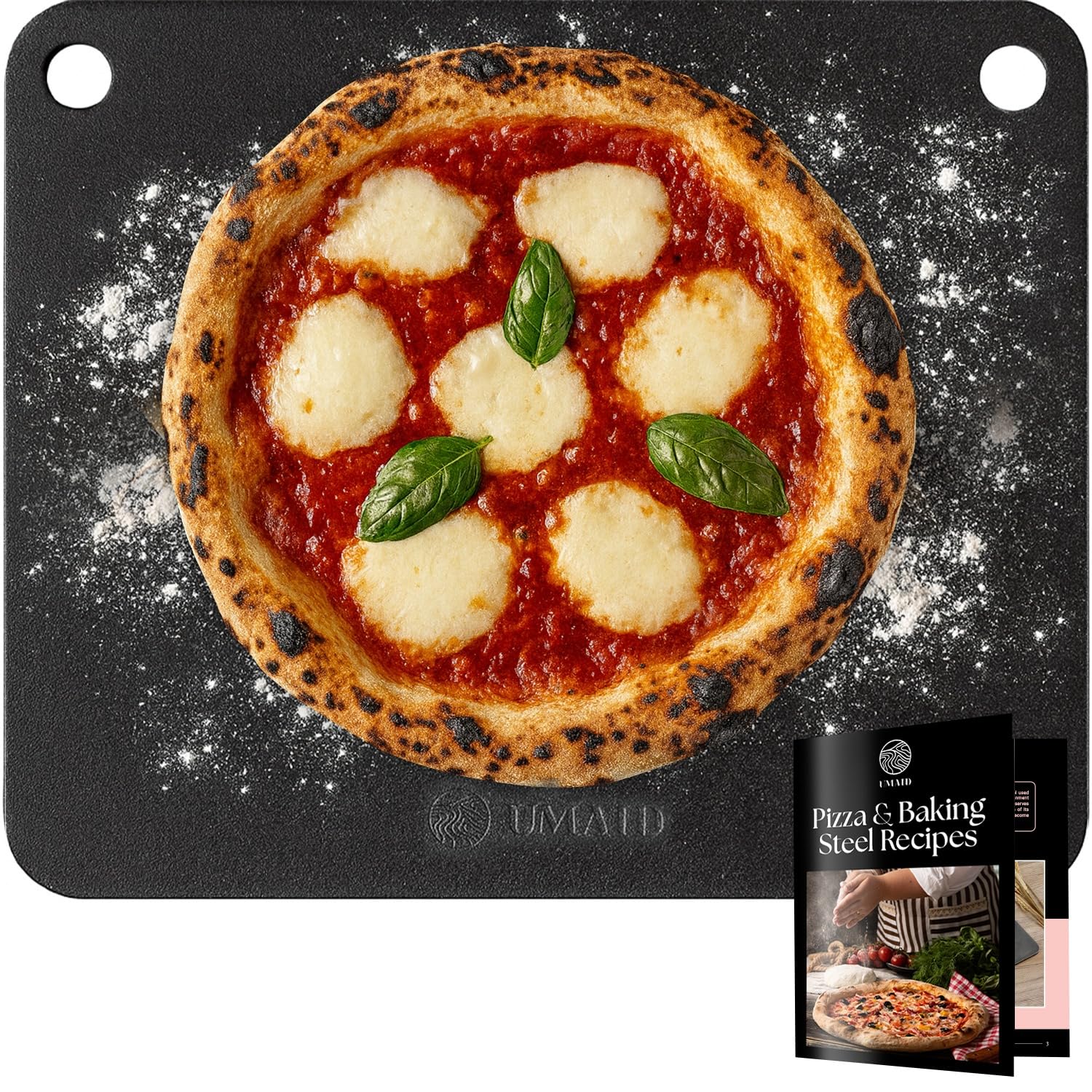
The UMAID plate hits the sweet spot of coverage and value. Measuring 16 by 13.4 inches at a quarter-inch thick, it fills almost the entire rack of a standard 30-inch oven, which means maximum radiant heat absorption from the top and bottom elements. The pre-seasoned surface arrives ready to launch a pizza within an hour of unboxing — no oiling or baking cycle required before first use.
I appreciate the included recipe booklet because it removes the guesswork around preheat times and dough hydration ratios. The carbon steel reaches 500°F quickly and recovers well enough between two consecutive 12-inch pies without noticeable temperature drop. The edges are laser-cut smooth, so there’s no risk of scratching your oven rack during insertion or removal.
Given the fit, the pre-seasoning, and the usable extras, this is the plate I recommend most often for home cooks who want a single steel that handles pizza, sourdough, and sheet-pan searing without compromise.
Why it’s great
- Pre-seasoned and ready immediately
- Full-coverage size fits most standard ovens
- Recipe booklet adds real beginner value
Good to know
- Quarter-inch thickness limits multi-pizza recovery
- No thumb hole for hanging storage
2. High Performance Pizza Steel Made in the USA

This is the closest thing to a commercial-grade steel you can fit in a residential oven without custom fabrication. At 16 by 14.25 inches and a quarter-inch thick, it offers slightly more surface area than the UMAID, and the domestic fabrication means the steel is cut from a consistent A36 grade blank without chemical anti-rust coatings that could off-gas during the first high-heat bake.
The raw steel surface requires an initial seasoning — rub on a thin layer of flaxseed or grapeseed oil, bake at 400°F for one hour, and let it cool inside the oven. Once seasoned, the surface becomes naturally non-stick and develops a dark patina that improves with each use. I’ve found the thermal recovery between pizzas feels more consistent than the pre-seasoned competitors, likely because the uncoated steel transfers heat with zero interference.
For bakers who plan to keep this steel for a decade and use it weekly for bread, pizza, and roasting, the extra care during setup pays off in longevity.
Why it’s great
- Domestic A36 steel with no chemical coatings
- Better heat recovery than pre-seasoned plates
- Largest usable surface area in this list
Good to know
- Requires initial seasoning before first use
- Heavier than advertised — expect nearly 15 lbs
3. Primica Pizza Steel XL for Oven & Grill

Primica markets this as a “crust game changer,” and the performance largely supports the claim. The 16-by-13.4-inch quarter-inch steel heats up fast — faster than most stones I’ve tested — and the advertised higher conductivity is noticeable in the first 90 seconds of a Neapolitan-style bake on the highest oven setting. The bottom sets before the top overcooks, which is exactly what a steel should do.
What makes this model stand out is the price-to-size ratio. It undercuts the premium plates by a noticeable margin while delivering nearly identical surface coverage. The pre-seasoning is light — you’ll still want to reinforce it after a few bakes with a quick oil wipe — but it’s enough to launch a pizza without sticking on day one.
The edges are clean, and I didn’t find any sharp burrs that could damage oven racks. For users who want a large steel without paying the domestic manufacturing premium, this is the logical pick.
Why it’s great
- Excellent heat conductivity for fast crust set
- Large surface area at a competitive value
- Light pre-seasoning works out of the box
Good to know
- Pre-seasoning layer is thin and needs reinforcement
- No lifting holes or handles included
4. Chef Pomodoro Pizza Steel for Oven 16 Inch

Chef Pomodoro’s 16-by-13.25-inch steel is defined by a simple ergonomic detail: two cutout lifting holes near the edges. That might sound trivial, but anyone who has tried to grip a 14-pound hot steel with bulky oven mitts knows the frustration of sliding fingers under a slick plate. These holes let you lift and transfer the steel from oven to stovetop safely and quickly.
The quarter-inch carbon steel performs consistently when preheated for 45 minutes at 500°F. I tested it with a 72-hour cold-fermented dough, and the bottom char developed evenly with no pale spots, indicating uniform thermal contact across the full surface. The edges are polished and free of machining marks that could snag on rack grates.
The pre-seasoning is moderate — similar to the Primica — and the steel will develop a darker patina over time. For bakers who prioritize safe handling and even bake distribution, this is a strong mid-range contender.
Why it’s great
- Integrated lifting holes for safe handling
- Even browning across full pizza surface
- Polished edges prevent rack scratches
Good to know
- Thin pre-season layer may need early reinforcement
- Slightly smaller than 16×14 competitors
5. Loftern Pizza Steel 14″ x 16″
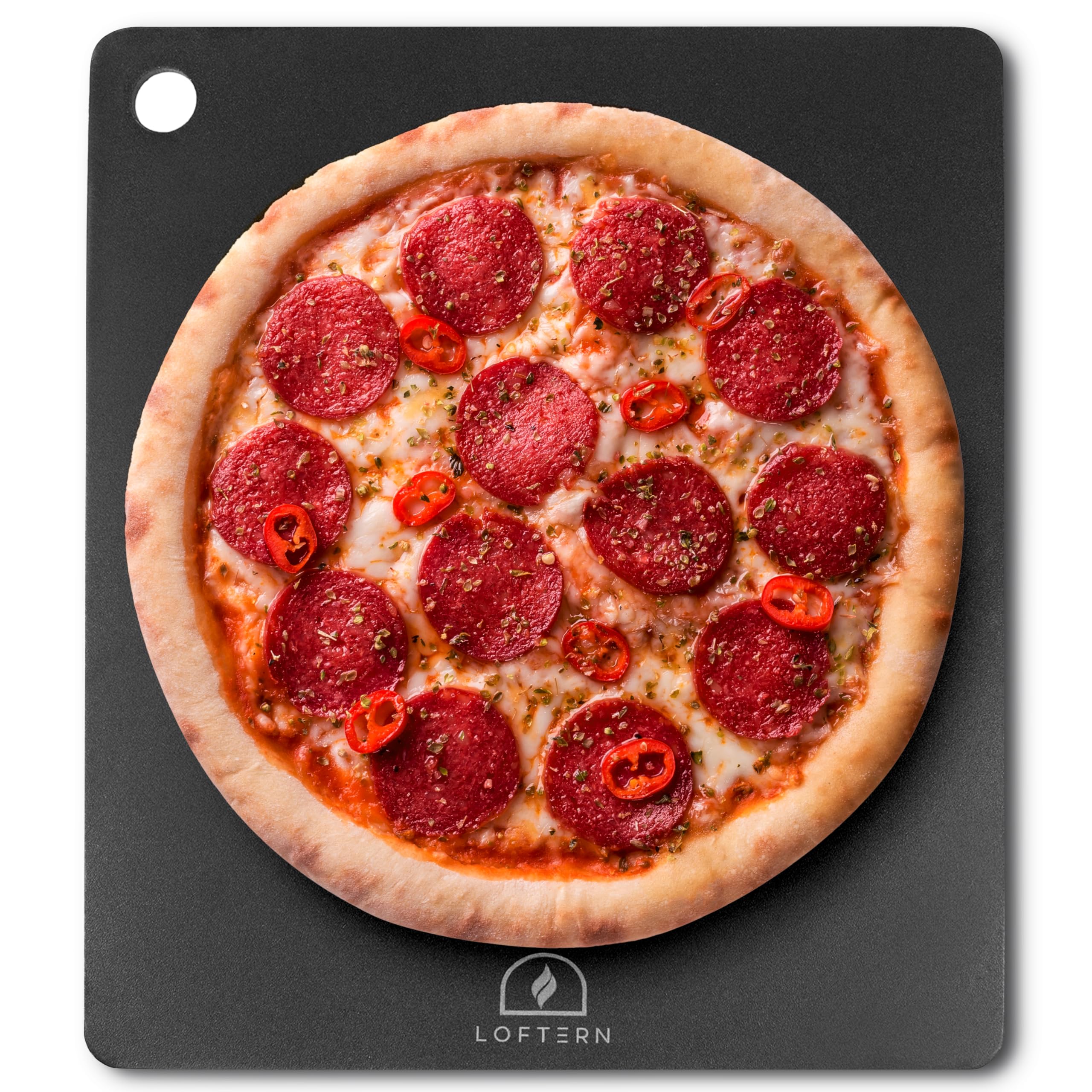
The Loftern steel is marketed as a multipurpose baking surface, and the 16-by-14-inch dimensions support that claim. I ran sourdough boules, sheet-pan vegetables, and pizza on the same plate without any flavor transfer or sticking issues. The pre-seasoned surface is more robust than the Chef Pomodoro and Primica options, requiring less upkeep in the first month.
The warp-resistant construction holds up under rapid temperature changes — I pulled the steel directly from a 500°F oven and placed it on a room-temperature granite countertop without any visible bowing. That thermal shock resistance matters if you occasionally finish a pizza under the broiler or grill. The carbon steel is thick enough at a quarter-inch to distribute heat evenly but light enough for most people to handle with two hands.
For home cooks who want one steel that can pivot between pizza, bread, and roasting without requiring a dedicated preheat schedule, this is the most versatile option in the mid-range tier.
Why it’s great
- Robust pre-seasoning requires minimal upkeep
- Warp-resistant performance under thermal shock
- Versatile for bread, pizza, and roasting
Good to know
- No lifting holes or cutouts for grip
- Weight is manageable but edges are smooth
6. IMPRESA Pizza Oven Steel Plate 14″ x 14″

The IMPRESA steel goes square — 14 by 14 inches — which makes it the best fit for smaller ovens or ovens with side-mounted heating elements where a 16-inch plate would touch the walls. The quarter-inch carbon steel still delivers the conductivity advantage over ceramic stones, but the reduced surface area means you’ll need to rotate your pizza once during the bake for even browning if you’re cooking a 14-inch pie.
A single 1-inch finger hole in the center of one edge provides a handling point, though I prefer two holes for balanced lifting. The pre-seasoned coating is adequate, and the steel develops a dark patina after 4-5 bakes. For 12-inch pizzas, the coverage is excellent, and the residual heat is enough to cook a second pizza without a full reheat.
At this size and price point, the IMPRESA serves as an ideal entry-point steel for apartment dwellers or anyone with limited oven clearance who still wants a genuine thermal-mass upgrade from stone.
Why it’s great
- Square shape fits compact and side-element ovens
- Finger hole aids single-handed grip
- Pre-seasoned and ready for immediate use
Good to know
- Single hole makes two-handed lift awkward
- 14×14 limits space for very large pies
7. VEVOR Pizza Steel, 16″ x 14.5″ x 1/4″

The VEVOR steel undercuts virtually every competitor on raw price while delivering a 16-by-14.5-inch surface — the largest footprint in this roundup. The quarter-inch carbon steel is pre-seasoned and has undergone oxidation and sandblasting treatments that produce a smooth, rust-resistant finish. For bakers on a tight budget, this is the lowest barrier to entry into steel baking.
A thumb hole cut into one corner allows for hanging storage, and the laser-cut edges are free of sharp burrs. In testing, the thermal performance matched other quarter-inch plates — preheat for 45 minutes at 500°F, and you’ll get a well-browned bottom crust. The steel is compatible with both indoor ovens and outdoor grills, expanding its utility beyond pizza.
The main trade-off is the pre-seasoning longevity. It works fine for the first month, but I noticed it beginning to fade faster than the Loftern or UMAID surfaces. A quick re-seasoning with vegetable oil every 6-8 bakes keeps it in good shape. For the price, this is a capable starter steel that leaves room to upgrade later.
Why it’s great
- Largest surface area at the lowest price
- Thumb hole for easy hanging storage
- Smooth, rust-resistant finish out of the box
Good to know
- Pre-seasoning wears faster than premium options
- Frequent re-oiling required for long-term patina
FAQ
Can I use a baking steel on a gas grill?
How long should I preheat a quarter-inch baking steel?
Will a 16-inch baking steel fit in my standard oven?
Do I need to season a steel that is already pre-seasoned?
Final Thoughts: The Verdict
For most users, the baking steel for pizza winner is the UMAID Pizza Steel because it combines full oven coverage, pre-seasoned convenience, and a recipe guide that removes guesswork from the first bake. If you want domestically sourced A36 steel with maximum durability, grab the High Performance Pizza Steel Made in the USA. And for an entry-level price that still delivers genuine steel performance, nothing beats the VEVOR Pizza Steel.