The search for bakeware that doesn’t warp, rust, or leach mystery compounds into your food often lands on a single, decisive filter: country of origin. A set of carbon steel sheet pans or aluminum loaf pans stamped with “USA” usually demands a higher price, but the real question is whether the gauge, the nonstick chemistry, and the forming process actually justify the premium when you pull a perfect, evenly-browned cake from the oven. This guide cuts through the marketing noise to evaluate the options that earn their label.
I’m Mohammad Maruf — the founder and writer behind AirfryerBite. I have spent years analyzing the thermal conductivity, coating durability, and warp resistance of domestic bakeware across multiple price tiers, comparing aluminized steel layering methods against pure aluminum forming to separate real quality from patriotic packaging.
Whether you are outfitting a new kitchen or replacing a warped sheet pan that spins on the burner, the selection here is built around measurable performance rather than a flag decal. This guide covers the bakeware made in usa that passes a strict build-quality test for home bakers who expect consistent results every time.
How To Choose The Best Bakeware Made In USA
The domestic bakeware market is smaller than the import flood, which means every brand has to compete on material thickness and coating integrity. Understanding three specific variables will prevent you from buying a pan that fails within six months.
Material: Aluminized Steel vs. Pure Aluminum
Aluminized steel combines a steel core for structural rigidity with an aluminum cladding for heat conduction. This construction resists the curling and twisting that plagues thin-gauge pure aluminum sheets when exposed to the 425°F roasting temperatures common in home ovens. Pure aluminum heats up faster and is lighter, but it dents easily and can react with acidic foods like tomato-based casseroles. For bakeware that must stay flat through hundreds of thermal cycles, aluminized steel is the safer domestic choice.
Coating Chemistry: Americoat and Beyond
USA Pan uses a proprietary silicone coating called Americoat that is explicitly free of PTFE, PFOA, and PFAS. This is not the same as standard nonstick spray-on finishes you find on lower-tier imports. Americoat relies on a textured corrugation pattern that lifts food off the metal surface, reducing the need for aggressive greasing. The trade-off is that silicone coatings degrade faster if you use metal utensils or abrasive scrubbing pads. Hand-washing with a soft sponge is non-negotiable to preserve the release performance over several years.
Gauge Thickness and Rim Construction
Commercial-grade bakeware typically uses steel between 0.7mm and 1.0mm thick. Thinner pans transfer heat so quickly that edges burn before the center sets. Look for encapsulated galvanized steel rims like the ones Nordic Ware uses on their Naturals series — the rim is a separate piece rolled over the aluminum edge to physically resist warping. A pan that flexes when you apply moderate hand pressure is too thin to last in regular rotation, regardless of where it is assembled.
Quick Comparison
On smaller screens, swipe sideways to see the full table.
| Model | Category | Best For | Key Spec | Amazon |
|---|---|---|---|---|
| USA Pan Rectangular Pan with Lid | Premium | Baking & transportation | 9×13 inch / Aluminized Steel | Amazon |
| USA Pan Brownie Bowl Pan | Premium | Novelty desserts | 6-Cup / Aluminized Steel | Amazon |
| Nordic Ware Naturals Half Sheet | Mid-Range | General roasting & baking | Pure Aluminum / Steel Rim | Amazon |
| USA Pan Meat Loaf Pan | Mid-Range | Meatloaf & bread loafs | 10x5x3 inch / Aluminized Steel | Amazon |
| USA Pan Pie Pan Set | Budget | Pies & quiches | 9-Inch / Aluminized Steel | Amazon |
In‑Depth Reviews
1. USA Pan 1117RCLD-ST-1 Bakeware Nonstick Rectangular Pan with Lid, 9×13-Inches
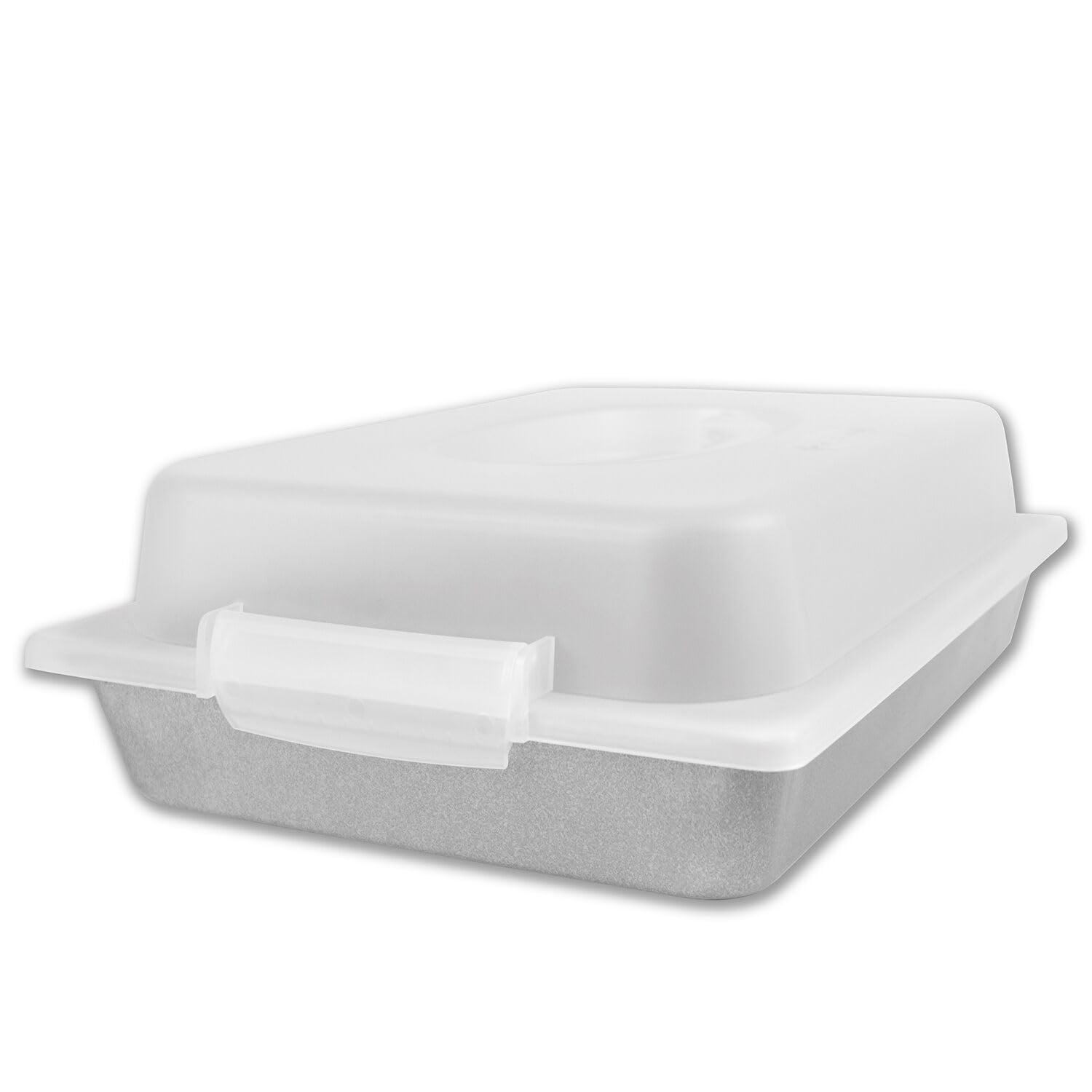
This 9×13 inch pan combines the structural advantages of aluminized steel with a practical snap-on lid, making it the most versatile single piece in the lineup. The 2.25-inch depth is sufficient for dense brownie batches or a substantial lasagna, while the corrugated bottom promotes even airflow that prevents soggy centers. The lid adds a transport capability that is rare in domestic bakeware — you can carry a finished sheet cake to a gathering without Saran wrap failures.
The Americoat nonstick surface holds up well against butter-based batters, though you need to resist the temptation to cut directly in the pan. Steel knives will score the silicone coating and reduce release performance over time. The pan is rated oven-safe to 450°F, which covers almost all baking recipes but stops short of high-heat roasting scenarios where you might push 475°F for crispy vegetables — that is a minor limitation for a pan designed primarily for cakes and bars.
One critical distinction to note: the pan body is made in the USA, but the lid is imported. If absolute domestic sourcing is your non-negotiable filter, that distinction matters. For most users, the corrosion resistance of the aluminized steel and the double-walled rim that prevents twisting under heat makes this the best-balanced choice for everyday baking and potluck transport.
Why it’s great
- Encapsulated rim design resists warping at 450°F continuous use
- Included lid with handle enables secure transport of moist cakes
- Aluminized steel core delivers even heat distribution without hot spots
Good to know
- Lid is imported, not made in USA
- Americoat coating requires hand-washing with a soft sponge; dishwasher degrades it
2. USA Pan Nonstick Brownie Bowl Pan, 6 Cup, Aluminized Steel

This specialty pan takes the standard brownie tray and reimagines it as six individual wells shaped to form bowl-like structures. Each well is formed from the same heavy-gauge aluminized steel used in USA Pan’s commercial line, so the heat transfer is consistent across all six cavities — you will not get one bowl overbaked while another remains underdone. The Americoat coating covers the full interior, including the curve at the bottom, which is where cheaper novelty pans fail because the nonstick spray skips the corners.
The outside dimensions measure 15.75 inches wide, which is wider than a standard quarter-sheet pan and may crowd a smaller countertop oven. Make sure your oven rack can accommodate the full width before committing. The corrugation pattern on the flat sections between wells reduces sticking where the batter pools, but you still need to grease the vertical walls of each cup if you want the bowls to release cleanly for stuffing with ice cream or fruit.
For families who bake desserts weekly, this pan adds a presentation value that a flat brownie sheet cannot match. The heavy gauge prevents the thin walls between cups from cracking over time, a failure mode common in stamped import versions. The limited lifetime warranty from USA Pan provides backup if the coating bubbles after a few uses, though most users report the silicone layer holds through several hundred baking cycles with proper care.
Why it’s great
- Commercial-grade aluminized steel prevents warping in the thin cavity walls
- Americoat coating is PFOA-free and PTFE-free for safer high-heat baking
- Individual wells ensure consistent browning across all six bowls
Good to know
- Requires manual greasing of vertical walls for reliable release
- Pan width may not fit compact toaster ovens or narrow racks
3. Nordic Ware Naturals Half Sheet 2-Pack

Nordic Ware takes a fundamentally different approach from USA Pan. Instead of aluminized steel with a silicone coating, these half sheets are bare pure aluminum with an encapsulated galvanized steel rim rolled onto the edge. The aluminum body provides superior thermal conductivity — it heats up faster and recovers temperature quickly after you load cold ingredients — but the lack of a nonstick coating means you need parchment or foil for every batch of sticky cookies or roasted vegetables.
The encapsulated rim is the standout engineering feature here. Traditional sheet pans warp because the rim and the base expand at different rates under heat. Nordic Ware solves that by physically rolling the steel rim over the aluminum edge, creating a mechanical lock that keeps the pan flat even after repeated cycles in a 450°F oven. The pans measure 17.9 x 12.9 inches externally, fitting standard half-sheet racks perfectly without overhang.
The chemical-free surface is a double-edged sword. On the positive side, there is no coating to scratch, flake, or degrade, which makes these pans effectively immortal if you do not bend them. On the negative side, aluminum reacts with acidic ingredients — a tomato-based sheet pan dinner can develop a metallic taste and leave a permanent stain. For roasting vegetables, proteins, and making sheet cakes, these are excellent; for lasagna or anything with citrus or vinegar, line the pan first.
Why it’s great
- Encapsulated galvanized steel rim prevents warping at high roasting temperatures
- Pure aluminum delivers fast, even heat conduction for crisp browning
- No coating to peel or flake; pans last indefinitely with proper care
Good to know
- Reacts with acidic foods like tomatoes and citrus; requires parchment lining
- Hand-wash only; aluminum discolors in the dishwasher and loses conductivity
4. USA Pan Aluminized Steel Meat Loaf Pan with Insert

This loaf pan solves a specific problem: removing a dense meatloaf from a deep pan without destroying the sliceable integrity. The included insert lifts the meatloaf out of the rendered fat, keeping the bottom from stewing in grease while the top browns. The aluminized steel construction means the pan walls stay straight and do not bow under the weight of a five-pound loaf, a failure mode common in thin stainless steel loaf pans that flex during removal.
The corrugated surface runs along the flat bottom and up the short sides, allowing air to circulate beneath the meatloaf for even cooking. The Americoat coating on the insert makes release relatively effortless — a gentle slide with a spatula and the loaf comes out in one piece. The interior dimensions are 10 x 5 x 3 inches, which fits standard meatloaf recipes and also works for large yeast breads or pound cakes.
If you prefer a crusty exterior on your meatloaf, you may need to unmold it halfway through cooking and finish on a separate sheet pan. The insert also has small drainage slots that can trap batter residue if you use the pan for quick breads, requiring careful scrubbing with a bottle brush to avoid buildup.
Why it’s great
- Removable insert lifts meatloaf out of grease for cleaner cooking
- Corrugated bottom promotes airflow for even baking without soggy edges
- Heavy-gauge aluminized steel resists bending under heavy loads
Good to know
- Deep 3-inch walls trap steam; may need to finish on a sheet pan for crust
- Drainage slots in the insert require thorough cleaning to prevent residue
5. USA Pan Aluminized Steel Commercial Pie Pan Set, 9 Inch, 2-Pack

This two-pack of 9-inch pie pans is the most accessible entry point into USA Pan’s domestic line. Each pan is stamped from the same heavy-gauge aluminized steel used in the larger pans, but the shallow 1.5-inch depth means they heat up faster and cool down quickly — ideal for custard pies where a slow cool-down can cause curdling. The corrugation ridges on the bottom are tighter than the ones on the loaf pan, which helps a wet fruit pie filling release cleanly without tearing the crust.
The Americoat coating performs well here because the surface area is relatively flat compared to the brownie bowl or meatloaf insert. A standard pie crust slides out onto a serving plate with a gentle tilt, and the fluted edges release excess dough without sticking. The pans weigh about one pound each, which gives them a solid feel without being cumbersome. They stack neatly for storage, taking up minimal cabinet space compared to a full cookie sheet set.
Customer feedback consistently highlights the even browning — the aluminized steel eliminates the burnt-edge, raw-center problem common in thinner glass or ceramic pie dishes. The main caution is that the 1.5-inch sides are shorter than a classic deep-dish pie plate, so you may need to trim your dough differently or reduce the filling volume slightly. For standard 9-inch pie recipes, the dimensions are exact, and the price per pan makes this the most cost-effective way to own two identical, reliable baking surfaces.
Why it’s great
- Set of two identical pans for consistent double-batch baking
- Corrugated surface prevents crust sticking and promotes even browning
- Heavy-gauge aluminized steel does not flex or warp during crust cutting
Good to know
- 1.5-inch depth is shallower than deep-dish pie plates; adjust filling volume
- Americoat coating needs soft sponge cleaning to avoid scratching
FAQ
How does the USA Pan corrugated surface affect baking times?
Can I use Nordic Ware Naturals pans for high-heat roasting above 450°F?
Why is the lid on the USA Pan 9×13 listed as imported while the pan is made in USA?
Final Thoughts: The Verdict
For most users, the bakeware made in usa winner is the USA Pan 9×13 Rectangular Pan with Lid because it combines aluminized steel durability with a practical transport lid that works for everyday cakes and potluck deliveries. If you want a bare-metal pan with no coating risk and lifelong longevity, grab the Nordic Ware Naturals Half Sheet 2-Pack for its warp-proof encapsulated rim and superior heat conductivity. And for a specialized task like greaseless meatloaf or crusty loaf bread, nothing beats the USA Pan Meat Loaf Pan with Insert — the removable insert changes how you approach dense baked dishes entirely.