Whether you crave silky fettuccine, perfectly al dente spaghetti, or delicate lasagna sheets, the promise of homemade pasta often collides with the reality of a flour-dusted kitchen and aching arms from cranking a manual roller. An automatic pasta maker eliminates that friction entirely, doing the kneading, extruding, or rolling for you so the only thing left on your counter is a beautiful pile of fresh noodles ready for the pot.
I’m Mohammad Maruf — the founder and writer behind AirfryerBite. My focus is on breaking down the engineering and material choices in kitchen gear, from motor wattage in dough mixers to the corrosion resistance of stainless steel in pasta extruders, so you can match the hardware to your cooking rhythm.
This guide cuts through the marketing to compare roller machines, extruder attachments, and full-cycle all-in-one units to help you identify the right best automatic pasta maker for your kitchen setup and the types of noodles you make most often.
How To Choose The Best Automatic Pasta Maker
Choosing the right pasta machine begins with understanding how you cook. If you prefer extruded shapes like penne and bucatini, you need a screw-extrusion unit with multiple discs. If you want sheets for lasagna or ravioli, a roller-and-cutter machine is the only path. The second major fork is motor strength — a 110W motor handles standard dough, but higher hydration doughs or whole wheat blends perform much better with motors north of 150W. Build material is the third pillar: food-grade 304 stainless steel resists acid from tomato or spinach dough far better than lower-grade 410 stainless or plastic housings.
Roller Versus Extruder Mechanisms
Roller machines (like the GVODE or the WICHEMI) press dough into a sheet and then cut it into specific widths — ideal for fettuccine, spaghetti, lasagna sheets, and dumpling wrappers. Extruder machines (like the Philips 7000 Series and the KitchenAid attachment) push dough through a die under pressure to create more complex shapes such as rigatoni, macaroni, fusilli, and bucatini. Roller units produce a more traditional, silky texture; extruders create a rougher surface that sauces cling to well. If you want both capabilities in one device, you need a dual-function machine or two separate tools.
Motor Strength and Dough Capacity
Motor wattage directly correlates to how well the machine handles stiff dough. A 135W motor in the WICHEMI or Luzrise units is sufficient for standard all-purpose flour and egg dough, producing up to 22 lb/h. A 700W motor in the GVODE provides two speeds and a reverse function to clear jams instantly, making it more forgiving for beginners who might use slightly wetter or drier dough. For heavy-duty use — making multiple batches for large families or selling at farmer’s markets — the higher wattage wins. For occasional home use, 135W to 150W offers a strong sweet spot.
Adjustability and Noodle Variety
Thickness settings matter more than most buyers realize. A range of 0.5 mm to 5 mm lets you go from paper-thin pappardelle to thick udon-style noodles. Some machines offer only 4 or 6 settings while premium models offer 9. The number of cutting discs or blades also determines variety: a 3-blade set covers the basics (spaghetti, fettuccine, lasagna) but a 4-blade or 8-disc extruder unlocks shapes like angel hair, bucatini, and ziti. Check whether blades are built-in or interchangeable — built-in blades reduce cleanup time but limit future expansion.
Build Materials and Cleanup
Stainless steel grades matter for longevity. 304 stainless steel (found in the Luzrise and AIZIYO machines) is non-reactive, resists rust from high-moisture dough, and holds up to repeated use. 430 stainless steel is magnetic and more prone to corrosion over time. Plastic housings reduce weight and cost but crack under thermal stress or accidental drops. For cleanup, dishwasher-safe parts are a major time saver — many roller units claim dishwasher safety, but check whether the blades and rollers are explicitly labeled for the top rack, as abrasive detergent can dull sharp edges over time.
Quick Comparison
On smaller screens, swipe sideways to see the full table.
| Model | Category | Best For | Key Spec | Amazon |
|---|---|---|---|---|
| Philips 7000 Series | Extruder | Versatile shapes & large batches | 150W motor, 8 discs | Amazon |
| Luzrise 4-Blade | Roller | Precision thickness & 4 noodle widths | 135W, 9 thickness settings | Amazon |
| WICHEMI 3-in-1 | Roller | High output (22 lb/h) & compact build | 304 stainless, 135W motor | Amazon |
| Newhai 2-Blade | Roller | Quiet operation & dumpling wrappers | 135W, 0.5-3mm adjustable | Amazon |
| NEWTRY 3-Blade | Roller | Rust-free 410 stainless & sturdy knob | 11 lb/h, 1-4mm thickness | Amazon |
| GVODE 700W | Roller | Jam resistant & beginner friendly | 700W, 2-speed motor | Amazon |
| Zuguachi 13-Mold | Extruder | 13 noodle shapes & 500g capacity | 260W, 4 auto modes | Amazon |
| AIZIYO DoughChief | Mixer + Fermenter | Dough mixing & proofing in one unit | 5.3QT 304 steel bowl | Amazon |
| KitchenAid Extruder | Attachment | Stand mixer owners & extruded shapes | 6 pasta plates included | Amazon |
In‑Depth Reviews
1. Philips 7000 Series Pasta Maker (HR2660/03)

This is the most fully featured extruder-style machine on the market. The 150W motor paired with ProExtrude technology applies consistent torque across the entire mixing-to-extrusion cycle, producing up to eight portions of pasta in under ten minutes. The wide feed chute and large mixing chamber allow higher hydration dough without stalling, which is a common failure point in lower-watt extruders. The eight included discs cover everything from angel hair to bucatini and lasagna to penne, making it the most versatile single machine for shape variety.
The HomeID app integration provides step-by-step video guidance for dough hydration ratios and includes vegan and gluten-free recipe presets that compensate for the lack of gluten structure — a category-exclusive feature that reduces trial-and-error waste. All parts that contact food are dishwasher safe, and the non-stick inner chamber scrapes clean with minimal effort. At roughly 20 pounds, it has enough heft to stay planted during extrusion without the vibration that plagues lighter machines.
One trade-off: the extruder method produces a denser, slightly rougher surface texture compared to a roller machine. If your primary goal is silky fettuccine or lasagna sheets, a dedicated roller unit will produce a more delicate result. But for anyone who wants penne, macaroni, fusilli, and spaghetti under one hood, this is the reference design for the category.
Why it’s great
- 8 discs offer the widest shape library of any single machine
- 150W motor handles whole wheat and gluten-free dough without jamming
- Dishwasher-safe, non-stick chamber simplifies cleanup
Good to know
- Extruder texture is rougher than roller-cut pasta
- Requires KitchenAid-level counter space and storage
2. Luzrise 4-Blade Electric Pasta Maker

This roller machine is built for cooks who obsess over dough thickness. The 135W motor drives a 14cm roller that mimics hand rolling, paired with nine adjustable settings from 0.5 mm up to 5 mm — the widest range in this roller group. Four cutting blades (1.5 mm, 2.5 mm, 4 mm, and 9 mm) give you spaghetti, fettuccine, pappardelle, and lasagna ribbons without swapping parts. The roller and blades are constructed from 304 stainless steel, which resists pitting even when you work with acidic spinach or tomato dough.
The motor incorporates a heat dissipation system alongside anti-slip rubber feet that keep the machine stationary during continuous use of up to one hour. The ABS shield protects the housing from scratches and makes the unit feel more solid than the all-metal construction of some competitors. The included 2-year warranty and 30-day unconditional refund policy provide confidence that the manufacturer stands behind this unit for heavy weekly use.
The machine is not lightweight at nearly 14 pounds, so it is not a grab-and-store appliance — you will want permanent counter space. Dishwasher-safe components reduce cleanup friction, though hand-drying the blades immediately after washing prevents potential water spots on the stainless surface.
Why it’s great
- Nine thickness settings give extreme control from paper-thin to udon-thick
- Four blades cut common shapes without tool changes
- Two-year warranty and 304 stainless build
Good to know
- Heavy design is best left on countertop full-time
- No extruder discs for tubular shapes
3. WICHEMI 3-in-1 Electric Pasta Maker

The WICHEMI stands out for its production speed — the 135W motor moves dough through the rollers at 22 lb/h, which is roughly double the rate of most home roller machines. The mode-switch knob lets you toggle between pressing dough sheets and cutting noodles without removing attachments, which saves significant time during batch cooking. It comes with three cutting options: 2.5 mm round noodles, 4 mm flat noodles, and 9 mm flat noodles, covering the most common pasta families for weeknight meals.
The entire machine body is 304 food-grade stainless steel, which resists rust and aging better than the 410 steel found on the NEWTRY unit. Dimensions are compact at 8.66 x 6.88 x 8.66 inches, making it the smallest high-output roller in this lineup — a plus if counter space is tight. The thickness adjustment runs from 1 mm to 3.5 mm, which is slightly less range than the Luzrise machine, but still covers standard pasta and dumpling wrapper thicknesses without issue.
Dishwasher-safe components simplify cleanup, but the manual recommends hand-washing the blades to preserve the sharpness of the built-in cutters. The 17.6-pound weight gives it stability under load, and the low noise signature at 135W means you can run it during a conversation without raising your voice.
Why it’s great
- 22 lb/h output is the fastest among roller machines tested
- 304 stainless body resists corrosion from colored dough
- One-knob mode switch eliminates attachment swaps
Good to know
- Thickness range caps at 3.5 mm — less than some competitors
- Only three blade options, no extruder discs
4. Newhai Electric Family Pasta Maker
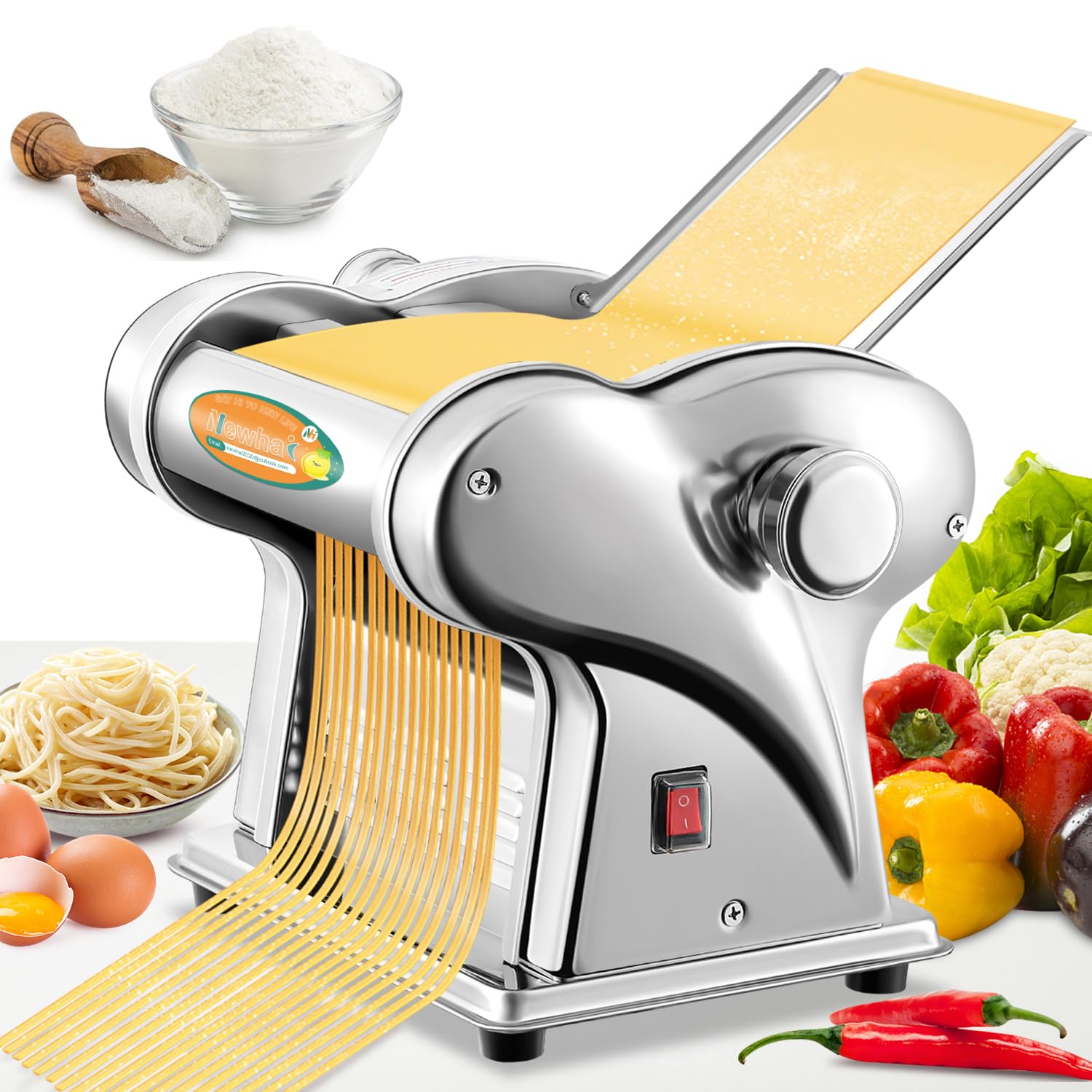
This 2-blade machine is designed for the home cook who values quiet operation above all else. The 135W motor runs with noticeably low noise, making it comfortable to operate during early-morning prep without waking the household. It produces two pasta sizes — 1.5 mm round noodles and 4 mm flat noodles — and supports thickness adjustment from 0.5 mm to 3 mm across eight gear settings. The compact footprint of 8.66 x 6.88 x 8.26 inches fits easily under upper cabinets.
The body uses 430 stainless steel, which is magnetic and slightly less corrosion-resistant than 304, but still food-safe and easy to maintain with proper drying. The round corners on the machine body prevent accidental scratches during handling. The one-key switch between pressing and cutting modes is straightforward, and the included user manual provides clear guidance for dough hydration ratios. The output rate of 11 lb/h is enough for a family batch.
One limitation: this machine cannot make extruded shapes, and the 2-blade set limits your variety to thin round noodles and flat noodles only. If your pasta repertoire rarely extends beyond spaghetti and fettuccine, this is a quiet, reliable performer. The 16-pound weight provides good stability, and all parts that contact dough are dishwasher safe.
Why it’s great
- Very quiet motor ideal for early or late kitchen sessions
- Compact footprint saves counter space
- Eight thickness settings offer fine granularity
Good to know
- Only two blade sizes limit noodle variety
- 430 stainless is less corrosion resistant than 304
5. NEWTRY Electric Pasta Maker 3-Blade

This roller machine uses 410 stainless steel for its body and rollers, offering a budget-conscious alternative to the 304 builds without sacrificing the weight and stability of metal construction. Three blade types are included: 2.5 mm round pasta, 4 mm flat noodles, and 9 mm wide noodles. The upgraded knob mechanism replaces snap-style controls with a left-right twist that adjusts thickness from 1 mm to 4 mm and switches between pressing and cutting modes — more intuitive than older designs and less prone to breakage.
The 135W motor produces an output of 11 lb/h, suitable for weekly family meals. The machine weighs 19.3 pounds, which is the heaviest in this roller class, providing vibration-free operation even at the lowest thickness setting. The compact dimensions of 9.6 x 7 x 7.6 inches make it manageable for smaller kitchens despite the weight. The included user manual provides clear proportions for dough preparation.
A few user reports note the motor can overheat during extended use beyond 15 minutes of continuous operation — short bursts work best with this unit. The stainless steel is food grade but not labeled as 304, so acidic doughs should be cleaned off promptly to prevent surface dulling over time. Dishwasher-safe parts help with routine cleaning.
Why it’s great
- 19.3-pound heft eliminates vibration during operation
- Upgraded knob design is more durable than snap-style alternatives
- Three blade options cover the essential pasta widths
Good to know
- Motor heats up during continuous use past 15 minutes
- 410 stainless requires prompt cleaning after moist or acidic dough
6. GVODE Electric Pasta Maker 3-in-1
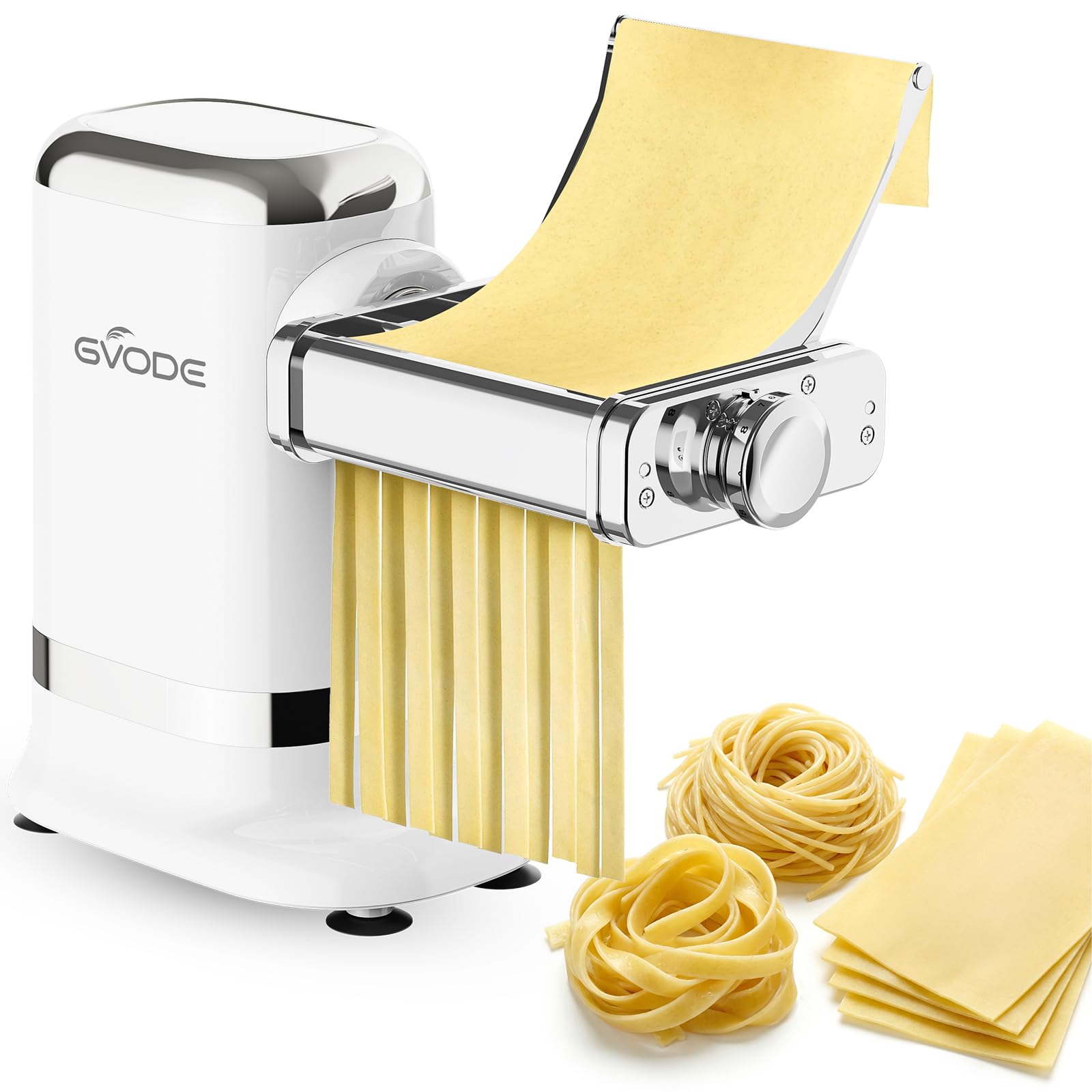
The GVODE is the most forgiving machine for beginners because of its 700W motor — more than five times the power of the 135W units. This overbuilt motor runs at two speeds and includes a reverse function that clears dough jams instantly without having to disassemble the machine. The stainless steel 3-in-1 attachment set includes a sheet roller with eight adjustable thickness settings from 0.4 mm to 2 mm, plus built-in fettuccine and spaghetti cutters. The dedicated roller guide auto-feeds dough into the cutter, producing consistent noodle widths across the entire sheet.
The machine body and attachments are stainless steel with a polished silver finish that resists fingerprints and flour dust. Tool-free installation means attachments click on and off in seconds, and the included cleaning brush reaches the crevices of the roller grooves. At 7.6 pounds, it is significantly lighter than the Newhai and NEWTRY units — easier to store but may need a hand held steady during first use until the suction feet grip the counter.
One caveat: the maximum sheet thickness of 0.25 inches (approximately 6.35 mm) means this machine cannot produce the very thin sheets needed for delicate ravioli or won ton skins. It is best suited for standard spaghetti and fettuccine thicknesses. The included components do not mention dishwasher safety, so hand washing is recommended to preserve the motor housing seals.
Why it’s great
- 700W motor with reverse completely eliminates jam frustration
- Two-speed control lets you adjust feed rate to dough consistency
- Tool-free attachment changes take under five seconds
Good to know
- Thin pasta sheets below 0.5 mm are not achievable
- Not labeled dishwasher safe — hand wash only
7. Zuguachi 13-Mold Electric Pasta Machine

This extruder-style machine offers 13 different noodle molds, making it the most prolific shape generator below the Philips price tier. The 260W motor uses a bidirectional kneading rod that mimics manual kneading before switching to extrusion, which helps develop gluten structure before shaping. The 500-gram flour capacity (roughly 1.1 pounds) produces enough pasta for 4 to 6 servings per batch. Four automatic modes handle the mixing, resting, extruding, and cleaning cycles with one-button operation.
The design is compact — just slightly larger than a hair dryer — and runs on a simple plug-in AC power supply. The included accessories (flour measuring cup, liquid measuring cup, spatula, and 13 molds) mean you have everything needed out of the box. Cleaning requires letting the flour residue dry overnight and then tapping it off, plus using the dedicated spatula for stubborn bits. The instruction manual includes a recommended recipe that some users found too wet — dialing back the liquid by about 10% resolves the issue.
The main build compromise is the plastic blade material and plastic housing, which may not withstand heavy daily use as well as the stainless steel roller machines. A small number of user reports mention the lid lifting during the mixing cycle, which causes the machine to stop as a safety feature. Placing a weight on the lid during operation solves this, but it is worth noting for those who prefer a fully sealed mixing chamber.
Why it’s great
- 13 molds produce more shapes than any roller machine can offer
- 260W motor handles stiff dough better than 135W extruders
- Compact, lightweight design stores easily in a cabinet
Good to know
- Plastic blade material and housing wear faster than stainless
- Recipe provided in manual needs hydration adjustment
8. AIZIYO DoughChief 5.3QT Dough Mixer
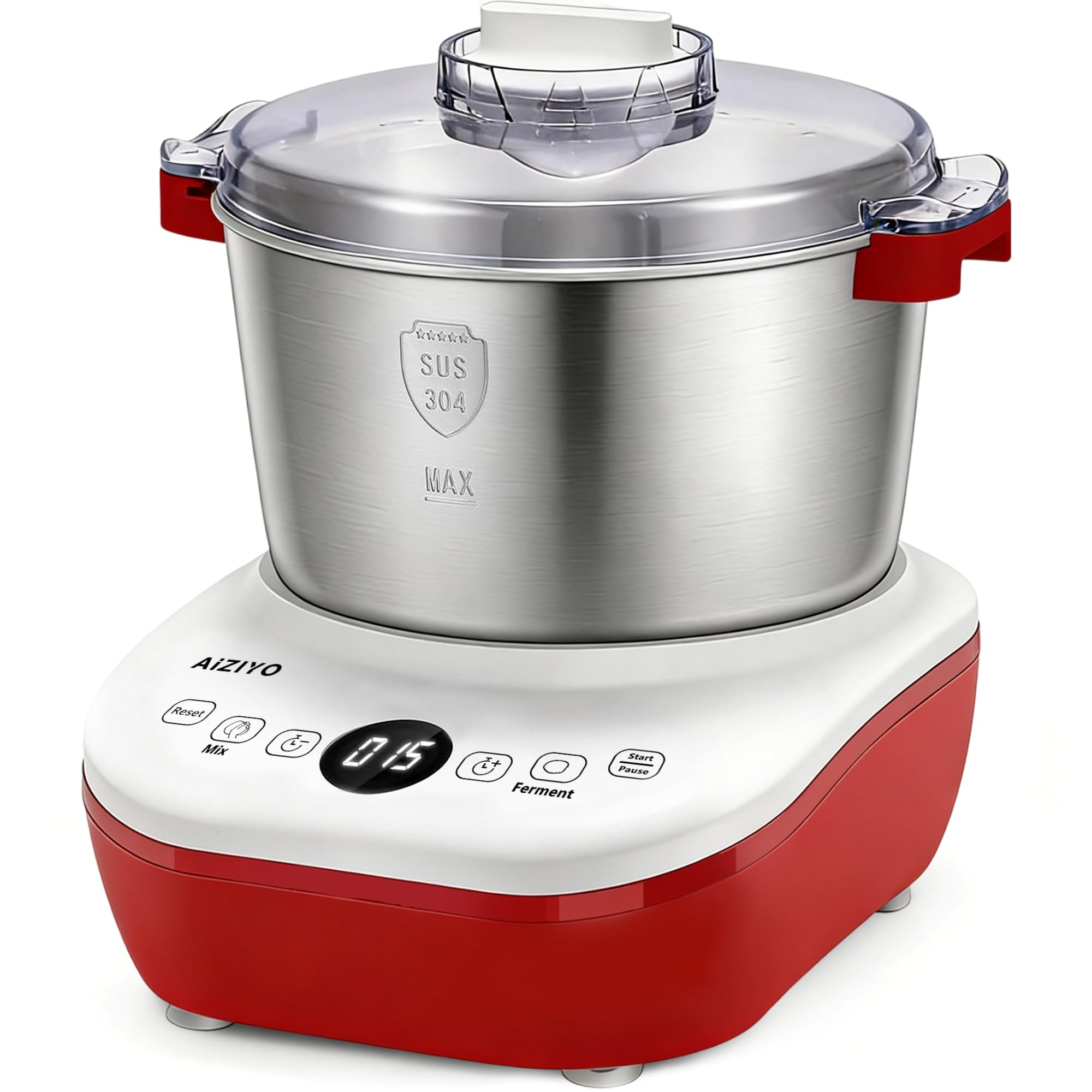
This unit approaches pasta making from the dough preparation angle rather than the shaping angle. The 5.3-quart 304 stainless steel bowl uses an S-shaped mixing blade that follows a smart mix-pause-mix program to simulate hand kneading. The standout feature is the built-in ferment function that maintains a constant 77–100°F environment for dough proofing — useful for yeasted pasta doughs like pappardelle or for pizza and bread doughs. The touch panel control makes selecting the mix or ferment mode simple, and the wide top opening allows adding flour or water mid-cycle without stopping the machine.
The included accessories — egg separator, measuring cup, and measuring spoon — add convenience, and all parts that touch dough are dishwasher safe for easy cleanup. The 9-pound weight is moderate, and the 11.8-inch square footprint fits most counters. This machine is not a pasta shaper itself; you will need a separate roller or extruder to finish the noodles, but it excels at producing perfectly hydrated and aerated dough that reduces the risk of cracking or tearing during rolling.
The touch panel is sensitive and requires dry hands for accurate input. The ferment function works best with active yeast rather than baking powder, and the manual explicitly notes that fermentation requires yeast or fermentation powder — it is not a general warm-holding feature. This unit is ideal for bakers who make pasta, pizza, and bread regularly and want one machine that handles the mixing-to-proofing phase while they use a dedicated pasta roller for final shaping.
Why it’s great
- Constant-temperature ferment function improves yeasted dough consistency
- Smart mix-pause-mix program develops gluten without overheating
- 304 stainless steel bowl is non-reactive and dishwasher safe
Good to know
- Does not cut or shape pasta — requires a separate roller or extruder
- Touch panel less responsive with wet hands
9. KitchenAid KPEXTA Pasta-Extruder Attachment

For anyone who already owns a KitchenAid stand mixer, this attachment converts it into a pasta extruder without taking up additional counter space or duplicating a motor. The package includes six pasta plates — spaghetti, bucatini, fusilli, macaroni, rigatoni, and lasagna — stored in a plastic case that keeps them organized. The auger and hook mechanism feeds dough into the extrusion chamber, and the included cleaning brush removes residue from the die openings. The plastic housing is lighter than standalone machines, and the attachment mounts to the mixer’s power hub in seconds.
The extrusion speed depends entirely on the mixer speed setting — running it on the lowest gear (stir speed) produces the most consistent results without overheating the mixer motor. The included combo tool and wrench help with assembly and disassembly. The attachment works best with drier dough (around 30% hydration) because wetter dough can cause sticking inside the extrusion tube. Hand washing is recommended for all parts, particularly the dies, to prevent pasta residue from hardening in the small openings.
One limitation: the plastic housing can feel less durable than the all-metal standalone extruders, and the mixer motor may overheat during back-to-back batches of more than 2 pounds of dough. The attachment also does not produce rolled sheets or cut noodles — it is strictly for extruded shapes. If you already own a KitchenAid and want to add extruded pasta capability without buying a full second appliance, this is the most space-efficient route.
Why it’s great
- Leverages existing mixer motor — no counter space wasted
- Six plates provide solid shape variety for extruded pasta
- Mates to nearly all KitchenAid tilt-head and bowl-lift models
Good to know
- Plastic housing is less impact-resistant than metal machines
- Mixer motor can overheat on large batches or high speeds
FAQ
Can I use whole wheat or gluten-free flour in an automatic pasta maker?
How do I clean dried dough from the extrusion dies or roller blades?
What dough hydration ratio works best for extruder vs. roller machines?
Can I make stuffed pasta like ravioli with a roller-only machine?
Final Thoughts: The Verdict
For most users, the best automatic pasta maker winner is the Philips 7000 Series because its 150W motor and eight-disc extruder system deliver the broadest shape variety with consistent, jam-free operation and the convenience of a dedicated app for recipe guidance. If you want precise thickness control and prefer the silky texture of rolled pasta, grab the Luzrise 4-Blade for its nine adjustable settings and 304 stainless build. And for a budget-friendly introduction that emphasizes dough prep before shaping, nothing beats the AIZIYO DoughChief for mixing and proofing your pasta base before running it through a separate roller.