The difference between a grocery-store bag of coffee and a freshly roasted batch is not subtle—it is a chasm of lost aroma, muted body, and flat acidity. Green coffee beans stay vibrant for months, yet once roasted, the clock starts ticking. Bringing that process into your kitchen is the single most direct way to take control of your morning cup, and the market now offers a wide spread of machines that make it far more accessible than it was even five years ago.
I’m Mohammad Maruf — the founder and writer behind AirfryerBite. I’ve spent years analyzing small-kitchen hardware, studying batch-size thermodynamics, smoke-suppression engineering, and the heating uniformity metrics that separate a hobby roaster from a frustrating toy.
Whether you want to experiment with single-origin microlots, save money over artisanal roasters, or simply enjoy the smell of first crack in your own kitchen, the best at home coffee roaster is the tool that unlocks that entire experience without requiring a commercial vent hood or a chemistry degree.
How To Choose The Best At Home Coffee Roaster
Choosing a home coffee roaster is not a one-size-fits-all decision. The machine that suits a daily single-cup drinker is completely different from the unit a weekend host needs for bulk batches. Three variables—capacity, heat control, and smoke handling—will dictate your long-term satisfaction more than any marketing claim.
Batch Size and Consistency
Most electric home roasters claim a maximum capacity between 300 and 750 grams. The real-world sweet spot for even roasting is usually half the stated max. A machine rated for 500 grams delivers its best, most uniform results at 250–300 grams per cycle. Overloading produces scorched exterior beans with raw centers; underloading can lead to erratic temperature swings. Match the usable batch size to your weekly consumption: if you drink two cups a day, a 300-gram effective batch covers roughly a week of brewing.
Heat Source and Agitation Method
Three designs dominate the home market. Fluid-bed roasters use high-velocity hot air to suspend and tumble beans, offering fast roast times and excellent clarity in light roasts but occasionally less body development. Electric drum roasters with rotating agitators provide more conductive heat transfer, producing fuller-bodied medium and dark roasts. Gas-fired drum roasters, which are premium and less common at the entry level, offer the most responsive temperature adjustments but require a gas supply and more ventilation discipline. Each method produces a flavor profile that serious home roasters develop a preference for.
Smoke, Chaff, and Ventilation
Roasting coffee generates significant smoke and papery chaff that separates from the bean. A roaster without a chaff collector or smoke-suppression system will fill your kitchen with visible particulate and a persistent burnt-popcorn smell. Look for machines with a dedicated chaff basket, a smoke filter, or a vent pipe that can be routed near a window. If you roast indoors frequently, a unit with an integrated exhaust path is not a luxury—it is a necessity for a clean home and comfortable air quality.
Quick Comparison
On smaller screens, swipe sideways to see the full table.
| Model | Category | Best For | Key Spec | Amazon |
|---|---|---|---|---|
| Fresh Roast SR800 | Fluid Bed | Light roast precision and speed | 170–226g per batch | Amazon |
| Precision Coffee Roaster PKF-500 | Electric Drum | Smoke-filtered indoor roasting | 1 lb max capacity | Amazon |
| DYVEE KAKA-G400 | Gas Drum | Premium heat control and visibility | 400g quartz glass drum | Amazon |
| LATIJISHI Upgraded Roaster | Electric Drum | Precise temperature and timer | 750g max / 464°F range | Amazon |
| ANGELLOONG Coffee Roaster | Electric Drum | Multi-grain versatility | 750g / 1200W / Teflon | Amazon |
| WINB Coffee Roaster | Electric Drum | Automatic timing and temperature | 750g / 464°F max | Amazon |
| JIAWANSHUN Upgraded (Timer) | Electric Drum | Entry-level with timer | 500g / 240°C adjustable | Amazon |
| GIVEROO 500g Roaster | Electric Drum | Budget-friendly home roasting | 800W / 1.7 lb capacity | Amazon |
| JIAWANSHUN Electric Roaster | Electric Drum | Simple first machine | 500g / 1200W / glass lid | Amazon |
In‑Depth Reviews
1. Fresh Roast SR800
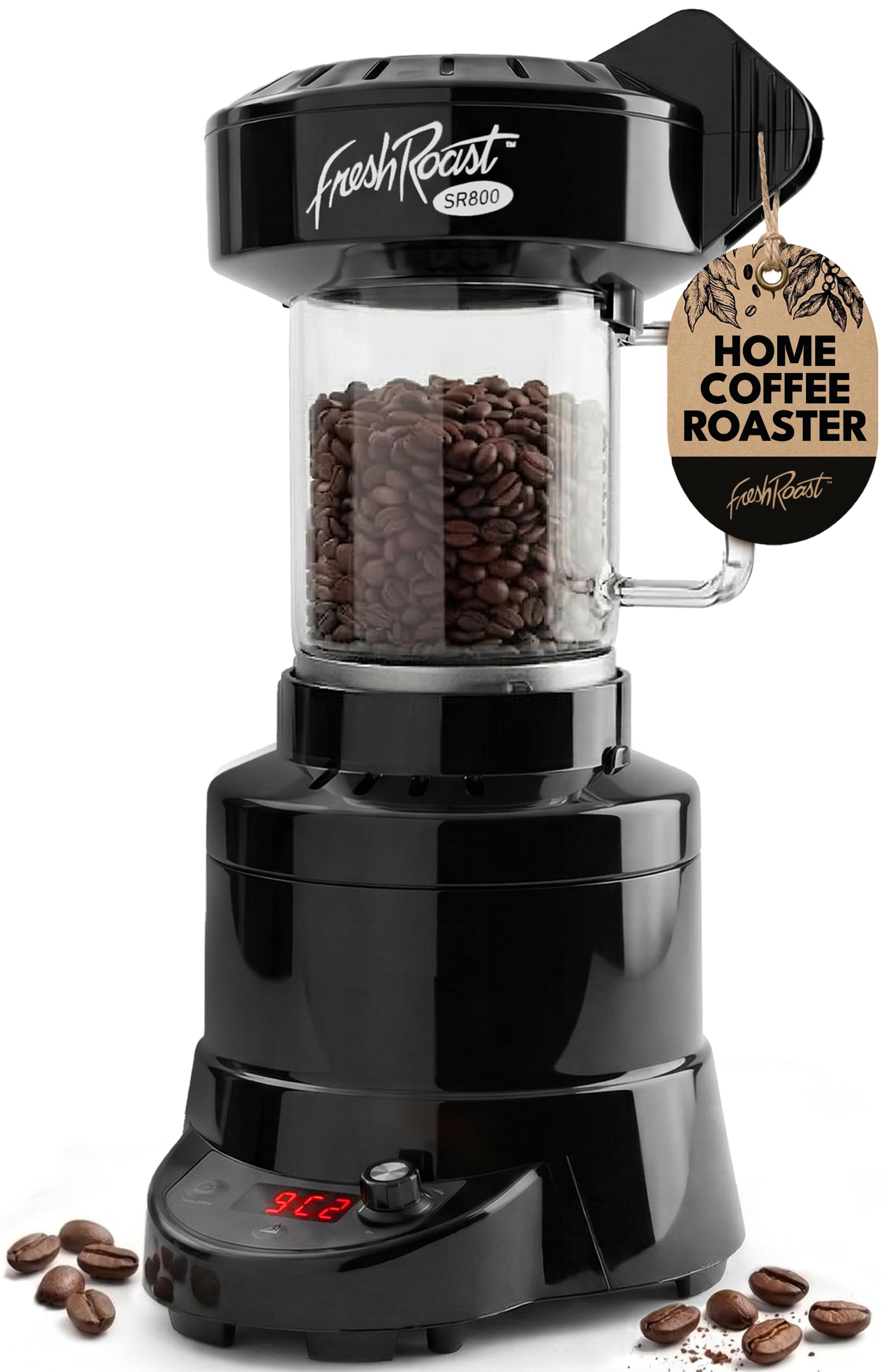
The Fresh Roast SR800 is widely regarded as the gold standard for home fluid-bed roasting. Its convection-driven system suspends beans in a column of hot air, delivering rapid, even development in under ten minutes per batch. The digital display shows real-time temperature, and the nine-level power and fan controls let you dial in very specific roast curves—critical for preserving delicate floral and fruity notes in light roasts.
Each batch handles 170 to 226 grams, which is ideal for a week’s supply for a moderate coffee drinker. The removable top cap and chaff basket catch most of the flying chaff, though some fine dust will escape. The glass roasting chamber and optional extension tube give you a clear view of the color change from green to yellow to first crack.
This machine rewards attention: you need to monitor the roast actively and adjust heat and fan as the bean temperature rises. It is not a set-it-and-forget design, but for anyone serious about controlling the final cup profile, the SR800 delivers unmatched precision at this price point. A one-year warranty on the base unit adds peace of mind.
Why it’s great
- Fast 10-minute roast cycle preserves bright acidity
- Dual variable controls for power and fan speed
- Real-time temperature display aids repeatability
Good to know
- Requires active attention during the roast cycle
- Chaff basket can overflow; place near a window or vent
- Best suited for small batch sizes, not bulk roasting
2. Precision Coffee Roaster PKF-500
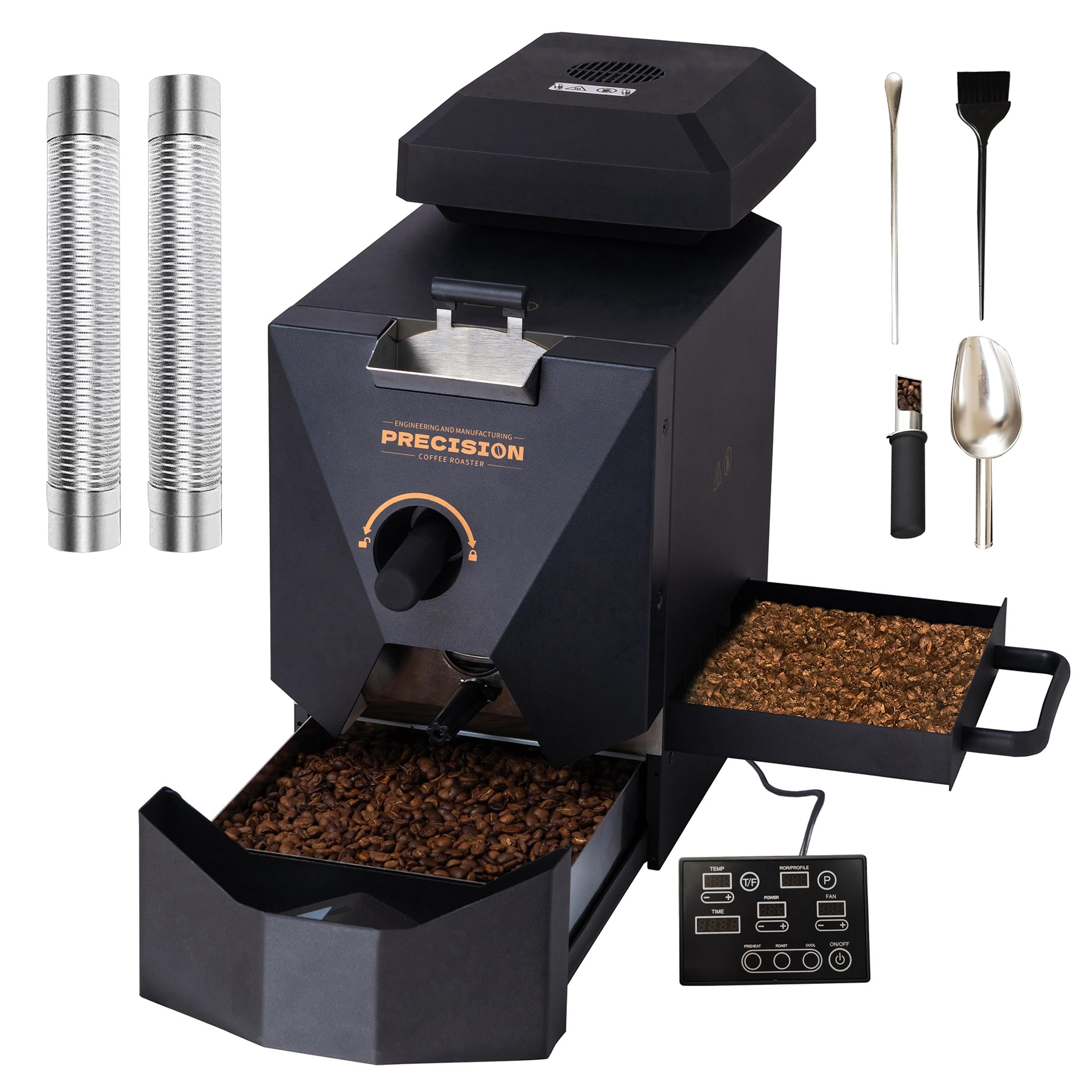
The PKF-500 from Precision Coffee Roaster is designed for the user who wants a clean indoor roasting experience without installing a dedicated vent hood. Its integrated smoke filter and dual-chimney vent pipe system actively scrubs particulate and routes exhaust outdoors or into a well-ventilated area—a rare feature in the sub-500-dollar home segment. The unit holds up to one pound of green beans, making it one of the highest-capacity machines on this list.
A touchscreen interface with automatic, assisted, and manual operating modes gives you three levels of involvement. Beginners can rely on pre-set programs; experienced roasters can override temperature and time at any point in the cycle. The observation window and included sample spoon let you pull beans mid-roast to check color and aroma without opening the chamber.
The stainless steel construction and microfilter contribute to a durable, easy-to-clean interior. This machine is a strong choice if you roast weekly and want to minimize kitchen smoke without sacrificing batch size. The touchscreen is responsive, but the interface does have a slight learning curve for the manual mode.
Why it’s great
- Integrated smoke filter reduces indoor air impact
- 1 lb capacity handles larger batches efficiently
- Automatic, assisted, and manual modes suit all skill levels
Good to know
- Touchscreen interface has a learning curve for manual programming
- Not recommended for high-volume commercial use
- Chimney tubes need occasional cleaning of oil residue
3. DYVEE KAKA-G400

The DYVEE KAKA-G400 is a gas-fired drum roaster built with a transparent quartz glass drum and a 304 stainless steel frame. Gas heat offers more responsive temperature adjustments than most electric units—useful for executing a precise ramp-and-soak profile. The recommended batch of 200–300 grams fits neatly into the drum, and the 12-volt low-voltage motor rotates the beans at a consistent speed without scorching them against the drum wall.
The glass drum gives you full visibility of the bean color change from green to yellow to first crack, and the direct gas flame means you can see exactly how the heat affects the bean surface. The wooden handle stays cool during the roast, and the included funnel and power adapter get you started immediately. This machine requires a gas burner (not included), so you need a compatible heat source such as a butane or propane burner.
This roaster is for the enthusiast who values conductive heat transfer over convection. The beans develop a fuller body and more cocoa notes compared to fluid-bed machines. The learning curve is steeper: managing gas flame height and rotational speed takes several practice batches to master.
Why it’s great
- Quartz glass drum provides unmatched visibility of the roast
- Gas heat offers responsive, precise temperature control
- Low-voltage motor adds safety and quiet operation
Good to know
- Requires a separate gas burner as a heat source
- Steeper learning curve compared to electric roasters
- 17-pound weight makes it less portable
4. LATIJISHI Upgraded Coffee Roaster

The LATIJISHI upgraded roaster brings a thermostatic Teflon-coated chamber and a wide 212–464°F temperature range to the table. The non-stick coating helps the rotating agitator maintain even contact with the beans, reducing the risk of hot spots that can produce an inconsistent roast. The transparent lid with a high-heat-resistant handle and four venting windows lets you watch the progress while allowing moisture to escape.
This unit handles up to 750 grams per batch, but the optimal usable load sits around 400–500 grams for even results. The 0–60 minute timer and programmable settings let you set a rough profile and walk away briefly, though checking at first crack is still recommended. It can also roast peanuts, chestnuts, and popcorn, adding multi-use flexibility to the kitchen counter.
The build quality is solid for the price tier, but the plastic exterior feels less premium than the all-metal DYVEE or Fresh Roast units. The non-stick coating simplifies cleanup: a quick wipe with a damp cloth removes most residue. For a mid-range electric drum roaster with good temperature range and decent capacity, this is a reliable everyday choice.
Why it’s great
- Wide temperature range allows light to dark roast profiles
- Teflon-coated chamber promotes even heat distribution
- Multi-food roasting capability adds versatility
Good to know
- Plastic housing feels less durable than metal alternatives
- Larger batches require careful load distribution for uniformity
- Chaff basket is small relative to maximum capacity
5. ANGELLOONG Coffee Roaster

The ANGELLOONG roaster pairs a 1200-watt heating element with a 0–60-minute timer and an adjustable thermostat that holds temperatures from 212°F to 464°F. The honeycomb-patterned Teflon-coated base promotes even heat across the full 750-gram chamber, and the transparent heat-resistant lid includes a four-hole ventilation system to release steam and smoke during the roast.
In practice, the sweet spot is around 400–500 grams of green beans, which roasts in roughly 25 minutes. The automatic agitator rotates the beans continuously, and the wide anti-scald handles stay cool enough to grip when moving the machine. It handles peanuts, barley, dried fruit, and popcorn as well, making it a dual-use baking machine for a household that wants more than just coffee roasting.
Build quality is acceptable for the mid-range bracket, with a metal chassis and heat-resistant plastic components. The chamber’s honeycomb design does collect some chaff that requires a brush to fully remove. For a beginner who wants a large capacity and temperature control without paying fluid-bed prices, this is a strong option.
Why it’s great
- 1200W heating element delivers fast temperature recovery
- Large 750g chamber suits weekly batch roasting
- Anti-scald handles improve safety during operation
Good to know
- Honeycomb base can trap chaff; requires brushing to clean
- Temperature dial lacks fine markings for repeatable profiles
- Lid hinge is plastic and may wear over heavy use
6. WINB Coffee Roaster

The WINB roaster mirrors the ANGELLOONG in capacity and wattage—750 grams and 1200 watts—but adds a more intuitive control layout with separate dials for temperature and time. The transparent lid with air holes lets you see the transition from green to yellow to first crack, and the honeycomb Teflon-coated base keeps beans tumbling without sticking. The recommended optimal load is 300–500 grams for even roasting.
The machine’s 25-minute typical cycle covers a full medium roast, and the automatic thermostat maintains the set temperature within a reasonable band. It also handles peanuts, chestnuts, and popcorn, which is useful if you plan to experiment beyond coffee. The non-stick base wipes clean with minimal effort, cutting down post-roast maintenance.
Where the WINB falls short is the plastic build quality—the lid latch and base housing feel less robust than the metal-framed competition. The chaff collector is simple and can overflow if you pack the chamber near maximum capacity. For the price, though, it delivers solid temperature control and a straightforward user experience that a beginner can master in three batches.
Why it’s great
- Separate temperature and timer dials simplify operation
- 1200W ensures quick preheating and consistent heat
- Non-stick base makes cleaning straightforward
Good to know
- Plastic components feel less durable over extended use
- Chaff collector overflows when chamber is near full
- Manual lacks detailed roast profile guidance for beginners
7. JIAWANSHUN Upgraded (with Timer)

The upgraded JIAWANSHUN roaster adds a dedicated timer to the base model, giving you more control over roast duration without standing by the machine. The 100–240°C temperature adjustment covers light through dark roasts, and the automatic mixing stirrer rotates the beans at a steady pace to reduce hot spots. The recommended 300–500 gram batch size works well for a small household roasting once or twice a week.
The transparent glass lid with four ventilation holes provides a clear view of the color change, and the honeycomb non-stick interior cleans up with just a damp cloth. At 1200 watts, it reaches roasting temperature quickly, and the entire cycle finishes in roughly 25–30 minutes depending on the target roast level.
This is an entry-level machine that compromises on material quality—the plastic housing and lightweight chassis feel less substantial than mid-range options. The timer is mechanical rather than digital, which makes precise repeatability harder. Still, for someone buying their first home roaster on a tight budget, this model offers the essential features: adjustable heat, visibility, and simple cleanup.
Why it’s great
- Added timer extends control over roast duration
- Non-stick honeycomb base simplifies cleaning
- Affordable entry point for beginners
Good to know
- Mechanical timer lacks digital precision for repeatable profiles
- Plastic housing feels lightweight under extended use
- Removing defective beans beforehand is necessary to prevent stirrer jams
8. GIVEROO 500g Coffee Roaster

The GIVEROO 500g roaster is the most compact unit in this lineup, with an 800-watt heating element and a 1.7-pound maximum capacity. Its smaller footprint appeals to users with limited counter space who want to dip into home roasting without dedicating a significant area. The transparent glass lid provides visibility, and the electric drum design uses a simple on/off switch paired with a temperature dial.
The build quality is consistent with its budget positioning: plastic dominant, with a metal-reinforced base. The 800-watt element is adequate for 200–300 gram batches, but it struggles to maintain temperature if you push toward the maximum capacity. Roast times trend longer—around 30–35 minutes for a medium roast—because of the lower wattage.
Cleaning is manageable thanks to the non-stick interior, but the chaff management is minimal: there is no dedicated chaff collector, so you will need to brush out the interior between batches. For a casual roaster who makes one small batch per week and does not need precise profile control, the GIVEROO is an ultra-budget path into the hobby.
Why it’s great
- Compact footprint fits small kitchens
- Non-stick interior eases post-roast cleaning
- Low entry cost for exploring home roasting
Good to know
- 800W element struggles with temperature recovery near max capacity
- No dedicated chaff collector; chaff must be brushed out manually
- Longer roast times compared to higher-wattage units
9. JIAWANSHUN Electric Coffee Roaster (Base)

The base JIAWANSHUN model strips away the timer found in the upgraded version, leaving a straightforward machine with a 100–240°C temperature dial and a single program setting. The 1200-watt element and automatic mixing rod are the same as the upgraded unit, so the heating performance is identical. The transparent glass cover with four ventilation holes gives you direct visual access to the beans throughout the cycle.
Without a timer, you must monitor the roast manually and flip the switch when the beans reach your target level. This is fine for a hands-on roaster who enjoys the process, but it makes multi-tasking difficult. The honeycomb non-stick bottom cleans easily with a damp cloth, and the unit can also roast nuts, peanuts, and popcorn.
This is the most stripped-down entry point in the lineup. The lack of a timer means less precision, and the plastic construction matches the low price. If you are unsure whether home roasting will become a long-term habit, this machine lets you test the waters with minimal investment. If you stick with the hobby, you will likely upgrade within a year.
Why it’s great
- Lowest investment required to start roasting at home
- 1200W heating matches higher-priced siblings
- Versatile for other grains and nuts
Good to know
- No timer requires full attention during the roast cycle
- Plastic build reduces long-term durability
- Single program setting limits repeatability
FAQ
How much smoke does a home coffee roaster produce and how do I manage it?
Can I roast beans darker than city-plus in a fluid-bed roaster?
How long does a typical home roast cycle take from green to done?
Do I need to install ventilation to roast coffee at home?
How do I clean the chaff out of my coffee roaster?
Final Thoughts: The Verdict
For most users, the best at home coffee roaster winner is the Fresh Roast SR800 because it combines precise variable heat and fan control with a fast 10-minute cycle that produces exceptional light and medium roasts. If you want integrated smoke management for indoor roasting, grab the Precision Coffee Roaster PKF-500. And for the enthusiast who values a hands-on, gas-fired process with full drum visibility, nothing beats the DYVEE KAKA-G400.