Tap water chemistry varies wildly by zip code, yet most pitcher filters rely on a single-stage carbon block that only addresses chlorine taste. An activated carbon water filter must do more than improve flavor — it needs the right pore structure, contact time, and supporting media to handle lead, PFAS, volatile organic compounds, and sediment without stripping essential minerals. The difference between a mediocre tasting pitcher and one that truly purifies comes down to micron rating, certified reduction rates, and filter geometry.
I’m Mohammad Maruf — the founder and writer behind AirfryerBite. I’ve spent years analyzing water filtration hardware, comparing third-party lab reports, and mapping certification claims against real-world flow rates to separate marketing from measurable performance.
If you are scanning for a pitcher, faucet-mounted, or countertop unit that actually reduces the contaminants common in your supply, this guide breaks down the specific features, micron ratings, and certifications that define the best activated carbon water filter for your kitchen and budget.
How To Choose The Best Activated Carbon Water Filter
Selecting the right activated carbon water filter means matching the filter’s micron rating, media composition, and certifications to the specific contaminants found in your local supply. A filter that excels at chlorine reduction may do little for lead or volatile organic compounds, so understanding what each stage targets is essential.
Micron Rating and Filtration Surface Area
The micron rating determines the largest particle size the filter can trap. A 0.5-micron absolute carbon block captures much finer particles — including some cysts and sediment — than a 5-micron granular activated carbon filter. Tighter ratings, however, can reduce flow rate, so the best choice balances contaminant reduction against how quickly you need water.
Certifications and Contaminant Specifics
Look beyond generic claims. NSF/ANSI Standard 42 covers aesthetic effects like chlorine taste and odor, while NSF/ANSI Standard 53 addresses health-related contaminants such as lead, mercury, and volatile organic compounds. A filter certified to both is a stronger choice. Some advanced units also carry NSF/ANSI 401 for emerging contaminants like pharmaceuticals and PFOA/PFOS, which are increasingly common in municipal water.
Filter Life and Replacement Costs
Longer filter life reduces the frequency of cartridge swaps, but the cost per gallon matters more than the sticker price. A unit lasting 200 gallons at a mid-range price may be cheaper per gallon than one lasting 40 gallons at a low entry cost. Factor in the ongoing expense, not just the initial purchase.
Quick Comparison
On smaller screens, swipe sideways to see the full table.
| Model | Category | Best For | Key Spec | Amazon |
|---|---|---|---|---|
| Clearly Filtered Pitcher | Premium Pitcher | Broad contaminant removal with NSF certs | 0.5-micron carbon block, 100-gal filter life | Amazon |
| OEMIRY Countertop SS | Faucet Countertop | High-flow alkaline filtration without electricity | 1.6 GPM flow rate, 304 stainless steel housing | Amazon |
| OEMIRY Countertop ABS | Faucet Countertop | Budget-friendly high-flow alkaline system | 1.6 GPM flow rate, 8000-gal filter life | Amazon |
| Waterdrop ED01W Electric | Electric Pitcher | Instant dispensing with NSF certs | 0.5 µm carbon block, 200-gal filter life | Amazon |
| Waterdrop ED06W Electric | Electric Pitcher | Quick electric dispensing at entry price | 0.7 L/min flow, coconut carbon + resin media | Amazon |
| Brita Large Pitcher | Standard Pitcher | Basic chlorine reduction for taste | 40-gal filter life, reduces chlorine (taste & odor) | Amazon |
| Culligan ZeroWater Pitcher | TDS-Removal Pitcher | Reducing dissolved solids with 5-stage tech | 5-stage filter, built-in TDS meter | Amazon |
In‑Depth Reviews
1. Clearly Filtered Filtered Water Pitcher
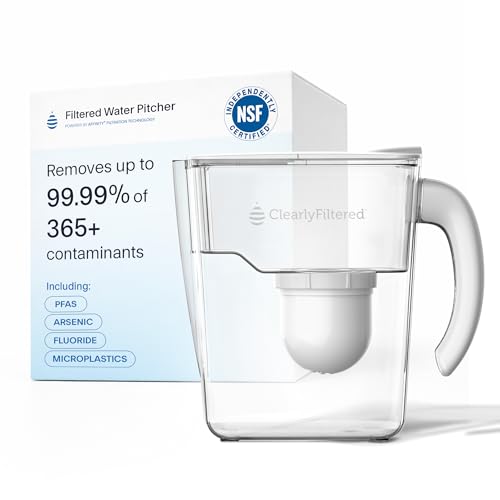
The Clearly Filtered pitcher is the most comprehensively tested unit in this lineup, targeting 365+ contaminants including fluoride, lead, PFAS/PFOA, arsenic, microplastics, and chlorine at up to 99.99% removal. Its proprietary Affinity Filtration Technology uses ionic binding to capture impurities while preserving beneficial minerals, a feature that most carbon-only filters cannot offer. The 80-fluid-ounce (10-cup) capacity is family-sized, and the medical-grade Tritan plastic body avoids the leaching concerns of standard polypropylene pitchers.
Each filter handles 100 gallons — roughly four months of daily use — before needing replacement, which reduces the long-term cartridge cost compared to many 40-gallon units. The spill-resistant water dam and ergonomic handle make pouring steady, even when the pitcher is full. The certification is independently verified to NSF/ANSI Standards 42 and 372 for chlorine reduction and lead-free materials, with additional third-party testing for pharmaceuticals and VOCs.
The trade-off is the upfront cost, which sits at the premium end of the pitcher category. Flow rate is moderate compared to faucet-mounted systems, and the 0.5-micron carbon block can slow dispensing when the filter is near the end of its life. For health-conscious users who want a single pitcher that handles the broadest contaminant spectrum without requiring electricity or plumbing modifications, this is the reference standard.
Why it’s great
- NSF certified to reduce 365+ contaminants including fluoride and PFAS
- Medical-grade Tritan plastic is BPA/BPS-free and non-leaching
- 100-gallon filter life reduces replacement frequency
Good to know
- Slower flow rate due to 0.5-micron carbon block
- Higher initial investment compared to basic pitchers
2. OEMIRY Stainless Steel Countertop Water Filter

The OEMIRY stainless steel model stands out for its 1.6 GPM flow rate, which fills an 8-ounce cup in 2–3 seconds. That is substantially faster than any pitcher system and makes it suitable for cooking and filling large pots without waiting. The multistage filtration reduces up to 99% of chlorine, heavy metals, fluoride, and hydrogen sulfide, while retaining beneficial minerals like calcium and magnesium — meaning the TDS reading stays unchanged. The 304 food-grade stainless steel housing with a 1mm thickened wall resists corrosion better than plastic or ABS alternatives.
Installation takes under three minutes with the included 6 adapters and Teflon tape, and it requires no electricity or drilling. The filter life is rated at 8,000 gallons or 12 months, which is one of the longest service intervals in the category. The twist-on diverter switch lets you toggle between filtered and unfiltered tap water, so you can use filtered water only when needed and extend the filter’s life.
The main limitation is compatibility — it only works with standard threaded faucets and is not suitable for pull-out, handheld, spray-style, or sensor faucets. It also does not reduce TDS, which may be a concern if your water has high dissolved solids. The fingerprint-resistant brushed finish is a nice aesthetic touch, but the system is heavier than plastic countertop units, so it requires stable counter space near the sink.
Why it’s great
- Extremely fast 1.6 GPM flow rate
- 8,000-gallon filter life with 12-month service interval
- 304 stainless steel housing resists corrosion
Good to know
- Not compatible with pull-out or sensor faucets
- Does not reduce TDS
3. OEMIRY Countertop Water Filter (ABS)

The ABS version of the OEMIRY countertop filter delivers the same 1.6 GPM flow rate and 8,000-gallon filter life as its stainless steel sibling, but at a lower cost. The multistage alkaline filtration reduces chlorine, heavy metals, and fluoride while retaining beneficial minerals, making it a practical choice for renters or anyone wanting a no-drill, no-electricity system. It includes 6 adapters and Teflon tape for quick installation on standard faucets.
The environmentally friendly ABS housing is lightweight and easy to move, but it lacks the corrosion resistance of stainless steel. The 12-month or 8,000-gallon filter lifespan means fewer cartridge swaps, and the twisting diverter switch gives you instant control between filtered and unfiltered water. Performance-wise, the filtration results are similar to the steel model, with the same limitation of not reducing TDS.
The housing material is the main differentiator — ABS is durable for normal use but may show wear faster than stainless steel if exposed to direct sunlight or extreme temperatures. As with the steel version, faucet compatibility is limited to standard threads, so confirm your faucet type before purchasing. For the price, this is the most gallon-per-dollar value in the countertop category.
Why it’s great
- High 1.6 GPM flow rate with long 8,000-gallon filter life
- Simple twist-on installation, no electricity needed
- Affordable entry point for high-flow countertop filtration
Good to know
- ABS housing less durable than stainless steel
- Does not reduce TDS
4. Waterdrop ED01W Electric Water Filter Pitcher
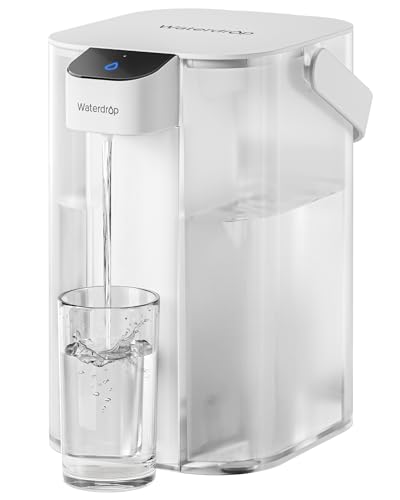
The Waterdrop ED01W is an electric pitcher that dispenses filtered water in about one second after a single button press, eliminating the gravity-fed wait of traditional pitchers. Its 0.5-micron premium carbon block filter is certified by IAPMO against NSF/ANSI 42, 53, 401, and 372, covering chlorine, lead, microplastics, mercury, benzene, and emerging contaminants like PFOA/PFOS. The 200-gallon filter life — roughly three months — is double that of most standard pitcher filters.
The rechargeable battery lasts up to 30 days on standby, and the included USB-C charging cable makes it easy to keep powered. The 15-cup (120-ounce) capacity is generous, and the electric pump ensures consistent flow regardless of filter age. The system does not lower TDS, so beneficial minerals remain, which is preferable for those who want mineral retention.
The trade-off is reliance on battery charging — if the battery dies, the pitcher stops dispensing until charged. The price is higher than non-electric pitchers, but the certification range and filter longevity make it competitive on a cost-per-gallon basis. The unit is slightly taller than standard pitchers, so measure your refrigerator shelf height if you plan to store it chilled.
Why it’s great
- Instant electric dispensing at the press of a button
- NSF certified to reduce 45+ contaminants including PFOA/PFOS
- 200-gallon filter life reduces replacement frequency
Good to know
- Requires periodic battery recharging
- Does not reduce TDS
5. Waterdrop ED06W Electric Water Filter Pitcher

The Waterdrop ED06W brings electric dispensing to the mid-range price bracket, using a combination of coconut shell activated carbon, ion-exchange resin, and activated carbon fiber to reduce chlorine, taste and odor, copper, calcium, magnesium, and sediment. The electric pump dispenses water instantly at 0.7 liters per minute, which is faster than gravity pitchers but slower than the OEMIRY countertop units. The 17-cup capacity is the largest in this electric pitcher comparison, making it a strong option for households that go through water quickly.
Battery life is rated at 20 days on a single charge, and the filter lasts up to 2 months or 40 gallons, which is average for this category but shorter than the ED01W. The coconut shell carbon media is known for better adsorption of organic compounds compared to bituminous coal-based carbons, giving it an edge in taste improvement. The unit is lightweight at 3.42 pounds and fits easily on countertops or refrigerator shelves.
The filtration does not lower TDS, which is fine for taste improvement but not for heavy metal reduction beyond copper and lead. It also lacks the NSF certifications found on the ED01W, so its contaminant reduction claims rely on third-party lab testing rather than formal certification. For an entry-level electric pitcher that prioritizes speed and capacity over certification scope, this is a capable option.
Why it’s great
- Instant electric dispensing with large 17-cup capacity
- Coconut shell carbon media improves taste and odor reduction
- Rechargeable with 20-day battery life
Good to know
- 40-gallon filter life is shorter than premium electric options
- Lacks NSF certification for broader contaminant claims
6. Brita Large Water Filter Pitcher
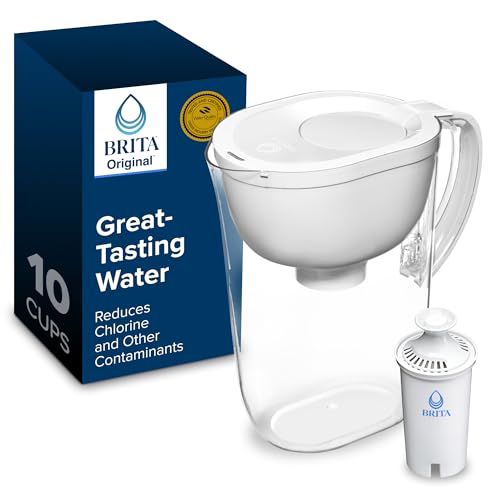
The Brita Large Pitcher is the most recognized name in basic water filtration, using a standard granular activated carbon (GAC) filter to reduce chlorine (taste and odor), mercury, copper, zinc, and cadmium. The 10-cup capacity is suitable for individuals or small families, and the BPA-free construction keeps the plastic body safe for daily use. The Standard filter lasts 40 gallons (about 2 months), while the Longlast+ filter extends to 120 gallons (about 6 months), giving users a choice in replacement frequency.
The space-efficient design fits standard refrigerator shelves, and the easy-fill locking lid prevents splashes during refills. Replacement filters are widely available at most retailers, which simplifies long-term ownership. The brand’s market share also means replacement cartridges are often discounted in multi-packs, lowering the ongoing cost.
The contaminant reduction scope is narrow compared to NSF/ANSI 53-certified units — Brita does not target lead, fluoride, PFAS, or pharmaceuticals. The GAC media also has a higher micron rating than carbon block filters, meaning it captures fewer fine particles and cysts. For households with relatively clean municipal water that just needs chlorine taste reduction, this is a reliable budget-friendly choice, but it falls short for those concerned about heavy metals or emerging contaminants.
Why it’s great
- Widely available replacement filters at low cost
- Fits standard fridge shelves with space-efficient design
- Longlast+ filter option extends to 120 gallons
Good to know
- Does not reduce lead, fluoride, PFAS, or pharmaceuticals
- GAC media has higher micron rating than carbon block
7. Culligan with ZeroWater Technology 10-Cup Pitcher
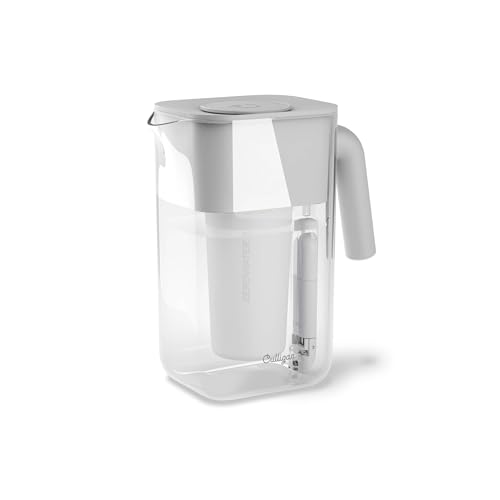
The Culligan ZeroWater pitcher uses a 5-stage filtration system that removes 99.9% of dissolved solids, making it one of the few activated carbon-based pitchers that actually reduces TDS to near-zero levels. The built-in TDS meter gives instant readouts of dissolved solid content, alerting you when the filter is exhausted. It is IAPMO certified to reduce lead, total PFAS (forever chemicals), mercury, fluoride, and chlorine, offering broader contaminant coverage than standard carbon-only pitchers.
The 10-cup capacity is moderate, and the BPA-free design fits both countertops and small refrigerator shelves. The included TDS meter is a useful diagnostic tool that shows exactly when the filter needs changing — no guessing based on taste or time. The 5-stage process includes a carbon stage, ion-exchange stage, and a non-woven membrane stage to target both organic and inorganic contaminants.
The 0.18 liters per minute flow rate is noticeably slower than other pitchers in this list, which can be frustrating when refilling large containers. The TDS meter also reads zero when the filter is working, but some users report that the filter life is shorter than advertised, especially in areas with very hard water. For those who prioritize TDS reduction and want a visual confirmation of filter performance, this is a solid choice, but be prepared for slower dispensing and potentially frequent filter changes.
Why it’s great
- Removes 99.9% of total dissolved solids for near-zero TDS
- Built-in TDS meter gives real-time filter status
- Certified to reduce lead, PFAS, mercury, fluoride, and chlorine
Good to know
- Very slow flow rate at 0.18 liters per minute
- Filter life may be shorter in hard water areas
FAQ
Does an activated carbon water filter remove fluoride?
What is the difference between a carbon block and granular activated carbon filter?
How often should I replace my activated carbon water filter?
Final Thoughts: The Verdict
For most users, the best activated carbon water filter winner is the Clearly Filtered Pitcher because it combines the widest contaminant reduction (365+ targets) with independent NSF certification and a 100-gallon filter life. If you want instant dispensing with NSF-rated protection, grab the Waterdrop ED01W Electric Pitcher. And for high-speed countertop filtration without electricity, nothing beats the OEMIRY Stainless Steel Countertop Filter.