A real Japanese-style wok isn’t about nonstick coatings or gimmicky gadgets—it’s about thin carbon steel that responds instantly to flame, a round bottom that channels heat into the food, and a surface that builds flavor with every use. The difference between a flimsy pan and a true cooking tool comes down to material gauge, heat conductivity, and the patience to season it yourself.
I’m Mohammad Maruf — the founder and writer behind AirfryerBite. I’ve spent years analyzing cookware metallurgy, comparing hammered carbon steel from Japanese forges to mass-market alternatives, and breaking down the thermal physics that define real wok cooking.
This guide cuts through the marketing noise to identify the best japanese wok for your stove type, cooking volume, and skill level, whether you’re chasing wok hei in a home kitchen or outfitting a serious prep station.
How To Choose The Best Japanese Wok
Choosing a Japanese-style wok means prioritizing material purity, thermal behavior, and the physical relationship between your stove and the pan’s bottom profile. The wrong choice will steam your stir-fry instead of searing it.
Round Bottom Versus Flat Bottom
A round-bottom wok concentrates heat at the base and allows flames to lick up the sides, creating the temperature gradient essential for authentic wok hei. However, round bottoms require a wok ring on gas stoves and are completely incompatible with induction or electric smooth-top ranges. Flat-bottom models sacrifice some heat concentration for universal stovetop compatibility, making them the practical choice for most home kitchens.
Steel Thickness and Heat Response
Japanese woks traditionally use 1.2mm carbon steel, which heats and cools nearly instantly—ideal for high-flame gas burners. Thicker steel at 1.8mm retains more heat but responds slower, making it better for electric coils or lower-output burners. Anything thicker than 2mm starts behaving like cast iron, defeating the purpose of a wok’s responsive thermal profile.
Pre-Seasoned Versus Raw Carbon Steel
Pre-seasoned woks arrive with a factory-applied oil layer that allows cooking immediately after a quick rinse. Raw carbon steel woks ship with a protective lacquer or rust-prevention varnish that must be burned off and scrubbed away before the first seasoning. Raw steel gives you complete control over the seasoning layer but requires an extra 30 to 45 minutes of initial preparation.
Quick Comparison
On smaller screens, swipe sideways to see the full table.
| Model | Category | Best For | Key Spec | Amazon |
|---|---|---|---|---|
| Procasa Tri Ply Carbon Steel | Premium | All-stove versatility + durability | Tri-ply steel/aluminum, 13 in, oven-safe 500°F | Amazon |
| Yamada Iron One Hand Wok 33cm | Premium | Traditional round-bottom gas cooking | 1.2mm hand-hammered iron, 33 cm | Amazon |
| Yamada Kogyosho Iron Handed Wok 30cm | Premium | Single-serving or couple-sized portions | 1.2mm hand-hammered iron, 30 cm, 980g | Amazon |
| Craft Wok 16 Inch Canton Style | Mid-Range | Heavy-duty batch cooking | 1.8mm hand-hammered carbon steel, 16 in | Amazon |
| SOONEAR KOTE2 Light Weight | Mid-Range | Lightweight wok tossing on gas | 1.2mm carbon steel, 14.25 in, 2.73 lb | Amazon |
| SUNRISE 14 Inch Japanese Steel | Budget | Commercial gas wok station | 1.2mm carbon steel, round bottom, 14 in | Amazon |
| FGJ 13 Inch Carbon Steel Wok | Budget | Flat-bottom induction/glass top cooking | 5.8 qt carbon steel, pre-seasoned, flat bottom | Amazon |
In‑Depth Reviews
1. Procasa Tri Ply Carbon Steel Wok
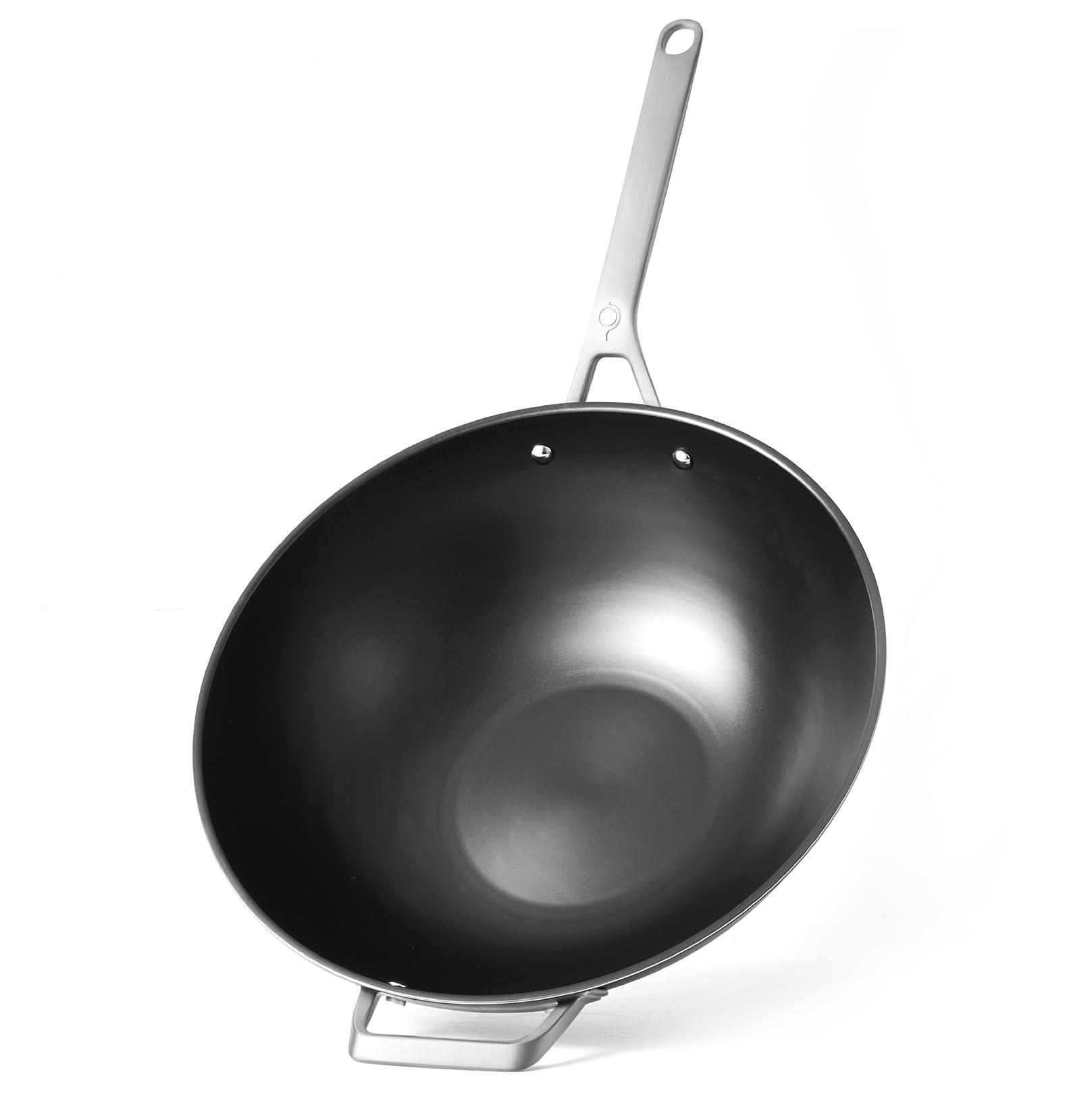
The Procasa 13-inch wok redefines what a carbon steel pan can do by laminating an aluminum core between two layers of carbon steel. This tri-ply construction solves carbon steel’s biggest weakness—hot spots—by spreading heat evenly across the flat base and up the sides. The nitrided surface treatment creates a black oxide layer that’s five times harder than bare steel, making it naturally nonstick without any PTFE or ceramic coating.
It arrives pre-seasoned and ready to cook, so you skip the burn-off ritual. The helper handle provides extra control when tossing larger portions, and the wooden main handle stays cool enough for comfortable grip during high-heat stir-fries. At 3.6 pounds, it feels solid without being cumbersome, and the 500°F oven rating adds braising and finishing flexibility.
Customer reviews consistently praise its performance on induction cooktops—an area where round-bottom woks fail completely. The flat bottom ensures full contact with any heating surface, while the thin sidewalls still allow rapid heat response. This is the most versatile Japanese-style wok available for the modern kitchen.
Why it’s great
- Tri-ply construction eliminates hot spots for even searing
- Nitrided finish is rust-proof and safe for metal utensils
- Works on induction, gas, electric, and oven up to 500°F
Good to know
- Flat bottom won’t concentrate heat like a true round wok
- Pre-seasoned surface still improves with additional seasoning over time
2. Yamada Iron Launch One Hand Wok 33cm

This 33cm Yamada wok represents traditional Japanese forging at its purest. Each unit is hammered over 5,000 times, creating a dimpled surface that reduces food contact area and promotes natural nonstick properties. The 1.2mm iron thickness delivers the instantaneous heat response that experienced wok cooks demand—the pan goes from ambient temperature to smoking hot in under a minute on a decent gas burner.
At 1,150 grams, it’s light enough for one-handed tossing, yet the iron construction holds enough thermal mass to sear proteins without dropping temperature. The one-piece iron handle eliminates rivets entirely, removing the single most common failure point in cheap woks. Customers report these lasting decades with proper seasoning.
The caveat is preparation. This wok ships with a rust-prevention lacquer that must be burned off in a high-heat oven or over a gas flame, followed by thorough scrubbing before seasoning. It’s also strictly for gas cooktops—the round bottom requires a wok ring for stability. For purists who want authentic wok hei at home, this is the benchmark.
Why it’s great
- 5,000+ hand hammer strokes create superior food release
- 1.2mm iron heats and cools almost instantly
- One-piece iron handle eliminates rivet failure risk
Good to know
- Requires lacquer burn-off and initial seasoning before use
- Round bottom needs a wok ring on standard gas stoves
3. Yamada Kogyosho Iron Handed Wok 30cm

This 30cm variant from Yamada Kogyosho delivers the same hand-hammered iron craftsmanship as the 33cm model but in a more manageable size for smaller households or limited burner space. At 980 grams, it’s even lighter, making single-handed stir-frying effortless. The 90mm depth still provides enough volume for tossing vegetables and noodles without spillage.
Forged in Yokohama, Japan, the iron construction develops a deep, dark seasoning patina over time that becomes increasingly nonstick. The raw iron surface has no chemical coatings—just the rust-prevention varnish that must be removed. Once seasoned properly, this wok outperforms any nonstick pan for scrambled eggs, fried rice, and delicate fish without flaking or scratching.
The 30cm size hits a sweet spot for couples or individuals who cook 2-3 servings at a time. It heats faster than the 33cm version due to the smaller diameter, which is beneficial for cooks using standard home gas burners that lack commercial flame power. The hand-forged character means minor surface variations are normal and actually enhance the pan’s cooking personality.
Why it’s great
- Lighter weight at 980g for one-handed tossing control
- Hand-hammered iron from Yokohama with zero chemical coatings
- Ideal size for quick 2-3 portion meals on home gas stoves
Good to know
- Rust-prevention varnish requires thorough burn-off
- Round bottom is gas-only and needs a wok ring
4. Craft Wok 16 Inch Heavy Canton Style

The Craft Wok 16-inch Canton-style wok is built for volume cooking. Its 1.8mm carbon steel construction is significantly thicker than traditional Japanese woks, which means slower heat response but superior heat retention once the pan is up to temperature. This characteristic makes it ideal for electric coils or lower-BTU gas burners that can’t sustain high flame.
Hand hammered by craftsmen in Guangzhou, the surface texture helps food release and adds visual character. Professional Chinese chefs frequently choose this model for its durability and the generous 16-inch diameter that accommodates whole fish, massive portions of fried rice, or large batches of braised dishes. The wooden handle stays cooler than all-metal designs.
At 2.4 kilograms, this is not a pan for quick wrist flicks—it’s a stationary wok meant for sustained cooking. The raw carbon steel surface arrives unseasoned, requiring the user to build their own seasoning layer. It’s compatible with gas and electric coil cooktops but not flat-surface induction or glass tops due to the round bottom.
Why it’s great
- 1.8mm steel holds heat steady for low-BTU burners
- 16-inch diameter handles large batches and whole ingredients
- Hand hammered by experienced Canton craftsmen
Good to know
- Heavy weight makes tossing difficult for most home cooks
- Requires full seasoning process before first cooking session
5. SOONEAR KOTE2 Light Weight Carbon Steel Wok

The KOTE2 is made in Japan and weighs 30 percent less than comparable 14-inch carbon steel woks, coming in at just 2.73 pounds. The weight reduction comes from a 1.2mm steel gauge and a rivet-free handle design that eliminates excess metal. This makes it one of the most toss-friendly woks available for home cooks who want to replicate restaurant-style stir-fry motion.
The round bottom and carbon steel handle are designed exclusively for gas cooktops. The all-metal construction means the handle gets hot during cooking—a kitchen towel or silicone grip becomes necessary. The oven-safe rating adds flexibility for finishing dishes under a broiler, though seasoning maintenance requires care after oven use.
Initial preparation involves burning off the factory coating and building a seasoning layer. Once seasoned, the lightweight steel develops a natural nonstick patina quickly because the thin metal accepts oil polymerization readily. It’s a specialist tool for gas-powered cooks who prioritize maneuverability over thermal mass.
Why it’s great
- 30% lighter than standard woks for easy tossing
- Rivet-free handle improves balance and grip
- Oven safe for high-heat finishing techniques
Good to know
- All-metal handle gets hot during extended cooking
- Gas-only round bottom requires a wok ring
6. SUNRISE 14 Inch Japanese Style Steel Wok

The SUNRISE 14-inch wok is a no-frills commercial-grade tool designed for restaurant gas ranges. The 1.2mm carbon steel construction is welded at the joints, providing a durable round-bottom profile that professional kitchens rely on. It’s the most affordable entry point into a genuine round-bottom Japanese-style wok experience.
This wok requires significant preparation. The protective coating must be completely burned off before the first use, and the manufacturer explicitly warns about needing a wok ring for residential gas stoves. The carbon steel surface rusts if left wet, so immediate drying and oiling after each use is mandatory. The welded handle stays firmly attached but transfers heat readily.
Customer feedback emphasizes that this is not a beginner’s pan—it demands respect for the seasoning process and consistent maintenance. However, for cooks who already own a seasoned cast iron skillet and understand reactive cookware, the SUNRISE wok delivers the same authentic performance as premium brands at a fraction of the price. It’s a budget tier choice for gas-only kitchens.
Why it’s great
- Genuine 1.2mm commercial-grade carbon steel at an accessible price
- Round bottom delivers authentic heat concentration
- Welded joints withstand heavy daily use
Good to know
- Protective coating must be aggressively burned off first
- Requires a wok ring for most home gas stoves
7. FGJ 13 Inch Carbon Steel Wok
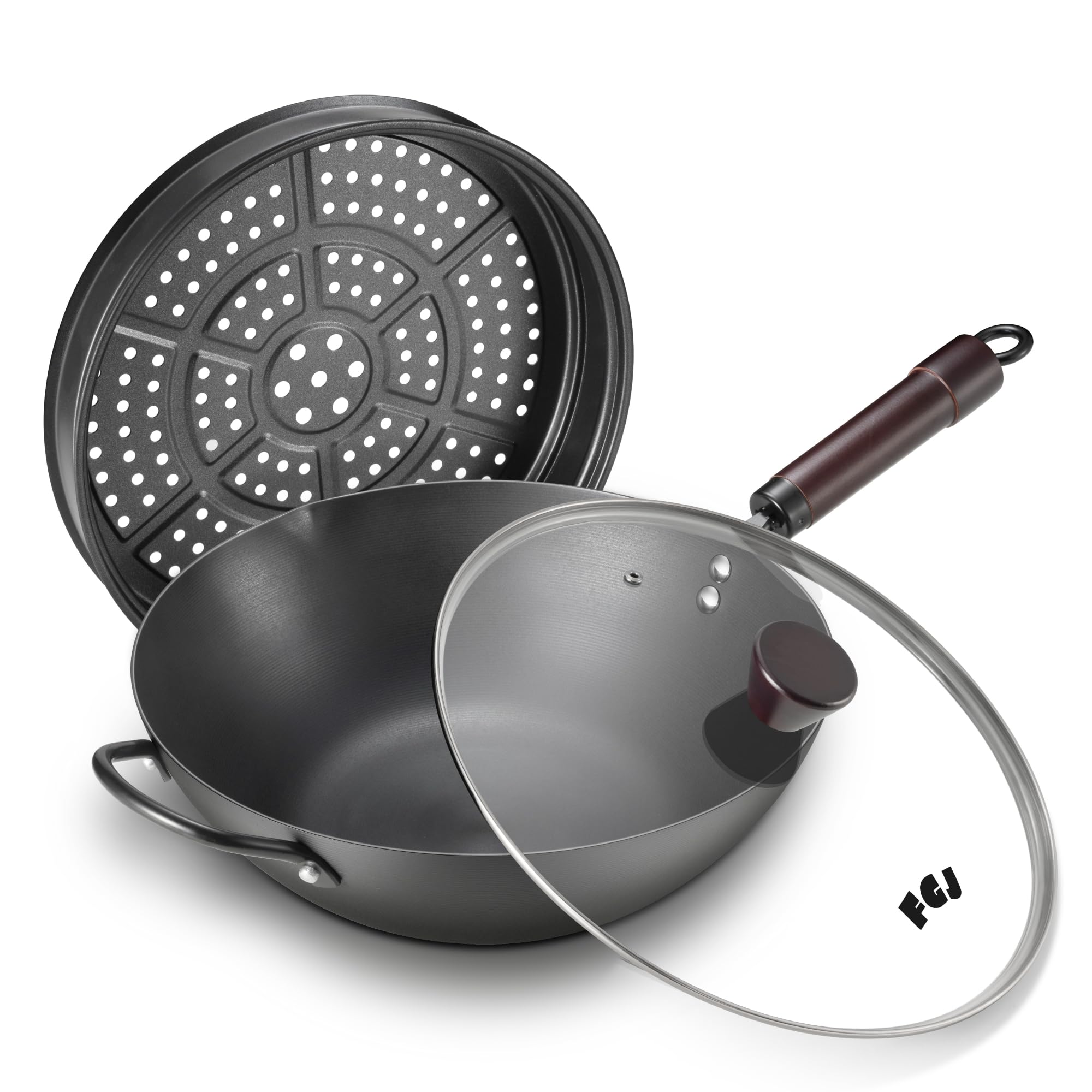
The FGJ 13-inch wok is designed for maximum compatibility with modern cooktops. The flat bottom makes it usable on induction, electric glass, ceramic, and gas ranges, while the included glass lid and steamer basket add steaming functionality. The pre-seasoned surface has been nitrogen-treated at over 1000°F, creating a hard oxide layer that resists corrosion and provides immediate nonstick performance.
The 5.8-quart capacity is generous for family meals, and the wooden handle stays cool during cooking. The black carbon steel heats quickly and responds well to temperature adjustments, though the flat bottom means less dramatic heat differentiation between the center and sides compared to round woks. The wok is not dishwasher safe—hand washing and drying are required to maintain the seasoning.
This is the most beginner-friendly option on the list. The pre-seasoned surface eliminates the intimidating burn-off and seasoning process, while the included accessories add immediate versatility. It won’t produce the same wok hei as a round-bottom gas wok, but it serves as an excellent introduction to carbon steel cooking for cooks with electric or induction stoves.
Why it’s great
- Flat bottom works on induction, gas, electric, and glass cooktops
- Pre-seasoned with nitrogen treatment for immediate use
- Comes with glass lid and steamer for added cooking options
Good to know
- Flat bottom lacks the heat concentration of round designs
- Seasoning still needs periodic maintenance to prevent rust
FAQ
What is the ideal steel thickness for a Japanese wok on a home gas stove?
Can I use a round-bottom Japanese wok on an induction cooktop?
How do I remove the factory lacquer from a new Japanese wok?
Does a hand-hammered wok perform better than a smooth one?
Final Thoughts: The Verdict
For most users, the best japanese wok winner is the Procasa Tri Ply Carbon Steel Wok because it combines traditional carbon steel performance with modern tri-ply heat distribution and universal stove compatibility. If you want authentic round-bottom wok hei on a gas burner, grab the Yamada Iron Launch One Hand Wok 33cm. And for the best value entry into Japanese-style wok cooking, nothing beats the SUNRISE 14 Inch Japanese Steel Wok for its pure, unadorned carbon steel performance at a budget-friendly price.