A commercial batch brewer must deliver consistent extraction, high throughput, and reliable heat retention across back-to-back service cycles—yet many so-called “commercial” machines fail to hold a stable brew temperature above 195°F, producing weak, bitter, or uneven coffee that frustrates staff and customers alike. The difference between a true workhorse and a glorified home machine comes down to specific engineering: plumbed water lines instead of reservoirs, insulated stainless steel tanks rather than plastic, and heating elements rated for continuous duty rather than intermittent use.
I’m Mohammad Maruf — the founder and writer behind AirfryerBite. My research on heavy-use brewing equipment focuses on measurable output specs like gallons per hour, brew cycle duration, and internal component materials that separate a 3-year machine from a 15-year investment.
Whether you are stocking a high-volume restaurant, a bustling office break room, or a busy church kitchen, finding the right best commercial batch brewer means matching your daily cup demand to a machine built for that exact workload without overpaying for features you cannot realistically use.
How To Choose The Best Commercial Batch Brewer
Choosing the wrong unit means either undercapacity—long lines and lukewarm coffee during peak hours—or an oversized machine that wastes energy and takes up valuable counter space. Focus on four decisive factors before comparing brand names.
Brew Speed and Gallons Per Hour
Commercial kitchens operate on tight timelines. A brewer that produces 3.8 gallons per hour suits moderate-volume settings like a small café or break room, whereas a unit rated at 8–10 gallons per hour handles a full-service restaurant breakfast rush. Check the manufacturer’s stated gallons-per-hour (GPH) figure with a full decanter cycle—some brands quote optimistic numbers using partial batches.
Plumbed Direct-Line vs. Pour-Over Reservoir
Plumbed machines connect directly to your water line, eliminating the need to manually refill a reservoir. This is critical for high-volume setups because it maintains consistent water temperature and volume for every brew cycle. Pour-over units are portable and easier to install but require staff to pour cold water into a tank—a step that slows service and introduces temperature variation that affects extraction quality.
Warming Station Configuration
Multiple independently controlled warming stations allow you to serve different coffee varieties simultaneously. A three-warmer setup gives you the flexibility to offer regular, decaf, and a seasonal roast without cross-contamination. For airpot-style service, the machine should have a dedicated airpot platform that activates a thermal seal rather than a standard hot plate, preserving temperature without scorching the coffee.
Construction Materials and Certifications
The internal water tank and brew basket must be made from 304 stainless steel or BPA-free composite to resist corrosion and staining. NSF certification is non-negotiable in professional kitchens—it ensures the machine meets sanitation standards for food-contact surfaces. Avoid units with plastic brew cones or aluminum heating elements, as these degrade under continuous heat and affect water chemistry.
Quick Comparison
On smaller screens, swipe sideways to see the full table.
| Model | Category | Best For | Key Spec | Amazon |
|---|---|---|---|---|
| BUNN VP17-3 | Pour-Over | High-volume pourover stations | 3.8 gal/hr — 3 warmers | Amazon |
| NUPANT Dual Drip | Dual Brewer | Dual-flavor high output | 200 cups/hr — 4 warmers | Amazon |
| BUNN VPS 12-Cup | Pour-Over | Medium-volume pour-over | 14.7 L capacity — 3 stations | Amazon |
| Brew Express BEC-110 | Self-Filling | Automatic plumbed brewing | 10-cup — auto water fill | Amazon |
| Brew Express Built-In | Built-In | Permanent wall installation | 10-cup — touchscreen controls | Amazon |
| Waring WCM70PAP | Airpot | Airpot service with hot water | 4 gal/hr — hot water faucet | Amazon |
| Wilbur Curtis G3 | Decanter | Thermal decanter preservation | 64 oz — program. banner | Amazon |
In‑Depth Reviews
1. BUNN VP17-3 12-Cup Pourover Commercial Coffee Maker

The BUNN VP17-3 pours 3.8 gallons of coffee per hour through a SplashGard funnel that deflects hot liquid away from your hand during active use—a small detail that matters when you are refilling every 8 minutes during a rush. This 12-cup pourover unit requires no plumbing, so you can place it anywhere with a standard outlet, and its three lower warming stations let you serve three different roasts simultaneously.
The brushed stainless steel exterior holds up to repeated wiping without showing water spots, and the 14.4-liter internal tank maintains consistent water temperature across back-to-back brew cycles. Decanters are not included, which allows you to match your existing 12-cup glass or airpot inventory instead of buying proprietary carafes.
Real-world feedback confirms that coarse grind adjustments and proper tamping are essential for optimal extraction with this style of brewer—users who monitor their grind consistency consistently report clean, full-flavored coffee even under heavy morning loads. The machine is built to North American electrical standards and uses standard paper filters.
Why it’s great
- No plumbing needed — portable placement anywhere with an outlet
- Three independently controlled warming stations for multi-roast service
- Brushed stainless construction withstands commercial cleaning chemicals
Good to know
- Decanters must be purchased separately — no carafes included
- Requires manual pour-over method for each brew cycle
- Internal tank cannot be detached for scrubbing
2. NUPANT Dual Drip Commercial Coffee Maker
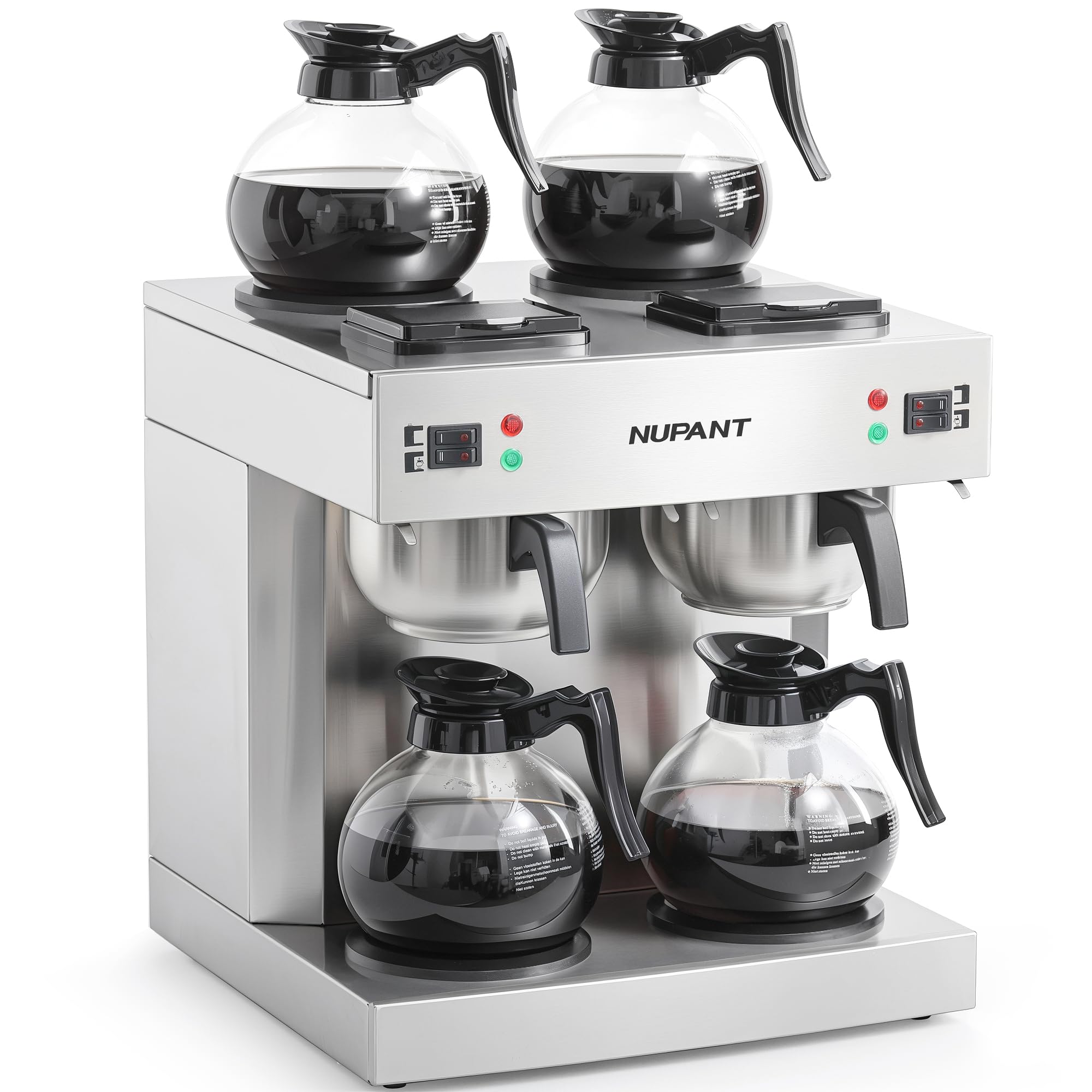
This dual-drip station brews 3.6 liters per side—7.2 liters total—and supplies over 200 cups per hour, making it a strong candidate for church fellowship halls or mid-size cafeterias where two coffee varieties need to stay hot simultaneously. Each side has its own switch, so you can brew regular on one side and decaf on the other without cross-contamination of grounds or flavors.
The 304 stainless steel body resists corrosion from daily commercial cleaning, and the four independently controlled warming panels keep every decanter at serving temperature until the last cup is poured. Users report that brew time for a full 3.6-liter batch runs about 7 minutes, which is faster than many single-batch machines in this class.
A few users experienced operational failures after several weeks, though the manufacturer provided free replacement parts for lost basket pieces—indicating responsive customer support. The included paper filters and four glass decanters mean this machine arrives ready for immediate service without additional purchases.
Why it’s great
- Dual independent brewing sides for two coffee varieties
- Four warming panels with individual switches for temperature control
- Includes four glass decanters and paper filters out of the box
Good to know
- Some units reported early failure within the first month of use
- Not plumbable — requires manual refill of the reservoir
- Glass decanters are fragile for high-traffic commercial environments
3. BUNN VPS 12-Cup Pourover Commercial Coffee Brewer
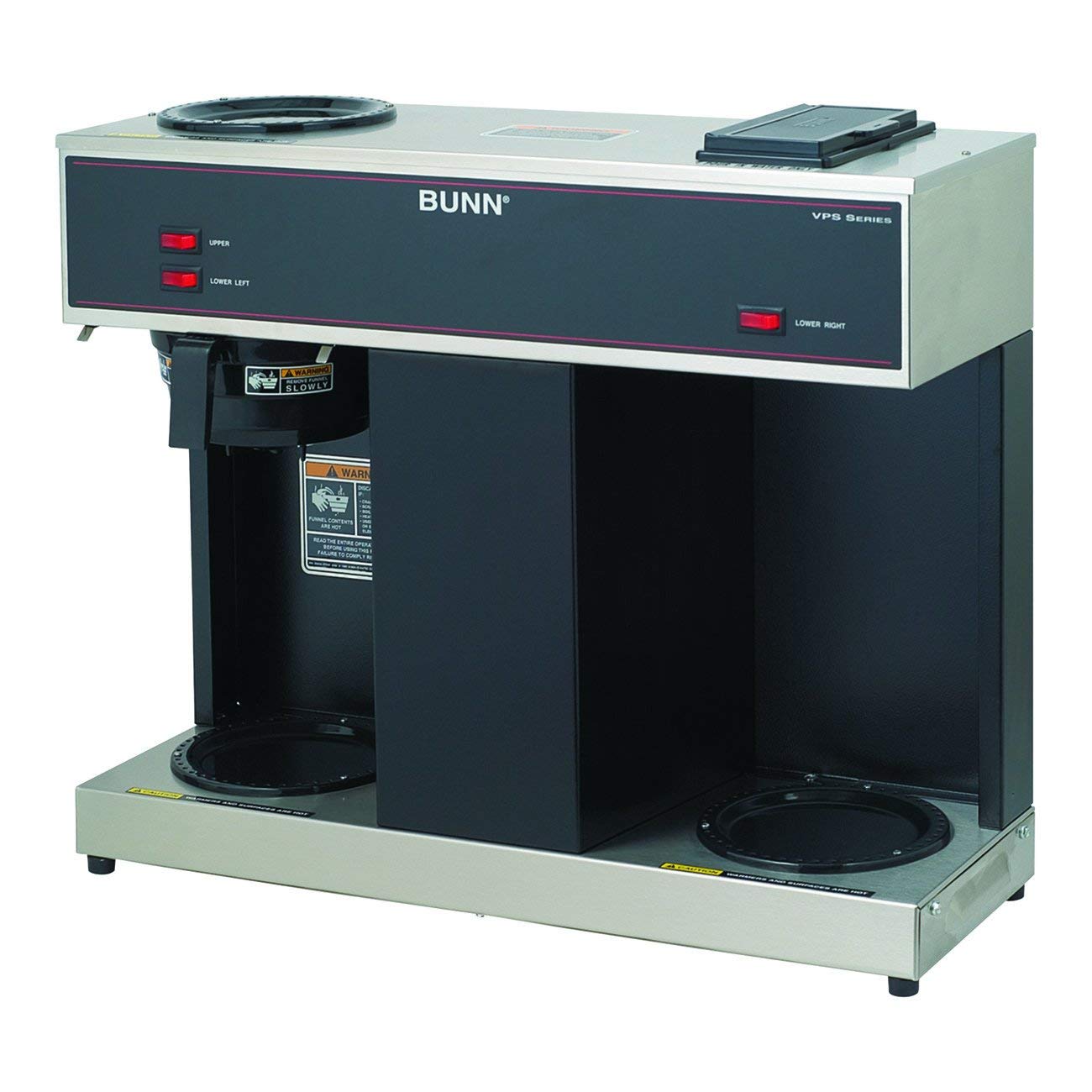
The BUNN VPS (Vertical Pour-over System) holds 14.7 liters of brewed coffee across its three warmers, with a polished stainless steel exterior that resists fingerprints and smudges in busy environments. Its pourover design means you control the water flow rate directly, which experienced baristas prefer for achieving specific extraction profiles.
This model is 23 inches wide, so verify your counter depth before purchasing—it is one of the broader units in this class. The paper filter system uses standard BUNN filter packs, keeping operational costs low compared to proprietary basket systems that require custom filters shipped directly from the manufacturer.
User reviews are sparse but consistent: this machine is identical in internal engineering to the VP17-3 but with a taller brew basket that accommodates larger grounds volumes for darker roasts. The black and stainless color scheme matches most commercial kitchen aesthetics without standing out.
Why it’s great
- Taller brew basket fits larger grounds loads for dark roasts
- Polished stainless exterior resists smudges and cleans easily
- Uses standard BUNN filter packs for low ongoing costs
Good to know
- Very wide chassis — verify your counter space before ordering
- Manual pourover operation slows throughput during peak hours
- Decanters not included — separate purchase required
4. Brew Express BEC-110 Countertop Automatic Water Filling Coffee System

The Brew Express BEC-110 connects directly to your existing water line via the included hardware kit—quick connector, 10-foot water line, under-sink faucet adapter, and T-connector for refrigerator lines—so you never pour a single cup of water into a reservoir. This plumbed convenience is rare at this price tier and makes the BEC-110 a compelling choice for offices or break rooms where staff should not fiddle with water refills.
The Brew Trak system actively monitors and maintains brew temperature within SCAA standards regardless of incoming water temperature or voltage fluctuations, addressing the most common complaint about commercial batch brewers: inconsistent heat. Users who have owned the unit for years praise its reliability, with one reporting a 12-year lifespan before replacement was needed.
A recurring note in reviews concerns brew temperature—while the coffee tastes good, some users wish it stayed hotter in the carafe during extended holds. The programmable timer lets you set a wake-up brew, and the infrared sensor prevents the brew basket from overflowing if you remove the carafe mid-cycle.
Why it’s great
- Plumbed automatic water fill eliminates daily refilling chore
- Brew Trak system maintains consistent SCAA-rated temperature
- Includes full installation hardware for under-sink connection
Good to know
- Carafe heat retention could be better during long holds
- Steam condensation can drip outside the carafe at highest brew temp
- 10-cup capacity is smaller than full commercial batch brewers
5. Brew Express 10-Cup Built-In-The-Wall Self-Filling Coffee System

This wall-mount coffee system from Brew Express is designed for built-in kitchen islands and custom cabinetry, saving all counter space while providing direct water-line connectivity. The stainless steel finish and touchscreen interface give it a contemporary look that integrates into high-end kitchen designs rather than sitting on the counter as an industrial appliance.
Users who have installed this unit in multiple homes report a lifespan of 15 to 18 years with daily use, making it one of the longest-lasting commercial-grade brewers available. The adjustable cup selector lets you brew anything from a single cup to a full carafe, and the reusable filter eliminates ongoing paper filter costs.
The carafe itself has been noted by some users to have minor imperfections, but the overall build quality of the heating element and internal plumbing is robust. Because installation requires cutting a recess into cabinetry and connecting to a water line, this is best planned during a kitchen renovation rather than as a quick retrofit.
Why it’s great
- Saves all counter space with wall-mount built-in design
- Touchscreen controls with programmable brew scheduling
- Reported lifespan of 15+ years with consistent daily use
Good to know
- Requires cabinetry cutout and plumbing — not a plug-and-play unit
- Premium price reflects custom installation cost
- Carafe quality reported as slightly below the machine’s price tier
6. Waring Commercial WCM70PAP Café Deco Automatic Airpot Coffee Brewer
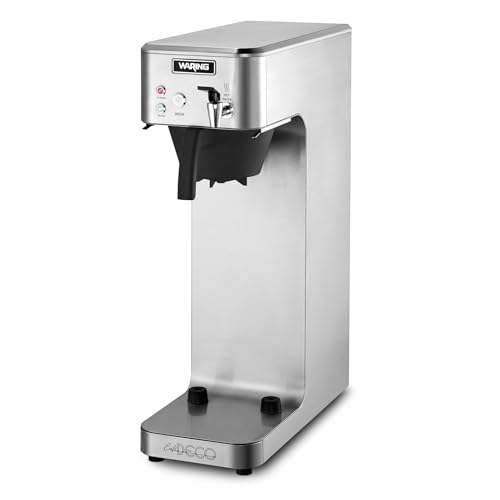
The Waring WCM70PAP is purpose-built for airpot service, brewing over 4 gallons per hour directly into 64-ounce vacuum-insulated airpots that maintain coffee temperature without a hot plate. A dedicated hot water faucet on the front panel dispenses near-boiling water for tea, hot chocolate, or soup base—a feature that eliminates the need for a separate hot water dispenser at your beverage station.
Industrial-grade construction uses a matte stainless steel exterior that hides scratches and fingerprints better than polished finishes, and the plumbed design means no water reservoirs to clean or refill. NSF and TUV Rheinland certifications ensure the unit meets commercial health-code requirements for food-contact surfaces and electrical safety.
This machine requires paper filters and is designed for ground coffee input. The included individually controlled upper and lower warmers let you keep one airpot on standby while brewing the next batch, maintaining continuous service during breakfast rush hours.
Why it’s great
- Integrated hot water faucet eliminates need for separate tea kettle
- NSF and TUV certified for commercial health-code compliance
- Matte stainless exterior hides daily wear and fingerprints
Good to know
- Designed specifically for airpots — not compatible with glass decanters
- Requires plumbing installation for water line connection
- Paper filters needed for each brew cycle
7. Wilbur Curtis G3 Thermal Decanter Brewer
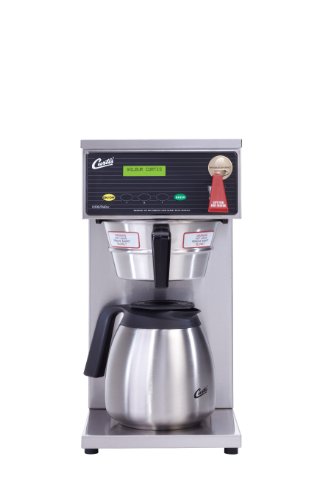
The Wilbur Curtis G3 uses a low-profile thermal decanter design that keeps coffee hot and fresh for hours without a heating element, making it ideal for self-serve stations where coffee sits for extended periods. The programmable display banner allows you to show your operation’s name or a rotating message—a feature that adds brand presence in hotel lobbies or corporate break rooms.
On-board self-diagnostics continuously monitor brewing operation and display error codes with a service phone number if a problem occurs, reducing downtime because technicians can identify the issue before arriving on site. Energy save mode automatically reduces power consumption when the brewer is idle, cutting electricity costs during off-peak hours.
Users report that the G3 is built like a tank with all-stainless construction, industrial electrical switches, and replaceable internal components that extend the machine’s lifespan beyond typical commercial brewers. One caveat: the carafe is not included with the brewer, so factor in the cost of a compatible thermal decanter when budgeting for this purchase.
Why it’s great
- Thermal decanter keeps coffee hot for hours without a hot plate
- Self-diagnostic system displays error codes for fast repair
- Programmable banner displays your business name or message
Good to know
- Thermal decanter sold separately — not included in the box
- Plumbing installation required — not a pour-over unit
- Initial setup may require multiple trips for water line fittings
FAQ
Do I need a plumbed brewer or is a pour-over unit sufficient for my café?
What does NSF certification mean for a commercial coffee brewer?
How many warming stations do I need for a busy office break room?
What is the difference between a glass decanter and an airpot system?
Final Thoughts: The Verdict
For most users, the best commercial batch brewer winner is the BUNN VP17-3 because it delivers a proven 3.8 gallons per hour from a portable pour-over design that needs no plumbing, with three independent warming stations for multi-roast service. If you want automatic water filling that eliminates the daily refill chore, grab the Brew Express BEC-110. And for airpot service that keeps coffee hot for hours without a hot plate, nothing beats the Waring WCM70PAP with its integrated hot water faucet.