The difference between a sour, thin shot and a syrupy, crema-topped espresso often comes down to a single variable: your grinder. Blade mills crush beans into uneven shards, while a dedicated espresso burr grinder produces the consistent, fine particles needed for proper 9-bar extraction. Without uniform particle size, water channels through the puck, leaving half the dose over-extracted and the rest under-extracted—a frustrating outcome no amount of tamping can fix.
I’m Mohammad Maruf — the founder and writer behind AirfryerBite. My research into coffee grinders focuses on burr geometry, micron adjustment ranges, and motor torque at low RPM, because the technical specs that matter for espresso are fundamentally different from those for drip or French press brewing.
Whether you are upgrading from a pre-ground routine or replacing a stale-entry-level model, this guide isolates the coffee grinders for espresso that genuinely deliver repeatable, dialed-in shots without forcing you to navigate marketing fluff.
How To Choose The Best Coffee Grinders For Espresso
Espresso demands a grind so fine and uniform that it creates enough hydraulic resistance to build the 9 bars of pressure required for proper extraction. A grinder built for drip coffee simply cannot maintain the tight particle distribution espresso requires. Here are the three most critical factors.
Conical vs. Flat Burrs: Geometry Dictates Flavor Profile
Conical burrs (typically 38–50 mm) grind at slower RPM (around 300–500) and produce a slightly more rounded, chocolate-forward shot with less astringency. Flat burrs (54–83 mm) spin faster and shear the bean into more uniform, angular particles that accentuate clarity, acidity, and fruit notes. For traditional Italian-style espresso, conical burrs are forgiving; for light-roast single-origin espresso, flat burrs unlock nuance. Both can produce espresso-quality grinds, but the burr diameter directly correlates to throughput and consistency.
Adjustment Mechanism: Stepless vs. Click-Stepped
Most espresso machines require grind adjustments in 10–20 micron increments to dial in a new bag of beans or compensate for humidity. Click-stepped grinders change grind size in fixed jumps—often 30–50 microns per click—which can leave you stuck between a fast-flowing gusher and a choked shot. Stepless adjustment uses a continuous collar that lets you fine-tune by fractions of a micron, making it the standard for prosumer espresso. For home use, a grinder with very fine click spacing (under 16 microns per step) can be acceptable.
Retention and Single-Dosing Workflow
Retention—grounds trapped inside the burr chamber after grinding—causes stale remnants to contaminate your next dose. For espresso, where every gram matters, a grinder that retains less than 0.2 grams is ideal. Single-dosing designs with bellows, anti-popcorn discs, and plasma generators (ionizers) force nearly all grounds out, ensuring every shot starts fresh and that you can swap between bean types without cleaning between each dose.
Quick Comparison
On smaller screens, swipe sideways to see the full table.
| Model | Category | Best For | Key Spec | Amazon |
|---|---|---|---|---|
| Viesimple Gen 4 | Single-Dose Electric | Quiet, low-retention home espresso | 48 mm conical burr, <50 dB noise | Amazon |
| MOKKOM 64mm Flat Burr | Prosumer Electric | Versatile espresso with flat-burr clarity | 64 mm flat burr, 100 grind settings | Amazon |
| MiiCoffee DF64 II | Flat-Burr Specialist | Zero-retention, mod-friendly single dosing | 64 mm flat burr, stepless adjustment | Amazon |
| KINGrinder K6 | Manual Burr | Portable, 16-micron precision for travel | 16 µm/click, full-metal design | Amazon |
| 1Zpresso J-Ultra | Manual Espresso Specialist | Ultra-fine 8-micron steps for dialing in | 8 µm/click, coated conical burr | Amazon |
| AMZCHEF 45-Setting | Budget Electric | Entry-level espresso with touchscreen ease | 40 mm conical burr, 45 settings | Amazon |
| AMZCHEF 48-Setting | Budget Electric | Portafilter-friendly dosing with LED control | 40 mm conical burr, 48 settings | Amazon |
| Tuni G1 | Compact Electric | Small countertop with 54-58mm portafilter dock | 40 mm conical burr, 48 settings | Amazon |
| OXO Brew Conical Burr | Mid-Range Electric | Reliable multi-brew grinding at a fair price | 40 mm conical burr, 15+ micro settings | Amazon |
In‑Depth Reviews
1. Viesimple Gen 4 Single-Dose Electric Grinder
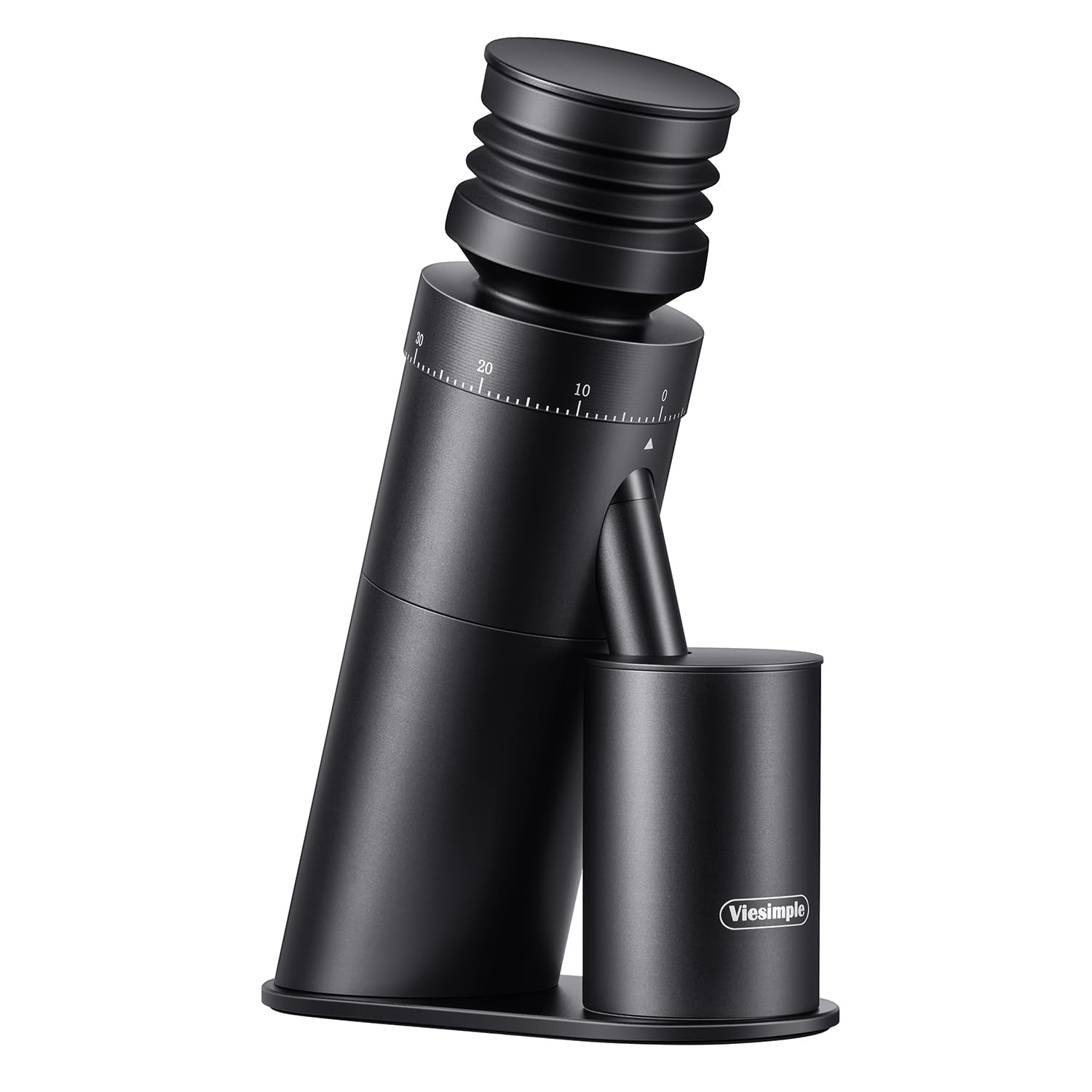
The Viesimple Gen 4 hits the sweet spot for home espresso enthusiasts who want industrial-grade retention control without prosumer bulk. Its 48 mm conical burr runs at a low enough RPM to minimize heat transfer to the grounds, preserving volatile aroma compounds that define shot sweetness. The anti-clogging patent and magnetic dosing cup with a sealed lid force retention below 0.2 grams—practically zero for a grinder in this price tier.
Noise is a genuine differentiator here: at under 50 decibels, this grinder is whisper-quiet compared to the typical 60–70 dB electric model, making early-morning shots far less disruptive. The blow-out funnel and food-grade anti-static coating mean you can grind, dump, and brush in under ten seconds without grounds clinging to the chute walls.
The trade-off is a relatively small 30-gram single-dose capacity, which suits a lone espresso drinker perfectly but requires refilling for back-to-back doubles. The aluminum build feels dense and solid, but some users note that the narrow footprint can make it slightly top-heavy when the hopper is full. For the home barista who values silence, cleanliness, and shot-to-shot precision, this is a refined choice.
Why it’s great
- Near-silent operation at under 50 dB
- True single-dose workflow with sub-0.2 g retention
- Anti-static coating keeps the counter spotless
Good to know
- 30-gram dose limit requires refilling for multiple shots
- Plastic internal chute collar may feel less premium than all-metal
2. MOKKOM 64mm Flat Burr Grinder
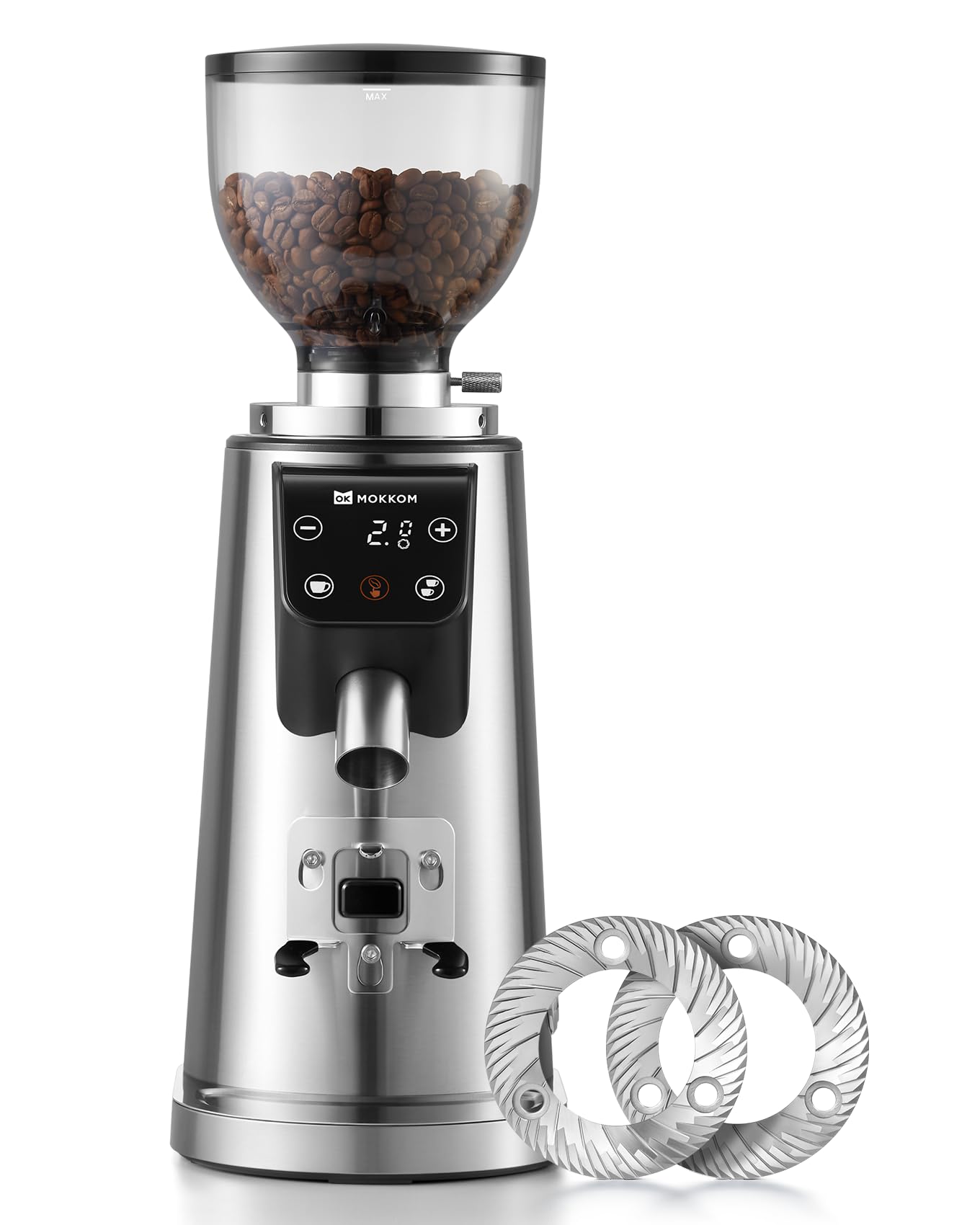
MOKKOM brings a full-metal, 64 mm flat-burr powerhouse to the table that competes with grinders costing twice as much. Flat burrs at this diameter produce a particle distribution with fewer fines than conical burrs, translating to clearer flavor separation in the cup—ideal for light-roast espresso where you want berry acidity and floral notes to shine through the crema.
The 100 grind settings span every conceivable brew method, but the crucial zone for espresso lies in the fine half of the dial, where each step moves the burrs by roughly 25 microns. The plasma generator at the exit chute neutralizes static cling, so grounds fall into the dosing cup without the messy spray typical of many budget flat burrs. The dual-hopper system—a 350-gram bulk hopper and a single-dose silicone bellows—gives you flexibility without committing to one workflow.
The all-stainless build with a brass adjustment ring adds significant weight—this grinder stays planted on the counter during grinding. The 0.1-second timer precision is excellent for repeatable doses, though the grinder requires a brief seasoning period before the burrs settle into consistent alignment. If you want flat-burr clarity and don’t want to spend over twice as much on a comparable unit, this is the most compelling option available.
Why it’s great
- Large 64 mm flat burrs deliver exceptional clarity
- Plasma generator virtually eliminates static mess
- Includes both bulk and single-dose hoppers
Good to know
- Requires a break-in period for consistent alignment
- Tall footprint may not fit under low cabinets
3. MiiCoffee DF64 II

The DF64 II has become an icon in the home espresso community for good reason: it delivers true stepless adjustment on a 64 mm flat burr platform at a fraction of the cost of Italian-made competitors. The ability to dial in by fractions of a micron means you can eliminate channeling and find the exact grind size where your beans produce a 1:2 ratio in 28 seconds—every time.
Version 2.5 introduced an improved inner chute with plasma generator probes that further reduce retention. True zero retention under 0.1 grams is achievable without even using the bellows, which is remarkable for a flat-burr grinder. The anti-popcorn disc sits integrated into the grind chamber, preventing bean hop that can cause dose inconsistency. The included 58 mm aluminum dosing cup aligns perfectly with standard portafilters for a seamless transfer.
The motor is rated for continuous use far beyond typical home sessions, and the 15-pound weight dampens vibration completely. The DF64 II also supports aftermarket burr upgrades (SSP red speed or high-uniformity) for those who want to push clarity even further. The only real consideration is the single-dose-only design—if you need timed grinding from a full hopper, this isn’t the grinder. For the enthusiast who wants café-quality espresso at home, the DF64 II is a benchmark.
Why it’s great
- Stepless adjustment enables precision dialing
- Near-zero retention without bellows
- Upgradable to SSP burrs for advanced profiles
Good to know
- Single-dose only, no hopper grinding option
- Noisy operation compared to smaller burr grinders
4. 1Zpresso J-Ultra Manual Grinder

The 1Zpresso J-Ultra is engineered specifically for espresso, and the numbers back it up: 8 microns per click is the finest step interval available in a hand grinder outside custom builds. The coated conical burr enhances sweetness by reducing micro-fractures that produce bitter fines, resulting in a balanced shot even with challenging light roasts. The external adjustment ring is tool-free and remains in place during grinding, so you never lose your setting.
The workflow is faster than most manual grinders thanks to the magnetic catch cup that snaps into position and the foldable handle that collapses for storage. A 35-gram capacity covers a double espresso comfortably, and the grind speed is notably quick—about 30 seconds for an 18-gram dose. The included premium travel case means this grinder can move between home, office, and camping without risk of burr misalignment.
The 1Zpresso burr set is factory-calibrated for long-term stability, rated to grind 100–200 kg over its lifetime. The full-aluminum body with stainless steel burrs feels dense and precision-machined, though hand grinding for espresso does require consistent wrist torque to maintain even particle size. For the purist who values absolute granular control and doesn’t want noise or counter clutter, the J-Ultra is a perfect partner for a lever or manual espresso machine.
Why it’s great
- Ultra-fine 8-micron steps for precise espresso dialing
- Coated burr enhances sweetness and reduces fines
- Magnetic catch cup and compact foldable handle
Good to know
- Manual grinding requires consistent effort
- Limited to 35-gram capacity per load
5. KINGrinder K6 Manual Grinder

The KINGrinder K6 punches well above its price point with a full-metal design that rivals grinders twice its cost. Its 16-micron click spacing means 60 clicks per full rotation of the adjustment dial, offering enough resolution to dial in most espresso beans without feeling locked out. The interior adjustment mechanism keeps the grind size locked even during aggressive manual grinding, a common failure point on cheaper hand mills.
The hopper capacity sits at 25–35 grams, which is standard for single-dosing but tight if you brew for more than two people. The straight handle design provides good leverage, and the dual-bearing burr carrier ensures concentric alignment that translates to even particle distribution. The grind consistency at espresso settings is noticeably better than most electric grinders in the same budget range, making this an excellent option for those who want high-quality espresso on a camping trip or in a small apartment where noise is a concern.
Disassembly for cleaning is tool-free, and the included brush makes short work of trapped grounds. The 1.2-inch body diameter makes it comfortable to grip even for users with smaller hands. The main trade-off is speed—hand grinding 18 grams for espresso takes about 45–60 seconds of steady effort. If that doesn’t bother you, the K6 delivers espresso-grade grind quality at a remarkably low entry point.
Why it’s great
- All-metal construction with dual-bearing stability
- 16-micron steps allow espresso dialing
- Tool-free cleaning and portable design
Good to know
- Manual effort required for fine espresso grind
- Small hopper may need refilling for multiple shots
6. OXO Brew Conical Burr Grinder
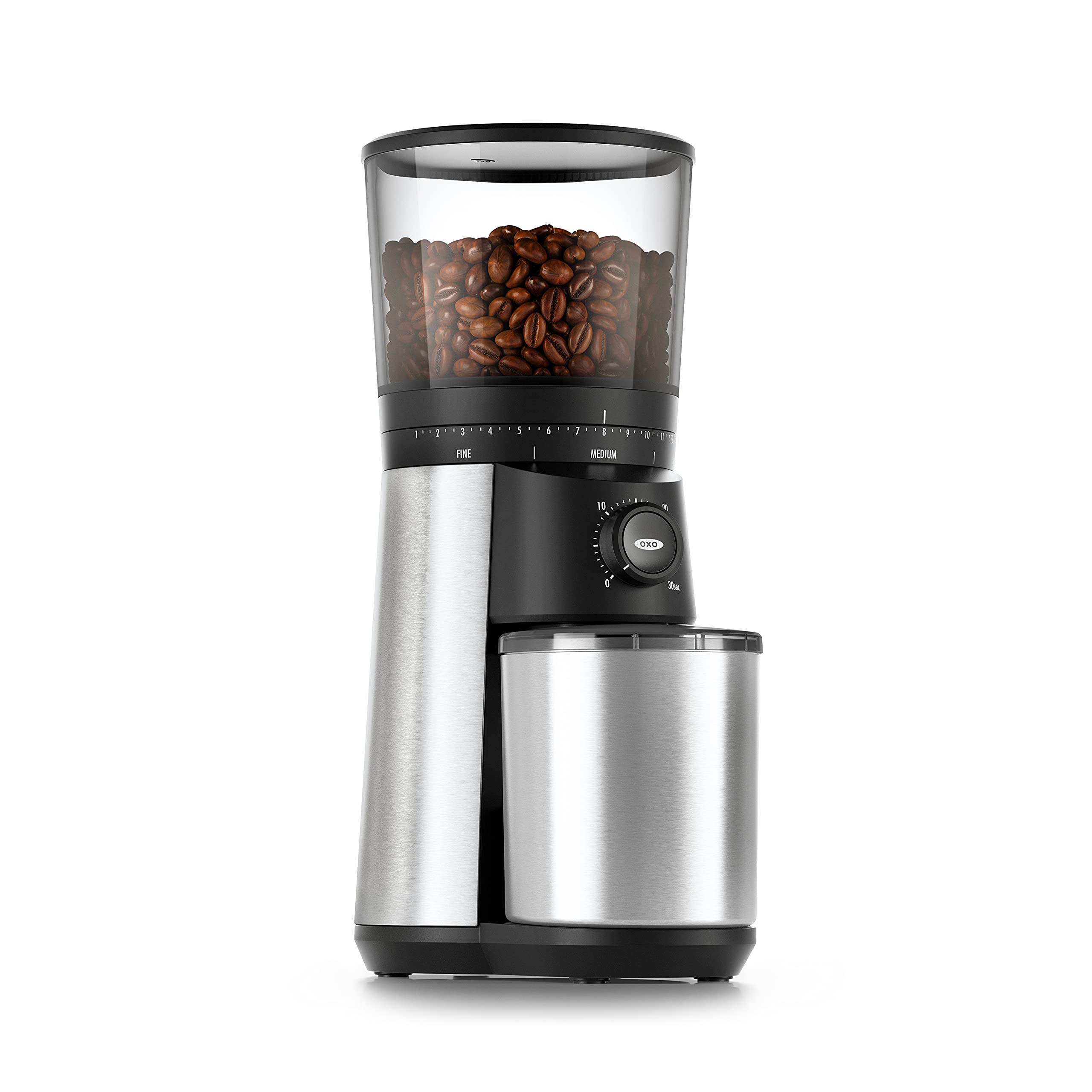
The OXO Brew conical burr grinder has earned its reputation as a Wirecutter pick by delivering dependable consistency across years of daily use. The 40 millimeter stainless steel conical burrs produce uniform grounds suitable for espresso at the finer end of its dial, though the 15 click-steps plus micro-adjustment range means you may land on one of only 2–3 usable settings for espresso depending on your machine. The DC motor runs cool and protects bean oils from overheating during longer grind cycles.
The large 12-ounce hopper with a UV-blocking tint keeps beans fresh for those who prefer to store a batch rather than single-dose. The trap door design prevents spillage when removing the hopper, a thoughtful touch often overlooked on competing models. The static-fighting stainless steel container reduces cling, though some users note the grounds cup can vibrate out of position on smooth countertops over time.
After seven years of consistent use in many households, the OXO proves its durability. The grind consistency holds up well for medium-roast espresso, but very light roast beans may push the limits of its retention and fine adjustment range. For the home barista who also brews drip, French press, and cold brew regularly, the OXO is a versatile workhorse that won’t force you to compromise on the other brew methods.
Why it’s great
- Proven long-term reliability over many years
- Large 12-ounce hopper with UV protection
- Quiet DC motor with cool operation
Good to know
- Limited espresso-specific fine adjustment range
- Grounds cup can vibrate loose during grinding
7. AMZCHEF 45-Setting Conical Burr Grinder
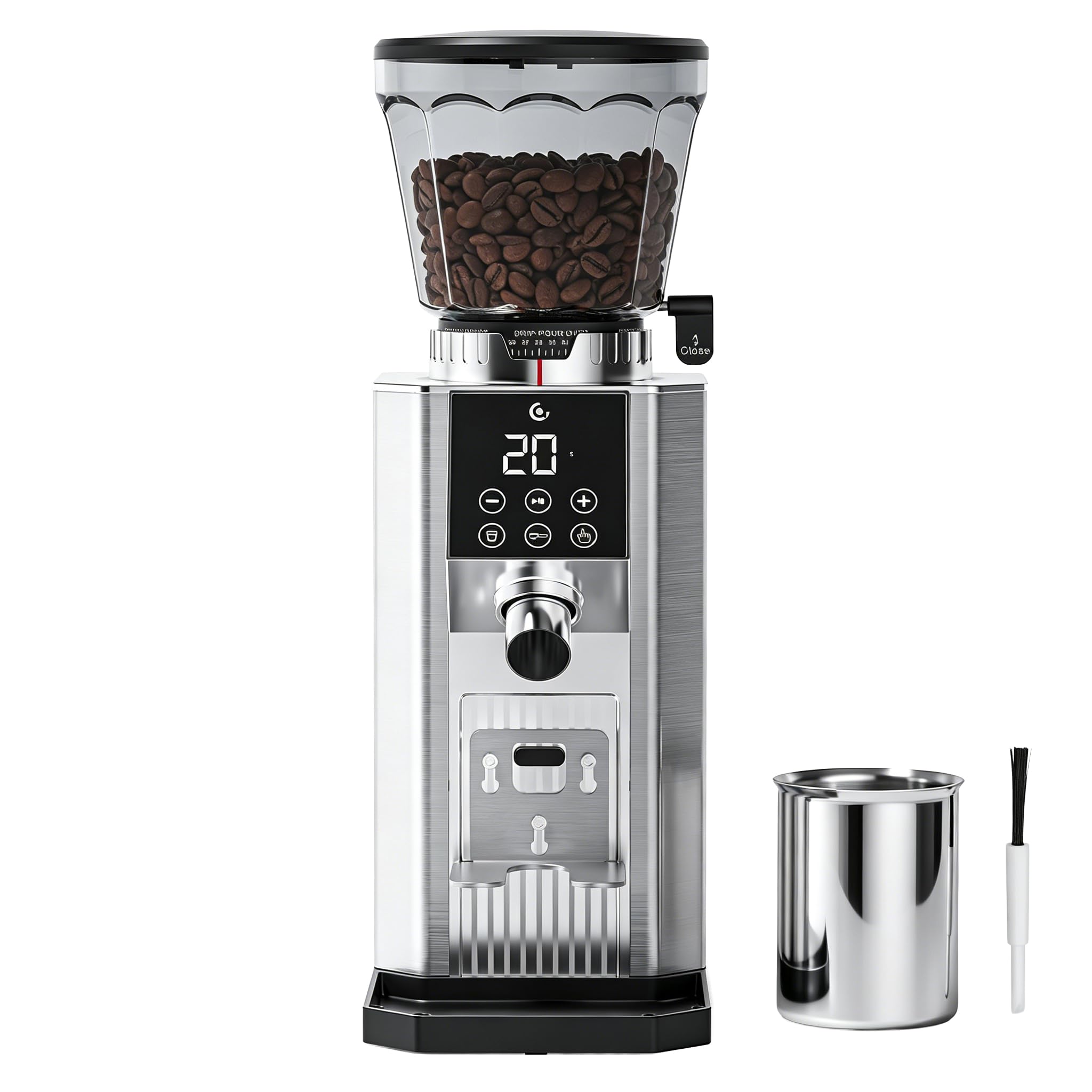
The AMZCHEF 45-setting grinder brings a smart touchscreen interface to the budget espresso segment, with 0.5-second timer precision that allows repeatable dosing without a scale once you’ve dialed in the time for your preferred dose. The 40 mm stainless steel conical burrs produce a grind quality that, while not matching premium flat burrs, is noticeably more uniform than blade grinders and sufficient for entry-level espresso machines.
The anti-static technology and stainless steel grounds cup do reduce cling, making the transfer to your portafilter basket less messy. The 10.5-ounce hopper with UV-blocking tint is generous for this price tier, and the built-in trap door allows you to swap beans without spilling. The touchscreen memory holds your last setting so you can push one button for your morning grind.
The primary limitation for serious espresso is the click-step spacing—at the fine end, each click may move the grind size enough that you can’t fine-tune flow rate precisely. Additionally, the build uses more plastic than the premium options on this list, which may affect long-term burr alignment consistency. For the user stepping up from a blade grinder or pre-ground coffee, this is a solid and affordable way to taste the difference a burr grinder makes.
Why it’s great
- Touchscreen with 0.5-second grind time precision
- Anti-static design reduces mess during transfer
- Large 10.5-ounce UV-protected hopper
Good to know
- Click-step spacing may limit precise espresso dialing
- Some plastic components in the build
8. AMZCHEF 48-Setting Coffee Grinder
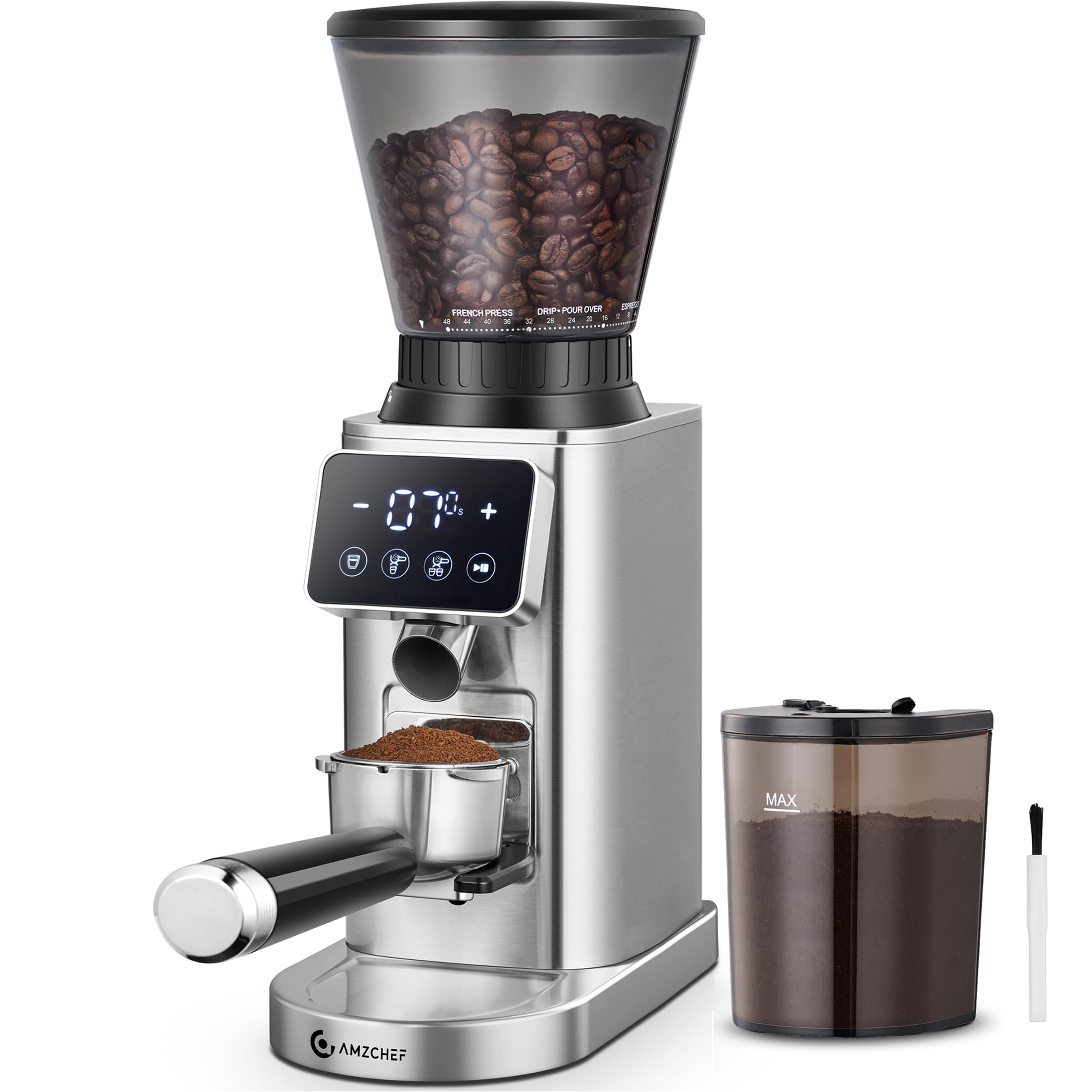
This AMZCHEF variant specifically targets espresso users by including a portafilter holder pad compatible with 50 mm portafilters, allowing direct grinding into the basket to reduce waste and mess. The 48 grind settings provide more resolution than the 45-setting model, with users reporting consistent results at setting 10–12 for traditional espresso. The LED touch panel lets you choose between grinding by cups, time, or single/double espresso doses.
The 40 mm conical burr spins at a low 450 RPM to minimize heat and static, preserving bean oils that contribute to crema production. The 100-gram photophobic grounds container keeps ground coffee fresh between uses by blocking UV light. Real customer reviews note that the grinder is quiet compared to other budget options, and the stainless steel construction feels more substantial than its price suggests.
The learning curve is mild—the first grind may produce some residue as the burrs season, but subsequent grinds are consistent. Some users wish the grinder would remember the last setting automatically, requiring a scroll each morning to your preferred cup count. For the espresso beginner who wants a dedicated portafilter-friendly workflow without spending heavily, this AMZCHEF model is a practical starting point.
Why it’s great
- Direct portafilter grinding reduces mess
- 48 settings with LED touch interface
- Low 450 RPM preserves bean oils
Good to know
- No automatic last-setting memory
- First-use seasoning period required
9. Tuni G1 Conical Burr Grinder

The Tuni G1 packs a 48-setting conical burr system and a detachable portafilter holder into a compact 7 x 4.5-inch footprint, ideal for crowded countertops. The portafilter dock accepts 54–58 mm baskets, making it compatible with most home espresso machines. The patented anti-static 40 mm burr set runs at 450 RPM to minimize heat, and the grind time can be adjusted in 0.5-second increments up to 40 seconds for precise dose control.
The 8.8-ounce bean hopper and 75-gram grounds container are appropriately sized for the machine’s compact frame. The anti-fingerprint stainless steel finish resists smudges, and the soft brush stored in the hopper lid makes quick cleanouts convenient. Users consistently report that the G1 produces grind consistency that punches above its price, with several reviews calling it an excellent value for espresso and French press alike.
The main limitation is the 250-gram bean hopper capacity—if you go through a pound of beans weekly, you’ll refill often. The portafilter holder works best with a dosing ring to prevent spillage during grinding. For the home barista with limited counter space who needs espresso-capable grinding without dedicating a huge footprint, the Tuni G1 is a space-efficient solution that doesn’t skimp on grind quality.
Why it’s great
- Compact footprint ideal for small kitchens
- Versatile 54-58 mm portafilter holder
- Anti-static burr system with consistent output
Good to know
- Small 8.8-ounce hopper requires frequent refills
- Dosing ring recommended for portafilter grinding
FAQ
Can I use a blade grinder for espresso?
What burr size do I need for espresso?
How do I clean an espresso grinder properly?
Should I get a single-dose or hopper-style grinder for espresso?
Can a manual hand grinder produce espresso-quality grinds?
Final Thoughts: The Verdict
For most users, the coffee grinders for espresso winner is the Viesimple Gen 4 because it combines near-silent operation, sub-0.2-gram retention, and a refined single-dose workflow at a price that sits in the accessible premium tier. If you want flat-burr clarity and the ability to upgrade burrs as your palate evolves, grab the MiiCoffee DF64 II. For those who value absolute portability and unmatched micrometer precision, nothing beats the 1Zpresso J-Ultra manual grinder.